纺织学报 ›› 2025, Vol. 46 ›› Issue (04): 81-88.doi: 10.13475/j.fzxb.20240202601

• 纺织工程 • 上一篇    下一篇

花式纱罗织物设计与三维仿真

尚静雨, 蒋高明(), 陈钰珊, 刘海桑, 李炳贤   

  1. 江南大学 针织技术教育部工程研究中心, 江苏 无锡 214122
  • 收稿日期:2024-02-23 修回日期:2024-08-21 出版日期:2025-04-15 发布日期:2025-06-11
  • 通讯作者: 蒋高明(1962—),男,教授,博士。主要研究方向为纺织数字化技术与纺织结构材料。E-mail: jgm@jiangnan.edu.cn
  • 作者简介:尚静雨(2001—),女,硕士生。主要研究方向为机织物的设计与三维仿真。
  • 基金资助:
    中央高校基本科研业务费专项资金资助项目(JUSRP123005);江苏省自然科学青年基金项目(BK20221094)

Design and 3-D simulation of jacquard leno fabrics

SHANG Jingyu, JIANG Gaoming(), CHEN Yushan, LIU Haisang, LI Bingxian   

  1. Engineering Research Center for Knitting Technology, Ministry of Education, Jiangnan University, Wuxi, Jiangsu 214122, China
  • Received:2024-02-23 Revised:2024-08-21 Published:2025-04-15 Online:2025-06-11

摘要:

为实现花式纱罗织物的快速设计和结构的可视性,通过深入分析花式纱罗织物的织造原理,总结其设计及仿真特点。构建了上机图数学模型,建立了组织图、穿综图、纹板图、绞经穿综图和绞经纹板图之间的数学关系,将织物结构数字化储存;并依据绞经结构特点,通过绞经穿综图计算出绞经偏移系数。基于对花式纱罗织物结构特点的深入探究,结合不同组织结构型值点的数量与位置,建立基本组织经纬纱几何模型和绞经几何模型。采用Visual C#和JavaScript语言进行编程,通过结合THREE.js库中的TubeGeometry三维样条曲线,借助WebGL技术根据型值点空间坐标绘制并渲染了花式纱罗织物结构。结果表明,采用该方法不仅能够简化设计流程、降低设计难度,同时还可较为准确地描述花式纱罗织物特点和模拟织物外观效果,实现三维仿真可视化。

关键词: 机织物, 纱罗组织, 几何模型, 三维仿真, WebGL技术

Abstract:

Objective In recent years, due to complex production techniques and other reasons, jacquard leno fabrics have gradually disappeared. Rapid design and three-dimensional structure simulation of jacquard leno fabrics would help to quickly predict the weaving effect of leno fabrics, and it would help generate new design ideas and methods for the design and development of leno fabrics, and is of great significance in reducing the design and development costs of leno fabrics.

Method According to the principle of weaving leno fabrics, a mathematical model for creating weaving diagrams was constructed. In accordance with the structural characteristics of the leno fabrics, a twisting warp geometric model and a ground warp geometric model were established on the basis of the plain weave fabric geometriy, and the deviation patterns of the twisting warp yarns were analyzed. Finally, the three-dimensional structure simulation of jacquard leno fabrics was achieved using C # and WebGL.

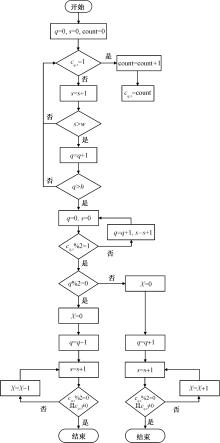
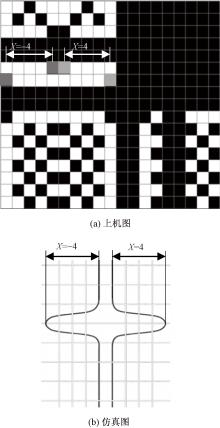
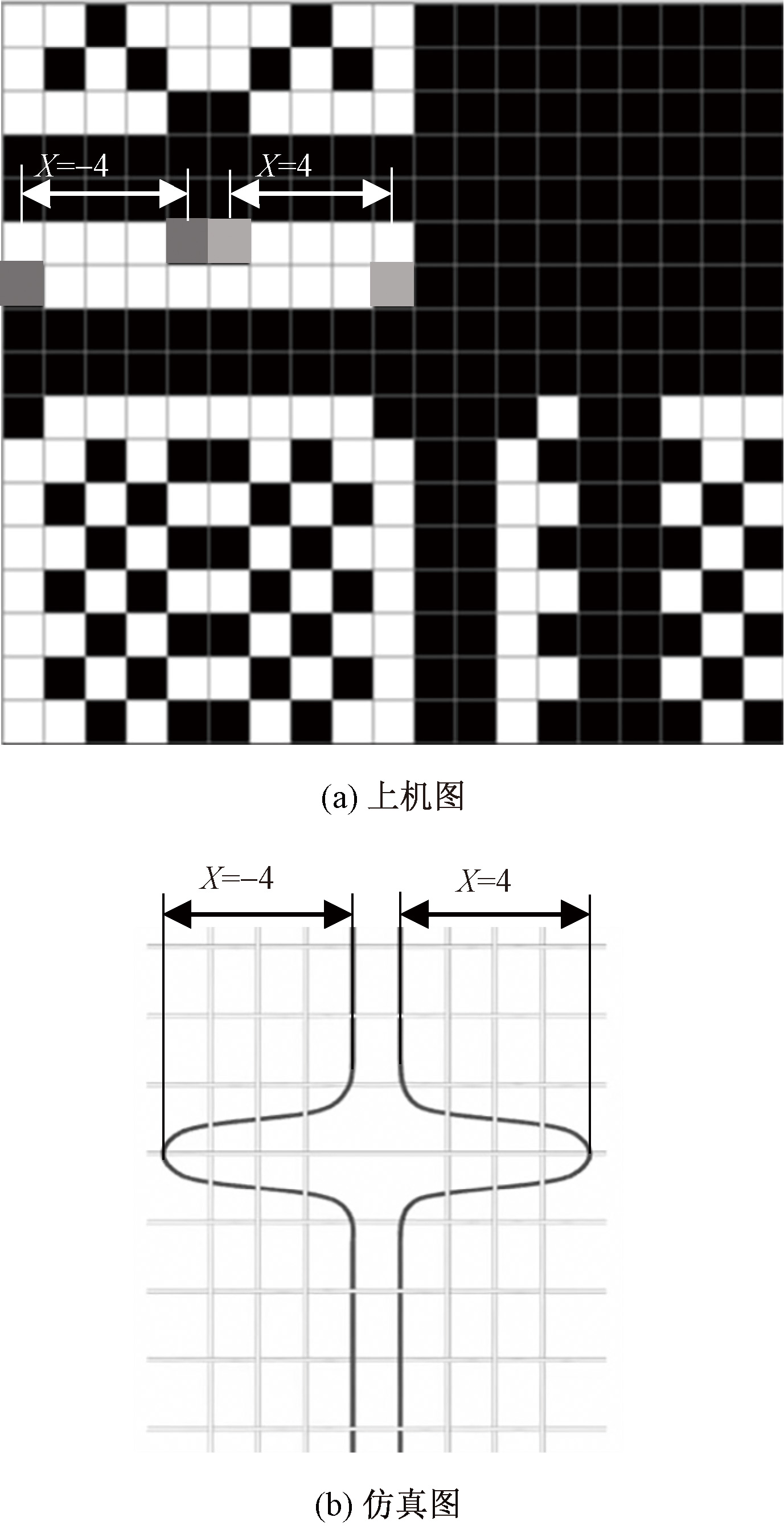
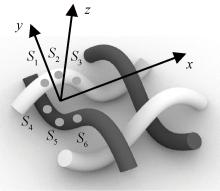
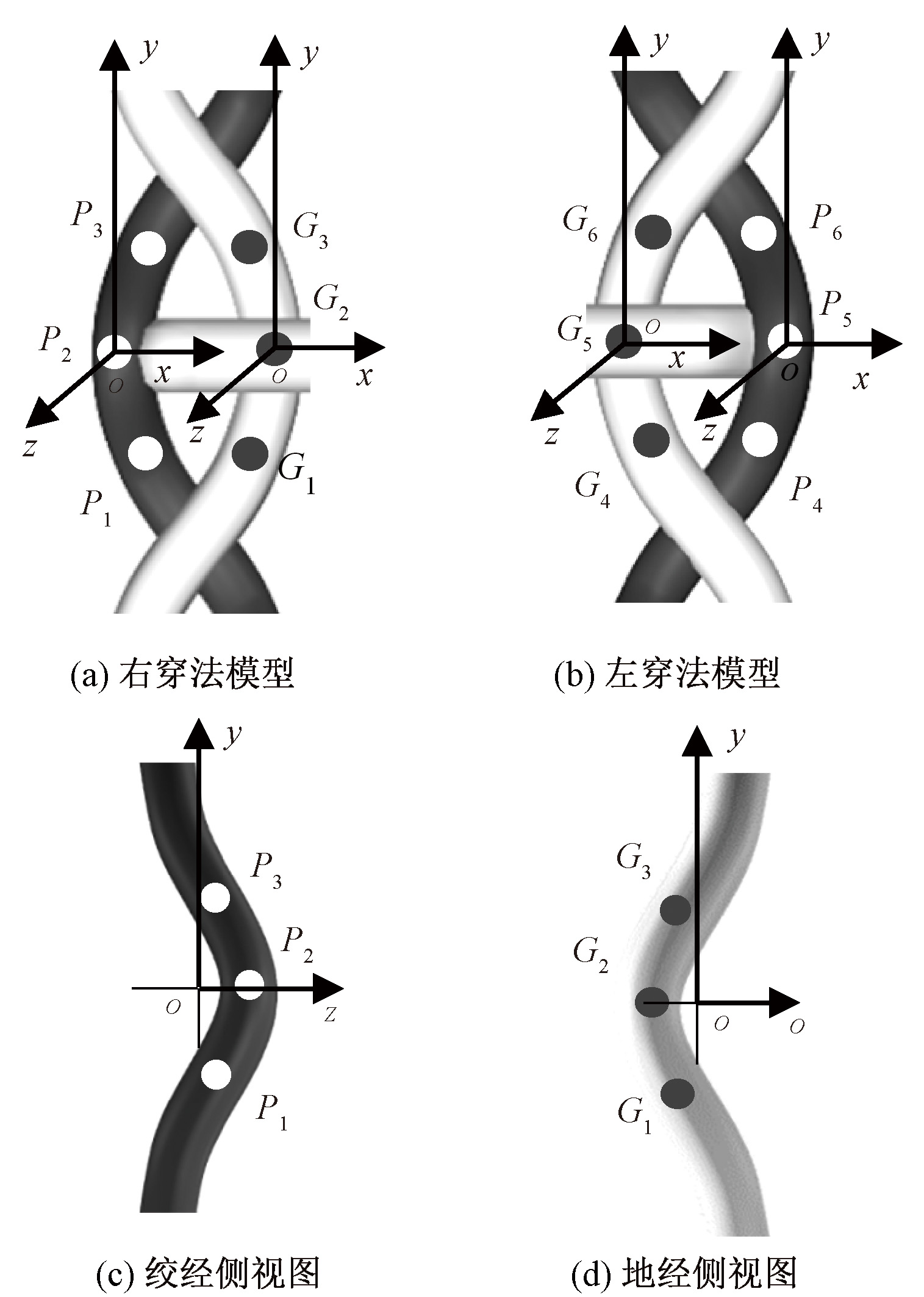
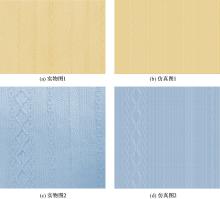
Results Drawing upon the weaving principle of jacquard leno fabrics and the representation of woven fabric structures, a mathematical model for generating weaving doagrams was formulated, including the two-dimensional matrix W for the weave diagram, the two-dimensional matrix D for the draft plan, the matrix L for the lifting plan, the matrix C for the twisting warp draft plan, and the matrix F for the twisting warp lifting plan. By utilizing the mathematical relationship among the weaving diagrams of ordinary fabrics, the mathematical relationship among the weaving diagrams of yarn and fabric was derived. The number of offset warp yarns was defined as the warp twist offset coefficient (X), and the X number of warp twists was calculated based on the weaving pattern of yarn and rib fabrics. A yarn threading model was constructed, taking into account the distinct characteristics of the yarns and fabrics. Jacquard leno fabrics consists of basic weave and leno fabric weave, so two geometric models need to be built. Drawing upon the intersection points of warp and weft yarns, the geometric model of plain weave warp and weft yarns and the geometric model of the leno fabrics were depicted. The geometric model of warp and weft yarns in plain weave fabrics added three warp points and three weft points at the interlacing point, and the geometric model of the leno fabric, builded upon the geometric model of warp and weft yarns in plain weave fabrics, also added three warp points at the twist point to create a twist warp geometric model. The x-axis and y-axis coordinates of the three warp points and the coordinates of these three warp points were related to the warp distance (gw) and weft distance (gh), the z-axis coordinates use the fifth structural phase of the nine structural phase systems, relating to the warp bending wave height (hj) and weft diameter (dw). With the help of the THREE.js tool, the 3-D simulation of the jacquard leno fabrics was achieved.

Conclusion Inspired by the structural characteristics of jacquard leno fabrics, a scientific and effective method for weaving diagrams and 3-D simulation is explored and achieved. This method can be applied to the 3-D simulation of various jacquard leno fabrics, so it can promote the design and innovation of jacquard leno fabrics and promote the development of jacquard leno fabrics.

Key words: woven fabric, leno fabric, geometric model, 3-D simulation, WebGL technology

中图分类号: 

  • TS105.1

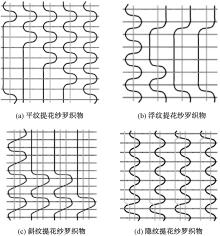
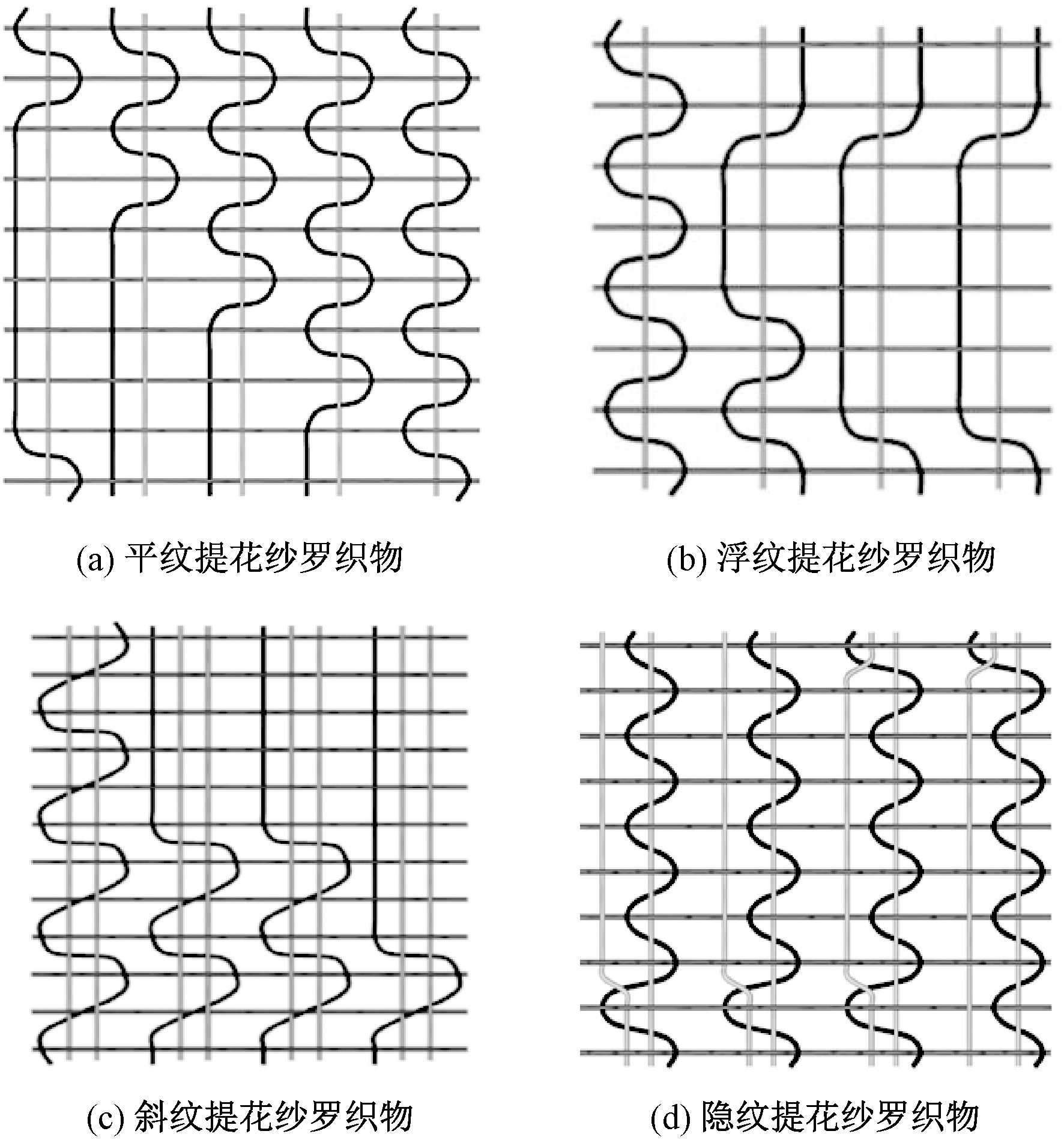
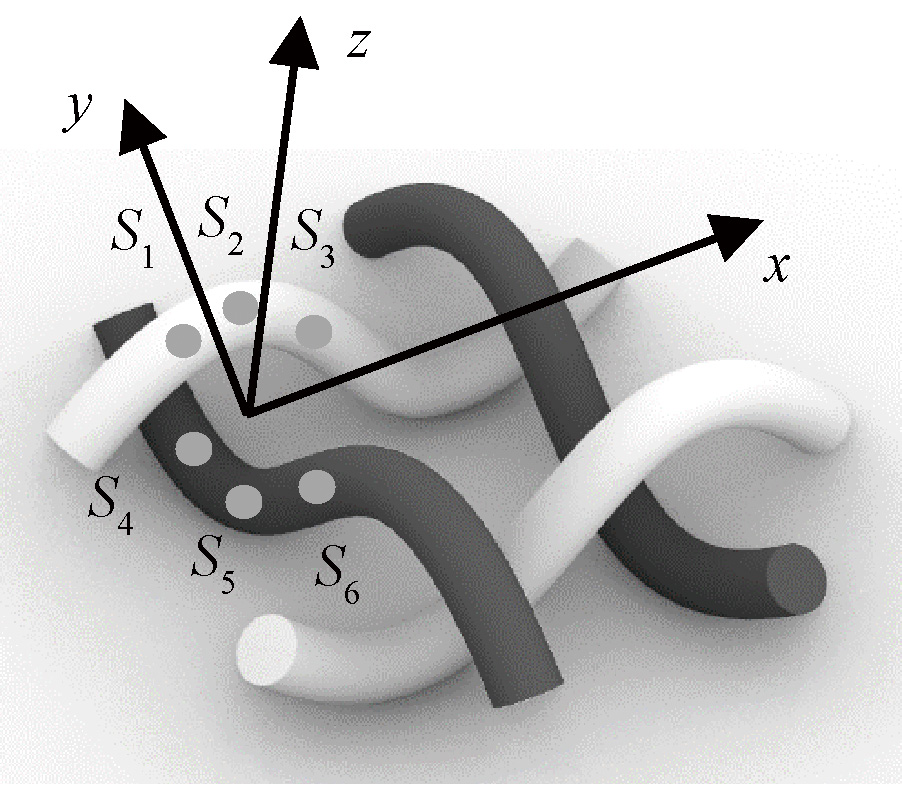
图1

花式纱罗织物拓扑结构仿真"

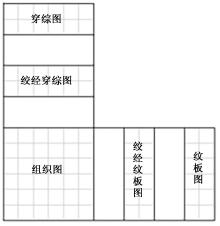
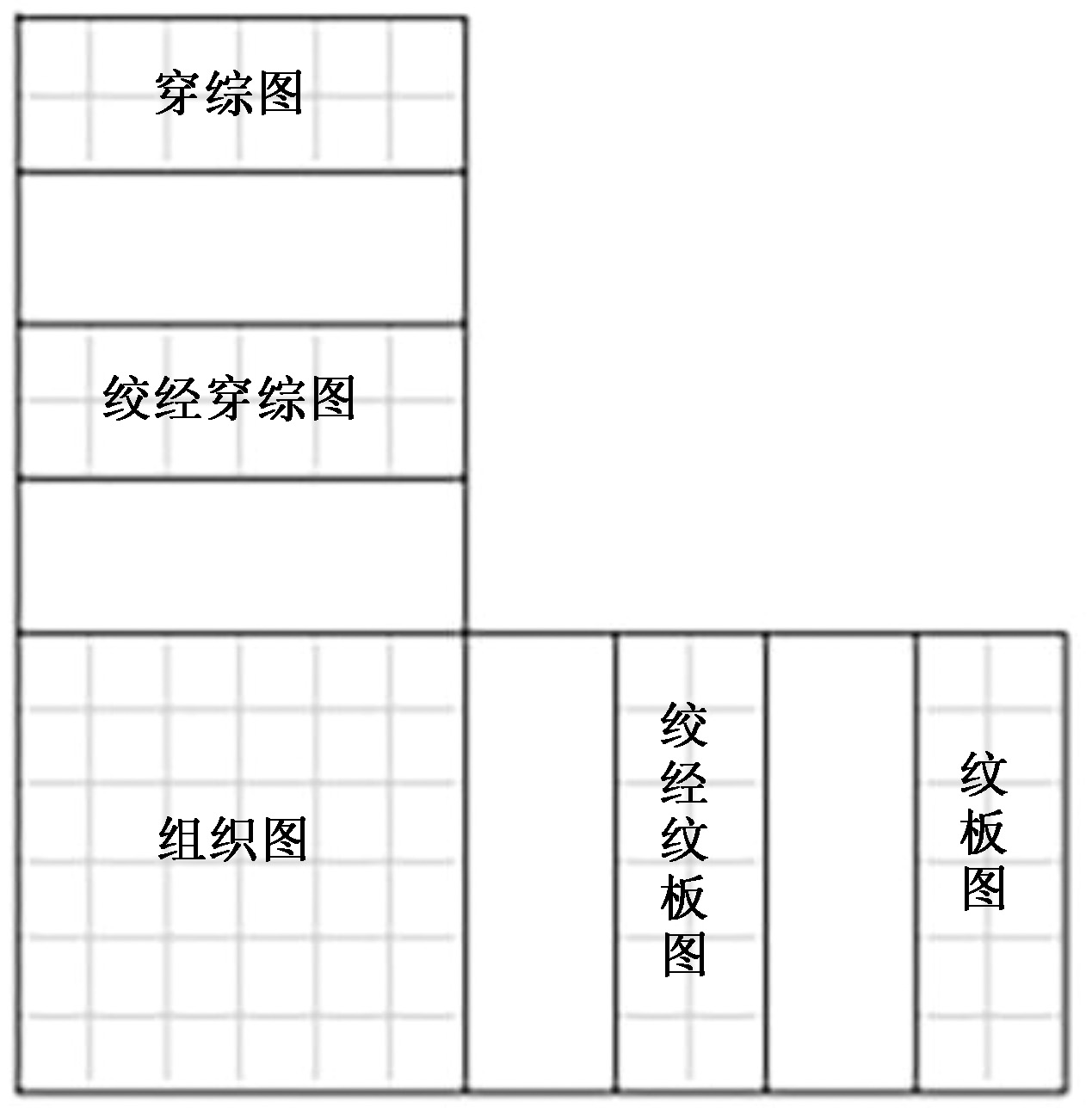
图2

纱罗织物上机示意图"

图3

绞经偏移系数(X)计算流程图"

图4

花式纱罗织物中绞经偏移系数(X)示意图"

图5

平纹组织经纬纱几何模型"

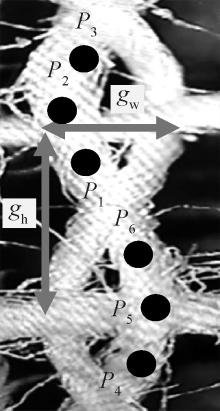
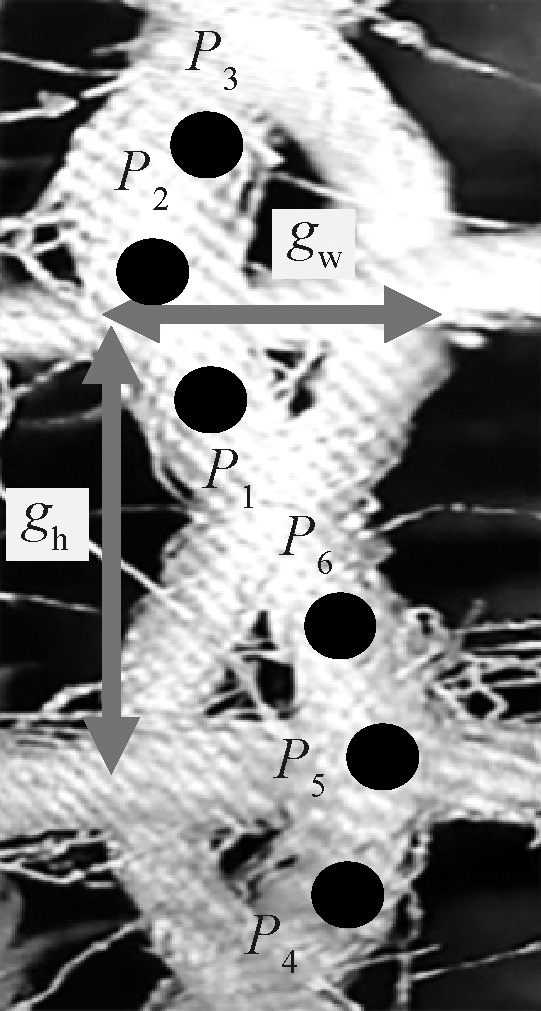
图6

纱罗组织实际结构"

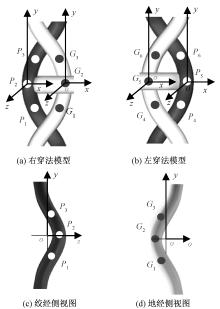
图7

纱罗组织几何模型"

图8

花式纱罗织物的上机图"

图9

花式纱罗织物的实物图和仿真图"

[1] 顾平. 织物组织与结构学[M]. 上海: 东华大学出版社, 2010: 135-136.
GU Ping. Fabric microstructure and structure[M]. Shanghai: Donghua University Press, 2010: 135-136.
[2] 张瑞云, 黄新林, 李汝勤. 机织物的计算机三维模拟[J]. 纺织学报, 2005(1):62-63, 69.
ZHANG Ruiyun, HUANG Xinlin, LI Ruqin. 3D computer simulation of woven fabric[J]. Journal of Textile Research, 2005(1):62-63, 69.
[3] 詹忻, 祝成炎. 纱罗组织数学模型的实现[J]. 纺织学报, 2009, 30(1):46-50, 59.
ZHAN Xin, ZHU Chengyan. Realization of mathematical model for leno weaves[J]. Journal of Textile Research, 2009, 30(1):46-50, 59.
[4] 张锐, 詹忻, 田伟, 等. 纱罗组织配色模纹数学模型的构建[J]. 纺织学报, 2010, 31(4):45-49.
ZHANG Rui, ZHAN Xin, TIAN Wei, et al. Realization of mathematical model for leno color effect[J]. Journal of Textile Research, 2010, 31(4):45-49.
[5] 蔡欣, 李佩. 宋代绞经花纱织造工艺及其数学建模[J]. 纺织学报, 2016, 37(11):42-47, 54.
CAI Xin, LI Pei. Weaving techniques and mathematical model for patterned simple gauze of Song dynasty[J]. Journal of Textile Research, 2016, 37(11):42-47, 54.
[6] 徐辉, 朱昊. 纱罗织物三维几何模型的构建[J]. 棉纺织技术, 2024, 52(1):45-49.
XU Hui, ZHU Hao. Construction of three-dimensional geometrie model for Leno fabric[J]. Cotton Textile Technology, 2024, 52(1):45-49.
[7] 卢明, 李维, 刘欣, 等. 花罗组织夏布织造技艺研究[J]. 丝绸, 2022, 59(1):58-63.
LU Ming, LI Wei, LIU Xin, et al. Study on the technology of jacquard leno weave grass cloth[J]. Journal of Silk, 2022, 59(1):58-63.
[8] 王子琪. 中国古代绞经织物结构、技艺与文化研究[D]. 上海: 东华大学,2021:138-146.
WANG Ziqi. Study on the structure, technology and culture of warp twisted fabrics in ancient china[D]. Shanghai: Donghua University,2021:138-146.
[9] 荆妙蕾. 织物结构与设计[M]. 第5版. 北京: 中国纺织出版社,2014:8.
JING Miaolei. Fabric Structure and Design[M]. 5th Ed. Beijing: China Textile & Apparel Press,2014:8.
[10] PEIRCE F. Geometrical principles applicable to the design of functional fabrics[J]. Textile Research Journal, 1947, 17(3): 123-147.
[1] 王浙峰, 蔡王丹, 李诗雅, 徐青艺, 张红霞, 祝成炎, 金肖克. 抗菌除臭复合功能机织物的服用性能[J]. 纺织学报, 2025, 46(03): 90-99.
[2] 马运娇, 王蕾, 潘如如. 基于双斜交平面镜的纱线条干三维仿真[J]. 纺织学报, 2025, 46(02): 86-91.
[3] 李慧敏, 刘淑强, 杜琳琳, 张曼, 吴改红. 玄武岩/聚酰亚胺三维间隔机织物的参数化建模及高温环境传热数值模拟[J]. 纺织学报, 2025, 46(01): 87-94.
[4] 孙戬, 王彤, 陈云辉, 林何, 刘晖, 成小乐. 织物增强橡胶基复合材料本构模型及其应用[J]. 纺织学报, 2025, 46(01): 95-102.
[5] 陈钰珊, 蒋高明, 李炳贤. 基于双扎口的纬编管状无缝织物三维仿真[J]. 纺织学报, 2024, 45(10): 95-102.
[6] 田少萌, 张丽, 石浩轩, 徐阳. 基于ANSYS Workbench的高密机织滤料动态形变模拟与分析[J]. 纺织学报, 2024, 45(09): 63-69.
[7] 关松松, 蒋高明, 杨美玲, 李炳贤. 基于线圈结构的双针床经编毛绒织物三维仿真[J]. 纺织学报, 2024, 45(09): 84-90.
[8] 徐辉, 朱昊, 潘苏情, 史红艳, 应迪. 基于变截面复丝模型的机织物模拟[J]. 纺织学报, 2024, 45(05): 70-78.
[9] 赵俊杰, 蒋高明, 程碧莲, 李炳贤. 毛衫绞花织物的三维仿真与实现[J]. 纺织学报, 2023, 44(12): 81-87.
[10] 石路健, 宋亚伟, 谢汝义, 高志超, 房宽峻. 莱赛尔机织物防原纤化前处理工艺优化[J]. 纺织学报, 2023, 44(12): 96-105.
[11] 杨美玲, 蒋高明, 王婷, 李炳贤. 基于弹簧-质点模型的单贾卡经编鞋材三维仿真[J]. 纺织学报, 2023, 44(11): 113-119.
[12] 杨孟想, 刘让同, 李亮, 刘淑萍, 李淑静. 机织物的热传递与强热条件下热防护性能[J]. 纺织学报, 2023, 44(11): 74-82.
[13] 王旭, 闵尔君, 李少聪, 张文强, 彭旭光. 基于平织机的管状三维机织物设计及其矩阵模型[J]. 纺织学报, 2023, 44(08): 103-109.
[14] 杨美玲, 蒋高明, 王婷, 李炳贤. 经编间隔鞋材设计与三维仿真[J]. 纺织学报, 2023, 44(08): 96-102.
[15] 郑培晓, 蒋高明, 丛洪莲, 李炳贤. 多色调线横条纹织物的设计与三维仿真[J]. 纺织学报, 2023, 44(06): 85-90.
Viewed
Full text


Abstract

Cited

  Shared   
  Discussed   
No Suggested Reading articles found!