纺织学报 ›› 2025, Vol. 46 ›› Issue (12): 216-223.doi: 10.13475/j.fzxb.20250104201

• 机械与设备 • 上一篇    下一篇

棉精梳机分离罗拉传动中直齿轮初始齿隙分析

王彪1,2,3, 李新荣1,2,3(), 刘荣芳1,2,3, 李理1,2,3   

  1. 1.天津工业大学 机械工程学院, 天津 300387
    2.天津市现代机电装备技术重点实验室, 天津 300387
    3.天津工业大学绍兴柯桥研究院, 浙江 绍兴 312030
  • 收稿日期:2025-01-16 修回日期:2025-03-29 出版日期:2025-12-15 发布日期:2026-02-06
  • 通讯作者: 李新荣(1975—),男,教授,博士。主要研究方向为新型纺织机械设计及自动化。E-mail:lixinrong7505@hotmail.com
  • 作者简介:王彪(1999—),男,硕士生。主要研究方向为新型纺织机械设计及自动化。
  • 基金资助:
    天津市自然科学基金重点项目(24JCZDJC00670)

Analysis of initial backlash of spur gears in transmission of detaching roller for cotton comber

WANG Biao1,2,3, LI Xinrong1,2,3(), LIU Rongfang1,2,3, LI Li1,2,3   

  1. 1. School of Mechanical Engineering, Tiangong University, Tianjin 300387, China
    2. Tianjin Key Laboratory of Advanced Mechatronics Equipment Technology, Tianjin 300387, China
    3. Shaoxing Keqiao Institute of Tiangong University,Shaoxing, Zhejiang 312030, China
  • Received:2025-01-16 Revised:2025-03-29 Published:2025-12-15 Online:2026-02-06

摘要: 高档织物、特种纱线的生产离不开精梳机,分离罗拉齿轮传动机构作为精梳机的核心机构,其运动规律直接影响着纱线的质量。为解决分离罗拉齿轮传动机构中直齿轮初始齿隙安装调节与车速不匹配导致精梳机振动加剧的问题,首先,通过分析现有分离罗拉齿轮传动机构,采用集中质量法建立了直齿轮系统的动力学模型,并根据牛顿第二定律推导其动力学微分方程,得到了初始齿隙、车速与振动三者关系的齿隙振动模型;然后,利用龙格库塔法对齿隙振动模型求解,并以不同车速与初始齿隙为变量,通过激光测振仪实验验证了三者之间关系模型的准确性;最后,对关系模型与实验结果进行分析,得到了精梳机车速在450~550钳次/min区间(每10钳次/min为一档)内,各车速对应的最小振动位移下的最优初始齿隙。结果表明:在保证最小振动的情况下,不同车速需要匹配相应的直齿轮初始安装齿隙。

关键词: 精梳机, 分离罗拉, 直齿轮, 初始齿隙, 时变齿隙, 齿轮传动机构

Abstract:

Objective The separating roller gear transmission mechanism in most combing machine consists of differential wheel system and spur gear system, with spur gear system as its main input. With the increase of combing machine speed, under the influence of time-varying parameters (backlash and pressure angle) of spur gear system, its vibration and noise would also increase, resulting in the reduction of stability and precision of the transmission mechanism, which in turn leads to the increase of vibration of the combing machine. Therefore, in order to reduce the vibration of the combing machine, it is necessary to study the effect of the initial backlash of the driving spur gear of the separating roller differential wheel system on the vibration and noise of the system.

Method First, by analysing existing separated roller gear transmission mechanisms, a dynamic model of the spur gear system was established using the concentrated mass method. Based on Newton's second law, its dynamic differential equations were derived, yielding a backlash vibration model that relates initial backlash, vehicle speed, and vibration. Subsequently, the backlash vibration model was solved using the Runge-Kutta method. The accuracy of the relationship model was verified experimentally using a laser vibrometer, with varying carriage speeds and initial backlash as variables. Finally, analysis of the relationship model and experimental results determined the optimal initial backlash corresponding to the minimum vibration displacement at each speed for carding machines operating between 450 and 550 strokes per minute. This resolves the requirement for matching straight gear initial installation backlash to different carding machine speeds to achieve minimal vibration.

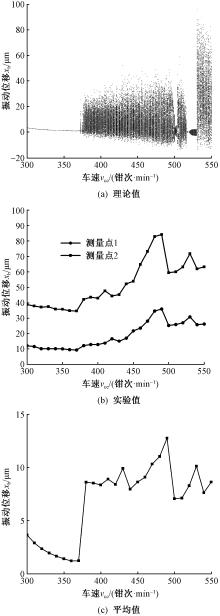
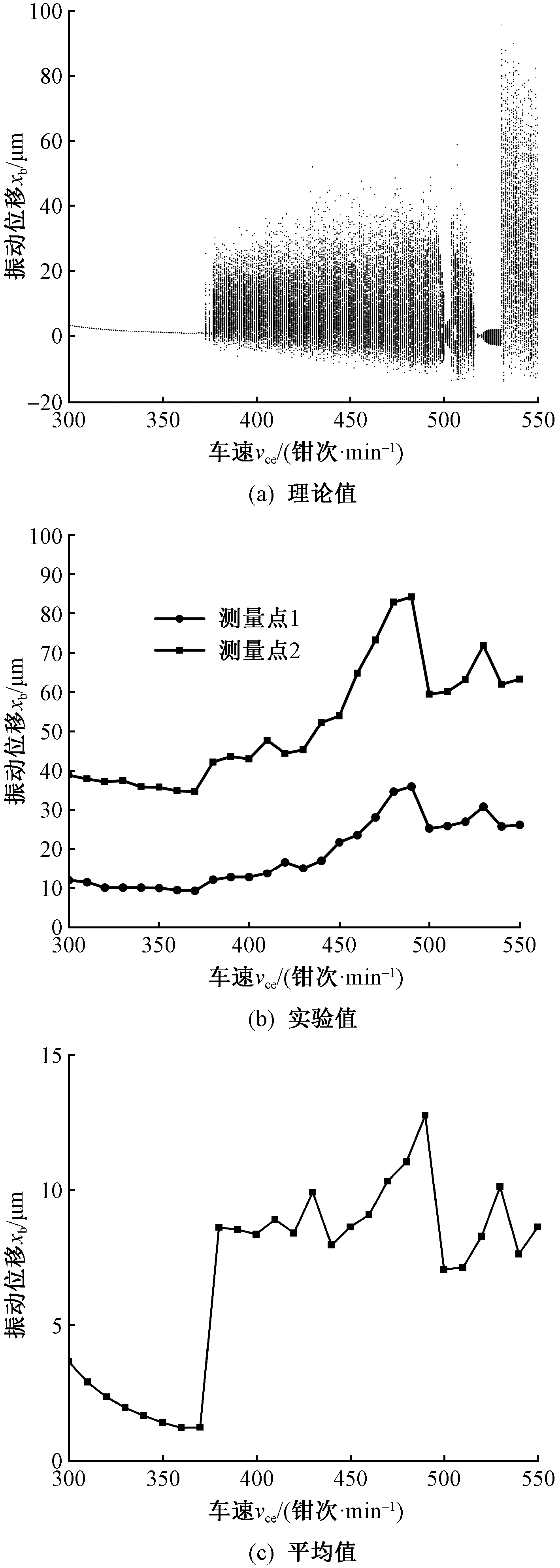
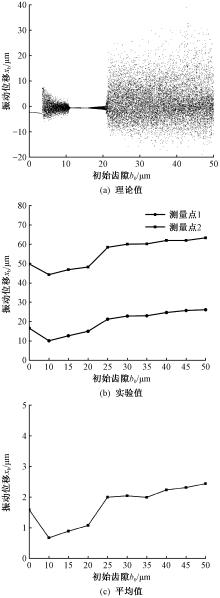
Results Firstly, to address the issue of exacerbated precision machinery vibration caused by mismatched initial backlash adjustment and vehicle speed in hybrid drive mechanisms. Considering the impact of initial backlash on vibration and noise within spur gear systems, a dynamic model was derived for the spur gear system using Newton's second law. The resulting differential equations for spur gear dynamics enable optimisation of the relationship between initial backlash, vehicle speed, and vibration.Secondly, with the fixed spur gear initial backlash set at b0 = 50 μm, the cutting speed was varied in increments of 10 cuts per minute from 300 to 550 cuts per minute. The vibration displacement was measured and recorded at different cutting speeds. With the combing machine speed fixed at 550 strokes per minute, the initial backlash b0 was varied in increments of 5 μm within the range of 5-50 μm. Vibration displacement data was calculated and collected for different initial backlash values. By comparing theoretical and experimental vibration displacement values across varying speeds and initial backlashes, the derived dynamic differential equation demonstrated excellent accuracy in characterising the relationship between initial backlash, speed, and vibration.Finally, employing the Runge-Kutta method to solve the dynamic differential equations at increments of 10 strokes per minute, and integrating experimental results of vibration displacement at varying speeds and initial backlashes, the optimal initial backlash corresponding to the minimum vibration displacement was determined for carding machine speeds ranging from 450 to 550 strokes per minute.

Conclusion In this paper, the dynamic model of spur gear system is established by using the concentrated mass method, and its power differential equation is deduced according to Newton's second law, which shows the relationship between initial backlash, vehicle speed and vibration, and the experiments are carried out by using laser vibration meter with different vehicle speeds and initial backlashes as the variables, which verifies that the power differential equations can accurately show the relationship between the three, and the analytical analysis obtains the initial tooth gap corresponding to the minimum vibration displacement under the vehicle speed of combing machine of 450-550. The initial tooth gap corresponding to the minimum vibration displacement of the combing machine is analyzed and obtained.

Key words: comber, separating roller, spur gear, initial backlash, time-varying backlash, gear transmission mechanism

中图分类号: 

  • TS112.2

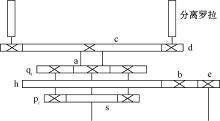
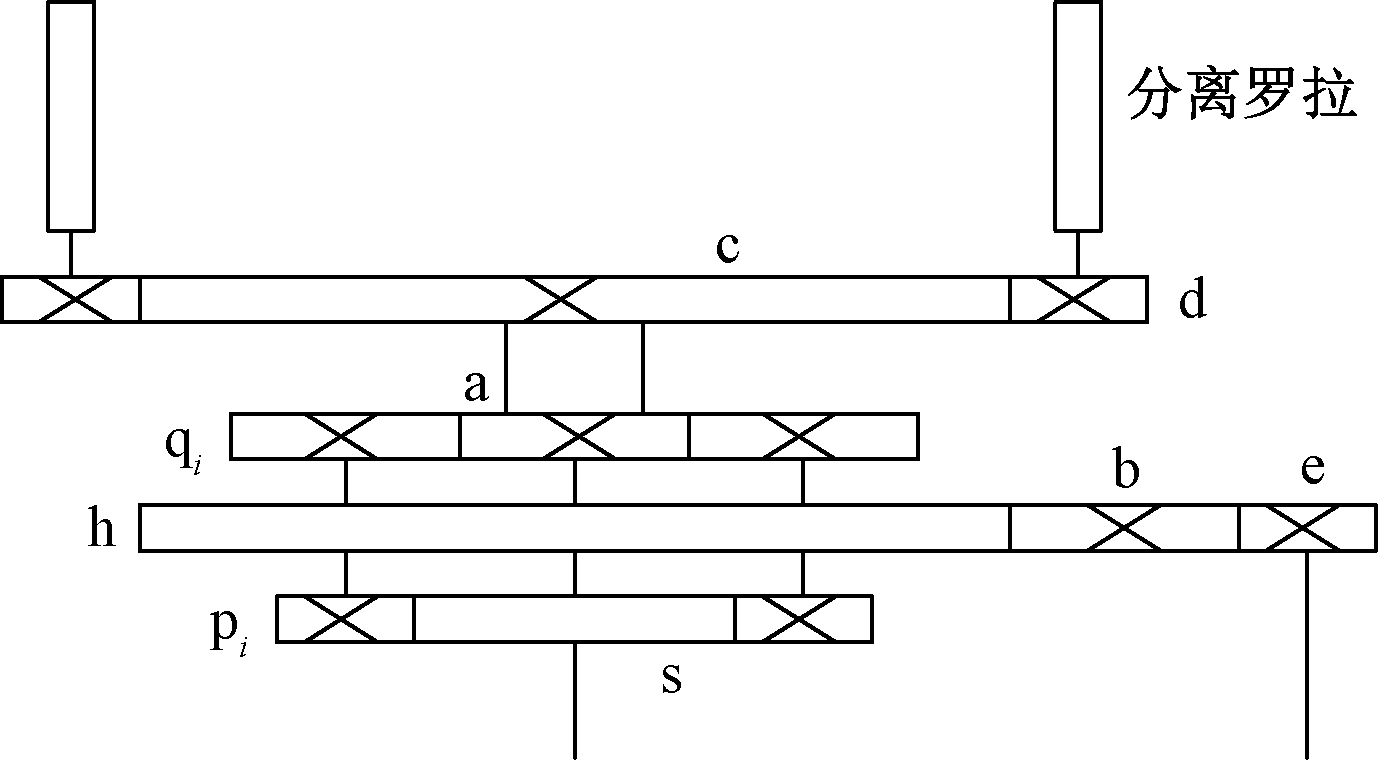
图1

分离罗拉齿轮传动机构示意图"

表1

分离罗拉齿轮传动机构中各构件的基本参数"

构件 齿数
z
模数
m/mm
质量
mm/kg
齿宽
b/mm
压力角/
(°)
太阳轮s 39 2.5 1.48 35 20
行星轮pi 21 2.5 0.44 34.5 20
行星轮qi 28 2.5 0.49 34.5 20
太阳轮a 32 2.5 1.13 35 20
环行轮h 95 2.5 13.15 40 20
齿轮b 56 2.5 6.50 40 20
齿轮c 87 1.25 2.51 30 20
齿轮d 28 1.25 0.14 30 20
齿轮e 15 2.5 1.74 40 20

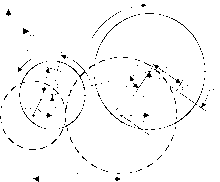
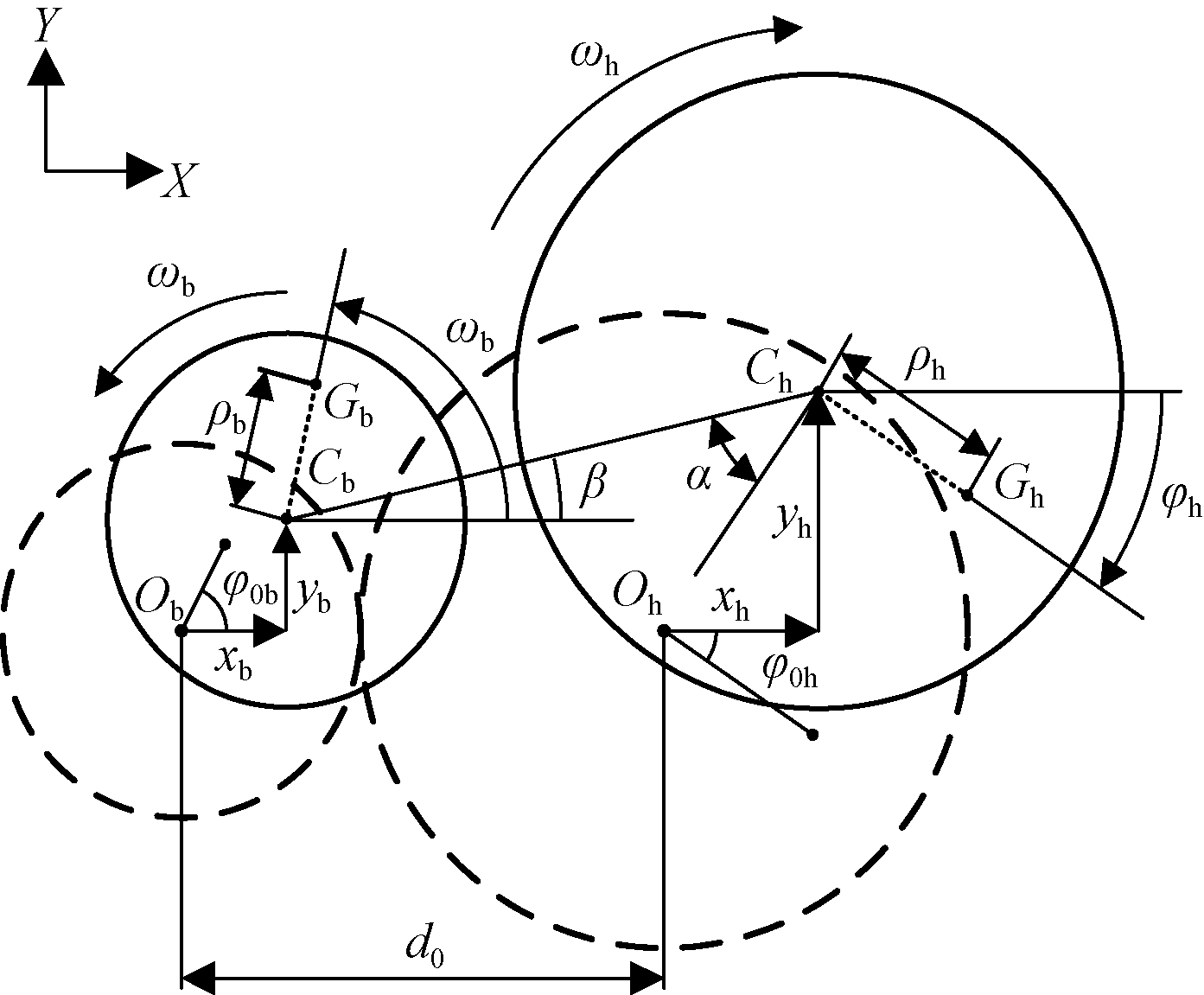
图2

直齿轮系统的广义坐标"

图3

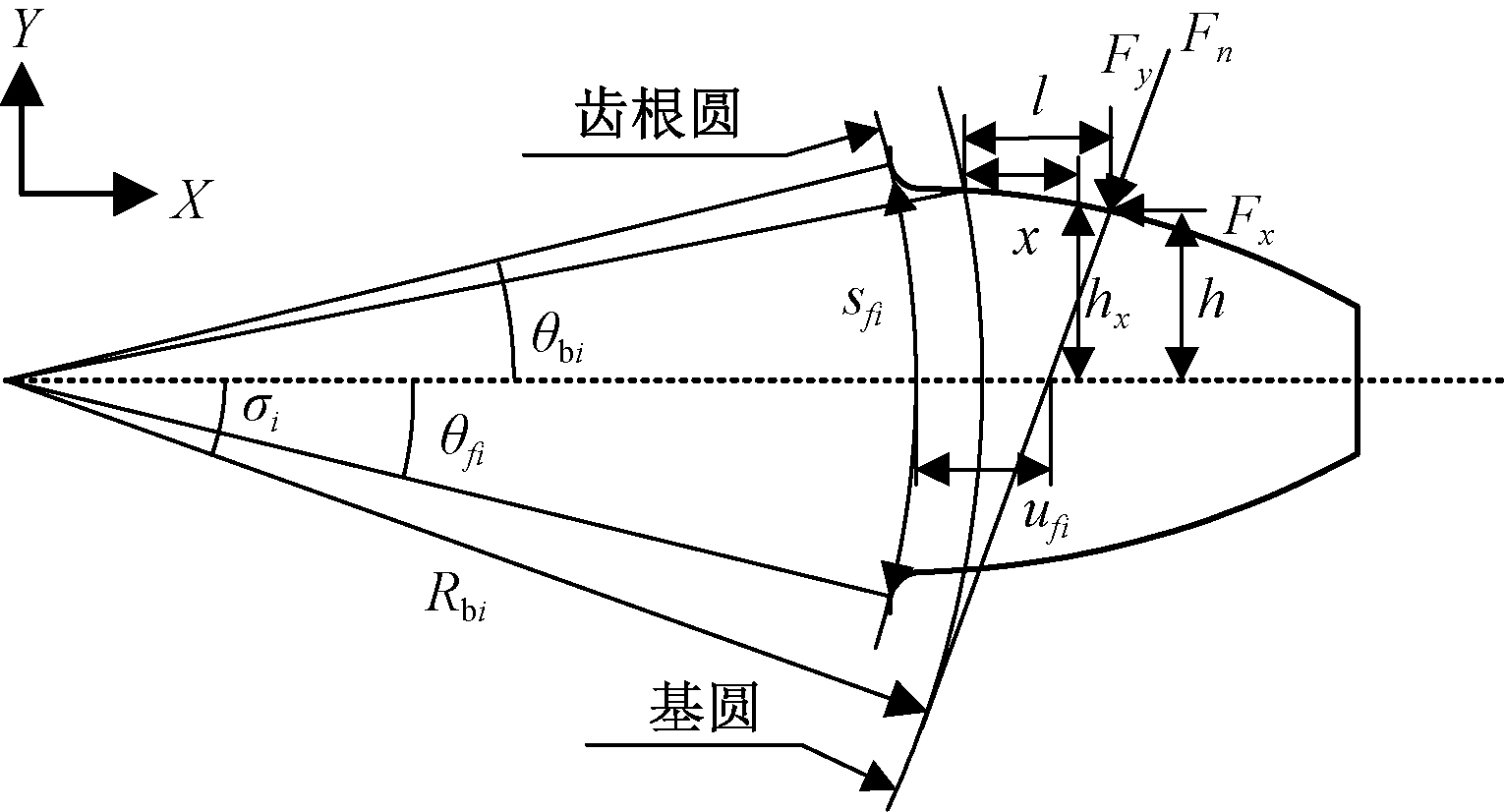
直齿轮系统的齿廓及受力分析图"

图4

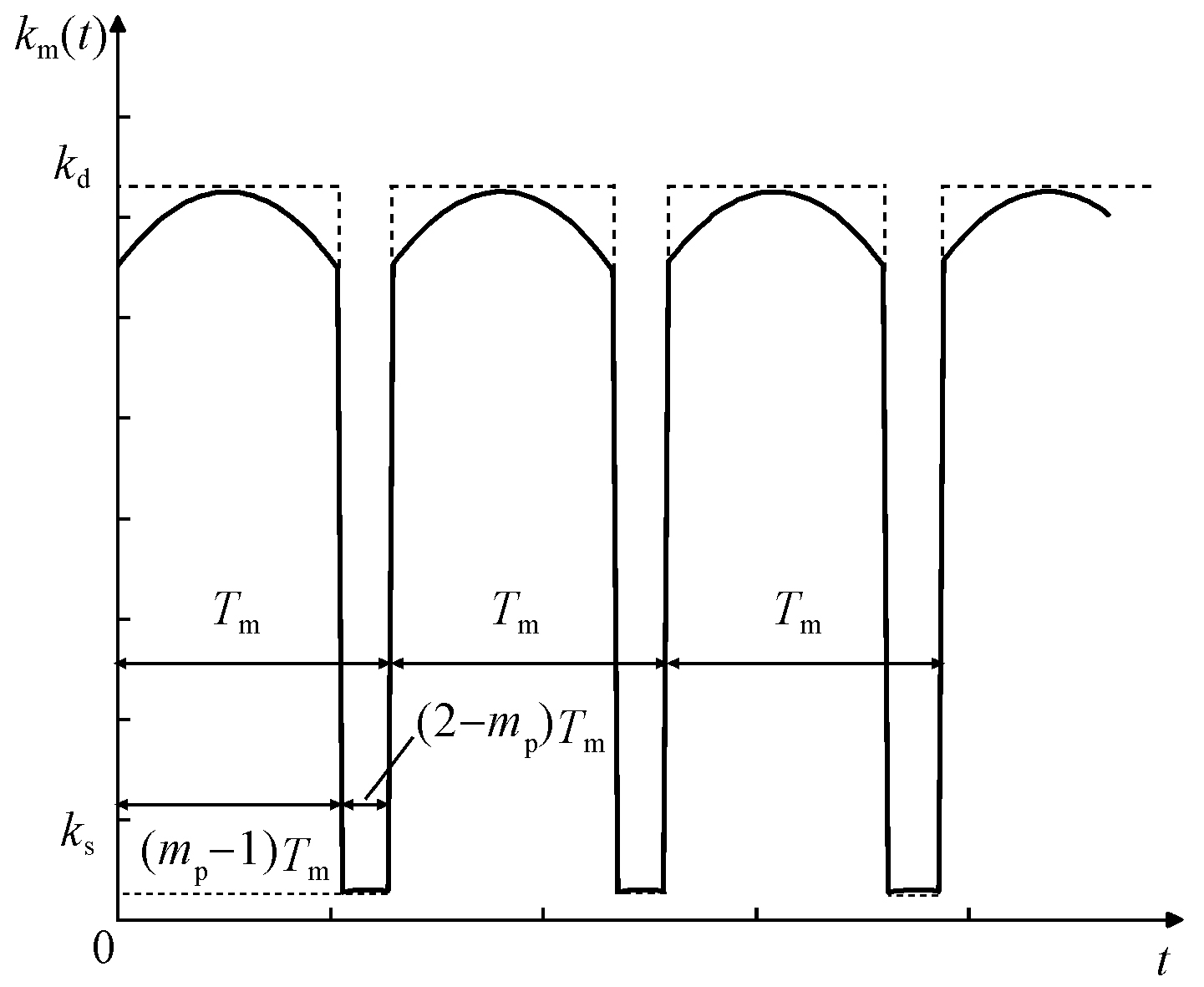
直齿轮系统的时变啮合刚度"

图5

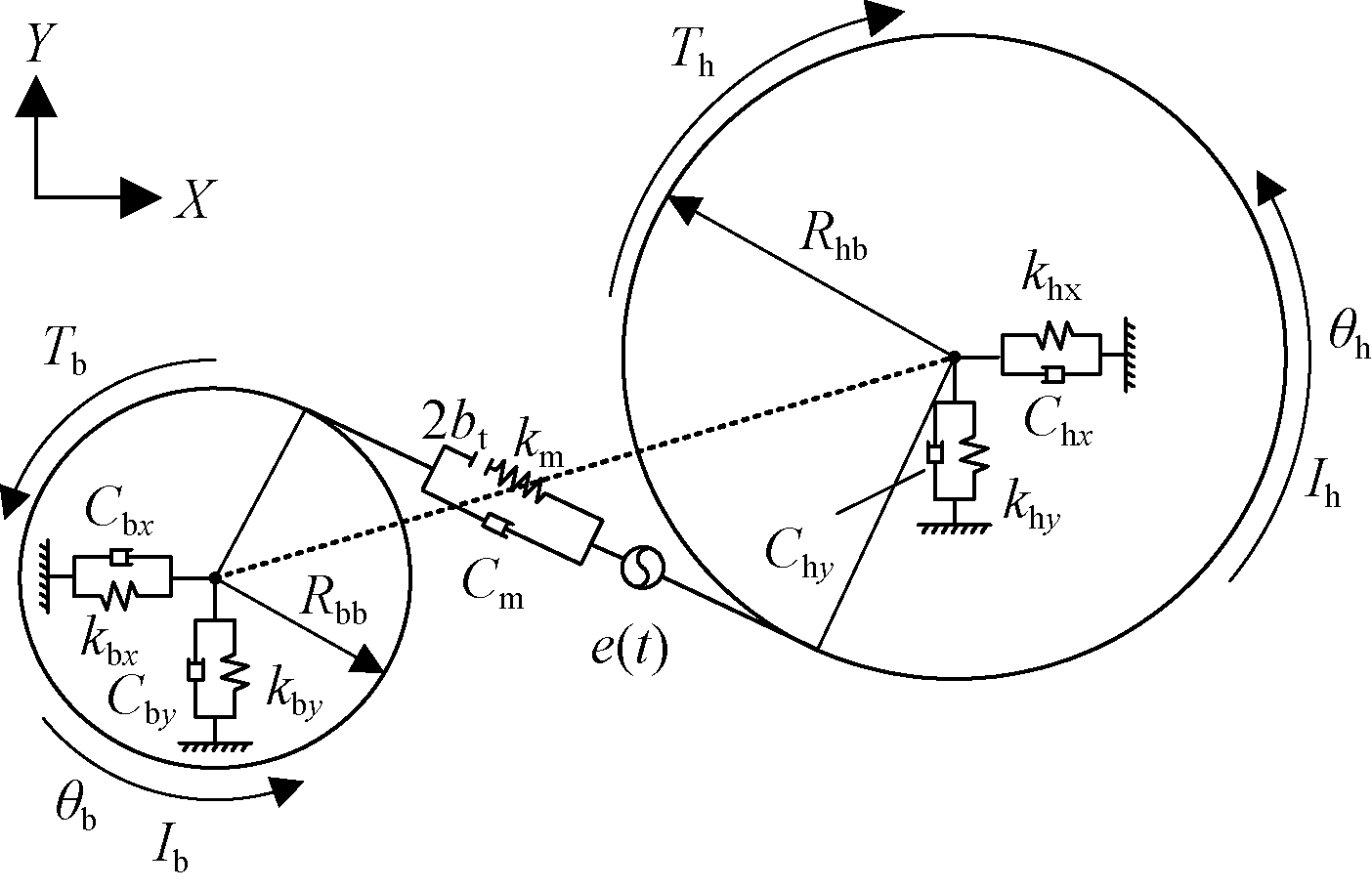
直齿轮系统的动力学模型"

图6

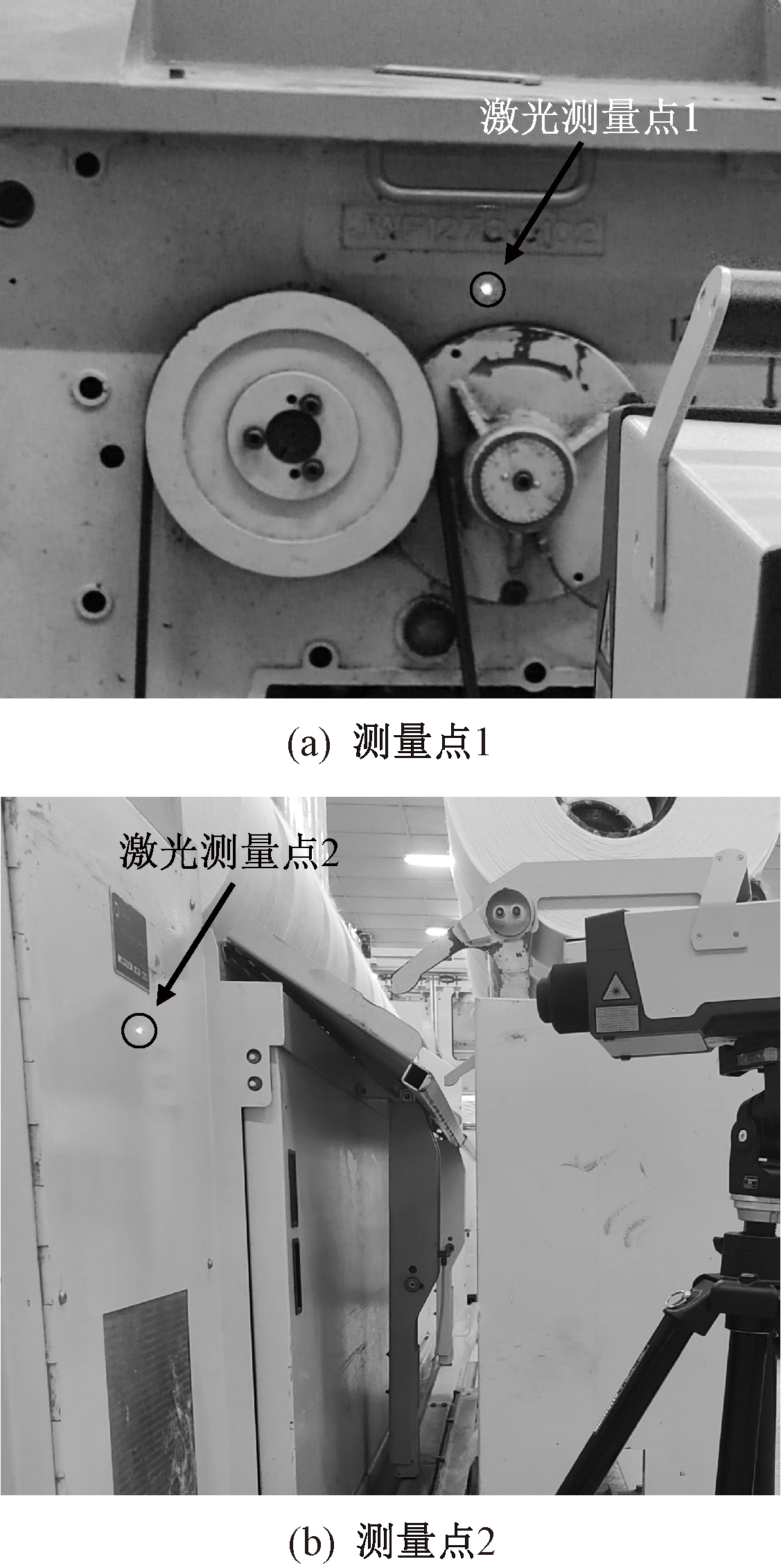
振动测量点位置"

图7

不同车速的振动位移"

表2

直齿轮系统的其它参数"

初始中心
d0/mm
轴承刚度/
(N·m-1)
轴承阻尼/
(N·s·m-1)
初始重
合度
误差幅度
ea/μm
188.75 1.0×10⁸ 512.64 1.810 22 20

图8

不同初始间隙的振动位移"

表3

最小振动位移下的初始齿隙"

车速/
(钳次·min-1)
初始齿隙
b0/μm
车速/
(钳次·min-1)
初始齿隙
b0/μm
450 6.0~6.5 510 2.0~3.5
460 4.5~6.5 520 1.5~4.5
470 3.5~6.0 530 12.5~24
480 3.0~5.5 540 11.5~22
490 2.5~5.5 550 10.5~21
500 2.0~5.0
[1] 任家智, 马驰, 张一风, 等. 高速节能精梳技术的研究与应用[J]. 纺织学报, 2013, 34(2): 141-145.
REN Jiazhi, MA Chi, ZHANG Yifeng, et al. Research and application of high-speed and energy-saving combing technology[J]. Journal of Textile Research, 2013, 34(2): 141-145.
[2] 李留涛, 贾国欣, 任家智. 精梳机分离罗拉传动机构的平衡优化[J]. 纺织学报, 2015, 36(8): 133-138.
LI Liutao, JIA Guoxin, REN Jiazhi. Balance optimization based on detaching roller transmission mechanism of combing machine[J]. Journal of Textile Research, 2015, 36(8): 133-138.
[3] 任家智, 高卫东, 谢春萍, 等. 棉精梳机分离罗拉顺转定时对棉网均匀度的影响[J]. 纺织学报, 2014, 35(3): 127-131.
REN Jiazhi, GAO Weidong, XIE Chunping, et al. Influence of forward motion timing of comber detaching roller on evenness of cotton web[J]. Journal of Textile Research, 2014, 35(3): 127-131.
[4] 陈宇恒, 高卫东, 任家智. 精梳机分离牵伸力在线检测与规律分析[J]. 纺织学报, 2022, 43(8): 1-6.
CHEN Yuheng, GAO Weidong, REN Jiazhi. On-line detection and pattern analysis of separation drafting force in comber[J]. Journal of Textile Research, 2022, 43(8): 1-6.
doi: 10.1177/004051757304300101
[5] LI X R, JIANG X M, YANG J C, et al. Study on flock detaching motion of a cotton comber[J]. The Journal of the Textile Institute, 2014, 105(8): 789-793.
doi: 10.1080/00405000.2013.861150
[6] MENG Z, SHI G X, WANG F L. Vibration response and fault characteristics analysis of gear based on time-varying mesh stiffness[J]. Mechanism and Machine Theory, 2020, 148: 103786.
doi: 10.1016/j.mechmachtheory.2020.103786
[7] CHEN Z, JIANG Y B, LI S, et al. Effect of lubricant viscosity on dynamics of high-precision gear considering lubricant-induced backlash reduction[J]. Tribology International, 2022, 168: 107447.
doi: 10.1016/j.triboint.2022.107447
[8] CHEN Z, JIANG Y B, LI S, et al. Uncertainty propagation of correlated lubricant properties in gear tribodynamic system[J]. Tribology International, 2023, 179: 107812.
doi: 10.1016/j.triboint.2022.107812
[9] LU R X, TANG W C. Analytical calculation models for mesh stiffness and backlash of spur gears under temperature effects[J]. Proceedings of the Institution of Mechanical Engineers, Part C: Journal of Mechanical Engineering Science, 2022, 236(8): 4450-4462.
doi: 10.1177/09544062211049860
[10] SHI J F, GOU X F, ZHU L Y. Calculation of time-varying backlash for an involute spur gear pair[J]. Mechanism and Machine Theory, 2020, 152: 103956.
doi: 10.1016/j.mechmachtheory.2020.103956
[11] LEI D C, KONG X N, CHEN S Y, et al. Numerical and experimental investigation of a spur gear pair with unloaded static transmission error[J]. Engineering Computations, 2021, 38(6): 2461-2480.
doi: 10.1108/EC-02-2020-0072
[12] YANG D C H, LIN J Y. Hertzian damping, tooth friction and bending elasticity in gear impact dyna-mics[J]. Journal of Mechanisms, Transmissions, and Automation in Design, 1987, 109(2): 189-196.
doi: 10.1115/1.3267437
[13] SAINSOT AND P, VELEX P, DUVERGER O. Contribution of gear body to tooth deflections: a new bidimensional analytical formula[J]. Journal of Mechanical Design, 2004, 126(4): 748-752.
doi: 10.1115/1.1758252
[1] 王旭真, 任家智, 贾国欣, 杨天琪, 李季平. 精梳过程中棉短纤排除机制及实验研究[J]. 纺织学报, 2025, 46(10): 54-61.
[2] 畅博彦, 韩芳孝, 周杨, 关鑫. 精梳机钳板机构接触碰撞动力学建模与仿真[J]. 纺织学报, 2025, 46(01): 179-186.
[3] 刘金儒, 李新荣, 王建坤, 王浩, 师帅星, 王彪. 精梳机分离罗拉齿轮传动机构优化[J]. 纺织学报, 2024, 45(03): 177-184.
[4] 刘金儒, 李新荣, 王浩, 师帅星. 棉精梳机分离罗拉混合驱动系统优化[J]. 纺织学报, 2023, 44(11): 190-198.
[5] 冯清国, 巫鳌飞, 任家智, 陈宇恒. 棉纺精梳机分离罗拉连杆驱动机构动力学仿真及有限元分析[J]. 纺织学报, 2023, 44(09): 197-204.
[6] 陈宇恒, 高卫东, 任家智. 精梳机分离牵伸力在线检测与规律分析[J]. 纺织学报, 2022, 43(08): 1-6.
[7] 梁灼, 贾国欣, 任家智, 李金键. 棉纺精梳机钳板的变形及其应力分析[J]. 纺织学报, 2021, 42(12): 145-150.
[8] 李金键, 任家智, 梁灼, 贾国欣. 棉纺精梳机钳板摆轴的动力学分析[J]. 纺织学报, 2021, 42(06): 160-165.
[9] 刘立东, 李新荣, 杨海鹏, 卜兆宁. 棉精梳机分离罗拉伺服驱动研究[J]. 纺织学报, 2020, 41(01): 158-164.
[10] 杨海鹏, 李新荣, 吕鹏飞, 王振宇. 采用混合驱动的精梳机分离罗拉传动机构[J]. 纺织学报, 2019, 40(04): 122-128.
[11] 李留涛 贾国欣 任家智. 精梳机分离罗拉传动机构的平衡优化[J]. 纺织学报, 2015, 36(08): 133-138.
[12] 王晓维 周国庆 李新荣. 棉精梳机钳板开闭口时间的研究[J]. 纺织学报, 2015, 36(07): 121-125.
[13] 任家智 高卫东 谢春萍 陈宇恒. 棉精梳机分离罗拉顺转定时对棉网均匀度的影响[J]. 纺织学报, 2014, 35(3): 127-0.
[14] 任家智 马驰 张一风 冯清国. 高速节能精梳技术的研究与应用[J]. 纺织学报, 2013, 34(2): 141-145.
[15] 毛立民 谢征恒 李兆旗 侯春杰. 一种全新概念的并行梳理精梳机[J]. 纺织学报, 2013, 34(12): 113-0.
Viewed
Full text


Abstract

Cited

  Shared   
  Discussed   
No Suggested Reading articles found!