纺织学报 ›› 2026, Vol. 47 ›› Issue (04): 1-8.doi: 10.13475/j.fzxb.20250900701
• 纤维材料 • 下一篇
郭成志1,2, 李众3, 刘永胜3, 乔小兰1,2( ), 朱美芳1,2
GUO Chengzhi1,2, LI Zhong3, LIU Yongsheng3, QIAO Xiaolan1,2(), ZHU Meifang1,2
摘要:
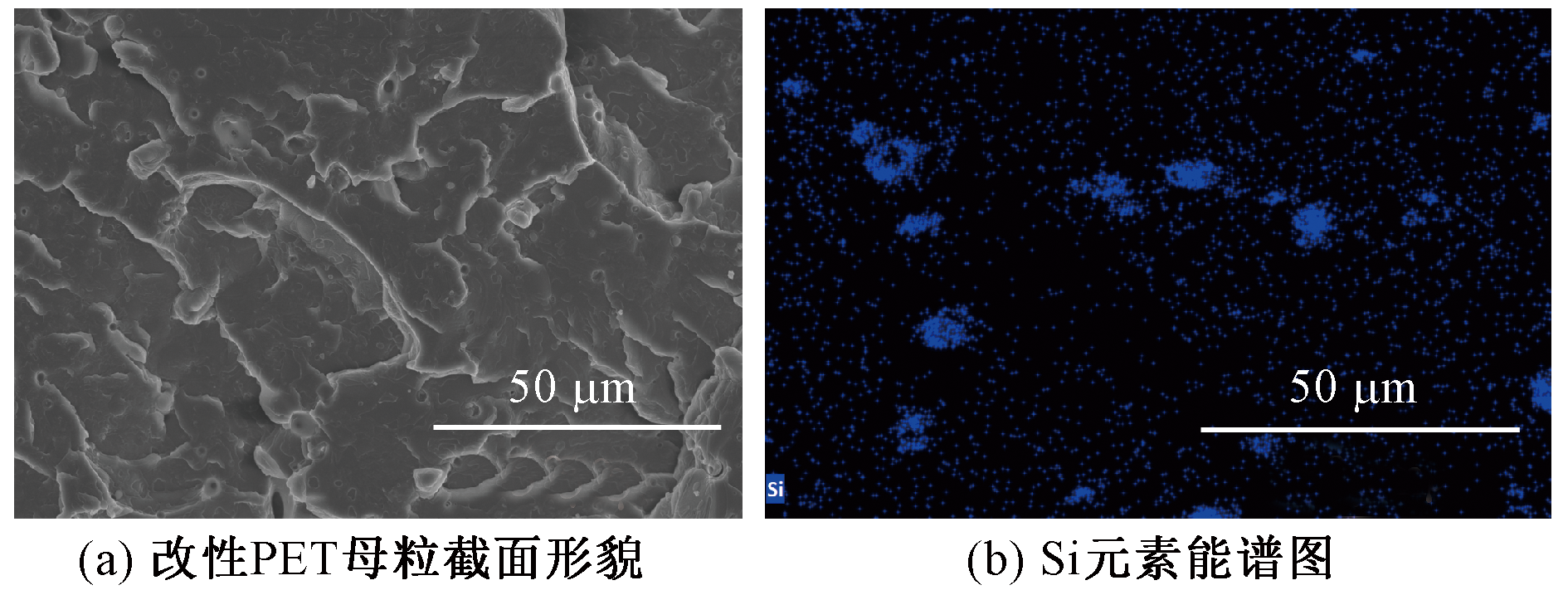
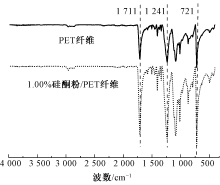
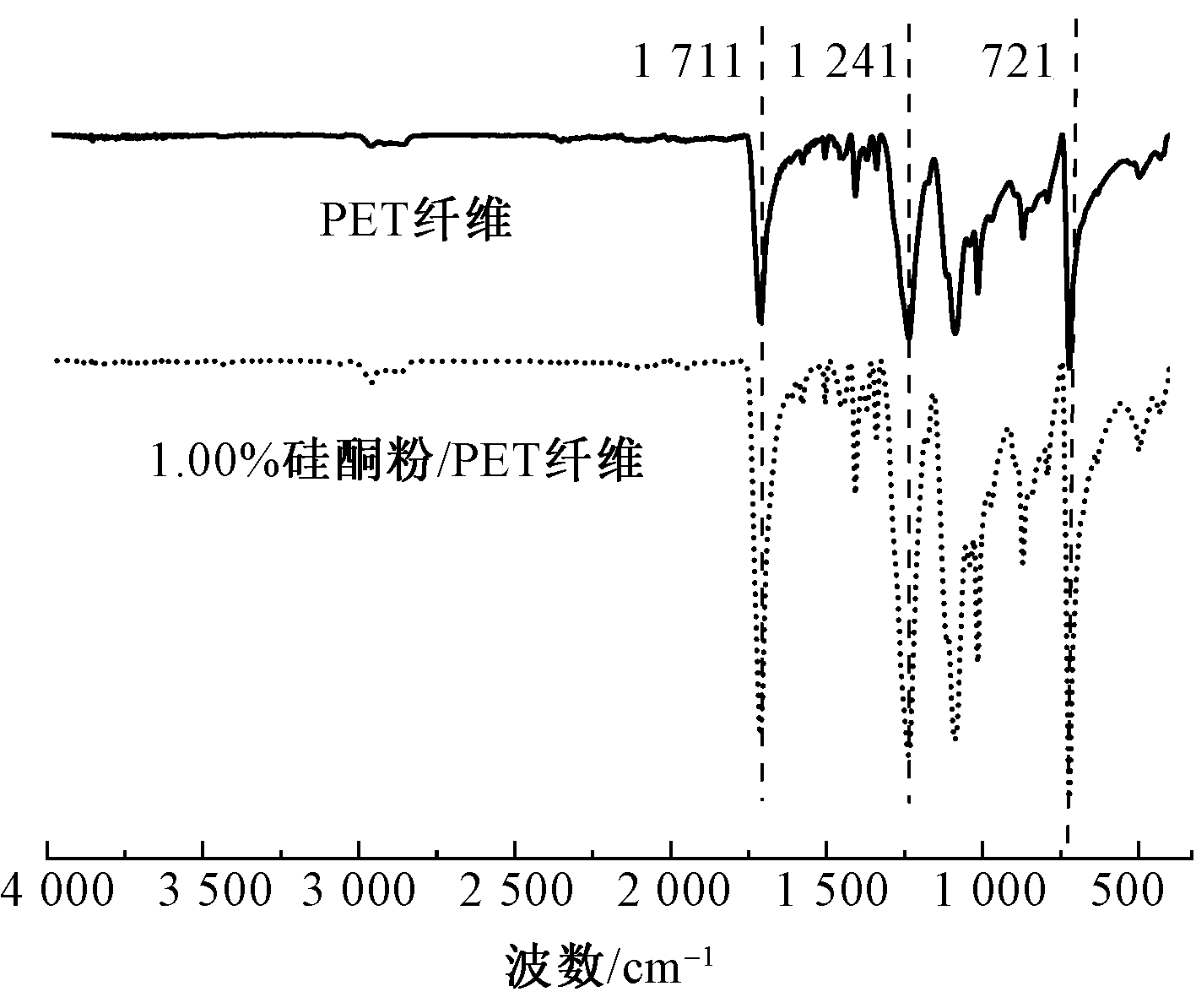
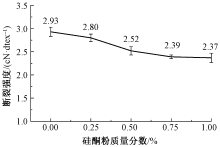
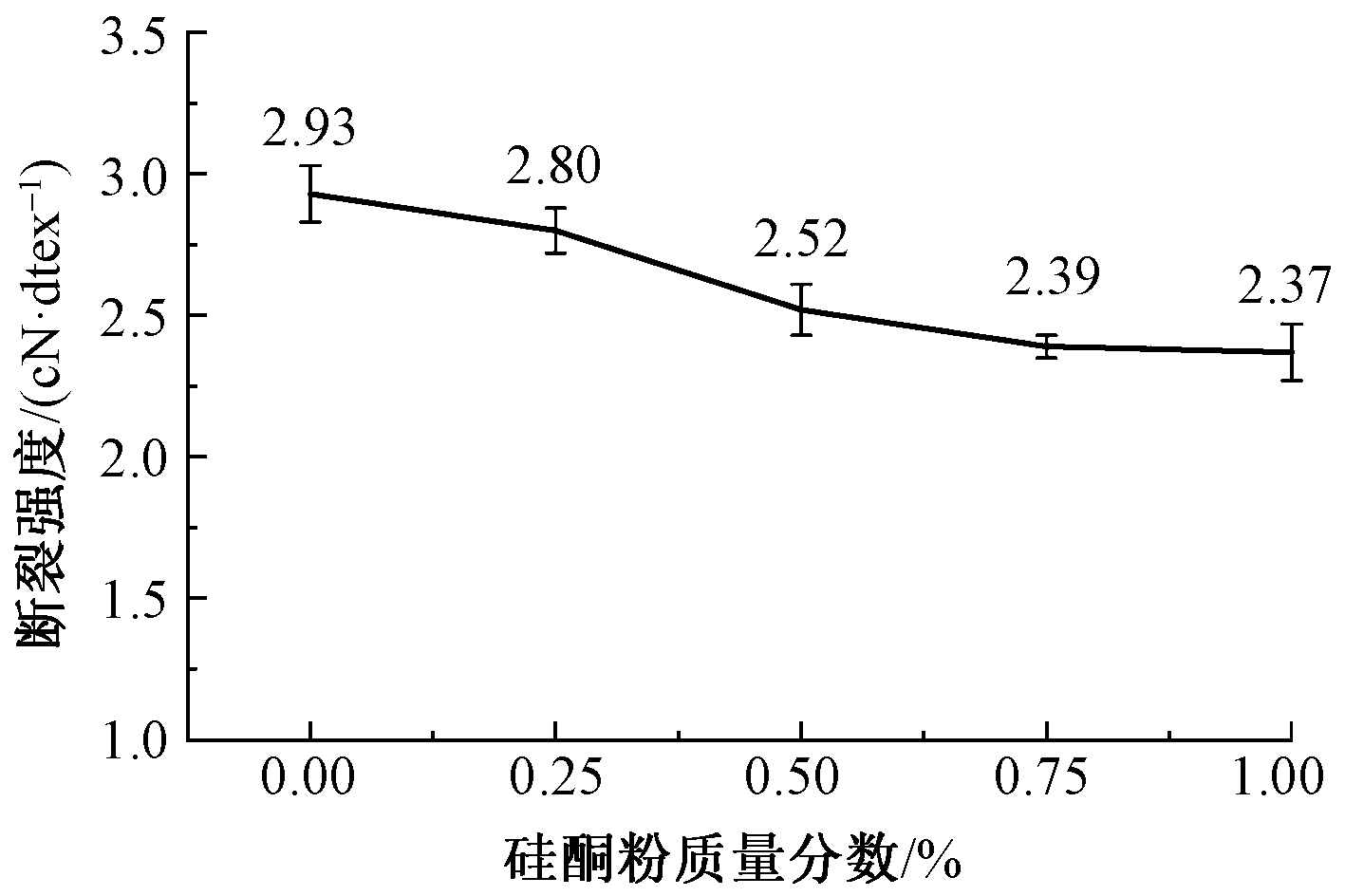
为提高聚对苯二甲酸乙二醇酯(PET)纤维的抗起毛起球性能,改善其织物的外观质量,将硅酮粉与PET共混,通过双螺杆挤出机制备了硅酮粉改性PET母粒,并进一步通过熔融纺丝工艺制备了不同硅酮粉质量分数的改性PET纤维。采用安东帕高温旋转流变仪和熔融指数测试仪考察了改性前后PET母粒的流变性能与加工性能;利用扫描电子显微镜、X射线光电子能谱、傅里叶变换红外光谱、电子万能材料试验机、马丁代尔织物起毛起球仪及纤维摩擦因数测试仪,对改性前后PET母粒、纤维及织物的结构、力学性能、抗起毛起球性能和表面摩擦特性进行了系统表征。结果表明:硅酮粉在PET母粒中分布均匀,对PET纤维的微观形貌和化学结构未产生明显影响;当硅酮粉质量分数为1.00%时,改性PET纤维的断裂强度仍保持在2.37 cN/dtex;改性PET织物的抗起毛起球性能随硅酮粉质量分数的增加呈现先上升后下降再上升的趋势,在硅酮粉质量分数为1.00%时,抗起毛起球等级达到4级,较纯PET织物提高1~2级;此外,改性PET纤维的摩擦因数明显低于纯PET纤维,表明硅酮粉的引入有助于改善纤维的表面润滑性。
中图分类号:
| [1] | 顾镓渝. 合成纤维性能优势及其在运动领域的应用[J]. 塑料助剂, 2023(1): 39-43. |
| GU Jiayu. Performance advantages of synthetic fiber and its application in sports field[J]. Plastic Additives, 2023(1): 39-43. | |
| [2] | 龚杜弟, 李梦楠. 汽车用纺织品的应用现状及发展趋势[J]. 纺织导报, 2021(8): 22-27. |
| GONG Dudi, LI Mengnan. Application status and trends of automotive textiles[J]. China Textile Leader, 2021(8): 22-27. | |
| [3] |
GAO K Z, HU D, WANG S W, et al. Application of cerium phosphate in preparing anti-ultraviolet PET fibers with masterbatch method[J]. Journal of Polymer Research, 2020, 27(12): 361.
doi: 10.1007/s10965-020-02324-w |
| [4] |
ZHU Y M, WANG Y, SHA L, et al. Preparation of antimicrobial fabric using magnesium-based PET masterbatch[J]. Applied Surface Science, 2017, 425: 1101-1110.
doi: 10.1016/j.apsusc.2017.07.044 |
| [5] |
DASTJERDI R, MOJTAHEDI M R M, TAVANAIE M A. High-speed spun PET nanocomposites for smart multifunctional approaches[J]. Advances in Polymer Technology, 2018, 37(1): 84-93.
doi: 10.1002/adv.2018.37.issue-1 |
| [6] |
邬淑芳, 张亭亭, HASAN Md Rokibul, 等. 涤纶网络丝仿麻织物的摩擦性能[J]. 纺织学报, 2019, 40(10): 134-140.
doi: 10.13475/j.fzxb.20180605107 |
|
WU Shufang, ZHANG Tingting, HASAN Md Rokibul, et al. Improvement of friction performance of polyester interlacement yarn linen-like fabric[J]. Journal of Textile Research, 2019, 40(10): 134-140.
doi: 10.13475/j.fzxb.20180605107 |
|
| [7] | 熊知智, 温润, 徐广标. 涤纶仿真丝织物起毛起球性能及其影响因素[J]. 丝绸, 2020, 57(9): 22-26. |
| XIONG Zhizhi, WEN Run, XU Guangbiao. Pilling performance and influencing factors of polyester silk-like fabric[J]. Journal of Silk, 2020, 57(9): 22-26. | |
| [8] | 徐炜, 周向东. 有机硅改性聚氨酯抗起毛起球整理剂的合成及应用[J]. 印染助剂, 2018, 35(2): 18-22. |
| XU Wei, ZHOU Xiangdong. Synthesis and application of polysiloxane modified polyurethane anti-pilling finishing agent[J]. Textile Auxiliaries, 2018, 35(2): 18-22. | |
| [9] | 周华. 一种抗起球的聚酯长丝的生产方法: CN111575809A[P]. 2020-08-25. |
| ZHOU Hua. A method for producing anti-pilling polyester filament: CN111575809A[P]. 2020-08-25. | |
| [10] | 安踏(中国)有限公司. 一种耐磨的抗起球纤维、其制备工艺及面料: CN202410783794.7[P]. 2024-09-10. |
| ANTA (China) Co., Ltd.. A wear-resistant, pilling-resistant fiber, its preparation process, and fabric: CN202410783794.7[P]. 2024-09-10. | |
| [11] | 唐帅, 钱志国, 王海强, 等. 有机硅PDMS对PBT/IFR/GF复合材料性能的影响[J]. 塑料工业, 2019, 47(2): 59-63. |
| TANG Shuai, QIAN Zhiguo, WANG Haiqiang, et al. Effect of organosilicon PDMS on properties of PBT/IFR/GF composites[J]. China Plastics Industry, 2019, 47(2): 59-63. | |
| [12] | 李会, 吴国忠, 杨俊杰, 等. 聚四氟乙烯微粉与硅酮粉在尼龙66中的耐磨效果比较[J]. 有机氟工业, 2018(1): 16-19, 64. |
| LI Hui, WU Guozhong, YANG Junjie, et al. Comparison of the wear resistance performance of PTFE powder and silicone powder in nylon 66[J]. Organo-Fluorine Industry, 2018(1): 16-19, 64. | |
| [13] | 柳毅琨, 邱志成, 刘静, 等. 易染色聚酯熔体的流变性能[J]. 纺织学报, 2015, 36(7): 1-6. |
|
LIU Yikun, QIU Zhicheng, LIU Jing, et al. Rheological behavior of dyeable polyester melt[J]. Journal of Textile Research, 2015, 36(7): 1-6.
doi: 10.1177/004051756603600101 |
|
| [14] | 刘杰, 高阳, 秦升学, 等. 硅酮粉改性超高分子量聚乙烯及其熔体纺丝加工性能[J]. 工程塑料应用, 2024, 52(3): 28-32. |
| LIU Jie, GAO Yang, QIN Shengxue, et al. Silicone powder modified ultra-high molecular weight polyethylene and its melt-spinning processability[J]. Engineering Plastics Application, 2024, 52(3): 28-32. | |
| [15] |
MAMUN KABIR S M, RAHMAN M M, HONG I, et al. Comparative characterization and dyeing properties of poly(ethylene terephthalate-co-polyethylene glycol) fibers and poly(ethylene terephthalate) fibers[J]. Polymer, 2024, 311: 127488.
doi: 10.1016/j.polymer.2024.127488 |
| [16] | 明贺娜, 赵鹏, 张宝予, 等. 抗菌聚酯纤维的制备及性能[J]. 印染, 2024, 50(12): 51-54. |
| MING Hena, ZHAO Peng, ZHANG Baoyu, et al. Preparation and properties of antibacterial polyester fiber[J]. China Dyeing & Finishing, 2024, 50(12): 51-54. | |
| [17] | 宋玲玲. 毛纺产品起毛起球现象的影响因素及检测方法[J]. 纺织检测与标准, 2024, 10(1): 4-7. |
| SONG Lingling. Influencing factors and detection methods of pilling in wool textile products[J]. Textile Testing and Standard, 2024, 10(1): 4-7. |
| [1] | 乔思杰, 邢桐贺, 童爱心, 史芷丞, 潘恒, 刘可帅, 余豪, 陈凤翔. 不同聚乳酸材料的性能对比[J]. 纺织学报, 2025, 46(03): 27-33. |
| [2] | 王文, 张乐乐, 黄阳杰, 谭浩, 方舒婷, 向晨雪, 王栋. 聚乙烯醇-乙烯/SiO2复合柔性驱动膜的制备及其性能[J]. 纺织学报, 2024, 45(07): 10-17. |
| [3] | 孙福;钱建华;凌荣根;杨斌;孙艳秋;郭城越;王铁军. 炭黑复合导电聚酯纤维的研制[J]. 纺织学报, 2010, 31(1): 1-4. |
| [4] | 凌荣根;孙福;钱建华;马立东;袁文冲;冯家骏. 皮芯负氧离子涤纶长丝的研制[J]. 纺织学报, 2009, 30(12): 5-8. |
| [5] | 孙福;钱建华;凌荣根;张国庆;孙艳秋;王铁军. 导电炭黑/聚酯复合材料的等温结晶行为[J]. 纺织学报, 2009, 30(11): 24-28. |
| [6] | 刘 亚;李 静;朱正孝. PP抗光氧老化纺粘非织物布的开发及其性能[J]. 纺织学报, 2009, 30(05): 48-51. |
| [7] | 孙福;张国庆;孙艳秋. 导电炭黑/聚酯复合材料的性能[J]. 纺织学报, 2008, 29(10): 9-11. |
| [8] | 曹欣羊;钱樟宝;段亚峰;赵江峰. 有色涤纶丝的色母粒测配色与纺丝技术[J]. 纺织学报, 2007, 28(6): 35-39. |
| [9] | 石建恒;郭振福;高绪珊;童俨. 白色导电涤纶的开发[J]. 纺织学报, 2007, 28(12): 16-18. |
|
||
 京公网安备11010502044800号