纺织学报 ›› 2024, Vol. 45 ›› Issue (11): 193-198.doi: 10.13475/j.fzxb.20240104201

• 服装工程 • 上一篇    下一篇

人体对干燥和含水织物的接触感知对比研究

张昭华1,2, 羊悦1, 倪军1(), 张旭1   

  1. 1.东华大学 服装与艺术设计学院, 上海 210051
    2.东华大学 高性能纤维及制品教育部重点实验室, 上海 201620
  • 收稿日期:2024-01-22 修回日期:2024-07-11 出版日期:2024-11-15 发布日期:2024-12-30
  • 通讯作者: 倪军(1972—),女,教授。主要研究方向为服装与服饰设计。E-mail:nj2000@dhu.edu.cn
  • 作者简介:张昭华(1977—),女,副教授,博士。主要研究方向为服装舒适性与功能服装。
  • 基金资助:
    上海市自然科学基金面上项目(22ZR1403100);中央高校基本科研业务费专项资金资助项目(2232023G-02)

Comparative analysis of contact perception between dry and wet fabrics

ZHANG Zhaohua1,2, YANG Yue1, NI Jun1(), ZHANG Xu1   

  1. 1. College of Fashion and Design, Donghua University, Shanghai 200051, China
    2. Key Laboratory of High Performance Fibers and Products, Ministry of Education, Donghua University, Shanghai 201620, China
  • Received:2024-01-22 Revised:2024-07-11 Published:2024-11-15 Online:2024-12-30

摘要: 为探究干态织物与湿态织物在达到同等皮肤冷却时所产生的触觉感知是否一致,设计了3组皮肤冷却下的对照实验。通过对比各组织物在与皮肤动态接触下的冷/暖、光滑/粗糙、干/湿感觉评分,分析了感知差异产生的原因。结果表明:在皮肤冷却至0.9 ℃和1.2 ℃ 条件下,干织物的冷感显著强于同组湿织物;在皮肤冷却至0.9 ℃条件下,织物的光滑/粗糙感、干/湿感评分不存在显著差异,说明此时织物的干湿状态不足以使光滑/粗糙感和干/湿感产生显著变化;在皮肤冷却至1.2 ℃和1.4 ℃条件下,湿织物的光滑/粗糙感、干/湿感显著强于同组干织物,说明织物含水量较大时,与皮肤的黏附力增加,进而增强了粗糙感和湿感觉。因此,无水参与的情况下,干织物通过降温可以产生湿感觉。但仅降低干织物的温度,其湿感强度仍低于同组湿织物。

关键词: 湿感觉, 接触感知, 干织物, 湿织物, 主观评价, 皮肤温度

Abstract:

Objective The production of skin moisture perception does not necessarily require water; however, contact with dry and cold fabrics can also induce a wet perception due to skin cooling. Nevertheless, no comparative analysis of the subjective feeling when using the same fabric with consistent skin cooling has been proposed. This research aims to explore the influence of dry and wet fabrics on subjective perception by controlling for an equal amount of skin temperature drop.

Method The pre-test determined the amount of water added to the wet fabric when the skin cooling was equivalent to that of the dry fabric. Three groups of controlled skin cooling experiments were designed, with skin cooling set at 0.9 ℃ (produced by contacting 18 ℃ dry fabric or wet fabric with 2 mL water added), 1.2 ℃ (produced by contacting 13 ℃ dry fabric or wet fabric with 12 mL water added) and 1.4 ℃ (produced by contacting 8 ℃ dry fabric or wet fabric with 16 mL water added), respectively. Sixteen subjects were invited to touch fabrics from each of the three different groups and report their subjective sensation scores for cold/warmth, dryness/wet ness and smooth ness/roughness.

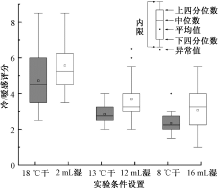
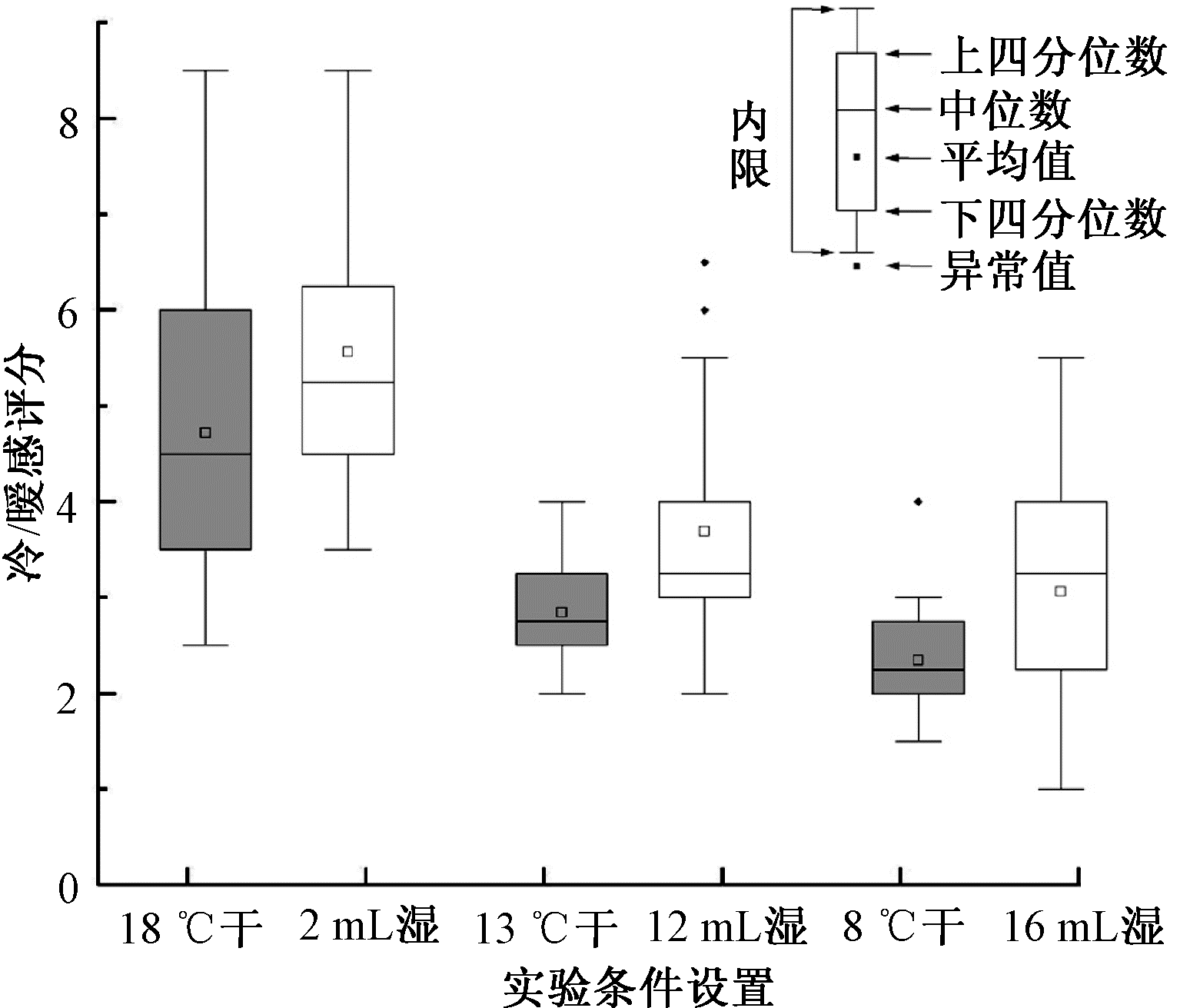
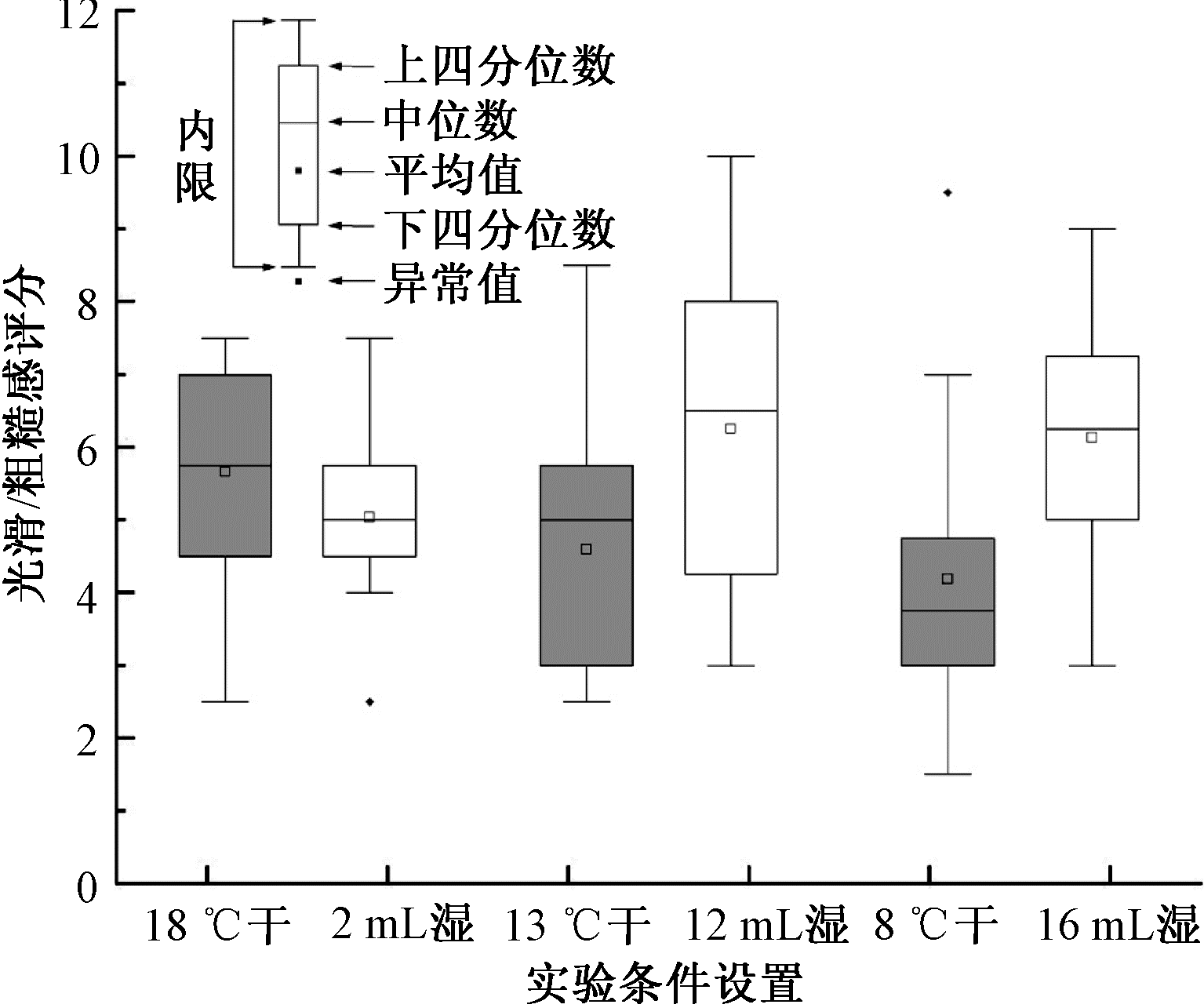
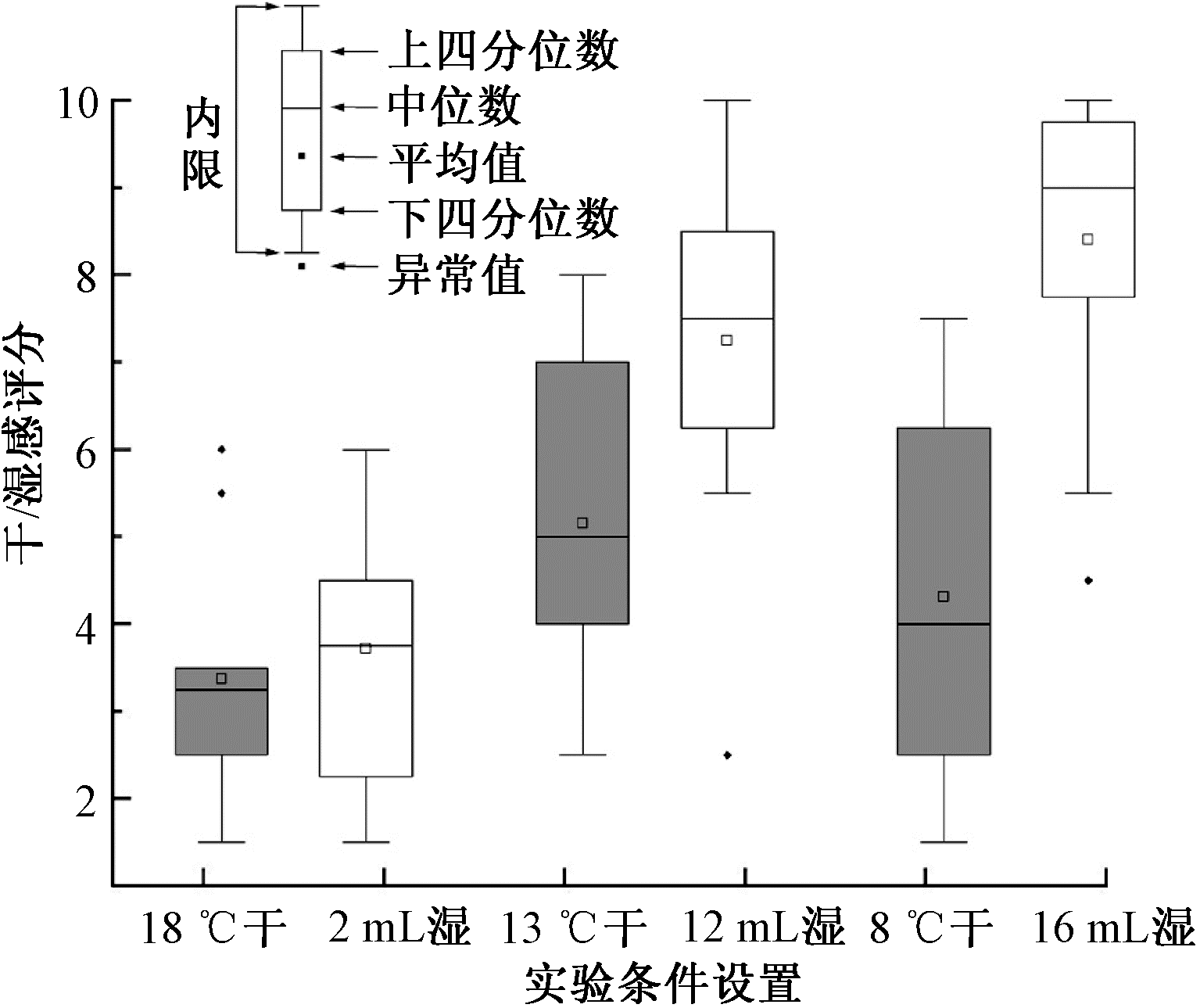
Results The Wilcoxon non-parametric test results were conducted on the two associated samples. It was found that the cold sensation of dry fabric at 18 ℃ was significantly stronger than that of the wet fabric with 12 mL water (Z=-2.961, P=0.003). Additionally, the dry fabric at 13 ℃ had a significantly stronger cold sensation compared to the wet fabric with 12 mL (Z=-2.456, P=0.014), but no significant difference existed between the dry fabric at 8 ℃ and the wet fabric with 16 mL water (Z=-1.611, P=0.107). No significant difference existed in roughness sensation between the dry fabric at 18 ℃ and the wet fabric with 2 mL water (Z=-1.459, P=0.145), while roughness of the dry fabric at 13 ℃ was significantly lower than that of the wet fabric with 12 mL (Z=-2.645, P=0.008), and roughness of the dry fabric at 8 ℃ was significantly lower than that of the wet fabric with 16 mL water (Z=-2.646, P=0.008). The wet sensation scores showed no significant difference between the dry fabric at 18 ℃ and the wet fabric with 2 mL water (Z=-0.656, P=0.512), while the wet feeling of the wet fabric with 12 mL water was significantly stronger than that of the dry fabric at 13 ℃ (Z=-2.616, P=0.009), and the same was found between wet sensation of the wet fabric with 16 mL water and the dry fabric at 8 ℃(Z=-3.339, P=0.001). Specifically, when the skin temperature drop increased to approximately 1.2 ℃ and 1.4 ℃, the wetness of the wet fabric was significantly stronger. The Friedman test was adopted to further analyze changes in the wetness of both dry and wet fabrics with temperature and water addition. The perception of wetness in dry fabrics among the three groups showed significant differences (χ2=10.906, P=0.004), with a significantly stronger sensation of wetness in the dry fabric at 13 ℃ compared to that in the dry fabric at 18 ℃ (Sig.=1). Significant differences existed in perceived wetness among different groups for wet fabrics (χ2=24.875, P<0.001), where a lower sensation of wetness was observed for the wet fabric with 2 mL water compared to that for both the 12 mL and 16 mL soaked fabrics (Sig.=1).

Conclusion When the skin cooling is (0.965±0.015) ℃ and (1.165±0.015) ℃, the cold sensation of dry fabric is significantly stronger than that of wet fabric in the same group (P<0.05), indicating that a larger initial temperature difference makes it easier to experience a strong feeling of coldness. When the skin temperature consistently drops to(0.965±0.015) ℃, neither the dry nor wet state of the fabric significantly affects the perception of smoothness/roughness or dryness/wetness. In groups 2 and 3, wet fabrics feel rougher and wetter compared to dry fabrics, indicating that higher moisture content (12 mL, 16 mL) increases adhesion to the skin and enhances sensations of roughness and wetness. The comparative research of dry and water-containing fabrics enriches the theoretical basis of contact sensing characteristics. In the wetness reproduction device, the immersion feeling of wetness in the virtual world can be increased by reducing the contact temperature.

Key words: wetness sensation, contact perception, dry fabric, wet fabric, subjective evaluation, skin temperature

中图分类号: 

  • TS941.16

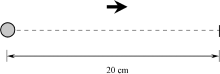
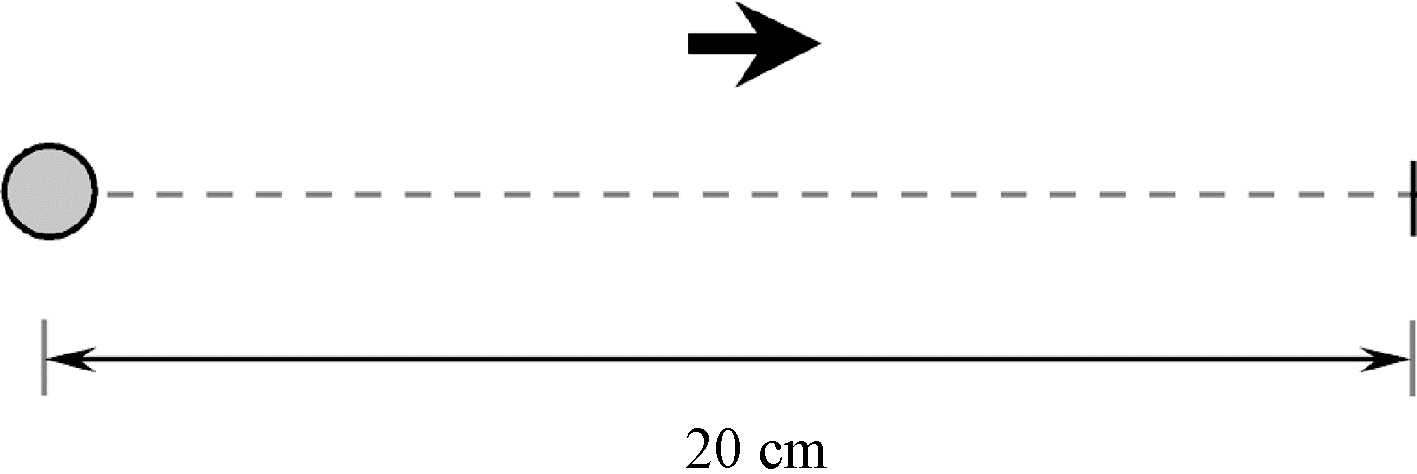
图1

动画示意图"

表1

干织物与湿织物对应温度与加水量"

皮温下降量/℃ 干织物温度/℃ 湿织物加水量/mL
0.9 18 2
1.2 13 12
1.4 8 16

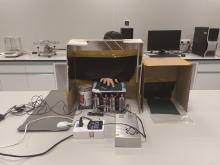
图2

实验场景图"

表2

Kendall's W 检验表"

感觉 Kendall's W χ2 Sig.
冷/暖 0.649 51.940 0.000
干/湿 0.593 47.427 0.000
粗糙/光滑 0.260 20.832 0.001

图3

冷/暖感觉评分"

图4

光滑/粗糙感觉评分"

图5

干/湿感觉评分"

[1] GATES D M, CLARK R P, EDHOLM O G. Man and his thermal environment[J]. Arctic and Alpine Research, 1986, 18(4): 445.
[2] ZHANG Z H, TANG X N, LI J, et al. The effect of dynamic friction with wet fabrics on skin wetness perception[J]. International Journal of Occupational Safety and Ergonomics, 2020, 26(2): 370-383.
doi: 10.1080/10803548.2018.1453023 pmid: 29537944
[3] KATO I, MASUDA Y, NAGASHIMA K. Characteri-stics of wet perception during the static touch of moist paper by the index fingertip alongside thermal stimulus application[J]. Physiology & Behavior, 2023, 258: 1-7.
[4] TANG K M, KAN C, FAN J. Assessing and predicting the subjective wetness sensation of textiles: subjective and objective evaluation[J]. Textile Research Journal, 2015, 85(8): 838-849.
[5] 张昭华, 唐香宁, 李俊, 等. 织物与皮肤动态接触下的湿感觉阈限与强度评价[J]. 纺织学报, 2021, 42(2): 93-100.
ZHANG Zhaohua, TANG Xiangning, LI Jun, et al. Threhold and intensity evaluation of skin wetness perception under dynamic contact with fabrics[J]. Journal of Textile Research, 2021, 42(2):93-100.
[6] CHAU K H, TANG K M, KAN C. Subjective wet perception assessment of fabrics with different drying time[J]. Royal Society Open Science, 2018, 5(8): 1-8.
[7] RACCUGLIA M, HODDER S, HAVENITH G. Human wetness perception in relation to textile water absorption parameters under static skin contact[J]. Textile Research Journal, 2017, 87(20): 2449-2463.
[8] MERRICK C, ROSATI R, FILINGERI D. The role of friction on skin wetness perception during dynamic interactions between the human index finger pad and materials of varying moisture content[J]. Journal of Neurophysiology, 2022, 127(3): 725-736.
doi: 10.1152/jn.00382.2021 pmid: 35044853
[9] FILINGERI D, FOURNET D, HODDER S, et al. Body mapping of cutaneous wetness perception across the human torso during thermo-neutral and warm environmental exposures[J]. Journal of Applied Physiology, 2014, 117(8): 887-897.
doi: 10.1152/japplphysiol.00535.2014 pmid: 25103965
[10] SHIBAHARA M, SATO K. Illusion of wet sensation by controlling temperature and softness of dry cloth[M]. Cham: Springer International Publishing, 2016: 371-379.
[11] PEIRIS R L, CHAN L, MINAMIZAWA K. Liquid reality: wetness sensations on the face for virtual reality[M]. Cham: Springer International Publishing,2018: 366-378.
[12] HAN T. Exploring wetness illusion on fingertips to enhance immersive experience in VR[C]// Proceedings of the 2020 CHI Conference on Human Factors in Computing Systems. Honolulu: ACM, 2020: 1-10.
[13] SHIBAHARA M, SATO K. Illusion of wetness by dynamic touch[J]. IEEE Transactions on Haptics, 2019, 12(4): 533-541.
doi: 10.1109/TOH.2019.2919575 pmid: 31150346
[14] SWEENEY M M, BRANSON D H. Sensorial comfort: part I: a psychophysical method for assessing moisture sensation in clothing[J]. Textile Research Journal, 1990, 60(7): 371-377.
[15] BAZHENOV S. Dissipation of energy by bulletproof aramid fabric[J]. Journal of Materials Science, 1997, 32(15): 4167-4173.
[1] 施楚, 李俊, 王云仪. 基于温度监测的糖尿病足预防性智能鞋袜研究进展[J]. 纺织学报, 2024, 45(07): 240-247.
[2] 谭轶丹, 张昭华, 李诗涵. 不同感官模态对织物湿感觉的影响[J]. 纺织学报, 2024, 45(06): 82-88.
[3] 丁小蝶, 唐虹, 高强, 张成蛟. 上躯干皮肤温度冷热变化与热量调节区划分[J]. 纺织学报, 2024, 45(05): 147-154.
[4] 柯莹, 林磊, 郑晴, 王宏付. 电加热服加热区域分布对人体热舒适感的影响[J]. 纺织学报, 2024, 45(04): 188-194.
[5] 程子琪, 卢业虎, 许静娴. 电热织物系统热传递模拟及其参数设计[J]. 纺织学报, 2024, 45(02): 206-213.
[6] 杜吉辉, 苏云, 刘广菊, 田苗, 李俊. 智能防寒手套温控系统设计及热舒适性研究[J]. 纺织学报, 2023, 44(04): 172-178.
[7] 陈莹, 宋泽涛, 郑晓慧, 姜延, 常素芹. 蒸发型降温服的降温性能研究[J]. 纺织学报, 2022, 43(11): 141-147.
[8] 张昭华, 陈之瑞, 李璐瑶, 肖平, 彭浩然, 张钰涵. 人体局部皮肤的气流敏感性及其影响因素[J]. 纺织学报, 2021, 42(12): 125-130.
[9] 牛梦雨, 潘姝雯, 戴宏钦, 吕凯敏. 医用防护服的热湿舒适性与人体疲劳度的关系[J]. 纺织学报, 2021, 42(07): 144-150.
[10] 张昭华, 唐香宁, 李俊, 李璐瑶. 织物与皮肤动态接触下的湿感觉阈限与强度评价[J]. 纺织学报, 2021, 42(02): 93-100.
[11] 黄倩倩, 李俊. 环境温度突变时人体热感觉变化机制研究进展[J]. 纺织学报, 2020, 41(04): 188-194.
[12] 郑晴, 王宏付, 柯莹, 李爽. 相变降温矿工服的设计与评价[J]. 纺织学报, 2020, 41(03): 124-129.
[13] 楚鑫鑫, 肖红, 范杰. 织物凉感等级的主客观评价及确定[J]. 纺织学报, 2019, 40(02): 105-113.
[14] 郑晶晶. 冬季用围巾保暖性能评价[J]. 纺织学报, 2017, 38(12): 129-134.
[15] 赵蒙蒙 宋晓霞. 通风服装对人体热舒适的影响[J]. 纺织学报, 2017, 38(10): 94-97.
Viewed
Full text


Abstract

Cited

  Shared   
  Discussed   
No Suggested Reading articles found!