纺织学报 ›› 2025, Vol. 46 ›› Issue (04): 162-170.doi: 10.13475/j.fzxb.20240905801
陈馨蔚1, 顾冰菲1,2, 田佳莉3, 周思凡1, 刘瑜希1, 刘金灵1, 易洁伦4, 孙玥1,2( )
)
CHEN Xinwei1, GU Bingfei1,2, TIAN Jiali3, ZHOU Sifan1, LIU Yuxi1, LIU Jinling1, YICK Kit-lun4, SUN Yue1,2()
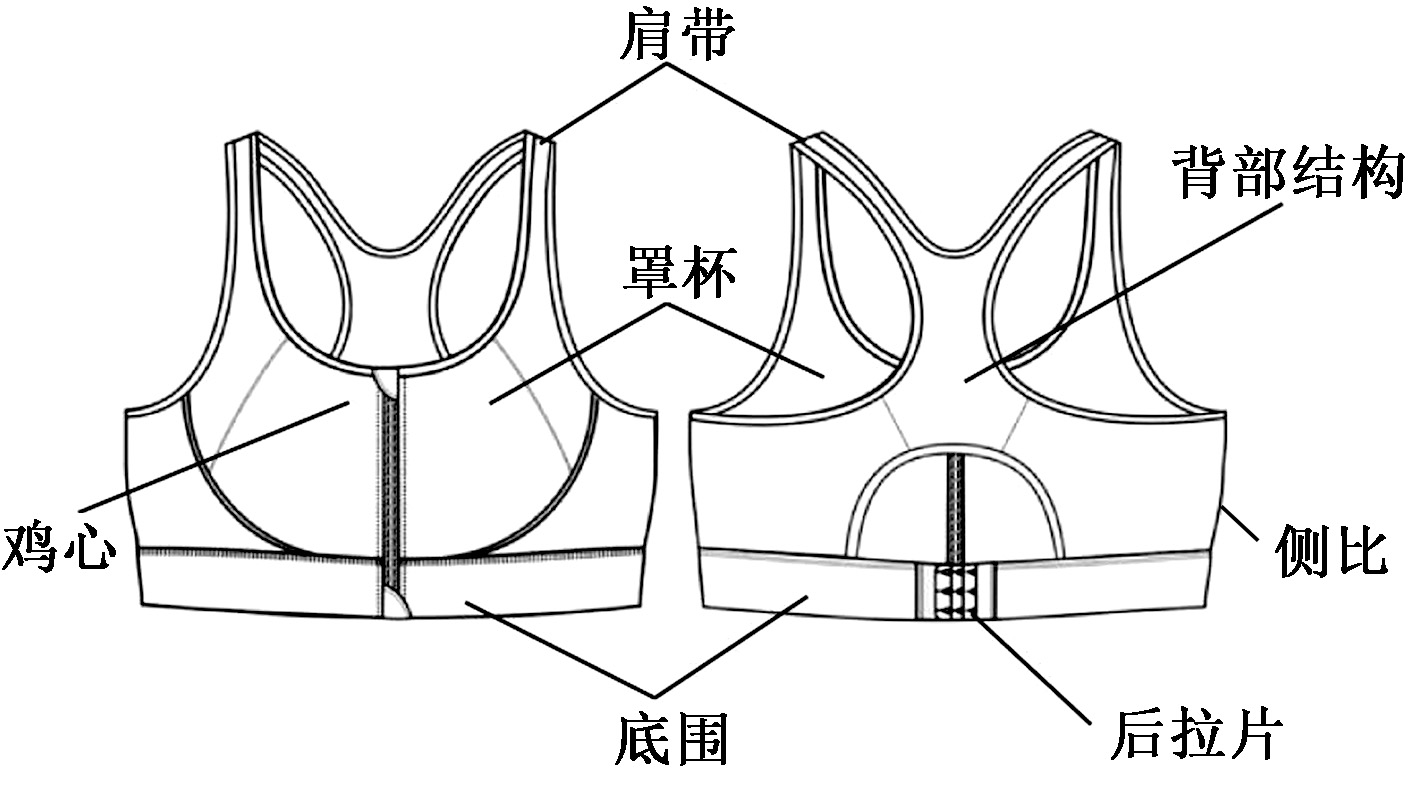
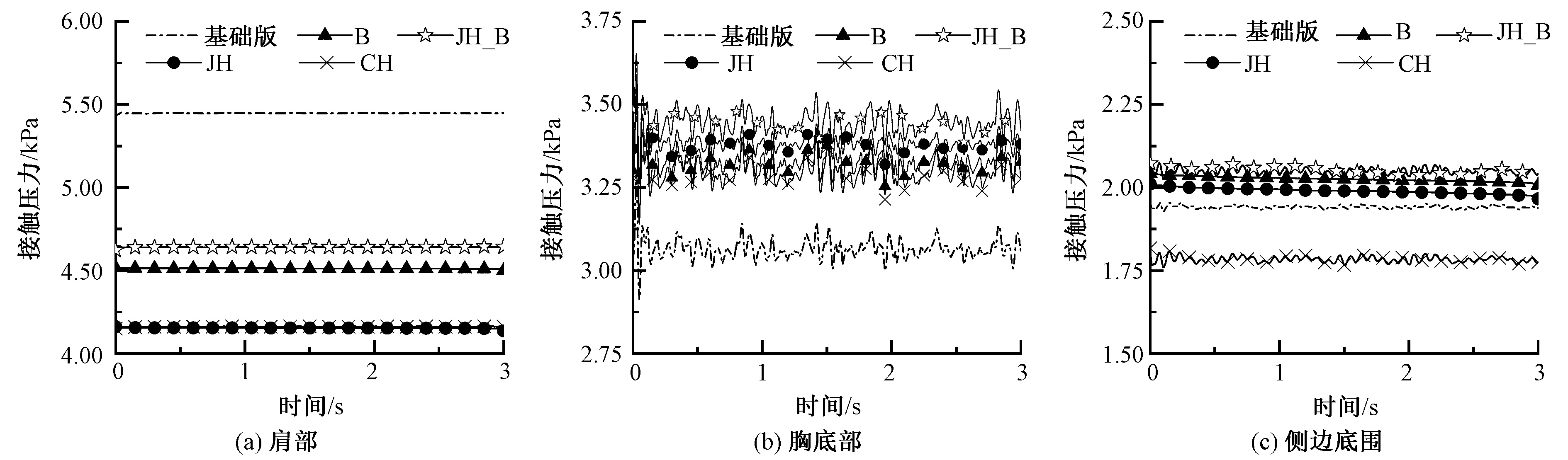
摘要: 为探究运动文胸结构设计参数对乳房位移控制及压力舒适性的影响,进一步优化运动文胸款式设计,提出了一种结合参数化设计和数值模拟仿真技术的方法,从运动文胸版型的数字化和人体生物力学建模仿真角度出发,通过选取鸡心高度、侧比高度和背部结构3种结构参数作为研究对象,分析设计参数对运动文胸性能的影响。结果表明:单独改变结构参数或同时改变鸡心高和背部结构均能有效影响抑制乳房位移效果和胸底部的动静态接触压力,最大运动控制效果可提升1.23%,且改变鸡心高度或背部结构(改为U型)时,不会抑制另一个参数的优化效果;此外,与文胸接触的人体部位,其动静态压力的最大值分布排序依次为肩部、胸底部、身体侧边与底围接触区域。本文提出的研究方法能够帮助运动文胸开发人员从功能性和舒适性角度更好地理解文胸结构性能,为消费者提供更加贴合身体且穿着舒适的运动文胸。
中图分类号:
| [1] | LEME J C, BANKS L D S, REIS Y B D, et al. Sports bra but not sports footwear decreases breast movement during walking and running[J]. Journal of Biomechanics, 2020. DOI:10.1016/j.jbiomech.2020.110 014. |
| [2] |
RISIUS D, MILLIGAN A, BERNS J, et al. Understanding key performance indicators for breast support: an analysis of breast support effects on biomechanical, physiological and subjective measures during running[J]. Journal of Sports Sciences, 2017, 35(9): 842-851.
doi: 10.1080/02640414.2016.1194523 pmid: 27291899 |
| [3] | NORRIS M, BLACKMORE T, HORLER B, et al. How the characteristics of sports bras affect their perfo-rmance[J]. Ergonomics, 2020, 64(3): 410-425. |
| [4] | 陈慧娴, 鲁虹, 李书洋, 等. 运动文胸结构设计要素对穿着舒适性的影响[J]. 纺织学报, 2019, 40(9): 159-166. |
| CHEN Huixian, LU Hong, LI Shuyang, et al. Influence of sports bra structural elements on wearing comfort[J]. Journal of Textile Research, 2019, 40(9): 159-166. | |
| [5] | LEE C W, YICK K L, NG S P, et al. Analysis of dynamic vertical breast displacement for the design of seamless moulded bras[J]. The Journal of The Textile Institute, 2021, 113(4): 637-646. |
| [6] | OCRAN F M, JI Xiaofen, ZHAI Lina. A study to evaluate pressure distribution of different sports bras[J]. Journal of Engineered Fibers and Fabrics, 2022. DOI:10.1177/15589250221118643. |
| [7] | 郑晶晶, 赵清瑶, 阎玉秀. 跑步运动中运动文胸对乳房振幅的影响[J]. 纺织学报, 2020, 41(3): 130-135. |
| ZHENG Jingjing, ZHAO Qingyao, YAN Yuxiu. Effect of sports bra on breast displacement amplitude during running[J]. Journal of Textile Research, 2020, 41(3): 130-135. | |
| [8] | 于莉君, 陈晓娜. 运动文胸下围围度对胸部位移的影响[J]. 时尚设计与工程, 2017(5):30-35. |
| YU Lijun, CHEN Xiaona. Effect of the sports bra circumference on the breast displacement[J]. The Journal of Fashion Design and Engineering, 2017(5):30-35. | |
| [9] | 范玉婷, 丁波, 王兆芳, 等. 底围宽度对运动文胸压力舒适性的影响[J]. 毛纺科技, 2023, 51(2): 77-83. |
| FAN Yuting, DING Bo, WANG Zhaofang, et al. Effect of bottom width on pressure comfort of sports bra[J]. Wool Textile Journal, 2023, 51(2): 77-83. | |
| [10] | 薛萧昱, 何佳臻, 王敏. 三维虚拟试衣技术在服装设计与性能评价中的应用进展[J]. 现代纺织技术, 2023, 31(2): 12-22. |
| XUE Xiaoyu, HE Jiazhen, WANG Min. Application progress of 3D virtual fitting technology in fashion design and performance evaluation[J]. Advanced Textile Technology, 2023, 31(2): 12-22. | |
| [11] | CHENG Z, KUZMICHEV V, ADOLPHE D. A digital replica of male compression underwear[J]. Textile Research Journal, 2019, 90(7/8): 877-895. |
| [12] | HORIBA Y, AMANO T, INUI S, et al. Proposal of method for estimating clothing pressure of tight-fitting garment made from highly elastic materials: hybrid method using apparel CAD and finite element analysis software[J]. Journal of Fiber Science and Technology, 2021, 77(2): 76-87. |
| [13] | 余玉坤, 孙玥, 侯珏, 等. 单层服装间隙量的动态有限元模型构建与仿真[J]. 纺织学报, 2022, 43(4): 124-132. |
| YU Yukun, SUN Yue, HOU Jue, et al. Dynamic finite element modeling and simulation of single layer clothing ease allowance[J]. Journal of Textile Research, 2022, 43(4): 124-132. | |
| [14] | ZHU C L. Establishment of the finite element model of human body wearing sports bra[C]// LONG W, YING B A, QI J. Textile Bioengineering and Informatics Symposium (TBIS) Proceedings.[n.l.]: Electr Network, 2020:167-172. |
| [15] | SUN Y, YICK K L, YU W, et al. 3D bra and human interactive modeling using finite element method for bra[J]. Computer: Aided Design, 2019, 114:13-27. |
| [16] | SUN Y, YICK K L, CAI Y Q, et al. Finite element analysis on contact pressure and 3D breast deformation for application in women's bras[J]. Fibers and Polymers, 2021, 22(10): 2910-2921. |
| [17] | LIANG R X, YIP J, YU W, et al. Finite element-based machine learning method to predict breast displacement during running[J]. AATCC Journal of Research, 2022, 8(S1): 69-74. |
| [18] | LIU S Y, SUN G W, ZUO H F, et al. Predicting the effect of bra pad specifications on breast deformation during jumping using a finite element method[J]. International Journal of Clothing Science and Technology, 2023, 35(5): 779-798. |
| [19] | ZHANG S C, YICK K L, CHEN L H, et al. Finite-element modelling of elastic woven tapes for bra design applications[J]. The Journal of The Textile Institute, 2020, 111(10): 1470-1480. |
| [20] | GOLBAD S, HAGHPANAHI M. Hyperelastic model selection of tissue mimicking phantom undergoing large deformation and finite element modeling for elastic and hyperelastic material properties[J]. Advanced Materials Research, 2012, 415: 2116-2120. |
| [21] |
SAMANI A, BISHOP J, YAFFE M J, et al. Biomechanical 3-D finite element modeling of the human breast using MRI data[J]. IEEE Transactions on Medical Imaging, 2001, 20(4): 271-279.
pmid: 11370894 |
| [22] |
EDER M, RAITH S, JALALI J, et al. Comparison of different material models to simulate 3-D breast deformations using finite element analysis[J]. Annals of Biomedical Engineering, 2014, 42(4): 843-857.
doi: 10.1007/s10439-013-0962-8 pmid: 24346816 |
| [23] | LIANG R X, YIP J, YU W, et al. Numerical simulation of nonlinear material behaviour: Application to sports bra design[J]. Materials & Design, 2019. DOI:10.1016/j.matdes.2019.108177. |
| [24] | 孙玥, 周凌芳, 周祺旋, 等. 运动内衣承托及其动态舒适性能的有限元分析[J]. 纺织学报, 2023, 44(9): 180-187. |
| SUN Yue, ZHOU Lingfang, ZHOU Qixuan, et al. Finite element analysis of supportive performance and dynamic comfort of sports bra[J]. Journal of Textile Research, 2023, 44(9): 180-187. | |
| [25] | 盛欣洋, 陈晓娜, 卢娅娅, 等. 面料拉伸性能与运动文胸防震功能的定量关系[J]. 纺织学报, 2024, 45(1): 161-167. |
| SHENG Xinyang, CHEN Xiaona, LU Yaya, et al. Quantitative relationship between fabric elasticity and shock absorption performance of sports bras[J]. Journal of Textile Research, 2024, 45(1): 161-167. | |
| [26] | YICK K L, KEUNG Y C, YU A, et al. Sports bra pressure: effect on body skin temperature and wear comfort[J]. International Journal of Environmental Research and Public Health, 2022. DOI:10.3390/ijerph192315765. |
| [1] | 陶静, 汪俊亮, 张洁. 数据驱动与有限元仿真融合的纱线断裂强力分析方法[J]. 纺织学报, 2024, 45(02): 238-245. |
| [2] | 盛欣洋, 陈晓娜, 卢娅娅, 李艳梅, 孙光武. 面料拉伸性能与运动文胸防震功能的定量关系[J]. 纺织学报, 2024, 45(01): 161-167. |
| [3] | 孙玥, 周凌芳, 周祺旋, 张诗晨, 易洁伦. 运动内衣承托及其动态舒适性能的有限元分析[J]. 纺织学报, 2023, 44(09): 180-187. |
| [4] | 吴佳玥, 吴巧英. 羽绒制品热传递的有限元仿真[J]. 纺织学报, 2022, 43(11): 154-162. |
| [5] | 肖琪, 王瑞, 张淑洁, 孙红玉, 王静茹. 基于ABAQUS的涤/棉混纺机织物起球过程有限元仿真[J]. 纺织学报, 2022, 43(06): 70-78. |
| [6] | 牛雪娟, 徐妍慧. 不同流通间隙排布条件下碳纤维束展纤行为研究[J]. 纺织学报, 2022, 43(06): 165-170. |
| [7] | 孙亚博, 李立军, 马崇启, 吴兆南, 秦愈. 基于ABAQUS的筒状纬编针织物拉伸力学性能模拟[J]. 纺织学报, 2021, 42(02): 107-112. |
| [8] | 戴宁, 彭来湖, 胡旭东, 崔英, 钟垚森, 王越峰. 纬编针织机织针自由状态下固有频率测试方法[J]. 纺织学报, 2020, 41(11): 150-155. |
| [9] | 王建萍, 徐朔, 王竹君, 姚晓凤, 李永贵. 智能运动文胸电子监测系统设计方案与实施[J]. 纺织学报, 2020, 41(06): 105-111. |
| [10] | 郑晶晶, 赵清瑶, 阎玉秀. 跑步运动中运动文胸对乳房振幅的影响[J]. 纺织学报, 2020, 41(03): 130-135. |
| [11] | 陈慧娴, 鲁虹, 李书洋, 左恒. 运动文胸结构设计要素对穿着舒适性的影响[J]. 纺织学报, 2019, 40(09): 159-166. |
| [12] | 周捷, 马秋瑞. 基于BP神经网络的运动文胸肩带属性与乳房振幅的函数关系[J]. 纺织学报, 2019, 40(09): 186-191. |
| [13] | 陈晓娜, 王二会. 文胸钢圈对乳房竖直位移的影响[J]. 纺织学报, 2019, 40(07): 133-137. |
| [14] | 高晓晓 江红霞. 应用3D打印技术的运动文胸模杯个性化定制[J]. 纺织学报, 2018, 39(11): 135-139. |
| [15] | 李瑛慧 谢春萍 刘新金. 三原组织织物拉伸力学性能有限元仿真[J]. 纺织学报, 2017, 38(11): 41-47. |
|
||
 京公网安备11010502044800号