纺织学报 ›› 2025, Vol. 46 ›› Issue (05): 262-269.doi: 10.13475/j.fzxb.20241100901

• 机械与设备 • 上一篇    下一篇

化学防护服内湿度调节装置的设计与性能评价

杨琪1, 周晓钰2, 季静1, 戴宏钦1,3()   

  1. 1.苏州大学 纺织与服装工程学院, 江苏 苏州 215021
    2.无锡市港航事业发展中心, 江苏 无锡 214000
    3.苏州大学 现代丝绸国家工程实验室, 江苏 苏州 215021
  • 收稿日期:2024-11-05 修回日期:2025-02-08 出版日期:2025-05-15 发布日期:2025-06-18
  • 通讯作者: 戴宏钦(1990—),男,副教授,博士。主要研究方向为服装舒适性、服装工效性。E-mail:daihongqin@suda.edu.cn
  • 作者简介:杨琪(1999—),女,硕士。主要研究方向为化学防护服舒适性的改善。

Design and performance evaluation of humidity regulator in chemical protective suit

YANG Qi1, ZHOU Xiaoyu2, JI Jing1, DAI Hongqin1,3()   

  1. 1. College of Textile and Clothing Engineering, Soochow University, Suzhou, Jiangsu 215021, China
    2. Wuxi Port and Shipping Industry Development Center, Wuxi, Jiangsu 214000, China
    3. National Engineering Laboratory for Modern Silk, Soochow University, Suzhou, Jiangsu 215021, China
  • Received:2024-11-05 Revised:2025-02-08 Published:2025-05-15 Online:2025-06-18

摘要:

化学防护服通过隔绝人体与外界环境提供防护,但其特殊的面料结构往往导致作业者在穿着时面临较差的热湿舒适性。针对防化服热湿舒适性较差的问题,基于干湿气体交换原理,设计并开发一种外置式湿度调节装置。采用人体穿着试验开展该湿度调节装置在改善防化服热湿舒适性方面的评价研究,对比分析受试者穿着配备外置式湿度调节装置的试验防化服与对照防化服的衣下空气层温湿度、人体皮肤温度和主观感觉参数,从客观和主观2个方面评价配备该湿度调节装置的防化服在热湿舒适性方面的表现。试验结果表明,配备湿度调节装置的试验防化服能够在不同阶段有效降低衣下空气层相对湿度20%~40%,整体相对湿度能够维持在70%左右。主观评价试验中,穿着试验防化服的受试者反馈其整体湿感觉显著降低。此外,试验防化服对衣下空气层温度及皮肤温度亦具有一定的降低作用,主观评价显示其在调节人体的整体冷热感觉方面表现良好。

关键词: 衣内微环境, 湿度调节装置, 防化服, 热湿舒适性, 功能性服装

Abstract:

Objective Chemical protective suit functions as a critical barrier that separates the human body from the external environment, thereby ensuring human safety. Designed with specialized isolating materials and a one-piece construction, this type of suit significantly hinders the evaporation of sweat from the skin surface and restricts heat exchange between the interior and exterior. Consequently, this design often leads to inadequate thermal and humid comfort levels for the wearer. In ordert to address this challenge, a novel method aimed at optimizing the thermal comfort of chemical protective suit has been developed. This involves the design and fabrication of an external wearable humidity regulator intended to enhance thermal and humid comfort by reducing the humidity within the air layer of the suit.
Methods The proposed design strategy is grounded on the principles of dry and wet gas exchange. The external humidity regulator operates based on the dehumidification mechanism of desiccant. For this purpose, a composite desiccant formulation comprising two units of calcium chloride and two units of 4A molecular sieve was employed. In oder to assess the efficacy of the device, an artificial climate chamber was utilized to replicate the actual working conditions experienced by users of chemical protective suit. Eight subjects were instructed to wear both control chemical protective suit and the experimental suit equipped with the humidity regulatory for a duration of 35 min. The thermal and humid comfort performance of the experimental suit was evaluated through both objective measurements and subjective assessments.
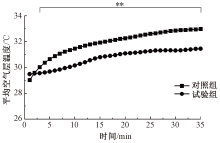
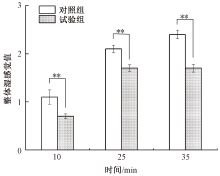
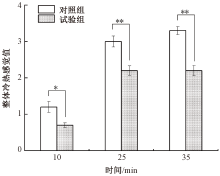
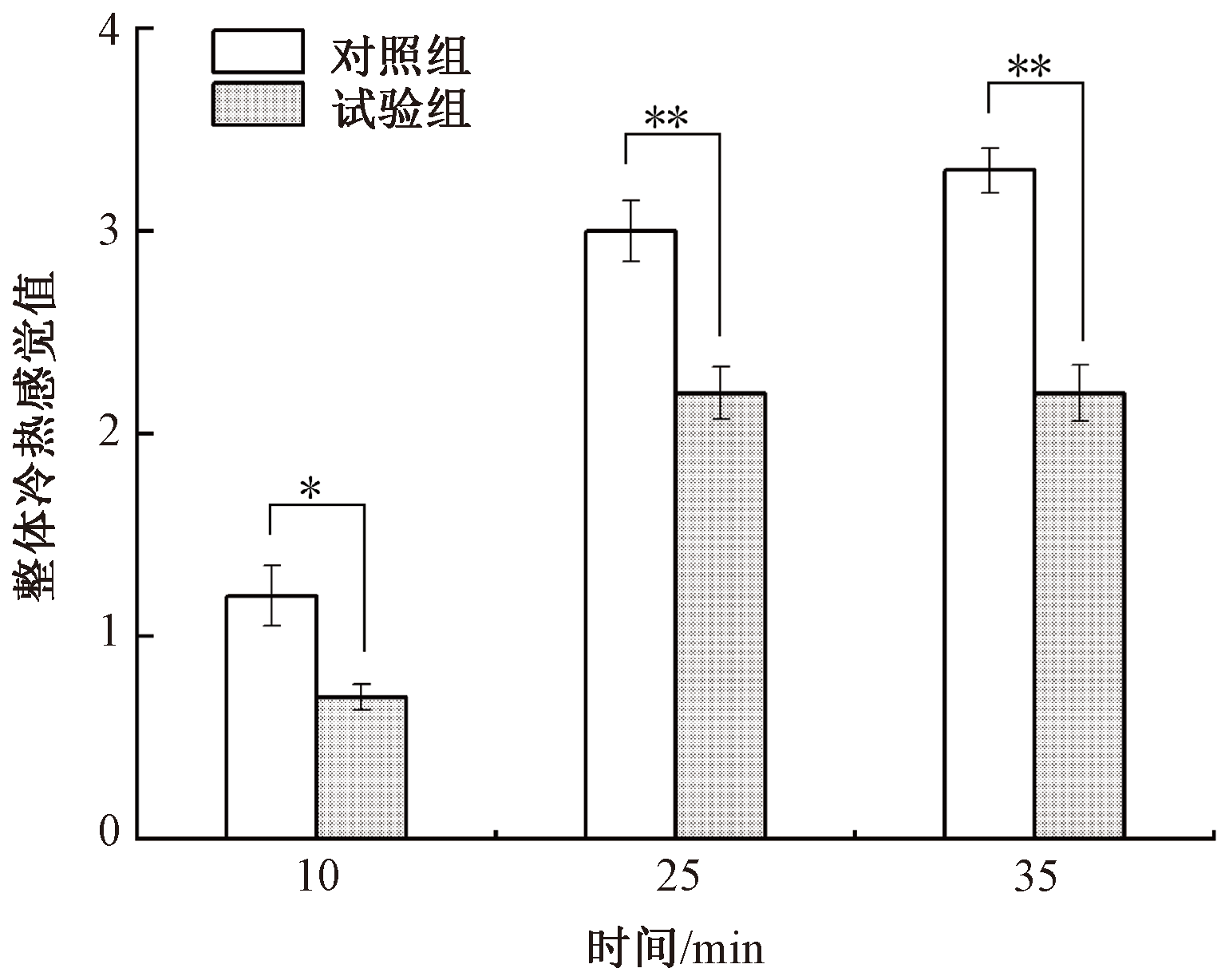
Results The experimental chemical protective suit equipped with integrated external humidity regulation manifested a notable improvement in thermal and humid comfort in contrast to the control chemical protective suit. Specifically, in the torso area, the external wear humidity regulator presented a more stable performance, reducing the relative humidity of the air layer under the regulating by approximately 30% on average. In the extremities, the device was capable of effectively lowering the relative humidity of the air layer under the suit to within the range of 20%-40%. This dehumidification effect significantly augmented the comfort of the wearer when using chemical protective suit. It is noteworthy that throughout the entire experiment, the relative humidity of the experimental group was maintained at or below 70% on average, which was conspicuously superior to that of the control group. Additionally, the integrated external humidity regulator not only effectively decreased the relative humidity of the air layer under the regulatory but also exerted a positive influence on the wearer's body skin temperature and the temperature of the air layer under the regulator. At the end of the experiment, the average temperature difference of the air layer in the experimental group was approximately 2.5 ℃ lower than that in the control group, and the average skin temperature difference was about 1 ℃ lower, signifying that the protective suit had a significant impact on regulating the body heat load. Concerning the subjective assessment, participants generally stated that the perceived humidity was significantly reduced when wearing protective suit with integrated external humidity regulator, and the subjective value of the overall wet sensation was reduced by approximately 0.5 on average, suggesting that the wearer was more content with the improvement measures. Simultaneously, participants also offered positive feedback on the overall feeling of cold and hot after wearing, and the average overall subjective evaluation value of cold and hot decreased by approximately 0.8.
Conclusion The utilization of calcium chloride and 4A molecular sieve as desiccant external humidity regulator is effective and feasible. This externall humidity regulator offers an innovative solution for optimizing thermal and humid comfort in chemical protective suit, significantly enhancing comfort in the working environment.

Key words: suit microenvironment, humidity regulator, chemical protective suit, thermal and humid comfort, functional suit

中图分类号: 

  • TS941.73

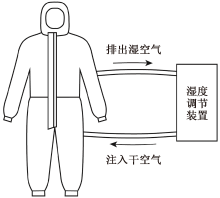
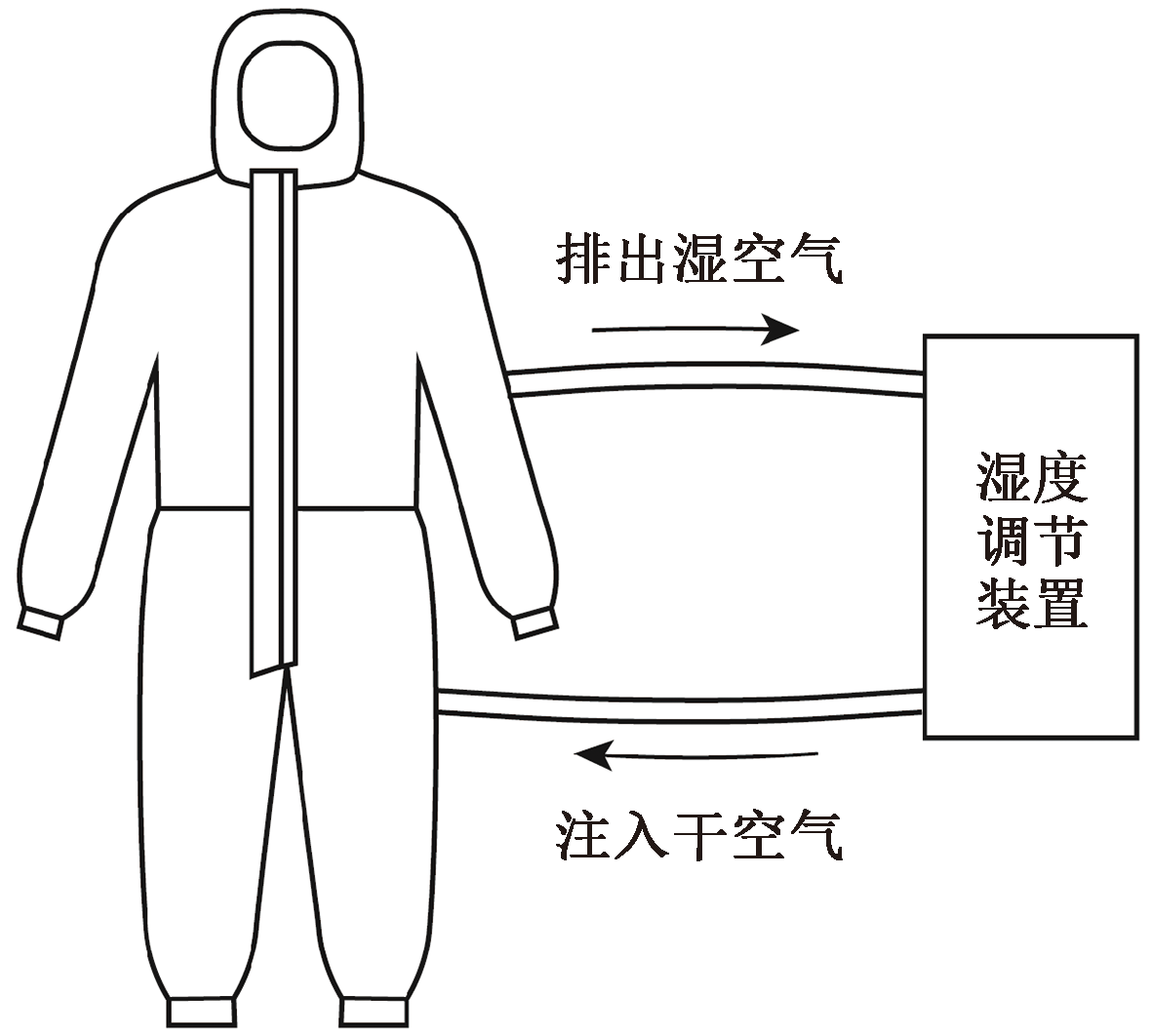
图1

湿度调节思路设计图"

表1

不同干燥剂产品的吸湿率和优缺点"

干燥剂
类型
常见产品 温度/
不同相对湿度下吸湿率/% 优点 缺点
20% 40% 50% 90%
硅胶 A型硅胶 25±2 7 20 30 吸湿性能稳定,多用于药品、食品干燥 成本较高,难降解,环境不友好
蒙脱石 蒙脱石 25±2 17 19 价格低廉,无毒无味 吸湿时体积膨胀
分子筛 4A分子筛 25±2 17 19 吸湿速率快,热稳定性强 忌油和液态水
纤维 覆膜纤维干燥
剂片
25±2 8 20 70 无毒安全,不占空间,可降解,绿色环保 价格较高
生石灰 袋装生石灰干
燥剂
38±2 30 价格低廉 遇水放热且体积
膨胀
复合 氯化钙、氯化镁等 25±2 150 吸湿性能稳定,价格低廉 吸湿后会形成结晶或溶液

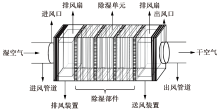
图2

湿度调节装置设计示意图"

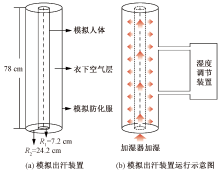
图3

模拟出汗装置及其运行示意图"

图4

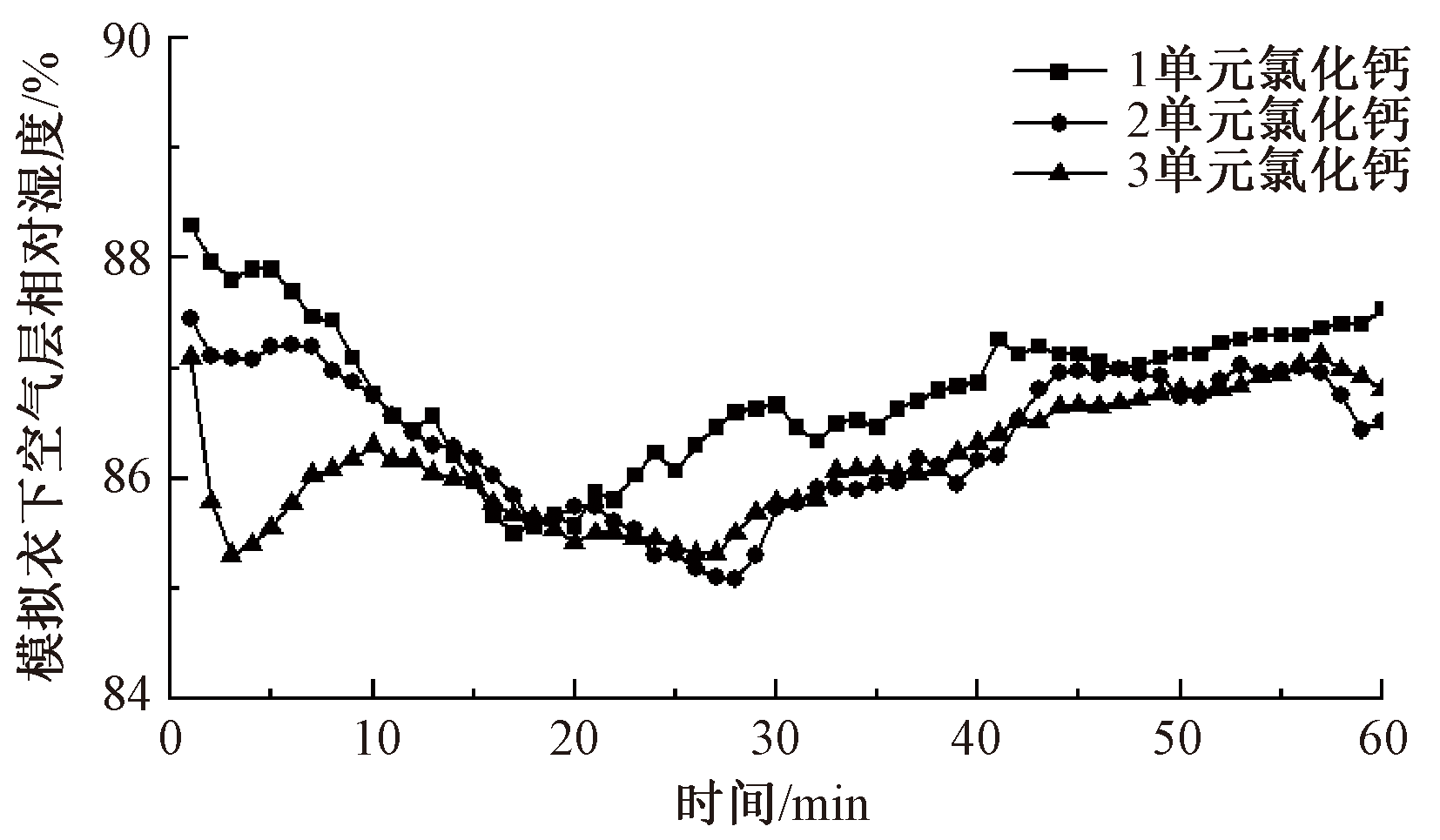
氯化钙干燥剂不同用量的除湿曲线"

图5

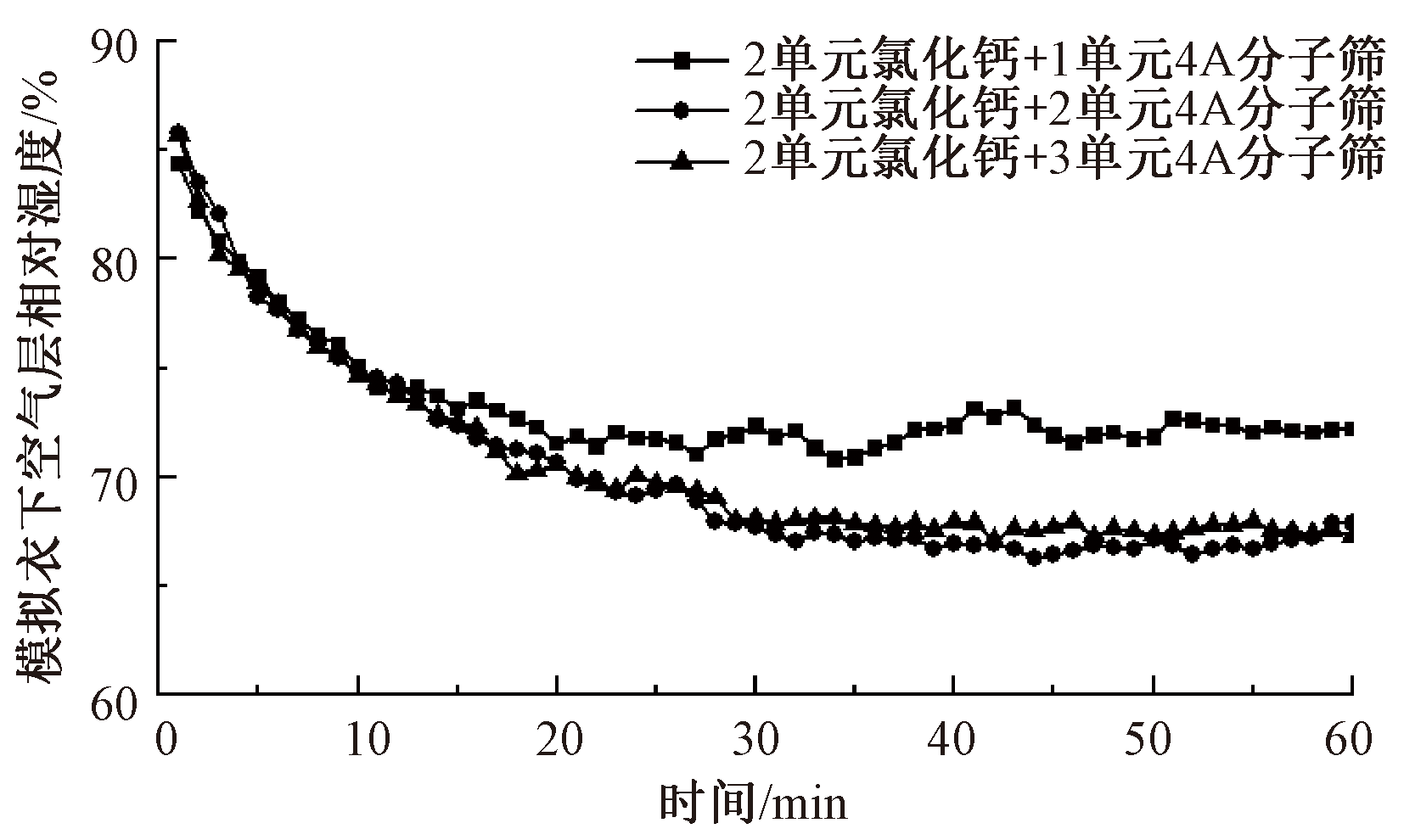
干燥剂组合不同用量的除湿曲线"

图6

湿度调节防化服的穿戴示意图"

表2

性能评价试验流程设置"

试验
阶段
试验时间/
min
试验
强度
跑步机速度/
(km·h-1)
第1阶段 10 低强度 3
第2阶段 15 中强度 5
第3阶段 10 低强度 3

图7

各部位衣下空气层相对湿度"

图8

平均衣下空气层温度"

图9

平均皮肤温度"

图10

整体湿感觉主观评价值"

图11

整体冷热感觉主观评价值"

[1] SHOVON B, RAKESH J, AHMAD A C, et al. Graphene modified multifunctional personal protective cloth-ing.[J]. Advanced Materials Interfaces, 2019.DOI:10.1002/admi.201900622.
[2] 栗辰飞, 刘元军, 赵晓明. 生化防护服的研究进展[J]. 纺织学报, 2022, 43(7):207-216.
LI Chenfei, LIU Yuanjun, ZHAO Xiaoming. Research progress of biochemical protective clothing[J]. Journal of Textiles Research, 2022, 43(7):207-216.
[3] JIANG Haihua, CAO Bin, ZHU Yingxin. Improving thermal comfort of individual wearing medical protective clothing: two personal cooling strategies integrated with the polymer water-absorbing resin material[J]. Building and Environment, 2023.DOI:10.1016/J.BUILDENV.2023.110730.
[4] 朱晓荣, 何佳臻, 王敏. 相变材料在热防护服上的应用研究进展[J]. 纺织学报, 2022, 43(4):194-202.
ZHU Xiaorong, HE Jiazhen, WANG Min. Research progress of phase change materials applied to thermal protective clothing[J]. Journal of Textile Research, 2022, 43(4):194-202.
[5] SU Xing, TIAN Shaochen, LI He, et al. Thermal and humid environment improvement of the protective clothing for medical use with a portable cooling device: analysis of air supply parameters[J]. Energy and Buildings, 2021. DOI:10.1016/J.ENBUILD.2021.110909.
[6] WANG Wanwan, ZHAO Mengmeng. Design of liquid-air hybrid cooling garment and its effect on local thermal comfort[J]. Applied Sciences, 2023, 13(16): 9414.
[7] XU Xin, ZHANG Lian, MIAO Deyu, et al. Research on the novel medical protective clothing for COVID-19[J]. Heliyon, 2023.DOI:10.1016/J.HELIYON.2023.E13374.
[8] 韩郑良, 肖鑫. 复合固体干燥剂的研究进展[J]. 化工进展, 2023, 42(2):839-853.
HAN Zhengliang, XIAO Xin. Research progress of composite solid desiccant[J]. Advances in Chemical Industry, 2023, 42(2):839-853.
[9] 段敏, 李强, 刘文, 等. 食品包装用吸湿剂的研究进展[J]. 食品安全质量检测学报, 2018, 9(18):4893-4899.
DUAN Min, LI Qiang, LIU Wen, et al. Research progress of hygroscopic agents for food packaging[J]. Journal of Food Safety and Quality Inspection, 2018, 9(18):4893-4899.
[10] 刘林, 何兆红, 陈捷超, 等. 固体湿度调节复合干燥剂研究进展[J]. 新能源进展, 2017, 5(5):377-385.
LIU Lin, HE Zhaohong, CHEN Jiechao, et al. Research progress of solid dehumidification composite desiccant[J]. Advances in New Energy, 2017, 5(5):377-385.
[11] 苗苗, 鲁虹, 程梦琪. 运动前后人体体表温度变化与主观热感觉评定[J]. 纺织学报, 2018, 39(4):116-122.
MIAO Miao, LU Hong, CHENG Mengqi. Changes of body surface temperature and subjective thermal sensation assessment before and after exercise[J]. Journal of Textile Science, 2018, 39(4):116-122.
[12] 郭婷婷, 田宏. 医用防护服装下人体各部位的相对湿度测试[J]. 辽宁丝绸, 2021(2):60-6124.
GUO Tingting, TIAN Hong. Measurement of relative humidity of human body parts under medical protective clothing[J]. Liaoning Silk, 2021(2):60-6124.
[13] GOLBABAEI F, HEYDARI A, MORADI G, et al. The effect of cooling vests on physiological and perceptual responses: a systematic review[J]. International Journal of Occupational Safety and Ergonomics, 2022, 28(1): 223-255.
[14] 牛梦雨, 潘姝雯, 戴宏钦, 等. 医用防护服的热湿舒适性与人体疲劳度的关系[J]. 纺织学报, 2021, 42(7):144-150.
NIU Mengyu, PAN Shuwen, DAI Hongqin, et al. The relationship between thermal and wet comfort of medical protective clothing and human fatigue[J]. Journal of Textile Science, 2019, 42(7):144-150.
[1] 朱梦慧, 葛美彤, 董智佳, 丛洪莲, 马丕波. 纬编双面羊毛/涤纶交织物的结构与热湿性能评价[J]. 纺织学报, 2025, 46(05): 179-185.
[2] 巫晓雯, 方蕾妹, 江昆, 丛洪莲. 基于热湿舒适性的横编全成形运动内衣的分区设计[J]. 纺织学报, 2024, 45(12): 172-179.
[3] 王兆芳, 张辉, 丁波, 张淼. 文胸罩杯透湿率测定新方法[J]. 纺织学报, 2024, 45(01): 176-184.
[4] 姚晨曦, 万爱兰. 聚对苯二甲酸丁二醇酯/聚对苯二甲酸乙二醇酯纬编运动T恤面料的热湿舒适性[J]. 纺织学报, 2024, 45(01): 90-98.
[5] 王兆芳, 丁波, 张辉, 陈思璘. 青年女性胸部出汗分布和出汗率的测定[J]. 纺织学报, 2023, 44(12): 145-152.
[6] 王予涛, 丛洪莲, 顾洪阳. 纬编成形护膝结构设计及其热湿舒适性[J]. 纺织学报, 2023, 44(10): 68-74.
[7] 赵辰, 王敏, 李俊. 个体降温服优化设计对其降温效果影响的研究进展[J]. 纺织学报, 2023, 44(09): 243-250.
[8] 丁雪婷, 王建萍, 潘婷, 姚晓凤, 袁鲁宁. 仿蜻蜓翅膀结构的冬季针织面料研发及其性能[J]. 纺织学报, 2023, 44(09): 75-83.
[9] 陈佳慧, 梅涛, 赵青华, 尤海宁, 王雯雯, 王栋. 热湿舒适性智能织物的研究进展[J]. 纺织学报, 2023, 44(01): 30-37.
[10] 牛梦雨, 潘姝雯, 戴宏钦, 吕凯敏. 医用防护服的热湿舒适性与人体疲劳度的关系[J]. 纺织学报, 2021, 42(07): 144-150.
[11] 江燕婷, 严庆帅, 辛斌杰, 高琮, 施楣梧. 纺织品单向导水性能测试方法分析[J]. 纺织学报, 2021, 42(05): 51-58.
[12] 王莉, 张冰洁, 王建萍, 刘莉, 杨雅岚, 姚晓凤, 李倩文, 卢悠. 基于仿生学的冬季针织运动面料开发与性能评价[J]. 纺织学报, 2021, 42(05): 66-72.
[13] 杨阳, 俞欣, 章为敬, 张佩华. 针织面料凉爽性能的评价方法及其预测模型[J]. 纺织学报, 2021, 42(03): 95-101.
[14] 孙岑文捷, 倪军, 张昭华, 董婉婷. 针织运动服的通风设计与热湿舒适性评价[J]. 纺织学报, 2020, 41(11): 122-127.
[15] 张昭华, 李璐瑶, 安瑞平. 管道式通风服头部与躯干部位的热湿舒适性评价[J]. 纺织学报, 2020, 41(08): 88-94.
Viewed
Full text


Abstract

Cited

  Shared   
  Discussed   
No Suggested Reading articles found!