Journal of Textile Research ›› 2024, Vol. 45 ›› Issue (11): 185-192.doi: 10.13475/j.fzxb.20240201801

• Apparel Engineering • Previous Articles     Next Articles

Design method of sleeve cap structure based on enclosing armhole structure model

ZHANG Heng()   

  1. Changchun Institute of Technology, Changchun, Jilin 130021, China
  • Received:2024-02-20 Revised:2024-07-22 Online:2024-11-15 Published:2024-12-30

Abstract:

Objective Precise matching of sleeve cap and armhole is the core technical issue in designing sleeve cap structure. In order to accurately match the sleeve cap and armhole, a design method for the sleeve cap structure based on the armhole closure structure model is proposed to address the issue of a lack of relevant design theory for sleeve cap structure design.

Method By creating a model of the armhole structure in the enclosed state of clothing, a formula for calculating the armhole depth in the enclosed state was derived based on the flat state armhole data. Using the trigonometric function formula and the variable relationship between the sleeve angle and the armhole height, the calculation method of the sleeve cap height was determined. The key structural turning points in the design of sleeve cap structure were determined through three groups of nine experiments with different sleeve pinch angles and sleeve hole depth states. Experimental data were analyzed by regression using SPSS software.

Results From the analysis of the virtual simulation structure model of the armhole, it was found that the sleeve angle and the armhole height are closely related. The variable relationship between the sleeve angle and the height of the sleeve cap can be accurately calculated by using the trigonometric formula. The armhole depth in the enclosed state has more practical significance for setting the sleeve height, and the data is more accurate. Based on the planar armhole data, virtual simulation experiments can verify that this method of using the semi-elliptic perimeter formula to calculate the depth calculation formula of the encirclement armhole is feasible. Therefore, the planar armhole data can be used as the basic data for building the sleeve cap structure model. The sleeve cap height can be accurately calculated by taking the armhole depth data in the enclosed state and the preset sleeve angle. From the analysis of the correlation between the armhole and the sleeve cap planar structure model, the accurate setting of points E and F in the structure based on the arc of the armhole becomes the key to achieve the accurate matching of the sleeve cap and the armhole. The experimental design of the fitted sleeve cap structure model was completed based on the basic type of garment body structure model, the focus of the experiment was to complete the initial determination of the key structural turning points in the design of the sleeve cap structure. From the comparative analysis of the experimental data of the sleeve cap arc length and the armhole arc length, the intersection point obtained by taking GB3/5 as the horizontal line intersecting the front and back armhole arcs can be used as the key structural turning point.Through the experiment on designing the sleeve cap structure based on different morphological armhole structure models and the comparison of sleeve cap arc length and armhole arc length data for three groups of nine different sleeve angle and armhole depth states, the SPSS software was utilized to complete the t-test for paired samples of anterior sleeve cap arc length and anterior armhole arc length, and the t-test for paired samples of posterior sleeve cap arc length and posterior armhole arc length, it is proved that the intersection point obtained by taking GB3/5 on the horizontal line intersecting the front and back armhole arcs can be used as the key structural turning point to complete the design of the sleeve cap structure based on the armhole.

Conclusion The results of the study indicate that the sleeve angle, sleeve cap height and the overall structure of the sleeve cap are closely related. Verified through structural design practice, the design method of sleeve cap structure based on the enclosed structure model can improve the precise matching between the sleeve cap and armhole,which has theoretical guidance and practical application value in practical work.

Key words: armhole structure, sleeve cap structure, enclosed condition, sleeve angle, precise matching

CLC Number: 

  • TS941.17

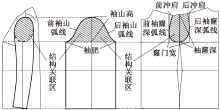
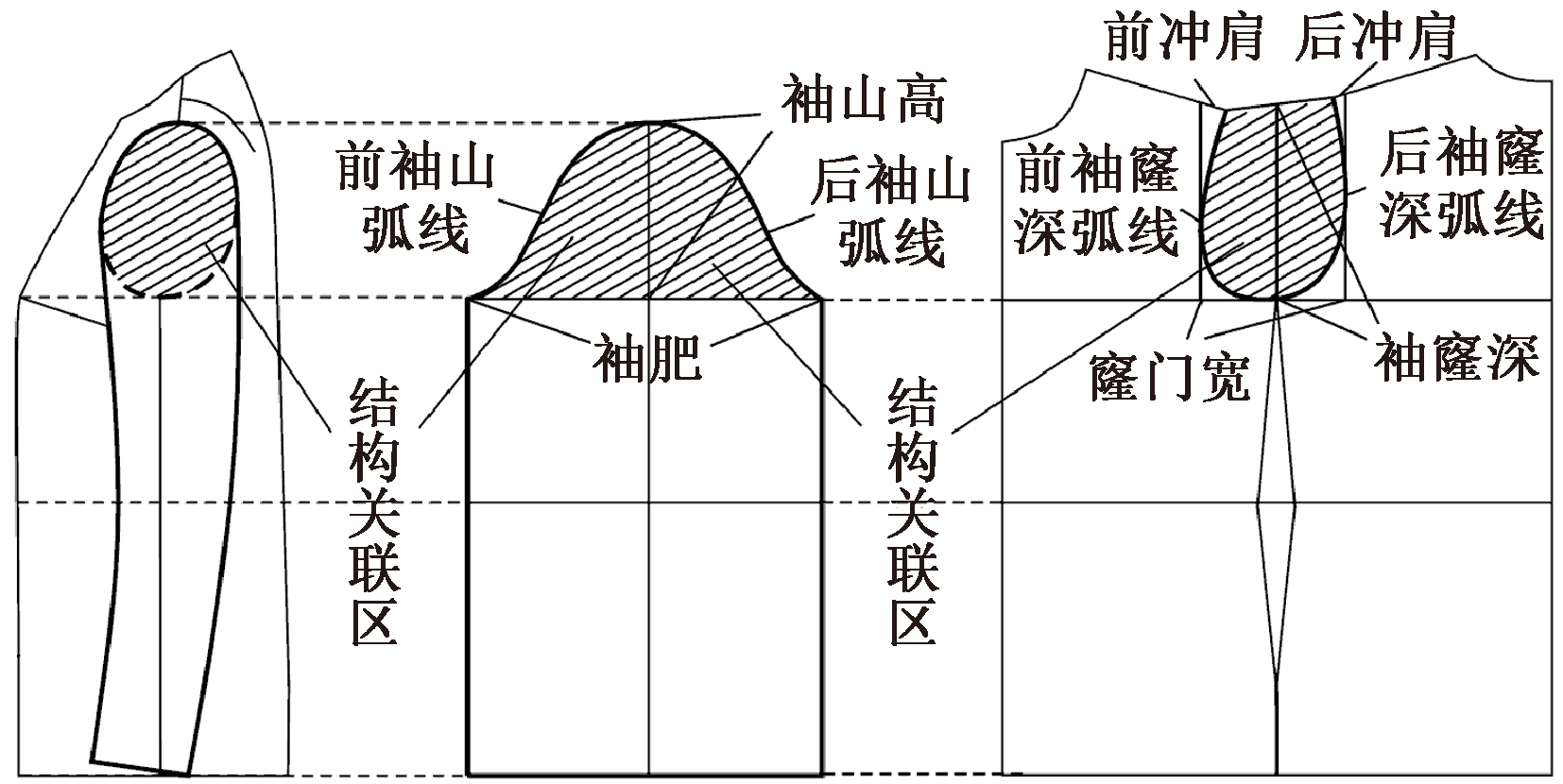
Fig.1

Structural relationship between armhole and sleeve cap"

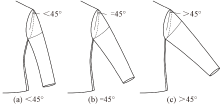
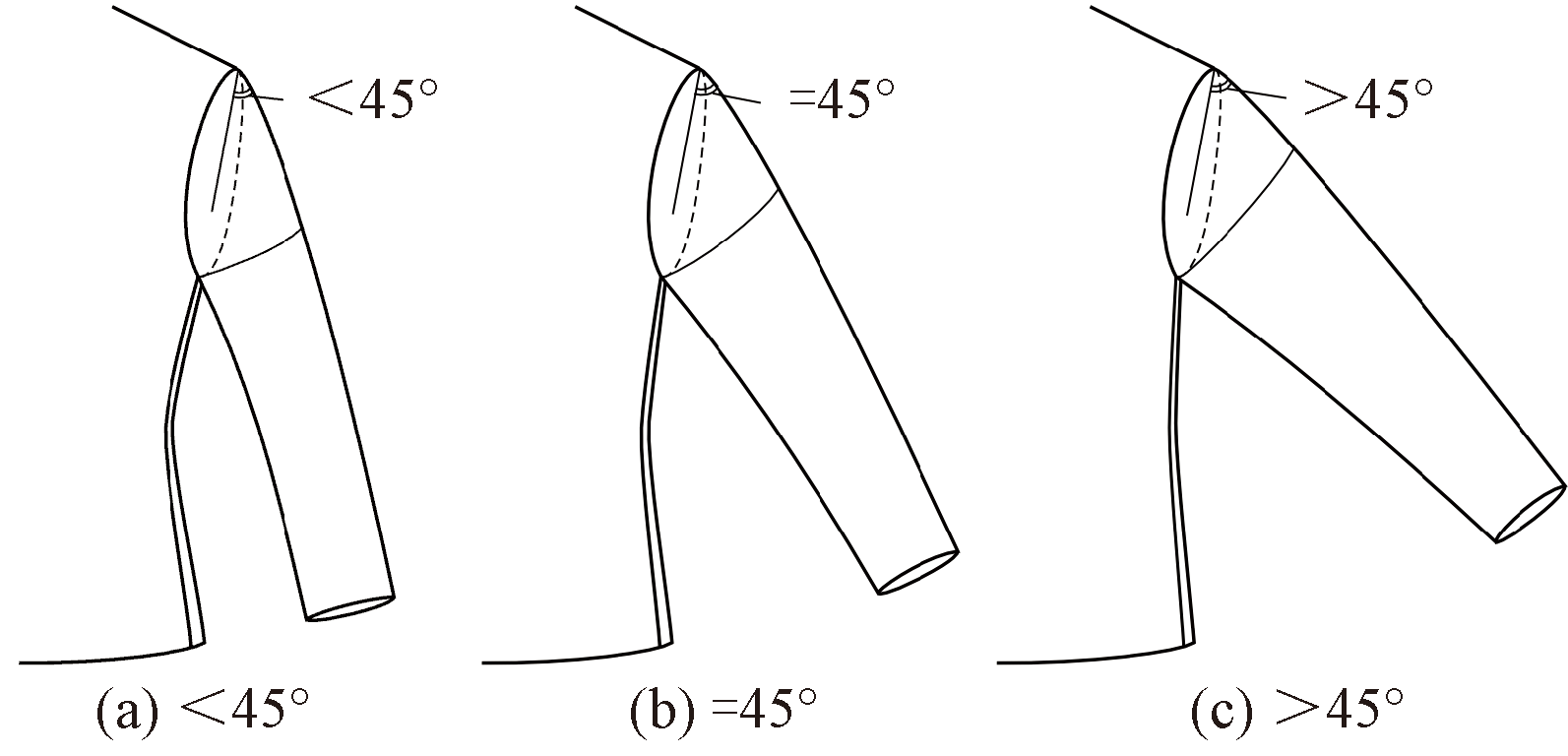
Fig.2

Shapes of sleeve forms under different sleeve angle states"

Fig.3

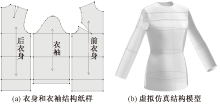
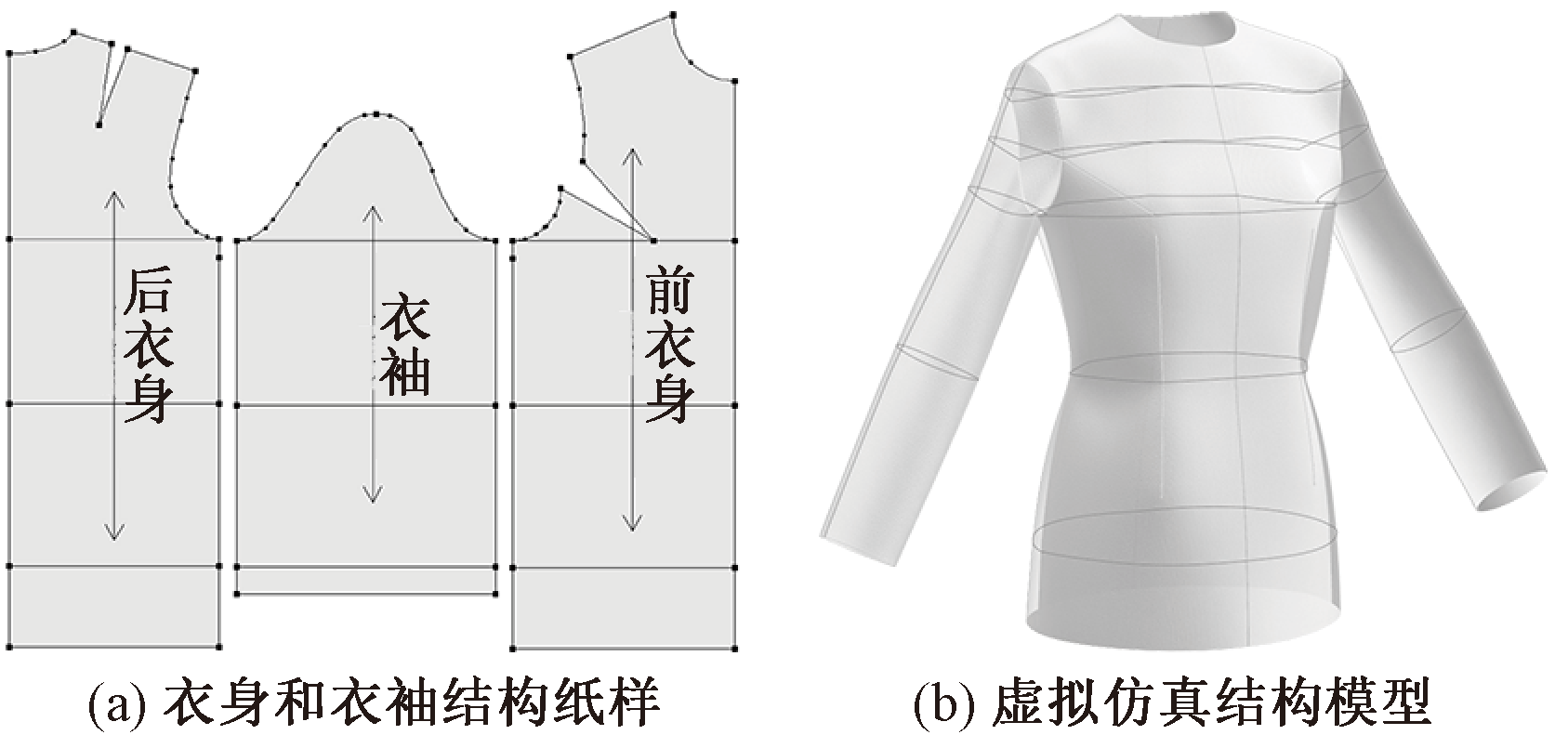
Basic women's clothing body and sleeve structure paper pattern (a) and virtual simulation structure model (b)"

Fig.4

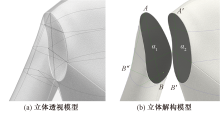
Partial structure model of armhole and sleeve cap. (a) Stereoscopic perspective model;(b)Stereoscopic deconstruction model"

Fig.5

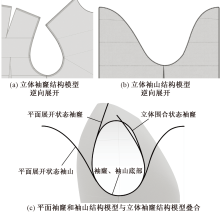
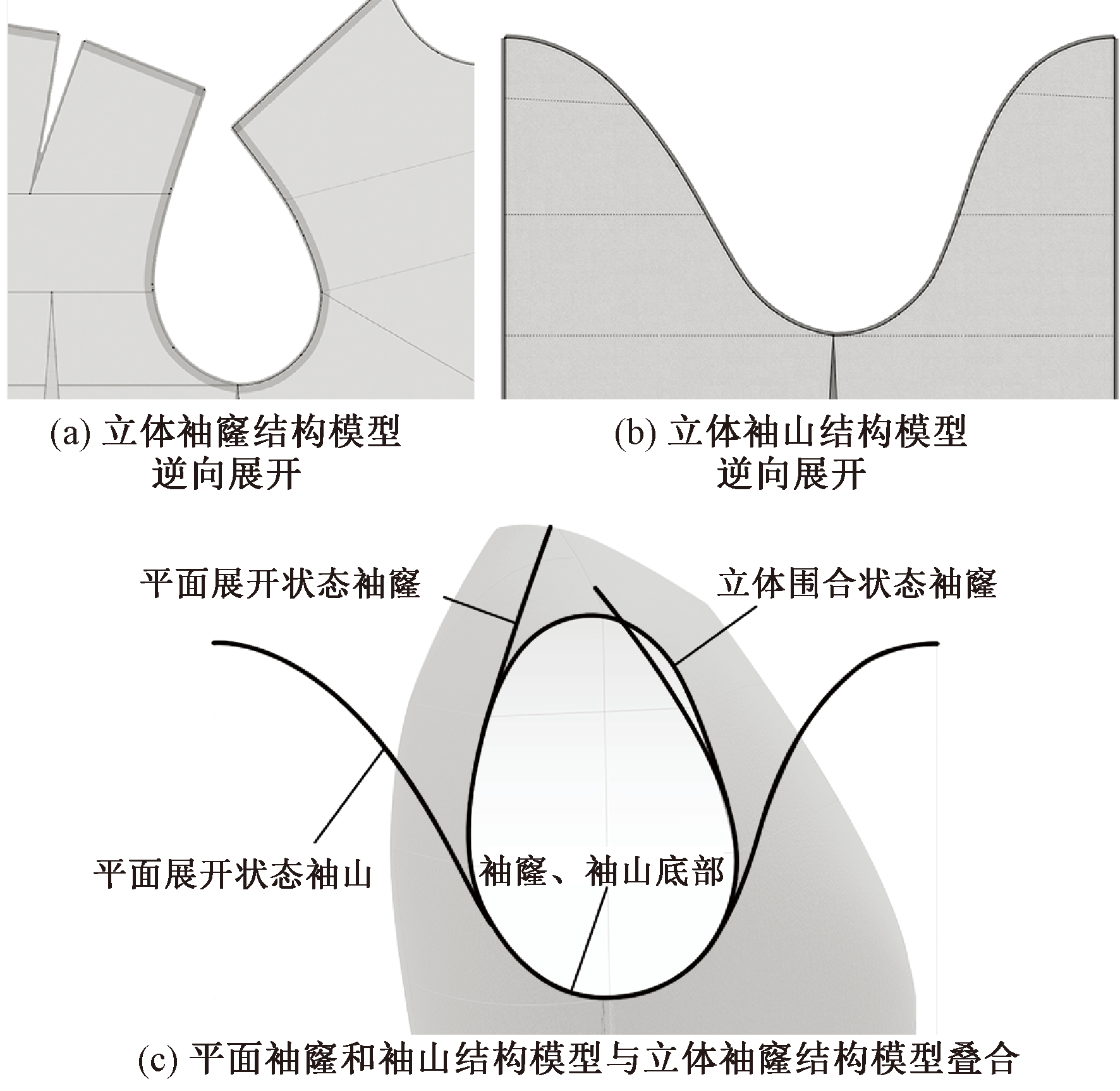
Comparative analysis of armhole structure model and sleeve cap structure model. (a)Reverse expansion of three-dimensional armhole structure model; (b)Reverse expansion of three-dimensional sleeve cap structure model; (c) Plane armhole and sleeve capstructural model overlapped with three-dimensional armhole structural model"

Fig.6

Structural modeling of armhole structure in enclosed condition"

Tab.1

Comparison and analysis of between armhole depth calculated based on planar armhole data and armhole depth data measured by virtual simulation experiment"

实验
号型
袖窿深数据/cm 差值/
cm
基于平面袖窿计算数据 虚拟仿真实验量取数据
150/76A 15.43 15.34 +0.09
155/80A 15.56 15.50 +0.06
160/84A 15.68 15.61 +0.07
165/88A 15.78 15.82 -0.04
170/92A 15.97 15.96 +0.01

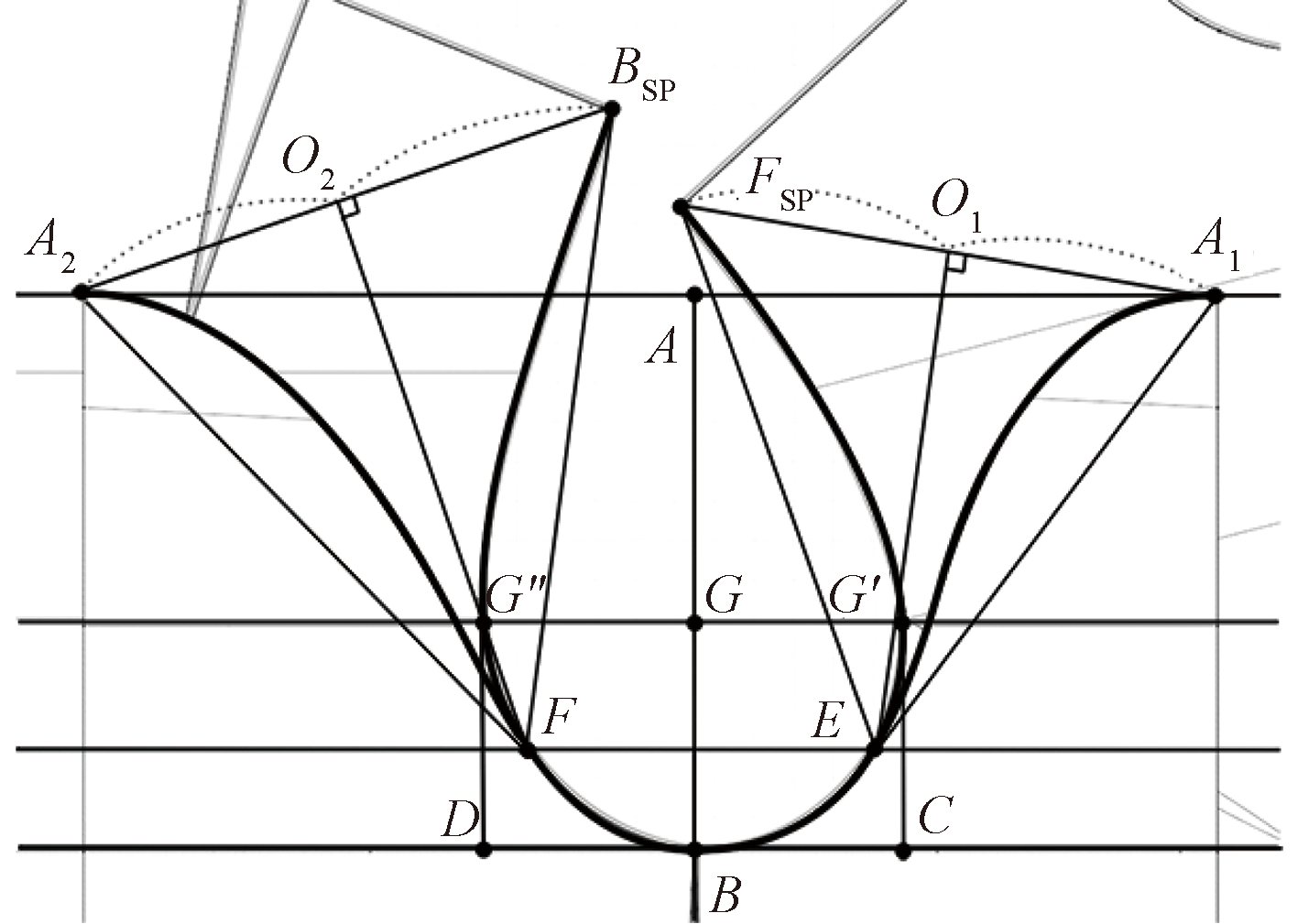
Fig.7

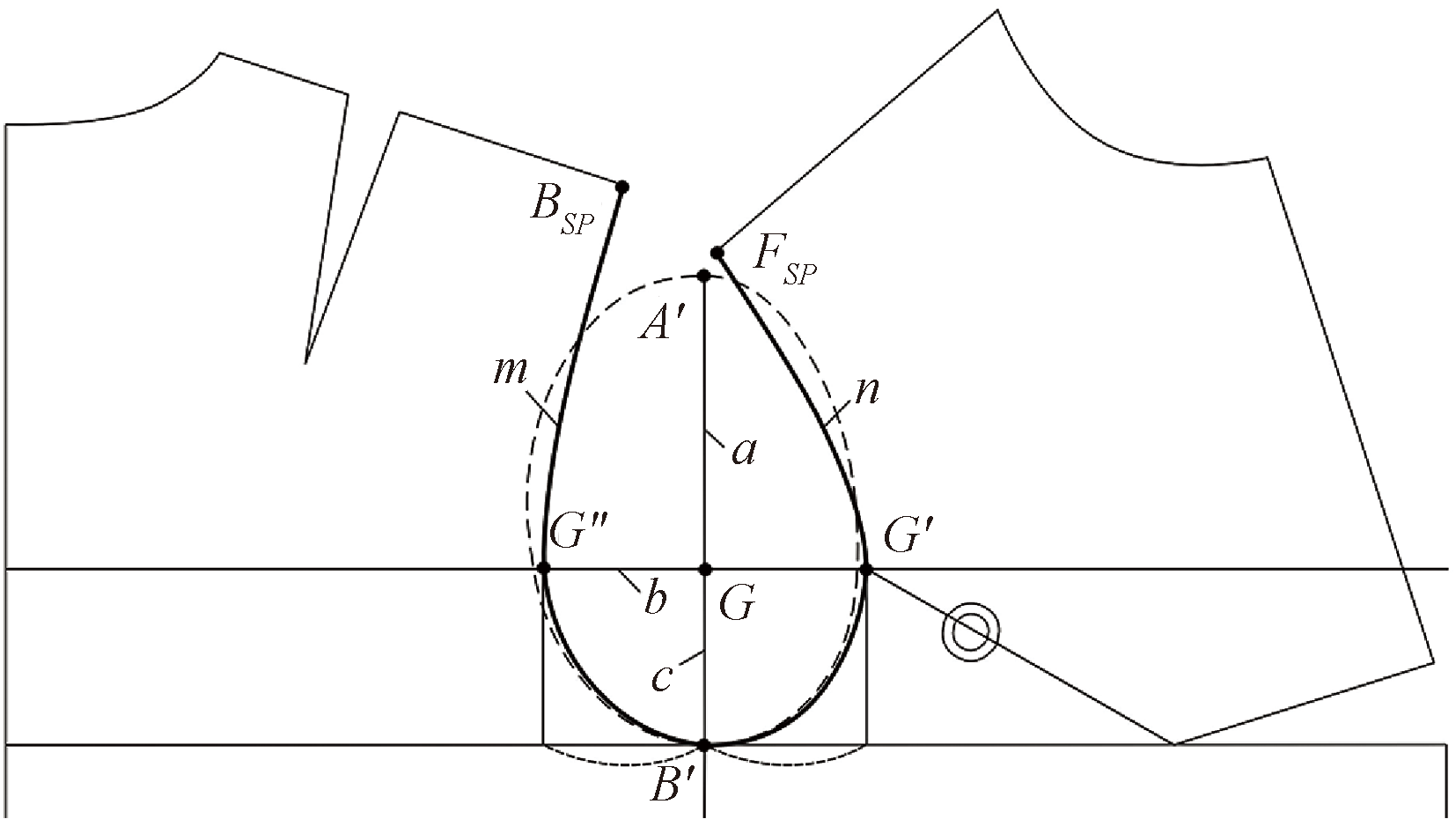
Analysis of correlation between armhole and sleeve cap planar structure models"

Fig.8

Experimental preparation of basic garment structure model"

Fig.9

Setting of matching range between armhole bottom arc and sleeve capbottom arc"

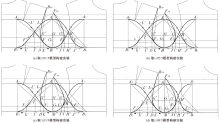
Fig.10

Sleeve cap structure model constructing experiments based on armhole structure model. (a)Taking GB1/5 to model constructing experiments; (b)Taking GB2/5 to model constructing experiments; (c)Taking GB3/5 to model constructing experiments; (d) Taking GB4/5 to model constructing experiments"

Tab.2

Comparative analysis of experimental data between arc length of sleeve cap and arc length of armhole"

实验
项序
GB
分线
位置
后袖山
弧长/
cm
后袖窿
弧长/
cm
差值/
cm
前袖山
弧长/
cm
前袖窿
弧长/
cm
差值/
cm
1 G1 22.07 21.78 +0.29 21.07 20.86 +0.21
2 G2 22.05 21.78 +0.27 21.03 20.86 +0.17
3 G3 21.81 21.78 +0.03 20.78 20.86 -0.08
4 G4 21.31 21.78 -0.47 20.20 20.86 -0.66

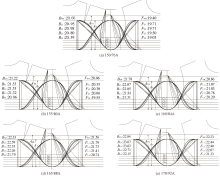
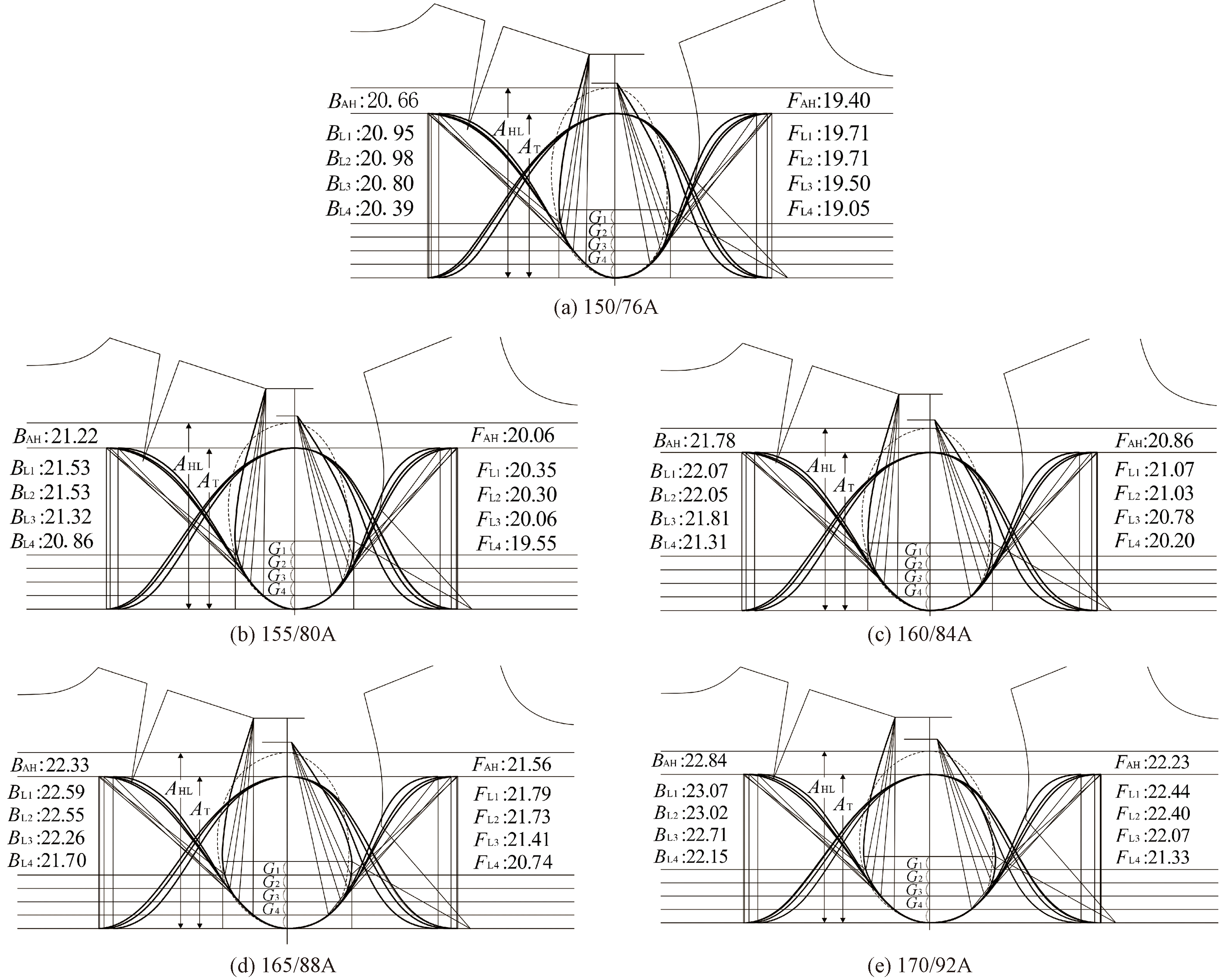
Fig.11

Verification experiment data of sleeve cap structure design based on different experiment sizes"

Tab.3

Comparison between sleeve cap arc length and armhole arc length"

实验
号型
GB
分线
位置
后袖山
弧长/
cm
后袖
窿弧长/
cm
后袖
差值/
cm
前袖
山弧长/
cm
前袖
窿弧长/
cm
前袖
差值/
cm
150/76A G1 20.95 20.66 +0.29 19.71 19.40 +0.31
G2 20.98 20.66 +0.32 19.71 19.40 +0.31
G3 20.80 20.66 +0.14 19.50 19.40 +0.10
G4 20.39 20.66 -0.27 19.05 19.40 -0.35
155/80A G1 21.53 21.22 +0.31 20.35 20.06 +0.29
G2 21.53 21.22 +0.31 20.30 20.06 +0.24
G3 21.32 21.22 +0.10 20.06 20.06 +0.00
G4 20.86 21.22 -0.36 19.55 20.06 -0.51
160/84A G1 22.07 21.78 +0.29 21.07 20.86 +0.21
G2 22.05 21.78 +0.27 21.03 20.86 +0.17
G3 21.81 21.78 +0.03 20.78 20.86 -0.08
G4 21.31 21.78 -0.47 20.20 20.86 -0.66
165/88A G1 22.59 22.33 +0.26 21.79 21.56 +0.23
G2 22.55 22.33 +0.22 21.73 21.56 +0.17
G3 22.26 22.33 -0.07 21.41 21.56 -0.15
G4 21.70 22.33 -0.63 20.74 21.56 -0.82
170/92A G1 23.07 22.84 +0.23 22.44 22.23 +0.21
G2 23.02 22.84 +0.18 22.40 22.23 +0.17
G3 22.71 22.84 -0.13 22.07 22.23 -0.16
G4 22.15 22.84 -0.69 21.33 22.23 -0.90

Tab.4

Averagecomparison of sleeve cap arc length and armhole arc length"

实验
号型
GB
分线
位置
后袖山
弧长均
值/cm
后袖窿
弧长均
值/cm
后袖
差值均
值/cm
前袖山
弧长均
值/cm
前袖窿
弧长均
值/cm
前袖
差值均
值/cm
5个
实验
号型
G1 22.04 21.77 +0.28 21.07 20.82 +0.25
G2 22.03 21.77 +0.26 21.03 20.82 +0.21
G3 21.78 21.77 +0.01 20.76 20.82 -0.06
G4 21.28 21.77 -0.48 20.17 20.82 -0.65

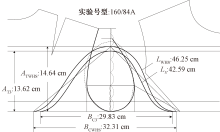
Fig.12

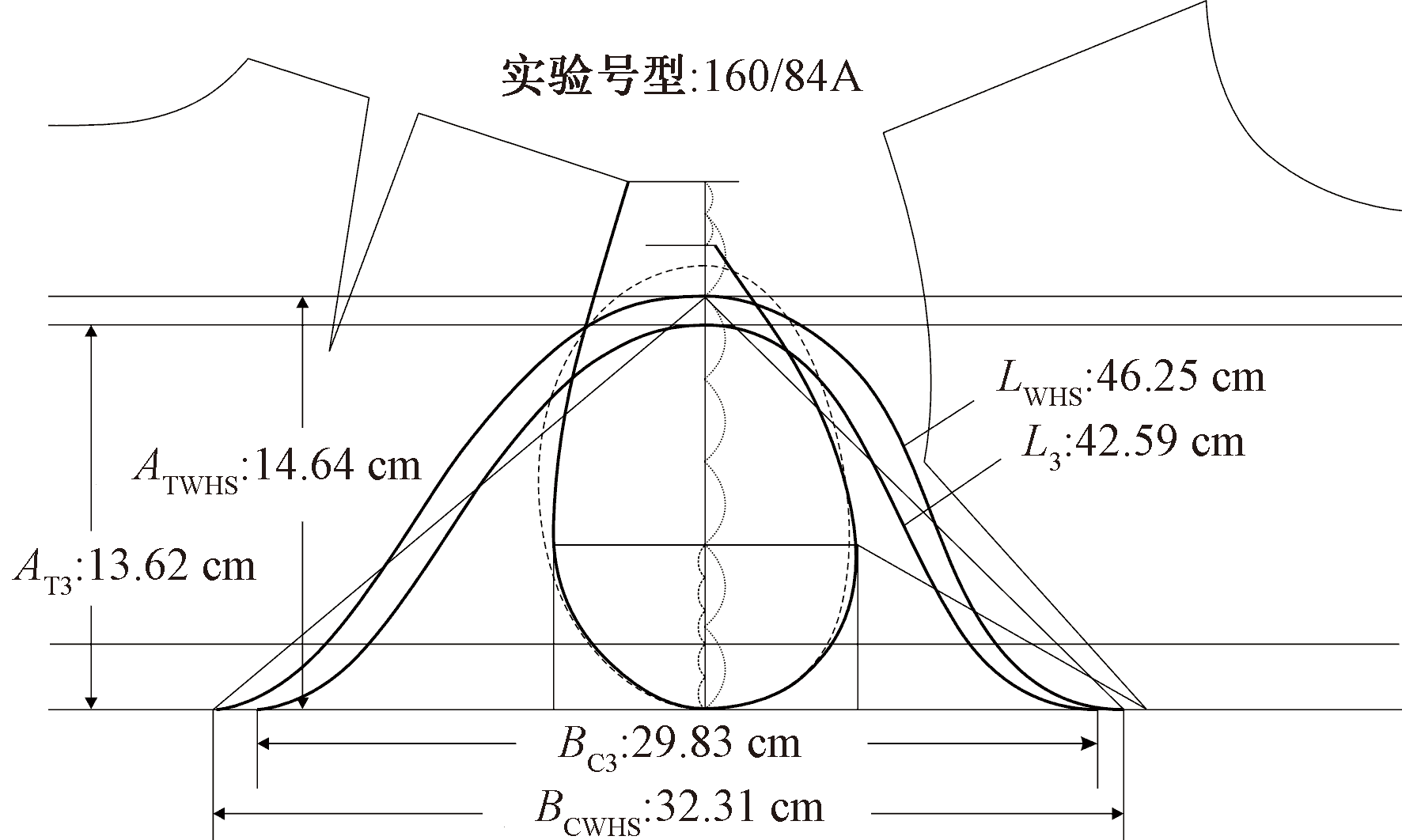
Experimental validation of structural design comparison of sleeve cap"

[1] 谢勇. 影响新原型袖子结构的相关因素分析[J]. 纺织导报, 2019(1):89-92.
XIE Yong. Analysis of related factors influencing new prototype sleeve structure[J]. China Textile Leader, 2019 (1):89-92.
[2] 石春乐, 刘冠彬, 张文斌. 袖山高与衣袖造型的配伍关系研究[J]. 西安工程科技学院学报, 2006(6): 284-287.
SHI Chunle, LIU Guanbin, ZHANG Wenbin. The theoretic research and practice on using angle in sleeve structure design[J]. Journal of Xi'an University of Engineering Science and Technology, 2006(6): 284-287.
[3] 刘瑞璞. 服装纸样设计原理与应用(女装篇)[M]. 北京: 中国纺织出版社, 2008(9):366.
LIU Ruipu. The principles and practices of pattern design[M]. Beijing: China Textile & Apparel Press, 2008 (9): 366.
[4] 刘凤霞, 韩滨颖. 现代男装纸样设计原理与打板[M]. 北京: 中国纺织出版社, 2014(3):161-219.
LIU Fengxia, HAN Binying. Modern men's pattern design principle and pattern making[M]. Beijing: China Textile & Apparel Press, 2014 (3): 161-219.
[5] 刘东. 衣袖结构与袖窿的配合因素分析[J]. 纺织导报, 2010(2):80-82.
LIU Dong. Coordination analysis between sleeves and armholes[J]. China Textile Leader, 2010(2):80-82.
[6] 王竹君, 李婷玉, 邢英梅, 等. 基于曲线拟合文化式原型袖窿和袖山结构研究[J]. 西安工程大学学报, 2014(12):704-708.
WANG Zhujun, LI Tingyu, XING Yingmei et al. Research on armhole and sleeve cap struture of culture prototupe based on curve fitting[J]. Journal of Xi'an Polytechnic University, 2014(12):704-708.
[7] 张恒, 刘凤霞. 女装结构设计原理与应用[M]. 北京: 中国纺织出版社,2021:73-79.
ZHANG Heng, LIU Fengxia. Structural design of women's wear principle and application[M]. Beijing: China Textile & Apparel Press, 2021: 73-79.
[8] 胡冰冰. 基于三维虚拟试衣系统的女装两片袖袖窿与衣袖的结构关系研究[D]. 武汉: 武汉纺织大学,2018:46-55.
HU Bingbing. Research on the relationship between the two-piece cuff sleeve and the sleeves of women's wear based on the three-dimensional virtual fitting system[D]. Wuhan: Wuhan Textile University, 2018:46-55.
[9] 张文斌. 服装结构设计[M]. 北京: 中国纺织出版社,2006:210-214.
ZHANG Wenbin. Pattern making for fashion design[M]. Beijing: China Textile & Apparel Press, 2006: 210-214.
[10] 中屋典子, 三吉满智子. 服装造型学[M]. 北京: 中国纺织出版社,2004:33.
NAKAYA Noriko, MIYOSHI Machiko. Fashion modeling[M]. Beijing: China Textile & Apparel Press,2004: 33.
[1] LI Yang, SHEN Hong, WU Jing. Correlation between change of shoulders' structure and armhole angle in lady's wear [J]. Journal of Textile Research, 2019, 40(11): 151-154.
Viewed
Full text


Abstract

Cited

  Shared   
  Discussed   
No Suggested Reading articles found!