Journal of Textile Research ›› 2025, Vol. 46 ›› Issue (08): 191-198.doi: 10.13475/j.fzxb.20240901701

• Apparel Engineering • Previous Articles     Next Articles

Space extension of clothing materials based on diamond-shaped pleating structure

MO Yanting1,2, ZHOU Li2,3(), CHEN Siyu4   

  1. 1. School of Design and Art, Beijing Institute of Technology, Beijing 102401, China
    2. College of Sericulture Textile and Biomass Science, Southwest University, Chongqing 400715, China
    3. China National Apparel Technology & Innovation Institute, Beijing 100036, China
    4. College of Humanities, Tarim University, Alar, Xinjiang 843300, China
  • Received:2024-09-11 Revised:2025-04-24 Online:2025-08-15 Published:2025-08-15
  • Contact: ZHOU Li E-mail:mydtcazz@126.com

Abstract:

Objective Through in-depth study and analysis of the extension characteristics of the diamond-shaped pleating structures in space, an innovative and controllable shaping method is developed. This technology aims to improve the pleat modeling effect associated to traditional pleat design methods and to overcome the difficulty in accurately estimating the amount of fabric required in the design process. This research would not only improve the accuracy of the design, but also optimize the efficiency of fabric use, providing designers with a more efficient and accurate design approach.

Method Through diamond-shaped pleat-making and digital simulations, the impact of the spatial extension function of diamond-shaped pleats on pleat shaping and fabric consumption was clarified, highlighting the necessity of this research. The single modeling analysis of the key structure of the diamond-shape space extension function was carried out. Through sample experiments and digital models, the influence of key structural values on the spatial extension function of diamond-shaped pleat and the numerical control method in the manufacturing process were discussed. Three groups of diamond-shaped pleat samples were tested to collect the key structures in the samples. On the one hand, the maximum spatial extension prediction and the pleats area fabric usage prediction of the samples were calculated by the modeling method proposed in this paper. On the other hand, the maximum spatial extension measurement value and pleats area fabric usage measurement value were obtained by actual measurement. The correlation between the predicted and measured values of the two sample groups was compared by SPSS to verify the accuracy of the proposed method. Finally, shaping method based on the spatial extension function was proposed after an integrated shaping analysis. Different design cases were studied to prove the feasibility in clothing design.

Results The numerical settings for valleys, ridges, and amounts of diamond-shaped pleat were crucial for the spatial extension function. Wider pleat wings provided more ease for movement, increasing the spatial extension. The experimental results showed that the diamond-shaped pleat wing was equal to the first step of the double pleat method. The relationship between diamond-shaped pleats ridges and wings worked to determine the maximum spatial extension. When pleat ridge > pleat wing, maximum spatial extension amount = wing width×2×number of pleats, and when pleat ridge ≤ pleat wing,maximum spatial extension amount = ridge length×2×number of pleats. It was also found that when more diamond-shaped pleats were used, more ease for spatial extension in clothing was created. The experiment showed that the amount of diamond-shaped pleats was equal to the pleats amount of double pleat, which is described as (diamond-shaped pleats + 1)×2. Based on the research of the above key structural elements and the clothing design process, the diamond-shaped pleat structure modeling method based on the spatial extension function' is proposed on the basis of the double pleat method. The method was created step by step according to the three steps of setting requirements, quantifying structure and making forming, and the diamond wrinkle data was integrated into the garment making steps. Three groups of diamond-shaped pleat samples were made according to the method proposed in this paper. By comparing the expected value of the maximum spatial extension amount with the measured value, the correlation coefficient between the expected value and the measured value of the fabric consumption in the pleats area, it was seen that the modeling method proposed in this research was accurate. Through the practice of clothing design, the feasibility of this method in practical application was verified.

Conclusion Compared with the previous traditional methods, this newly developed method can control and adjust more accurately the wrinkle structure according to the specific needs at the early stage of garment production. It can also accurately predict and calculate the amount of fabric required, thereby effectively reducing the cost of conducting experiments and sample preparation. This study provides a more scientific, efficient and practical method for the creative process of pleat design in the field of fashion design.

Key words: diamond-shaped pleat, space extension function, clothing styling method, digital simulation, fashion design

CLC Number: 

  • TS941.17

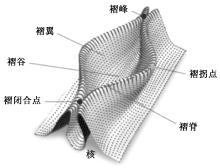
Fig.1

Diamond-shaped pleats and components"

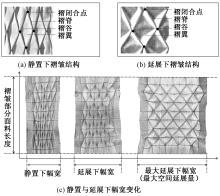
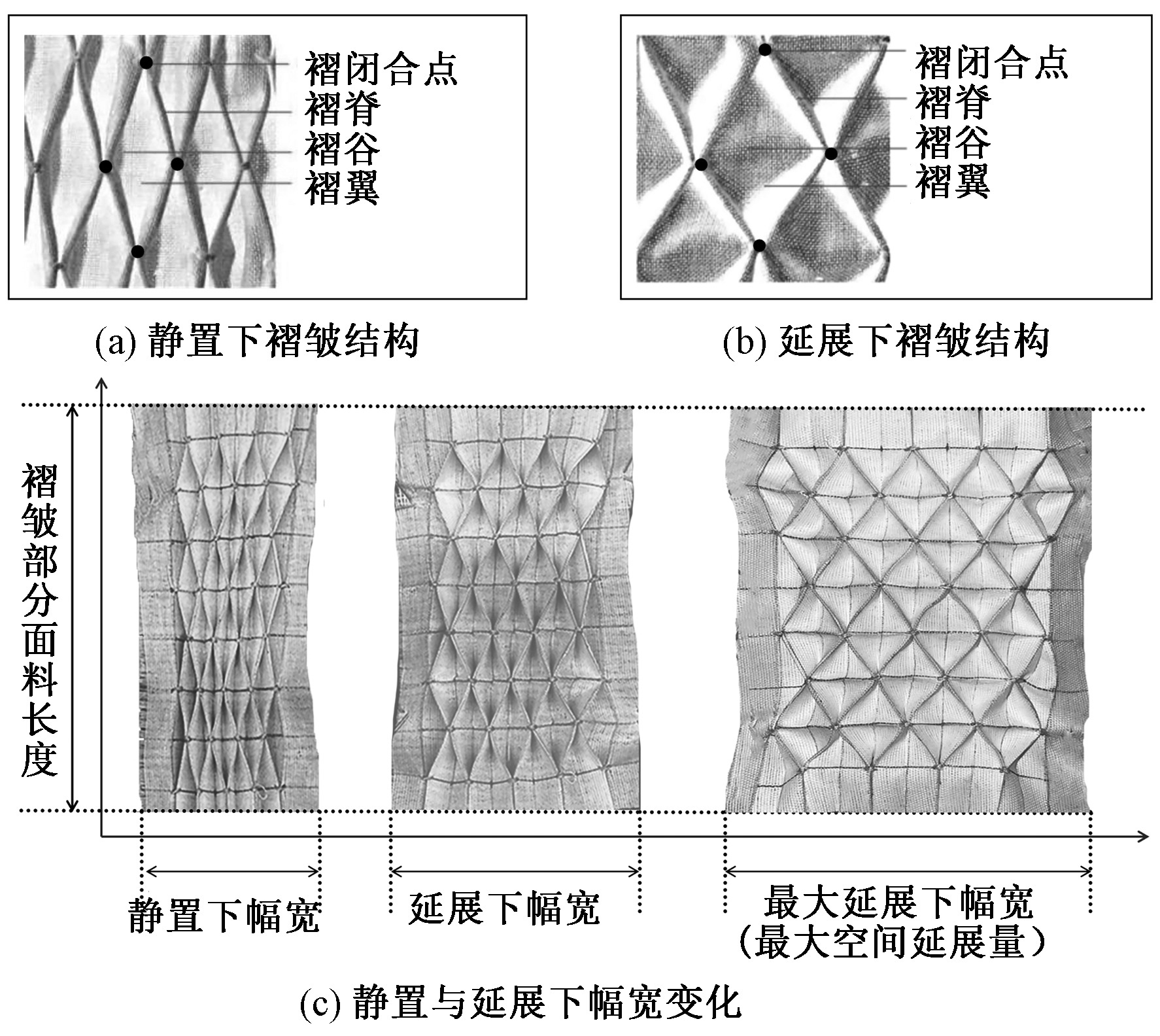
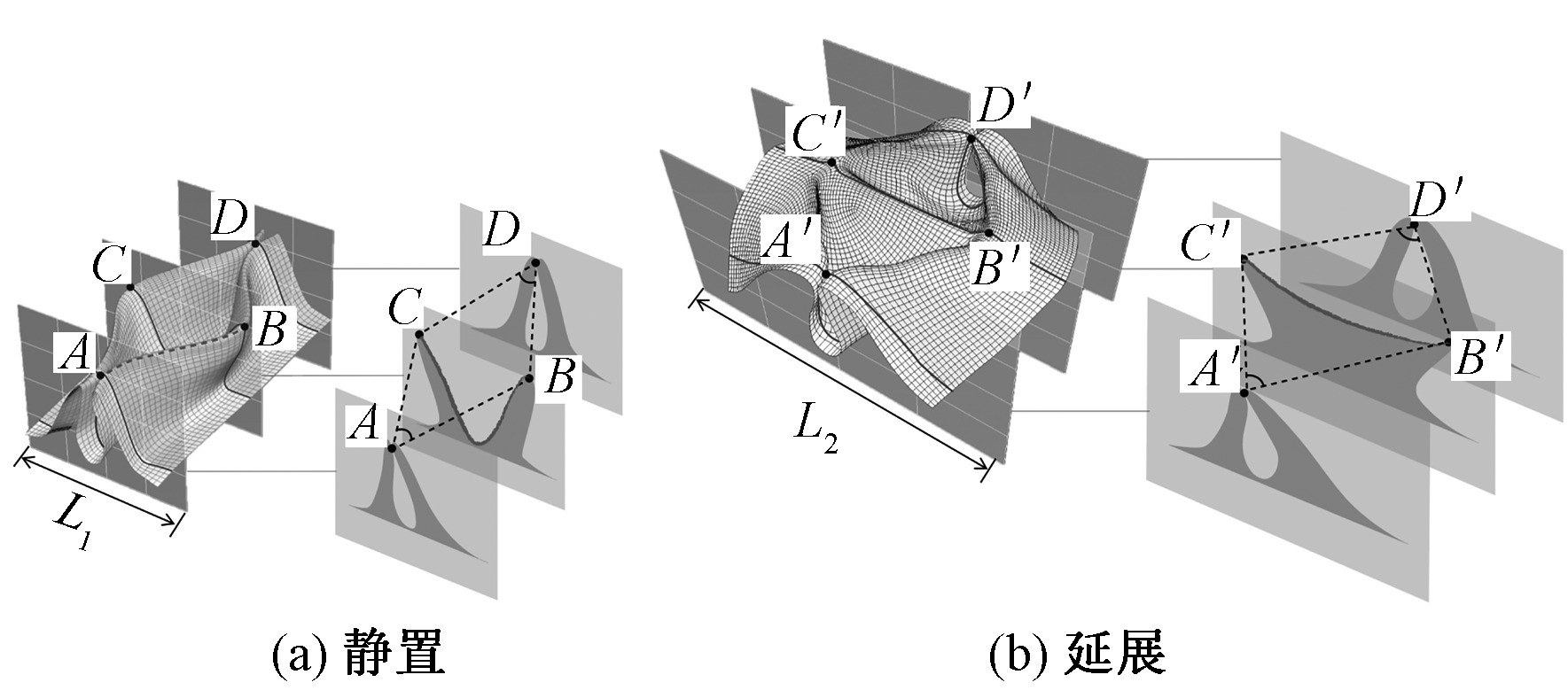
Fig.2

Structural characteristics and width changes of diamond-shaped pleats under standing and extension conditionse.(a)Structure under static;(b)Structure under extended;(c)Width changes in static and extended states"

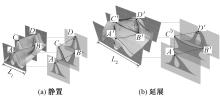
Fig.3

Comparison diagram of key structural details of diamond-shaped pleats under static and extended state. (a)Cross section under static;(b)Cross section under extended"

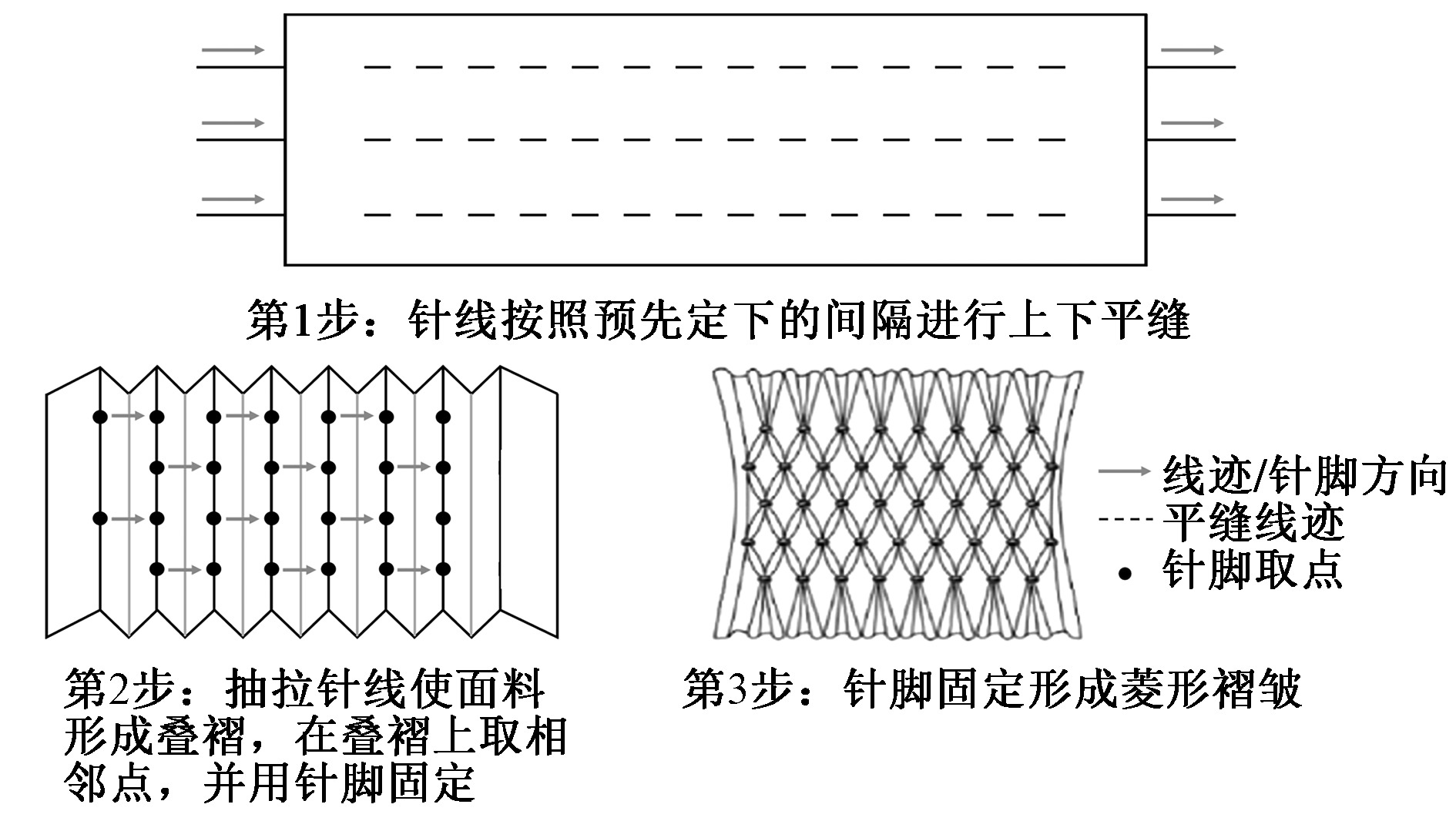
Fig.4

Production process of fold method"

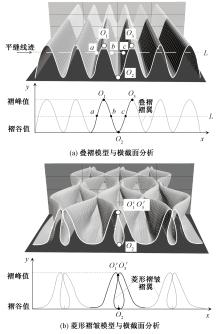
Fig.5

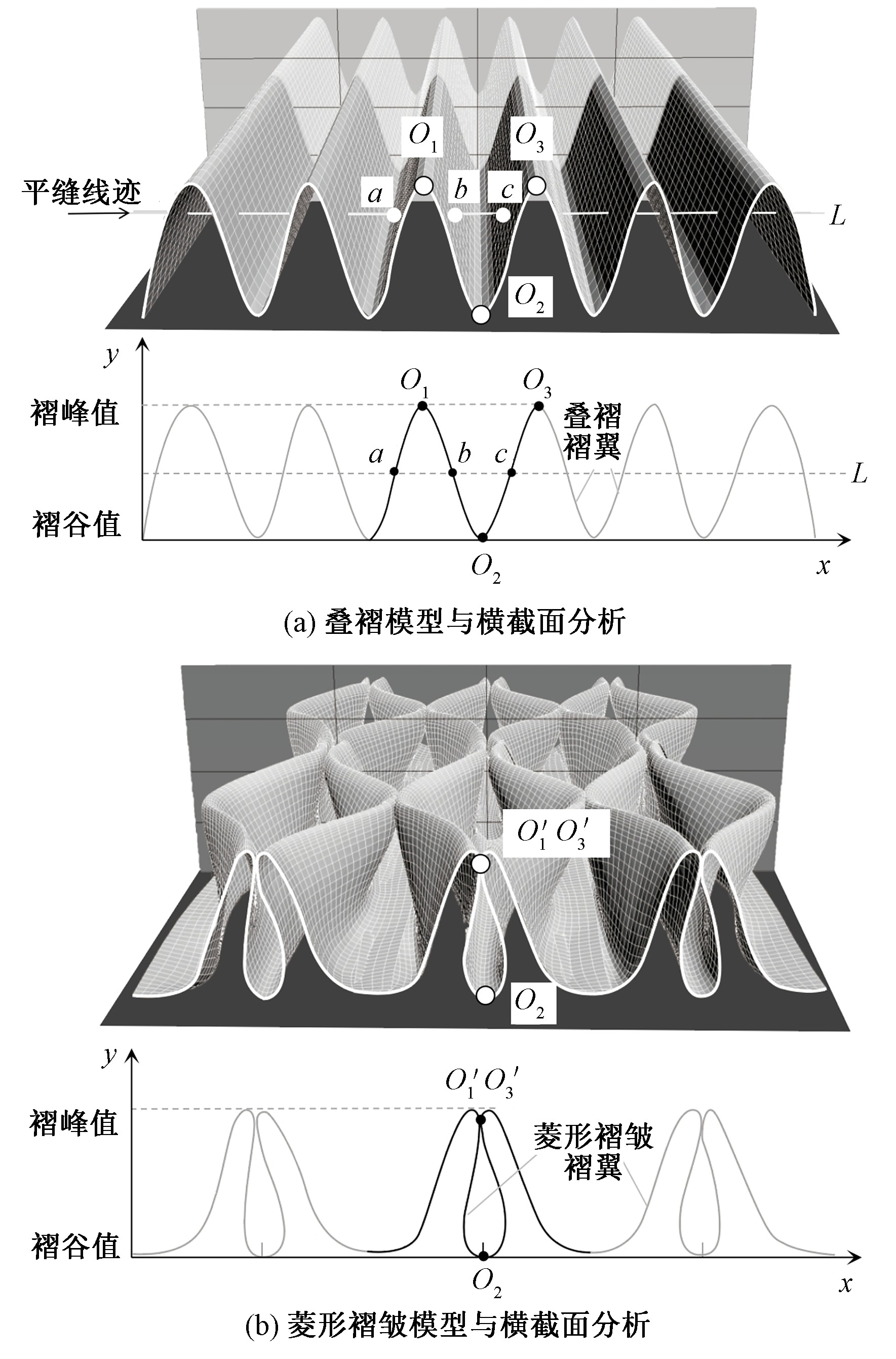
Stacked (a)and diamond-shaped(b) pleat models and cross-section"

Fig.6

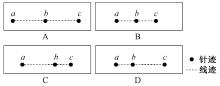
Four groups of sample needle pitch relationship diagram"

Tab.1

Fold valley depth data under different slit spacings"

样本
编号
针迹ab
距离/cm
针迹bc
距离/cm
叠褶褶翼
宽度/cm
菱形褶皱褶
翼宽度/cm
A 1 1 1 1
B 0.5 0.5 0.5 0.5
C 1 0.5 0.75 0.75
D 0.5 1 0.75 0.75

Fig.7

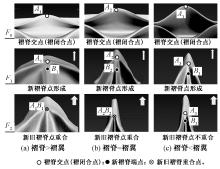
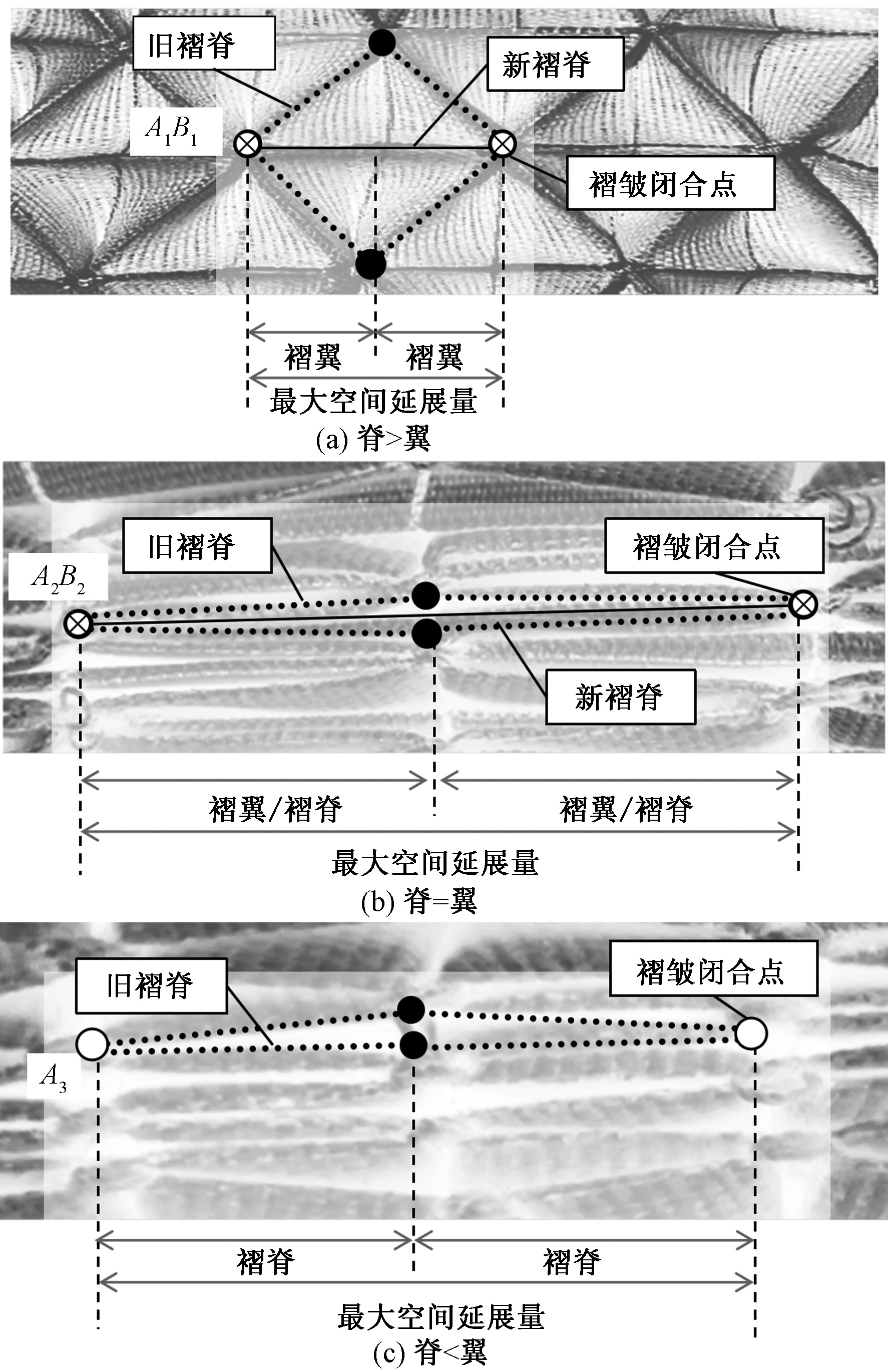
Analysis of diamond pleats under different "ridge-wing" relations. (a)Ridge > Wing ; (b)Ridge = Wing;(c) Ridge < Wing"

Fig.8

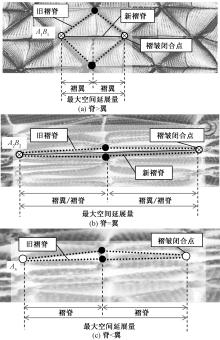
Maximum spatial extension of diamond-shaped pleats with different ridge-wing relations. (a)Ridge > Wing;(b)Ridge = Wing;(c)Ridge < Wing"

Tab.2

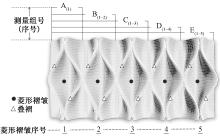
Data collection of folds required for different number of diamond-shaped pleats folds"

样本编号 菱形褶皱数量/个 对应叠褶数量/个
A 1 4
B 2 6
C 3 8
D 4 10
E 5 12

Fig.9

Experimental research model of diamond-shaped pleats"

Fig.10

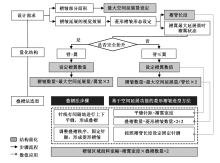
Structural modeling method for diamond-shaped pleats based on spatial extension function"

Tab.3

Comparison between expected value and measured value of modeling method"

样本
编号
R/cm W/cm P/个 褶翼状态与
脊-翼关系
最大空间延展量 褶皱区域面料用量
T/cm 测量值/cm Q/cm 测量值/cm
A1 1.3 0.9 5 不完全抬升
脊<翼
9 8.7 31.2 33
A2 2.7 2 10 40 39.5 118.8 119.3
A3 2 1.5 15 45 44.3 128 128.4
B1 1 1.5 5 完全抬升
脊>翼
10 9.5 24 24.3
B2 2.6 4 10 52 51.5 114.4 115
B3 1.4 2 15 42 41.6 89.6 90.4
C1 1.5 1.5 5 不完全抬升
脊=翼
15 14.7 36 36
C2 3 3 10 60 59.8 132 133.1
C3 1 1 15 15 15 64 64.5

Fig.11

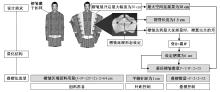
Application and production process of diamond-shaped pleats' spatial extension function in clothing"

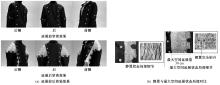
Fig.12

Design and application of diamond-shaped pleats space extension function in shoulder. (a)Dressing effect before and after extension;(b)Comparison effect of static and maximum space extension"

[1] COLETTE W. The art of manipulating fabric[M]. London: Chilton Book Company, 1996:126-128.
[2] PAUL J. Complete pleats:pleating techniques for fashion, architecture and design[M]. London: Laurence King Publishing, 2020:40-43.
[3] 刘雪花. 绣缀技法在礼服上的应用[J]. 大众文艺, 2017(22):113-115.
LIU Xuehua. Application of embroidering techniques in dresses[J]. Art and Literature for the Masses, 2017(22):113-115.
[4] 李璐. 缝缩手法在服装立体裁剪中的技术原则[J]. 辽宁丝绸, 2016(4):43-45.
LI Lu. The technical principle of seam shrinkage technique in three-dimensional cutting of clothing[J]. Liaoning Silk, 2016(4):43-45.
[5] 邹平, 李璐. 绣缀法服装立体裁剪技术[J]. 毛纺科技, 2024, 52(3):96-102.
ZOU Ping, LIU Lu. Research on three-dimensional cutting technology of embroidered clothing[J]. Wool Textile Journal, 2024, 52(3):96-102.
[6] 莫雁婷. 基于叠褶法的菱形褶皱分类与创新应用[J]. 西部皮革, 2021, 43(8):46-47.
MO Yanting. diamond-shaped pleats classification and innovative application based on fold method[J]. Western Leather, 2021, 43(8):46-47.
[7] 周莉, 樊培宏, 金玉婷, 等. 服装逆向造型的数字化设计方法[J]. 纺织学报, 2023, 44(12):138-144.
doi: 10.13475/j.fzxb.20221001901
ZHOU Li, FAN Peihong, JIN Yuting, et al. Digital design method of clothing reverse modeling[J]. Journal of Textile Research, 2023, 44(12):138-144.
doi: 10.13475/j.fzxb.20221001901
[8] 李晶晶. 服用面料褶曲外观表征与测试方法[D]. 上海: 东华大学, 2020:9-13.
LI Jingjing. Appearance characterization and test method ofpleats for wearing fabrics[D]. Shanghai: Donghua University, 2020:9-13.
[9] MINCHEN L, SHEFFER A, GRINSPUN E, et al. Foldsketch: enriching garments with physically reproduciblefolds[J]. ACM Transactions on Graphics, 2018, 37(4): 1-13.
[10] 苏旭中, 魏艳红, 刘新金, 等. 纺纱方式对织物抗皱性能及拉伸弹性的影响[J]. 纺织学报, 2020, 41(4):33-38.
SU Xuzhong, WEI Yanhong, LIU Xinjin. Effect of spinning method on wrinkle-resistance and tensile elasticity of fabric[J]. Journal of Textile Research, 2020, 41(4): 33-38.
[11] CAI Qinxiao, FENG Xinsun, MOHAMMADo Irfan Iqba, et al. Mechanical characterization of surface wrinkling properties in fibrous sheet materials by facile folding process[J]. Polymer Testing, 2021, 97(3):107153.
[12] 陈莹, 魏静, 马俊淑. 叠褶在服装造型中的应用[J]. 纺织学报, 2018, 39(5):97-102.
CHEN Ying, WEI Jing, MA Junshu. Application of double pleat in apparel modeling[J]. Journal of Textile Research, 2018, 39(5):97-102.
[13] 章建跃. 研究三角形的数学思维方式[J]. 数学通报, 2019, 58(4):1-10.
ZHANG Jianyue. Studying mathematical way of thinking oftriangles[J]. Mathematical Bulletin, 2019, 58(4):1-10.
[1] YANG Zitian, WANG Shiqi, LEI Mengjie. Drape index and structural analysis of horse-face skirts [J]. Journal of Textile Research, 2025, 46(07): 186-192.
[2] LYU Yingrui, WANG Zhaohui, YE Qinwen, LIU Huanhuan, SUN Yuexin. Design methods and development tendency of sportswear [J]. Journal of Textile Research, 2025, 46(03): 256-265.
[3] LIU Yongmei, LIU Siyi, YU Xiaokun, XUE Huixin, ZHANG Xianghui. Body shape characteristics and classification of middle-aged and elderly women in eastern China [J]. Journal of Textile Research, 2023, 44(07): 184-191.
[4] CHEN Jia, YANG Congcong, LIU Junping, HE Ruhan, LIANG Jinxing. Cross-domain generation for transferring hand-drawn sketches to garment images [J]. Journal of Textile Research, 2023, 44(01): 171-178.
[5] WANG Di, KE Ying, WANG Hongfu. Parametric fashion design based on Voronoi graphics [J]. Journal of Textile Research, 2021, 42(12): 131-137.
[6] . Design and application of three-dimensional parametric technology in construction of new forms of modern clothing [J]. Journal of Textile Research, 2018, 39(12): 118-123.
[7] . Finite element model for evaluating pressure distribution of men's basic pattern on upper body [J]. Journal of Textile Research, 2018, 39(11): 116-121.
[8] . Integrating of soft intelligent textile and functional fiber [J]. JOURNAL OF TEXTILE RESEARCH, 2018, 39(05): 160-169.
[9] . Innovative application of men's plus fours in Chinese modern fashion design [J]. Journal of Textile Research, 2015, 36(04): 124-127.
[10] LIU Li-Xian, GUO Jian-南, ZENG Li.  Study on made-to-order designing mode [J]. JOURNAL OF TEXTILE RESEARCH, 2012, 33(2): 104-108.
[11] . Research on evolution of women′s dominant status and transformation of costume culture [J]. JOURNAL OF TEXTILE RESEARCH, 2012, 33(12): 70-74.
[12] CHEN Bin;CAO Xiaojie. Design style of modern men’s wear [J]. JOURNAL OF TEXTILE RESEARCH, 2010, 31(10): 116-120.
[13] ZHU Guangzhou;LI Xiaojiu;SUN Enle. Three dimensional fashion design based on universal and game software [J]. JOURNAL OF TEXTILE RESEARCH, 2010, 31(1): 134-137.
[14] QIAN Xin;ZHAO Meng. Application of Lujin patterns in fashion design [J]. JOURNAL OF TEXTILE RESEARCH, 2010, 31(1): 96-101.
[15] QIAN Xin. Discussion on imitation of fashion design [J]. JOURNAL OF TEXTILE RESEARCH, 2009, 30(04): 90-93.
Viewed
Full text


Abstract

Cited

  Shared   
  Discussed   
No Suggested Reading articles found!