Journal of Textile Research ›› 2025, Vol. 46 ›› Issue (02): 227-235.doi: 10.13475/j.fzxb.20240908401

• Dyeing and Finishing Engineering • Previous Articles     Next Articles

Preparation and properties of bismuth oxide-silicone rubber-based X-ray protective fabrics

LI Xin1, YE Peipei1, ZHAO Xiaoman1,2,3,4(), WANG Hongbo5, YANG Guorong6, HONG Jianhan1,2,3,4   

  1. 1. School of Textile Science and Engineering, Shaoxing University, Shaoxing, Zhejiang 312000, China
    2. Key Laboratory of Clean Dyeing and Finishing Technology of Zhejiang Province, Shaoxing, Zhejiang 312000, China
    3. Shaoxing Sub-Center of National Engineering Research Center for Fiber-Based Composites, Shaoxing University, Shaoxing, Zhejiang 312000, China
    4. Shaoxing Key Laboratory of High Performance Fibers & Products, Shaoxing University, Shaoxing, Zhejiang 312000, China
    5. Jiangsu Engineering Technology Research Center of Function Textiles, Jiangnan University, Wuxi, Jiangsu 214122, China
    6. China Textile Academy (Zhejiang) Technology Research Institute Co., Ltd., Shaoxing, Zhejiang 312000, China
  • Received:2024-09-30 Revised:2024-10-17 Online:2025-02-15 Published:2025-03-04
  • Contact: ZHAO Xiaoman E-mail:wxzhxm09@163.com

Abstract:

Objective X-ray, as a short-wave ionizing radiation source, is widely used in the fields of national defense, industrial flaw detection, medical diagnosis and treatment, archaeology and other fields. However, the overdose of X-ray radiation may cause serious harm to the human body and the environment. Most of the common radiation shielding materials contain lead. The lead and its compounds have high density and strong cumulative toxicity, and the prepared protective materials are bulky and with poor elasticity, which limit in the application of radiation protection. Therefore, it is necessary to develop lead-free, lightweight, and non-toxic flexible X-ray radiation protective materials.

Method A bismuth oxide-silicone rubber-based X-ray flexible protective fabric was prepared through surface coating process. Micro-nanoscale bismuth oxide was selected as the protective filler, silicone rubber as the coating carrier. The microscopy morphology, physical and mechanical properties and X-ray radiation protection properties of coated samples were characterized and analyzed. The influence of bismuth oxide content on the physical and mechanical properties of X-ray protective materials and their X-ray protective properties were studied.

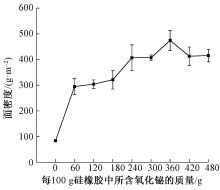
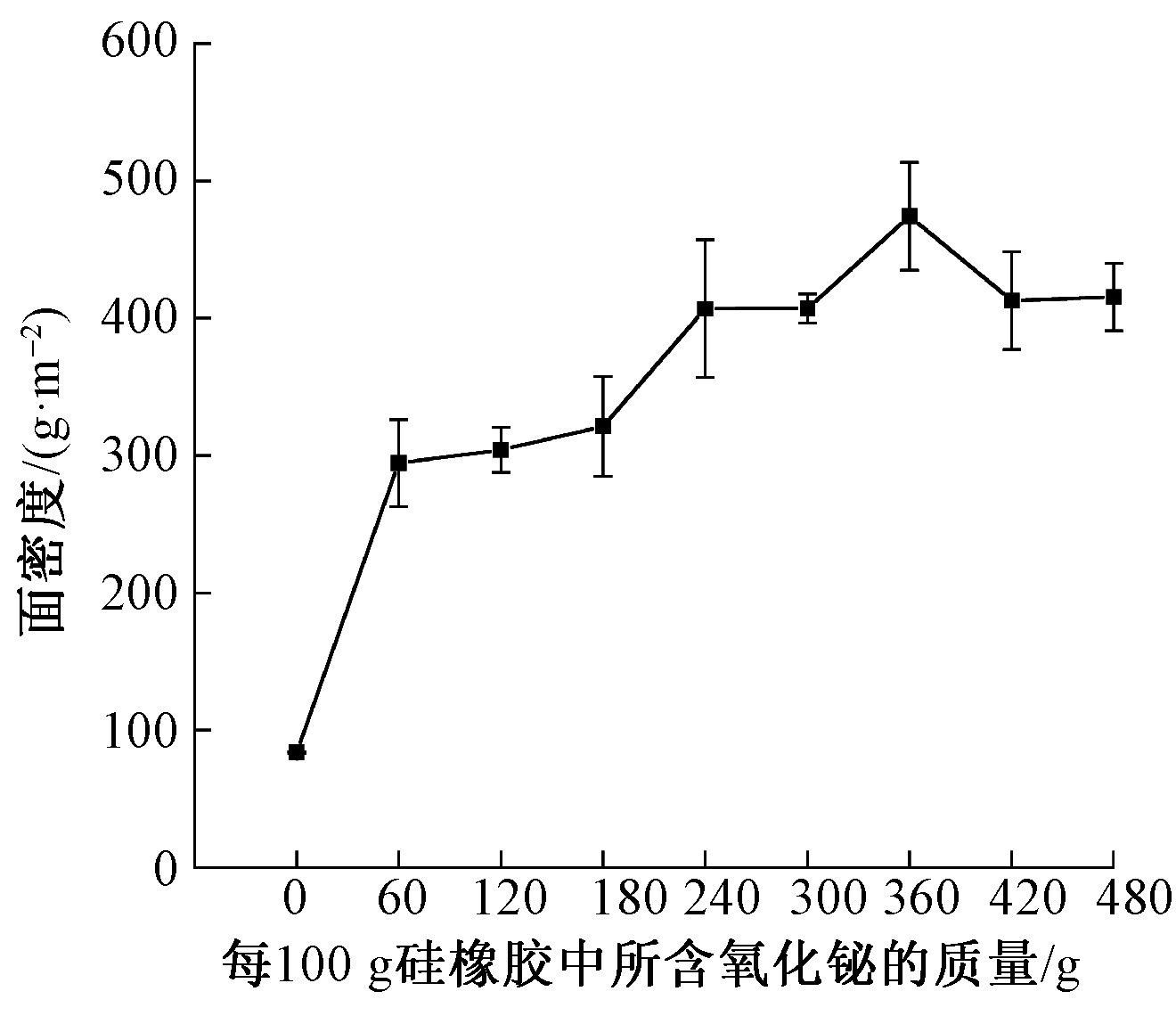
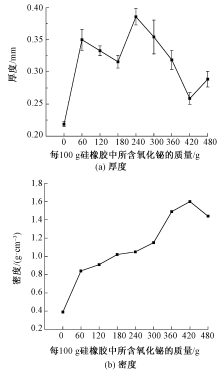
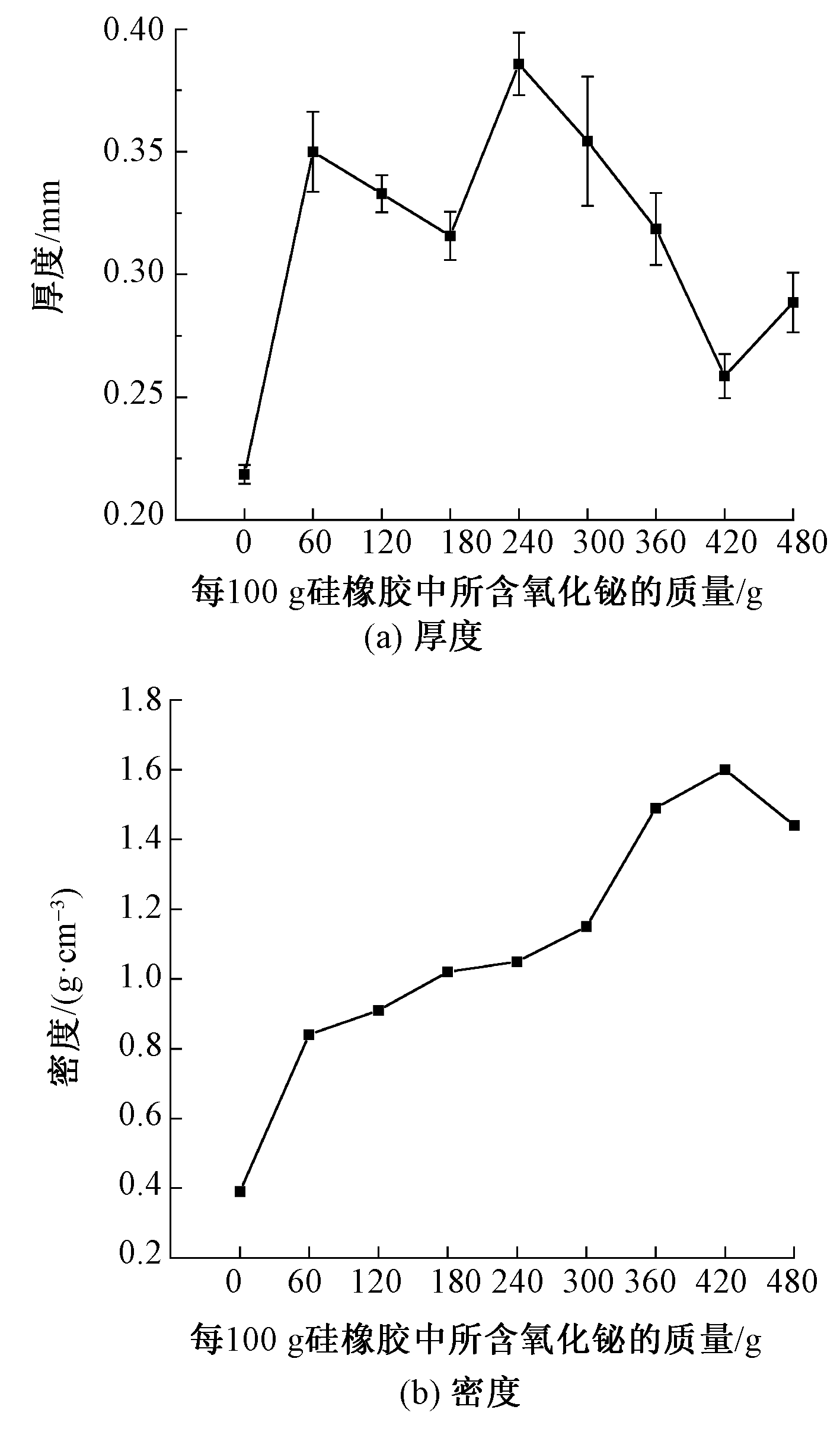
Results The areal density of PET substrate fabric increased with the increasing content of bismuth oxide when the bismuth oxide content per 100 g of silicone rubber was lower than 360 g.The maximum areal density was 474 g/m2. When 100 g of silicone rubber contains more than 360 g of the bismuth oxide, the areal density of the coated material showed slight decrease and gradually reached a static level. The increase in bismuth oxide content made the thickness of PET fabric increase and then followed by a decrease. When the content of bismuth oxide reached 240 g per 100 g of silicone rubber, the PET fabric was with the maximum thickness of 0.39 mm. The density of flexible protective materials with different bismuth oxide contents was in the range of 0.8 to 1.6 g/cm3, compared to 3.79 g/cm3of the commercial lead-containing protective materials. It is evident that the density of the prepared coated fabric was significantly lower than that of conventional lead-containing protective materials.

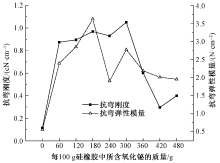
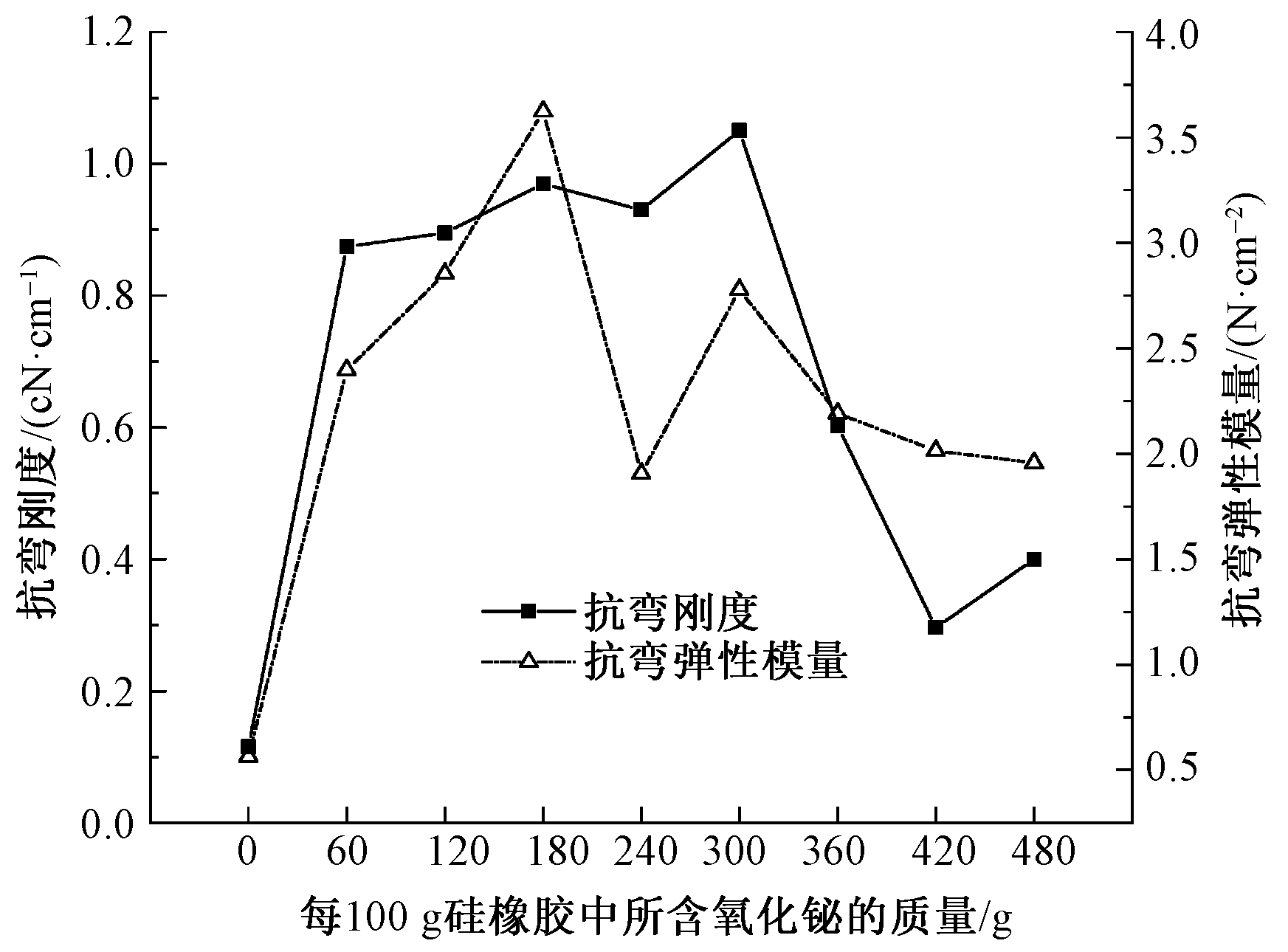
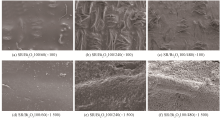
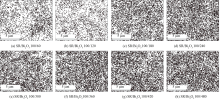
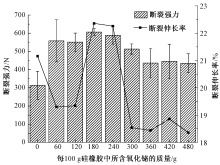
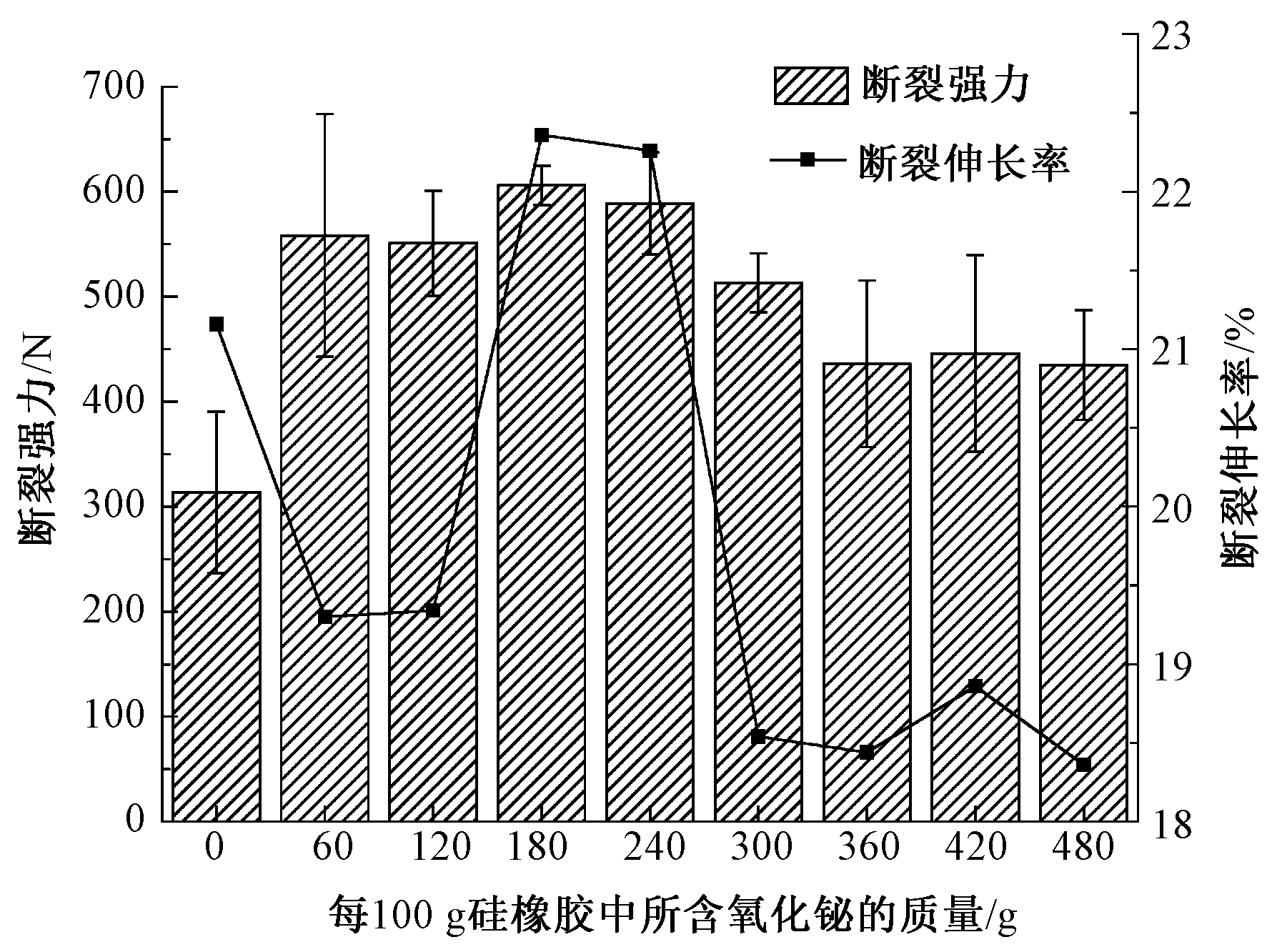
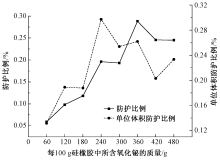
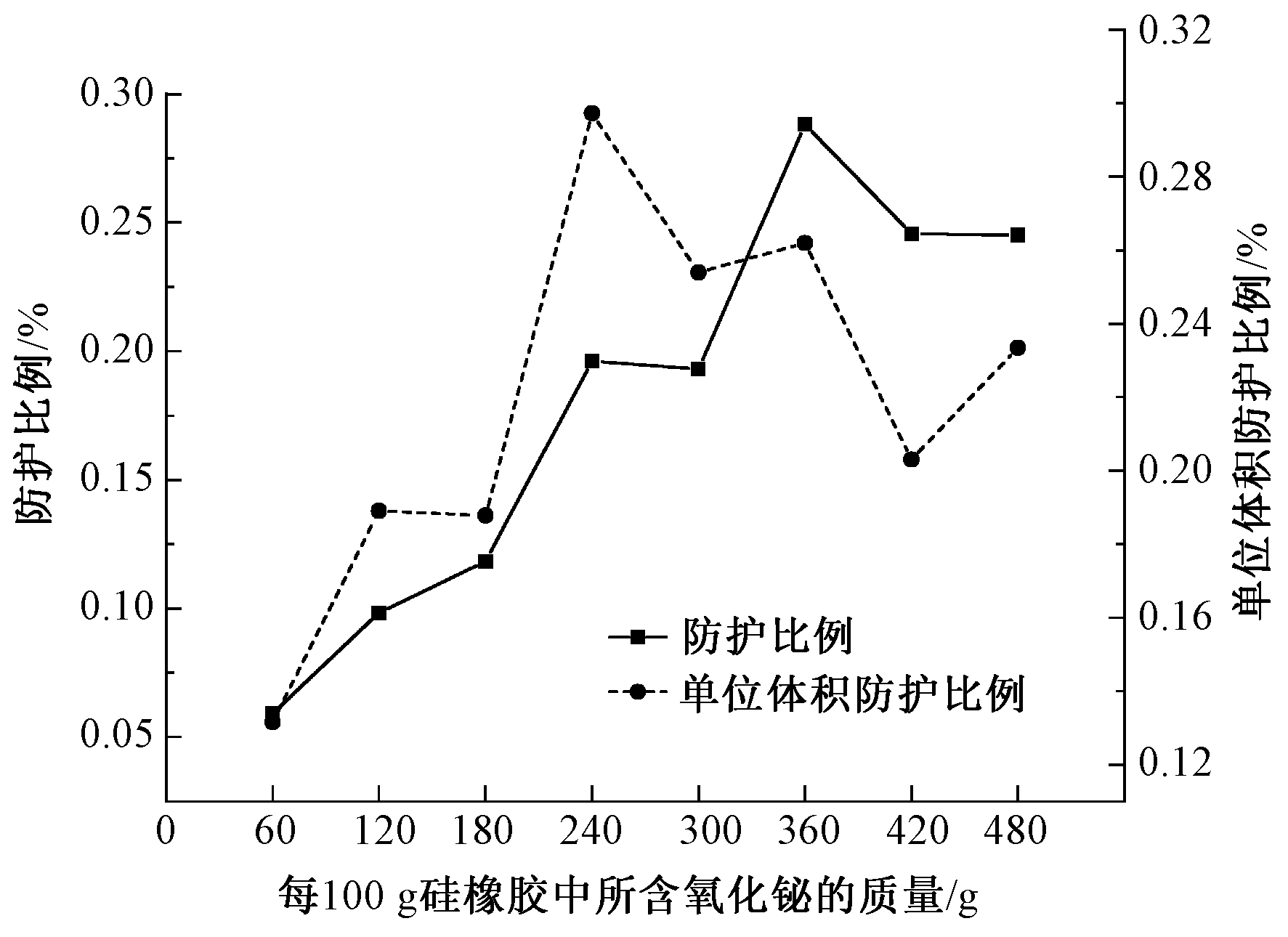
The coated fabrics exhibited poor bending performance comparing with the pristine fabric. The bending elastic modulus tended to increase first and then decrease with the increase of bismuth oxide content. The SEM and EDS images showed that the bismuth oxide powder was dispersed evenly in the silicone rubber when the bismuth oxide content per 100 g of silicone rubber was less than 240 g. When the bismuth oxide content per 100 g of silicone rubber exceeded 240 g, the bismuth oxide powder gradually formed some self-aggregated particles, resulting in poor dispersion in the silicone rubber. When the bismuth oxide content per 100 g of silicone rubber reached 240 g, the bismuth element was evenly and densely distributed on the fabric surface. There was no powder dropping on the surface of the fabric sample, which was conducive to X-ray protection and practical application. The coating of bismuth oxide-silicone rubber enhanced the breaking strength of PET fabrics. The breaking elongation of coated fabrics was lower than the pristine sample except for the fabrics with bismuth oxide contents of 180 to 240 g per 100 g of silicone rubber. The highest X-ray protection ratio of PET fabrics was 28.81% when the bismuth oxide content reached 360 g per 100 g of silicone rubber. However, when the bismuth oxide content per 100 g of silicone rubber was 240 g, the highest X-ray protection ratio per unit density of PET fabric reached 29.73%.

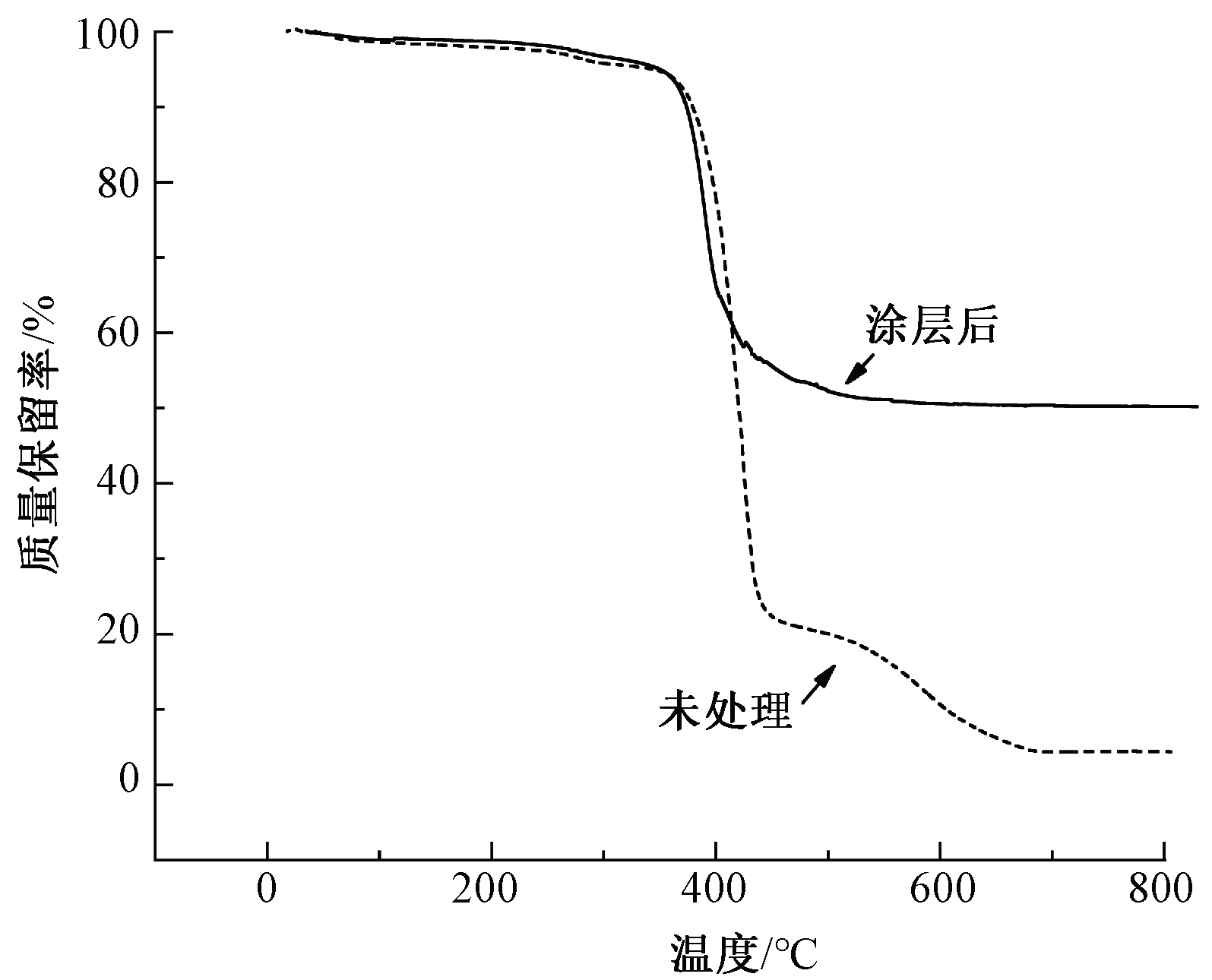
Conclusion The maximum thickness of coated PET fabric was 0.39 mm when the content of bismuth oxide reached 240 g per 100 g of silicone rubber. The density of flexible protective materials with different bismuth oxide contents was in the range of 0.8 to 1.6 g/cm3, which was significantly lower than that of conventional lead-containing protective materials. The maximum load of bismuth oxide was 360 g per 100 g of silicone rubber. Bwteen bismuth oxide content 0 and 360 g per 100 g of silicone rubber, 240 g was found the the optimal for lightweight and softness. For practical application of flexible X-ray protective materials, dispersion uniformity of bismuth oxide in silicone rubber and drop of particles from the fabric surface are two important considerations. The bismuth oxide content of less than 240 g per 100 g of silicone rubber should be selected, considering the parameters of X-ray protection performance, softness and mechanical properties of the coated PET fabrics, the optimal filling amount of bismuth oxide per 100 g of silicone rubber was 240 g. The X-ray protection ratio per unit density of PET fabric was 29.73%. The X-ray protection ratio was approximated to be 31.9% for the nanocomposite materials prepared with polymethyl methylmethacrylate (PMMA) as the polymer matrix and bismuth oxide nanoparticles as the filler. In addition, the thermal stability and the breaking strength of PET fabrics after coating was improved.

Key words: radiation protection, functional textile, polyester fabric, bismuth oxide, silicone rubber, X-ray protection, coating process

CLC Number: 

  • TL733

Tab.1

Formulation of a mobile colloidal coating solution"

样品编号 透明液
体硅橡
胶B质
量/g
氧化
铋质
量/g
乙酸乙
酯质
量/g
固化
剂质
量/g
防护材料
中氧化铋
的质量分
数/%
SR/Bi2O3 100/0 100 0 10 2 0.0
SR/Bi2O3 100/60 100 60 30 2 37.0
SR/Bi2O3 100/120 100 120 60 2 54.1
SR/Bi2O3 100/180 100 180 90 2 63.8
SR/Bi2O3 100/240 100 240 120 2 70.2
SR/Bi2O3 100/300 100 300 150 2 74.6
SR/Bi2O3 100/360 100 360 180 2 77.9
SR/Bi2O3 100/420 100 420 210 2 80.5
SR/Bi2O3 100/480 100 480 240 2 82.5

Fig.1

Preparation of bismuth oxide-silicone rubber based X-ray flexible protective materials by knife coating process"

Fig.2

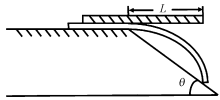
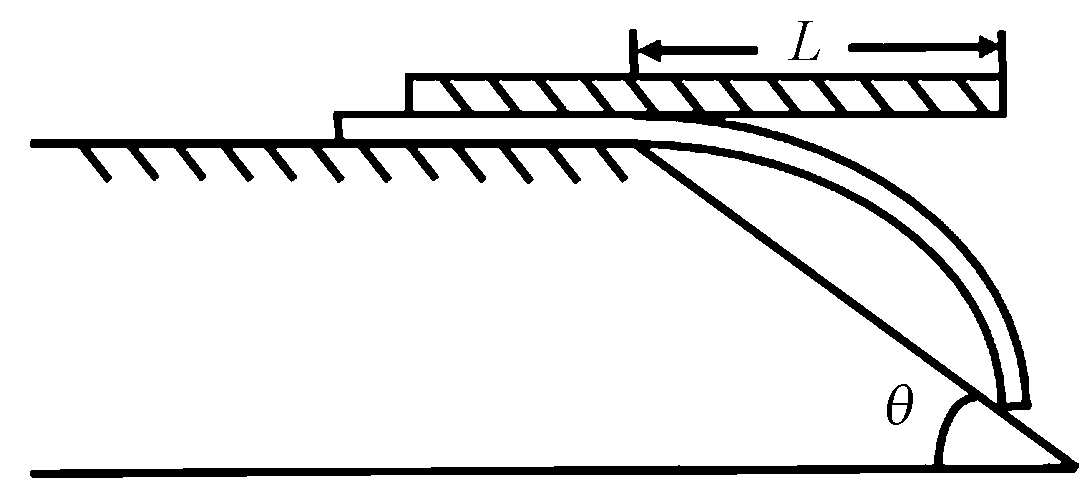
Schematic diagram of measuring stiffness and flexibility of fabric by bevel method"

Fig.3

Curve of areal density of PET fabric with bismuth oxide content"

Fig.4

Variation curve of sample thickness(a) and density(b) with bismuth oxide content"

Fig.5

Curve of bending stiffness and bending elastic modulus with bismuth oxide content"

Fig.6

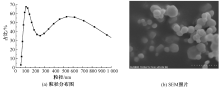
Size distribution curve(a) and SEM image(b) of bismuth oxide"

Fig.7

SEM images of PET fabrics with different bismuth oxide content"

Tab.2

Content of bismuth element from PET fabrics with different bismuth oxide contents"

每100 g硅橡胶中
氧化铋的质量/g
60 120 180 240 300 360 420 480
铋元素含量/% 34.1 38.3 52.2 58.9 61.4 68.8 70.3 73.9

Fig.8

EDS pattern of bismuth element from PET fabrics with different bismuth oxide contents"

Fig.9

Curve of breaking strength and breaking elongation with bismuth oxide content"

Fig.10

Thermogravimetric curves of PET fabrics before and after coating"

Fig.11

Curve of protection ratio with bismuth oxide content"

[1] YONPHAN S, CHAIPHAKSA W, KALKORNSURAPRANEE E, et al. Development of flexible radiation shielding materials from natural rubber/Sb2O3 composites[J]. Radiation Physics and Chemistry, 2022. DOI: 10.1016/j.radphyschem.2022.110379.
[2] GHOLAMZADEH L, SHARGHI H, AMINIAN M K. Synthesis of barium-doped PVC/Bi2WO6 composites for X-ray radiation shielding[J]. Nuclear Engineering and Technology, 2022, 54(1): 318-325.
[3] LI Z, ZHOU W, ZHANG X, et al. High-efficiency, flexibility and lead-free X-ray shielding multilayered polymer composites: layered structure design and shielding mechanism[J]. Scientific Reports, 2021, 11(1): 1-13.
[4] BUKHVALOVA S Y, ASMOLOVA N F, LOPATINA T I, et al. Bismuth and thorium fluorides as efficient X-ray radiation shielding materials[J]. Radiation Physics and Chemistry, 2021. DOI: 10.1016/j.radphyschem.2021.109388.
[5] REDDY B C, MANJUNATHA H C, VIDYA Y S, et al. X-ray/gamma ray radiation shielding properties of α-Bi2O3 synthesized by low temperature solution combustion method[J]. Nuclear Engineering and Technology, 2022, 54(3): 1062-1070.
[6] ZAREI M, SINA S, HASHEMI S A. Superior X-ray radiation shielding of biocompatible platform based on reinforced polyaniline by decorated graphene oxide with interconnected tungsten-bismuth-tin complex[J]. Radiation Physicsand Chemistry, 2021. DOI: 10.1016/j.radphyschem.2021.109588.
[7] 闫林萍, 沈悦, 李昊, 等. 超细纤维-稀土元素复合X射线防护材料的制备及性能[J]. 材料工程, 2023, 51(4): 167-176.
doi: 10.11868/j.issn.1001-4381.2022.000053
YAN Linping, SHEN Yue, LI Hao, et al. Preparation and properties of microfiber-rare earth elements composites as-ray protective materials[J]. Journal of Materials Engineering, 2023, 51(4): 167-176.
doi: 10.11868/j.issn.1001-4381.2022.000053
[8] LI W, CHEN S, PENG M, et al. Prediction of γ-ray shielding performance and study of Bi/PU coated fabric[J]. Textile Research Journal, 2022, 93(9/10): 2303-2316.
[9] YU L, PEREIRA A L C, TRAN D N H, et al. Bismuth oxide films for X-ray shielding: effects of particle size and structural morphology[J]. Materials Chemistry & Physics, 2021, 260(2):1-7.
[10] 廖益传. 基于组合填料的射线防护柔性复合材料的制备和性能研究[D]. 绵阳: 中国工程物理研究院, 2018: 3-25.
LIAO Yichuan. Preparation and properties of flexible composite materials for radiation protection based on composite fillers[D]. Mianyang: China Academy of Engineering Physics, 2018: 3-25.
[11] 吴巧英, 胡滢, 吴春胜, 等. 不同织物弯曲性能测试仪测试结果的比较[J]. 纺织学报, 2015, 36(7): 126-130.
WU Qiaoying, HU Ying, WU Chunsheng, et al. Comparative analysis on test results of different fabric bending behavior test apparatus[J]. Journal of Textile Research, 2015, 36(7): 126-130.
[12] 左亚君, 蔡赟, 王蕾, 等. 纯棉纱线合股数对织物性能的影响[J]. 纺织学报, 2021, 42(4): 74-79.
ZUO Yajun, CAI Bin, WANG Lei, et al. Influence of ply number of cotton yarns on fabrics performance[J]. Journal of Textile Research, 2021, 42(4): 74-79.
[13] LIU W, ZHANG X, WANG H, et al. Flexible lightweight Bi2O3-rubber based materials for X-ray protection[J]. Radiation Physics and Chemistry, 2024. DOI: 10.1016/j.radphyschem.2023.111395.
[14] MOTAKEF-KAZEMI N, RASHIDIAN M. Synthesis and characterization of bismuth oxide nanoparticle by thermal decomposition of bismuth-based MOF and evaluation of its nanocomposite[J]. Iranian Journal of Chemistry & Chemical Engineering, 2021, 40(1): 11-19.
[1] GUO Qing, MAO Yangshun, REN Yajie, LIU Jimin, WANG Huaifang, ZHU Ping. Simultaneous in-situ dyeing and flame retardant functionalization of wool fabrics based on laccase catalysis [J]. Journal of Textile Research, 2025, 46(02): 161-169.
[2] ZHANG Jie, GUO Xinyuan, GUAN Jinping, CHENG Xianwei, CHEN Guoqiang. Modification of cotton fabric by in-situ deposition of phosphorus/nitrogen flame retardants for durable flame retardancy [J]. Journal of Textile Research, 2025, 46(02): 180-187.
[3] SONG Wanmeng, WANG Baohong, SUN Yu, YANG Jiaxiang, LIU Yun, WANG Yuzhong. Preparation and performance of flame-retardant viscose fabrics with both mechanical and efficient flame-retardant properties [J]. Journal of Textile Research, 2025, 46(02): 188-196.
[4] YUAN Huabin, WANG Yifeng, WANG Jiapeng, XIANG Yongxuan, CHEN Guoqiang, XING Tieling. Modification of cotton fabrics by behenic acid and ZIF-8 for superhydrophobic and anti-icing performance [J]. Journal of Textile Research, 2025, 46(02): 197-206.
[5] ZHU Lin, WANG Zhanpeng, WU Baozhai, WANG Shaopeng, LIU Yiming, DAI Chengna, CHEN Biaohua. Decolorization of waste polyester fabrics by solvent extraction and its influence on glycolysis [J]. Journal of Textile Research, 2025, 46(01): 103-110.
[6] XIAO Xin, LI Wei, LU Run, JIANG Huiyu, LI Qing. Scouring and bleaching of cotton nonwoven fabrics using plasma-assisted hydrogen peroxide activation system [J]. Journal of Textile Research, 2024, 45(12): 118-127.
[7] HUANG Tiantian, SONG Yuanzhu, ZHAO Bin. Tannic acid-based flame retardant multifunctional coating for surface finishing Lyocell fabrics [J]. Journal of Textile Research, 2024, 45(12): 152-158.
[8] GUAN Yu, WANG Dong, GUO Yifang, FU Shaohai. Preparation and properties of MoS2/MXene flame retardant gas sensitive cotton fabrics [J]. Journal of Textile Research, 2024, 45(12): 159-165.
[9] WANG Xinyu, GUO Mingming, ZHANG Lele, ZHENG Weijie, AMJAD Farooq, WANG Zongqian. Preparation and performance analysis of durable antimicrobial and superhydrophobic cotton fabrics [J]. Journal of Textile Research, 2024, 45(11): 170-177.
[10] YU Ping, WANG Haiyue, WANG Yi, SUN Qinchao, WANG Yan, HU Zuming. Hydrophobic modification and mechanism of polyester fabrics with direct fluorine modification [J]. Journal of Textile Research, 2024, 45(10): 137-144.
[11] ZHAO Qiang, LIU Zhengjiang, GAO Xiaoping, ZHANG Yunting, ZHANG Hong. Functionality of cotton fabrics finished by montmorillonite combined with TiO2 [J]. Journal of Textile Research, 2024, 45(09): 121-128.
[12] XIANG Xuexue, LIU Na, GUO Jiaqi, GAO Jing, WANG Lu, HU Xiuyuan. Preparation and performance of patterned thermal polyester medical bandage [J]. Journal of Textile Research, 2024, 45(08): 198-204.
[13] HE Mantang, GUO Junze, WANG Liming, QIN Xiaohong. Simulation of coupled thermal-moisture transfer in cross-section of nanofiber core-spun yarns [J]. Journal of Textile Research, 2024, 45(08): 142-149.
[14] XU Yusong, ZHOU Jie, GAN Jiayi, ZHANG Tao, ZHANG Xianming. Preparation of phosphorus and nitrogen containing waterborne polyurethane and its application in polyester fabrics for flame retardant finishing [J]. Journal of Textile Research, 2024, 45(07): 112-120.
[15] LI Xu, LIU Xiangji, JIN Xin, YANG Chenghao, DONG Chaohong. Preparation of durable and efficient P/N synergical flame retardant and its application on cotton fabrics [J]. Journal of Textile Research, 2024, 45(07): 121-129.
Viewed
Full text


Abstract

Cited

  Shared   
  Discussed   
No Suggested Reading articles found!