Journal of Textile Research ›› 2025, Vol. 46 ›› Issue (09): 66-73.doi: 10.13475/j.fzxb.20250205901

• Fiber Materials • Previous Articles     Next Articles

Preparation and properties of long-lasting antimicrobial polyamide 66 fibers

SUN Heqing1,2, ZHAO Congying1,2, WU Bingxue1,2, ZHANG Youwei1,2()   

  1. 1. State Key Laboratory of Advanced Fiber Materials, Donghua University, Shanghai 201620, China
    2. College of Materials Science and Engineering, Donghua University, Shanghai 201620, China
  • Received:2025-02-26 Revised:2025-06-18 Online:2025-09-15 Published:2025-11-12
  • Contact: ZHANG Youwei E-mail:zhyw@dhu.edu.cn

Abstract:

Objective Antimicrobial polyamide 66 (PA66) fibers have gained a lot of attention because of the demand from the apparel and biomedical fields. Poly(hexamethylene guanidine hydrochloride) (PHMG) is an ideal antimicrobial agent because of its broad-spectrum antimicrobial properties, good biocompatibility, low cost and non-toxicity. However, due to its excellent water solubility, the antimicrobial fibres produced by direct blending of PHMG with the matrix exhibit shortcomings such as poor washability and dissolution tendency. The present study aims at producing long-lasting antimicrobial polyamide 66 (PA66) fibers via modification of PHMG with polyepoxy polystyrene (PSG).

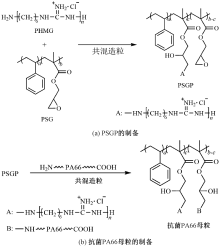
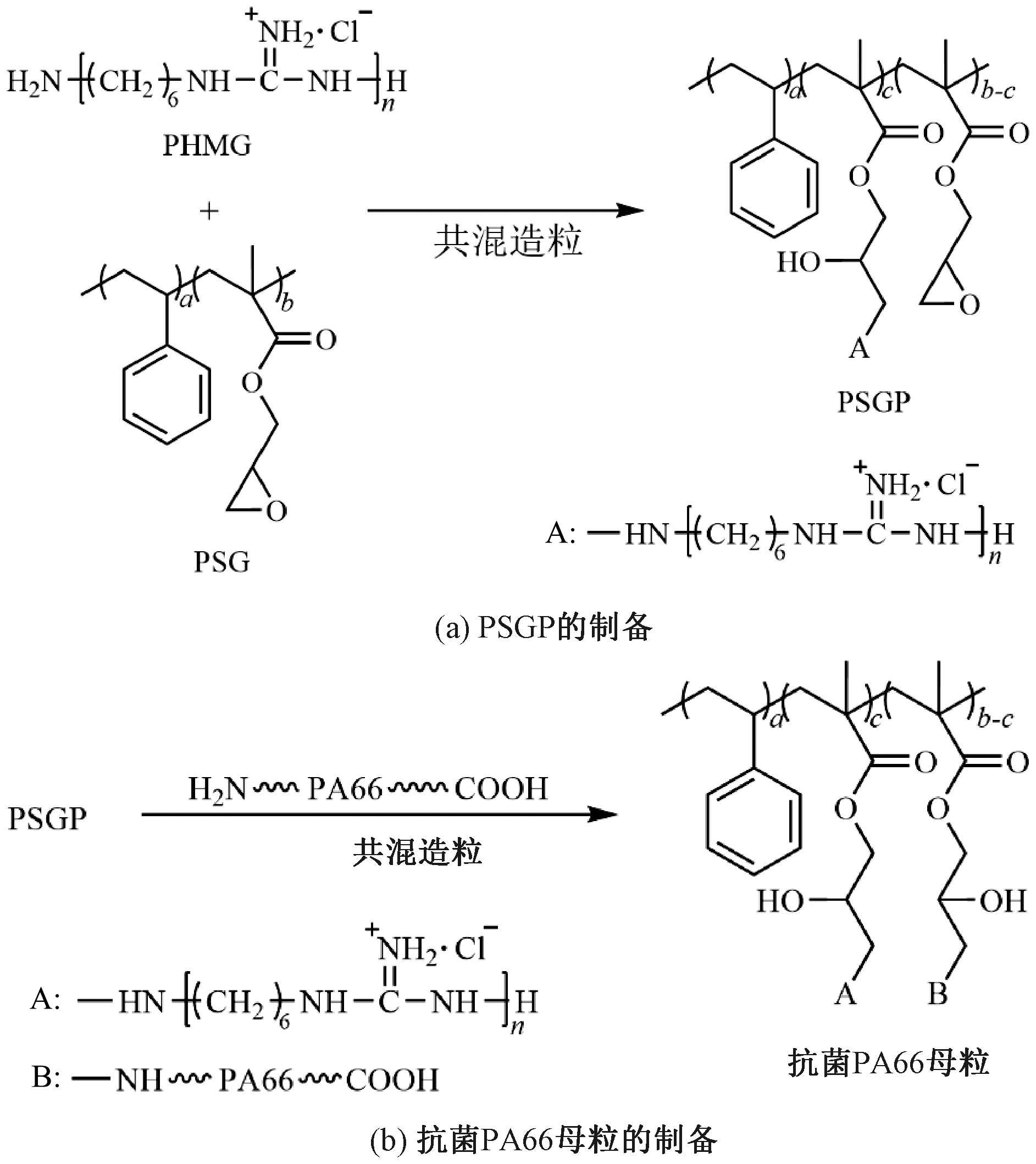
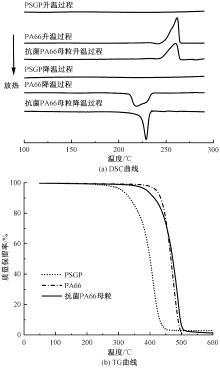
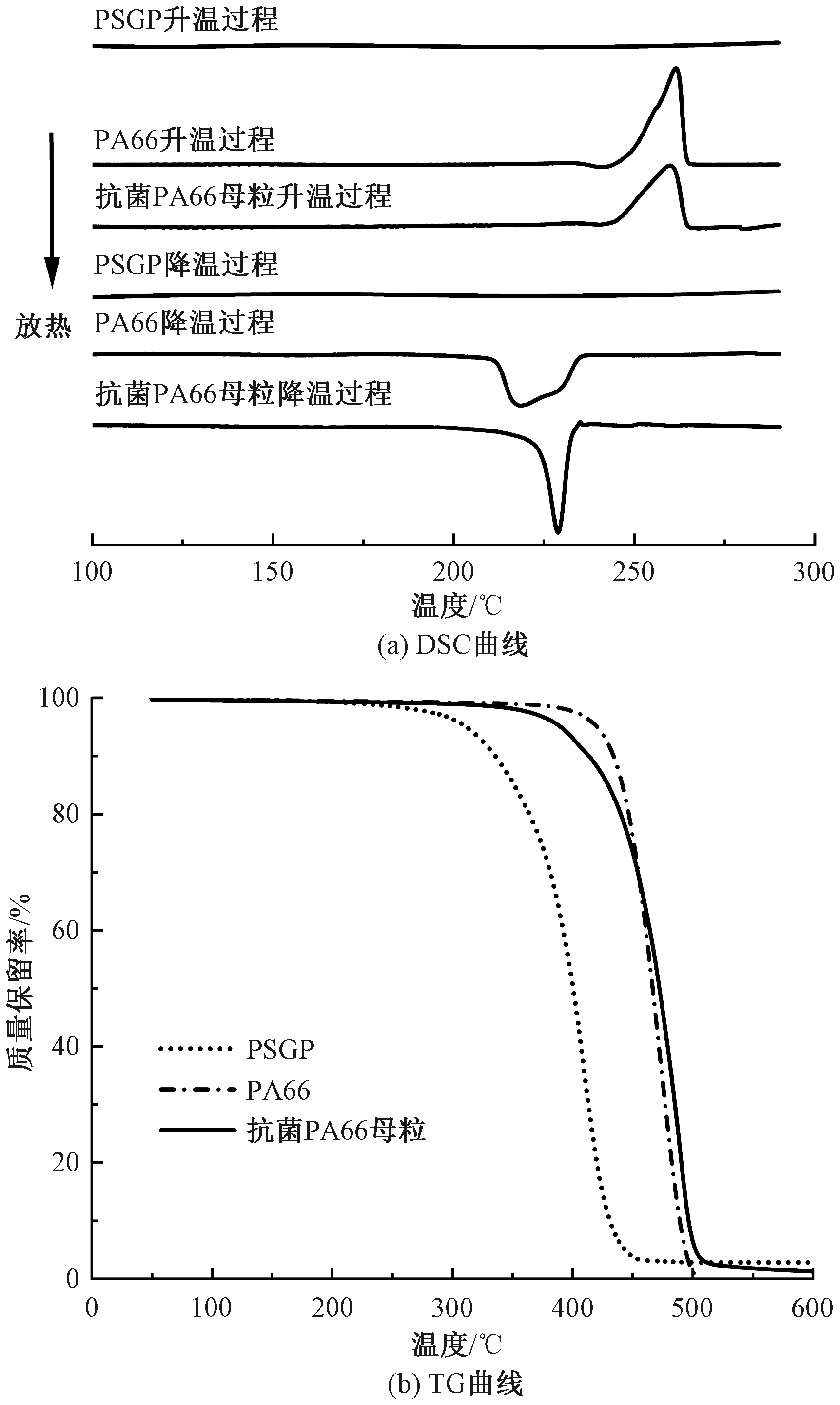
Method PHMG was first modified by melt blending with PSG via a twin-screw extruder to produce guanidine salt copolymer (PSGP). Next, PSGP was melt blended with PA66 chips via a twin-screw extruder to produce antimicrobial PA66 masterbatch. Finally, the antimicrobial PA66 masterbatch was used as additives to fabricate long-lasting antimicrobial PA66 fibers through blend melt spinning techniques. The chemical structure and thermal properties of the antimicrobial PA66 masterbatch, the micromorphology, crystal structure, mechanical and antimicrobial properties, as well as the distribution of Cl element on the cross-section of the antimicrobial PA66 fibres were investigated.

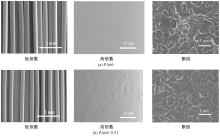
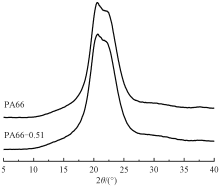
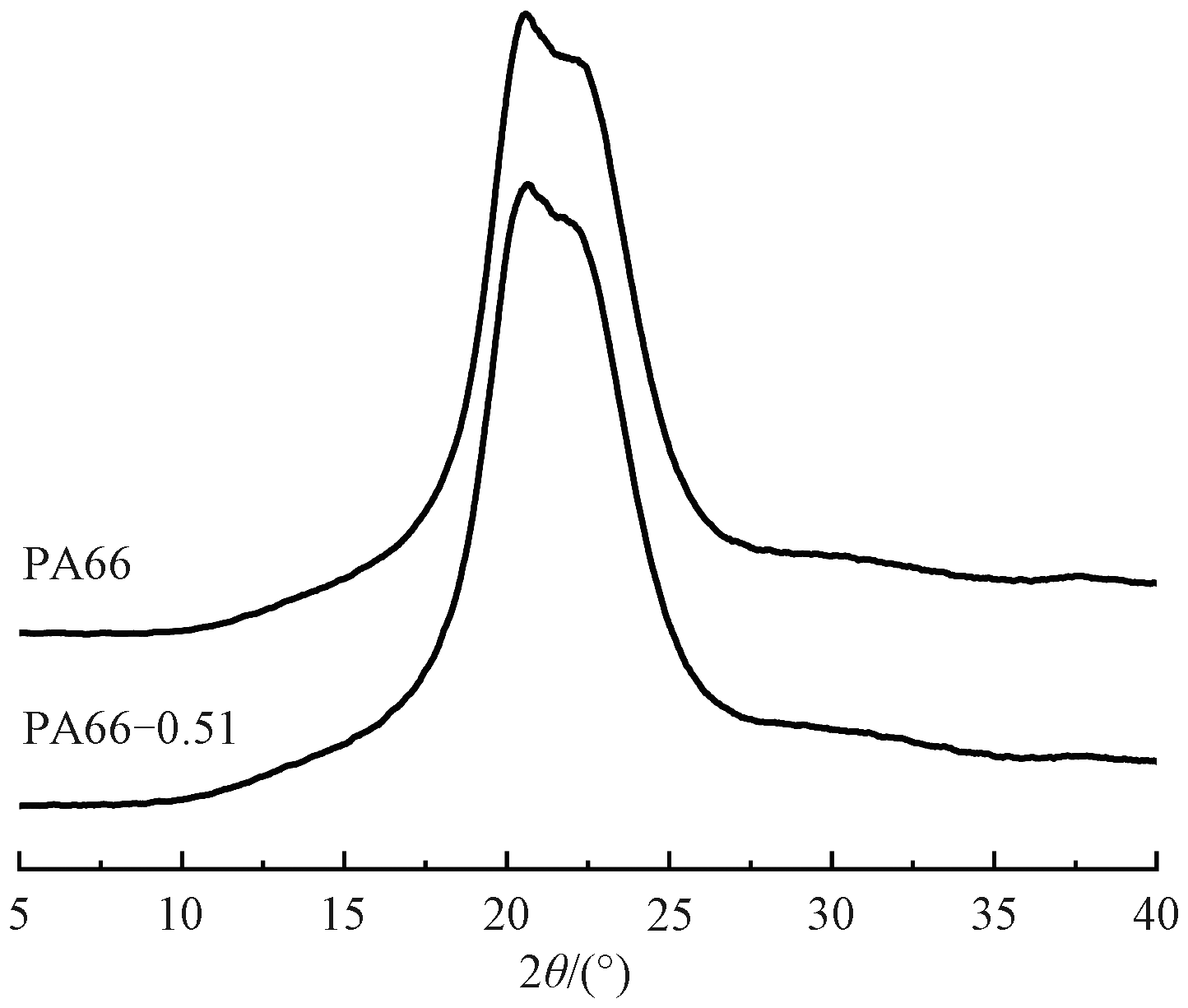
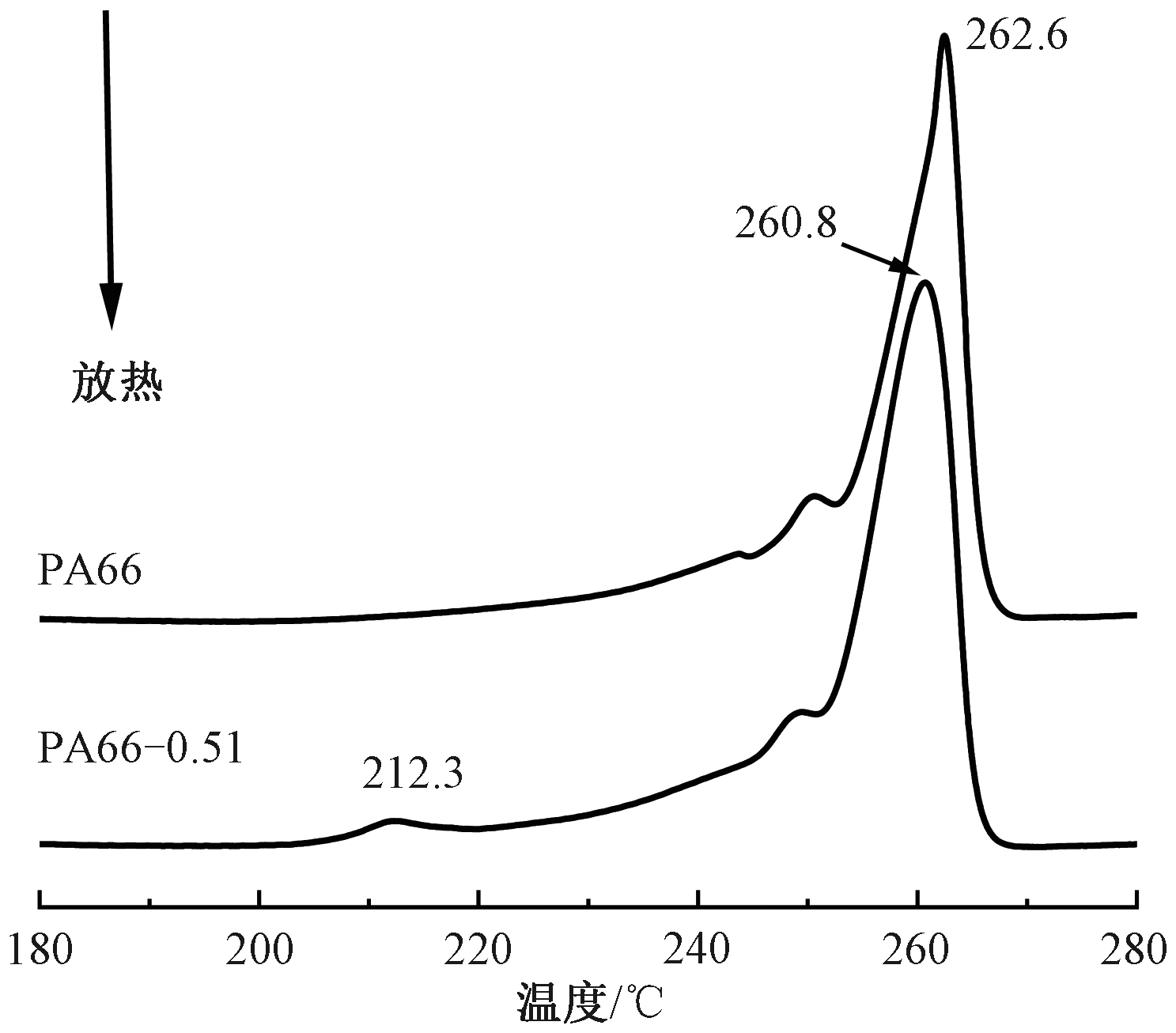
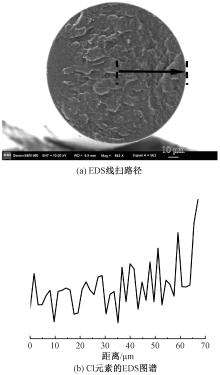
Results The antimicrobial PA66 masterbatch demonstrated exceptional thermal stability with almost no mass loss below 310 ℃, fully satisfying the thermal requirements for melt spinning processes. Remarkably, even at a PHMG loading as low as 0.33%, the resulting PA66 fibers achieved outstanding antibacterial efficacy, showing 99.46% and over 99.99% reduction rates against E. coli and S. aureus, respectively. When the PHMG content was increased to 0.39%, the fibers exhibited over 99.99% antibacterial activity against both bacterial strains. Notably, after 50 washing cycles, fibers with a PHMG dosage of 0.45% maintained impressive antibacterial performance with over 95% inhibition rates for both microorganisms, demonstrating excellent wash durability and good long-lasting antimicrobial properties. Mechanical characterization revealed that as the dosage of PHMG increased gradually from 0% to 0.33%, 0.39%, 0.45% and 0.51%, the breaking strength of the resulting fibers decreased continuously from (6.09±0.21) cN/dtex to (5.48±0.22), (5.35±0.20), (5.19±0.23), and (4.98±0.27) cN/dtex, while the orientation factor only slightly decreased from 0.79±0.03 to 0.77±0.02, 0.76±0.04, 0.76±0.03, and 0.75±0.04. DSC and XRD analyses indicated that the incorporation of PHMG reduced crystallinity and diminished crystal structure regularity in the fibers, explaining the observed mechanical property changes. Importantly, despite this reduction, all antibacterial fibers maintained breaking strengths above (4.98±0.27) cN/dtex, which fulfills the mechanical requirements for practical textile applications. SEM morphological analysis demonstrated excellent compatibility between PSGP and PA66 matrix, with no evidence of phase-separation. Surface characterization studies, including the cross-section radial line-scanning of Cl (a characteristic element of PHMG) and XPS analysis of the antimicrobial PA66-0.51 fiber containing 0.51% PHMG, revealed significant PHMG enrichment on the fiber surface compared to both the inner part and bulk average of the fiber. This surface enrichment phenomenon explains the fibers' exceptional antibacterial performance at such low PHMG loadings.

Conclusion Antimicrobial PA66 masterbatch exhibits good thermal stability. The introduction of PSG promotes the enrichment of PHMG on the fiber surface during the spinning process. This enhances the utilization rate of the antimicrobial agent, enabling the antimicrobial PA66 fiber to achieve over 99% antibacterial rates against E. coli and S. aureus at a low PHMG dosage of 0.33%. At a PHMG dosage of 0.45%, the resulting antimicrobial fibre not only remained excellent antimicrobial properties after 50 washing cycles, but also exhibited good mechanical properties with a breaking tenacity of 5.19 cN/dtex. In summary, this work provides a new approach for developing PA66 fibre materials that combine excellent mechanical properties with efficient antimicrobial performance, demonstrating great potential for applications in medical, sports, and home textiles.

Key words: antimicrobial fiber, polyamide66, poly(hexamethylene guanidine hydrochloride), polyepoxy polystyrene, antimicrobial agent

CLC Number: 

  • TQ342.8

Fig.1

Preparation route for antimicrobial PA66 masterbatch. (a) Preparation of PSGP; (b) Preparation of antibacterial PA66 masterbatch"

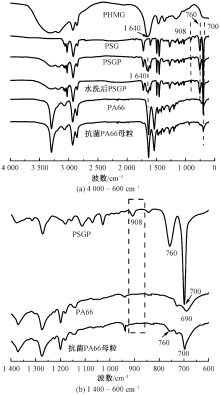
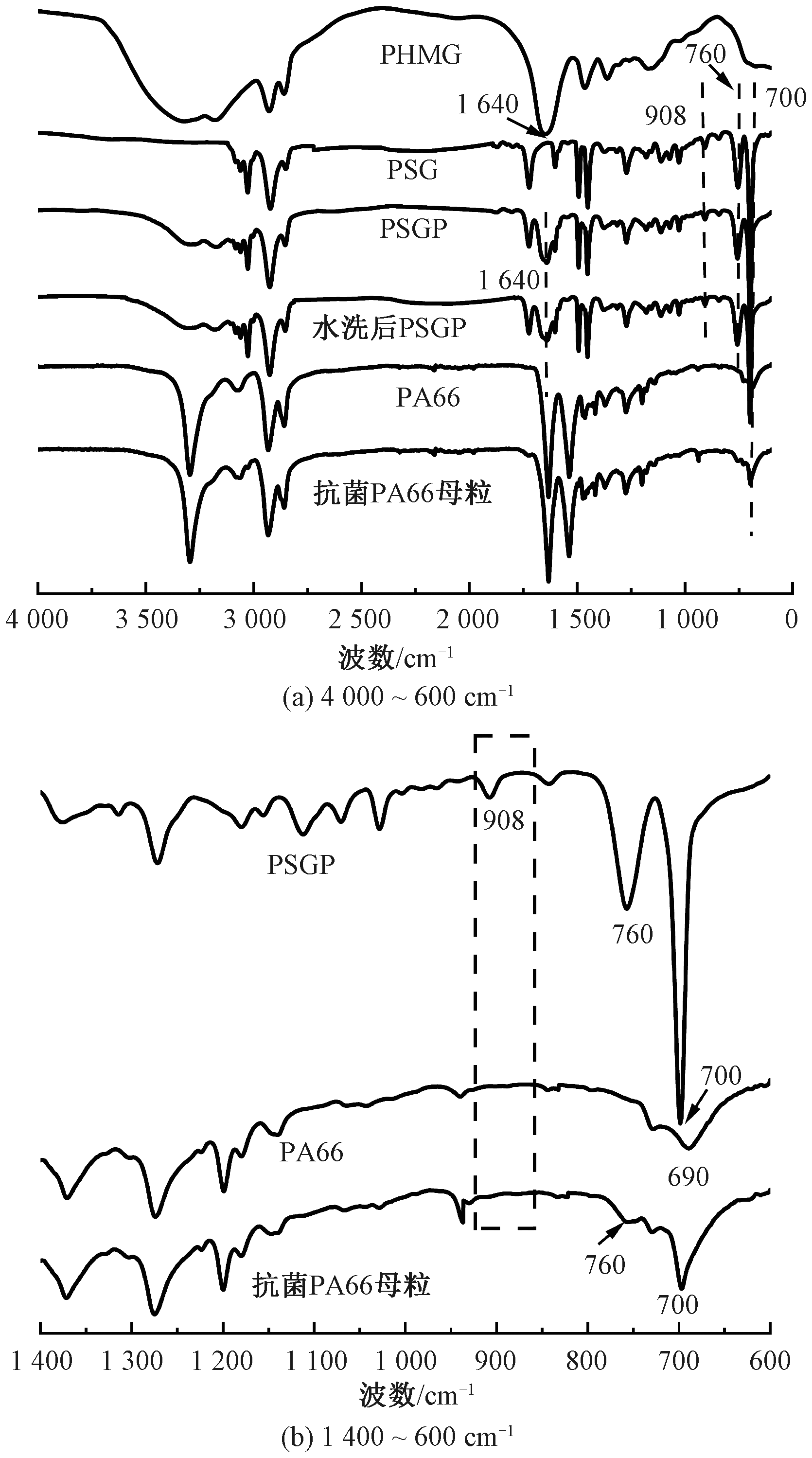
Fig.2

FT-IR spectra of PHMG, PSG, PSGP, PSGP after washing, PA66 and antimicrobial PA66 masterbatch"

Fig.3

Thermal properties of PSGP, PA66 and antimicrobial PA66 masterbatch. (a) DSC curves; (b) TG curves"

Fig.4

SEM images of as-spun PA66 and PA66-0.51 fibers"

Fig.5

WAXD patterns of PA66 and PA66-0.51 fibers"

Fig.6

DSC curves of PA66 and PA66-0.51 fibers"

Tab.1

Comparison of breaking strength, elongation at break and orientation factor of fibers"

样品
编号
PHMG质量
分数/%
线密度/
dtex
断裂强度/
(cN·dtex-1)
断裂伸
长率/%
取向
因子
PA66 0 81.22±1.73 6.09±0.21 10.3±0.6 0.79±0.03
PA66-0.33 0.33 76.34±2.14 5.48±0.22 10.1±0.7 0.77±0.02
PA66-0.39 0.39 76.32±2.18 5.35±0.20 10.2±0.6 0.76±0.04
PA66-0.45 0.45 75.18±2.03 5.19±0.23 10.6±0.7 0.76±0.03
PA66-0.51 0.51 73.01±1.97 4.98±0.27 10.4±0.7 0.75±0.04

Tab.2

Antibacterial rates of PA66 fibers and antimicrobial PA66 fibers"

样品 洗涤处理 抑菌率/%
对大肠埃希菌 对金黄色葡萄球菌
PA66 0 0
PA66-0.33 未洗涤 99.46 >99.99
洗涤50次 82.52 90.14
PA66-0.39 未洗涤 >99.99 >99.99
洗涤50次 92.93 98.58
PA66-0.45 未洗涤 >99.99 >99.99
洗涤50次 95.31 >99.99
PA66-0.51 未洗涤 >99.99 >99.99
洗涤50次 98.34 >99.99

Fig.7

EDS line scan of Cl element of cross-section of as-spun PA66-0.51 fiber. (a) EDS line-sweep path; (b) EDS line-sweep Cl element distribution"

Tab.3

Cross-section radius EDS line scan and surface XPS scan results of PA66-0.51 fiber"

测试方法 原子占比/%
C O N Cl
EDS线扫 72.09 15.16 12.69 0.05
XPS 75.88 16.87 7.12 0.13
[1] ZHANG J, GAO X, ZHANG X, et al. Polyamide 66 and amino-functionalized multi-walled carbon nanotube composites and their melt-spun fibers[J]. Journal of Materials Science, 2019, 54(16):11056-11068.
doi: 10.1007/s10853-019-03619-0
[2] 赵红艳, 房文鹏, 曾成, 等. 83dtex/24f 阻燃尼龙66纤维的制备及性能研究[J]. 合成纤维工业, 2024, 47(4):47-51.
ZHAO Hongyan, FANG Wenpeng, ZENG Cheng, et al. Preparation and performance study of 83dtex/24f flame-retardant nylon 66 fibre[J]. China Synthetic Fiber Industry, 2024, 47(4):47-51.
[3] 成天保, 刘中宾, 张申奥, 等. 尼龙66工业丝生产工艺及影响可纺性的因素[J]. 合成纤维, 2024, 53(4):16-18.
CHENG Tianbao, LIU Zhongbin, ZHANG Shenao, et al. Production process of nylon 66 industrial filament and factors affecting spinnability[J]. Synthetic Fiber in China, 2024, 53(4):16-18.
[4] LIN J, WINKELMAN C, WORLEY S D, et al. Antimicrobial treatment of nylon[J]. Journal of Applied Polymer Science, 2001, 81(4):943-947.
doi: 10.1002/app.v81:4
[5] ZHANG M, GAO Q, YANG C, et al. Preparation of antimicrobial MnO4-doped nylon-66 fibers with excellent laundering durability[J]. Applied Surface Science, 2017, 422:1067-1074.
doi: 10.1016/j.apsusc.2017.06.070
[6] PANT H R, PANDEYA D R, NAM K T, et al. Photocatalytic and antibacterial properties of a TiO2/nylon-6 electrospun nanocomposite mat containing silver nanoparticles[J]. Journal of Hazardous Materials, 2011, 189(12):465-471.
doi: 10.1016/j.jhazmat.2011.02.062
[7] DURAL-EREM A, OZCAN G, SKRIFVARS M. Antibacterial activity of PA6/ZnO nanocomposite fibers[J]. Textile Research Journal, 2011, 81(16):1638-1646.
doi: 10.1177/0040517511407380
[8] 郑晓頔, 盛平厚, 蒋佳岑, 等. 铜改性抗菌防螨聚酰胺6纤维的制备及其性能[J]. 纺织学报, 2024, 45(3):19-27.
ZHENG Xiaodi, SHENG Pinghou, JIANG Jiazen, et al. Preparation and properties of copper-modified antimicrobial and anti-mite polyamide 6 fibres[J]. Journal of Textile Research, 2024, 45(3):19-27.
[9] DIZAJ S M, LOTFIPOUR F, BARZEGAR-JALALI M, et al. Antimicrobial activity of the metals and metal oxide nanoparticles[J]. Materials Science and Engineering:C, 2014, 44:278-284.
doi: 10.1016/j.msec.2014.08.031
[10] 项荣, 丁栋博, 范亮亮, 等. 氧化锌的抗菌机制及其安全性研究进展[J]. 中国组织工程研究, 2014, 18(3):470-475.
XIAN Rong, DING Dongbo, FAN Liangliang, et al. Progress of research on the antibacterial mechanism of zinc oxide and its safety[J]. Chinese Journal of Tissue Engineering Research, 2014, 18(3):470-475.
[11] BHANDARI V, JOSE S, BADANAYAK P, et al. Antimicrobial finishing of metals, metal oxides, and metal composites on textiles: a systematic review[J]. Industrial & Engineering Chemistry Research, 2022, 61(1): 86-101.
doi: 10.1021/acs.iecr.1c04203
[12] GUAN Y, XIAO H N, SULLIVAN H, et al. Antimicrobial-modified sulfite pulps prepared by in situ copolymerization[J]. Carbohydrate Polymers, 2007, 69(4):688-696.
doi: 10.1016/j.carbpol.2007.02.013
[13] LIM N, GOH D, BUNCE C, et al. Comparison of polyhexamethylene biguanide and chlorhexidine as monotherapy agents in the treatment of acanthamoeba keratitis[J]. American Journal of Ophthalmology, 2008, 145(1):130-135.
pmid: 17996208
[14] OULE M K, AZINWI R, BERNIER A M, et al. Poly hexamethylene guanidine hydrochloride-based disinfectant: a novel tool to fight meticillin-resistant Staphylococcus aureus and nosocomial infections[J]. Journal of Medical Microbiology, 2008, 57(12):1523-1528.
doi: 10.1099/jmm.0.2008/003350-0
[15] MATHURIN Y K, KOFFI-NEVRY R, GUEHI S T, et al. Antimicrobial activities of polyhexamethylene guanidine hydrochloride-based disinfectant against fungi isolated from cocoa beans and reference strains of bacteria[J]. Journal of Food Protection, 2012, 75(6):1167-1171.
doi: 10.4315/0362-028X.JFP-11-361 pmid: 22691490
[16] GILBERT P, MOORE L E. Cationic antiseptics:diversity of action under a common epithet[J]. Journal of Applied Microbiology, 2005, 99(4):703-715.
doi: 10.1111/jam.2005.99.issue-4
[17] CARMONA-RIBEIRO A M, MELO CARRASCO L D. Cationic antimicrobial polymers and their assembl-ies[J]. International Journal of Molecular Sciences, 2013, 14(5):9906-9946.
doi: 10.3390/ijms14059906
[18] AL-HITI M M A, GILBERT P. Changes in preservative sensitivity for the USP antimicrobial agents effectiveness test micro-organisms[J]. Journal of Applied Bacteriology, 1980, 49(1):119-126.
doi: 10.1111/jam.1980.49.issue-1
[19] KIM S H, SEMENYA D, CASTAGNOLO D. Antimicrobial drugs bearing guanidine moieties:a review[J]. European Journal of Medicinal Chemistry, 2021, 216:113293.
doi: 10.1016/j.ejmech.2021.113293
[20] WANG L, ZHOU B, DU Y, et al. Guanidine derivatives leverage the antibacterial performance of bio-based polyamide PA56 fibres[J]. Polymers, 2024, 16(19):2707.
doi: 10.3390/polym16192707
[21] 张瀚誉, 钱思琦, 朱瑞淑, 等. 抗菌生物基聚酰胺56及纤维的制备与性能研究[J]. 合成纤维, 2020, 49(12):1-7.
ZHANG Hanyu, QIAN Siqi, ZHU Ruishu, et al. Preparation and properties of antibacterial bio-based polyamide 56 and fibres[J]. Synthetic Fiber in China, 2020, 49(12):1-7.
[1] ZHENG Xiaodi, SHENG Pinghou, JIANG Jiacen, LI Rui, JIAO Hongjuan, QIU Zhicheng. Preparation and performance of copper modified antimicrobial and anti-mite polyamide 6 fiber [J]. Journal of Textile Research, 2024, 45(03): 19-27.
[2] CAO Congcong, TANG Longshi, LIU Yuanjun, ZHAO Xiaoming. Research progress of inorganic antibacterial fabrics [J]. Journal of Textile Research, 2022, 43(11): 203-211.
[3] . Adsorbability of modified poly(vinyl alcohol-co-ethylene) nanofiber membrane to heavy metal ions [J]. JOURNAL OF TEXTILE RESEARCH, 2017, 38(06): 11-16.
Viewed
Full text


Abstract

Cited

  Shared   
  Discussed   
No Suggested Reading articles found!