Journal of Textile Research ›› 2026, Vol. 47 ›› Issue (07): 54-62.doi: 10.13475/j.fzxb.20260303401

• Academic Papers of the 28th Annual Meeting of the China Association for Science and Technology ·Special Column: Breakthroughs in Generic Technologies for Pollution and Carbon Reduction· • Previous Articles     Next Articles

Design and performance optimization of plate-fin heat exchangers for waste heat recovery of stenters

CAO Xianzhong1,2,3(), LOU Huiqing2,4, CHEN Xiaojun1, SHEN Yifeng3   

  1. 1 315211n Center of Advanced Textile Technology (Jianhu Laboratory) , Shaoxing, Zhejiang 312033, China
    2 Ningbo Key Laboratory of Intelligent Manufacturing of Textiles and Garments (Zhejiang Fashion Institute of Technology), Ningbo, Zhejiang 315211, China
    3 Zhejiang Sci-Tech University, Shaoxing-Keqiao Research Institute, Shaoxing, Zhejiang 312033, China
    4 College of Textiles, Zhejiang Fashion Institute of Technology, Ningbo, Zhejiang 315211, China
  • Received:2026-03-13 Revised:2026-05-14 Online:2026-07-15 Published:2026-07-29

Abstract:

Objective In order to address the critical challenges of fouling, corrosion, and performance degradation in heat exchangers used for waste heat recovery from stenter exhaust in the textile printing and dyeing industry, this study aims to develop a comprehensive and practical design solution. The primary objectives are to identify an optimal material with balanced thermal conductivity, corrosion resistance, and cost, to optimize the core structural parameters of a plate heat exchanger for enhanced comprehensive performance, to establish an accurate fouling prediction model tailored to the oily-fibrous exhaust conditions, and to validate the overall system performance through long-term laboratory and field engineering tests.

Method Five candidate materials (carbon steel, 304 stainless steel, 316 stainless steel, 316L stainless steel, and TA1 titanium alloy) were evaluated. Thermal conductivity was measured using the steady-state plate method from 20℃ to 300℃, and corrosion resistance was assessed by potentiodynamic polarization tests in a simulated acidic exhaust environment (H2SO4 (pH=4), 80℃). A multi-objective optimization framework was developed by coupling computational fluid dynamics (CFD) simulations with the NSGA-II algorithm to optimize the channel spacing and fin spacing ratio. The objectives were to maximize heat transfer rate, while minimizing pressure drop and material volume. The technique for order preference by similarity to ideal solution (TOPSIS) was subsequently employed to select the optimal solution from the Pareto front. A novel asymptotic fouling prediction model was established by introducing a wall shear stress modification to the Kern-Seaton theory, coupling the deposition and shear-driven removal rates. This model was validated through a 3 000 h fouling experiment. Finally, the optimized heat exchanger system was installed and tested on an industrial stenter line for three months to evaluate its real-world thermal performance, stability, and economic benefits.

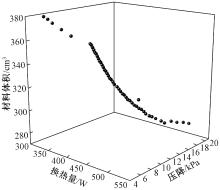
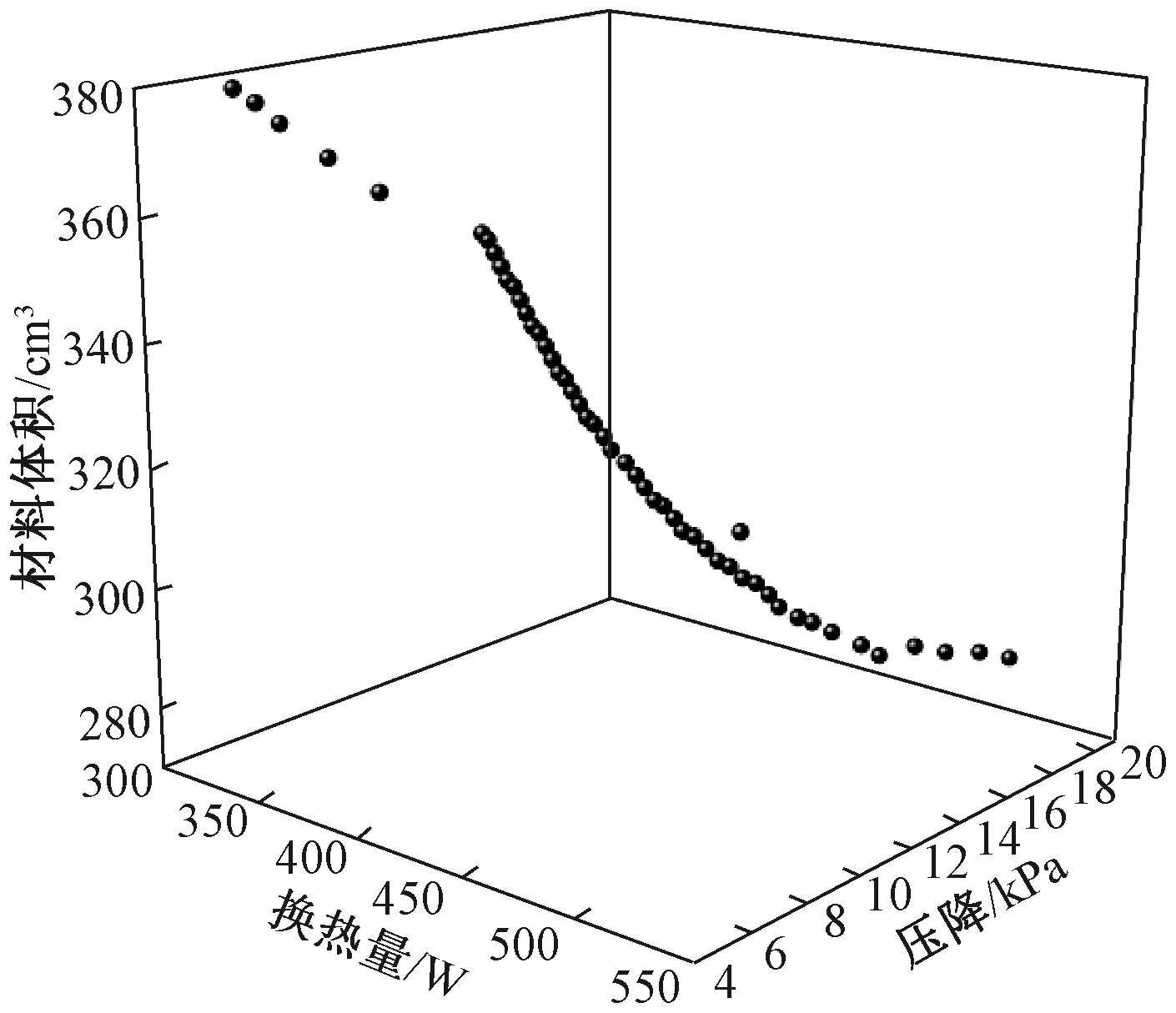
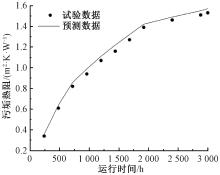
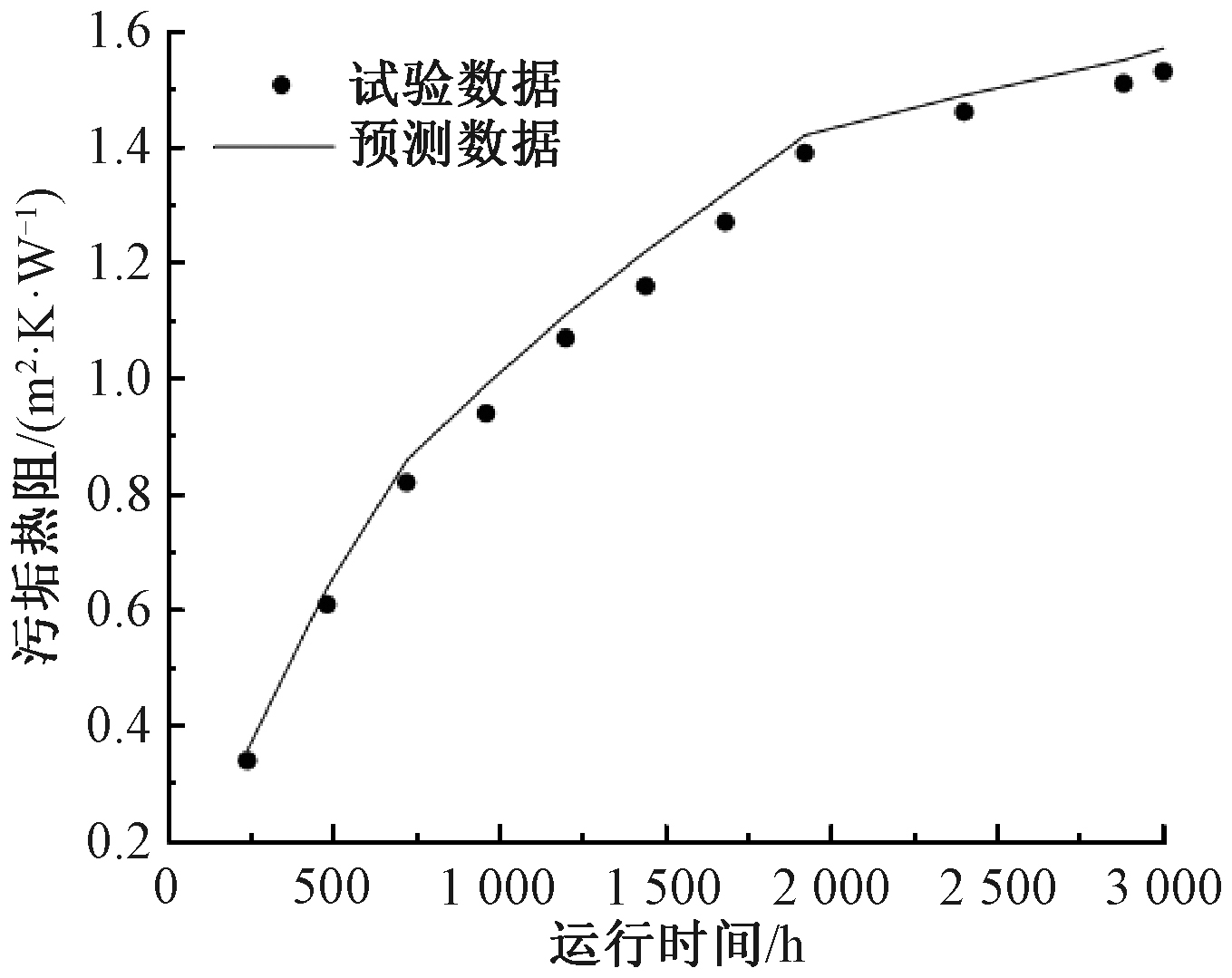
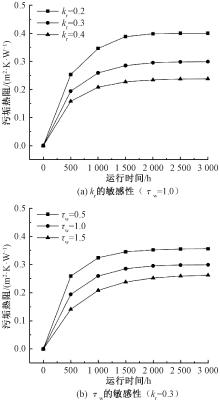
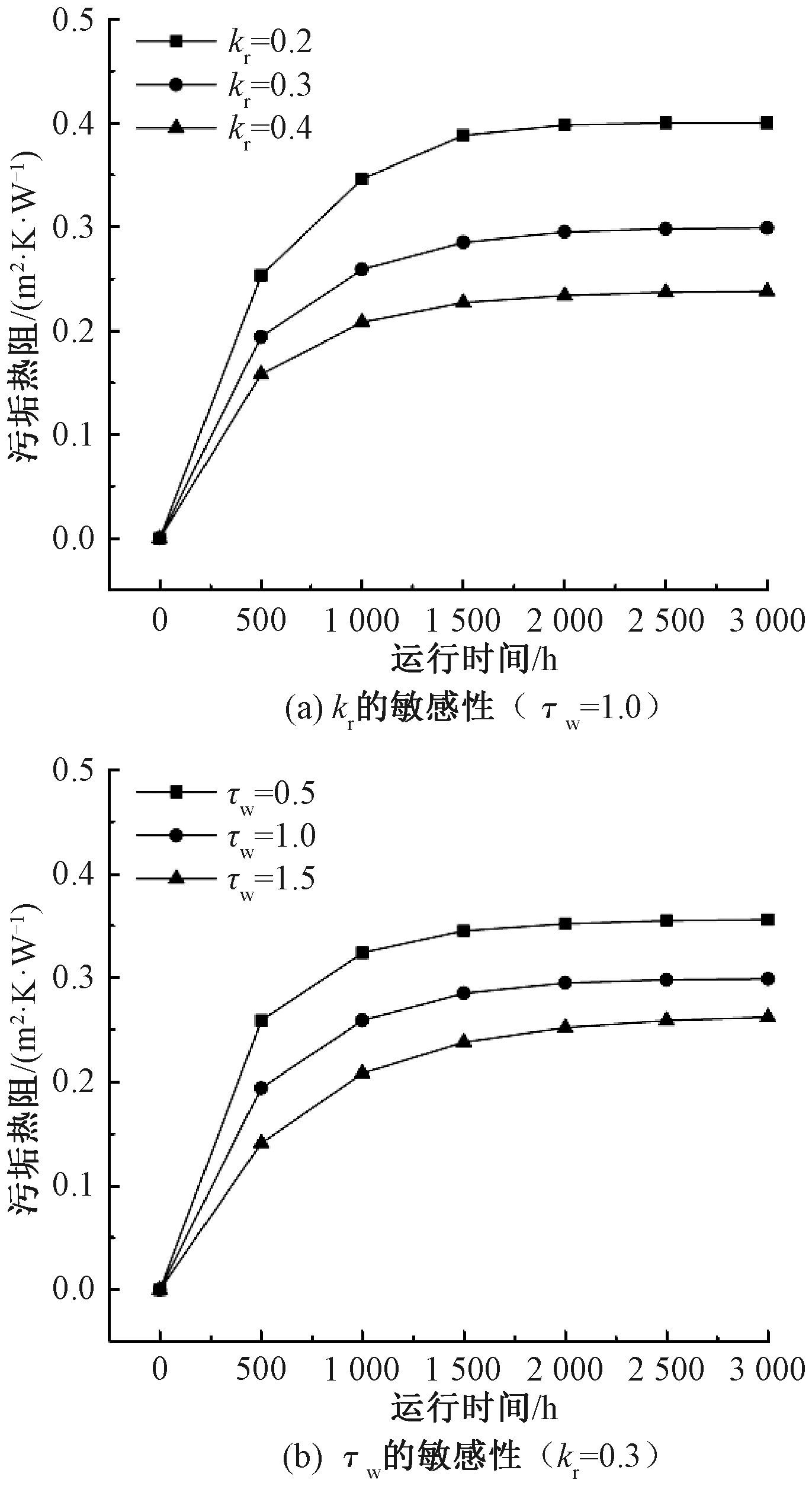
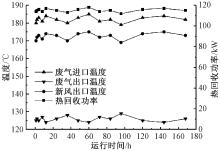
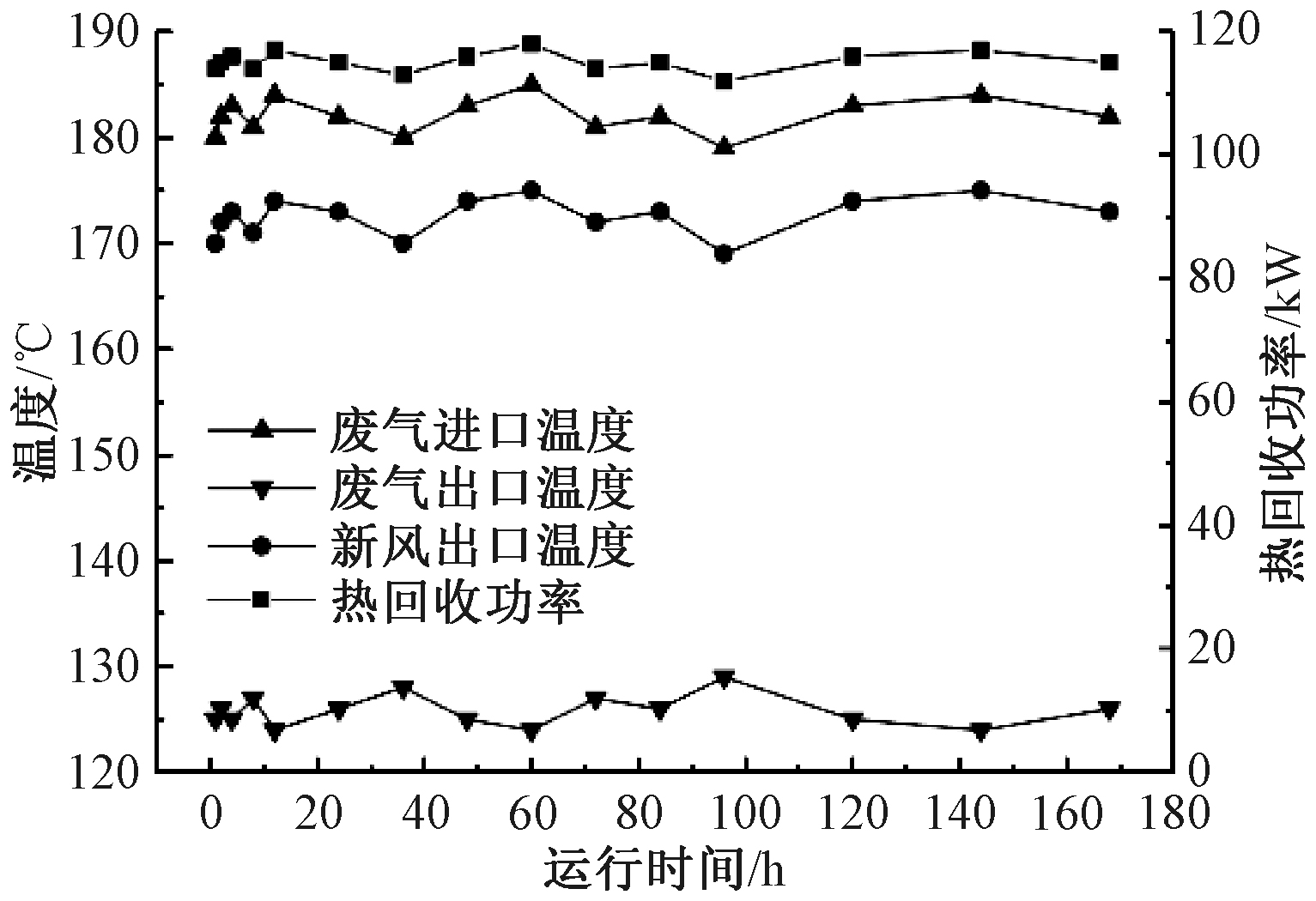
Results The material tests showed that while carbon steel had the highest thermal conductivity (50.2 W/(m·K)) at room temperature, its conductivity decreased at elevated temperatures, and its corrosion rate (0.144 mm/a) was unacceptably high. Titanium alloy exhibited the best corrosion resistance (0.000 6 mm/a) and stable thermal conductivity but at a prohibitive cost (5-8 times that of 304 stainless steel). 304 stainless steel demonstrated an optimal balance, with a thermal conductivity of 16.3 W/(m·K) at 100 ℃, a value that increased with temperature, and a corrosion rate below 0.01 mm/a. The CFD and NSGA-II multi-objective optimization revealed the inherent trade-offs among heat transfer rate (Q), pressure drop (ΔP), and material volume (Vm), with the conflicting nature of these objectives evident from the resulting Pareto front. Based on the material selection of 304 stainless steel, the TOPSIS analysis identified the optimal structural parameters as a channel spacing (d) of 2.0 mm and a fin spacing ratio (α) of 0.5. Under this material-specific context, this configuration yielded a TOPSIS closeness coefficient of 0.824, significantly outperforming other candidates. Compared to the initial design, this optimized structure achieved an 18.7% increase in heat transfer rate, a 22.3% reduction in pressure drop, and a 15% decrease in material volume. The proposed wall shear stress-modified asymptotic fouling model accurately captured the typical fouling growth trend. The predicted fouling resistance values showed excellent agreement with the 3 000 h experimental data, with a mean relative error of only 3.94%. Sensitivity analysis confirmed that the model could quantitatively describe the influences of the removal rate constant and wall shear stress on fouling dynamics. In the field engineering trial, the system operated stably over three months without significant fouling or corrosion. The exhaust gas was cooled by an average of 56 ℃ (from 182 ℃ to 126 ℃), while fresh air was preheated by 158 ℃. The system achieved a heat recovery efficiency of 25.2% and an exergy efficiency of 18.7%. The annual economic and environmental benefits are substantial, with projected savings of 73 800 m3 (Standard m3) of natural gas and a reduction of 199 tons of CO2 emissions per year (based on 6 000 operating hours).

Conclusion This research successfully delivers a validated, integrated solution for waste heat recovery from stenter exhaust. 304 stainless steel is confirmed as the most cost-effective and durable material choice. The identified structural parameters (d=2.0 mm, α=0.5) represent an optimal engineering compromise, significantly enhancing thermal-hydraulic performance while reducing material costs. The novel fouling model provides a reliable tool for predicting maintenance needs and optimizing cleaning schedules. The successful industrial application demonstrates that the designed system offers high efficiency, robust long-term stability, and significant energy-saving and emission-reduction potential, providing a practical and scientifically-grounded technology pathway for sustainable development in the textile industry.

Key words: plate-fin heat exchanger, stenter, waste heat recovery, 304 stainless steel, structural optimization, fouling model

CLC Number: 

  • TS198

Tab.1

Thermal conductivities and corrosion resistances of different materials at various temperatures"

材料 热导率/(W·(m·K)-1) 耐腐蚀性能
20 ℃ 100 ℃ 200 ℃ 300 ℃ 腐蚀电流密度/
(μA·cm-2)
腐蚀速率/
(mm·a-1)
碳钢 50.2 49.2 47.9 46.5 12.45 0.144 0
304不锈钢 15.4 16.3 17.5 18.7 0.85 0.009 8
316不锈钢 14.2 16.3 20.4 22.6 0.72 0.008 3
316L不锈钢 12.1 16.1 17.3 18.6 0.68 0.007 8
钛合金(TA1) 17.0 17.5 18.1 18.8 0.05 0.000 6

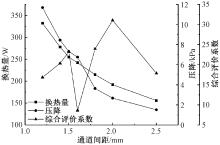
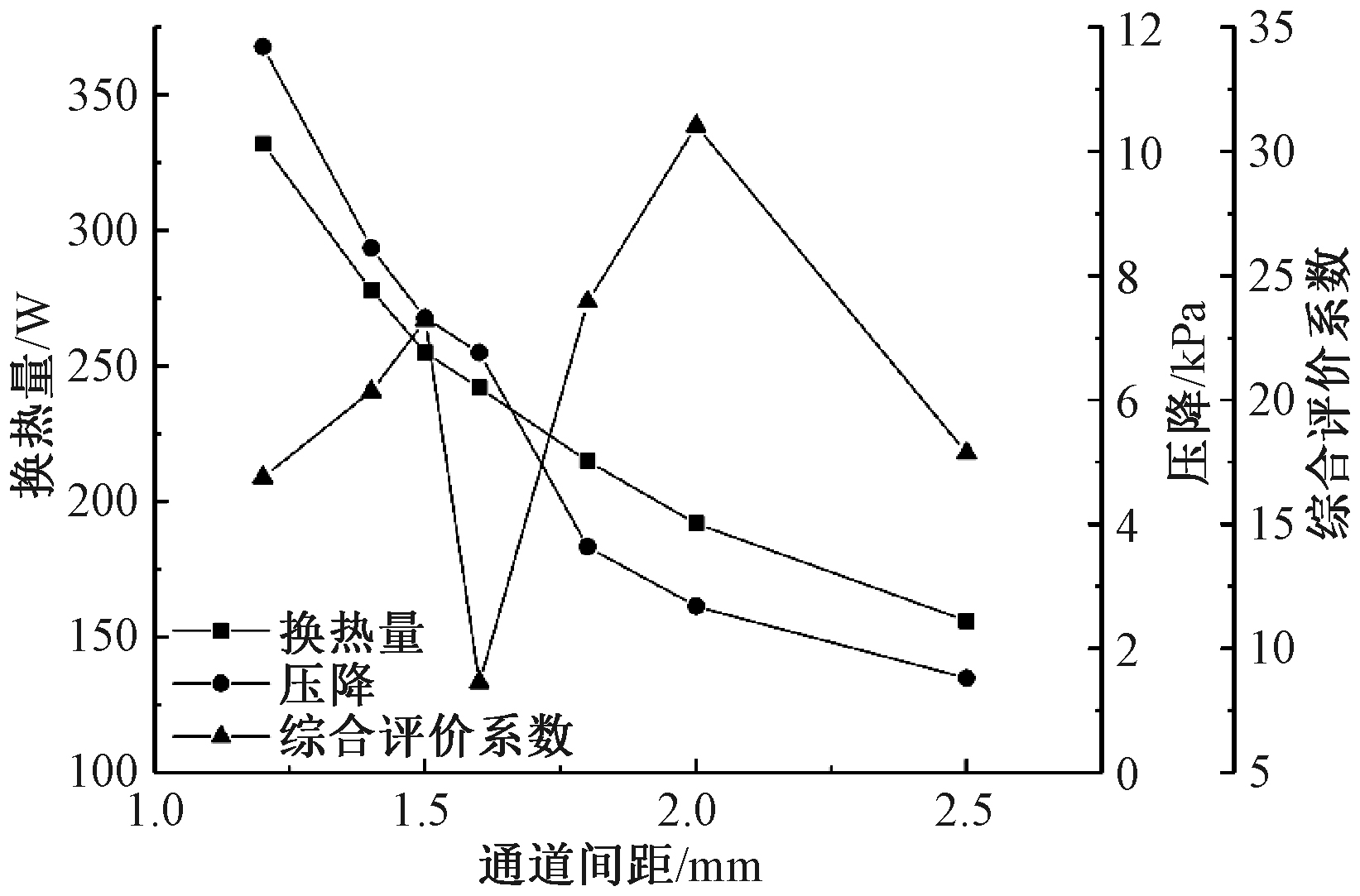
Fig.1

Heat transfer rate, pressure drop, and evaluation coefficient per unit spacing at different channel spacings"

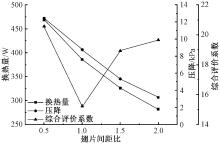
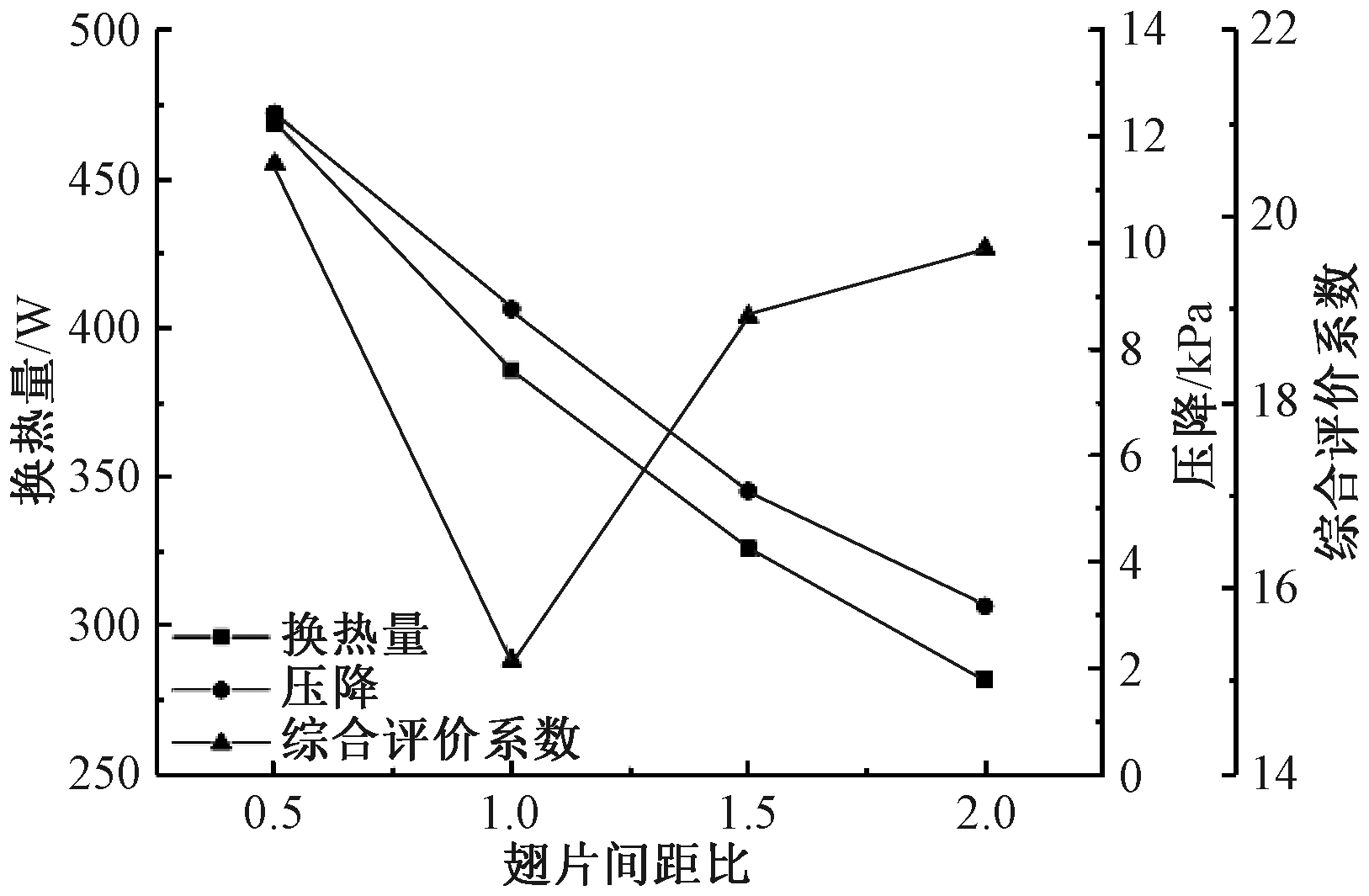
Fig.2

Heat transfer rate, pressure drop, and evaluation coefficient at different fin spacing ratios"

Tab.2

Influence mechanism of structural parameters on internal characteristics and macroscopic performance"

结构参数
变化
对内部流动与
传热特性的影响
对宏观性能的
工程影响
工程设计
启示
减小翅
片间距
流通面积减小,流速增大;涡流增强,扰动加剧;热边界层破坏,对流换热系数提高 换热量显著提升,但压降大幅增加 适用于换热性能要求高、泵功裕量充足的场景;α=0.5时换热增益优于压降代价,为优选
增大通
道间距
流通面积增大,流速降低;壁面剪切力减弱;热边界层增厚,传热强度下降 压降显著降低,运行能耗减少,但单位体积换热量略有下降 适用于压降敏感或能耗受限系统;d=2.0 mm时压降降幅显著,换热损失小,综合最优
最优组
合(d=
2.0 mm,
α=0.5)
在强扰动与低平均流速间取得平衡;维持较高换热系数,避免热边界层过厚 综合评价系数最高,实现高效换热与合理流动阻力的最佳匹配 为余热回收系统提供高效、低阻的设计基准

Fig.3

Pareto front distribution of heat transfer rate, pressure drop, and material volume"

Tab.3

Top 5 solutions and their parameters based on TOPSIS comprehensive evaluation"

排名 通道
间距/mm
翅片
间距比
换热量/
W
压降/
kPa
材料体
积/cm3
接近度
1 2.0 0.5 469 12.45 312 0.824
2 2.0 0.6 452 10.89 305 0.791
3 1.8 0.6 488 14.12 298 0.777
4 2.2 0.5 438 9.67 328 0.764
5 1.8 0.5 501 15.23 290 0.745

Fig.4

Prediction results of asymptotic fouling prediction model"

Fig.5

Influence of parameters kr and τw on dynamic characteristics of fouling thermal resistance. (a) Sensitivity of kr; (b) Sensitivity of τw"

Tab.4

Temperature and flow rate measurements results before and after heat exchange"

项目 废气
温度/
新风
温度/
废气流量/
(m3·h-1)
新风流量/
(m3·h-1)
热回收
效率/%
㶲效率/
%
换热前 182±1 15±1 6 000±120 1 246±25
换热后 126±1 173±2 6 000±120 1 246±25
变化量 -56±1 +158±2 25.2±
0.5
18.7±
0.4

Fig.6

Dynamic variations of temperature and heat recovery power during system operation"

[1] 吴承立, 赵跃捷, 张凤鸣. 纺织印染定型机节能减排技术研究进展[J]. 能源研究与管理, 2025, 17(4): 178-186.
WU Chengli, ZHAO Yuejie, ZHANG Fengming. Research progress on energy-saving and emission reduction technology of setting machines for textile printing and dyeing[J]. Jiangxi Energy, 2025, 17(4): 178-186.
[2] 陈益民. 定型机废气典型有机化合物治理和余热回收利用研究[D]. 长沙: 中南大学, 2024:1-37.
CHEN Yimin. Stenter exhaust typical organic compounds treatment and waste heat recovery for utilization[D]. Changsha: Central South University, 2024:1-37.
[3] ZENG Y M, LI K Y, HUGHES R, et al. Corrosion mechanisms and materials selection for the construction of flue gas component in advanced heat and power systems[J]. Industrial & Engineering Chemistry Research, 2017, 56(48): 14141-14154.
doi: 10.1021/acs.iecr.7b03664
[4] KAUR S, SHARMA S, BALA N. A comparative study of corrosion resistance of biocompatible coating on titanium alloy and stainless steel[J]. Materials Chemistry and Physics, 2019, 238: 121923.
doi: 10.1016/j.matchemphys.2019.121923
[5] MAO J B, MA X J, ZHAO F, et al. A novel design to enhance the heat transfer and reduce pressure drop of heat exchangers based on multi-objective optimization[J]. Numerical Heat Transfer, Part B: Fundamentals, 2026, 87(1): 2540782.
doi: 10.1080/10407790.2025.2540782
[6] KONG F L, WANG X X, GUO W, et al. Effects of key structural parameters on the flow boiling process of water in the corrugated plate heat exchanger[J]. International Communications in Heat and Mass Transfer, 2025, 167: 109364.
doi: 10.1016/j.icheatmasstransfer.2025.109364
[7] WEI C, ZHANG H, XU J R, et al. Optimizing direct contact heat exchangers via topological approach: multi-field synergy analysis to flow and heat transfer[J]. Applied Thermal Engineering, 2025, 276: 126824.
doi: 10.1016/j.applthermaleng.2025.126824
[8] SCHILLING S, GLADE H, ORTH T. Investigation of crystallization fouling on novel polymer composite heat exchanger tubes[J]. Heat Transfer Engineering, 2022, 43(15/16): 1326-1336.
doi: 10.1080/01457632.2021.1963533
[9] BROOKS S, ROY R. Design and complexity evaluation of a self-cleaning heat exchanger[J]. International Journal of Heat and Mass Transfer, 2022, 191: 122725.
doi: 10.1016/j.ijheatmasstransfer.2022.122725
[10] 顾震宇, 王蕾豪, 缪孝平, 等. 印染行业定型废气减污降碳技术初探[J]. 中国环保产业, 2023(6): 34-37.
GU Zhenyu, WANG Leihao, MIAO Xiaoping, et al. Preliminary study on pollution reduction and carbon reduction technology of exhaust gas from setting machine in printing and dyeing industry[J]. China Environmental Protection Industry, 2023(6): 34-37.
[11] ZHOU Y H, LI Z H, ZHAI Y L, et al. Effect of channel configuration on the thermal-hydraulic performance and economics of printed circuit heat exchangers[J]. International Journal of Heat and Fluid Flow, 2026, 117: 110103.
doi: 10.1016/j.ijheatfluidflow.2025.110103
[12] NAWAZ R, KAZI S N, MOHD ZUBIR M N, et al. Thermal and economic optimization of multi-start helically corrugated annular flow heat exchanger: an experimental and numerical study[J]. Experimental Heat Transfer, 2026, 39(3): 317-345.
doi: 10.1080/08916152.2025.2508477
[13] BRAHIM F, AUGUSTIN W, BOHNET M. Numerical simulation of the fouling process[J]. International Journal of Thermal Sciences, 2003, 42(3): 323-334.
doi: 10.1016/S1290-0729(02)00021-2
[14] LOU H Q, CAO X Z. Multi-field coupling fouling mechanism and optimization of heat exchangers in stenter exhaust systems[J]. International Communications in Heat and Mass Transfer, 2026, 172: 110252.
doi: 10.1016/j.icheatmasstransfer.2025.110252
[15] HAYTA Y, KANDEMIR S. Fatigue assessment of copper-brazed stainless-steel joints for plate heat exchangers[J]. Fatigue & Fracture of Engineering Materials & Structures, 2025, 48(2): 725-737.
[16] HE L, LUO Q, ZHAO S N, et al. Structural optimization of dimple-plate heat exchanger via artificial neural network and multi-objective genetic algorithm[J]. Applied Thermal Engineering, 2025, 263: 125297.
doi: 10.1016/j.applthermaleng.2024.125297
[17] ZHANG D, JIANG M J, HOU G, et al. MLP-based dynamic fouling prediction and health monitoring for energy-efficient operation of plate heat exchangers in smart heating systems[J]. Energy and Built Environment, 2025.DOI: 10.1016/j.enbenv.2025.06.002.
[18] HOU G, ZHANG D, YAN Q M, et al. Application of machine learning algorithms in real-time fouling monitoring of plate heat exchangers[J]. International Communications in Heat and Mass Transfer, 2025, 164: 108809.
doi: 10.1016/j.icheatmasstransfer.2025.108809
[1] HU Sheng, WANG Ziyue, ZHANG Shoujing. Influence of transport channel structure for foreign fiber sorting machine on airflow stability [J]. Journal of Textile Research, 2024, 45(09): 194-203.
[2] QIAN Miao, HU Hengdie, XIANG Zhong, MA Chengzhang, HU Xudong. Flow and heat transfer characteristics of non-uniform heat-pipe heat exchanger [J]. Journal of Textile Research, 2021, 42(12): 151-158.
[3] . Optimization algorithm for energy saving in heat setting of polyester fabric [J]. JOURNAL OF TEXTILE RESEARCH, 2018, 39(01): 164-168.
[4] . Analysis on hot-structure coupling of stenter clip using ANSYS [J]. JOURNAL OF TEXTILE RESEARCH, 2016, 37(06): 130-135.
Viewed
Full text


Abstract

Cited

  Shared   
  Discussed   
No Suggested Reading articles found!