Journal of Textile Research ›› 2024, Vol. 45 ›› Issue (12): 58-66.doi: 10.13475/j.fzxb.20230705801

• Textile Engineering • Previous Articles     Next Articles

Twist distribution in cotton/polyester sheath-core staple yarns based on ring spinning

JIANG Wenjie, GUO Mingrui, GAO Weidong()   

  1. College of Textile Science and Engineering, Jiangnan University, Wuxi, Jiangsu 214122, China
  • Received:2023-07-21 Revised:2024-02-04 Online:2024-12-15 Published:2024-12-31
  • Contact: GAO Weidong E-mail:gaowd@163.com

Abstract:

Objective To benefit from the performance advantages of two-component composite staple yarns, a new spinning method for sheath-core staple yarns based on ring spinning machine was developed. The twist distribution in the sheath and core layers of sheath-core staple yarn is studied because it has a significant impact on the settings of spinning process parameters and the yarn properties.

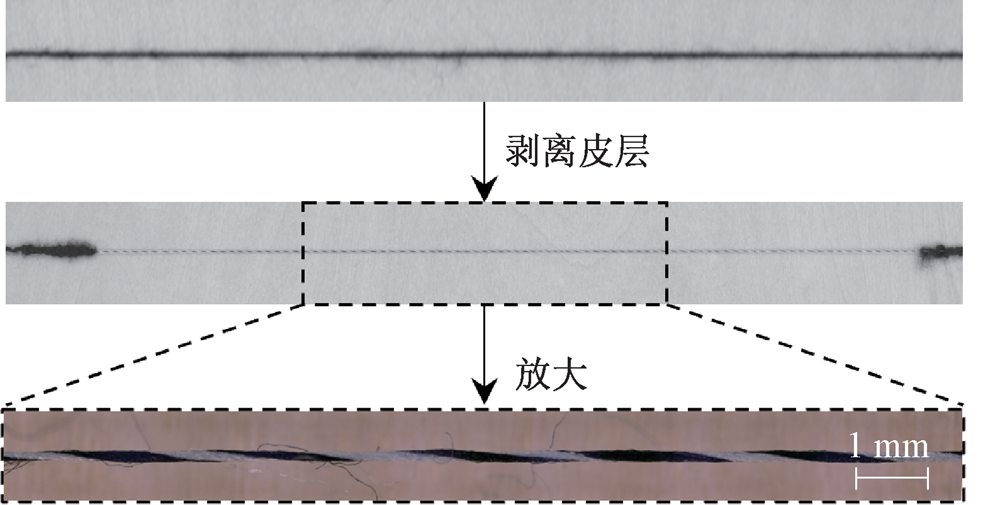
Method The conventional front roller was replaced with the coaxial front roller with different diameters. Two fiber slivers were output with different speeds at the front roller nip. The slow fiber sliver was twisted around its axis, while the fast fiber sliver was spirally wrapped around the outside of the slow counterpart, thus forming a sheath-core structure. Based on the geometry of spinning triangle, the twist in sheath layer was calculated theoretically, and the twist in sheath and core layers of sheath-core yarn were measured by the filament simulated tracer method and image technology.

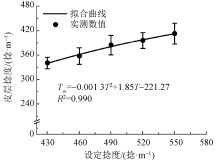
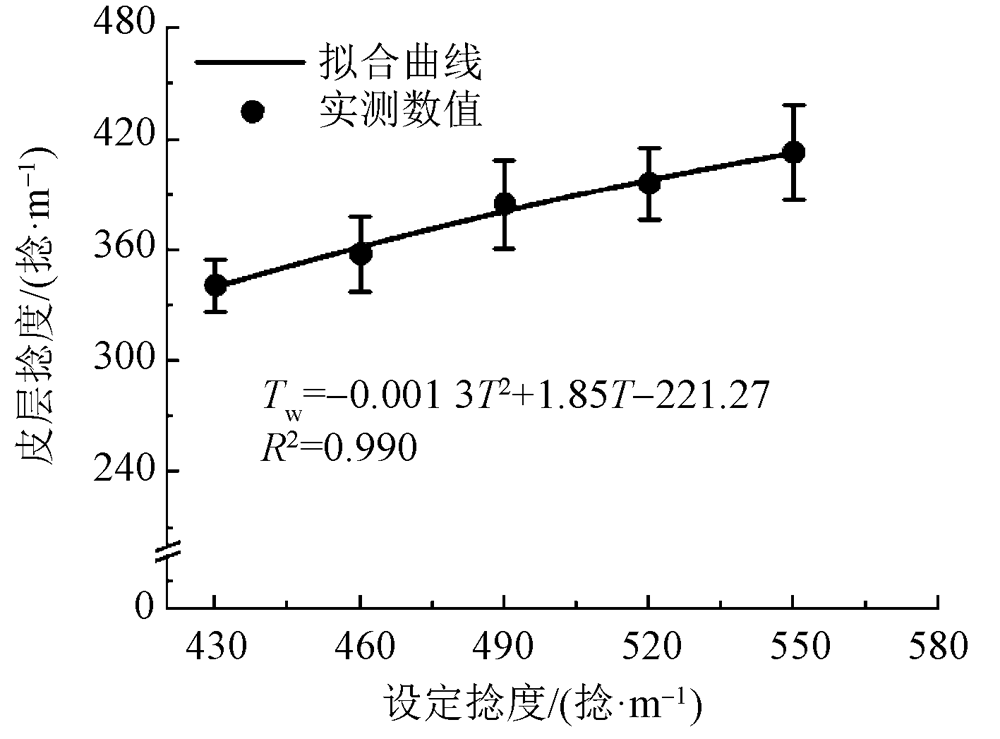
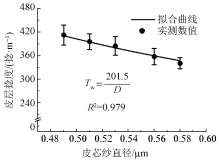
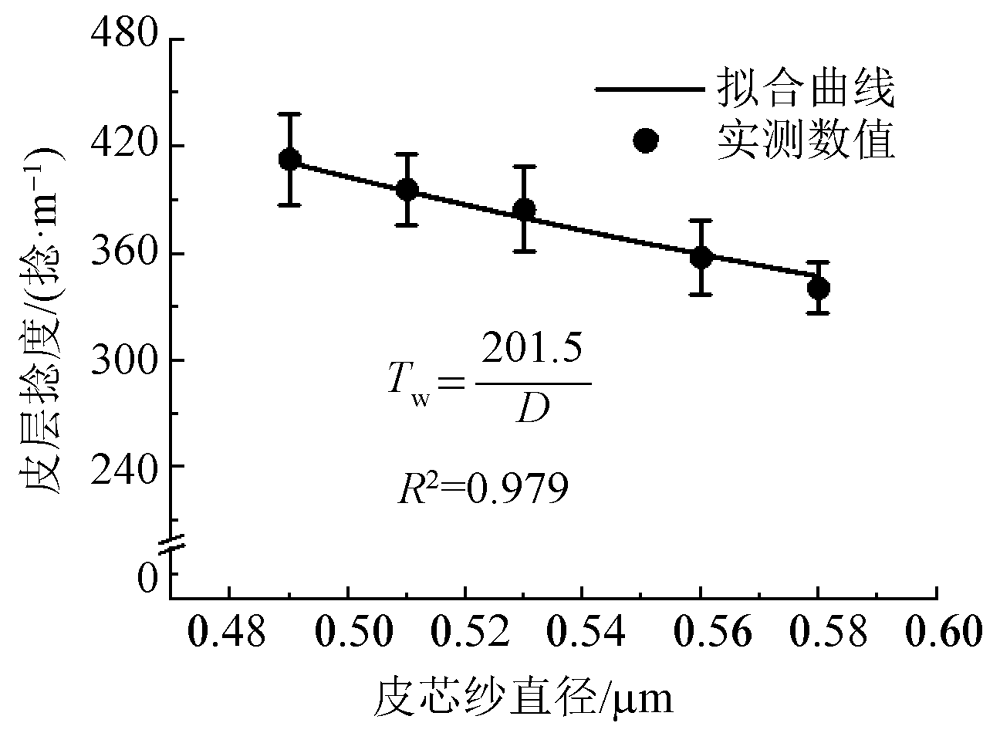
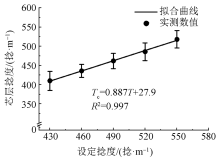
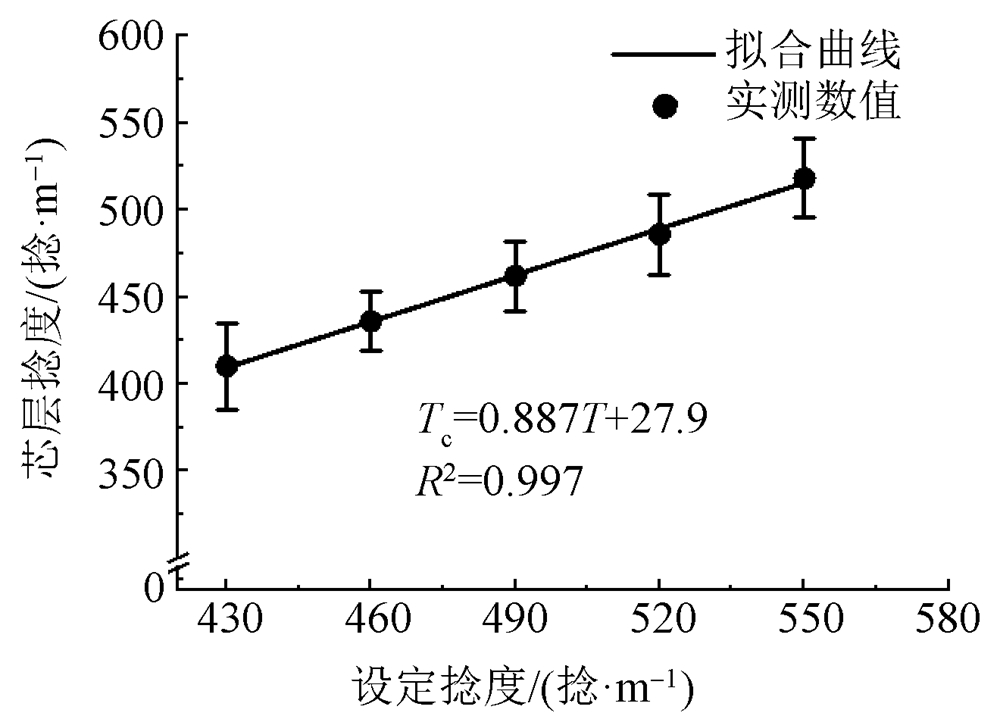
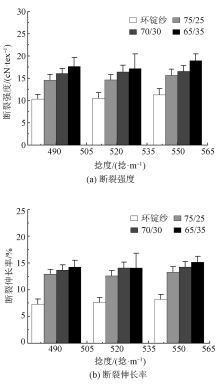
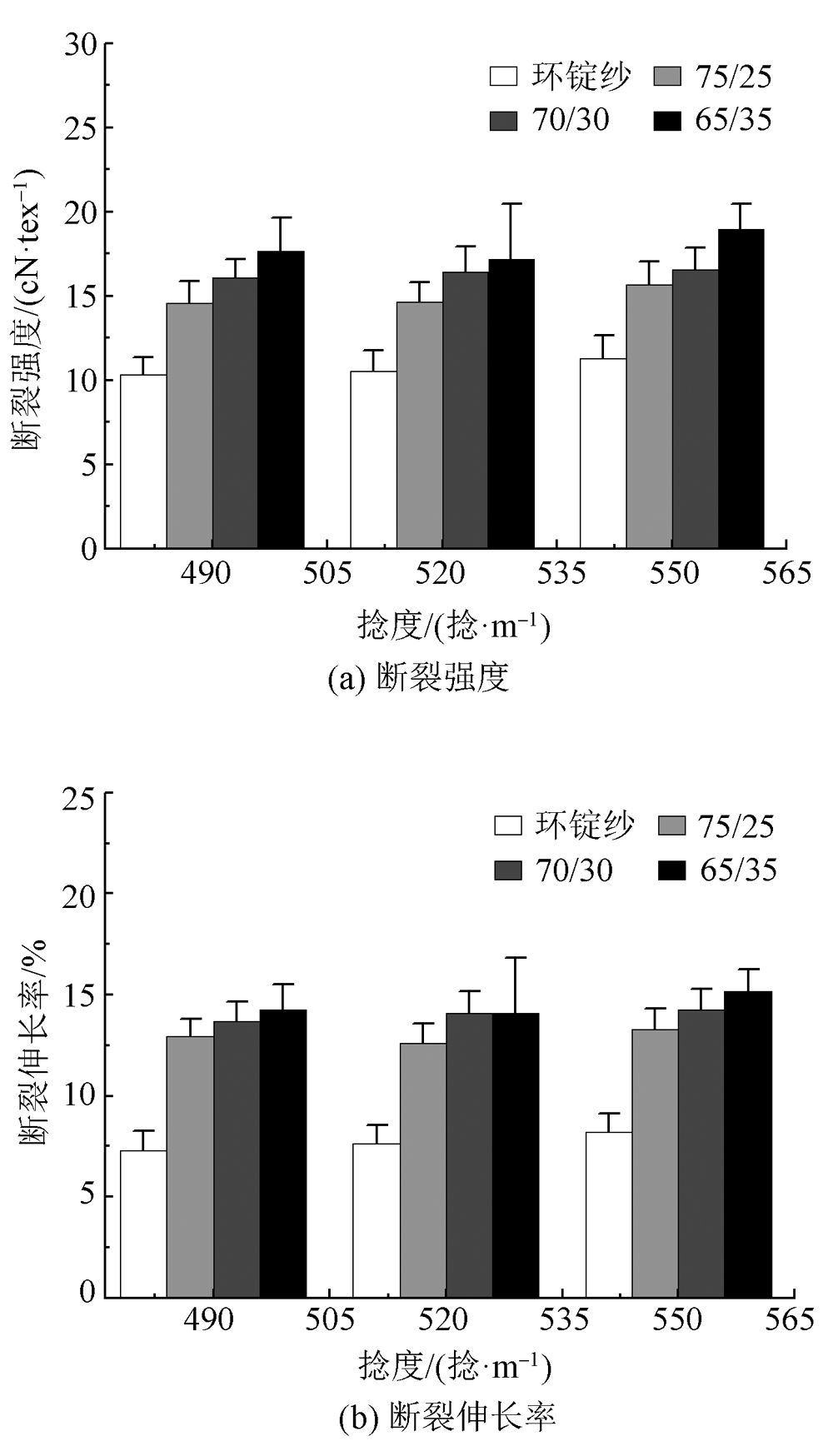
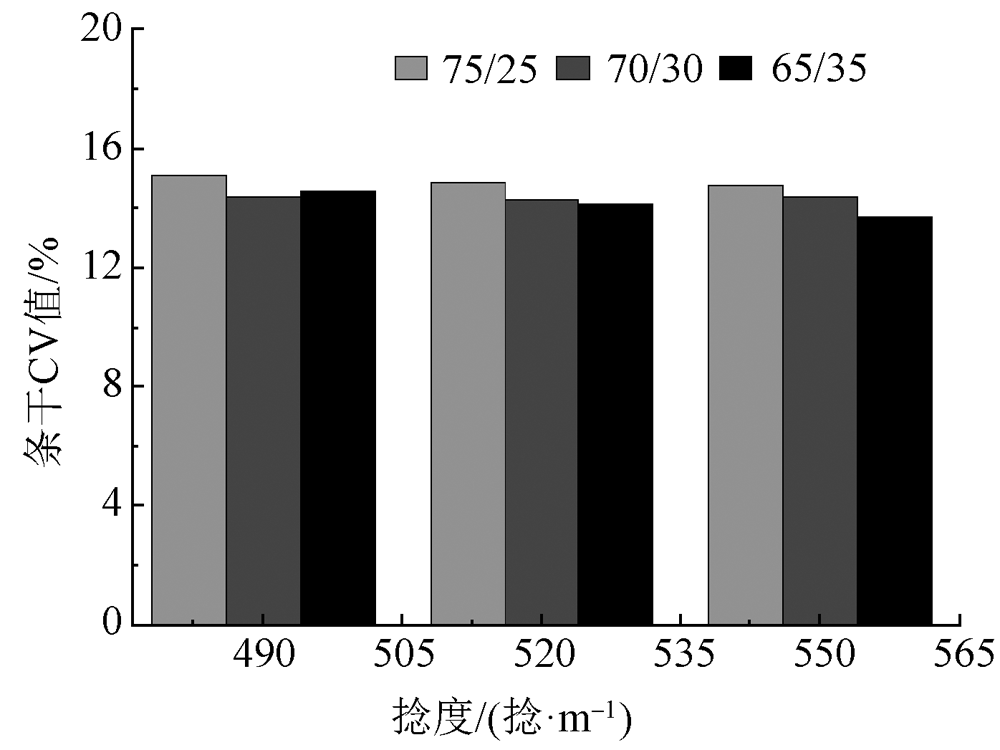
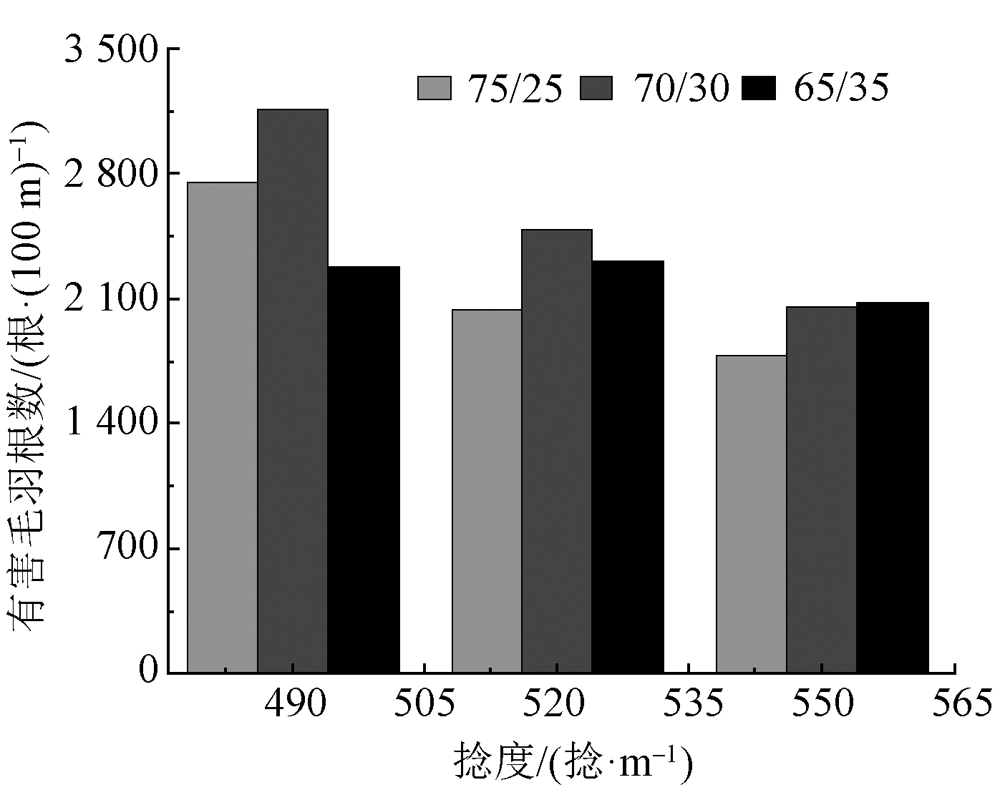
Results Through the fitting analysis of the twist in sheath and core layers, it is found that the twist in sheath layer is a quadratic function of the setting twist. Additionally, the twist in sheath layer is inversely proportional to the yarn diameter, which is consistent with theoretical analysis. Furthermore, the twist in core layer exhibits a linear relationship with the setting twist. The R2 values for all fitted curves exceed 0.95, indicating that the fitting results are highly reliable. The breaking strength and elongation of sheath-core yarn are superior to those of ring-spun cotton yarn. At a twist of 550 twist/m, the breaking strength and elongation of sheath-core yarn with a sheath-core proportion of 65/35 are 68.0% and 85.5% higher than those of ring-spun cotton yarn, respectively. As the setting twist and core proportion increase, the breaking strength and elongation of sheath-core staple yarn increase. This is because as the setting twist increases, the twist in sheath and core layers increase, thereby enhancing the breaking strength and elongation of sheath-core staple yarn. Additionally, it is well known that polyester fibers have superior tensile properties compared to cotton fibers. Therefore, as the core proportion increases, the tensile properties of sheath-core staple yarn improve. The CVm of sheath-core staple yarn decreases as the core proportion increases. At a twist of 550 twist/m, the CVm decreases by 7.2% when the core proportion increases from 25% to 35%. This is because, as the core proportion increases, the width of sheath fiber bundle decreases, enhancing the control over the edge fibers and reducing the loss of edge fibers. The CVm decreases as the setting twist increases. When the sheath-core proportion is 65/35, the CVm decreases by 6.0% as the twist increases from 490 to 550 twist/m. The twist of sheath and core fiber bundles in the spinning triangle increase with setting twist increases. This enhances the cohesion of fibers, reduces the loss of fibers, and thus improves the evenness of sheath-core staple yarn. The harmful hairiness of sheath-core staple yarn decreases with increasing setting twist. When the sheath-core proportion is 65/35, the harmful hairiness decreases by 8.8% as the twist increases from 490 to 550 twist/m. This is because as the setting twist increases, more fibers are involved in the yarn, resulting in reduced hairiness.

Conclusion A method of one-step spinning sheath-core staple yarn based on ring spinning machine was developed. The spinning efficiency of this method is high, and the yarn spun by this method has good properties. In addition, the relationship between twist in sheath and core layer and setting twist was established by combining theoretical modeling with experiment. The results show that the twist in sheath layer has a quadratic function relationship with setting twist, and the twist in core layer is positively linearly correlated with setting twist. The breaking strength and breaking elongation of cotton/polyester sheath-core staple yarn are better than those of cotton ring yarn at the same linear density and twist.

Key words: staple sheath-core yarn, output with different speed, spinning technique, twist in sheath layer, twist in core layer, composite structure yarn

CLC Number: 

  • TS104.1

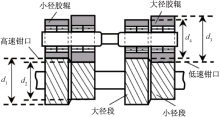
Fig.1

Schematic diagram of coaxial front bottom roller with different diameters and two-stage front top roller"

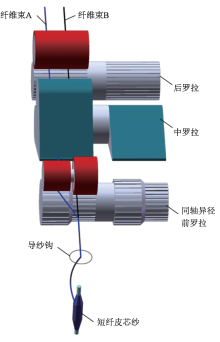
Fig.2

Schematic diagram of spinning device"

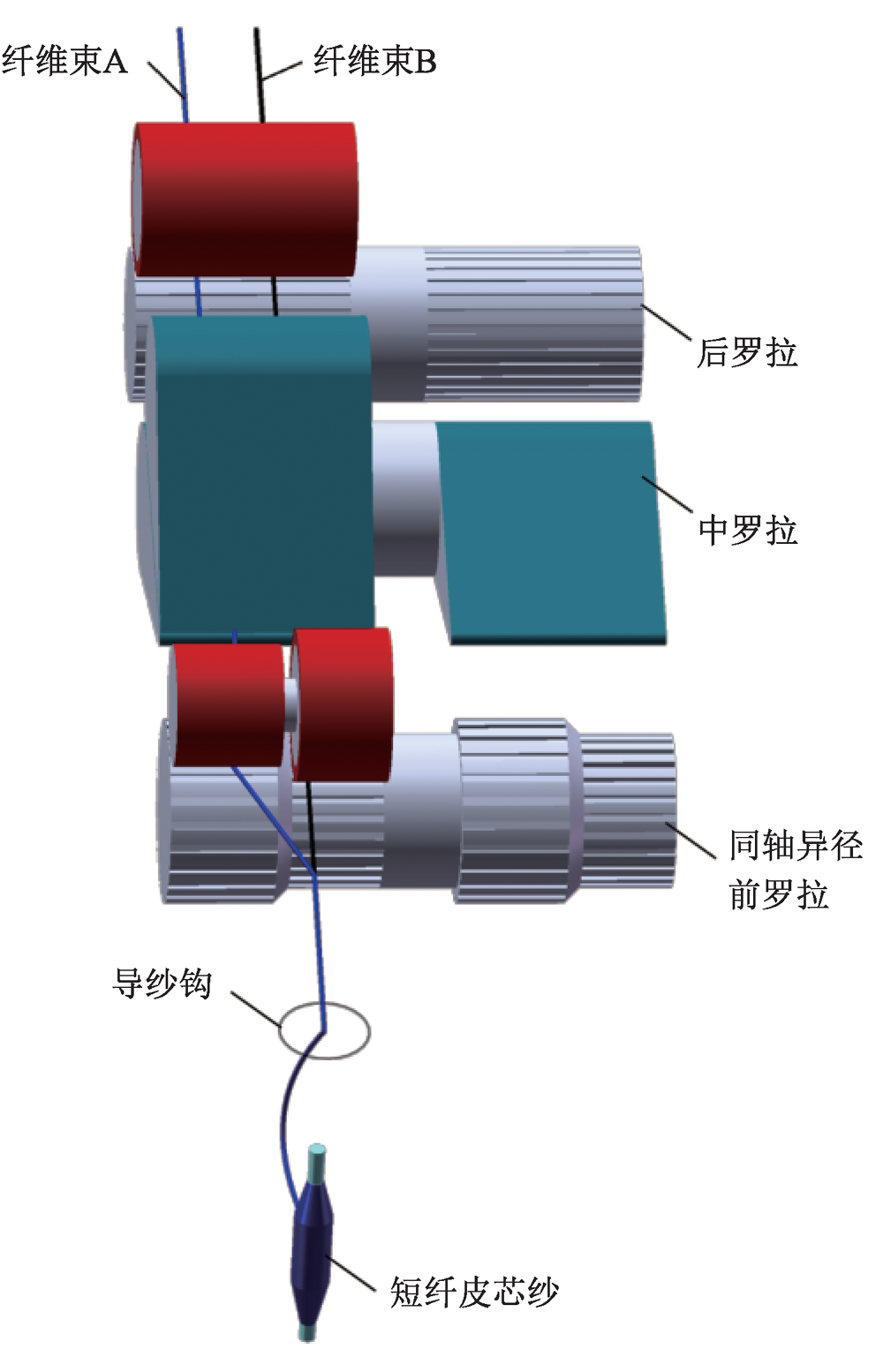
Fig.3

Image of twist triangle"

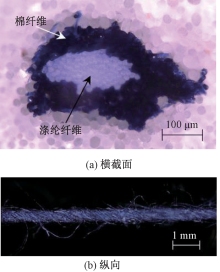
Fig.4

Cross-sectional(a) and longitudinal section(b) view of staple sheath-core yarn"

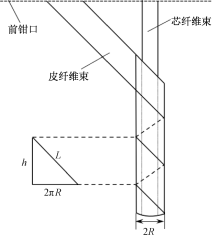
Fig.5

Schematic diagram of spinning section in ideal state"

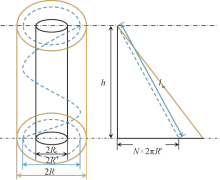
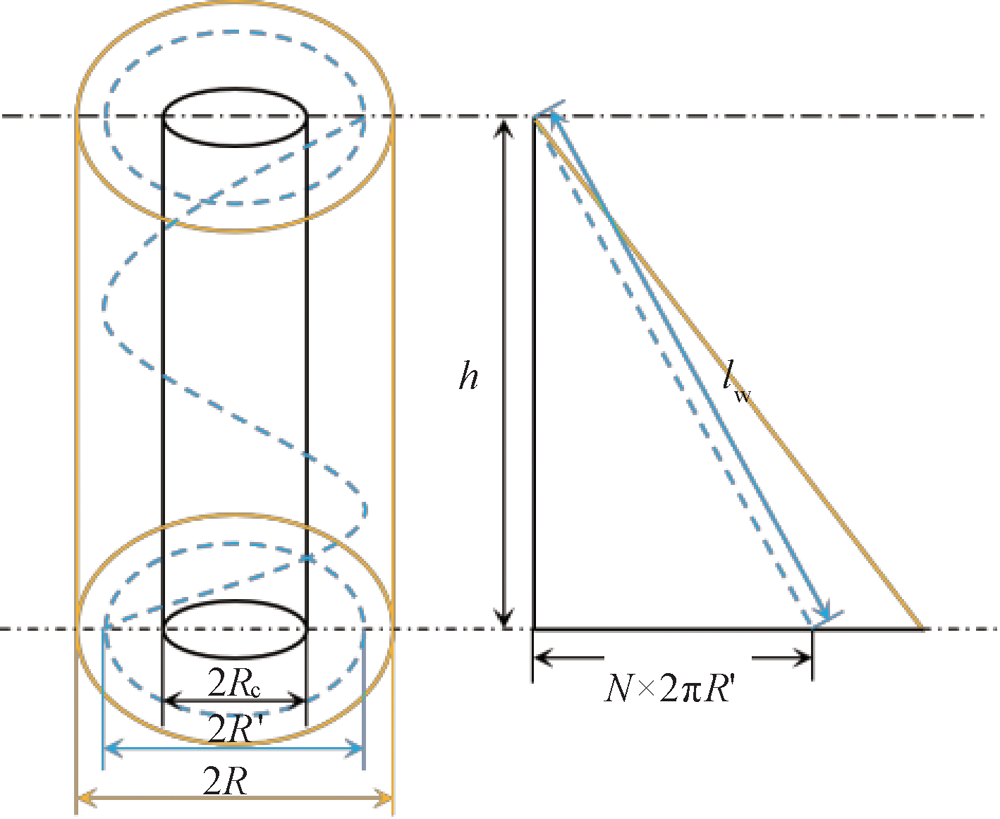
Fig.6

Unfolded drawing of sheath-core yarn"

Fig.7

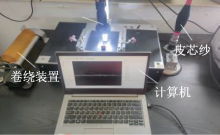
Acquisition system of sheath-core yarn image"

Fig.8

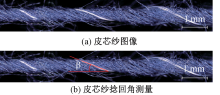
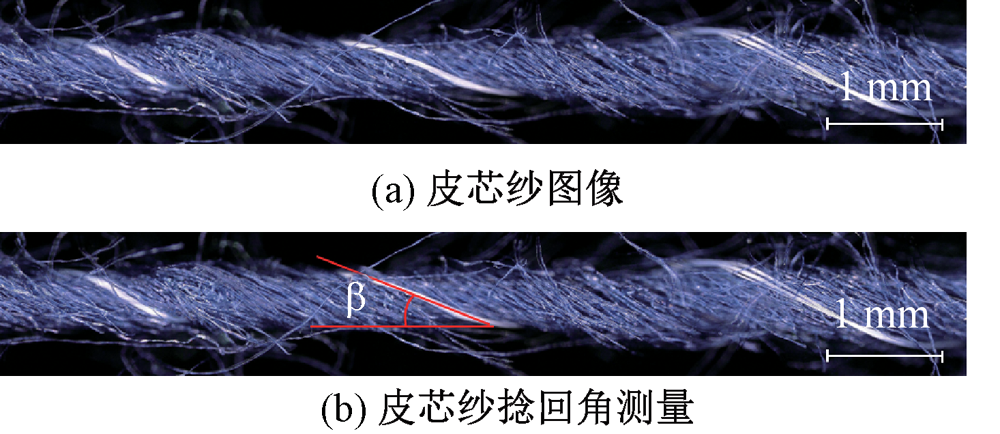
Measurement of twist in sheath layer. (a) Image of sheath-core yarn; (b) Measurement of twist angle"

Fig.9

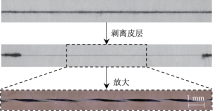
Measurement of twist in core layer"

Tab.1

Scheme of setting twist in sheath and core layers"

编号 皮芯比例 纱线线密度/tex 设定捻度/(捻·m-1)
A1 75∶25 58.3 430
A2 460
A3 490
A4 520
A5 550

Tab.2

Experimental scheme of spinning"

编号 纱线
种类
皮芯
比例
粗纱定量/
(g·(10 m)-1)
设定捻度/
(捻·m-1)
皮层 芯层
B1 短纤
皮芯纱
75/25 12.0 3.7 490
B2 520
B3 550
B4 短纤
皮芯纱
70/30 9.3 3.7 490
B5 520
B6 550
B7 短纤
皮芯纱
65/35 7.4 3.7 490
B8 520
B9 550
B10 纯棉
环锭纱
9.3 490
B11 520
B12 550

Tab.3

Twist in sheath layer of sheath-core yarn"

设定捻度/
(捻·m-1)
皮层捻度/
(捻·m-1)
皮芯纱直
径/mm
430 341 0.58
460 358 0.56
490 385 0.53
520 394 0.51
550 413 0.49

Fig.10

Relationship between twist in sheath layer and setting twist"

Fig.11

Relationship between twist in sheath layer and yarn diameter"

Fig.12

Relationship between twist in core layer and setting twist"

Fig.13

Influence of sheath-core proportion and twist on breaking strength and breaking elongation of sheath-core yarn. (a) Breaking strength; (b) Breaking elongation"

Fig.14

Influence of sheath-core proportion and twist on CV value of sheath-core yarn"

Fig.15

Influence of sheath-core proportion and twist on harmful hairness of sheath-core yarn"

[1] 邹专勇, 缪璐璐, 董正梅, 等. 喷气涡流纺工艺对粘胶/涤纶包芯纱性能的影响[J]. 纺织学报, 2022, 43(8): 27-33.
ZOU Zhuanyong, MIAO Lulu, DONG Zhengmei, et al. Effect of air-jet vortex spinning process on properties of viscose/polyester core-spun yarns[J]. Journal of Textile Research, 2022, 43(8): 27-33.
[2] 谢治云, 蒋培清, 乐鹏涛, 等. 棉涤包芯纱机织物单向导湿及快干性能研究[J]. 棉纺织技术, 2022, 50(1): 40-44.
XIE Zhiyun, JIANG Peiqing, YUE Pengtao, et al. Study on unidirectional moisture-transfer and fast dry property of fabric with cotton polyester core-spun yarn[J]. Cotton Textile Technology, 2022, 50(1): 40-44.
[3] 吴绥菊, 季晓雷, 钱庆雨. 赛络纺棉/氨纶包芯纱工艺探讨[J]. 纺织学报, 2006, 27(3): 80-82.
WU Suiju, JI Xiaolei, QIAN Qingyu. Investigation of siro cotton/Spandex core-spun yarn[J]. Journal of Textile Research, 2006, 27(8): 80-82.
[4] ELRYS S M M E, El- HABIBY F F, ELDEEB A S, et al. Influence of core yarn structure and yarn count on yarn elastic properties[J]. Textile Research Journal, 2022, 92(19/20): 3534-3544.
[5] SAWHNEY A P S, ROBERT K Q, RUPPENICKER G F, et al. Improved method of producing a cotton covered/polyester staple-core yarn on a ring spinning frame[J]. Textile Research Journal, 1992, 62(1): 21-25.
[6] 洪凌云, 汪军, 张玉泽, 等. 内紧外松分层结构环锭纱的开发及性能研究[J]. 棉纺织技术, 2022, 50(3): 28-32.
HONG Lingyun, WANG Jun, ZHANG Yuze, et al. Development and property research of ring spun yarn with inner tightness and outer looseness layered struc-ture[J]. Cotton Textile Technology, 2022, 50(3): 28-32.
[7] 郭明瑞, 顾银华, 高卫东. 棉/涤皮芯结构粗纱参数对其细纱结构与性能的影响[J]. 纺织学报, 2022, 43(6): 57-62.
GUO Mingrui, GU Yinhua, GAO Weidong. Influencen of cotton/polyester sheath-core structure roving parameters on structure and performance of spun yarn[J]. Journal of Textile Research, 2022, 43(6): 57-62.
[8] 张红梅. 粗纱包芯纱棉/涤针织纱的研究与开发[J]. 针织工业, 2017(8): 24-26.
ZHANG Hongmei. Study and development of cotton polyester roving core spun yarn[J]. Knitting Industries, 2017(8): 24-26.
[9] 顾银华, 郭明瑞, 高卫东. 基于粗纱工序的短纤皮芯结构纱影响因素研究[J]. 棉纺织技术, 2020, 48(11): 14-18.
GU Yinhua, GUO Mingrui, GAO Weidong. Study on the influence factor of staple fiber sheath-core structure yarn based on roving process[J]. Cotton Textile Technology, 2020, 48(11):14-18.
[10] SAWHNEY A P S, ROBERT K Q, Ruppenicker G F. Device for producing staple-core/cotton-wrap ring spun yarns[J]. Textile Research Journal, 1989, 59(9): 519-524.
[11] 郭明瑞, 高卫东.一种纺制短纤维皮芯结构纱线的纺纱装置: 202111570904.4[P]. 2022-03-22.
GUO Mingrui, GAO Weidong.A spinning device for spinning staple yarn with sheath-core structure: 202111570904.4[P]. 2022-03-22.
[1] WANG Qing, LIANG Gaoxiang, YIN Junqing, SHENG Xiaochao, LÜ Xushan, DANG Shuai. Establishment of novel model and performance analysis of airflow drafting channel [J]. Journal of Textile Research, 2023, 44(11): 52-60.
[2] . Preparation and characterization of polyvinyl pyrrolidone nanofibrous membranes using funneling air-jet electrospinning [J]. Journal of Textile Research, 2018, 39(10): 7-11.
[3] QIAN Zhangbao;CAO Xinyang;DUAN Yafeng;JIN Jian;ZHAO Jiangfeng. Manufacture technique of full dull Terylene FDY [J]. JOURNAL OF TEXTILE RESEARCH, 2007, 28(8): 26-30.
Viewed
Full text


Abstract

Cited

  Shared   
  Discussed   
No Suggested Reading articles found!