Journal of Textile Research ›› 2024, Vol. 45 ›› Issue (12): 74-79.doi: 10.13475/j.fzxb.20230803701

• Textile Engineering • Previous Articles     Next Articles

Study on fiber hooking in chemical fiber sliver based on fiber tracing method

ZHANG Hongdou1, CHEN Fang2, CHU Xiangting1, LU Huiwen2, LIU Xinjin1(), SU Xuzhong1   

  1. 1. College of Textile Science and Engineering, Jiangnan University, Wuxi, Jiangsu 214122, China
    2. Uster Technologies (China) Co., Ltd., Suzhou, Jiangsu 215122, China
  • Received:2023-08-18 Revised:2023-12-26 Online:2024-12-15 Published:2024-12-31
  • Contact: LIU Xinjin E-mail:liuxinjin2006@163.com

Abstract:

Objective In order to improve the quality of yarn and textiles, this study tests and characterizes the fiber hook in chemical fier slivers, which is one of the most important internal performance indicators of fiber slivers, in order to explore the benefits to yarn producers in setting up production processes and optimizing spinning production parameters.

Method In this study, the cellulose fiber and polyester fiber were selected to be the research objects, and the tracer fiber method was used to evaluate the fiber hooks in the corresponding raw fiber slivers, head slivers, and end slivers. Firstly, the fluorescent fiber was made and mixed with the raw material for making the raw slivers. The specific forms of the hook fibers were defined, the state of various fibers in the sliver was observed, and the proportion of the hook fiber in each state was obtained according to the hook fiber definition.

Results In this study, the real state of fluorescent fibers in the viscose and polyester raw slivers, head draws and end draws was observed and analyzed, and various forms of fluorescent fibers were defined and classified. The fibers in the yarn sliver were divided into straightened fibers, broken fibers, zigzag fibers, 0-degree back/front hooking fibers, acute angle back/front hooking fibers, obtuse angle back/front hooking fibres, 2-end folding fibers, and 2-end acute angle hooking fibers. According to these 18 types of observed fluorescent fiber states, and the proportion of various forms of fibers was obtained, the results showed that the proportion of posterior hooking fibers in the green sliver was the largest, and more than 50% of the fibers were shown as posterior hooking fibers, and the proportion of front hooking fibers was about 10%, which was much lower than that of the back hooking. This was due to the configuration of the comb needle between cylinder and doffer and the relationship between specifications and carding, and therefore the probability of various fibers on the cylinder to be transformed to the upper back hook of the doffer was greater than that of the front hook, causing the directional problem of more back hooks in the green sliver. Due to the drafting effect, the straightened fibers in the head drawing were significantly increased, and when the back hooking fibers in the green sliver was transfered onto the cylinder and then led out to feed the head, they became the front hooking fiber. In this process, part of the hooked fibers were drawn and straightened, resulting in the reduction of the front hooking fibers in the head drawing compared with the amount of back hooking fibers in the green sliver. The hooked fibers in the end draw was straightened again, and the front hooking fibers in the head draw was encircled into the sliver and then led out to feed the second draw, hence forming the back hooking fibers.

Conclusion The tracer fiber method can not only accurately reflect the various stages of the fibers in the sliver, but also accurately calculate the proportion of fibers in various stages in the sliver produced by this process through the observation of a certain number of slivers. By making fluorescent fibers, the state and number of fibers in the sliver can be accurately recognized and measured by using tools such as fluorescent light boxes. This study reveals that the ratio of fluorescent fibers to raw materials was 1/1000 under the condition that the observation results were not affected, and a mixing method of "small batches and multiple batches" was established to allow the fluorescent fibers and raw materials to be mixed evenly. At the same time, the morphological characteristics of various hooking fibers in the yarn sliver are defined in detail, and the observed data results also provide a more detailed and comprehensive original data accumulation for the follow-up research on the final yarn quality and the relationship between the hook.

Key words: yarn quality, viscose fiber, polyester, fiber cook, tracer fiber method, fiber morphology in combing

CLC Number: 

  • TS102

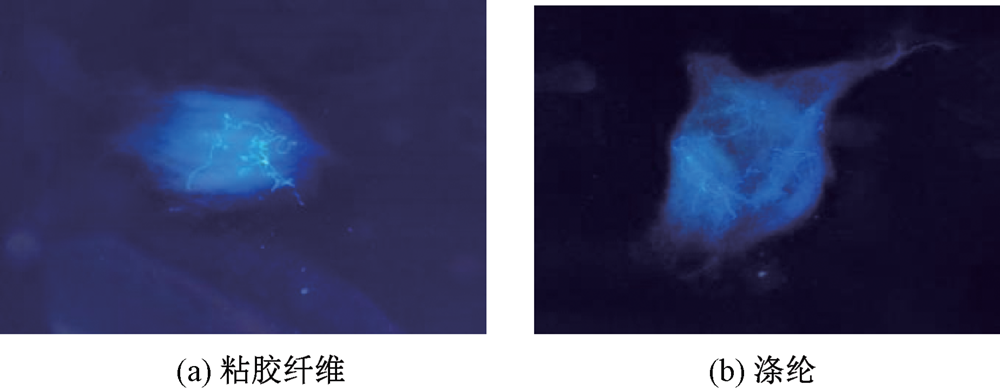
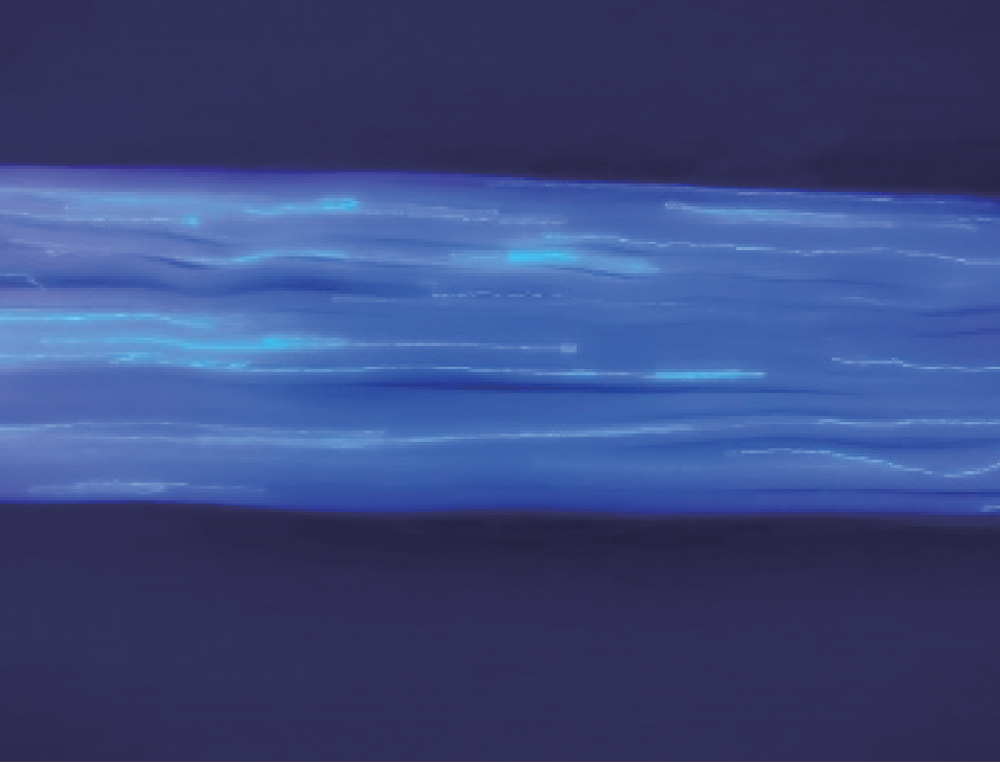
Fig.1

Picture of fiber inside fluorescent light box. (a)Viscose fiber; (b)Polyester fiber"

Tab.1

Process parameters setting of drawing"

并条 条干CV
值/%
定量/
(g·(5 m)-1)
出条速度/
(m·min-1)
并合
眼距 喇叭口
径/mm
粘胶头并 4.27 21.0 480 6 620 3.2
粘胶末并 3.61 20.5 480 6 620 3.0
涤纶头并 3.30 21.0 480 6 620 3.4
涤纶末并 2.71 20.5 480 6 620 3.2

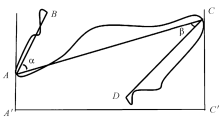
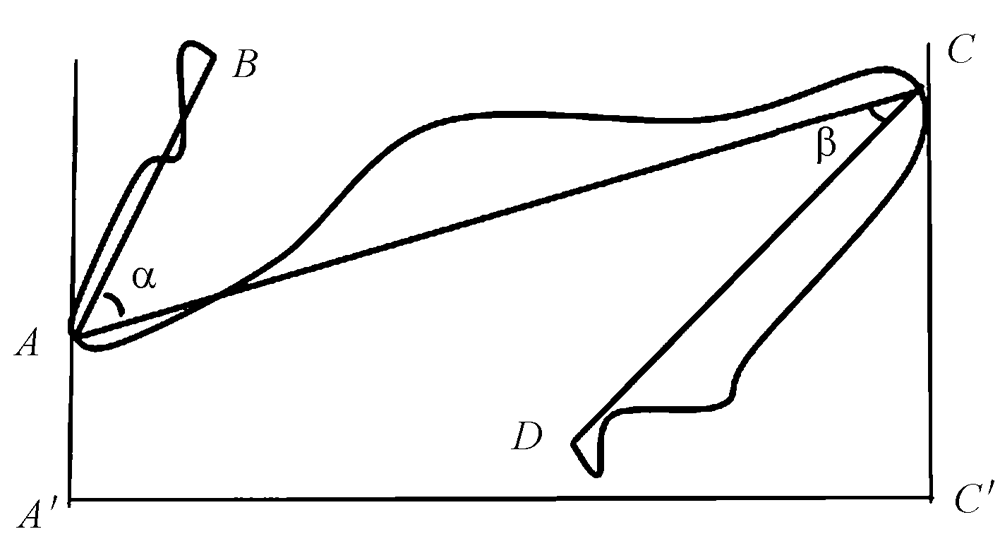
Fig.2

Schematic diagram of hook fiber"

Fig.3

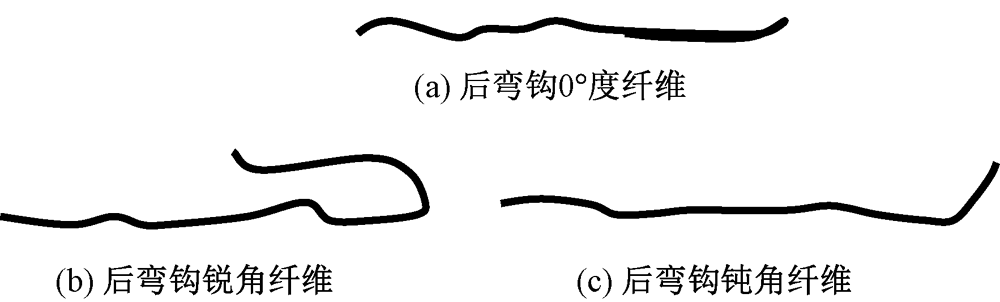
Schematic diagram of rear hook fiber.(a) Backward curved hook 0 degree fiber; (b) Backward curved hook sharp angle fiber; (c) Post-curved hook obtuse angle fiber"

Fig.4

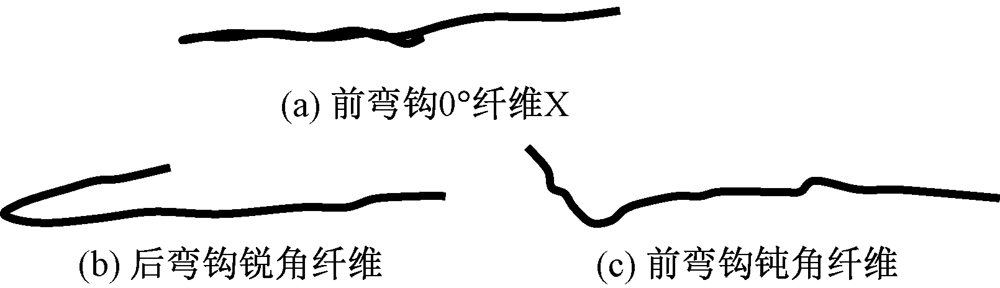
Schematic diagram of front hook fiber. (a) Nose hook 0 degree fiber; (b) Front curved hook sharpness fiber; (c) Anterior hook blunt fiber"

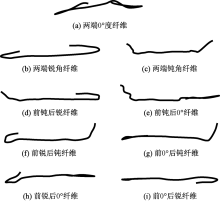
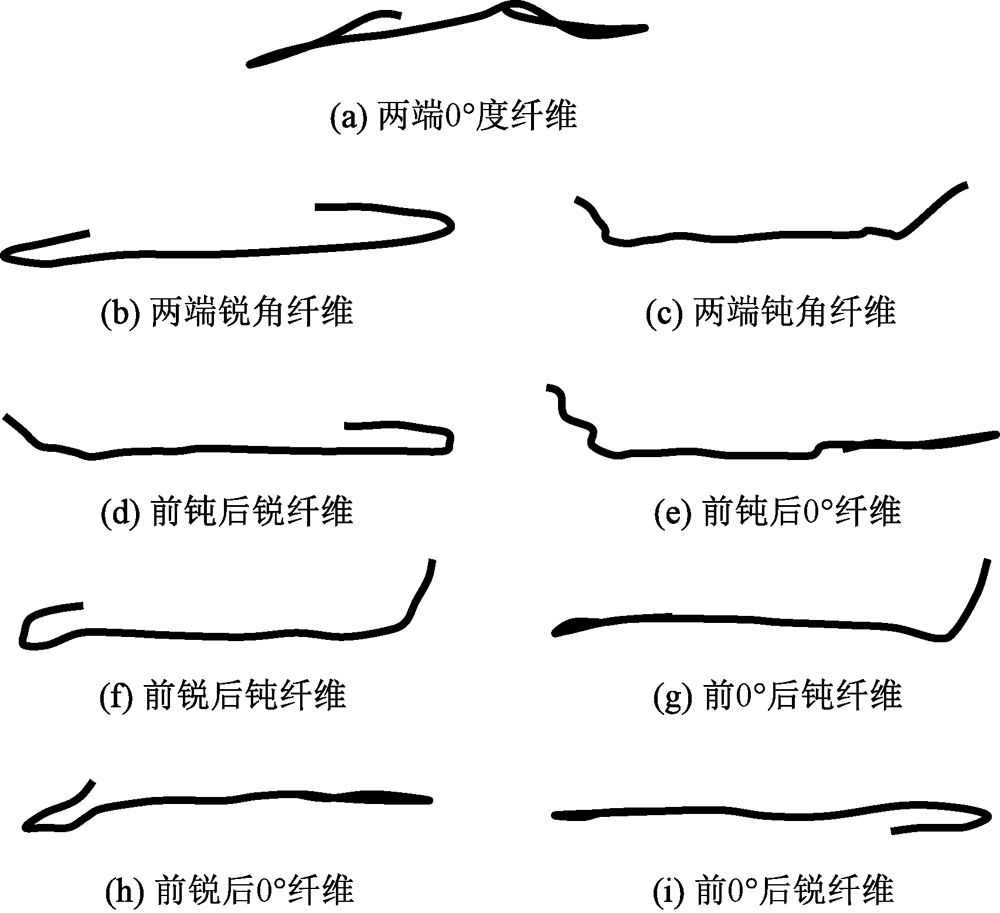
Fig.5

Schematic diagram of hook fibers at both ends. (a) 0° fibers at both ends; (b) Sharp angle fibers at both ends; (c) Obtuse angle fibers at both ends; (d) Anterior blunt posterior sharp fibers; (e) Blunt front and 0° fibers behind; (f) Sharp front and blunt back fafibers; (g) Blunt 0° fiber before and after 0°; (h) Front shorp and rear 0° fibers; (i) Front 0° back sharp fibers"

Fig.6

Effect of fluorescent fibers"

Tab.2

Observations of viscose tracer fibers"

纤维类型 生条内纤维
根数
头并条内
纤维根数
末并条内
纤维根数
伸直纤维 222 769 1 326
断裂纤维 222 288 396
曲折纤维 206 61 40
后弯钩0° 105 15 100
后弯钩锐角 681 65 289
后弯钩钝角 41 36 103
前弯钩0° 15 250 23
前弯钩锐角 109 505 143
前弯钩钝角 22 44 102
两端0° 6 8 0
两端锐角 257 51 26
两端钝角 5 10 15
前钝后锐 70 3 11
前钝后0° 6 1 5
前锐后钝 18 8 11
前0°后钝 0 5 1
前锐后0° 8 0 1
前0°后锐 4 5 2

Tab.3

Calculation results of viscose tracer fibers"

荧光纤维类型 占比/%
生条 头并条 末并条
伸直纤维 18.48 48.39 71.64
两端纤维 17.53 3.61 1.34
后弯钩纤维 54.94 4.73 18.77
前弯钩纤维 9.05 43.27 8.25

Tab.4

Observation results of polyester tracer fibers"

纤维类型 生条内纤维
根数
头并条内
纤维根数
末并条内
纤维根数
伸直纤维 270 770 1 565
断裂纤维 159 208 255
曲折纤维 277 67 45
后弯钩0° 462 61 198
后弯钩锐角 275 27 59
后弯钩钝角 73 34 68
前弯钩0° 102 640 80
前弯钩锐角 51 230 104
前弯钩钝角 50 87 106
两端0° 50 11 11
两端锐角 72 16 13
两端钝角 23 2 9
前钝后锐 52 3 4
前钝后0° 43 0 2
前锐后钝 19 7 3
前0°后钝 14 1 0
前锐后0° 30 3 0
前0°后锐 26 3 3

Tab.5

Calculation results of polyester tracer fibers"

荧光纤维类型 占比/%
生条 头并条 末并条
伸直纤维 16.75 47.12 78.56
两端纤维 20.41 1.64 1.21
后弯钩纤维 50.25 4.80 11.82
前弯钩纤维 12.59 46.44 8.40
[1] WAKANKAR V A, BHADURI S N, RAMASWAMY B R, et al. Some studies on the formation of hooks in carding[J]. Textile Research Journal, 1961, 31: 931-940.
[2] GHOSH G C, BHADURI S N. Transfer of fibers from cylinder to doffer during cotton and staple fiber carding[J]. Textile Research Journal, 1969,39:390-392.
[3] SIMPSON J. Relation between minority hooks and neps in the card web[J]. Textile Research Journal, 1972, 42: 590-591.
[4] 张弘强. 纱条中纤维形态及排列对条干不匀的影响[D]. 上海: 东华大学,2016:18-19.
ZHANG Hongqiang. Effect of fiber morphology and arrangement on uneven strip drying[D]. Shanghai: Donghua University,2016:18-19.
[5] 张亚秋, 陈霞, 江慧, 等. 基于图像处理技术的弯钩纤维表征[J]. 纺织器材, 2014, 41(5):32-36.
ZHANG Yaqiu, CHEN Xia, JIANG Hui, et al. Characterization of hooked fibers based on image processing technology[J]. Textile Accessories, 2014, 41(5): 32-36.
[6] MALAKANE P B, KADOLE P V, 史雅楠. 梳理工艺参数对纤维取向与纱条质量的影响[J]. 国际纺织导报, 2022, 50(2): 13-15, 25.
MALAKANE P B, KADOLE P V, SHI Yanan. Influence of carding process parameters on fiber orientation and yarn quality[J]. Melliand China, 2022, 50(2): 13-15,25.
[7] 李秋莽. 纤维伸直度的常用测试方法及其在生产中的应用[J]. 上海纺织科技, 2007(7): 33-34.
LI Qiumang. Common test methods for fiber straightness and their application in production[J]. Shanghai Textile Science & Technology, 2007(7): 33-34.
[8] 费青, 姚书琴. 纤维伸直度和弯钩方向性对气流纱质量的影响[J]. 纺织学报, 1979(1):22-29.
FEI Qing, YAO Shuqin. Effects of fiber straightness and hook directionality on the quality of airflow yarn[J]. Journal of Textile Research, 1979(1): 22-29.
[9] 王春燕, 郁崇文, 孙红卫. 棉条平行伸直度与转杯纺缩短工艺路线分析[J]. 山东纺织科技, 2003(3):1-3.
WANG Chunyan, YU Chongwen, SUN Hongwei. Analysis of parallel straightness and rotor shortening process route of cotton strip[J]. Shandong Textile Science & Technology, 2003(3): 1-3.
[10] 费青. 弯钩方向性和纤维伸直度研究[J]. 纺织科技进展, 2009(2):20-23, 29.
FEI Qing. Research on hook directionality and fiber straightness[J]. Progress in Textile Science & Technology, 2009(2) : 20-23, 29.
[1] XU Qiuge, GUO Xun, DUO Yongchao, WU Ruonan, QIAN Xiaoming, SONG Bing, FU Hao, ZHAO Baobao. Preparation and performance of high shrinkage polyester/polyamide 6 hollow pie-segmented spunbond needle-punching nonwovens [J]. Journal of Textile Research, 2024, 45(12): 41-49.
[2] BING Linhan, WANG Rui, WU Yuhang, LIU Botong, HUANG Hanjiang, WEI Jianfei. Preparation of PET-based carbon dots by pyrolysis and its application in PET flame retardancy [J]. Journal of Textile Research, 2024, 45(10): 1-8.
[3] PENG Bo, WU Yujie, ZHANG Yue, LI Miaolong, MENG Xiang, LI Wei, LU Yuhao. Influence of alkyl chain length of starch alkyl carboxylic acid monoester with low substitution degree on sizing property of polyester warp yarns [J]. Journal of Textile Research, 2024, 45(10): 122-127.
[4] HAN Huayu, YANG Wenlong, WANG Fu, HU Liu, HU Yi. Preparation of benzo[a]phenoxazine based functional dyes and their application on modified polyester fabrics [J]. Journal of Textile Research, 2024, 45(10): 128-136.
[5] YU Ping, WANG Haiyue, WANG Yi, SUN Qinchao, WANG Yan, HU Zuming. Hydrophobic modification and mechanism of polyester fabrics with direct fluorine modification [J]. Journal of Textile Research, 2024, 45(10): 137-144.
[6] WEI Peng, LI Zhiqiang, LI Jiaojiao, LI Junhui, LIU Dong, GENG Jiajun. Influence of solid-state polymerization on structure and properties of naphthalene ring structure aromatic liquid crystal copolyester [J]. Journal of Textile Research, 2024, 45(09): 50-55.
[7] YANG Ruihua, SHAO Qiu, WANG Xiang. Spinning performance of recycled cotton and polyester fibers and fabric characteristics [J]. Journal of Textile Research, 2024, 45(08): 127-133.
[8] GE Meitong, DONG Zhijia, CONG Honglian, DING Yuqin. Structure and moisture/thermal management evaluation of concave-convex lattice knitted fabrics [J]. Journal of Textile Research, 2024, 45(07): 47-54.
[9] WANG Yuxi, TANG Chunxia, ZHANG Liping, FU Shaohai. Preparation of carbon black nanoparticles by Steglich esterification and its ethylene glycol dispersity [J]. Journal of Textile Research, 2024, 45(07): 104-111.
[10] XU Yusong, ZHOU Jie, GAN Jiayi, ZHANG Tao, ZHANG Xianming. Preparation of phosphorus and nitrogen containing waterborne polyurethane and its application in polyester fabrics for flame retardant finishing [J]. Journal of Textile Research, 2024, 45(07): 112-120.
[11] LI Wenya, ZHOU Jian, LIAO Tanqian, DONG Zhenzhen. Structural control and spinning technology of highly wrapped core-spun yarn with thin sheath [J]. Journal of Textile Research, 2024, 45(06): 46-52.
[12] LI Qianqian, GUO Xiaoling, CUI Wenhao, XU Yuzhen, WANG Linfeng. Preparation and performance of antibacterial polyester knitted fabric for automotive seats [J]. Journal of Textile Research, 2024, 45(06): 127-133.
[13] FANG Xueming, DONG Zhijia, CONG Honglian, DING Yuqin. Design of variable porosity structure and evaluation of permeablity and moisture conductivity of single side weft knitted fabric [J]. Journal of Textile Research, 2024, 45(05): 51-59.
[14] HU Ziqiang, LUO Xiaolei, WEI Lulin, LIU Lin. Synergistic flame retardant finishing of polyester/cotton blended fabric with phytic acid/chitosan [J]. Journal of Textile Research, 2024, 45(04): 126-135.
[15] SHAO Mingjun, JIAN Yulan, TANG Wei, CHAI Xijuan, WAN Hui, XIE Linkun. Preparation of durable superhydrophobic coatings on polyester fabric surfaces and its water-oil separation properties [J]. Journal of Textile Research, 2024, 45(04): 142-150.
Viewed
Full text


Abstract

Cited

  Shared   
  Discussed   
No Suggested Reading articles found!