Journal of Textile Research ›› 2025, Vol. 46 ›› Issue (03): 196-206.doi: 10.13475/j.fzxb.20231202101

• Machinery & Equipment • Previous Articles     Next Articles

Optimization design of nozzle orifice structure based on response surface method

SHEN Min1, YANG Qi2, HU Feng2, WANG Zhen2, YANG Xuezheng3, LÜ Yongfa3, YU Lianqing1,2()   

  1. 1. Three-dimensional Textile Hubei Engineering Research Center, Wuhan Textile University, Wuhan, Hubei 430200, China
    2. School of Mechanical and Automation, Wuhan Textile University, Wuhan, Hubei 430200, China
    3. Shandong Rifa Textile Machinery Co., Ltd., Liaocheng, Shandong 252001, China
  • Received:2023-12-14 Revised:2024-05-10 Online:2025-03-15 Published:2025-04-16
  • Contact: YU Lianqing E-mail:2006110@wtu.edu.cn

Abstract:

Objective The air consumption of the auxiliary nozzle accounts for approximately 75% of the air-jet loom. In order to address the issues of low jet velocity and high air consumption in the single circular-hole auxiliary nozzle, a novel-shaped orifice auxiliary nozzle was designed. The study investigated the influence of the outlet shape parameters of the auxiliary nozzle on the synthesized airflow within the novel-shaped reed groove. This paper reports on numerical simulations based on the Reynolds-Averaged Navier-Stokes (RANS) equations and a turbulent model for vortex viscosity, focusing on the three-dimensional synthesized flow field composed of the main nozzle jet and the auxiliary nozzle jet.

Method Firstly, three-dimensional synthesized flow field models for auxiliary nozzles A1, A2, A3, B1,B2 and B3 were established using Solidworks software. The synthetic flow field models were then grid-divided using specialized meshing software ICEM, and boundary condition parameters were set using computational fluid dynamics (CFD) software Fluent. Numerical simulations of the synthesized airflow were conducted based on the RANS equations, and the accuracy of the numerical results was validated through experiments. Secondly, building upon the analysis of experimental results, the range of outlet parameters for the auxiliary nozzles was defined, including the long axis, short axis, and rotation angle. Experimental combinations were generated using the Box-Behnken method, and calculations were performed using Fluent. Experimental results were presented as response surfaces, and regression equations were derived, with the accuracy of the regression equation verified through variance analysis. By analyzing the interactions between various factors, the impact of each factor on air consumption and speed was determined. In conclusion, a comparison of air consumption and average velocity among the experimental groups facilitated the identification of the optimal comprehensive performance model.

Results The numerical simulation results exhibit a decay trend in the airflow velocity curve that aligns with the experimental test results. The velocity of the primary jet rapidly decreases upon entry into the novel-shaped reed groove. When the auxiliary nozzle jet enters the reed groove, the synthesized airflow gets accelerated briefly, temporarily slowing down the overall decay of the synthesized airflow. The prioritization of the converging type of auxiliary nozzle is observed in the order of A1 > A2 > A3 and B3>B2>B1. The F-value of the response surface model for air consumption of the auxiliary nozzle under 0.3 MPa is 249.89, with a P-value smaller than 0.000 1, indicating the rationality of the selected model parameters. The results that R2=0.997 3, Adjusted R-squared (Radj2)=0.993 3, CV=1.14%<10%, and Adeq precision =56.082 8>4, indicating that the fitted regression equation conforms to the experimental principle and can be used for the analysis and prediction of air consumption. The F-value of the response surface model for velocity of the auxiliary nozzle under 0.4 MPa is 66.55, with a P-value smaller than 0.000 1, indicating the rationality of the selected model parameters. The results that R2=0.990 1, Radj2=0.975 2, CV=1.58%<10%, and Adeq precision =33.092 6>4, suggest that the fitted regression equation conforms to the experimental principle and can be used for the analysis and prediction of velocity. Through interaction analysis, it is observed that air consumption and velocity are positively correlated with the long and short axes, while the influence of the rotation angle on air consumption is relatively minimal, but the interaction between the rotation angle and the short axis has a significant effect on the velocity. Finally, compared with the average of the experimental group, the air consumption of the optimized model is reduced by 7.35%, and the average speed is increased by 2.25%.

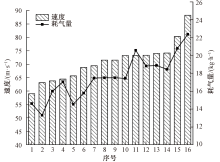
Conclusion 1) The gas supply pressure of the elliptical hole auxiliary jet inlet is increased from 0.3 MPa to 0.4 MPa, and the air consumption of the elliptical hole auxiliary nozzle will be significantly increased. However, the distribution pattern of the response surface of the interaction of factors affecting air consumption is basically consistent. 2) The short axis of the elliptical hole has the most significant effect on the air consumption, followed by the long axis, while the change of rotation angle has no effect on the air consumption, and the interaction between the long axis and the short axis has the most significant effect on the air consumption. 3) The degree of influence on the peak value of the resultant air velocity is as follows: short axis > long axis > rotation angle, and the interaction of long axis-short axis and short axis-rotation angle on the velocity is significant; changing the rotation direction of the long axis of the elliptic hole has a significant effect on the resultant flow velocity. 4) A nonlinear relationship exists between the gas consumption of the auxiliary injection with elliptical holes and the peak velocity of the synthetic gas axis, and the gas consumption decreases when the speed increases.

Key words: air jet loom, auxiliary nozzle, spray hole, response surface methodology, air consumption

CLC Number: 

  • TS103.3

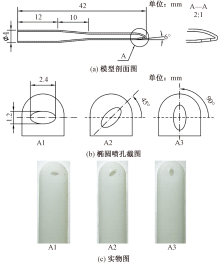
Fig.1

Structural parameters of auxiliary nozzls. (a) Model profile; (b) Elliptic orifice sections; (c) Physical drawings"

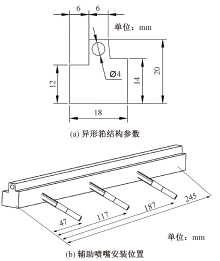
Fig.2

3-D model of multiple auxiliary nozzles combined with profiled reed. (a) Structural parameters of profiled reed; (b) Auxiliary nozzle installation positions"

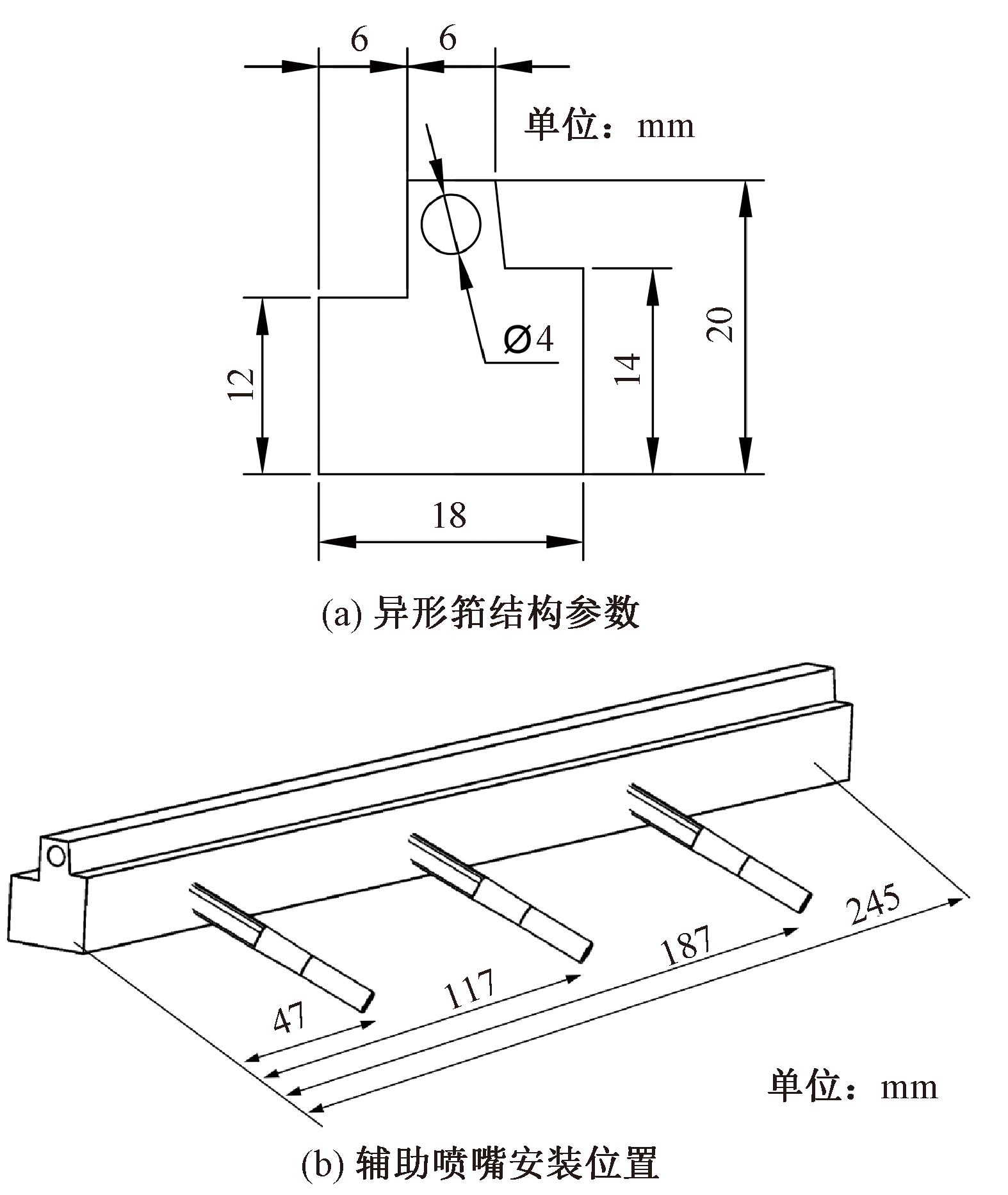
Fig.3

Grid division of main and auxiliary nozzles in 3-D flow field"

Fig.4

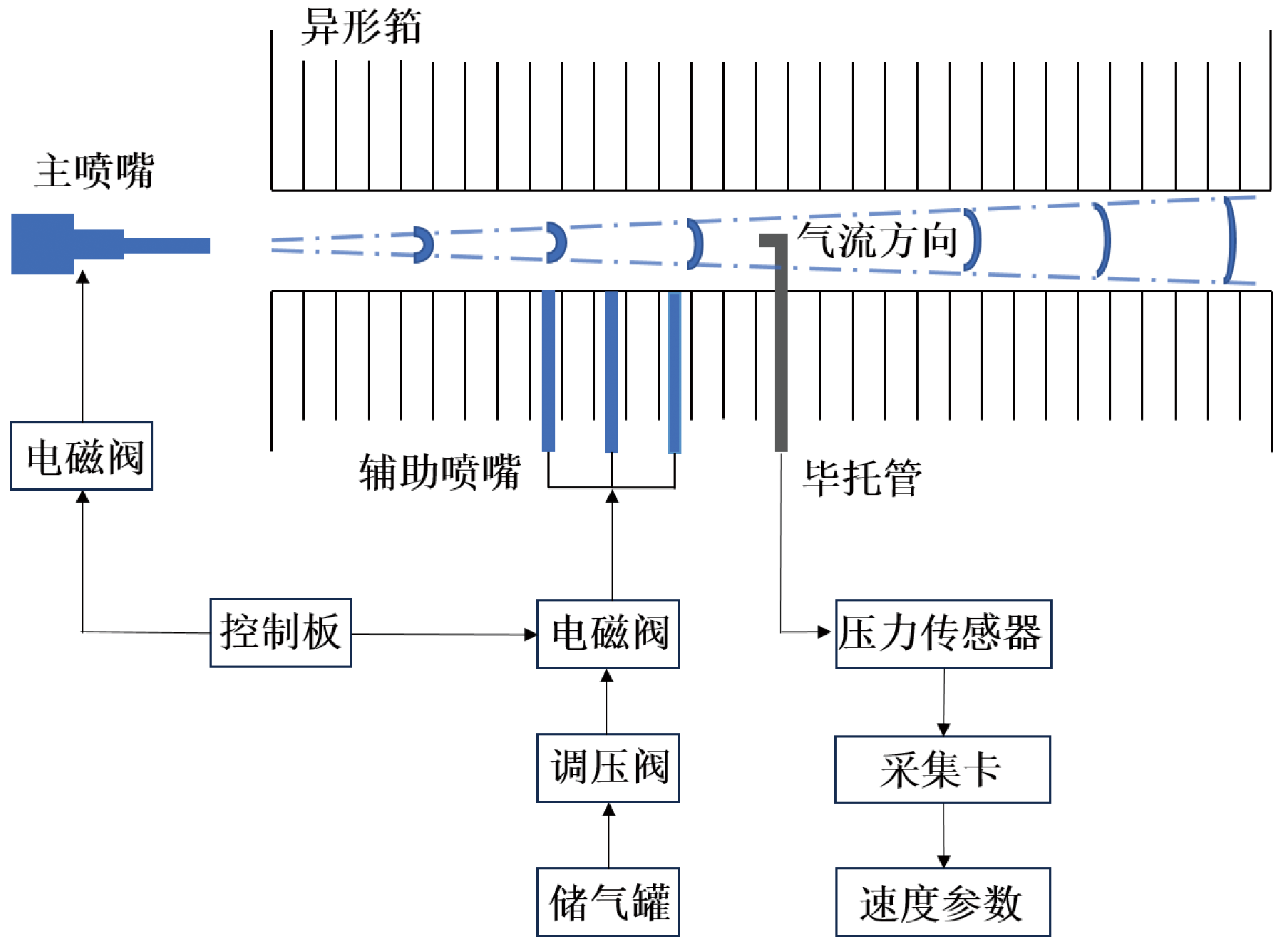
Principle of flow velocity measurement of jet from main and auxiliary nozzles into special reed passage"

Fig.5

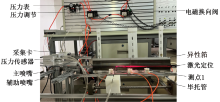
Average velocity measurement device for synthetic airflow in profiled reed channel"

Fig.6

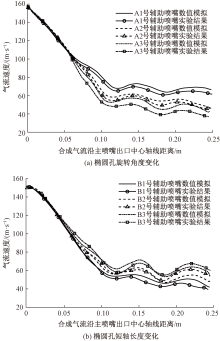
Numerical simulation and experimental verification of synthetic flow field of three auxiliary nozzles. (a)Change in rotation angle of elliptical hole; (b) Change in short axis length of elliptical holes"

Fig.7

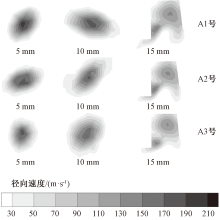
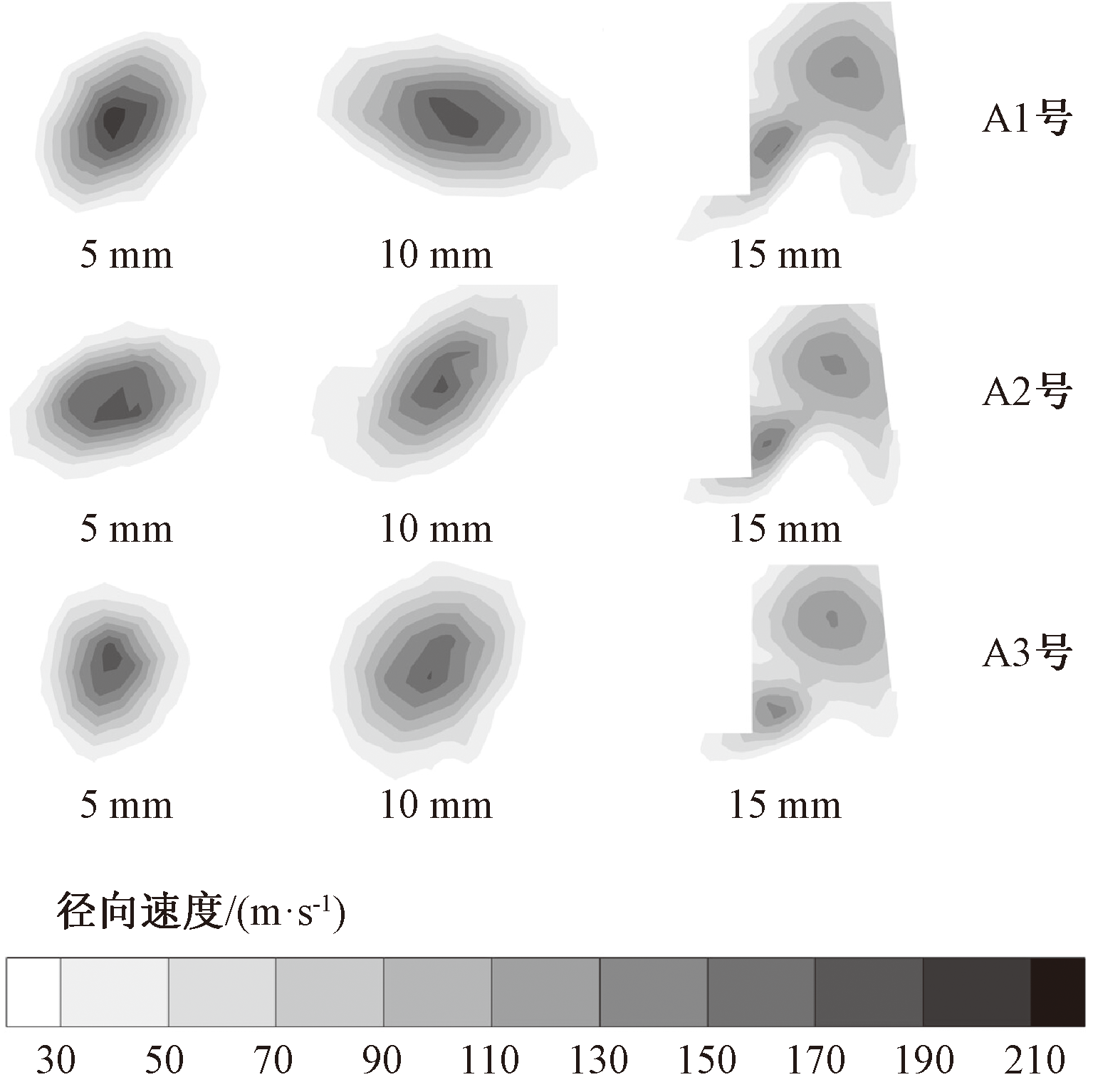
Velocity cloud maps at different distances parallel to exit section of auxiliary nozzle"

Tab.1

Factors and levels of Box-Behnken test design"

水平 A
长轴长度/mm
B
短轴长度/mm
C
旋转角度/rad
-1 2.0 1.0 0
0 2.2 1.2 0.393
1 2.4 1.4 0.785

Tab.2

Response surface test design and results"

试验
序号
响应变量 响应值
长轴长
度/mm
短轴长
度/mm
旋转
角度/
rad
H1:0.3MPa
耗气量/
(kg·h-1)
H2:0.4MPa
耗气量/
(kg·h-1)
1 2.0 1.0 0.393 10.41 13.29
2 2.2 1.0 0 11.32 14.53
3 2.2 1.0 0.785 11.52 14.60
4 2.4 1.0 0.393 12.47 15.77
5 2.0 1.2 0.785 12.56 15.74
6 2.0 1.2 0 12.61 15.99
7 2.2 1.2 0.393 13.46 17.49
8 2.2 1.2 0.393 13.47 17.49
9 2.2 1.2 0.393 13.48 17.46
10 2.2 1.2 0.393 13.72 17.42
11 2.4 1.2 0.785 14.52 18.81
12 2.4 1.2 0 14.61 18.43
13 2.0 1.4 0.393 14.83 18.87
14 2.2 1.4 0 16.14 20.55
15 2.2 1.4 0.785 16.17 20.78
16 2.4 1.4 0.393 17.54 22.35

Tab.3

Variance analysis of gas comsuption regression equation under 0.3 MPa"

来源 平方和 自由度 均方和 F P 显著性
模型 54.82 9 6.09 249.89 <0.000 1 **
A 9.53 1 9.53 390.81 <0.000 1 **
B 44.94 1 44.94 1 843.39 <0.000 1 **
C 0.001 0 1 0.001 0 0.041 5 0.845 2
AB 0.105 6 1 0.105 6 4.330 0 0.082 6
AC 0.000 4 1 0.000 4 0.016 0 0.903 5
BC 0.007 2 1 0.007 2 0.296 3 0.605 8
A2 0.004 6 1 0.004 6 0.186 9 0.680 6
B2 0.242 6 1 0.242 6 9.950 0 0.019 7 *
C2 0.000 3 1 0.000 3 0.012 6 0.914 3
残差 0.146 3 6 0.024 4
失拟项 0.099 2 3 0.033 1 2.11 0.278 1 不显著

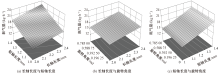
Fig.8

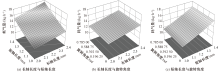
Interactive response surface diagram of factors influencing air consumption under 0.3 MPa. (a) Long axis length and short axis length; (b) Long axis length and rotation angle; (c)Short axis length and rotation angle"

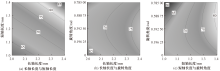
Fig.9

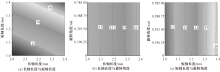
Interactive response plan of factors influencing air consumption under 0.3 MPa. (a) Long axis length and short axis length; (b) Long axis length and rotation angle; (c)Short axis length and rotation angle"

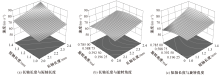
Fig.10

Interactive response surface diagram of factors influencing air consumption under 0.4 MPa. (a) Long axis length and short axis length; (b) Long axis length and rotation angle; (c)Short axis length and rotation angle"

Tab.4

Response surface test design and results at 0.4 MPa"

实验
序号
响应变量 响应结果
A长轴
长度/mm
B
短轴
长度/mm
C
旋转角度/
rad
V
速度/(m·s-1)
1 2.0 1.0 0.393 63.15
2 2.2 1.0 0 65.66
3 2.2 1.0 0.785 59.01
4 2.4 1.0 0.393 68.86
5 2.0 1.2 0.785 64.50
6 2.0 1.2 0 63.80
7 2.2 1.2 0.393 71.55
8 2.2 1.2 0.393 71.55
9 2.2 1.2 0.393 69.48
10 2.2 1.2 0.393 73.26
11 2.4 1.2 0.785 73.35
12 2.4 1.2 0 74.20
13 2.0 1.4 0.393 74.06
14 2.2 1.4 0 73.31
15 2.2 1.4 0.785 80.31
16 2.4 1.4 0.393 88.29

Tab.5

Analysis of variance of regression equation"

来源 平方和 自由度 均方和 F P 显著性
模型 749 9 83.22 66.55 <0.000 1 **
A 192 1 192 153.54 <0.000 1 **
B 439.15 1 439.15 351.17 <0.000 1 **
C 0.005 1 0.005 0.004 0.951 6
AB 18.15 1 18.15 14.51 0.008 9 **
AC 0.600 3 1 0.600 3 0.48 0.514 3
BC 46.59 1 46.59 37.25 0.000 9 **
A2 2.31 1 2.31 1.85 0.222 9
B2 7.51 1 7.51 6 0.049 8 *
C2 42.44 1 42.44 33.94 0.001 1 **
残差 7.5 6 1.25
失拟项 0.326 6 3 0.108 9 0.045 5 0.984 8 不显著

Fig.11

Interactive response surface diagram of velocity influencing factors under 0.4 MPa. (a) Long axis length and short axis length; (b) Long axis length and rotation angle; (c)Short axis length and rotation angle"

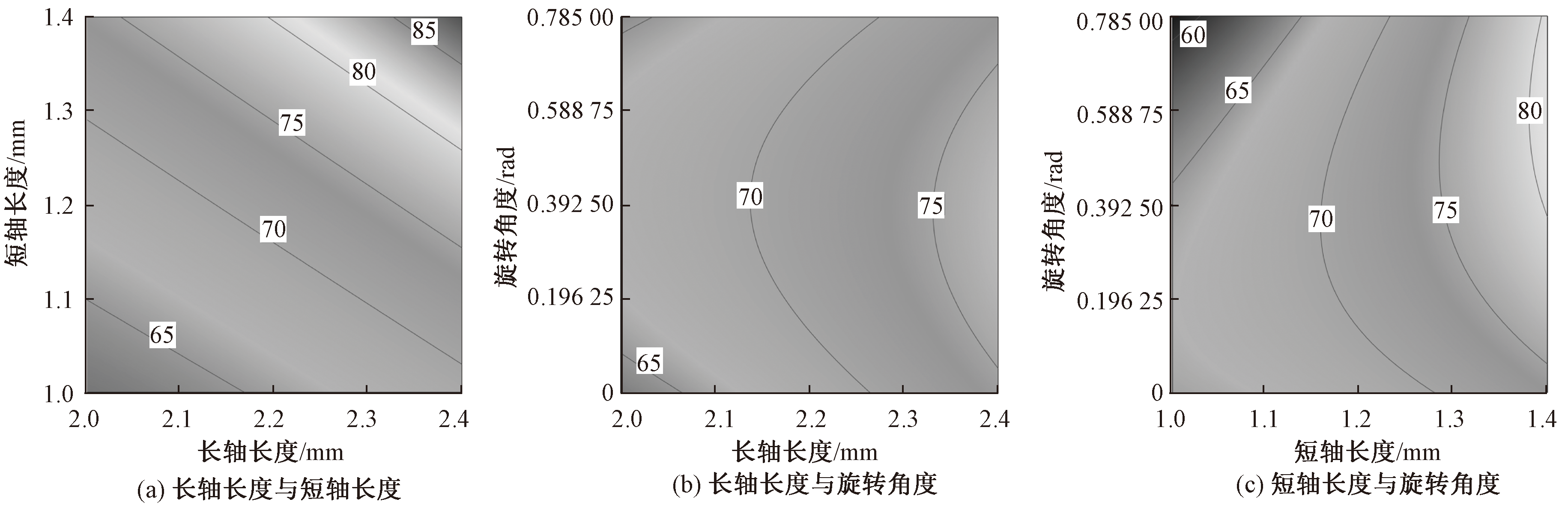
Fig.12

Interactive response plan of velocity factors under 0.4 MPa. (a) Long axis length and short axis length; (b) Long axis length and rotation angle; (c)Short axis length and rotation angle"

Fig.13

Relationship between peak velocity and air consumption"

[1] 李雪清. 我国纺机专用基础件行业现状与发展[J]. 纺织器材, 2023, 50(1):2-8.
LI Xueqing. Current situation and development of Chinese textile essential parts[J]. Textile Accessories, 2023, 50(1): 2-8.
[2] 祝成炎, 田伟, 李艳清, 等. 喷气织造技术现状与发展[J]. 棉纺织技术, 2023, 51(10):97-104.
ZHU Chengyan, TIAN Wei, Ll Yanqing, et al. Present situation and development of air-jet weaving techno-logy[J]. Cotton Textile Technology, 2023, 51(10):97-104.
[3] 殷俊清, 陈子韩, 陈永当, 等. 片式多源喷气引纬技术研究[J]. 丝绸, 2023, 60(5):66-73.
YIN Junqing, CHEN Zihan, CHEN Yongdang, et al. Research on sheet-type multi-source jet weft insertion technology[J]. Journal of Silk, 2023, 60(5):66-73.
[4] 陈巧兰, 王鸿博, 高卫东, 等. 喷气织机单圆孔辅助喷嘴结构优化[J]. 纺织学报, 2016, 37(1):142-146.
CHEN Qiaolan, WANG Hongbo, GAO Weidong, et al. Structure optimization of single circular hole auxiliary nozzle in air-jet loom[J]. Journal of Textile Research, 2016, 37(1):142-146.
[5] 谭保辉, 冯志华, 刘丁丁, 等. 基于CFD的喷气织机辅助喷嘴流场分析[J]. 纺织学报, 2012, 33(7):125-130.
TAN Baohui, FENG Zhihua, LIU Dingding, et al. Flow field analysis of auxiliary nozzle of air-jet loom based on CFD[J]. Journal of Textile Research, 2012, 33(7):125-130.
[6] 王卫华, 冯志华, 谭保辉, 等. 喷气织机辅助喷嘴流场特性分析与纬纱牵引实验研究[J]. 纺织学报, 2014, 35(10): 121-128.
WANG Weihua, FENG Zhihua, TAN Baohui, et al. Analysis of flow field characteristics of auxiliary nozzle of air-jet loom and experimental study on weft pulling[J]. Journal of Textile Research, 2014, 35(10):121-128.
[7] 陈巧兰, 王鸿博, 高卫东, 等. 喷气织机辅助喷嘴喷孔形状的优化设计[J]. 上海纺织科技, 2016, 44(7):14-16.
CHEN Qiaolan, WANG Hongbo, GAO Weidong, et al. Optimization design of hole shapeof auxiliary nozzle on air-jet loom[J]. Shanghai Textile Science & Technology, 2016, 44(7):14-16.
[8] JIANG Shunwei, JIN Yuzhen, HU Xiaodong, et al. Characteristics of intersecting airflows in the narrow flow channel[J], The Journal of The Textile Institute, 2018, 109(4):517-523.
[9] WEI Mengyuan, XUE Wenliang, LU Weimin, et al. Air velocity fluctuation in reedgroove of air-jet loom[J]. Journal of Donghua University, 2011, 28(2): 170-176.
[10] 陆庆, 冯志华, 张荣, 等. 主辅喷嘴供气压力对筘槽内引纬气流速度的影响[J]. 科学技术与工程, 2017, 17(7):95-100,118.
LU Qing, FENG Zhihua, ZHANG Rong, et al. Influence of air supply pressure of the main and auxiliary nozzles on the air flow velocity in the shed triangle of weft insertion[J]. Science Technology and Engineering, 2017, 17(7): 95-100,118.
[11] 杨国仲, 沈丹峰, 常革联, 等. 喷气织机异形筘结构参数对引纬气流场的影响[J]. 西安工程大学学报, 2020, 34(2):85-90.
YANG Guozhong, SHEN Danfeng, CHANG Gelian, et al. Comprehensive performance of auxiliary nozzle in air-jet loom based on Fluent[J]. Journal of Xi'an Polytechnic University, 2020, 34(2): 85-90.
[12] 周浩邦, 沈敏, 余联庆, 等. 辅助喷嘴结构对喷气织机异形筘内合成流场特征的影响[J]. 纺织学报, 2021, 42(11): 166-172.
doi: 10.13475/j.fzxb.20200502308
ZHOU Haobang, SHEN Min, YU Lianqing, et al. Effect of structural parameter of relay nozzles on characteristics of flow field in profiled reed of air jet loom[J]. Journal of Textile Research, 2021, 42(11):166-172.
doi: 10.13475/j.fzxb.20200502308
[13] 张敏, 王鸿博, 高卫东, 等. 喷气织机辅助喷嘴流场特性与耗气量分析[J]. 纺织学报, 2016, 37(12):123-128.
ZHANG Min, WANG Hongbo, GAO Weidong, et al. Analysis on weft insertion flow field and gas consumption of auxiliary nozzle in air-jet loom[J]. Journal of Textile Research, 2016, 37(12):123-128.
[14] 张振全, 曹铭成, 王顺利, 等. 丰田喷气织机节能降耗的实践[J]. 纺织器材, 2021, 48(5):43-47.
ZHANG Zhenquan, CAO Mingcheng, WANG Shunli, et al. Practice of energy saving and consumption reducing in Toyota air-jet loom[J]. Textile Accessoires, 2021, 48(5): 43-47.
[15] 樊百林, 张昌睿, 郭佳华, 等. 基于Flow Simulation的喷气织机辅助喷嘴喷孔结构优化[J]. 纺织学报, 2023, 44 (6):200-206.
FAN Bailin, ZHANG Changrui, GUO Jiahua, et al. Nozzle structure optimization based on flow simulation for air-jet weaving[J]. Journal of Textile Research, 2023, 44(6):200-206.
[16] 张亮, 冯志华, 刘帅, 等. 喷气织机辅助喷嘴喷孔结构优化设计[J]. 纺织学报, 2016, 37(6):112-117.
ZHANG Liang, FENG Zhihua, LIU Shuai, et al. Structure optimization design of auxiliary nozzle for air-jet loom[J]. Journal of Textile Research, 2016, 37(6):112-117.
[17] 马建鑫, 陈永当, 程云飞, 等. 喷孔锥度对喷气织机环槽型辅助喷嘴性能的影响[J]. 轻工机械, 2023, 41(2):42-47.
MA Jianxin, CHEN Yongdang, CHENG Yunfei, et al. Influence of nozzle taper on performance of annular groove auxiliary nozzle of air-jet loom[J]. Light Industry Machinery, 2023, 41(2):42-47.
[18] 赫森奥, 陈昊思, 肖福礼, 等. 喷气织机辅助喷嘴的气流场仿真[J]. 装备制造技术, 2024(1):7-9,36.
HE Senao, Chen Haosi, Xiao Fuli, et al. Airflow field simulation of an air-jet loom-assisted nozzle[J]. Equipment Manufacturing Technology, 2024(1):7-9,36.
[19] 鲍宏, 杨靖, 柯庆镝, 等. 基于支持向量回归的熔丝制造3D打印能效优化模型[J]. 中国机械工程, 2022, 33(18):2215-2226.
BAO Hong, YANG Jing, KE Qingdi, et al. An energy efficiency optimization model of fused filament fabrication 3D printing based on support vector regression[J]. CHINA Mechanical Engineering, 2022, 33(18):2215-2226.
doi: 10.3969/j.issn.1004-132X.2022.18.008
[20] KETEMA M Y, AYELE M. Effect of cotton/polyester blend ratio, loom speed, and air pressure on yarn twist loss and yarn strength loss: the case of air-jet loom[J]. Journal of Natural Fibers, 2023, 20(1):1-8.
[1] SHEN Min, OUYANG Can, XIONG Xiaoshuang, WANG Zhen, YANG Xuezheng, LÜ Yongfa, YU Lianqing. Prediction of fluctuation amplitude of weft yarns based on jet transient velocity variational modal decomposition [J]. Journal of Textile Research, 2025, 46(01): 187-196.
[2] XI Chuanzhi, WANG Jiayuan, WANG Yongzhi, CHEN Ge, PEI Zeguang. Numerical simulation of airflow field in nozzle of vortex spinning with low energy consumption and spinning experimentation [J]. Journal of Textile Research, 2024, 45(12): 206-214.
[3] XIAO Shichao, SHEN Min, FANG Jingbing, WANG Zhen, YU Lianqing. Characteristics of weft insertion synthetic airflow from main nozzle and high-speed special-shaped auxiliary nozzles [J]. Journal of Textile Research, 2023, 44(12): 181-188.
[4] FAN Bailin, ZHANG Changrui, GUO Jiahua, HUANG Ganghan, WEI Guoliang. Nozzle structure optimization based on Flow Simulation for air-jet weaving [J]. Journal of Textile Research, 2023, 44(06): 200-206.
[5] ZHOU Haobang, SHEN Min, YU Lianqing, XIAO Shichao. Effect of structural parameter of relay nozzles on characteristics of flow field in profiled reed of air jet loom [J]. Journal of Textile Research, 2021, 42(11): 166-172.
[6] CHEN Yuxiang, YU Meiya, DONG Zhengmei, MIAO Lulu, LIN Yanyan, ZOU Zhuanyong. Enhanced process optimization and mechanism analysis of thermal adhesion for air jet vortex spun yarn [J]. Journal of Textile Research, 2020, 41(11): 48-52.
[7] LI Sihu, SHEN Min, BAI Cong, CHEN Liang. Influence of structure parameter of auxiliary nozzle in air-jet loom on characteristics of flow field [J]. Journal of Textile Research, 2019, 40(11): 161-167.
[8] GUANG Shaobo, JIN Yuzhen, ZHU Xiaochen. Analysis on airflow field in extended nozzle of air jet loom [J]. Journal of Textile Research, 2019, 40(04): 135-139.
[9] . Comprehensive performance of auxiliary nozzle of air-jet loom based on Fluent [J]. JOURNAL OF TEXTILE RESEARCH, 2018, 39(08): 124-129.
[10] . Preparation of waterborne polyurethane coating by mechanical foaming based on response surface methodology [J]. JOURNAL OF TEXTILE RESEARCH, 2018, 39(07): 95-099.
[11] . Establishment of afterglow brightness model for luminous computer-embroidery fabric by response surface methodology [J]. JOURNAL OF TEXTILE RESEARCH, 2017, 38(09): 72-75.
[12] . Analysis of weft insertion flow field and gas consumption of auxiliary nozzle in air-jet loom [J]. JOURNAL OF TEXTILE RESEARCH, 2016, 37(12): 123-128.
[13] . Influence of auxiliary nozzle and profiled reed in air-jet loom on flow field [J]. JOURNAL OF TEXTILE RESEARCH, 2016, 37(09): 129-133.
[14] . Structure optimization of single cicular hole auxiliary nozzle in air-jet loom [J]. JOURNAL OF TEXTILE RESEARCH, 2016, 37(01): 142-146.
[15] . Extracting of lanolin from raw wool with optimized subcritical fluid technology by response surface methodology [J]. Journal of Textile Research, 2015, 36(12): 69-74.
Viewed
Full text


Abstract

Cited

  Shared   
  Discussed   
No Suggested Reading articles found!