Journal of Textile Research ›› 2025, Vol. 46 ›› Issue (03): 34-40.doi: 10.13475/j.fzxb.20240303101

• Fiber Materials • Previous Articles     Next Articles

Optimization and performance analysis of Lyocell fiber direct web formation process

ZHANG Fan, CHENG Chunzu(), GUO Cuibin, ZHANG Dong, CHENG Min, LI Ting, XU Jigang   

  1. State Key Laboratory of Bio-Based Fiber Materials, China Textile Academy, Beijing 100025, China
  • Received:2024-03-13 Revised:2024-08-28 Online:2025-03-15 Published:2025-03-15
  • Contact: CHENG Chunzu E-mail:chengchunzu@cta.gt.cn

Abstract:

Objective Lyocell fiber direct web formation is an innovative method of preparing nonwoven materials by drafting a cellulose solution through a liquid stream and directly webbing the filaments by a dry-spray wet method using air gap cooling. It has the advantages of short preparation process, low investment in equipment and small footprint. The prepared non-woven material has high strength, good softness, good moisture absorption and air permeability, and low flaking rate, and can be applied in the fields of beauty mask, medical gauze, high-end wiping paper, and tea bags.

Method In this research, the liquid flow rate of the liquid flow drafting device under different structural parameters was investigated, and the crystallinity, breaking strength, liquid absorption rate, permeability and softness of the materials prepared under different liquid flow rates, different liquid flow NMMO concentrations and temperatures were studied comparatively, so as to determine the optimal structural parameters of the device and the liquid flow process parameters.

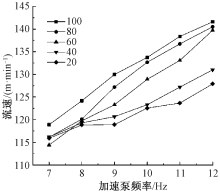
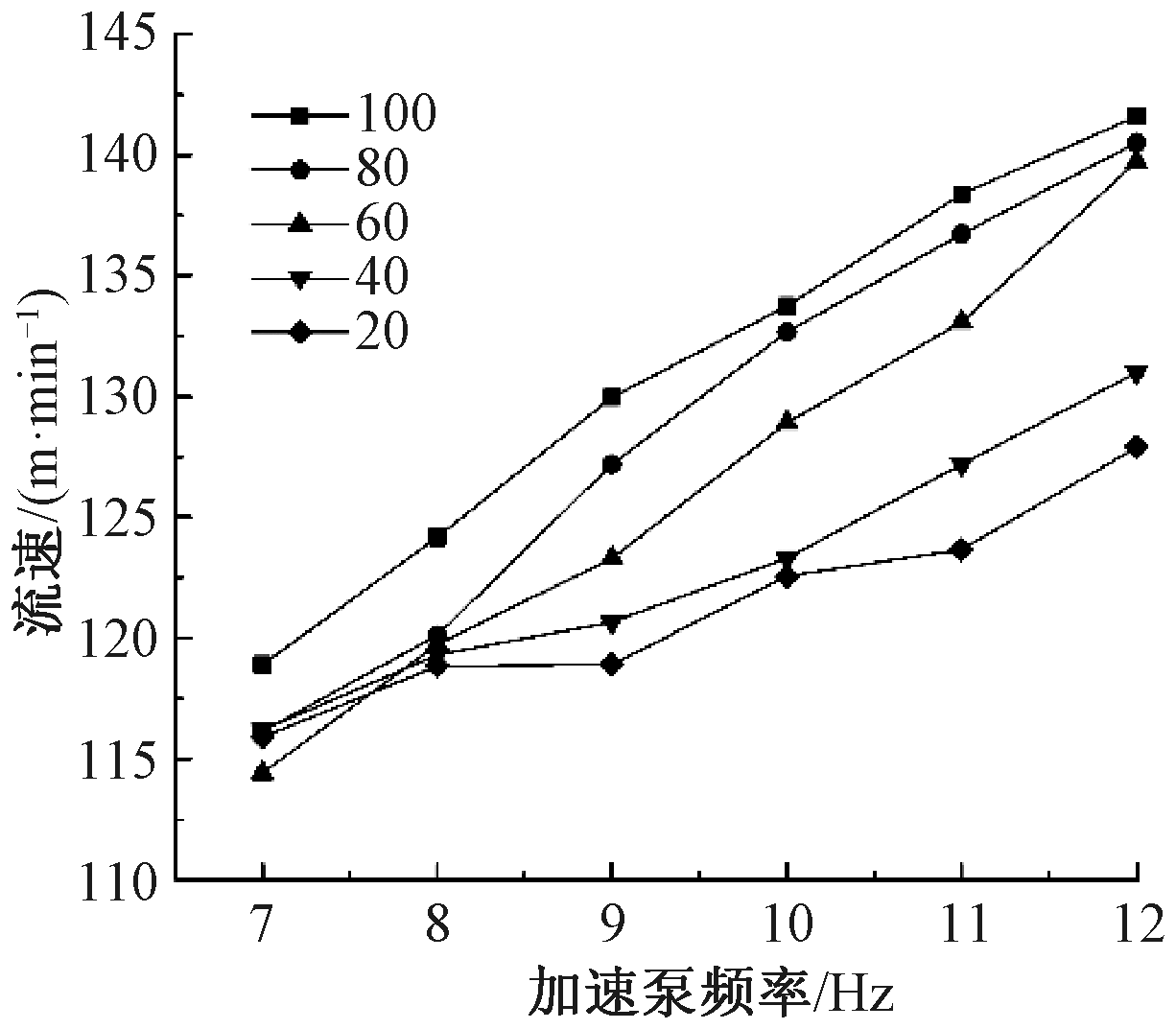
Results In the case of constant accelerating fluid flow rate, the total fluid rate increased with the increase of the ratio of the accelerating runner inlet and outlet widths (d0/d1). However, if d0/d1 value is too large, the accelerating fluid flow outlet pressure would be too large, which is prone to cause the non-uniformity of the fluid velocity. As the width of the bottom plate increased, the liquid flow velocity was decreased, and the width of the bottom plate was preferably 3-4 mm. As the liquid flow rate increased, the diameter of the fiber gradually became finer, and the finest was 9 μm in diameter, and the crystallinity and orientation of the fiber gradually increased with the increase of the liquid flow rate. The longitudinal and transversal breaking strengths of the nonwoven materials showed a tendency to increase with the increase of the liquid flow velocity. With the increase of the liquid flow rate, the liquid absorption rate and air permeability of the nonwoven materials demonstrated a decrease, and the softness of the nonwoven materials in both dry and wet states was deteriorated. With the increase of the concentration of NMMO, the crystallinity of the nonwoven materials was increased, and with the increase of the liquid flow temperature, the crystallinity of the nonwoven materials was decreased. The longitudinal and transverse breaking strength of the nonwoven materials was increased as the concentration of NMMO in the liquid flow increased, and the longitudinal and transverse breaking strength of the nonwoven materials was decreased as the temperature of the liquid flow increased. As the concentration of NMMO in the liquid flow increased, the softness of the nonwoven material was deteriorated, and as the temperature of the liquid flow increased, the softness of the nonwoven material was improved. Under the optimal process parameters, the prepared material had the longitudinal breaking strength of 35-40 N, transverse breaking strength of 18-25 N, liquid absorption rate of 1 100%-1 200%, air permeability of 4 600-4 900 mm/s, and dry state longitudinal softness 240-280 mN, dry state transverse softness 60-70 mN, wet state longitudinal softness 80-100 mN, and wet state transverse softness 49-56 mN.

Conclusion By optimizing the ratio of the inlet and outlet widths of the accelerating runner and the width of the base plate, the flow rate is maximized, resulting in improved fiber drafting. An increase in flow rate leads to a reduction in fiber diameter and an increase in crystallinity, which in turn enhances the longitudinal and transverse breaking strength of the nonwoven material. An increase in the liquid flow rate also leads to a decrease in the liquid absorption rate and air permeability of the material, and a deterioration in softness. As the concentration of liquid rate NMMO increases, the crystallinity and breaking strength of the material increase, and the softness decreases; while the increase of liquid rate temperature leads to the decrease of crystallinity, the decrease of breaking strength, and the improvement of softness. By precisely controlling the structural and process parameters of the liquid flow drafting device, the properties of Lyocell nonwoven materials can be effectively regulated, and nonwoven materials with high strength, good moisture absorption and air permeability, and suitable softness can be prepared. Future research can further explore the specific requirements of material properties in different application scenarios and achieve more refined process control and product customization.

Key words: cellulose solution, Lyocell fiber, direct web formation, fluid flow drafting, moisture absorption and permeability, softness

CLC Number: 

  • TS174

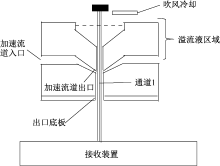
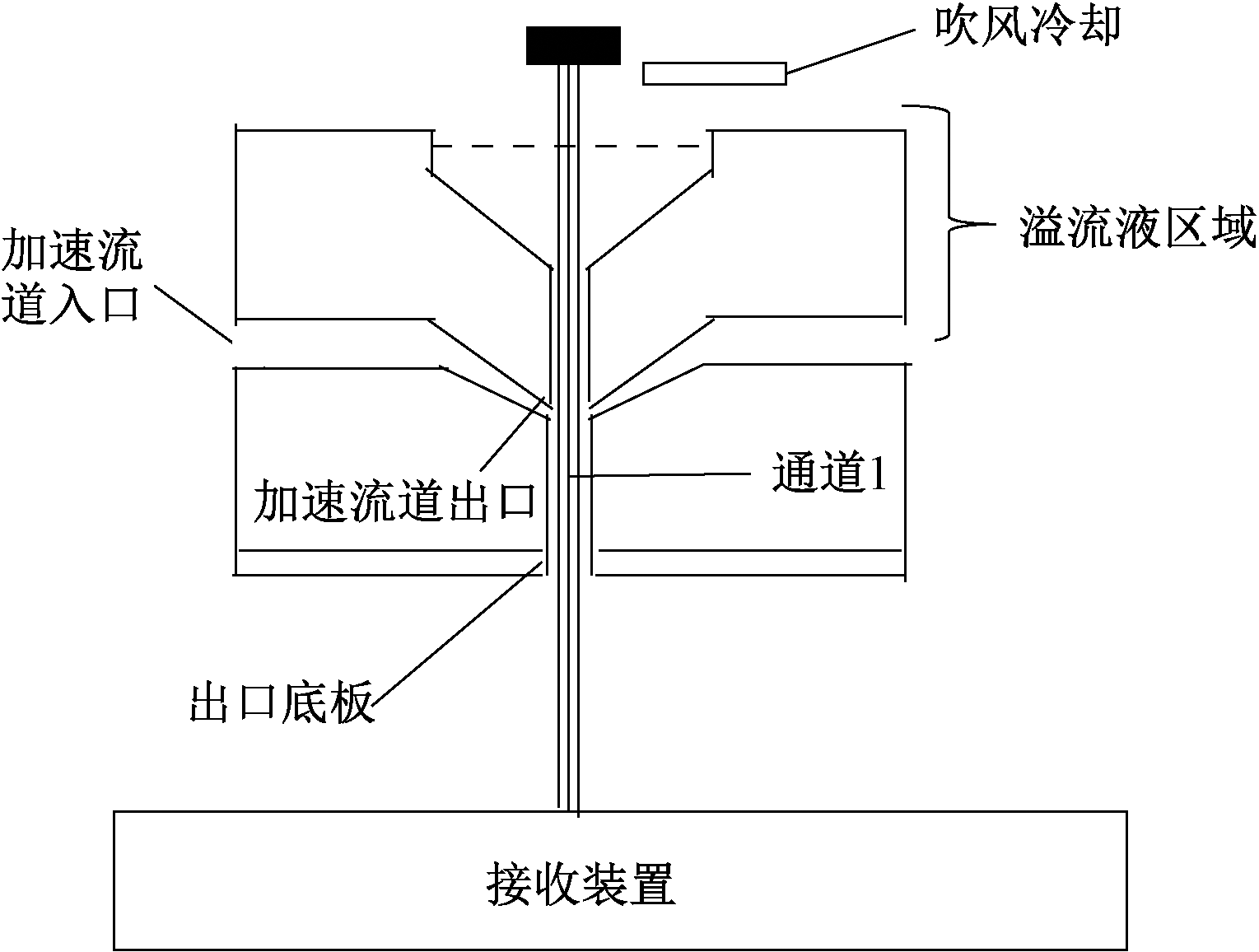
Fig.1

Schematic diagram of structure of fluid flow drafting device"

Tab.1

Parameters of drafting process with different fluid flowes"

试样
编号
液流速度/
(m·min-1)
液流NMMO
质量分数/%
液流
温度/℃
1# 134 20 20
2# 153 20 20
3# 167 20 20
4# 186 20 20
5# 217 20 20
6# 167 5 20
7# 153 15 20
8# 153 25 20
9# 153 20 5
10# 153 20 10
11# 153 20 30

Fig.2

Influence law ratio of inlet and outlet widths of accelerated flow channel on liquid velocity"

Tab.2

Fiber parameters at different flow rates"

试样编号 纤维直径/μm 结晶度/% Δn(双折射率)
1# 15.0 60.20 0.072 9
2# 12.0 61.09 0.073 2
3# 11.5 61.73 0.074 7
4# 10.8 62.25 0.076 5
5# 9.0 62.97 0.077 7

Tab.3

Tensile properties of nonwoven materials at different liquid flow rates"

试样
编号
纵向断裂
强力/N
纵向断裂
伸长率/%
横向断裂
强力/N
横向断裂
伸长率/%
1# 35.24 36.94 18.32 85.02
2# 40.96 31.93 24.74 78.22
3# 42.35 26.94 26.32 69.80
4# 44.38 20.44 28.86 59.48
5# 48.92 15.67 31.67 51.78

Tab.4

Liquid absorption rate and air permeability of nonwoven materials at different liquid flow rates"

试样编号 孔隙率/% 吸液率/% 透气率/(mm·s-1)
1# 91.5 1 162 4 863
2# 90.9 1 137 4 618
3# 88.9 1 095 4 496
4# 86.4 1 047 4 178
5# 85.2 1 006 3 986

Tab.5

Softness of nonwoven materials at different liquid flow rates"

试样编号 干态柔软度/mN 湿态柔软度/mN
纵向 横向 纵向 横向
1# 245.4 62.8 83.3 49.1
2# 276.5 70.3 96.6 55.8
3# 300.7 77.7 104.3 60.2
4# 325.0 84.2 110.3 63.9
5# 342.3 98.7 122.5 66.2

Tab.6

Tensile properties of nonwoven materials at different liquid flow NMMO concentrations and temperatures"

试样
编号
纵向断裂
强力/N
纵向断裂
伸长率/%
横向断裂
强力/N
横向断裂
伸长率/%
3# 42.35 26.94 26.32 69.80
6# 32.76 39.17 19.27 86.41
7# 36.42 35.37 23.88 80.56
8# 47.51 22.45 28.84 60.73
9# 53.00 21.57 34.73 58.44
10# 48.00 19.72 30.68 62.14
11# 37.00 32.66 22.75 77.45

Tab.7

Softness of nonwoven materials at different stream NMMO concentrations and temperatures"

试样编号 干态柔软度/mN 湿态柔软度/mN
纵向 横向 纵向 横向
3# 300.7 77.7 104.3 60.2
6# 254.3 73.8 88.5 53.2
7# 269.4 67.4 97.5 57.1
8# 320.5 81.6 112.7 65.9
9# 354.8 83.7 126.8 78.3
10# 330.2 81.1 117.4 70.5
11# 267.9 72.5 85.3 55.3
[1] 张寅江, 王荣武, 靳向煜, 等. 湿法水刺可分散材料的结构与性能及其发展趋势[J]. 纺织学报, 2018, 39(6): 167-174.
ZHANG Yinjiang, WANG Rongwu, JIN Xiangyu, et al. Structure and properties of wet spunlace dispersible materials and their development trend[J]. Journal of Textile Research, 2018, 39(6): 167-174.
[2] 王乐军, 刘怡宁, 房迪, 等. Lyocell纤维的国内外研发现状与发展方向[J]. 纺织学报, 2017, 38(4): 165-167.
WANG Lejun, LIU Yining, FANG Di, et al. Status and development research of Lyocell fiber at home and abroad[J]. Journal of Textile Research, 2017, 38(4): 165-167.
[3] 何建龙, 张帆, 郭翠彬, 等. Lyocell长丝非织造材料的制备及性能[J]. 合成纤维, 2022, 51(1): 24-28.
HE Jianlong, ZHANG Fan, GUO Cuibin, et al. Preparation and properties of lyocell filament nonwovens[J]. Synthetic Fiber in China, 2022, 51(1): 24-28.
[4] 李顺希, 徐圣俊, 杨革生, 等. Lyocell熔喷非织造布纤网结构及纤维直径的研究[J]. 纤维素科学与技术, 2013, 21(3): 48-55.
LI Shunxi, XU Shengjun, YANG Gesheng, et al. Study on the web structure and fiber diameter of Lyocell melt-blown nonwovens[J]. Journal of Cellulose Science and Technology, 2013, 21(3): 48-55.
[5] 沈慧敏. 面膜基布性能指标及评价方法研究[D]. 天津: 天津工业大学, 2021: 40.
SHEN Huimin. Research on performance index and evaluation method of mask base cloth[D]. Tianjin: Tiangong University, 2021: 40.
[6] 赵明良, 任晓川, 邢明杰, 等. 面膜用非织造布的结构与性能[J]. 国际纺织导报, 2023, 51(1):23-26.
ZHAO Mingliang, REN Xiaochuan, XING Mingjie, et al. The structure and properties of nonwovens for facial mask[J]. Melliand China, 2023, 51(1): 23-26.
[7] 柯真霞, 余灵婕, 朱梦秋, 等. 非织造布内部结构重建及其性能模拟的研究进展[J]. 合成纤维, 2023, 52(3): 36-42.
KE Zhenxia, YU Lingjie, ZHU Mengqiu, et al. Research progressin internal structure reconstruction and performance simulation of nonwovens[J]. Synthetic Fiber in China, 2023, 52(3): 36-42.
[8] YILMAZ K B, SABUNCUOGLU B, YILDIRIM B. A brief review on the mechanical behavior of nonwoven fabrics[J]. Journal of Engineered Fibers and Fabrics, 2020. DOI: 1558925020970197.
[9] BOROJENI I A, GAJEWSKI G, RIAHI R A. Application of electrospun nonwoven fibers in air filters[J]. Fibers, 2022, 10(2): 15.
[10] 刘璐. 非织造空气过滤材料的优化设计:纤维形态的影响[D]. 天津: 天津工业大学, 2021:40.
LIU Lu. Optimal design of nonwoven air filtration materials: influence of fiber morphology[D]. Tianjin: Tiangong University, 2021:40.
[1] YAO Yiting, AO Limin, ZHANG Zhanwang, SU Youpeng. Testing method of pile face properties for felting knitted wool fabrics [J]. Journal of Textile Research, 2025, 46(03): 100-108.
[2] QI Xiaojie, SUN Li'na, LIAO Haiyang, MA Bomou, YU Jianyong, WANG Xueli, LIU Xiucai. Preparation and properties of modified polyester fiber for super softness and high hygroscopy [J]. Journal of Textile Research, 2023, 44(09): 27-34.
[3] HUANG Wei, ZHANG Jiayu, ZHANG Dong, CHENG Chunzu, LI Ting, WU Wei. Property characterization and comparative analysis of Lyocell fibers [J]. Journal of Textile Research, 2023, 44(03): 42-48.
[4] LI Ting, LI Wenrui, ZHANG Chenxi, CHI Kedong, ZHANG Mingming, LIU Haihui, HUANG Qing. Effect of Lyocell fiber structure on its fibrillation at high speed spinning process [J]. Journal of Textile Research, 2023, 44(02): 11-18.
[5] HUANG Wei, ZHANG Jiayu, ZHUANG Xiaoxiong, ZHANG Dong, LI Ting, CHENG Chunzu, XU Jigang. Effect of oiling treatment process on Lyocell fiber properties [J]. Journal of Textile Research, 2022, 43(02): 105-109.
[6] JIN Hong, ZHANG Yue, ZHANG Yumei, WANG Huaping. Predicting stability of solvent in dope-dyed Lyocell solution based on molecular simulation [J]. Journal of Textile Research, 2021, 42(10): 1-7.
[7] PAN Yile, QIAN Liying, XU Jigang, HE Beihai, LI Junrong. Analysis on factors influencing solution of Lyocell fiber spinning pulp [J]. Journal of Textile Research, 2021, 42(10): 27-33.
[8] LIN Shenggen, LIU Xiaohui, SU Xiaowei, HE Ju, REN Yuanlin. Preparation and properties of Lyocell fibers and fabrics modified with new phytic acid based flame retardant [J]. Journal of Textile Research, 2021, 42(07): 25-30.
[9] HUANG Wei, CHENG Chunzu, ZHANG Jiayu, ZHANG Chenxi, CHENG Min, XU Jigang, LIU Yunchong. Preparation and characterization of high fibrillation Lyocell fiber [J]. Journal of Textile Research, 2021, 42(06): 41-45.
[10] YUAN Wei, YAO Yongbo, ZHANG Yumei, WANG Huaping. Alkaline enzyme treatment process for preparation of Lyocell cellulose pulp [J]. Journal of Textile Research, 2020, 41(07): 1-8.
[11] LI Mengzhen, ZHANG Bin, YU Chongwen. Softness treatment of ramie fibers by N-methyl-2-pyrrolidone [J]. Journal of Textile Research, 2019, 40(04): 72-76.
[12] . Preparation of phase change Lyocell fiber and influence of microcapsule on solvent recovery [J]. JOURNAL OF TEXTILE RESEARCH, 2018, 39(06): 1-5.
[13] . Status and development research of Lyocell fiber at home and abroad [J]. JOURNAL OF TEXTILE RESEARCH, 2017, 38(04): 164-170.
[14] . Preparation and properties of carbon black/Lyocell cellulose membrane [J]. JOURNAL OF TEXTILE RESEARCH, 2017, 38(03): 28-32.
[15] . Preparation of 4-Methylmopholine N-oxide based ultrafine carbon black  [J]. JOURNAL OF TEXTILE RESEARCH, 2016, 37(11): 75-79.
Viewed
Full text


Abstract

Cited

  Shared   
  Discussed   
No Suggested Reading articles found!