Journal of Textile Research ›› 2025, Vol. 46 ›› Issue (04): 56-62.doi: 10.13475/j.fzxb.20240305201

• Textile Engineering • Previous Articles     Next Articles

Quality analysis of semi-combed cotton slivers based on fiber accelerating-point distribution during drafting zone

MA Wenjia, LIU Xinjin()   

  1. College of Science and Engineering, Jiangnan University, Wuxi, Jiangsu 214122, China
  • Received:2024-03-22 Revised:2024-09-24 Online:2025-04-15 Published:2025-06-11
  • Contact: LIU Xinjin E-mail:liuxinjin2006@163.com

Abstract:

Objective Drafting in the yarnmaking process involves multiple technical steps, and the quality of the sliver is the main indicator for evaluating the drafting effect. In practical drafting processes, there exists a speed differential between the front delivery nip and the rear feed nip, resulting in inter-fiber slippage and the attenuation of the sliver from thick to thin. Due to the inconsistent variable speed positions of fibers in the stretching zone, any two fibers would undergo displacement deviation after variable speed, resulting in uneven stretching, and this is the main reason for quality deterioration of the slivers. Therefore, the distribution of fiber accelerating-point has been identified to have significant impact on the quality of the sliver.

Method This study investigated the relationship between the distribution of fiber accelerating-point in the drafting zone of the drawing machine and the sliver quality of semi-combed cotton slivers with different blending ratios, using combed and carded slivers as raw materials. Five types of semi-combed cotton slivers were spun separately using the FA320A high-speed drawing frame under the same process parameters, with combed/carded sliver ratios being 1/5, 2/4, 3/3, 4/2, and 5/1. Then, the obtained 5 types of semi-combed cotton slivers, combed cotton slivers, and carded cotton slivers were each subjected to cutting and weighing. Subsequently, based on the distribution of fiber mass change rates, an analysis was conducted on the distribution of main drafting zone fiber accelerating-point, including the concentration, stability, and fronted movement of the fibers accelerated-point.

Results The experimental results sjowed that as the proportion of combed slivers increased, the distribution of fibers at the accelerating-point became more concentrated towards the front roller nip line. A more concentrated and forward distribution of fibers at the accelerating-point indicates better control over the coefficient of variation. This implies that the stability control of the severed and weighed slivers at the same nip line is better over different time intervals. Consequently, the mean deviation and coefficient of variation of the sliver after drafting were smaller. When the proportion of combed slivers reached a certain level, the differences in the concentration and forward distribution at accelerating points became negligible, and the differences in the sliver after drafting appeared minimal, resulting in overall superior quality. It was evident that the more reasonable the setting of blending process parameters, the better the stability control of the logarithmic variance of fibers accelerating-point distribution, all of which are smaller than the critical value. This indicates that external factors have minimal interference on the sliver quality of these seven groups. On the contrary, the higher the proportion of carded slivers, the more unstable the fibers accelerated-point, the more dispersed the fibers at the accelerating-point were away from the front jaws, the wider the range of speed change position at the fiber head end, and the greater the displacement deviation, resulting in a larger average difference and coefficient of variation. It was also found that the more uneven the yarn, the worse the fiber elongation, parallelism, and separation degree in the yarn, and the easier it is to produce coarse and fine knots. Disrupted fibers during the stretching process would cause deterioration of the yarn quality.

Conclusion In actual spinning processes, it is necessary to allocate blend ratios reasonably and set appropriate process parameters to enhance the uniformity of sliver weight. This optimization worked to improve the concentration, forward distribution, and stability of fibers accelerated-point, thereby enhancing sliver quality. This is of great significance for spinning enterprises to achieve effective control of fibers in the drafting area, predict the quality of slivers, and optimize the process parameters in drawing production.

Key words: accelerated point distribution, semi-combed sliver, drafting zone, equal length cutting weighing method, sliver quality

CLC Number: 

  • TS104.5

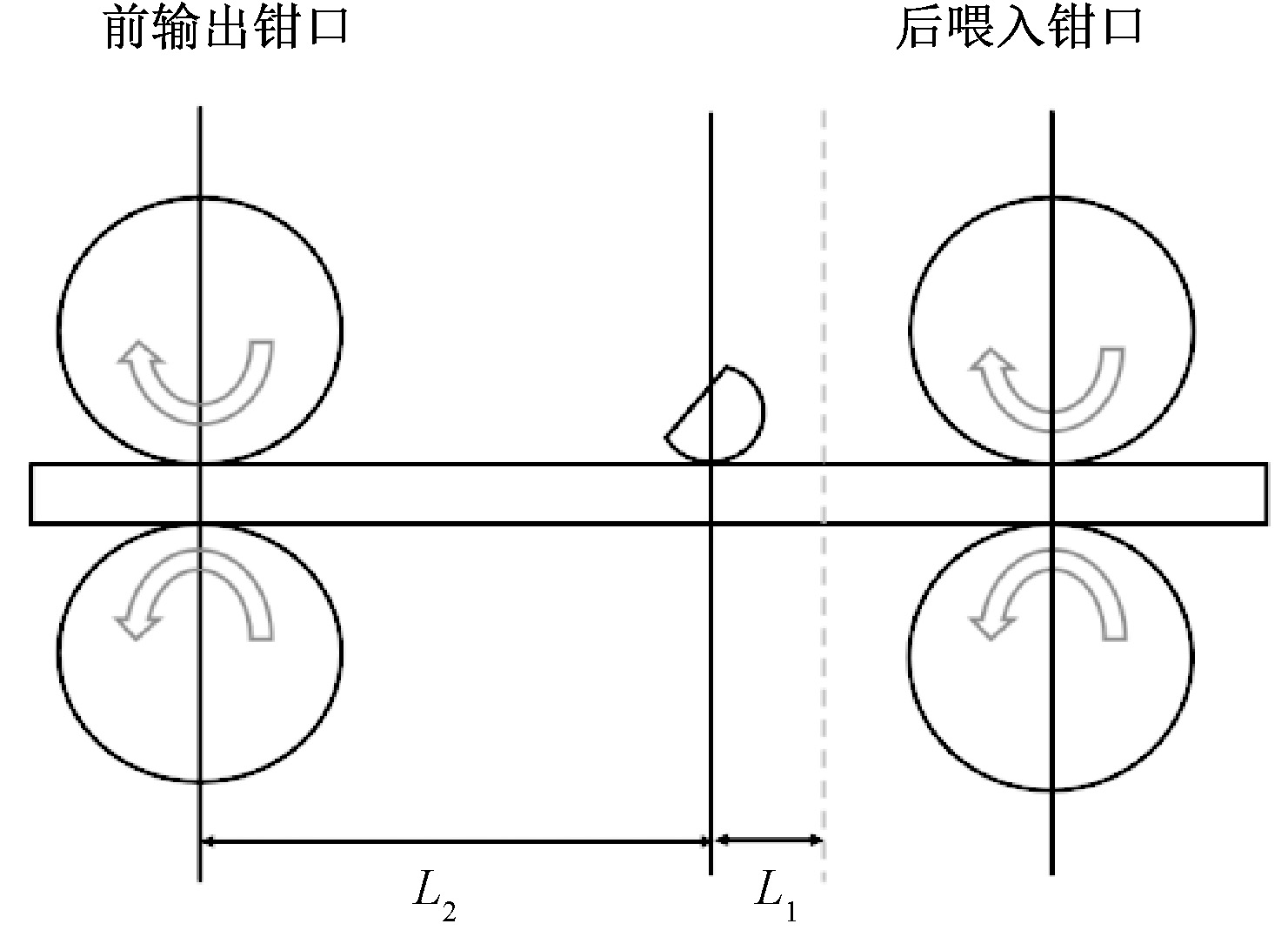
Fig.1

Simple roller drafting area"

Tab.1

Cotton performance index"

种类 技术
等级
马克
隆值
长度整
齐度/%
短绒
率/%
纺纱一致
性指标
断裂强度/
(N·tex-1)
细绒棉 329 4.30 81.49 7.95 135.76 31.54
长绒棉 237 4.34 87.74 2.20 208.96 42.23

Tab.2

Process parameters on FA320A high-speed drawing frame"

工序 并合
总牵伸
倍数
牵伸倍数 中心距
(前×中×后)/mm
主区 中区 后区
头道 6 6.573 5.153 1.018 1.25 40×40×48
二道 4 4.872 3.985 1.018 1.20 40×40×48

Tab.3

Weight distribution of sliver"

试样
编号
距前罗拉钳口线不同距离下须条质量/mg
5 mm 10 mm 15 mm 20 mm 25 mm 30 mm
1# 21.08 32.18 48.11 57.93 69.36 76.33
2# 25.90 31.24 47.99 59.84 74.29 81.52
3# 24.75 30.96 46.18 61.08 71.20 78.74
4# 24.62 31.12 48.12 64.28 78.58 85.32
5# 23.38 30.19 46.14 62.92 71.33 78.94
6# 25.50 32.52 56.27 66.04 74.24 81.52
7# 19.56 27.53 51.97 62.12 71.73 82.06

Tab.4

Weight variation distribution of sliver"

试样
编号
距前钳口线不同距离下须条质量变化量/mg
5 mm 10 mm 15 mm 20 mm 25 mm
1# 11.10 15.93 9.82 11.42 6.98
2# 5.34 16.74 11.86 14.44 7.23
3# 6.21 15.22 14.90 10.12 7.54
4# 6.50 17.00 16.16 14.30 6.74
5# 6.81 15.96 16.78 8.41 7.61
6# 7.02 23.74 9.78 8.20 7.28
7# 7.98 24.43 10.16 9.61 10.32

Tab.5

Weight change rate distribution of sliver"

试样
编号
距前钳口线不同距离下须条质量变化率/%
5 mm 10 mm 15 mm 20 mm 25 mm
1# 34.49 33.11 16.95 16.46 9.15
2# 17.09 34.88 19.82 19.44 8.87
3# 20.06 32.96 24.39 14.21 9.58
4# 20.89 35.33 25.14 18.20 7.90
5# 22.56 34.59 26.67 11.79 9.64
6# 21.59 42.19 14.81 11.05 8.93
7# 28.99 47.01 16.36 13.40 12.58

Tab.6

ωn distribution table"

试样编号 距前钳口线不同距离下的ωn
5 mm 10 mm 15 mm 20 mm 25 mm
1# 31.29 30.08 15.39 14.93 8.30
2# 17.21 34.71 19.87 19.29 8.92
3# 19.79 32.55 24.15 14.04 9.47
4# 19.37 32.93 23.37 16.97 7.37
5# 21.51 32.83 25.33 11.16 9.17
6# 21.60 42.20 14.80 11.03 8.92
7# 24.53 39.71 13.80 11.32 10.63

Tab.7

Sample standard deviation and coefficient of variation"

试样
编号
距前钳口线不同距离时须条的质量变化指标
5 mm 10 mm 15 mm 20 mm 25 mm
S CV/% S CV/% S CV/% S CV/% S CV/%
1# 0.99 2.88 1.87 5.64 1.25 7.34 0.98 5.96 0.76 8.33
2# 6.65 38.80 4.73 13.68 7.49 37.83 4.77 24.83 4.16 46.77
3# 2.38 11.91 3.22 9.78 1.28 5.26 1.68 11.81 1.90 19.81
4# 3.51 16.88 2.06 5.84 2.21 8.83 3.41 18.74 1.02 12.89
5# 2.68 11.82 1.59 4.60 1.92 7.19 1.88 16.00 1.72 17.80
6# 1.92 8.91 0.92 2.18 0.56 3.80 1.06 9.58 0.76 8.48
7# 1.54 5.30 2.38 5.07 1.38 8.43 1.25 9.33 1.15 9.14

Tab.8

Analysis of variance table"

编号 Em Ew Fs
1# 3.18 1.11 2.87
2# 2.02 1.35 1.07
3# 7.11 5.35 1.33
4# 5.81 2.27 2.56
5# 1.63 3.01 0.54
6# 13.7 7.92 1.73
7# 2.94 1.91 1.54

Tab.9

Strip performance testing"

编号 头道定量/
(g·(5 m)-1)
二道定量/
(g·(5 m)-1)
平均差
系数/%
变异系数
CVm/%
不同长度蚺质量不匀率/%
1 m 2 m 3 m 4 m
1# 22.97 18.00 1.45 1.76 0.99 0.79 0.65 0.70
2# 24.62 19.57 1.76 2.14 1.06 1.15 1.12 1.11
3# 25.10 20.50 1.62 1.91 0.88 0.57 0.81 0.33
4# 24.50 19.87 1.85 2.25 0.90 1.14 1.04 1.32
5# 24.74 19.98 1.56 1.92 0.55 1.05 0.65 0.63
6# 23.87 17.32 1.35 1.69 0.46 0.38 0.36 0.52
7# 23.97 17.68 1.48 1.87 0.93 0.78 1.02 0.94
[1] 胡振龙, 鲁莉博, 薛新港. 清梳精梳工序降低棉结的措施[J]. 纺织器材, 2021, 48(6): 32-36.
HU Zhenlong, LU Libo, XUE Xingang. Measures to reduce neps in carding and combing process[J]. Textile Accessories, 2021, 48(6): 32-36.
[2] 王学元. 纱线条干不匀与纱线疵点的成因探讨[J]. 纺织器材, 2022, 49(S1): 43-52.
WANG Xueyuan. Discussion on the cause of yarn unevenness and yarn defect[J]. Textile Accessories, 2022, 49(S1): 43-52.
[3] 王莉, 李国锋, 王娟, 等. 基于棉纺设备加工精梳产品的发展状况及研究方向[J]. 纺织科技进展, 2020(9): 12-14.
WANG Li, LI Guofeng, WANG Juan, et al. Development situation and research direction of processing combed products on cotton spinning sys-tem[J]. Progress in Textile Science and Techno-logy, 2020(9):12-14.
[4] 贺雅勤, 毕雪蓉, 钱希茜, 等. 牵伸对纱条条干不匀影响的模拟研究[J]. 纺织学报, 2021, 42(6): 85-90.
HE Yaqin, BI Xuerong, QIAN Xixi. Simulation study on effect of drafting on sliver unevenness[J]. Journal of Textile Research, 2021, 42(6): 85-90.
[5] 严广松. 基于密度函数方法的纤维长度分布影响研究[D]. 上海: 东华大学, 2009:63.
YAN Guangsong, Study on the influence of firber length distribution based on probabilistic density function[D]. Shanghai: Donghua University, 2009:63.
[6] 林倩. 纤维几何特征对成纱条干不匀的影响分析[D]. 上海: 东华大学, 2011:28-32.
LIN Qian. Effect of fiber geometrical characteristics on yarn unevenness[D]. Shanghai: Donghua University, 2011:28-32.
[7] 曲华洋, 谢春萍, 刘新金, 等. 超大牵伸条件下前牵伸区内纤维变速点分布对成纱质量的影响[J]. 上海纺织科技, 2017, 45(5): 38-41.
QU Huayang, XIE Chunping, LIU Xinjin, et al. Effect of fibers accelerated-point distribution of front draft zone on yarn quality on the super high draft spinning frame[J]. Shanghai Textile Science and Technology, 2017, 45(5): 38-41.
[8] 李瑛慧, 谢春萍, 刘新金. 基于纤维变速点分布实验的成纱条干不匀研究[J]. 纺织学报, 2016, 37(8): 32-36, 58.
LI Yinghui, XIE Chunping, LIU Xinjin. Study on yarn unevenness based on experiment of fibers accelerated point distribution[J]. Journal of Textile Research, 2016, 37(8):32-36, 58.
[9] 孙娜. 罗拉牵伸过程的模拟及牵伸中变速点分布的计算[D]. 上海: 东华大学, 2021:53-56.
SUN Na. Simulation of roller drafting process and calculation of accelerated-point distribution during the drafting process[D]. Shanghai: Donghua University, 2021:53-56.
[10] TAYLOR D S. Some observations on the movement of fibres during drafting[J]. Journal of the Textile Institute Transactions, 1954, 45 (4): 310-322.
[11] 姚杰, 叶国铭, 陈人哲. 牵伸区浮游纤维变速的数学建模与仿真[J]. 东华大学学报(自然科学版), 2006(4): 1-5.
YAO Jie, YE Guoming, CHEN Renzhe. Mathematical modeling and simulation of variable velocity of planktonic fibers in drafting zone[J]. Journal of Donghua University(Natural Science Edition), 2006(4): 1-5.
[12] 苏玉恒, 陈莉娜. 基于纤维长度分布的浮游纤维变速仿真[J]. 纺织学报, 2010, 31(4): 39-44.
SU Yuheng, CHEN Lina. Simulation on accelerating offloating fibers based on distribution of fiber length[J]. Journal of Textile Research, 2010, 31(4): 39-44.
[13] 郭明华, 刘新金. 基于切断称重法的细纱机牵伸区内纤维变速点分布研究[J]. 纺织学报, 2021, 42(8): 71-75.
GUO Minghua, LIU Xinjin. Investigation on distribution of fiber accelerated points in drafting zone of ring spinner based on cut-weighing method[J]. Journal of Textile Research, 2021, 42(8): 71-75.
[1] ZHU Lei, LI Yong, CHEN Xiaochuan, WANG Jun. Finite element modeling and simulation of cotton fiber assembly carding process based on 3-D braided and fractal theory [J]. Journal of Textile Research, 2024, 45(11): 65-72.
[2] FAN Jule, ZHANG Yuze, WANG Jun. Simulation of accelerating point distribution for floating fibers during dynamic drafting [J]. Journal of Textile Research, 2024, 45(03): 44-48.
[3] GUO Minghua, LIU Xinjin. Investigation on distribution of fiber accelerated points in drafting zone of ring spinner based on cut-weighing method [J]. Journal of Textile Research, 2021, 42(08): 71-75.
[4] HE Yaqin, BI Xuerong, QIAN Xixi, RUAN Jun, YU Chongwen. Simulation study on effect of drafting on sliver unevenness [J]. Journal of Textile Research, 2021, 42(06): 85-90.
[5] SHAO Yinghai, ZHANG Mingguang, CAO Jipeng, GUO Xin, HAN Xianguo. Effect of speed ratio between cylinder and taker-in on carding quality [J]. Journal of Textile Research, 2020, 41(01): 39-44.
[6] . Simulating design for draft ratio of back drafting zone on drawing frame [J]. JOURNAL OF TEXTILE RESEARCH, 2017, 38(04): 39-45.
[7] NIBIKORA Ildephonse;WANG Jun;TIAN Chengtai. [J]. JOURNAL OF TEXTILE RESEARCH, 2010, 31(3): 111-115.
[8] 辽东学院服装与纺织学院 辽宁丹东000. Comparative study on different types of web cleaner [J]. JOURNAL OF TEXTILE RESEARCH, 2008, 29(4): 111-114.
[9] YAN Guangsong;LU Yunfang;YU Chongwen. Theoretical study on the distribution of accelerated points of floating fibers in the drafting zone [J]. JOURNAL OF TEXTILE RESEARCH, 2007, 28(9): 23-26.
Viewed
Full text


Abstract

Cited

  Shared   
  Discussed   
No Suggested Reading articles found!