Journal of Textile Research ›› 2025, Vol. 46 ›› Issue (06): 187-195.doi: 10.13475/j.fzxb.20241103001

• Apparel Engineering • Previous Articles     Next Articles

Optimization of trousers patterns for men with protruding abdomen based on three-dimensional fitting

JI Mengqi1, HE Ying1,2(), MA Yongqian1   

  1. 1. School of Fashion Design & Engineering, Zhejiang Sci-Tech University, Hangzhou, Zhejiang 310018, China
    2. Key Laboratory of Silk Culture Inheritance and Product Design Digitization Technology, Ministry of Culture and Tourism, Hangzhou, Zhejiang 310018, China
  • Received:2024-11-12 Revised:2025-02-25 Online:2025-06-15 Published:2025-07-02
  • Contact: HE Ying E-mail:daisy_jacky@163.com

Abstract:

Objective In order to solve the problem of insufficient fit of men's trousers with protruding abdomen, a method for optimizing the trousers patterns for this group of men is proposed with the purpose of optimizing the structure of men's pants and improving the fit and comfort of the trousers based on three-dimensional fitting technology. Parametric modeling of men's trousers patterns with CLO-3D technology for men with protruding abdomen was carried out. This parameter optimization design provides useful reference for the structural design of men's trousers with special body type in the production process.

Method CLO-3D was used to construct seven virtual models with different waist sizes for men, and the regression analysis of waist circumference and critical circumference of lower limbs of men with abdominal obesity was carried out through model body surface standing cut and paper pattern fitting, and the method was verified through the virtual try-on experiments and real-life try-on experiments.

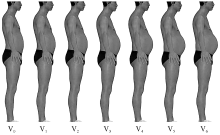
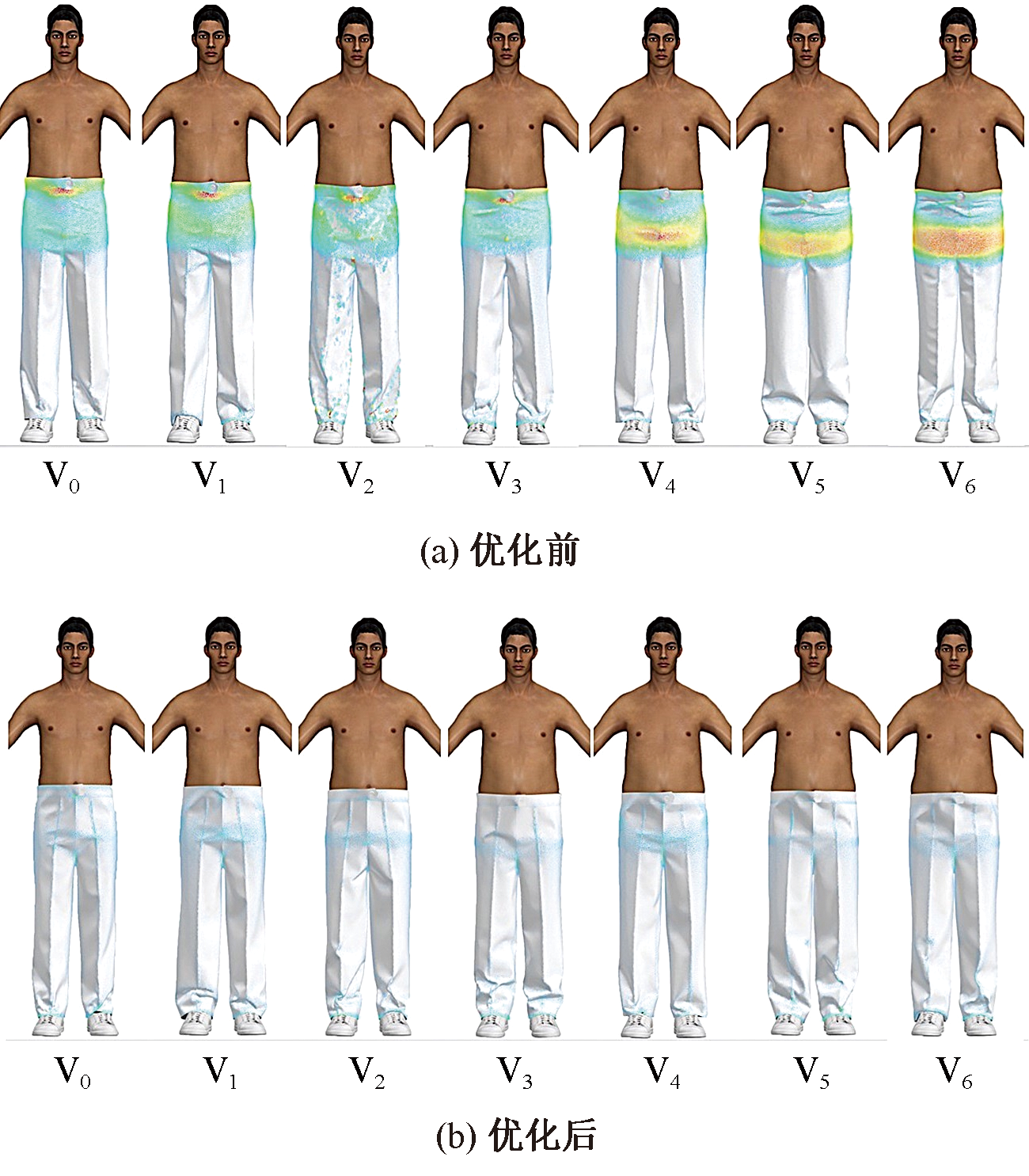
Results By constructing a model with a protruding belly and performing surface draping and pattern fitting, it was observed that the contours of the front and back pieces change proportionally as the degree of the belly protrusion increases. Specifically, the front center point, back center point, and the circumference change at one-third of the front crotch depth (belly allowance) showed significant and balanced variations in circumference. The side waist points exhibited noticeable and proportional changes in height, while both the front and back center points displayed clear proportional changes in both circumference and height. Treating the front waist measurement as a dependent variable and the back waist measurement as an independent variable, the regression coefficient for the back waist measurement was solved, revealing a distribution ratio of 5∶4 between the front and back waist measurements. Using the hip measurement as the independent variable and six key adjustment parameters and four key structural parameters as dependent variables, regression analysis showed a significant linear relationship between these parameters and the hip measurement, with a high degree of fit for the regression model. Based on this, a total of six key regulating parameters and six key structural parameters were derived as the rules for the variation. Considering the characteristics of men's trousers structural design, the regression equations were appropriately simplified to derive optimization rules for men's suit trousers tailored to protruding bellies. Using CLO-3D software for virtual fitting of the optimized trouser patterns, the results indicated that the stress area on the front waist and abdomen, as well as the front hip, was reduced, with pressure values approaching 0 kPa, resulting in reduced pressure sensation and improved comfort. Static and dynamic fitting trials on real individuals with protruding bellies showed high evaluations from participants regarding comfort and aesthetics.

Conclusion To address the issue of poor adaptability of men's suit trousers for individuals with protruding bellies, this study utilized three-dimensional virtual fitting technology to construct a model of a male with a severe protruding belly. Surface draping was employed to obtain the model's surface data, and through the analysis of two-dimensional pattern fitting, parametric optimization rules for men's suit trousers tailored to severe protruding bellies were established. The accuracy and feasibility of these optimization rules were verified through virtual fitting experiments and real-life fitting trials. The research content and results hold significant implications for shortening product production cycles, reducing energy consumption, and improving the accuracy and fit of pattern adjustments for suit trousers designed for individuals with protruding bellies.

Key words: protruding abdomen, special body type, trousers structure, 3-D virtual fitting, pattern optimization, garment pattern making

CLC Number: 

  • TS941.718

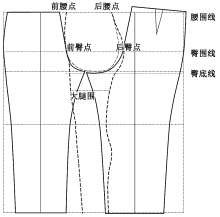
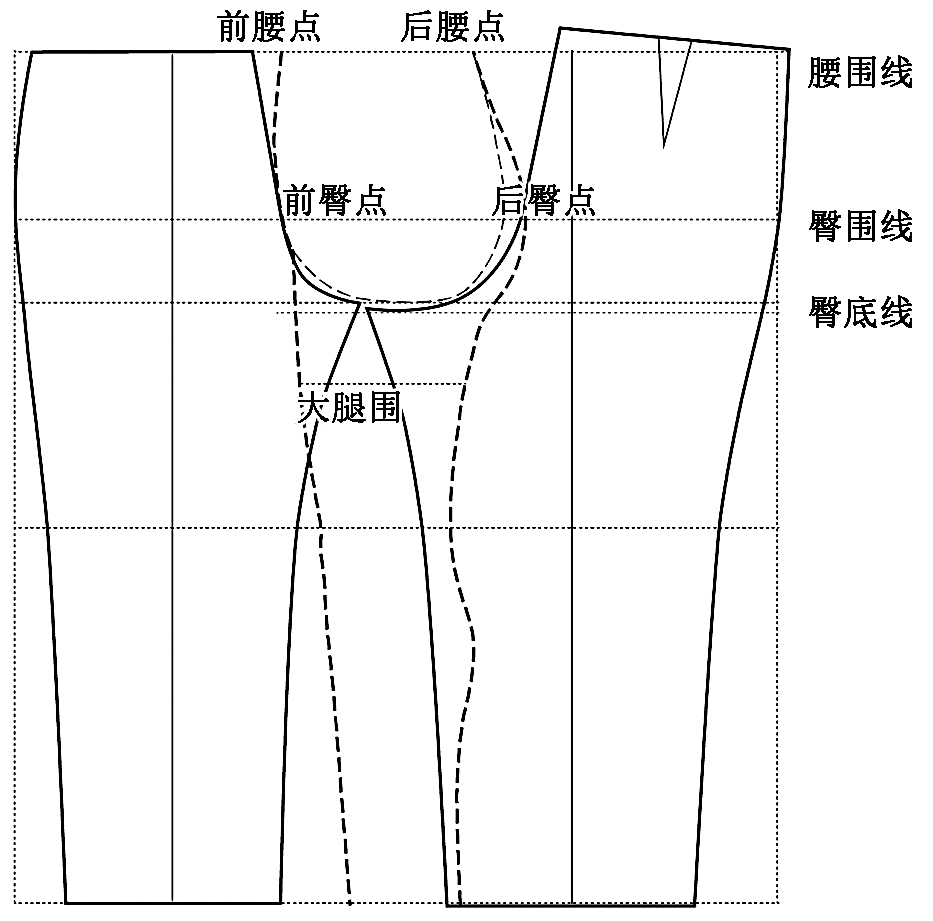
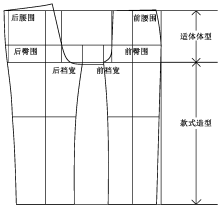
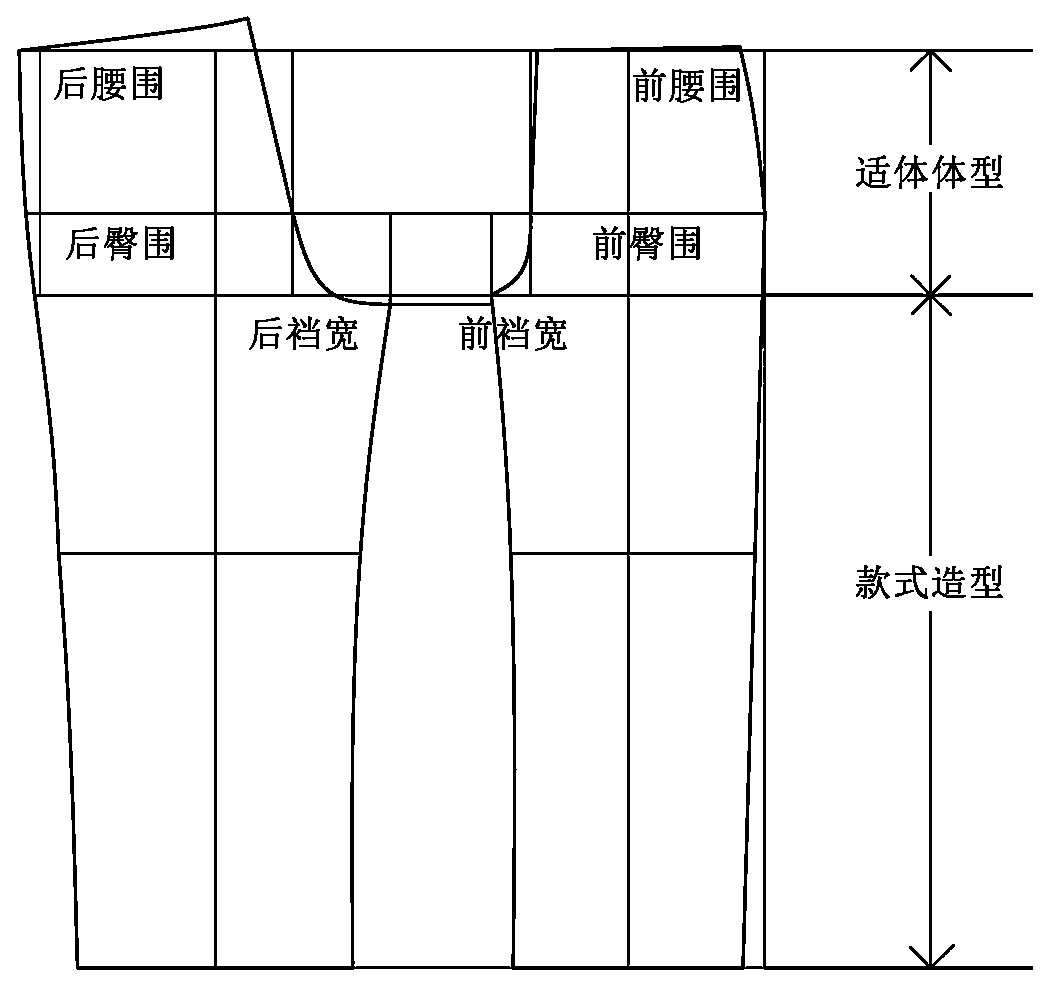
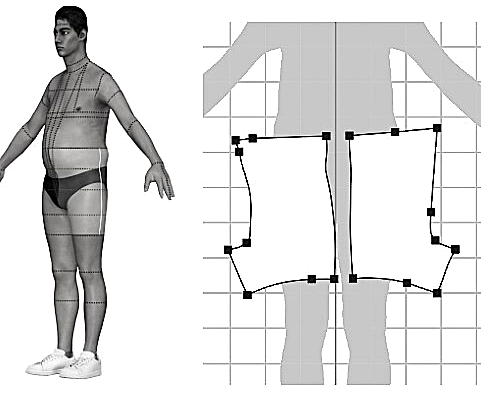
Fig.1

Correspondence between structural lines of pants limbs and characteristic points (lines) of human body"

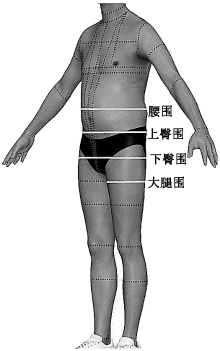
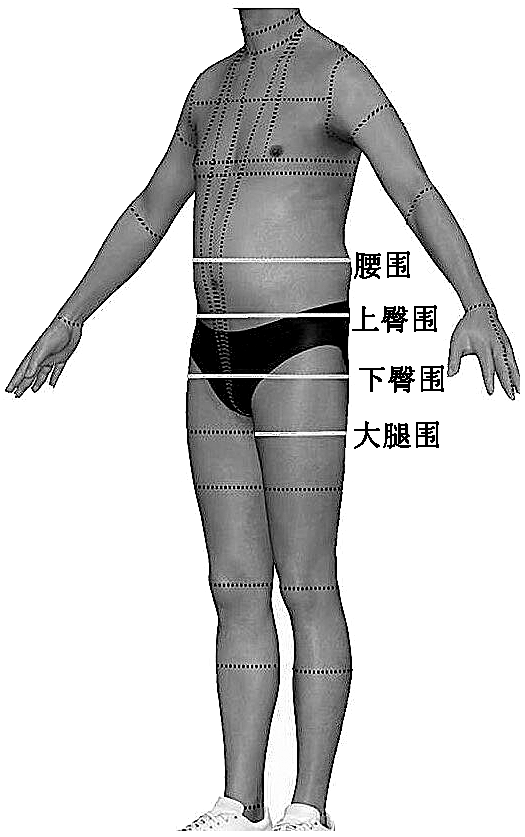
Fig.2

Critical parts of lower"

Tab.1

Key body part data of belly-protruding body sample model cm"

模特编号 腰围 上臀围 下臀围 大腿围 胸腰差
V0 87.00 88.19 94.34 55.55 5.00
V1 89.42 89.13 94.86 55.81 2.58
V2 91.98 90.55 95.31 56.13 0.02
V3 94.52 91.93 96.03 56.44 -2.52
V4 97.00 93.19 96.52 56.77 -5.00
V5 99.49 94.51 97.07 57.07 -7.49
V6 101.99 95.82 97.64 57.83 -9.99

Fig.3

Side view of 3-D model of male belly-protruding body"

Fig.4

Girth measurement allocation diagram of men's tailored trousers"

Tab.2

Key parameters of belly-protruding sample cm"

模特
编号
前腰
后腰
前臀
后臀
前裆
后裆
前直
后直
V0 24.165 19.335 24.575 22.595 4.700 9.530 31.733 32.899
V1 24.830 19.880 24.717 22.713 4.750 9.590 31.583 32.699
V2 25.540 20.450 24.830 22.825 4.770 9.630 31.430 32.579
V3 26.225 21.005 25.054 22.961 4.800 9.700 31.280 32.259
V4 26.942 21.558 25.130 23.130 4.830 9.750 31.130 32.099
V5 27.637 22.108 25.267 23.268 4.860 9.800 30.980 31.979
V6 28.331 22.664 25.412 23.408 4.880 9.900 30.822 31.819

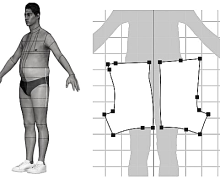
Fig.5

Schematic diagram of process of obtaining cut-out pattern of body surface"

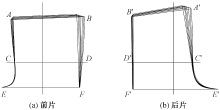
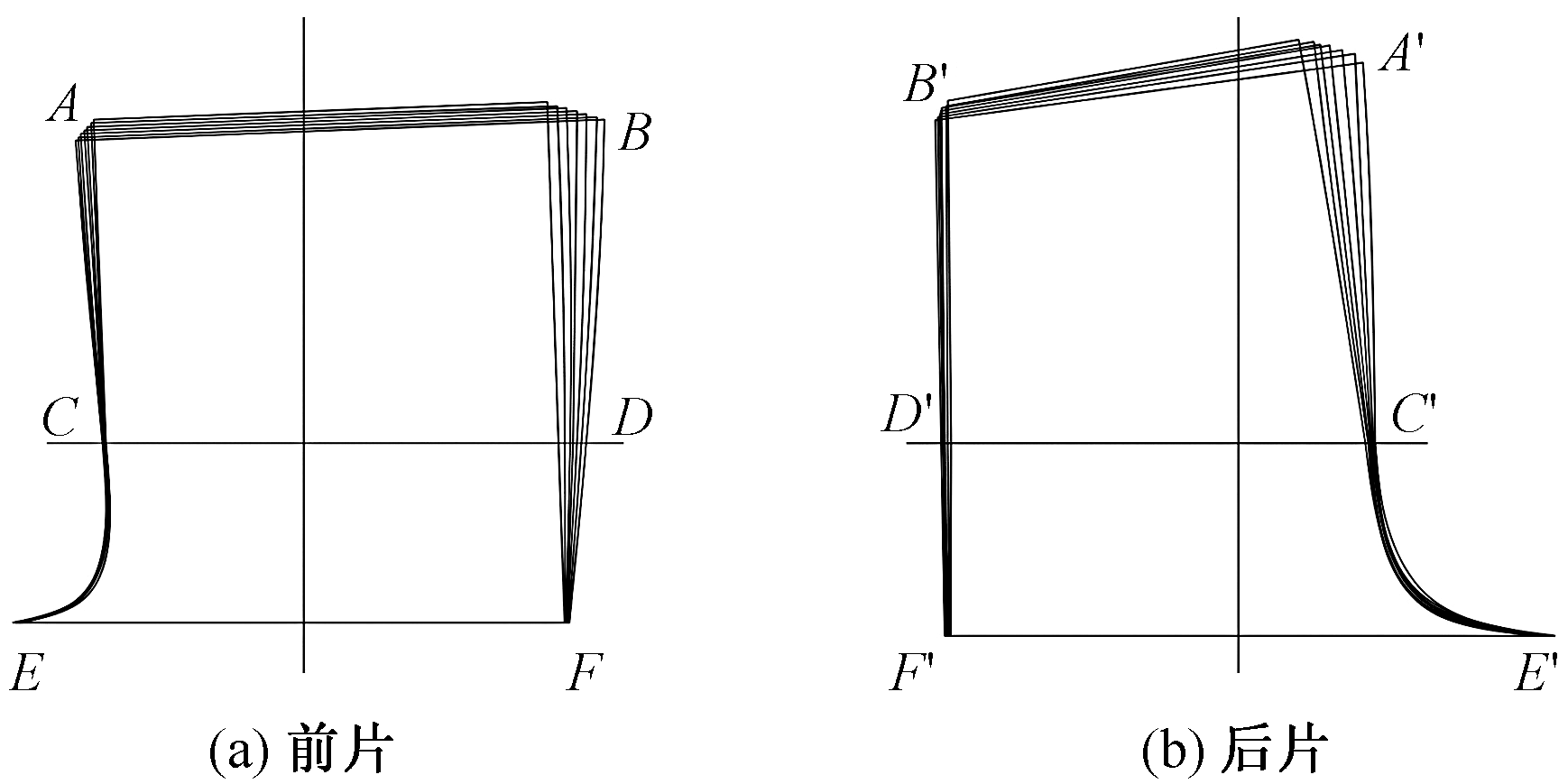
Fig.6

Plane sample fitting of front (a) and rear (b) pants pieces"

Tab.3

Change in displacement of key adjustment parameters"

模特
编号
前片 后片
A
外移量/
cm
A
下落量/
cm
B
下落量/
cm
肚量/
cm
后裆
斜度/
(°)
后起
翘量/
cm
V0 0.65 1.90 1.00 0.38 10.79 2.40
V1 0.77 2.08 1.20 0.50 8.57 2.26
V2 0.95 2.29 1.32 0.60 7.61 2.10
V3 1.07 2.47 1.48 0.71 6.12 2.00
V4 1.21 2.65 1.64 0.83 4.25 1.82
V5 1.34 2.85 1.80 0.96 2.28 1.66
V6 1.48 3.01 1.98 1.03 0.25 1.55
平均
增量
0.14 0.19 0.16 0.11 -1.75 -0.14

Tab.4

Regression analysis of key regulatory parameters with hip circumference"

因变量 变量 未标准化系数 标准化系数 t P R2 调整后R2
B 标准误差
A
外移量
常量 -22.903 0.796 -28.776 0.000 0.995 0.993
H* 0.250 0.008 0.997 30.119 0.000
A
下落量
常量 -29.780 0.847 -35.174 0.000 0.997 0.996
H* 0.336 0.009 0.998 38.087 0.000
B
下落量
常量 -26.024 0.750 -34.718 0.000 0.996 0.996
H* 0.287 0.008 0.998 36.706 0.000
肚量 常量 -18.402 0.603 -30.529 0.000 0.995 0.994
H* 0.199 0.006 0.998 31.718 0.000
后裆
斜度
常量 299.049 13.335 22.329 0.000 0.990 0.988
H* -3.057 0.139 -0.995 -21.967 0.000
后起
翘量
常量 26.788 0.997 26.868 0.000 0.992 0.990
H* -0.259 0.101 -0.996 -24.894 0.000

Tab.5

Regression analysis of key structural parameters with hip circumference"

因变量 变量 未标准化系数 标准化系数 t P R2 调整后R2
B 标准误差
前臀围 常量 0.804 0.650 1.237 0.000 0.996 0.996
H* 0.252 0.007 0.998 37.209 0.000
前裆宽 常量 -0.254 0.278 -0.915 0.402 0.985 0.982
H* 0.053 0.003 0.993 18.186 0.000
后臀围 常量 -0.804 0.650 -1.237 0.271 0.996 0.996
H* 0.248 0.007 0.998 36.589 0.000
后裆宽 常量 -0.497 0.457 -1.087 0.327 0.990 0.988
H* 0.106 0.005 0.995 22.315 0.000

Tab.6

Comparison of modification rules for belly-protruding men's tailored trousers before and after optimization"

关键调节参数 优化前变更规则 优化后变更规则 关键结构参数 优化前变更规则 优化后变更规则
A点外移量/cm -0.7 0.25H*-22.903 前腰围/cm W/4-1 5W/18
A点下落量/cm 0 0.336H*-29.780 前臀围/cm H/4-1 H/4+1
B点下落量/cm 0 0.287H*-26.024 前裆宽/cm H/20-1 H/20
肚量/cm 0 0.199H*-18.402 后腰围/cm W/4+1 4W/18
后档斜度/(°) 10~12 -3.057H*+299.049 后臀围/cm H/4+1 H/4-1
后起翘量/cm 2.5~3.5 -0.259H*+26.788 后裆宽/cm H/10 H/10

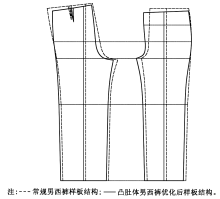
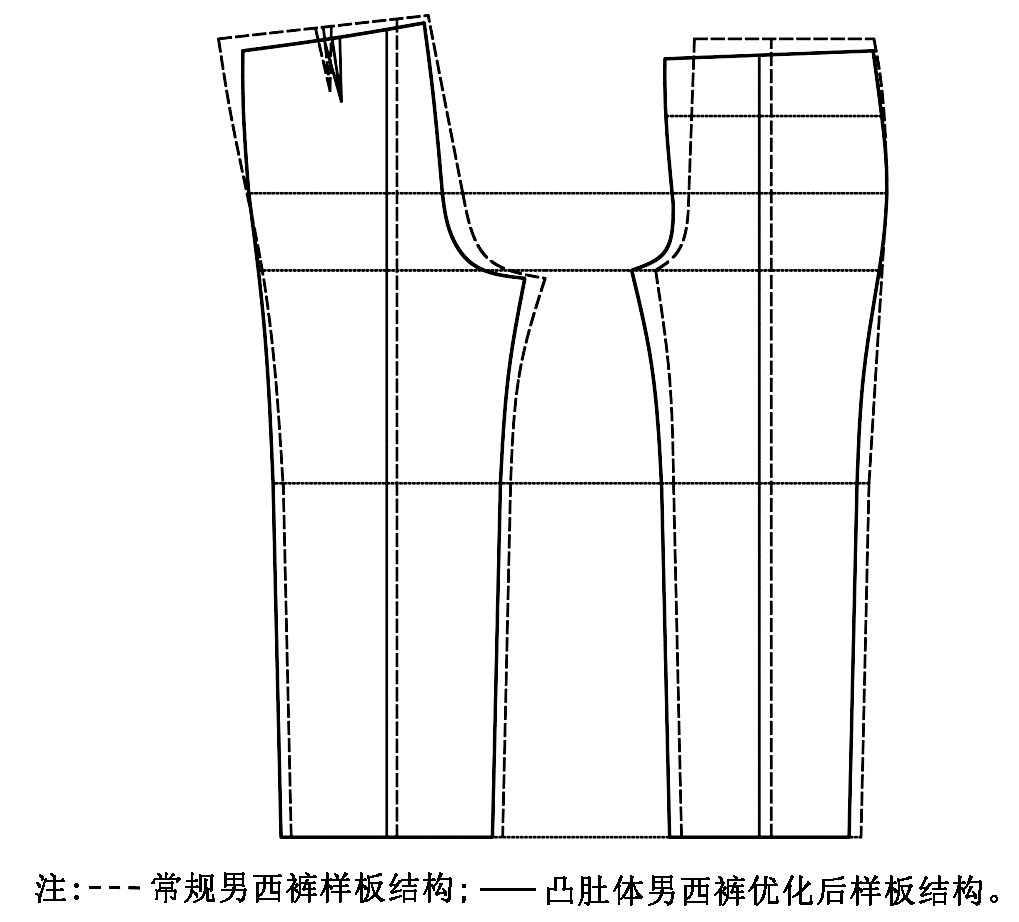
Fig.7

Structure comparison of belly-protruding men's tailored trousers patterns before and after optimization"

Fig.8

Comparison of pressure distribution before (a) and after (b) optimization"

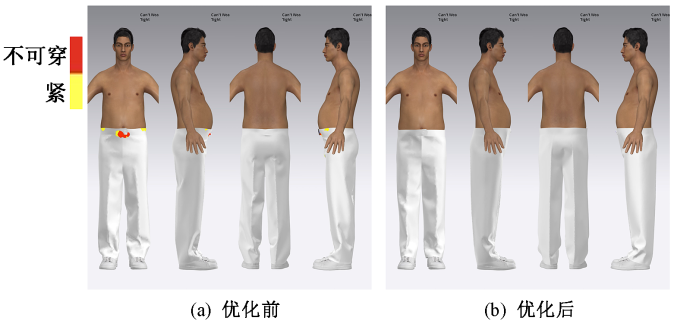
Fig.9

Comparison of fitting state distribution before(a) and after(b) optimization"

Fig.10

V0-V6 pressure distribution before (a) and after (b) optimization"

Fig.11

V0-V6 fitting state distribution before (a) and after (b) optimization"

Tab.7

Subjective ratings of trousers fitting satisfaction for V0-V6 (mean scores)"

模特
标号
整体款式
效果
外观
平整度
接缝部位
美观度
整体
满意度
V0 8 7 9 8
V1 7 7.5 9 7.5
V2 7.5 8 8.5 8
V3 7 8 9 8
V4 6.5 7.5 8 7.5
V5 7 7.5 8.5 7.5
V6 7 7 8.5 7

Fig.12

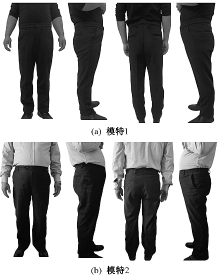
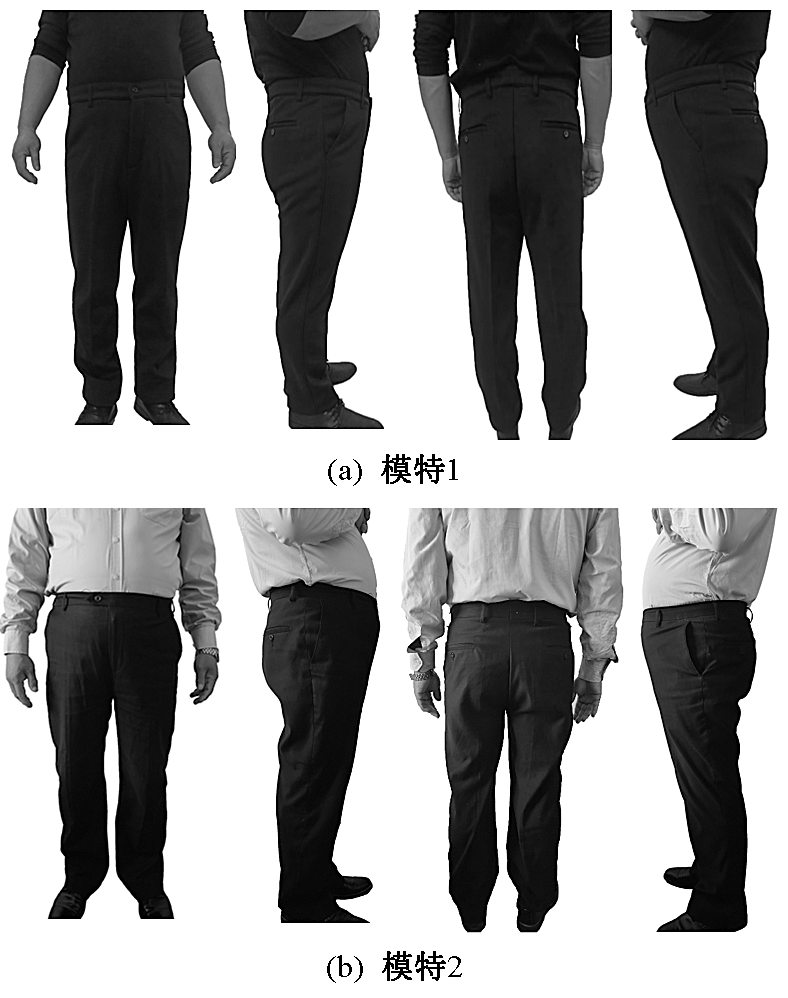
Static fitting effect. (a) Model 1; (b) Model 2"

Fig.13

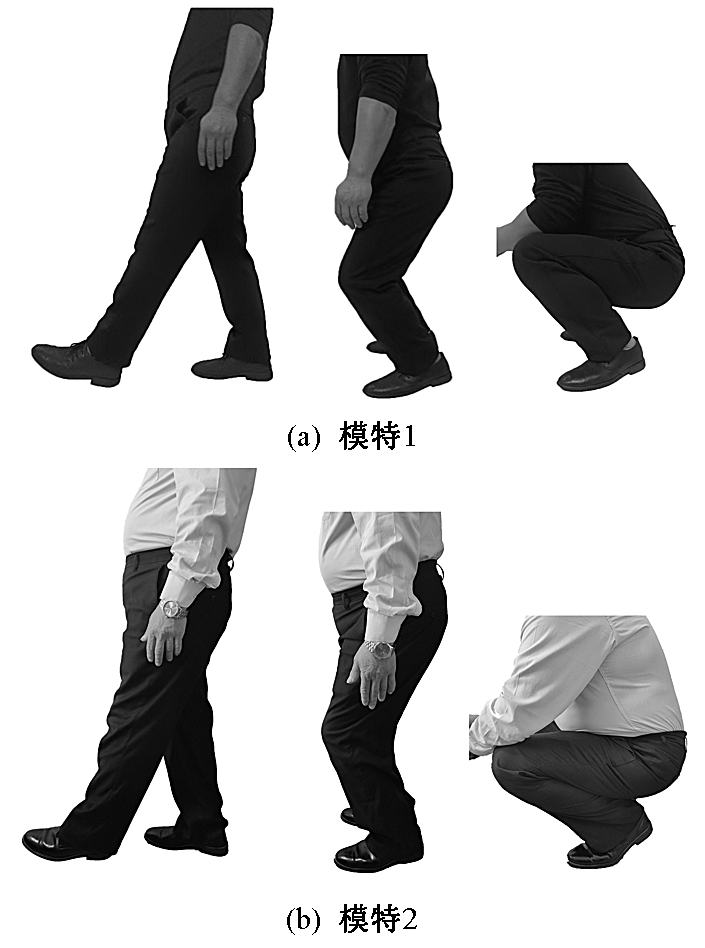
Dynamic fitting effect. (a) Model 1; (b) Model 2"

Tab.8

Subjective evaluation result of subject's fitting satisfaction"

试衣
状态
有无紧绷
现象
有无
牵扯感
外观
美观度
穿着
舒适度
整体
满意度
静态 7 8 8
动态 6.5 8 7.5
[1] 罗静, 柴莉. 凸肚体男正装的结构设计与验证[J]. 北京服装学院学报(自然科学版), 2023, 43(3):31-40.
LUO Jing, CHAI Li. Structural design of men's formal wear with convex belly[J]. Journal of Beijing Institute of Fashion Technology (Natural Science Edition), 2023, 43(3):31-40.
[2] 曲长荣, 吴爱荣. 凸肚体服装纸样的设计技巧[J]. 职业, 2010(20): 148-149.
QU Changrong, WU Airong. Design techniques of paper patterns for clothing with a bumpy belly body type[J]. Occupation, 2010(20): 148-149.
[3] 王妍, 李鑫祥, 李月. 基于体表剥离法的凸肚体男西裤结构研究[J]. 轻纺工业与技术, 2023, 52(3): 68-70,99.
WANG Yan, LI Xinxiang, LI Yue. Research on the structure of men's suit pants with convex belly based on body surface peeling method[J]. Light Textile Industry and Technology, 2023, 52(3):68-70,99.
[4] 雷鸽, 李小辉. 数字化服装结构设计技术的研究进展[J]. 纺织学报, 2022, 43 (4): 203-209.
LEI Ge, LI Xiaohui. Review of digital pattern-making technology in garment production[J]. Journal of Textile Research, 2022, 43 (4): 203-209.
[5] FENG Y F. Digital design and realization of fashionable men's wear in fashion design[J]. Journal of Physics: Conference Series, 2020. DOI:10.1088/1742-6596/1533/2/022058.
[6] ZULKIFLI S Z B, KIM K O. Similarities and differences between virtual and actual pants[J]. International Journal of Clothing Science and Technology, 2021, 33(2):199-217.
[7] 王渊霞, 肖伯祥, 刘正东. 凸肚体男衬衫制版参数化建模方法[J]. 北京服装学院学报(自然科学版), 2023, 43 (1): 23-29.
WANG Yuanxia, XIAO Boxiang, LIU Zhengdong. Parametric modeling method for men's shirts with convex belly[J]. Journal of Beijing Institute of Fashion Technology (Natural Science Edition), 2023, 43 (1): 23-29.
[8] 于欣禾, 王建萍.基于三维服装设计的凸肚体男衬衫样板参数化优化方法:201910753879.X[P]. 2019-12-03.
YU Xinhe, WANG Jianping. Parametric optimization method for convex belly body men's shirt samples based on three-dimensional garment design: 201910753879.X[P].2019-12-03.
[9] 徐虹, 尚笑梅. 制作裤子专用的人体数据采集[J]. 国外丝绸, 2006(4): 25-28.
XU Hong, SHANG Xiaomei. Human body data acquisition for pants production[J]. Overseas Silk, 2006(4): 25-28.
[10] 张文斌. 服装结构设计与疵病补正技术[M]. 北京: 中国纺织出版社, 2001:162-168.
ZHANG Wenbin. Clothing structure design and defects correction technology[M]. Beijing: China Textile & Apparel Press, 2001:162-168.
[11] 张文斌. 服装男装结构设计[M]. 北京: 高等教育出版社,2010:86-100.
ZHANG Wenbin. Structural design of men's clothing[M]. Beijing: Higher Education Press, 2010:86-100.
[12] ZHU C, LIU K, WANG R, et al. The mathematical model of men's garment prototype[J]. International Journal of Clothing Science and Technology, 2022, 34(6):892-904.
[13] 郭超杰. 凸肚体男西裤上裆结构的多因子优化研究[D]. 大连: 大连工业大学, 2015:42-48.
GUO Chaojie. Optimization of trousers' crotch pattern multi-factor for male potbelly[D]. Dalian: Dalian Polytechnic University, 2015:42-48.
[14] 匡才远, 刘国联. 基于青年女性人体图像的裙裤结构参数化设计[J]. 毛纺科技, 2020, 48 (11): 57-62.
KUANG Caiyuan, LIU Guolian. Parametric design of culottes structure based on young female's body images[J]. Wool Textile Journal, 2020, 48 (11): 57-62.
[15] 王玥. 腹凸特殊体型裤子结构修正的探析[J]. 玉林师范学院学报, 2010, 31 (5): 144-145.
WANG Yue. An analysis of the structural modification of pants with special body shape[J]. Journal of Yulin Normal College, 2010, 31 (5): 144-145.
[16] WU S, ZHONG A H, JIANG X W, et al. Auto-generation of paper patterns for children's jeans[J]. Journal of The Textile Institute, 2024, 115(9):1468-1475.
[17] 刘咏梅, 韩天琪, 张向辉, 等. 无省旗袍的结构设计方法[J]. 纺织学报, 2020, 41(6): 99-104.
LIU Yongmei, HAN Tianqi, ZHANG Xianghui, et al. Pattern design method of traditional cheongsam[J]. Journal of Textile Research, 2020, 41(6): 99-104.
[1] LIU Rong, XIE Hong. Similarity pattern matching technology based on garment structural feature recognition [J]. Journal of Textile Research, 2023, 44(10): 134-142.
[2] LU Hong, SONG Jiayi, LI Yuanyuan, TENG Junfeng. Pattern design of inner rotation styles based on fitted two-piece sleeve [J]. Journal of Textile Research, 2022, 43(08): 140-146.
[3] Hou-lin Wu. A Research on Ttrousers Structural Design [J]. JOURNAL OF TEXTILE RESEARCH, 2010, 31(8): 103-107.
Viewed
Full text


Abstract

Cited

  Shared   
  Discussed   
No Suggested Reading articles found!