Journal of Textile Research ›› 2025, Vol. 46 ›› Issue (11): 34-42.doi: 10.13475/j.fzxb.20250305801

• Fiber Materials • Previous Articles     Next Articles

Preparation and properties of self-adhesive Zein-based ultrafine fibrous mats

LIU Fei1,2, LIU Lu1,2, ZHENG Zhichao1,2, LIU Junhong1,2, WU Dequn1,2, JIANG Qiuran1,2()   

  1. 1. Key Laboratory of Textile Science & Technology, Ministry of Education, Donghua University, Shanghai 201620, China
    2. College of Textiles, Donghua University, Shanghai 201620, China
  • Received:2025-03-26 Revised:2025-06-25 Online:2025-11-15 Published:2025-11-15
  • Contact: JIANG Qiuran E-mail:jj@dhu.edu.cn

Abstract:

Objective Flexible electronic devices have been employed in real-time physiological signal monitoring and disease diagnosis. Owing to their natural origin and biocompatibility, there is an increasing interest in biodegradable protein-based devices. However, due to inadequate interfacial adhesion between protein substrate and biological tissue, challenges arise in maintaining long-term conformal contact during human motion monitoring, which restricts medical applications of protein-based sensors and electrodes. Therefore, the adhesion modification of protein ultrafine fibrous devices is crucial for advancing naturally derived wearable electronic devices in human health monitoring.
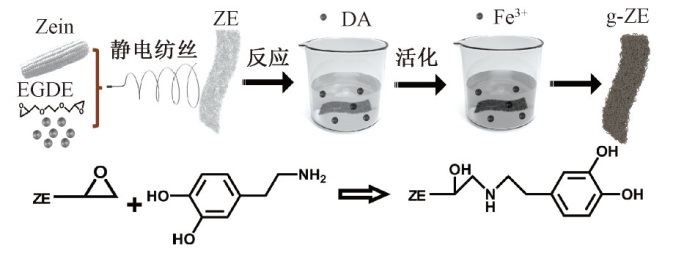
Method A dopamine-assisted ion chelation modification method was proposed to enhance the self-adhesion of zein ultrafine fibers. The process encompassed dopamine hydrochloride (DA) grafting, DA self-polymerization, and iron-ion chelation, all occurring within the epoxy/protein cross-linking network. Furthermore, the effects of DA process parameters, including solvent system, pH value, concentration, temperature, stirring speed, and reaction time of the DA bath, as well as activation treatment parameters such as concentration and reaction time of the iron-ion bath on adhesion (peeling strength), fiber morphology, and chemical structures were investigated.
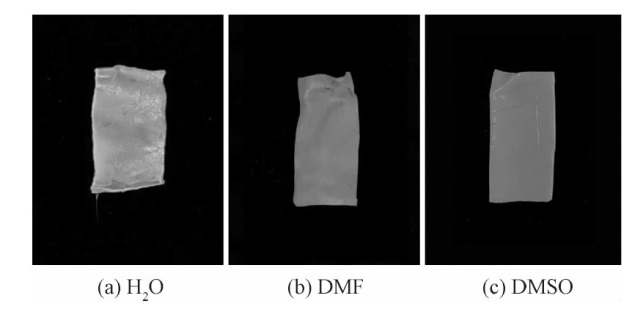
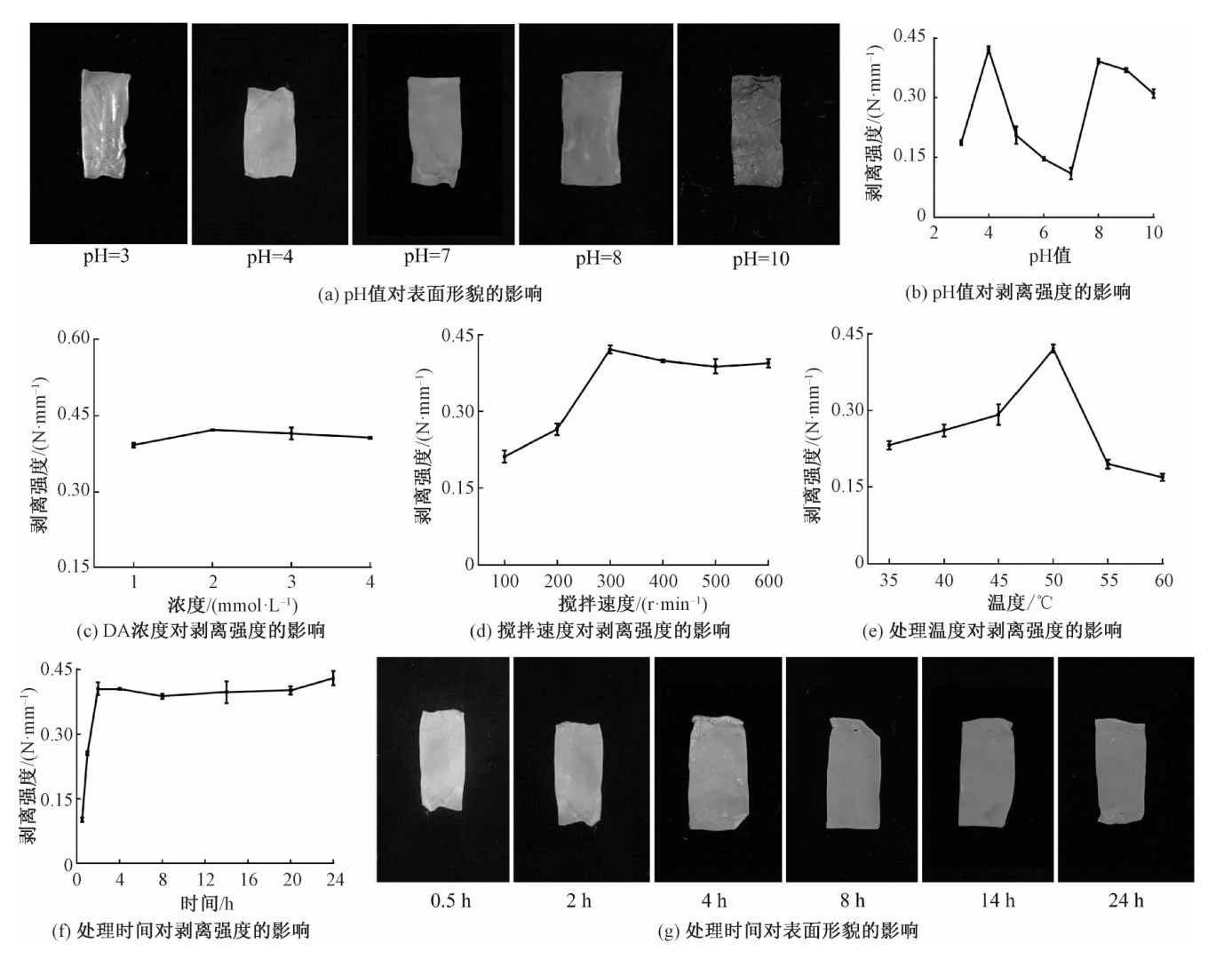
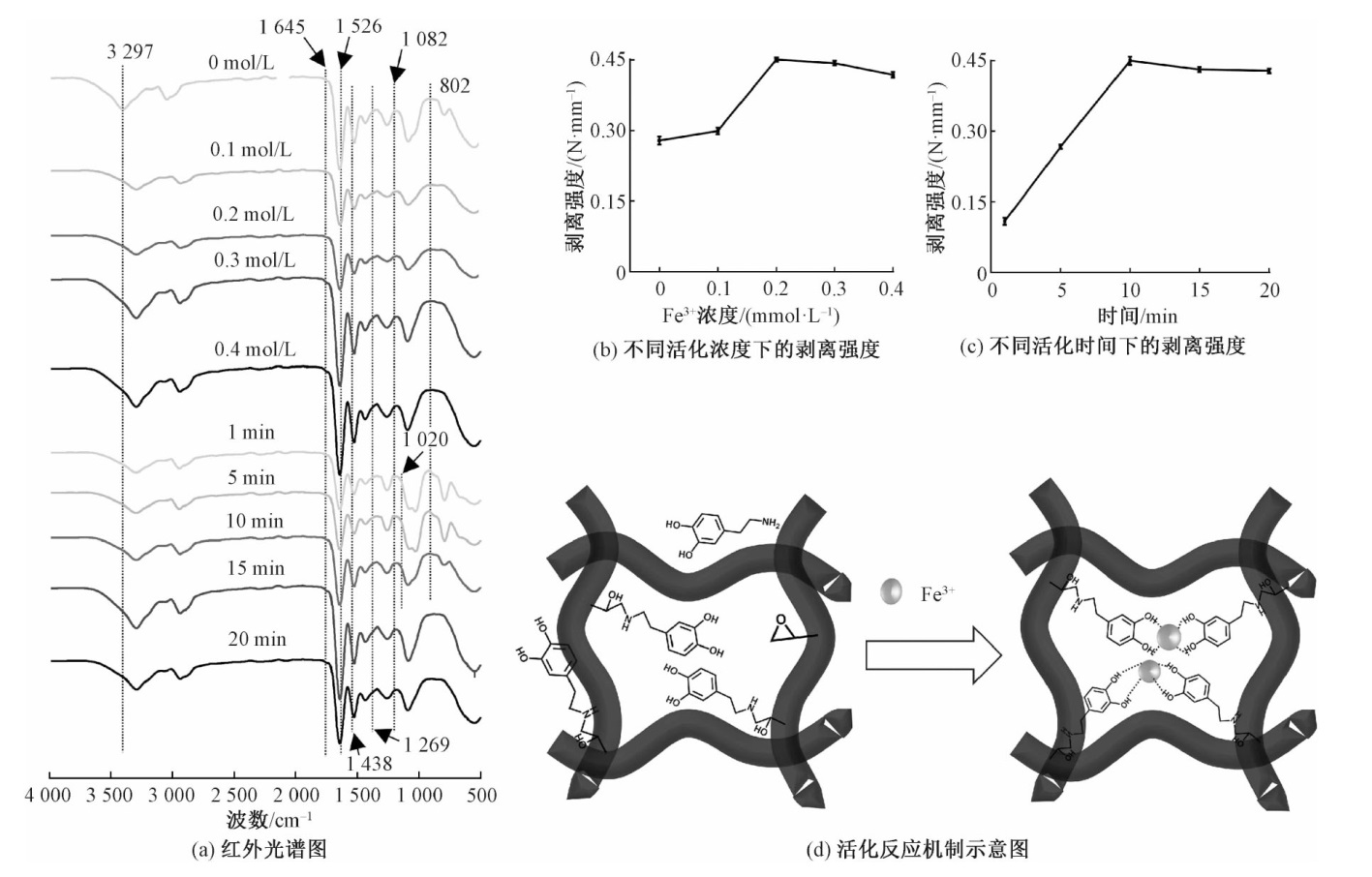
Results Compared with samples in water or dimethyl sulfoxide (DMSO), the obtained samples in N,N-dimethylformamide (DMF) solution demonstrated the highest peeling strength. The porous structure and adhesion modification of fiber mats could not be achieved in strongly acidic, alkaline or neutral (pH=7) environments, while the DA grafting efficiency was high at pH=4 or 8. The grafting saturation was achieved under the following conditions: DA concentration of 1 mmol/L, stirring speed of 300 r/min, reaction time of 2 h and reaction temperature of 50 ℃, when the peeling strength was up to 0.40 N/mm. Since the chelation of iron ions promoted the opening of epoxy groups, the coordination bonds between DA and Zein/epoxy crosslinked fiber mat (ZE) was formed. Consequently, after the ion treatment at a concentration of 0.2 mmol/L and a reaction time of 10 min, the interaction such as hydrogen bonds between the glass surface and grafted Zein/epoxide (g-ZE) samples were established, leading to a high peel strength of 0.45 N/mm. After grafting treatment, the diameter of samples with optimal parameters was around 0.32 μm, the fiber structure transformed from belts to curled belts and color appeared translucent white. In FT-IR spectra, the characteristic peaks of DA and polydopamine (PDA) did not include those of epoxy group, proving that the residue epoxy groups have been completely consumed. Additionally, the total intensity of the characteristic peak of g-ZE was higher than that of polydopamine coated fiber mat (PDA/ZE) due to the covering of PDA layer. In the aging experiment, the peeling strength maintained at 97% after 8 h, but subsequently decreased to 14.86% after 96 h. Moreover, g-ZE demonstrated the ability to adhere to five different surfaces, and the relative growth rate of L929 cells was recorded at an impressive 123.20% with a cytotoxicity grade of zero. For medical applications, the P, QRS, and T peaks of the electrocardiogram (ECG) signals obtained by g-ZE were comparable to those of commercial gel electrodes under both standing and sitting conditions, thereby demonstrating the feasibility of electrophysiological signal monitoring.
Conclusion The study shows that g-ZE preserves the porous ultrafine fibrous structure, achieves DA and PDA grafting to epoxy groups, and demonstrates high adhesion durability. It exhibits universal adhesion to a variety of surfaces, including glass, metals, resins, leaves, and pork skin, with a peel strength of no less than 0.36 N/mm. Additionally, g-ZE shows a high cell proliferation rate and excellent cytocompatibility, making it suitable for in-vivo and in-vitro applications. It can also be attached to the human skin for stable monitoring of static ECG signals. This work presents a straightforward and effective adhesion modification strategy for protein-based ultrafine fiber mats. Moreover, it supports a novel approach for developing environmentally friendly, hypoallergenic, air and moisture permeable, and skin-adhesive medical diagnostic devices.

Key words: Zein, ultrafine fibrous mat, epoxy crosslinking, dopamine modification, electrocardiogram electrode, flexible sensor, electrocardiogram signal detection

CLC Number: 

  • TS181.8

Fig.1

Diagram of modification process"

Tab.1

Standard grade of cytotoxicity"

分级/级 细胞相对增值率 结果评价
0 ≥100% 合格
1 75%~99% 合格
2 50%~74% 结合细胞形态综合分析
3 25%~49% 不合格
4 1%~24% 不合格
5 0% 不合格

Fig.2

Influence of DA solution systems on g-ZE fiber film morphologies"

Fig.3

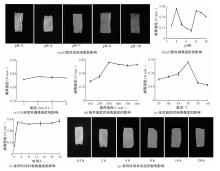
Influences of DA modification parameters on g-ZE fiber film properties. (a) Influence of pH value on surface morphologies; (b) Influence of pH value on peeling strength; (c) Influence of concentration of DA on peeling strength;(d) Influence of stirring speed on peeling strength; (e) Influence of reaction temperature on peeling strength;(f) Influence of reaction time on peeling strength; (g) Influence of reaction time on surface morphologies"

Fig.4

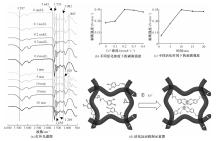
Influence of activation treatment parameters on modification properties. (a) FT-IR spectra; (b) Peeling strength after treatments with different iron-ion concentrations; (c) Peeling strength after iron-ion treatments for different reaction time periods; (d) Mechanism illustration of activation treatment"

Fig.5

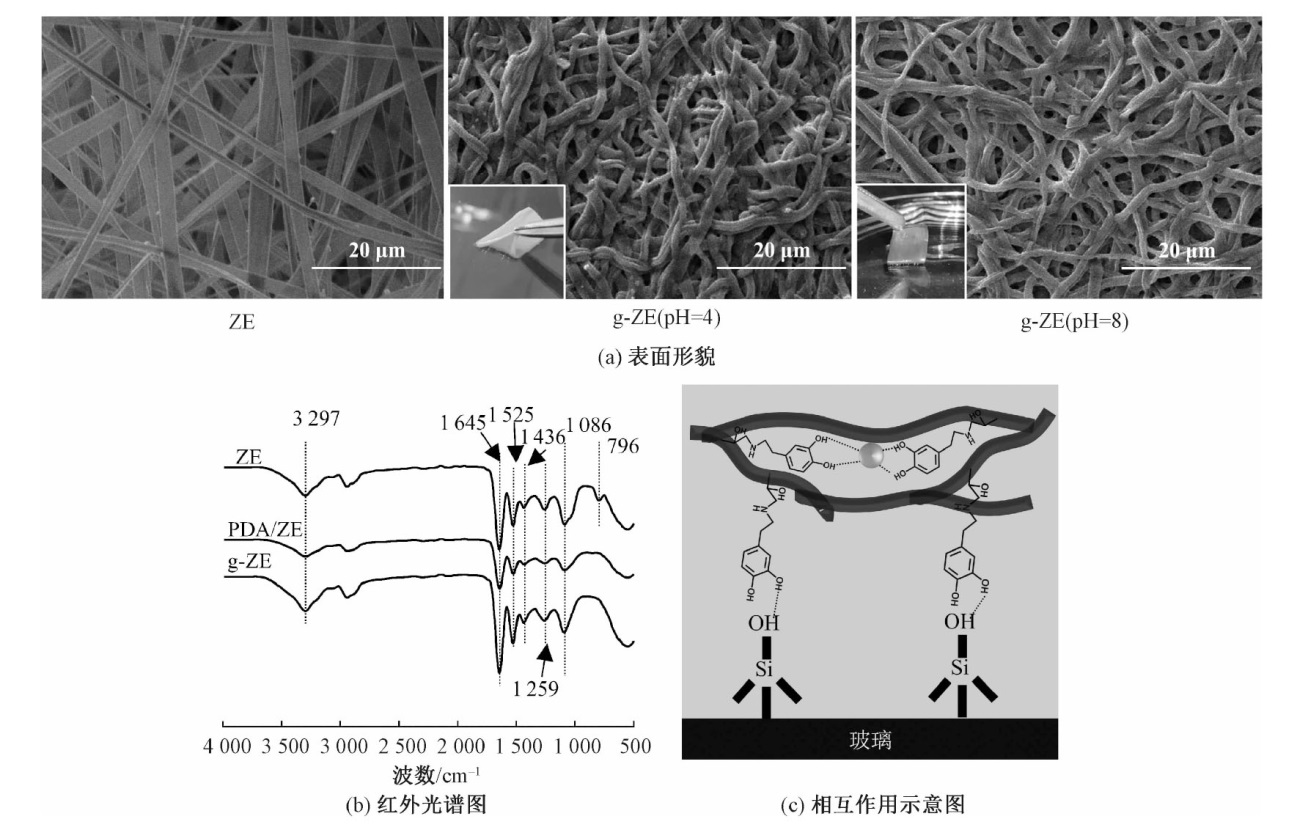
Micro- and chemical structures of self-adhesive Zein ultrafine fiber mats. (a) Surface morphologies;(b) FT-IR spectra; (c) Schematic diagram of interaction"

Fig.6

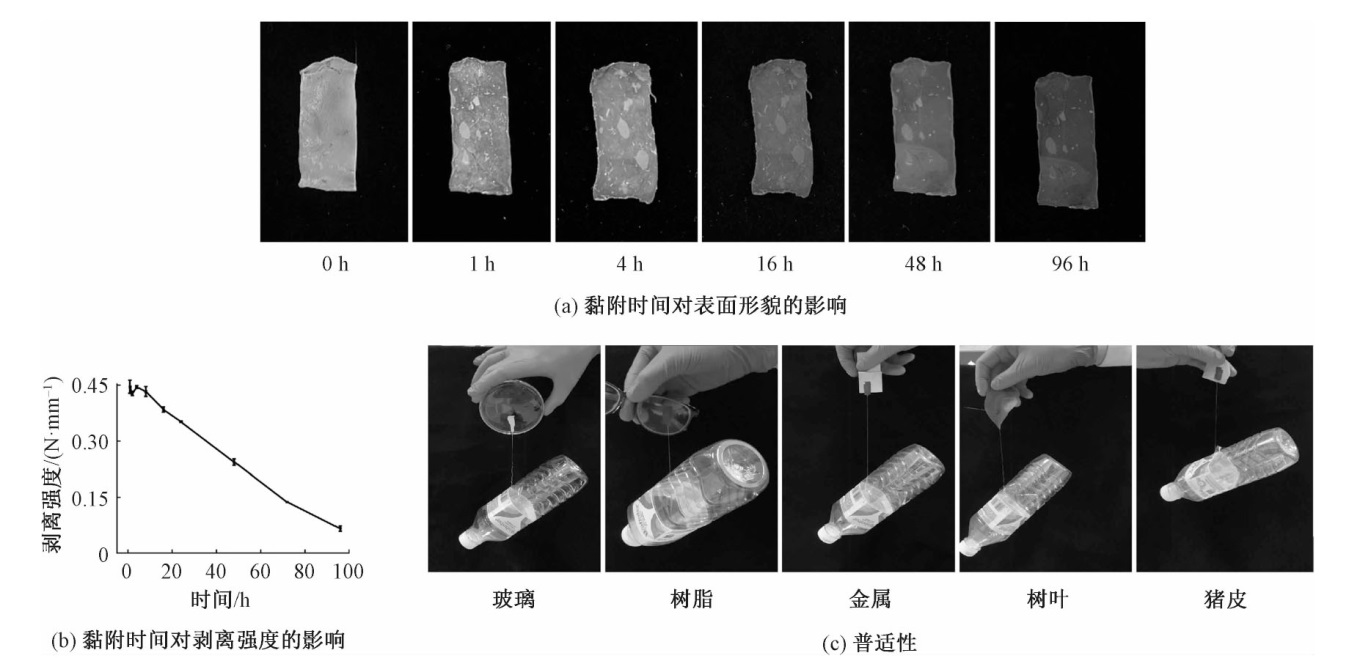
Adhesion characteristics of Zein ultrafine fiber mats. (a) Influence of adhesive time on surface morphologies; (b) Influence of adhesive time on peeling strength; (c) Adhesion universality"

Tab.2

Absorbance, cell relative growth rates and cytotoxicity grades of fiber mat extracts"

组别 吸光度 相对增值率/% 细胞毒性/级
ZE 0.429±0.032 69.61 2
g-ZE 0.494±0.053 123.20 0
阴性对照组 0.462±0.014 96.96 1
阳性对照组 0.364±0.008 15.47 4

Fig.7

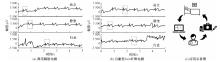
ECG signals under three motion states were detected by electrodes. (a) Commercial electrode; (b) Adhesive Zein fibrous electrode; (c) Illustration of medical diagnosis application"

[1] LIU S Y, RAO Y F, JANG H, et al. Strategies for body-conformable electronics[J]. Matter, 2022, 5(4): 1104-1136.
doi: 10.1016/j.matt.2022.02.006
[2] SOMEYA T, AMAGAI M. Toward a new generation of smart skins[J]. Nature Biotechnology, 2019, 37(4): 382-388.
doi: 10.1038/s41587-019-0079-1 pmid: 30940942
[3] REDDY N, REDDY R, JIANG Q R. Crosslinking biopolymers for biomedical applications[J]. Trends in Biotechnology, 2015, 33(6): 362-369.
doi: 10.1016/j.tibtech.2015.03.008 pmid: 25887334
[4] AGHABABAEI F, MCCLEMENTS D J, MARTINEZ M M, et al. Electrospun plant protein-based nanofibers in food packaging[J]. Food Chemistry, 2024, 432: 137236.
doi: 10.1016/j.foodchem.2023.137236
[5] JIANG Q R, REDDY N, YANG Y Q. Cytocompatible cross-linking of electrospun zein fibers for the development of water-stable tissue engineering scaffolds[J]. Acta Biomaterialia, 2010, 6(10): 4042-4051.
doi: 10.1016/j.actbio.2010.04.024 pmid: 20438870
[6] LIU L, JIANG J C, JIN X Y, et al. Epoxide cross-linked and lysine-blocked zein ultrafine fibrous scaffolds with prominent wet stability and cytocompatibility[J]. ACS Applied Polymer Materials, 2021, 3(8): 3855-3866.
doi: 10.1021/acsapm.1c00439
[7] LIU L, LI R, LIU F, et al. Highly elastic and strain sensing corn protein electrospun fibers for monitoring of wound healing[J]. ACS Nano, 2023, 17(10): 9600-9610.
doi: 10.1021/acsnano.3c03087 pmid: 37130310
[8] LIU Y L, AI K L, LU L H. Polydopamine and its derivative materials: synthesis and promising applications in energy, environmental, and biomedical fields[J]. Chemical Reviews, 2014, 114(9): 5057-5115.
doi: 10.1021/cr400407a pmid: 24517847
[9] ZHANG L, CHEN L, WANG S H, et al. Cellulose nanofiber-mediated manifold dynamic synergy enabling adhesive and photo-detachable hydrogel for self-powered E-skin[J]. Nature Communications, 2024, 15: 3859.
doi: 10.1038/s41467-024-47986-y pmid: 38719821
[10] CHANG C, WANG T R, HU Q B, et al. Zein/caseinate/pectin complex nanoparticles: formation and characterization[J]. International Journal of Biological Macromolecules, 2017, 104: 117-124.
doi: S0141-8130(17)31552-0 pmid: 28579466
[11] YU M N, LIU M M, ZHANG D D, et al. Lubricant-grafted omniphobic surfaces with anti-biofouling and drag-reduction performances constructed by reactive organic-inorganic hybrid microspheres[J]. Chemical Engineering Journal, 2021, 422: 130113.
doi: 10.1016/j.cej.2021.130113
[12] SHEN Y B, WANG B L, LI D, et al. Catechol-modified epoxy backbones for multifunctional and ultra-tough thermoset[J]. Chemical Engineering Journal, 2023, 455: 140889.
doi: 10.1016/j.cej.2022.140889
[1] WU Leran, WU Nihuan, LI Lingeng, ZHONG Yi, CHEN Hongpeng, TANG Nan. Preparation and performance of antibacterial nanofiber membrane loaded with magnolol [J]. Journal of Textile Research, 2025, 46(10): 30-38.
[2] FU Lin, QIAN Jianhua, SHAN Jiangyin, LIN Ling, WEI Mengrong, WENG Kexin, WU Xiaorui. Preparation and performance of silver nanowires/polyurethane nanofiber membrane flexible sensor [J]. Journal of Textile Research, 2025, 46(09): 74-83.
[3] ZHANG Jinqin, LI Jing, XIAO Ming, BI Shuguang, RAN Jianhua. Preparation of polystyrene/reduced graphene oxide microsphere sensing electrothermal fabrics by self-assembly method [J]. Journal of Textile Research, 2025, 46(05): 202-213.
[4] YUE Tiantian, ZHENG Shuai, HU Jing, LIU Yuqing, LIN Jinyou. Preparation of zein/ethylene-vinyl alcohol copolymer composite filter by electrostatic spinning and its air filtration performance [J]. Journal of Textile Research, 2024, 45(11): 21-28.
[5] HE Yin, DENG Ling, LIN Meixia, LI Qianqian, XIAO Shuang, LIU Hao, LIU Li. Key technology development of intelligent and flexible mannequin for winter sports [J]. Journal of Textile Research, 2024, 45(02): 221-230.
[6] WAN Ailan, SHEN Xinyan, WANG Xiaoxiao, ZHAO Shuqiang. Preparation and sensing response characterization of polydopamine modified reduced graphene oxide/polypyrrole conductive fabrics [J]. Journal of Textile Research, 2023, 44(01): 156-163.
[7] ZHAO Boyu, LI Luhong, CONG Honglian. Preparation of cotton/Ti3C2 conductive yarn and performance of pressure capacitance sensor [J]. Journal of Textile Research, 2022, 43(07): 47-54.
[8] RONG Kai, FAN Wei, WANG Qi, ZHANG Cong, YU Yang. Application progress of two-dimensional transitional metal carbon/nitrogen compound composite in field of intelligent wearable textiles [J]. Journal of Textile Research, 2021, 42(09): 10-16.
[9] ZHANG Lin, LI Zhicheng, ZHENG Qinyuan, DONG Jun, ZHANG Yin. Preparation and performance of flexible and anisotropic strain sensor based on electrospinning [J]. Journal of Textile Research, 2021, 42(05): 38-45.
[10] XIAO Yuan, LI Hongying, LI Qian, ZHANG Wei, YANG Pengcheng. Preparation of flexible sensor with composite dielectric layer of cotton fabric/polydimethylsiloxane [J]. Journal of Textile Research, 2021, 42(05): 79-83.
[11] ZHANG Yike, JIA Fan, GUI Cheng, JIN Rui, LI Rong. Preparation and piezoelectric properties of carbon nanotubes/polyvinylidene fluoride nanofiber membrane [J]. Journal of Textile Research, 2021, 42(03): 44-49.
[12] YU Jia, XIN Binjie, ZHUO Tingting, ZHOU Xi. Preparation and characterization of Cu/polypyrrole-coated wool fabrics for high electrical conductivity [J]. Journal of Textile Research, 2021, 42(01): 112-117.
[13] ZHANG Yike, JIA Fan, GUI Cheng, JIN Rui, LI Rong. Preparation and performance of flexible sensor made from polyvinylidene fluoride/FeCl3 composite fibrous membranes [J]. Journal of Textile Research, 2020, 41(12): 13-20.
[14] TONG Wei, FANG Ruxian, LI Jiawei, YI Lingmin. Preparation and properties of amphiphobic polyacrylonitrile electrospun nanofiber films [J]. Journal of Textile Research, 2019, 40(01): 1-8.
[15] . Research progress of wearable technology in textiles and apparels [J]. Journal of Textile Research, 2018, 39(12): 131-138.
Viewed
Full text


Abstract

Cited

  Shared   
  Discussed   
No Suggested Reading articles found!