纺织学报 ›› 2024, Vol. 45 ›› Issue (12): 89-97.doi: 10.13475/j.fzxb.20230904101
李沂蒙1, 单梦琪1, 李雯昕1, 周奉凯1, 毛吉富1,2,3( ), 王富军1,2,3, 王璐1,2,3
LI Yimeng1, SHAN Mengqi1, LI Wenxin1, ZHOU Fengkai1, MAO Jifu1,2,3(), WANG Fujun1,2,3, WANG Lu1,2,3
摘要:
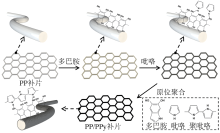
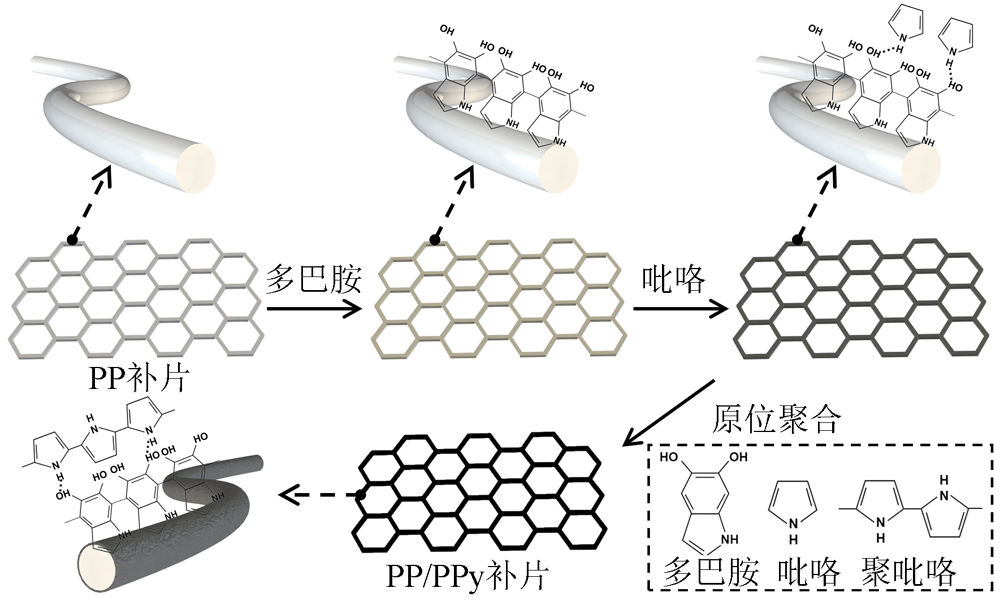
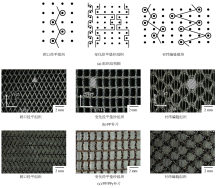
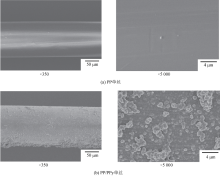
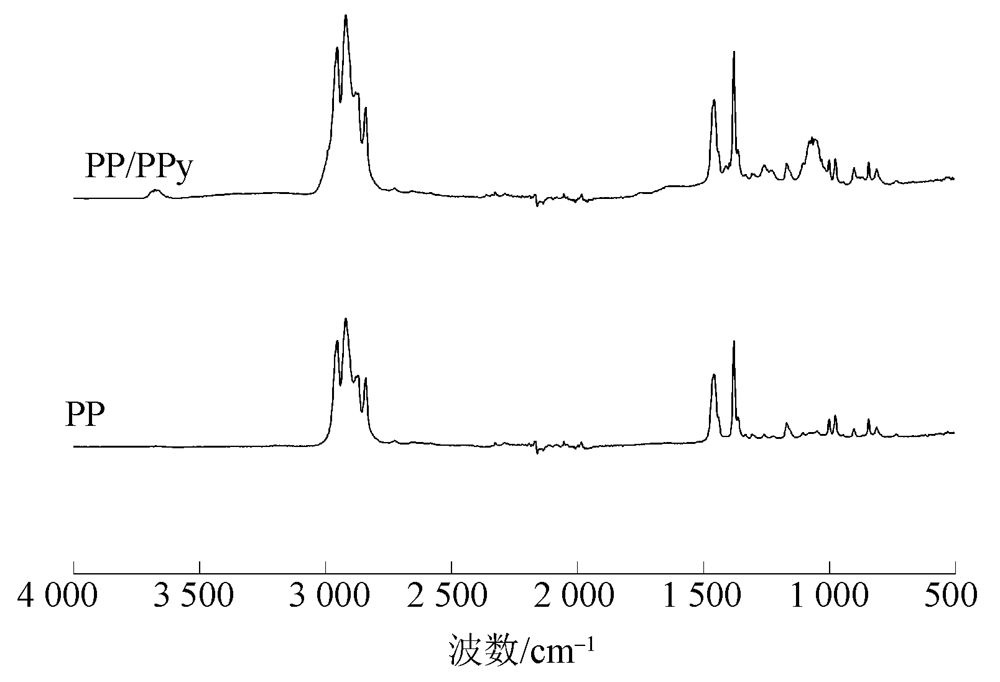
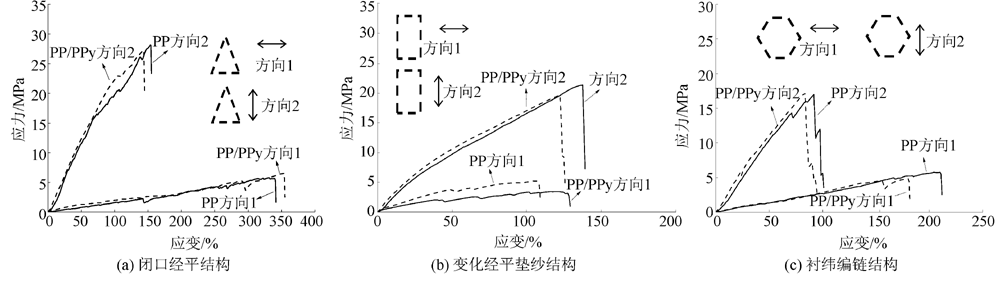
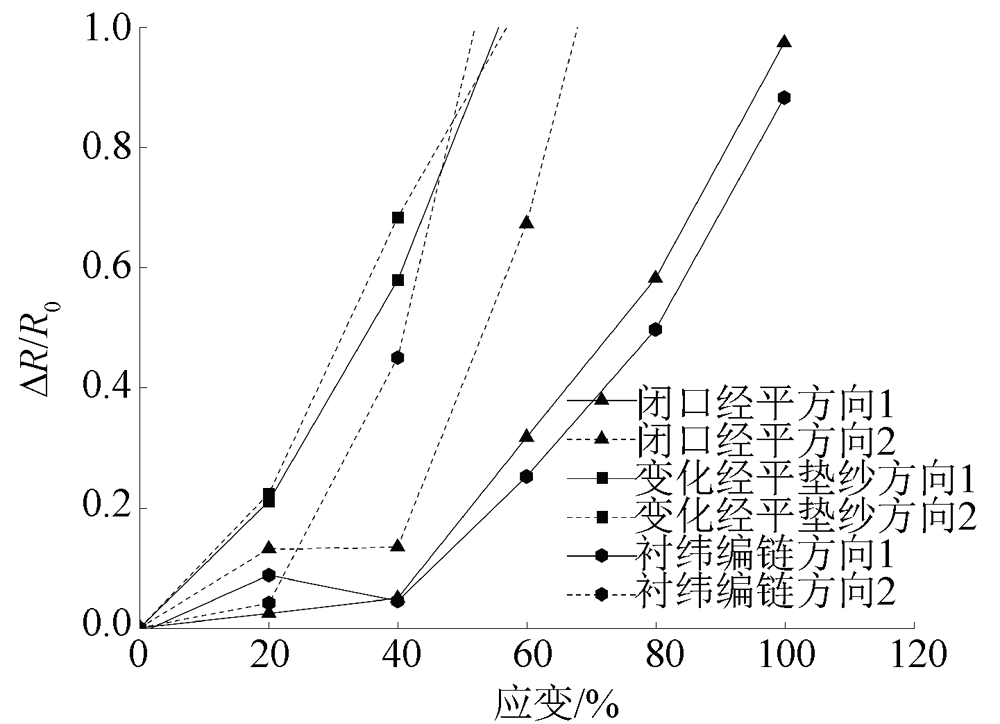
针对现有导电纤维基心肌补片难以拉伸及其在心脏跳动下电传导失效的问题,通过整合经编成形技术和原位聚合方法,制备了具有不同经编结构的聚吡咯涂层聚丙烯(PP/PPy)导电心肌补片,对补片的微观形貌、化学结构、力学性能、电学性能及其稳定性能、生物学性能等进行研究。结果表明:与变化经平垫纱结构的PP/PPy补片相比,闭口经平结构和衬纬编链结构的PP/PPy补片在拉伸过程中能够通过结构变形实现可拉伸性能;衬纬编链结构的PP/PPy补片展现出与天然心肌组织相似的各向异性导电性能(~10-3 S/cm,各向异性比为2.1),并在心脏跳动应变(20%)下表现出稳定的电传导性能(相对电阻变化<0.2);细胞实验证明,PP/PPy补片具有良好的生物相容性。衬纬编链结构的经编心肌补片提供了一种纺织成形的可拉伸结构设计,为各向异性导电补片简便成形提供了新思路。
中图分类号:
| [1] | LI Yimeng, WEI Leqian, LAN Lizhen, et al. Conductive biomaterials for cardiac repair: a review[J]. Acta Biomaterialia, 2022. DOI: 10.1016/j.actbio.2021.04.018. |
| [2] | 胡盛寿. 中国心血管健康与疾病报告2019概要[J]. 中国循环杂志, 2020, 35(9): 833-854. |
| HU Shengtao. The writing committee of the report on cardiovascular health diseases in China[J]. Chinese Circulation Journal, 2020, 35(9): 833-854. | |
| [3] | 邱小忠, 王乐禹, 宋小萍, 等. 心肌再生微环境构建策略[J]. 生命科学, 2020, 32(3): 233-238. |
| QIU Xiaozhong, WANG Leyu, SONG Xiaoping, et al. Construction strategy of myocardial regeneration microenvironment[J]. Chinese Bulletin of Life Sciences, 2020, 32(3): 233-238. | |
| [4] | WEI Leqian, WANG Shasha, SHAN Mengqi, et al. Conductive fibers for biomedical applications[J]. Bioactive Materials, 2023. DOI: 10.1016/j.bioactmat.2022.10.014. |
| [5] | MIHIC Anton, CUI Zhi, WU Jun, et al. A conductive polymer hydrogel supports cell electrical signaling and improves cardiac function after implantation into myocardial infarct[J]. Circulation, 2015, 132(8): 772-784. |
| [6] | LIANG Shuang, ZHANG Yinyu, WANG Hongbo, et al. Paintable and rapidly bondable conductive hydrogels as therapeutic cardiac patches[J]. Advanced Materials, 2018. DOI: 10.1002/adma.201704235. |
| [7] | HE Sheng, WU Jun, LI Shuhong, et al. The conductive function of biopolymer corrects myocardial scar conduction blockage and resynchronizes contraction to prevent heart failure[J]. Biomaterials, 2020. DOI: 10.1016/j.biomaterials.2020.120285. |
| [8] | ZHAO Guoxu, FENG Yanjing, XUE Li, et al. Anisotropic conductive reduced graphene oxide/silk matrices promote post-infarction myocardial function by restoring electrical integrity[J]. Acta Biomaterialia, 2022. DOI: 10.1016/j.actbio.2021.03.073. |
| [9] | SHI Mengting, BAI Lang, XU Meiguang, et al. Micropatterned conductive elastomer patch based on poly(glycerol sebacate)-graphene for cardiac tissue repair[J]. Biofabrication, 2022. DOI: 10.1088/1758-5090/ac59f2. |
| [10] | PEDROTTY Dawn M, KUZMENKO Volodymyr, KARABULUT Erdem, et al. Three-dimensional printed biopatches with conductive ink facilitate cardiac conduction when applied to disrupted myocardium[J]. Circulation-Arrhythmia and Electrophysiology, 2019. DOI: 10.1161/circep.118.006920. |
| [11] | HOSOYAMA Katsuhiro, AHUMADA Manuel, MCTIERNAN Christopher D, et al. Nanoengineered electroconductive collagen-based cardiac patch for infarcted myocardium repair[J]. Acs Applied Materials & Interfaces, 2018, 10(51): 44668-44677. |
| [12] | 艾靓雯, 卢东星, 廖师琴, 等. 基于原位冷冻界面聚合法的纱线传感器制备及其应变传感性能[J]. 纺织学报, 2024, 45(1): 74-82. |
| AI Jingwen, LU Dongxing, LIAO Shiqin, et al. Preparation and strain sensing properties of yarn sensor prepared by in-situ freezing interfacial polymeriza-tion[J]. Journal of Textile Research, 2024, 45(1): 74-82. | |
| [13] | CHEN Shanglin, HSIEH Menghsuan, LI Shuhong, et al. A conductive cell-delivery construct as a bioengineered patch that can improve electrical propagation and synchronize cardiomyocyte contraction for heart repair[J]. Journal of Controlled Release, 2020. DOI: 10.1016/j.jconrel.2020.01.027. |
| [14] | ENGELMAYR George C Jr, CHENG Mingyu, BETTINGER Christopher J, et al. Accordion-like honeycombs for tissue engineering of cardiac anisotropy[J]. Nature Materials, 2008, 7(12): 1003-1010. |
| [15] | MADDEN Lauran R, MORTISEN Derek J, SUSSMAN Eric M, et al. Proangiogenic scaffolds as functional templates for cardiac tissue engineering[J]. Proceedings of the National Academy of Sciences of the United States of America, 2010, 107(34): 15211-15216. |
| [16] | CRISTALLINI Caterina, ROCCHIETTI Elisa Cibrario, ACCOMASSO Lisa, et al. The effect of bioartificial constructs that mimic myocardial structure and biomechanical properties on stem cell commitment towards cardiac lineage[J]. Biomaterials, 2014, 35(1): 92-104. |
| [17] | OLVERA Dinorath, MOLINA Mina Sohrabi, HENDY Gillian, et al. Electroconductive melt electrowritten patches matching the mechanical anisotropy of human myocardium[J]. Advanced Functional Materials, 2020.DOI:10.1002/adfm.201909880. |
| [18] | HUYER Locke Davenport, ZHANG Boyan, KOROLJ Anastasia, et al. Highly elastic and moldable polyester biomaterial for cardiac tissue engineering applica-tions[J]. ACS Biomaterials Science & Engineering, 2016, 2(5): 780-788. |
| [19] | KOLEWE Martin E, PARK Hyoungshin, GRAY Caprice, et al. 3D structural patterns in scalable, elastomeric scaffolds guide engineered tissue architec-ture[J]. Advanced Materials, 2013, 25(32): 4459-4465. |
| [20] | WANG Yue, ZHU Chenxin, PFATTNER Raphael, et al. A highly stretchable, transparent, and conductive polymer[J]. Science Advances, 2017, 3(3): e1602076. |
| [21] | 王璐, 关国平, 王富军, 等. 生物医用纺织材料及其器件研究进展[J]. 纺织学报, 2016, 37(2): 133-140. |
| WANG Lu, GUAN Guoping, WANG Fujun, et al. Research progress on biomedical textile materials and devices[J]. Journal of Textile Research, 2016, 37(2): 133-140. | |
| [22] | 马丕波, 梅德轩. 生物医用纺织材料研究应用与进展[J]. 服装学报, 2022, 7(3): 189-195. |
| MA Pibo, MEI Dexuan. Research application and progress of biomedical textile materials[J]. Journal of Clothing Research, 2022, 7(3): 189-195. | |
| [23] | WANG Ling, WU Yaobin, GUO Baolin, et al. Nanofiber yarn/hydrogel core-shell scaffolds mimicking native skeletal muscle tissue for guiding 3D myoblast alignment, elongation, and differentiation[J]. ACS Nano, 2015, 9(9): 9167-9179. |
| [24] | 乔燕莎, 王茜, 李彦, 等. 聚多巴胺涂层聚丙烯疝气补片的制备及其体外炎性反应[J]. 纺织学报, 2020, 41(9): 162-166. |
| QIAO Yansha, WANG Qian, LI Yan, et al. Preparation and in vitro inflammation evaluation of polydopamine coated polypropylene hernia mesh[J]. Journal of Textile Research, 2020, 41(9): 162-166. | |
| [25] | 乔燕莎, 毛迎, 徐丹瑶, 等. 用于应对疝修补术后并发症的经编补片研究进展[J]. 纺织学报, 2022, 43(3): 1-7. |
| QIAO Yansha, MAO Ying, XU Danyao, et al. Research progress in warp-knitted meshes for tackling complications after hernia repair[J]. Journal of Textile Research, 2022, 43(3): 1-7. | |
| [26] | LI Yimeng, LAN Lizhen, ZHOU Fengkai, et al. Flexible and easy-handling pristine polypyrrole membranes with bayberry-like vesicle structure for enhanced Cr(Ⅵ) removal from aqueous solution[J]. Journal of Hazardous Materials, 2022. DOI: 10.1016/j.jhazmat.2022.129598. |
| [27] | 王博, 刘美亚, 陈明娜, 等. 聚吡咯/氨纶长丝的应变传感性能与应用[J]. 纺织学报, 2024, 45(2): 119-125. |
| WANG Bo, LIU Meiya, CHEN Mingna, et al. Strain-sensing performance of polypyrrole/polyurethane filaments and application[J]. Journal of Textile Research, 2024, 45(2): 119-125. | |
| [28] | SUN Fengqiang, TIAN Mingwei, SUN Xuantong, et al. Stretchable conductive fibers of ultrahigh tensile strain and stable conductance enabled by a worm-shaped graphene microlayer[J]. Nano Letters, 2019, 19(9): 6592-6599. |
| [29] | LI Yimeng, GAO Yaya, ZHANG Qian, et al. Flexible and free-standing pristine polypyrrole membranes with a nanotube structure for repeatable Cr(Ⅵ) ion removal[J]. Separation and Purification Technology, 2021. DOI: 10.1016/j.seppur.2020.117981. |
| [30] | LI Yimeng, SHAN Mengqi, PENG Jiamin, et al. A highly stretchable and conductive continuous composite filament with buckled polypyrrole coating for stretchy electronic textiles[J]. Applied Surface Science, 2023. DOI: 10.1016/j.apsusc.2022.155515. |
| [31] | XIE Jieqi, YAO Yuejun, WANG Shuqin, et al. Alleviating oxidative injury of myocardial infarction by a fibrous polyurethane patch with condensed ros-scavenging backbone units[J]. Advanced Healthcare Materials, 2022. DOI: 10.1002/adhm.202101855. |
| [32] | RAI Ranjana, TALLAWI Marwa, FRATI Caterina, et al. Bioactive electrospun fibers of poly(glycerol sebacate) and poly(e-caprolactone) for cardiac patch application[J]. Advanced Healthcare Materials, 2015, 4(13): 2012-2025. |
| [33] | CASTILHO Miguel, VAN MIL Alain, MAHER Malachy, et al. Melt electrowriting allows tailored microstructural and mechanical design of scaffolds to advance functional human myocardial tissue forma-tion[J]. Advanced Functional Materials, 2018. DOI: 10.1002/adfm.201803151. |
| [34] | HE Yutong, HOU Honghao, WANG Shuqi, et al. From waste of marine culture to natural patch in cardiac tissue engineering[J]. Bioactive Materials, 2021, 6(7): 2000-2010. |
| [35] | KAPNISI Michaella, MANSFIELD Catherine, MARIJON Camille, et al. Auxetic cardiac patches with tunable mechanical and conductive properties toward treating myocardial infarction[J]. Advanced Functional Materials, 2018. DOI: 10.1002/adfm.201800618. |
| [36] | SONG Chen, ZHANG Xingying, WANG Leyu, et al. An injectable conductive three-dimensional elastic network by tangled surgical-suture spring for heart repair[J]. ACS Nano, 2019, 13(12): 14122-14137. |
| [1] | 姜梦敏, 王一璠, 金欣, 王闻宇, 肖长发. 聚吡咯共轭结构对碳纤维增强树脂基复合材料热循环稳定性能的影响[J]. 纺织学报, 2024, 45(10): 23-30. |
| [2] | 项雪雪, 刘娜, 郭佳祺, 高晶, 王璐, 胡修元. 图案化致热涤纶医用绷带的制备及其性能[J]. 纺织学报, 2024, 45(08): 198-204. |
| [3] | 席立锋, 蒋高明, 马丕波, 贾伟, 张红斌, 王佳冕, 夏风林, 张琦, 刘海桑. 体外膜肺氧合经编膜织物自适应张力的低损伤制备[J]. 纺织学报, 2024, 45(07): 1-9. |
| [4] | 陈莹, 沈娜弟, 张露. 全纤维电容式传感器的结构设计及其性能[J]. 纺织学报, 2024, 45(05): 43-50. |
| [5] | 王博, 刘美亚, 陈明娜, 宋孜灿, 夏明, 李沐芳, 王栋. 聚吡咯/氨纶长丝的应变传感性能与应用[J]. 纺织学报, 2024, 45(02): 119-125. |
| [6] | 杨智超, 刘淑强, 吴改红, 贾潞, 张曼, 李甫, 李慧敏. 可吸收手术缝合线研究进展[J]. 纺织学报, 2024, 45(01): 230-239. |
| [7] | 艾靓雯, 卢东星, 廖师琴, 王清清. 基于原位冷冻界面聚合法的纱线传感器制备及其应变传感性能[J]. 纺织学报, 2024, 45(01): 74-82. |
| [8] | 王曙东, 马倩, 王可, 谷元慧. 3D生物打印制备组织工程支架的研究进展[J]. 纺织学报, 2023, 44(03): 210-220. |
| [9] | 万爱兰, 沈新燕, 王晓晓, 赵树强. 聚多巴胺修饰还原氧化石墨烯/聚吡咯导电织物的制备及其传感响应特性[J]. 纺织学报, 2023, 44(01): 156-163. |
| [10] | 俞杨销, 李枫, 王煜煜, 王善龙, 王建南, 许建梅. 聚吡咯/丝素导电纳米纤维膜的制备及其性能[J]. 纺织学报, 2022, 43(10): 16-23. |
| [11] | 刘蛟, 陈韶娟, 吴韶华. 丝素蛋白/聚左旋乳酸纳米纤维纱线肌腱补片的制备及其性能[J]. 纺织学报, 2022, 43(08): 60-66. |
| [12] | 李田华, 李晶晶, 张克勤, 赵荟菁, 孟凯. 螺旋型人工血管内的血流动力学数值模拟[J]. 纺织学报, 2022, 43(03): 17-23. |
| [13] | 乔燕莎, 毛迎, 徐丹瑶, 李彦, 李绍杰, 王璐, 唐健雄. 用于应对疝修补术后并发症的经编补片研究进展[J]. 纺织学报, 2022, 43(03): 1-7. |
| [14] | 方镁淇, 王茜, 李彦, 李超婧, 黎昊, 王璐. 女性压力性尿失禁吊带的设计及其体外力学性能评价[J]. 纺织学报, 2022, 43(03): 38-43. |
| [15] | 吴洋, 刘方恬, 曹孟杰, 崔金海, 邓红兵. 生物质纤维医用敷料研究进展[J]. 纺织学报, 2022, 43(03): 8-16. |
|
||
 京公网安备11010502044800号