纺织学报 ›› 2025, Vol. 46 ›› Issue (04): 89-95.doi: 10.13475/j.fzxb.20240306201

• 纺织工程 • 上一篇    下一篇

横编全成形鞋体的结构设计与工艺实现

王菁1, 董智佳1(), 郑飞2, 黄守东2, 彭会涛2, 吴光军1, 马丕波1   

  1. 1.江南大学 针织技术教育部工程研究中心, 江苏 无锡 214122
    2.安踏(中国)有限公司, 福建 晋江 362212
  • 收稿日期:2024-03-27 修回日期:2024-07-03 出版日期:2025-04-15 发布日期:2025-06-11
  • 通讯作者: 董智佳(1986—),女,副教授,博士。主要研究方向为针织全成形结构研发。E-mail: dongzj0921@163.com
  • 作者简介:王菁(2001—),男,硕士生。主要研究方向为横编全成形技术及产品工艺设计。
  • 基金资助:
    国家自然科学基金项目(61902150);中国纺织工业联合会应用基础研究项目(J202408)

Structural design and craftsmanship implementation of fully shaped shoe body through flat knitting

WANG Jing1, DONG Zhijia1(), ZHENG Fei2, HUANG Shoudong2, PENG Huitao2, WU Guangjun1, MA Pibo1   

  1. 1. Engineering Research Center for Knitting Technology, Ministry of Education, Jiangnan University, Wuxi, Jiangsu 214122, China
    2. Anta (China) Co., Ltd., Jinjiang, Fujian 362212, China
  • Received:2024-03-27 Revised:2024-07-03 Published:2025-04-15 Online:2025-06-11

摘要:

为进一步简化工艺流程突破二维平面版型的限制,选择全成形电脑横机和三维异型筒状编织技术,对横编全成形三维鞋体实现方法进行研究。首先对比三维立体鞋体与传统二维平面鞋面的结构差异,应用SDS-ONE APPEX3全成形设计系统开发三维立体鞋体版型,然后选用高强涤纶复丝、涤纶单丝、涤氨包覆纱和热熔丝4种纱线,借助岛精MACH2XS153-15G四针床全成形电脑横机进行织造。最后将下机鞋体坯样套入鞋楦模具中进行定型,完成全成形轻量鞋体制备过程。本研究制得的全成形针织鞋体包含鞋舌和鞋底组织,且鞋舌与鞋体、鞋体与鞋跟、鞋底与鞋身之间均为三维一体编织成形。同时增加了组织结构孔隙率,进一步降低了鞋体质量,缩短了生产工序步骤,实现了鞋体高透气轻量化开发,对于探索针织鞋体的创新开发具有重要意义。

关键词: 横编, 全成形鞋体, 结构设计, 分区工艺, 立体成形

Abstract:

Objective To transcend the prevalent knitting techniques for shoe uppers in the current market, a four-needle-bed computerized flat knitting machine is employed in this study for fabric construction. The objective is achieve the 3-D shoe uppers in one operation to eliminate the needs for stitching. This method is anticipated to diminish raw material wastage and streamline the shoemaking process.

Method The design of traditional knitted shoe uppers was delved into in this study through optimizing and designing a new type of knitted shoe structure layout. A four-needle-bed computerized flat knitting machine was utilized, opting to knit the left and right sides of the shoe on the front and back needle beds, respectively. Concurrently, each side is used to knit the exterior and interior structures of the shoe. Distinct stitch structures tailored to the various functional zones of the shoe uppers were incorporated into the design, utilizing four types of yarns, which are polyester multifilament, polyester monofilament, polyester covered spandex yarn, and hot melt yarn. Subsequently, the shoe uppers were placed over a shoe mold of the corresponding sizes and subjected to a heat setting process to set the shoe upper, culminating in the final product.

Results Upon removal from the knitting machine, a comprehensive structure was revealed by the shoe upper, incorporating integrated tongue and sole components without the need for subsequent stitching between the heel and sole, or the lateral sides, thus achieving a seamless, one-piece construction. Increased density and weight were typically exhibited by traditional 2-D flat knitted shoe uppers following a flat heat shrinkage process during shaping. Initially, the fabric dimensions directly off the machine were slightly larger than those of the final shoe upper, necessitating design considerations for the end product's dimensions. Contrastingly, an analysis involving zone sampling across various sections of the new shoe upper, both pre- and post-shaping, was conducted. Measurements of stitch density changes revealed a post-shaping decrease in stitch density and an enlargement of the shoe upper's overall dimensions. Consequently, a size deficit is initially presented by the new shoe upon machine removal. However, following stretching and shaping, the interstitial spaces within the overall stitch expanded, resulting in a lighter construct compared to traditional uppers. A lighter weight was achieved by this innovative approach, ensuring the inclusion of integral sole and tongue components. Furthermore, due to the large surface area of the sole structure, it was not only convenient but also robust when stitching or bonding with rubber soles. In the context of this investigation, the terminal physical representation of the shoe's structure was examined, accompanied by pertinent measurements and analytical data. It was elucidated that the fabric constituting the shoe's sole undergoes extension to conform to the dimensions prescribed by the shoe last mold. This observation result is very important for understanding the adaptability and performance of the shoe body under different forces in the last mold. Therefore, it was found that the tensile force of the shoe body at the head of the shoe last is the largest, which requires a specific structure to withstand.

Conclusion Diverse yarns are employed in this study, implementing a segmented structural approach. A four-needle-bed computerized flat knitting machine is utilized to design and craft a 3-D shoe upper through a one-step knitting forming process that enhances material conservation. Cutting requirements are markedly diminished by this technique, and 3-D integrated forming is facilitated, incorporating the tongue, sole stitch, and a seamless heel. The result is a shoe upper with superior breathability, fit, and reduced weight, offering an innovative perspective on the fabrication of knitted footwear.

Key words: horizontal knitting, fully shaped shoe body, structural design, partitioned process, solid forming

中图分类号: 

  • TS184.5

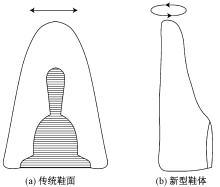
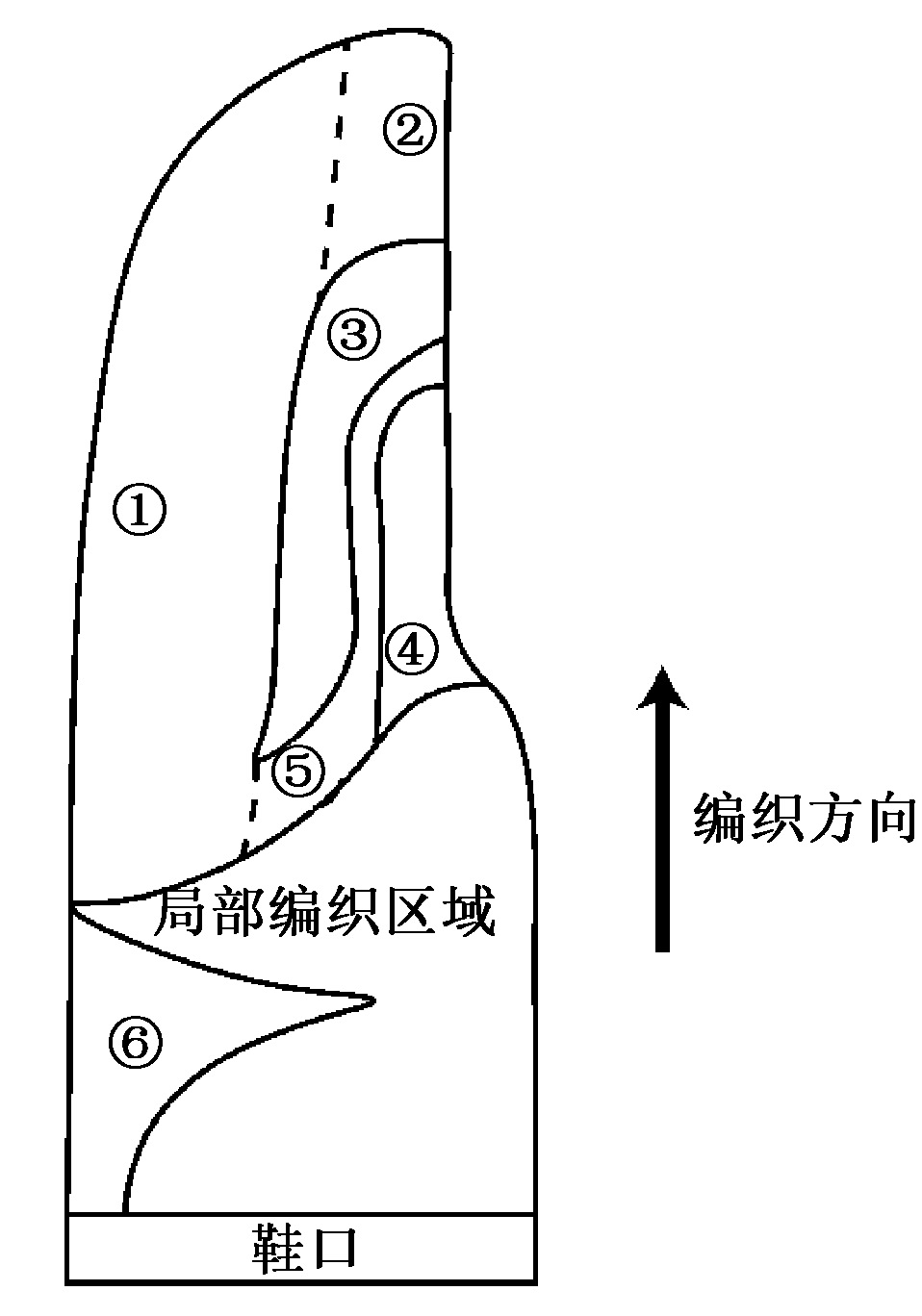
图1

鞋体结构对比"

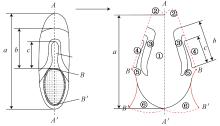
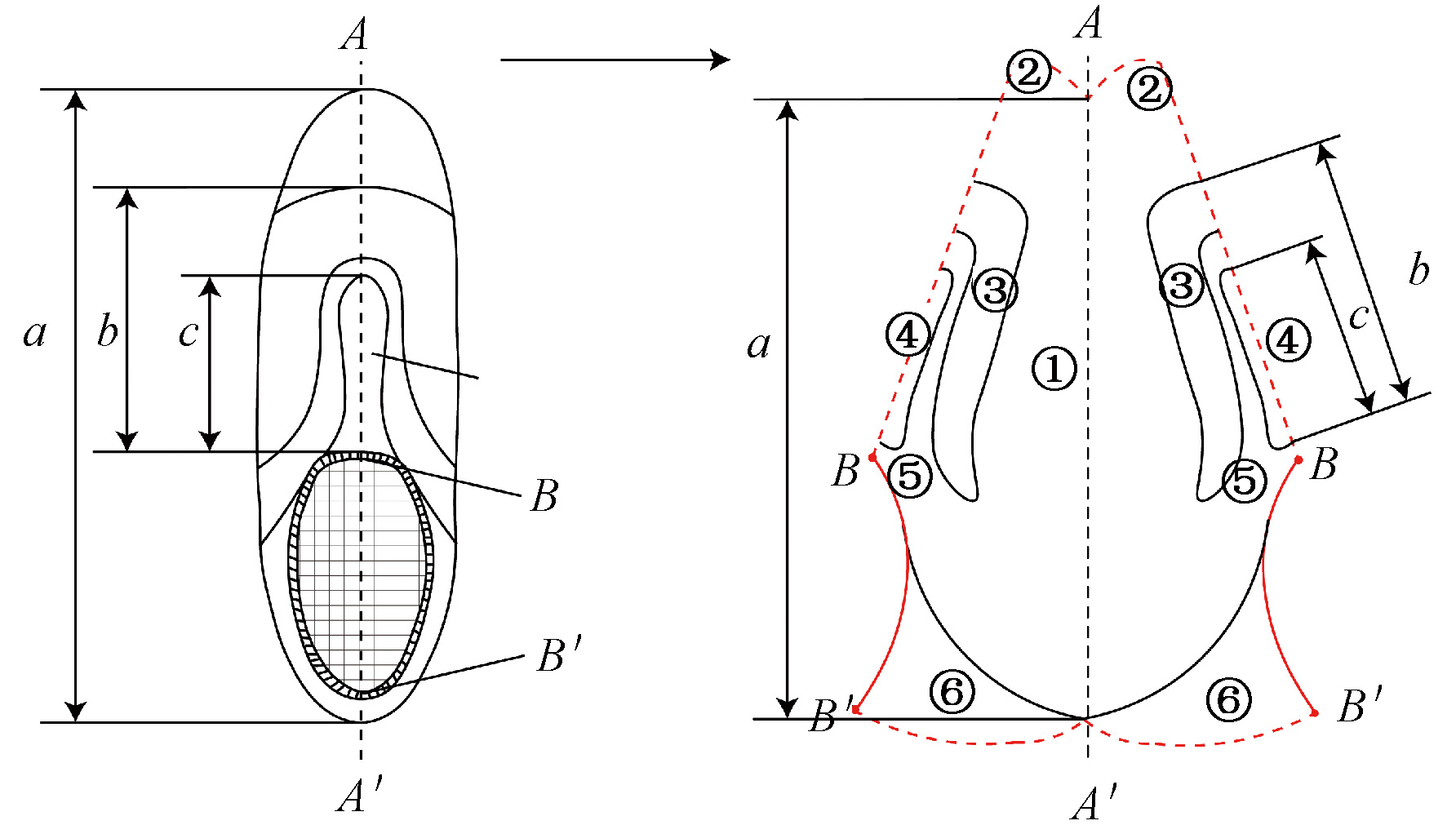
图2

鞋面展开"

图3

局部编织区域"

图4

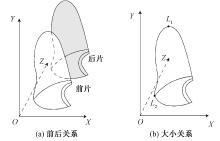
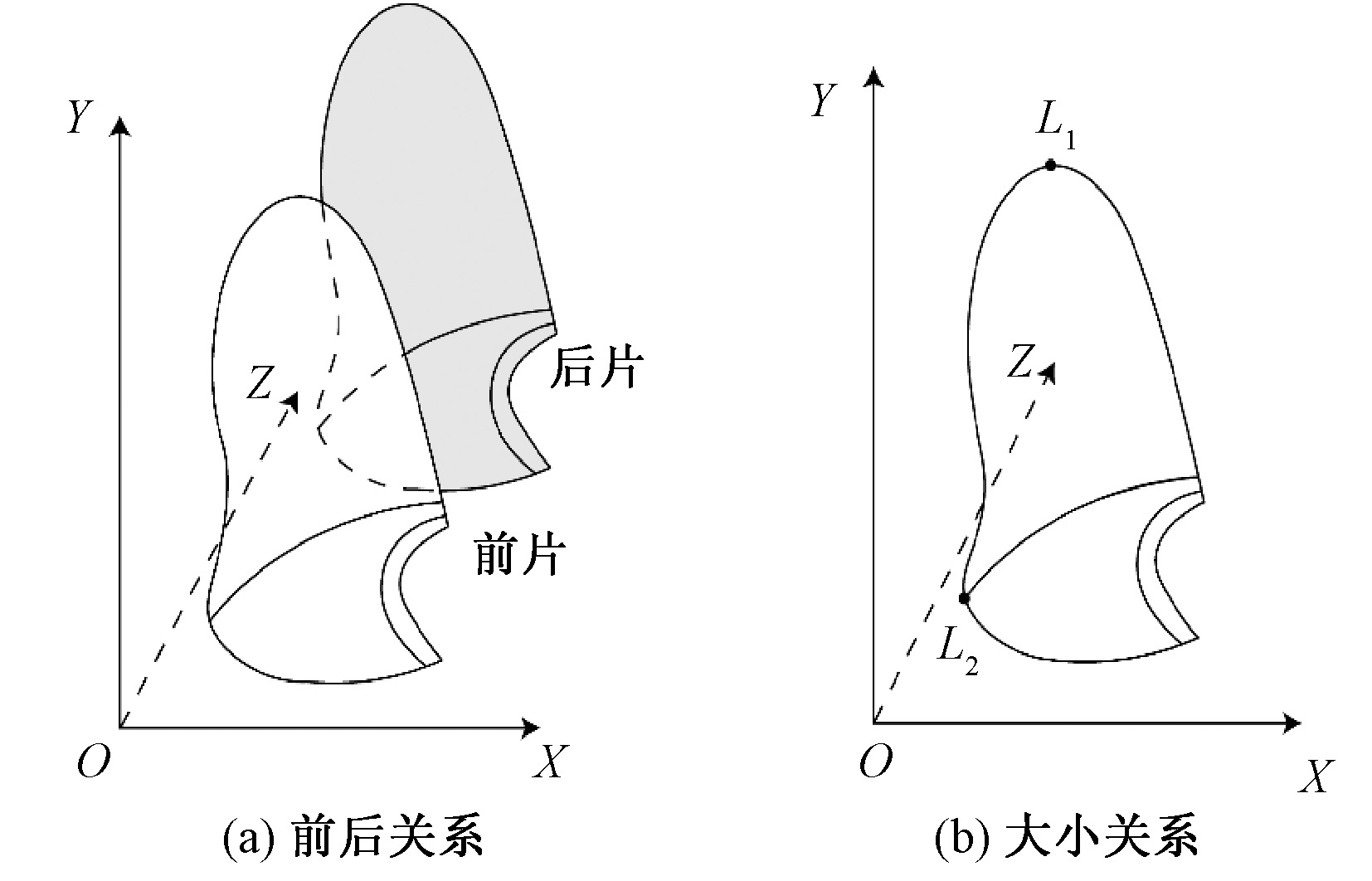
鞋体编织前后片对应关系"

图5

主体区域编织过程"

图6

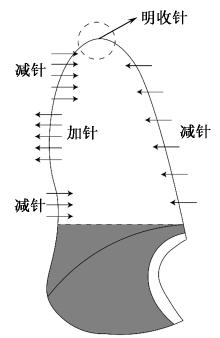
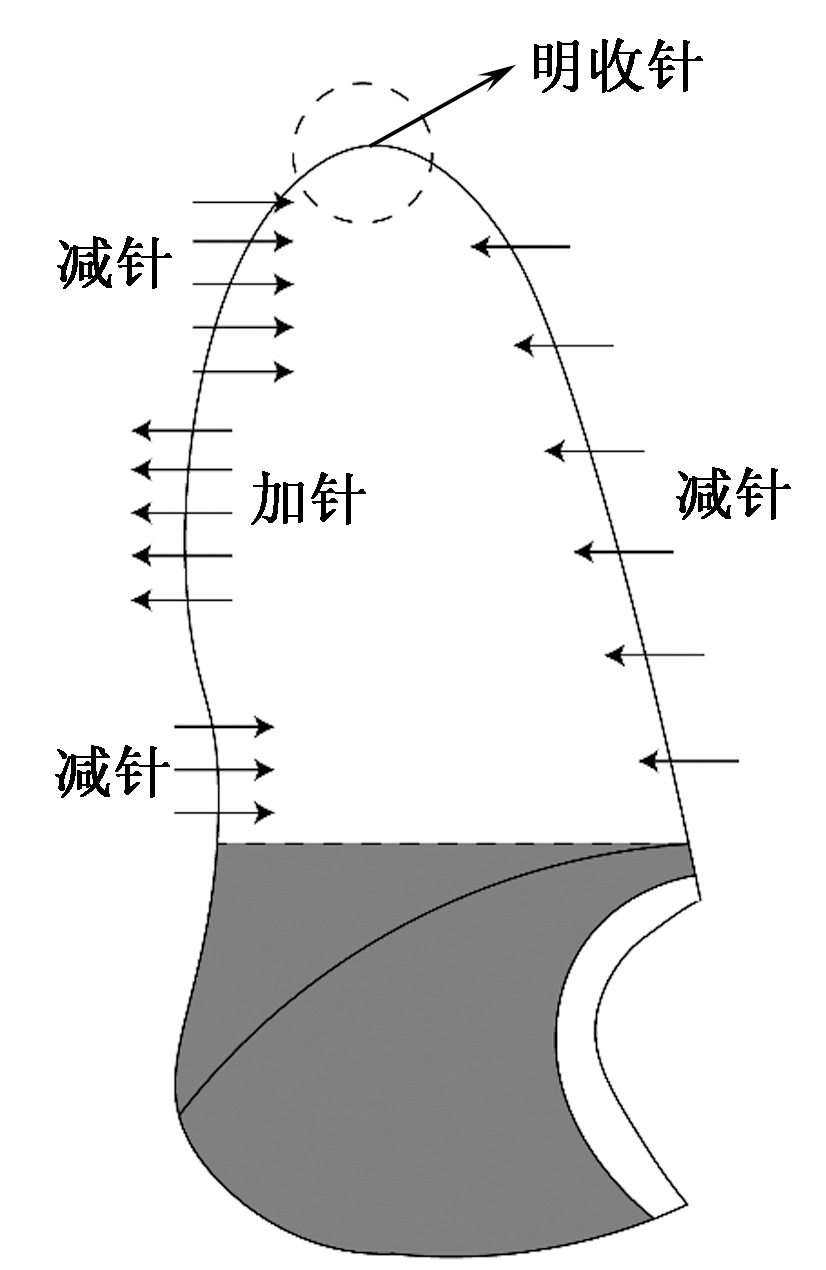
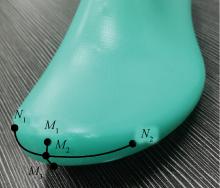
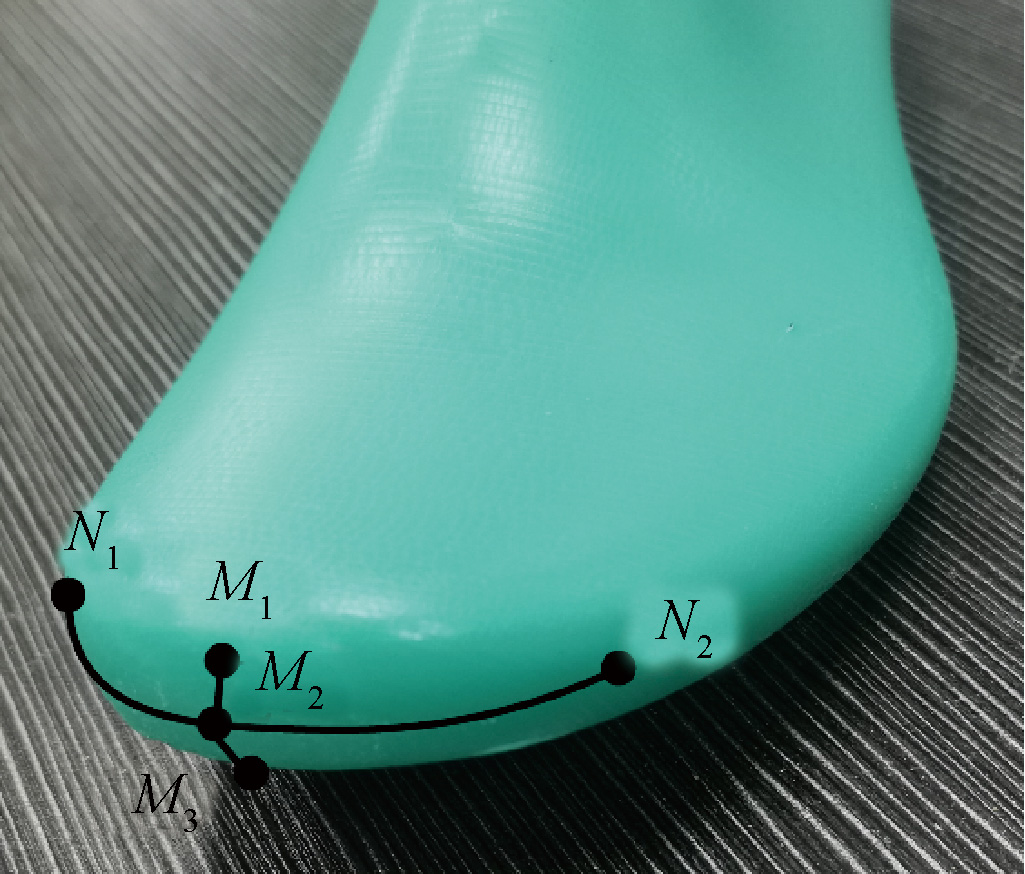
鞋头收口线圈垂直关系"

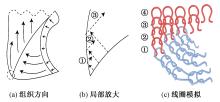
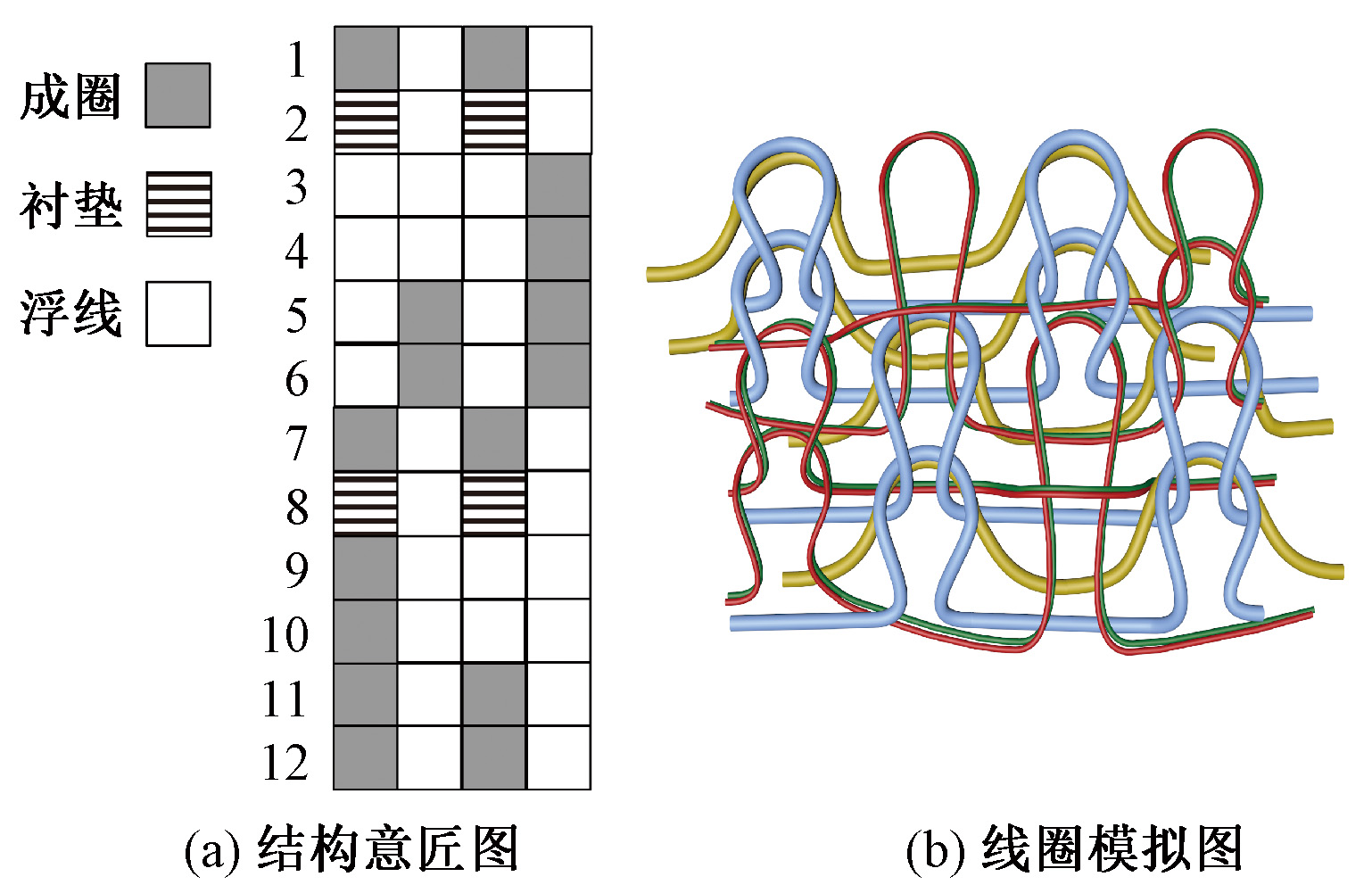
图7

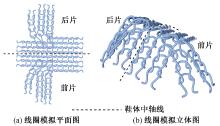
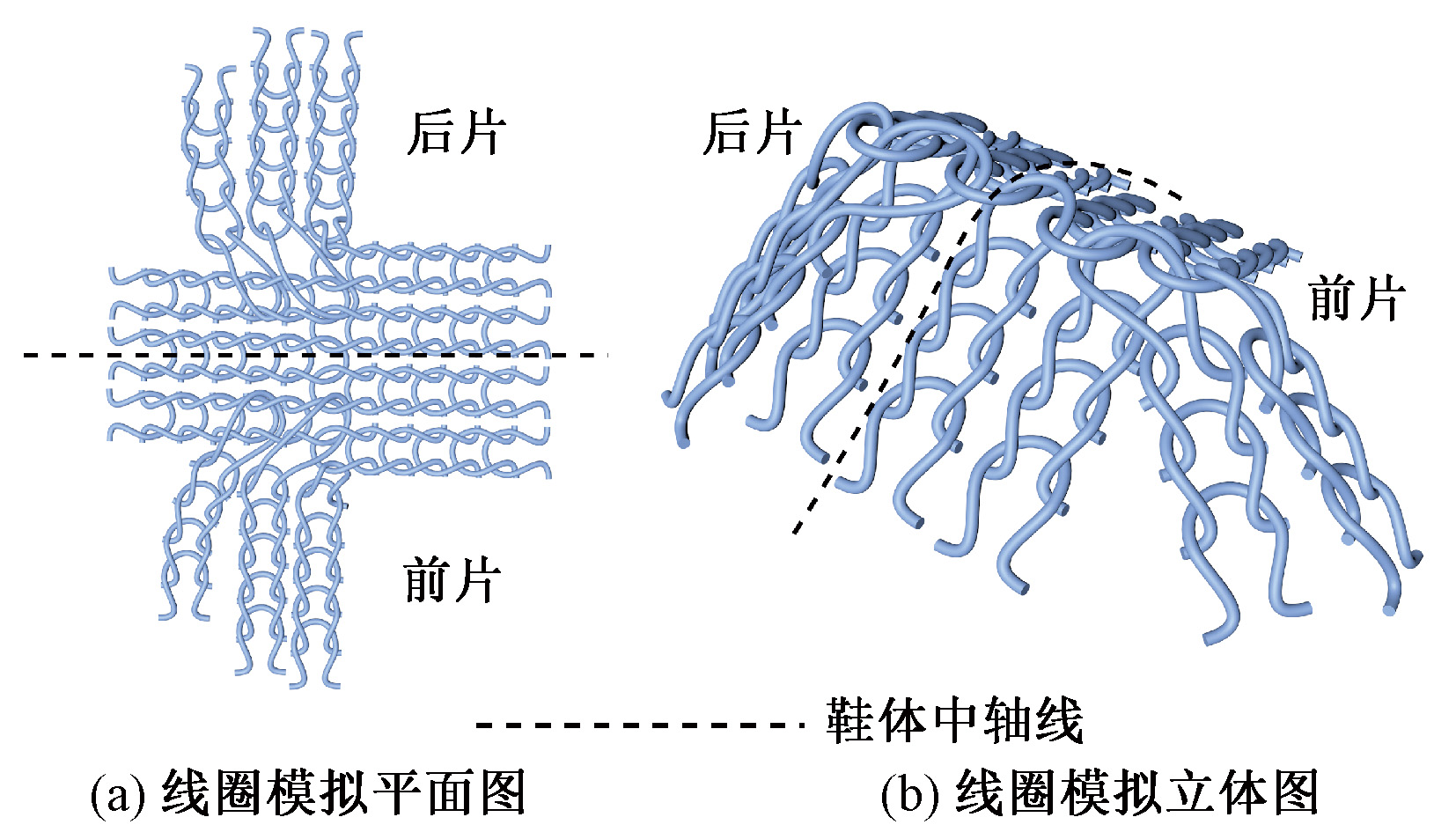
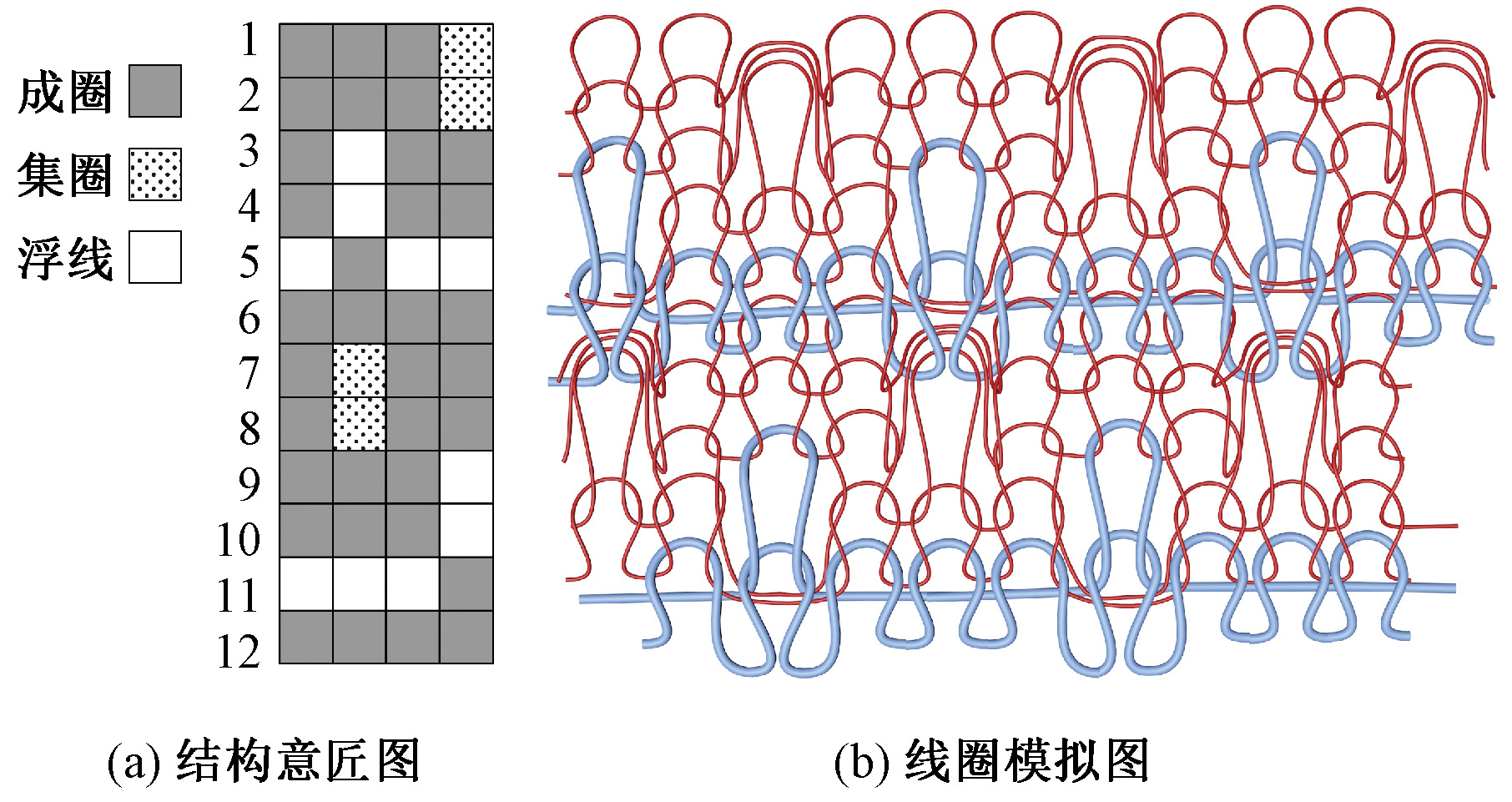
线圈模拟"

图8

鞋体制版图"

表1

纱嘴、纱线与编织区域表"

纱嘴编号 纱线 编织区域
1 66.7 tex高强涤纶复丝×1 废纱起底
2 31.1 tex涤纶/氨纶包覆纱×1 鞋口,鞋跟,鞋舌
3 66.7高强tex涤纶复丝×1+
8.3 tex TPU×1
鞋跟,鞋底,两侧,
鞋头及其收口
4 16.7 tex TPU×3 鞋跟
5 0.12 mm涤纶单丝×2 鞋跟,鞋底,两侧,鞋头

图9

鞋跟组织"

图10

鞋舌组织"

图11

鞋底组织"

图12

两侧组织"

图13

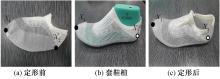
鞋子实物图"

表2

定形前后组织密度变化表"

参数 密度均值/(个·(4 cm2)-1) 密度变
化率/%
定形前 定形后
鞋跟 269 206 -23.4
鞋底 350 295 -15.7
鞋头 351 302 -14.0
两侧 842 693 -17.7
[1] 刘丽艳. 针织鞋材专利技术的研究进展[J]. 纺织导报, 2022(3):88-90, 92.
LIU Liyan. Research progress of patented knitted vamp technology[J]. China Textile Leader, 2022(3): 88-90, 92.
[2] 简晚霞, 张琦, 万爱兰. 针织成形鞋材生产技术现状[J]. 纺织导报, 2017(10):70-72.
JIAN Wanxia, ZHANG Qi, WAN Ailan, et al. Development of the manufacturing technology for fully-fashioned knitted vamp[J]. China Textile Leader, 2017(10): 70-72.
[3] 钟君. 经编贾卡提花鞋面织物的设计与仿真[D]. 无锡: 江南大学, 2017:41-42.
ZHONG Jun. The design and simulation of warp-knitted jacquard shoe-upper fabric[D]. Wuxi: Jiangnan University, 2017:41-42.
[4] 王盼, 吴志明. 横编全成形袜子工艺设计与编织原理[J]. 纺织学报, 2019, 40(7):44-50.
WANG Pan, WU Zhiming. Process design and knitting principle of whole socks on flat knitting machine[J]. Journal of Textile Research, 2019, 40(7): 44-50.
[5] 孙伟东. 基于电脑横机的成形鞋面编织工艺与性能研究[D]. 上海: 东华大学, 2018:70-71.
SUN Weidong. Investigating on knitting technology and performances of fully-shaped shoe upper based on computerized flat knitting machine[D]. Shanghai: Donghua University, 2018:70-71.
[6] 卢致文, 蒋高明, 杨茜. 横编成形鞋面的组织结构设计[J]. 纺织学报, 2015, 36(1):55-59.
LU Zhiwen, JIANG Gaoming, YANG Qian. Stitch structure design of flat knitting shaped shoe-upper[J]. Journal of Textile Research, 2015, 36(1): 55-59.
[7] 卢致文, 蒋高明, 丛洪莲, 等. 基于人体足部特征的鞋面样板设计及横编成形方法[J]. 纺织学报, 2015, 36(4):65-70.
LU Zhiwen, JIANG Gaoming, CONG Honglian, et al. Design and flat knitting shaping method of shoe-upper pattern based on human foot features[J]. Journal of Textile Research, 2015, 36(4): 65-70.
[8] 刘博, 丛洪莲. 全成形西服横向编织技术的工艺模型与实现[J]. 纺织学报, 2020, 41(7):53-58.
LIU Bo, CONG Honglian. Research and implementation of flat-bed knitting process model of fully formed suit[J]. Journal of Textile Research, 2020, 41(7): 53-58.
[9] 刘博, 丛洪莲. 四针床全成形休闲西服的工艺设计与成形原理[J]. 纺织学报, 2020, 41(4):129-134.
LIU Bo, CONG Honglian. Process design and knitting principle of one-piece casual suits based on four-needle-bed flat knitting machine[J]. Journal of Textile Research, 2020, 41(4): 129-134.
[10] 王小文. 基于热压工艺的TPU飞织鞋面的研究[D]. 上海: 东华大学, 2020:68-70.
WANG Xiaowen. Study on TPU fly-knit upper based on heat pressing process[D]. Shanghai: Donghua University, 2020:68-70.
[11] 王敏, 丛洪莲, 蒋高明, 等. 四针床电脑横机的全成形工艺[J]. 纺织学报, 2017, 38(4):61-67.
WANG Min, CONG Honglian, JIANG Gaoming, et al. Whole garment knitting process on four-needle-bed computerized flat knitting machine[J]. Journal of Textile Research, 2017, 38(4): 61-67.
[12] 王敏. 四针床电脑横机的全成形工艺研究[D]. 无锡: 江南大学, 2017:12-29.
WANG Min. The research of whole garment knitting process on four-needle-bed computerized flat knitting machine[D]. Wuxi: Jiangnan University, 2017:12-29.
[13] 王盼, 吴志明. 全成形毛衫局部编织原理及其应用[J]. 纺织学报, 2019, 40(5):41-46.
WANG Pan, WU Zhiming. Principle and application of partial knitting of fully formed sweater[J]. Journal of Textile Research, 2019, 40(5): 41-46.
[1] 巫晓雯, 方蕾妹, 江昆, 丛洪莲. 基于热湿舒适性的横编全成形运动内衣的分区设计[J]. 纺织学报, 2024, 45(12): 172-179.
[2] 郭琦, 吴宁, 孟影, 安达, 黄建龙, 陈利. 变厚度头锥体织物的工艺设计与验证[J]. 纺织学报, 2024, 45(12): 98-108.
[3] 姚思宏, 董智佳, 蒋高明, 王二南. 零裁耗经编成形翻领T恤结构设计与建模[J]. 纺织学报, 2024, 45(11): 178-184.
[4] 陈钰珊, 蒋高明, 李炳贤. 基于双扎口的纬编管状无缝织物三维仿真[J]. 纺织学报, 2024, 45(10): 95-102.
[5] 王遵钦, 刘东炎, 王晓旭, 张典堂. 机织角联锁变密度复合材料的面外压缩力学特性[J]. 纺织学报, 2024, 45(07): 63-71.
[6] 王一品, 李小辉. 服装褶皱形态的参数化表征方法[J]. 纺织学报, 2024, 45(06): 149-154.
[7] 董智佳, 郭燕雨秋, 刘海桑, 姚思宏. 经编全成形镂空紧身衣的结构设计与实现[J]. 纺织学报, 2023, 44(12): 130-137.
[8] 刘青, 牛丽, 蒋高明, 马丕波. 仿鳞片结构织物的制备及其防刺性能[J]. 纺织学报, 2023, 44(11): 90-97.
[9] 王予涛, 丛洪莲, 顾洪阳. 纬编成形护膝结构设计及其热湿舒适性[J]. 纺织学报, 2023, 44(10): 68-74.
[10] 李皎, 陈利, 姚天磊, 陈小明. 类回转预制体针刺机器人系统设计[J]. 纺织学报, 2023, 44(07): 207-213.
[11] 吕钧炜, 罗龙波, 刘向阳. 基于直接氟化技术的芳纶表/界面结构设计与制备研究进展[J]. 纺织学报, 2023, 44(06): 21-27.
[12] 周赳, 胡伊丽. 等经浮长的三纬组合全显结构设计与应用[J]. 纺织学报, 2023, 44(06): 78-84.
[13] 陈弈菲, 刘驰, 杨萌. 基于响应曲面分析的连体泳装结构情绪测量[J]. 纺织学报, 2022, 43(10): 161-168.
[14] 徐铭涛, 嵇宇, 仲越, 张岩, 王萍, 眭建华, 李媛媛. 碳纤维/环氧树脂基复合材料增韧改性研究进展[J]. 纺织学报, 2022, 43(09): 203-210.
[15] 鲁虹, 宋佳怡, 李圆圆, 滕峻峰. 基于合体两片袖的内旋造型结构设计[J]. 纺织学报, 2022, 43(08): 140-146.
Viewed
Full text


Abstract

Cited

  Shared   
  Discussed   
No Suggested Reading articles found!