纺织学报 ›› 2025, Vol. 46 ›› Issue (06): 231-239.doi: 10.13475/j.fzxb.20240504701
许纶有, 邹鲲( ), 吴浩男
XU Lunyou, ZOU Kun(), WU Haonan
摘要:
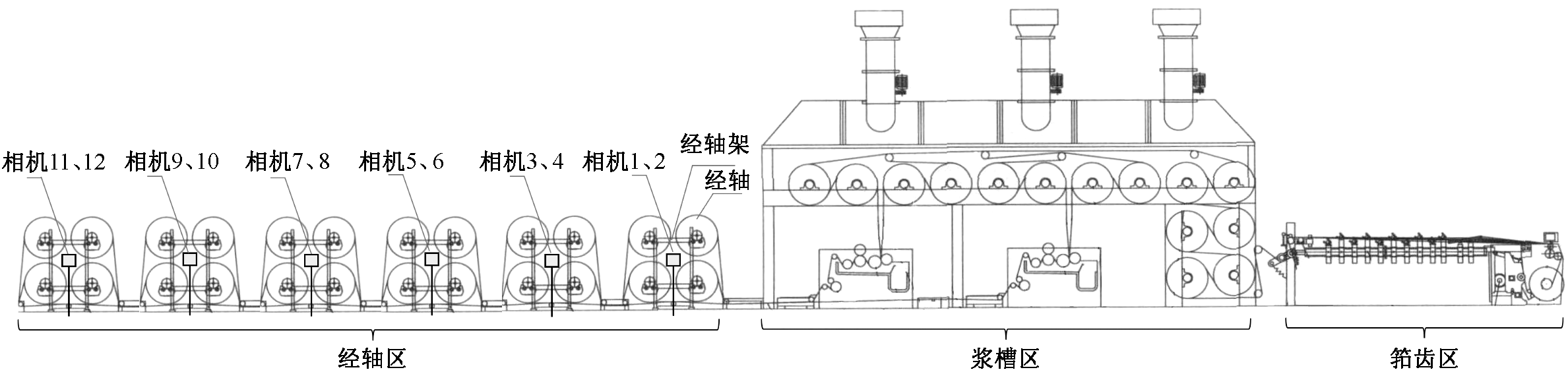
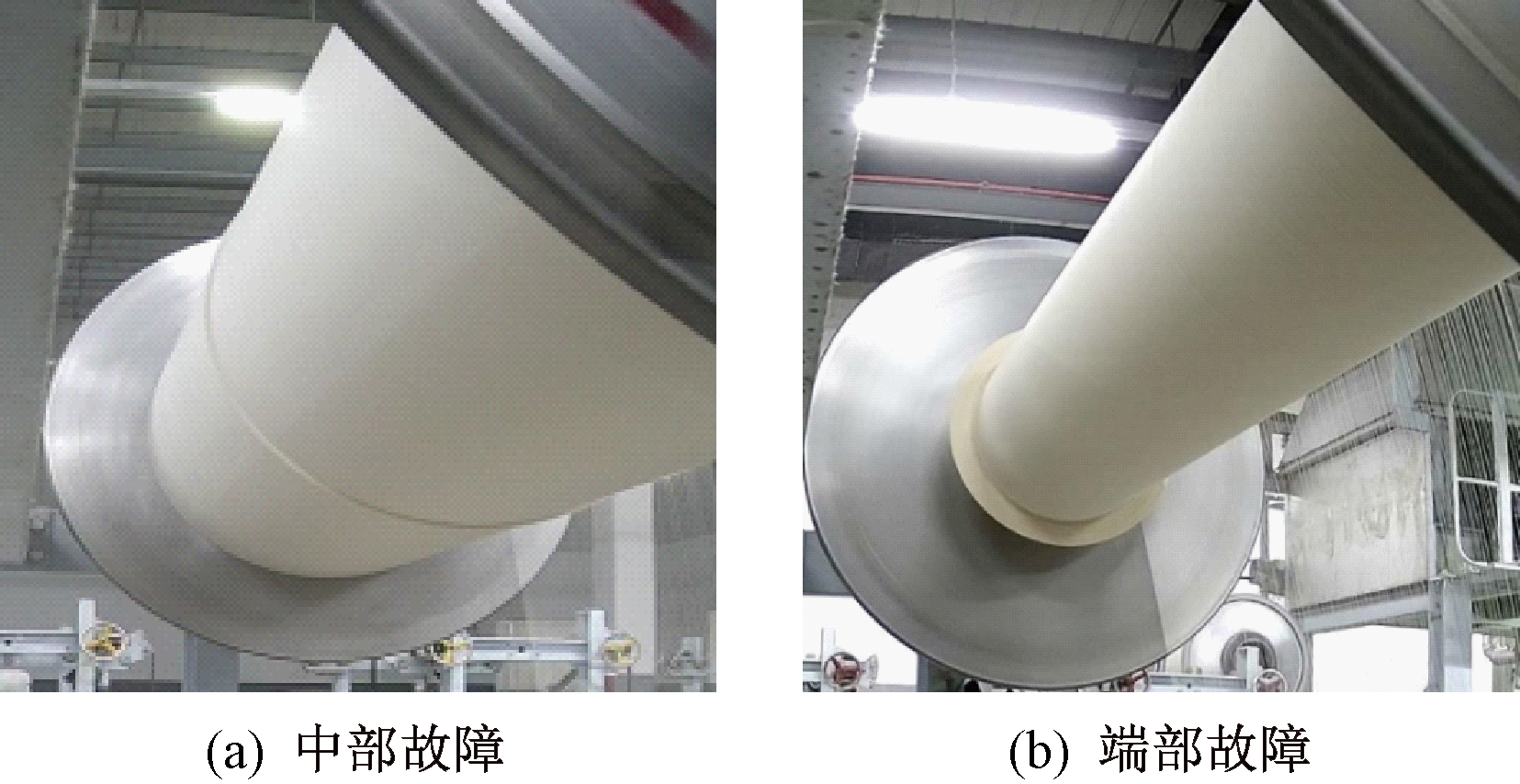
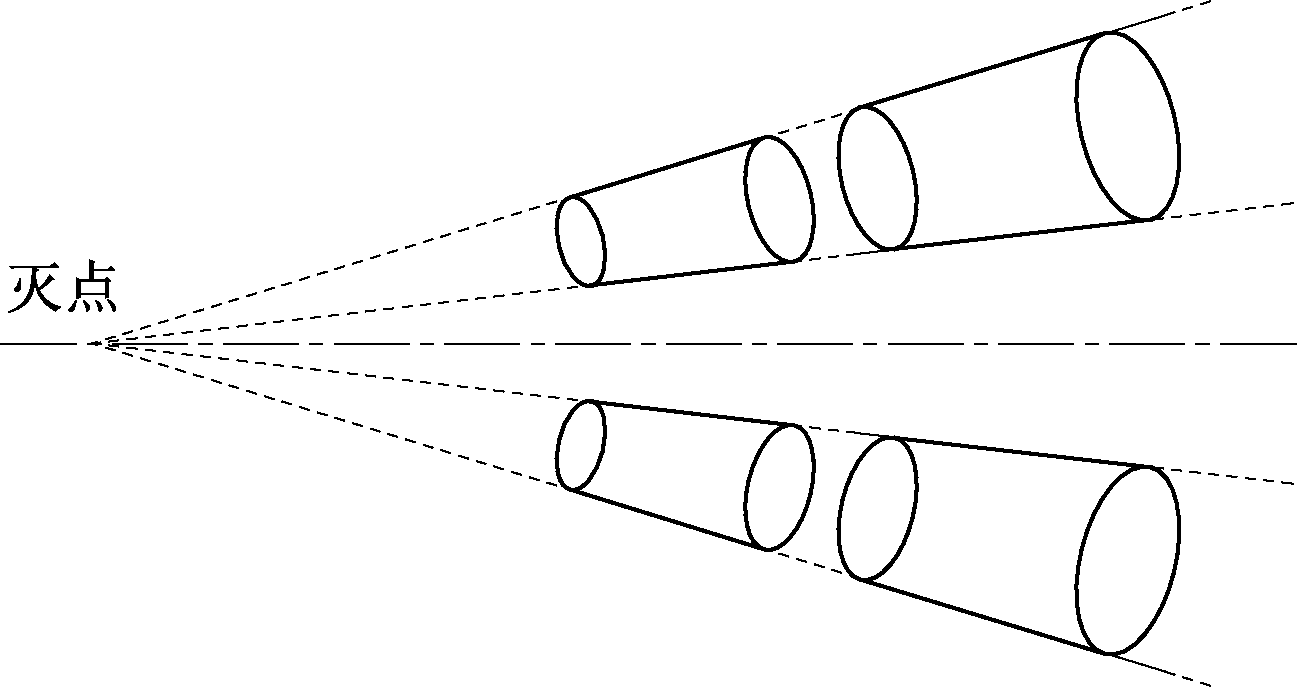
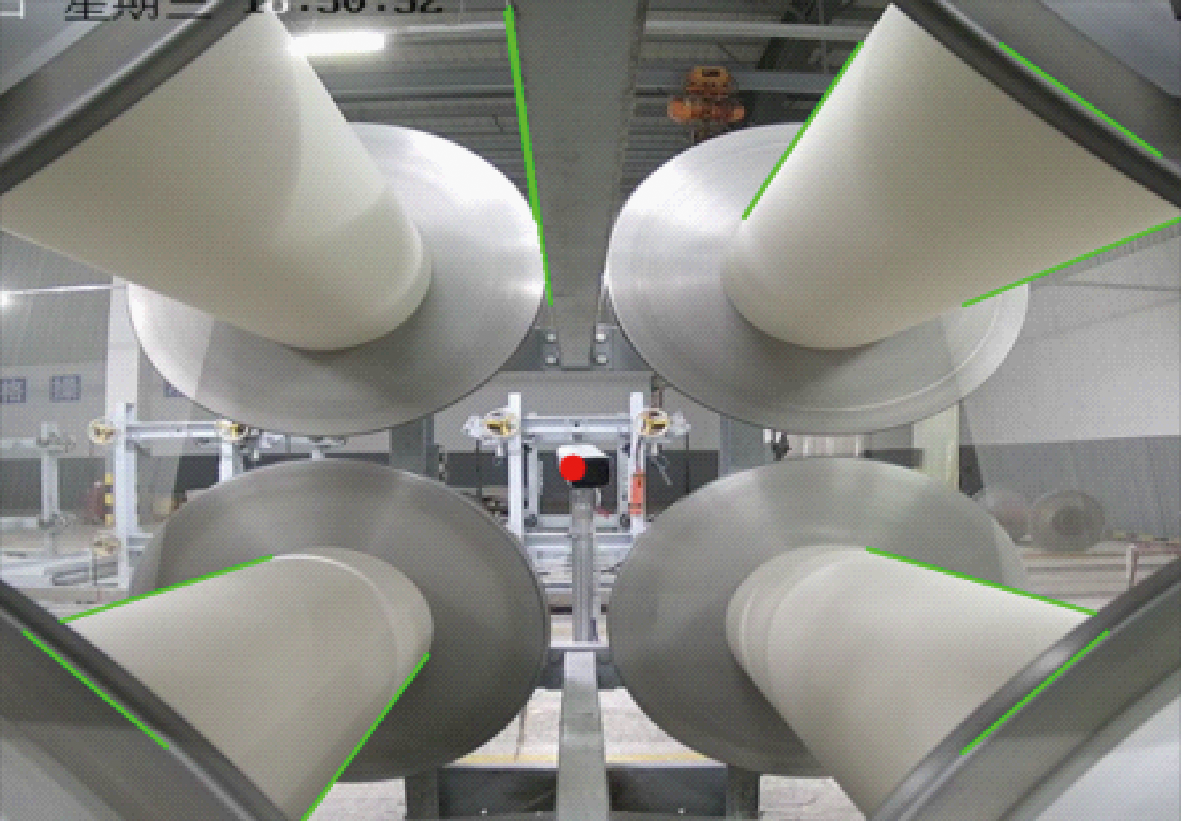
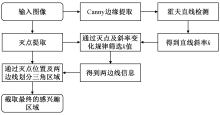
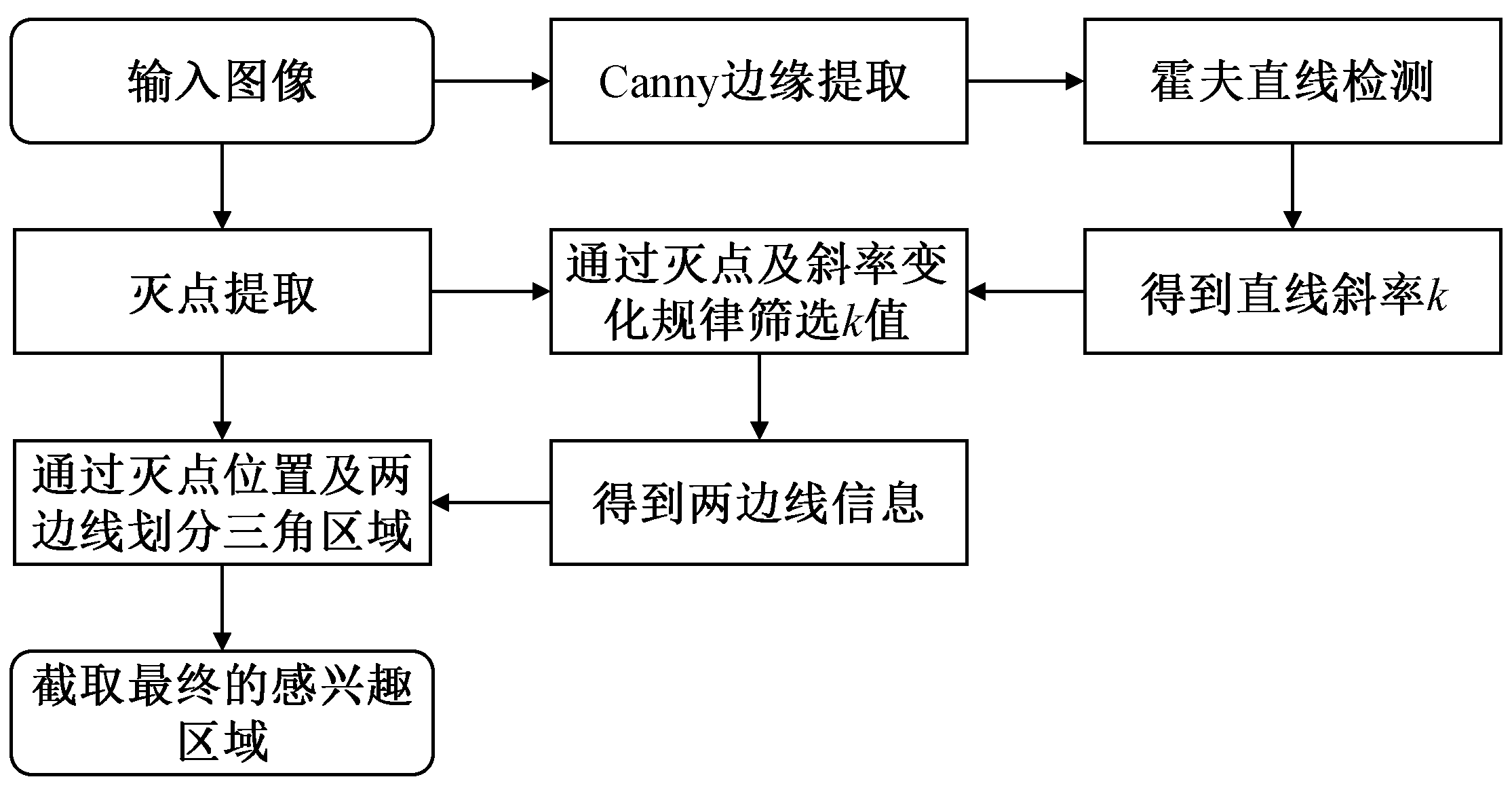
针对目前浆纱机经轴区断纱检测存在的时效性差、效率低等问题,提出了基于机器视觉的浆纱机经轴区断纱故障检测算法。通过分析相机采集的经轴区图像特征,研究了基于图像灭点的图像识别参数确定算法,包括穷举搜索自动灭点提取算法、纱辊轴心线标定算法、感兴趣区域自动选取算法。根据确定的图像识别参数,对原始图像进行预处理、边缘检测和椭圆拟合等步骤后,通过判断拟合椭圆与纱辊上下边线的位置关系,实现对经轴区断纱故障的识别。实际应用表明,所提出的经轴区断纱故障检测算法能及时准确地发现断纱,识别准确率可达0.91,有助于减少纱线浪费,提升浆纱生产质量和效率,展现出良好的实用价值与工业应用潜力。
中图分类号:
| [1] | 陈传亮, 王成群, 吕文涛, 等. 纱线张力传感器的研究进展[J]. 现代纺织技术, 2022, 30(4):32-41. |
|
CHEN Chuanliang, WANG Chengqun, LV Wentao, et al. Advances in yarn tension sensor research[J]. Advanced Textile Technology, 2022, 30(4): 32-41.
doi: 10.19398/j.att.202111050 |
|
| [2] | CARVALHO V, JOSÉ G P, MONTEIRO J L, et al. Yarn parameterization based on mass analysis[J]. Sensors & Actuators A: Physical, 2004, 115(2/3):540-548. |
| [3] | CHEN G F, SUN H C, ZHAI L L, et al. A capacitance based circuit design for yarn breaking detection[J]. Advanced Materials Research, 2012, 562: 1840-1843. |
| [4] | ELDAR M. Line-laser-based yarn shadow sensing break sensor[J]. Optics & Lasers in Engineering, 2011, 49(3): 313-317. |
| [5] | 宋晓亮, 刘建立, 徐阳, 等. 光电式环锭断纱在线检测系统[J]. 纺织学报, 2014, 35(8):94-98,103. |
| SONG Xiaoliang, LIU Jianli, XU Yang, et al. Online detection system for ring spinning yarn break based on photoelectric sensing[J]. Journal of Textile Research, 2014, 35(8): 94-98,103. | |
| [6] | 张建新, 李琦. 基于机器视觉的筒子纱密度在线检测系统[J]. 纺织学报, 2020, 41(6):141-146. |
| ZHANG Jianxin, LI Qi. On-line detection system for bobbin yarn density based on machine vision[J]. Journal of Textile Research, 2020, 41(6): 141-146. | |
| [7] | SCHNEIDER D, GLOY Y S, MERHOF D. Vision-based on-loom measurement of yarn densities in woven fabrics[J]. IEEE Transactions on Instrumentation and Measurement, 2014, 64(4): 1063-1074. |
| [8] | 史鹏飞, 白瑞林, 杨文浩, 等. 基于机器视觉的整经机断纱检测系统[J]. 东华大学学报(自然科学版), 2011, 37(6):750-754,760. |
| SHI Pengfei, BAI Ruilin, YANG Wenhao, et al. Broken yarn detection system for warp assembly machine based on machine vision[J]. Journal of Donghua University (Natural Science), 2011, 37(6): 750-754,760. | |
| [9] | 周其洪, 彭轶, 岑均豪, 等. 基于机器视觉的细纱接头机器人纱线断头定位方法[J]. 纺织学报, 2022, 43(5):163-169. |
| ZHOU Qihong, PENG Yi, CEN Junhao, et al. Yarn break localization method for fine yarn splicing robot based on machine vision[J]. Journal of Textile Research, 2022, 43(5): 163-169. | |
| [10] | PEREIRA F, CARVALHO V, SOARES F, et al. Computer vision techniques for detecting yarn defects[M]// Applications of Computer Vision in Fashion and Textiles. Cambridge: Woodhead Publishing, 2018: 123-145. |
| [11] | CHAN J P, PALMER G S. Machine vision-applications in industry[C]// IEE Colloquium on Application of Machine Vision. London: IEE, 1995: 1-6. |
| [12] | HARTLEY R, ZISSERMAN A. Multiple view geometry in computer vision[M]. Cambridge: Cambridge University Press, 2003: 213-218. |
| [13] | ROTHER C. A new approach to vanishing point detection in architectural environments[J]. Image and Vision Computing, 2002, 20(9): 647-655. |
| [14] | BAZIN J C, POLLEFEYS M. 3-line RANSAC for orthogonal vanishing point detection[C]// 2012 IEEE/rsj International Conference on Intelligent Robots and Systems. [S.l.]:IEEE, 2012: 4282-4287. |
| [15] |
ZITZLER E, DEB K, THIELE L. Comparison of multiobjective evolutionary algorithms: empirical results[J]. Evolutionary Computation, 2000, 8(2): 173-195.
doi: 10.1162/106365600568202 pmid: 10843520 |
| [1] | 李吉国, 景军锋, 程为, 王永波, 刘薇. 基于机器视觉的玻璃纤维纱团外观缺陷检测系统设计[J]. 纺织学报, 2025, 46(05): 243-251. |
| [2] | 任柯, 周衡书, 魏瑾瑜, 闫文君, 左言文. 基于机器视觉技术的百褶裙动态美感评价[J]. 纺织学报, 2024, 45(12): 189-198. |
| [3] | 任佳伟, 周其洪, 陈唱, 洪巍, 岑均豪. 基于机器视觉的交叉缠绕式筒子纱位姿检测方法[J]. 纺织学报, 2024, 45(11): 207-214. |
| [4] | 陈育帆, 郑小虎, 徐修亮, 刘冰. 基于机器视觉的缝纫线迹缺陷检测方法[J]. 纺织学报, 2024, 45(07): 173-180. |
| [5] | 文嘉琪, 李新荣, 冯文倩, 李瀚森. 印花面料的边缘轮廓快速提取方法[J]. 纺织学报, 2024, 45(05): 165-173. |
| [6] | 杨金鹏, 景军锋, 李吉国, 王渊博. 基于机器视觉的玻璃纤维合股纱缺陷检测系统设计[J]. 纺织学报, 2024, 45(05): 193-201. |
| [7] | 白恩龙, 张周强, 郭忠超, 昝杰. 基于机器视觉的棉花颜色检测方法[J]. 纺织学报, 2024, 45(03): 36-43. |
| [8] | 葛苏敏, 林瑞冰, 徐平华, 吴思熠, 罗芊芊. 基于机器视觉的曲面枕个性化定制方法[J]. 纺织学报, 2024, 45(02): 214-220. |
| [9] | 史伟民, 韩思捷, 屠佳佳, 陆伟健, 段玉堂. 基于机器视觉的空纱筒口定位方法[J]. 纺织学报, 2023, 44(11): 105-112. |
| [10] | 陈罡, 金贵阳, 吴菁, 罗千. 智能服装缝制关键技术及成套装备研发[J]. 纺织学报, 2023, 44(08): 197-204. |
| [11] | 陈泰芳, 周亚勤, 汪俊亮, 徐楚桥, 李冬武. 基于视觉特征强化的环锭纺细纱断头在线检测方法[J]. 纺织学报, 2023, 44(08): 63-72. |
| [12] | 杨宏脉, 张效栋, 闫宁, 朱琳琳, 李娜娜. 一种高鲁棒性经编机上断纱在线检测算法[J]. 纺织学报, 2023, 44(05): 139-146. |
| [13] | 纪越, 潘东, 马杰东, 宋丽梅, 董九志. 基于机器视觉的弦振动纱线张力非接触检测系统[J]. 纺织学报, 2023, 44(05): 198-204. |
| [14] | 陶静, 汪俊亮, 徐楚桥, 张洁. 基于视觉校准的环锭纺细纱条干特征在线提取方法[J]. 纺织学报, 2023, 44(04): 70-77. |
| [15] | 王斌, 李敏, 雷承霖, 何儒汉. 基于深度学习的织物疵点检测研究进展[J]. 纺织学报, 2023, 44(01): 219-227. |
|
||
 京公网安备11010502044800号