纺织学报 ›› 2025, Vol. 46 ›› Issue (04): 20-28.doi: 10.13475/j.fzxb.20240602101
黎靖康1, 黄亮1, 陈诗诗1, 毕曙光1( ), 冉建华1, 唐加功2
LI Jingkang1, HUANG Liang1, CHEN Shishi1, BI Shuguang1(), RAN Jianhua1, TANG Jiagong2
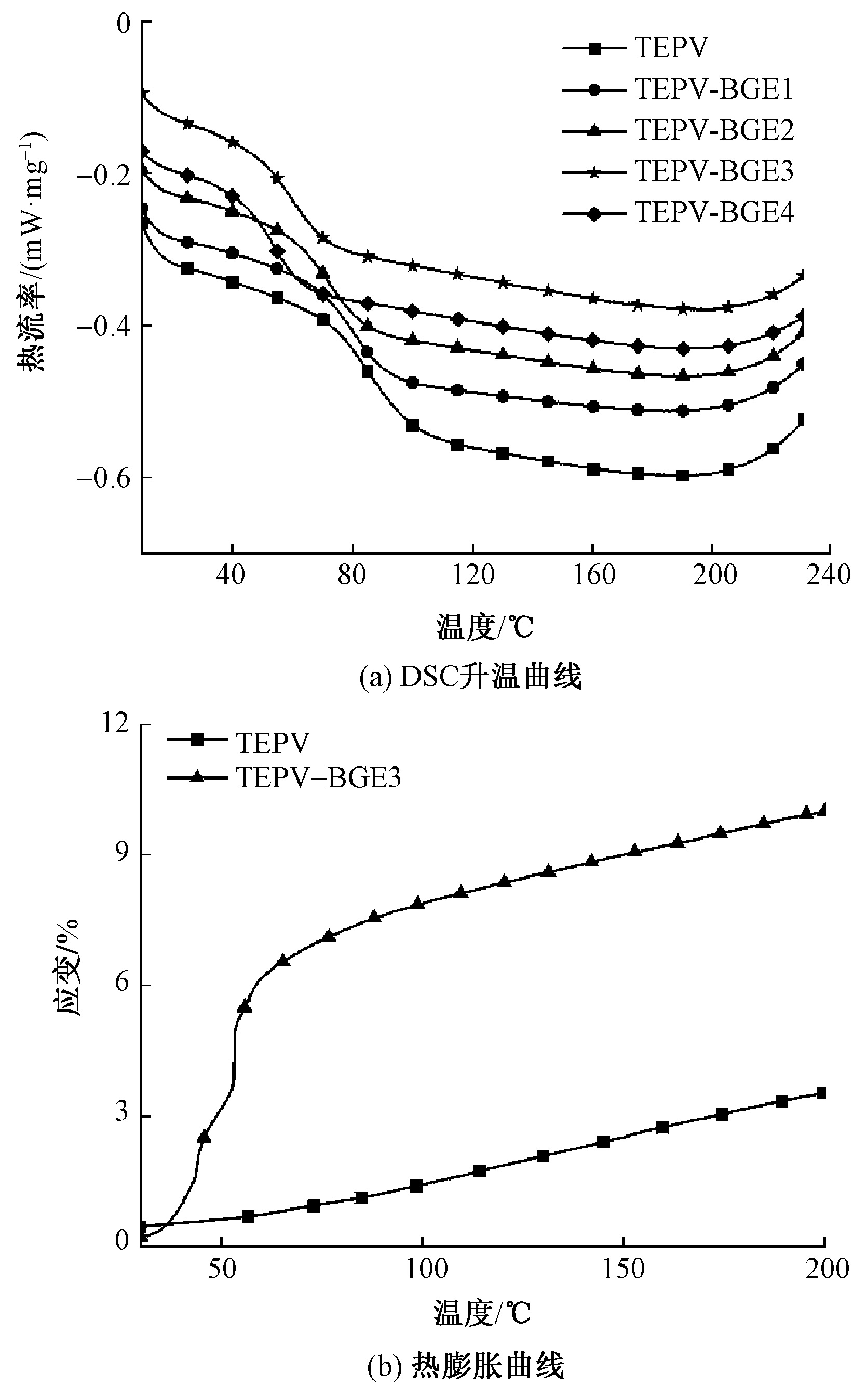
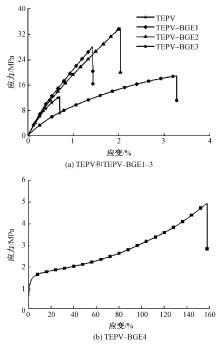
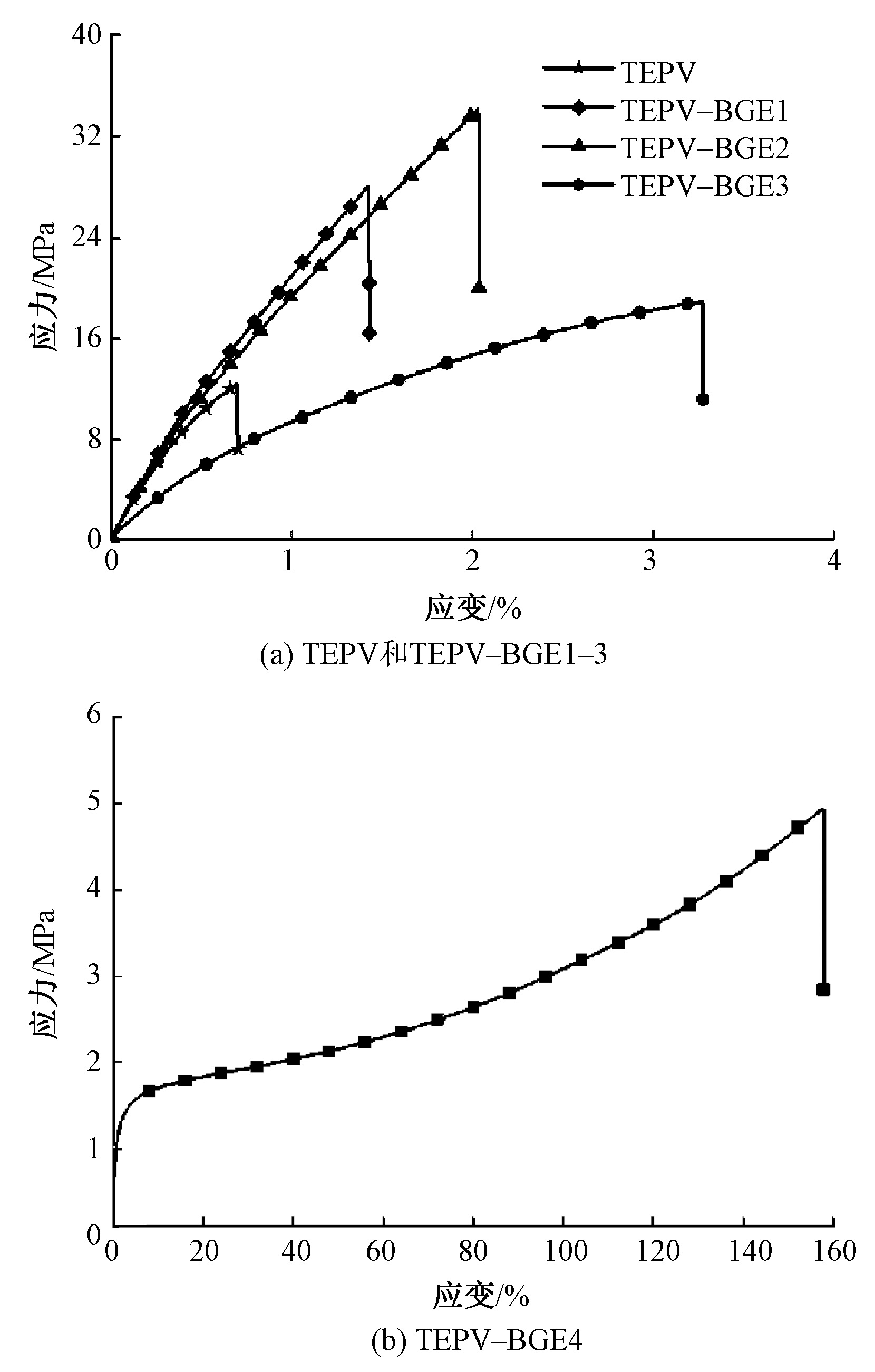
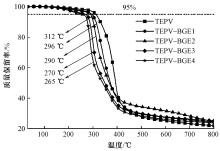
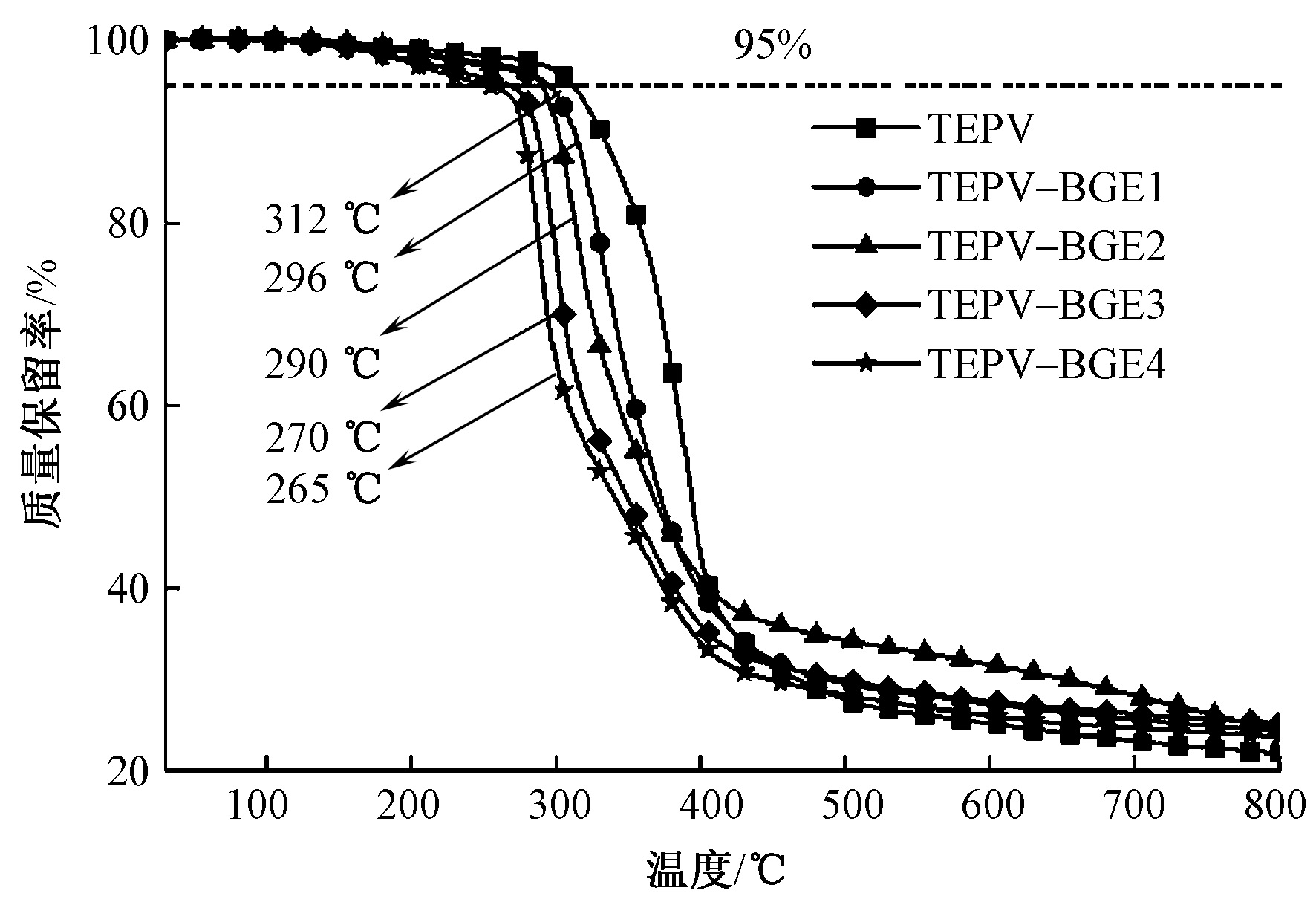
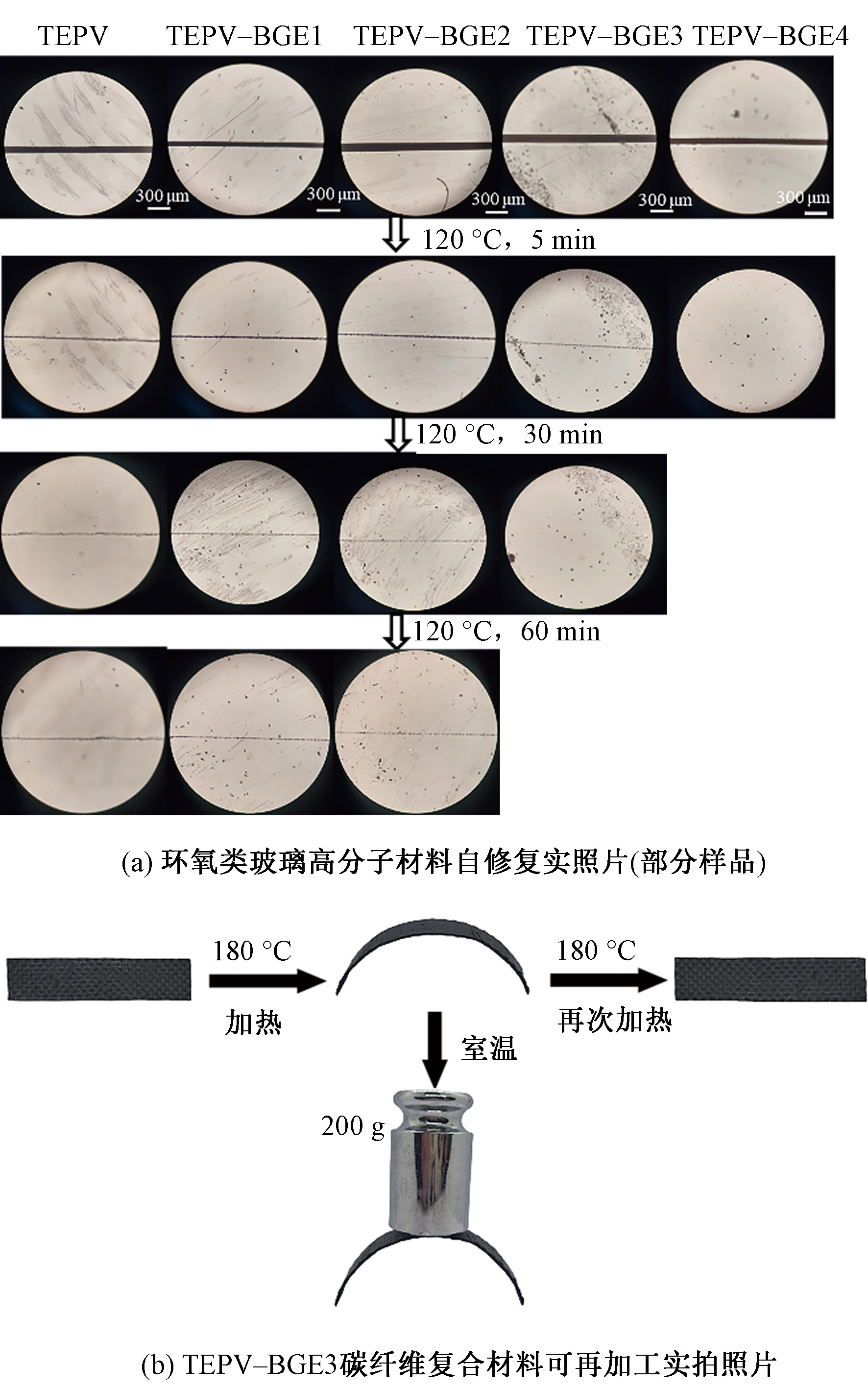
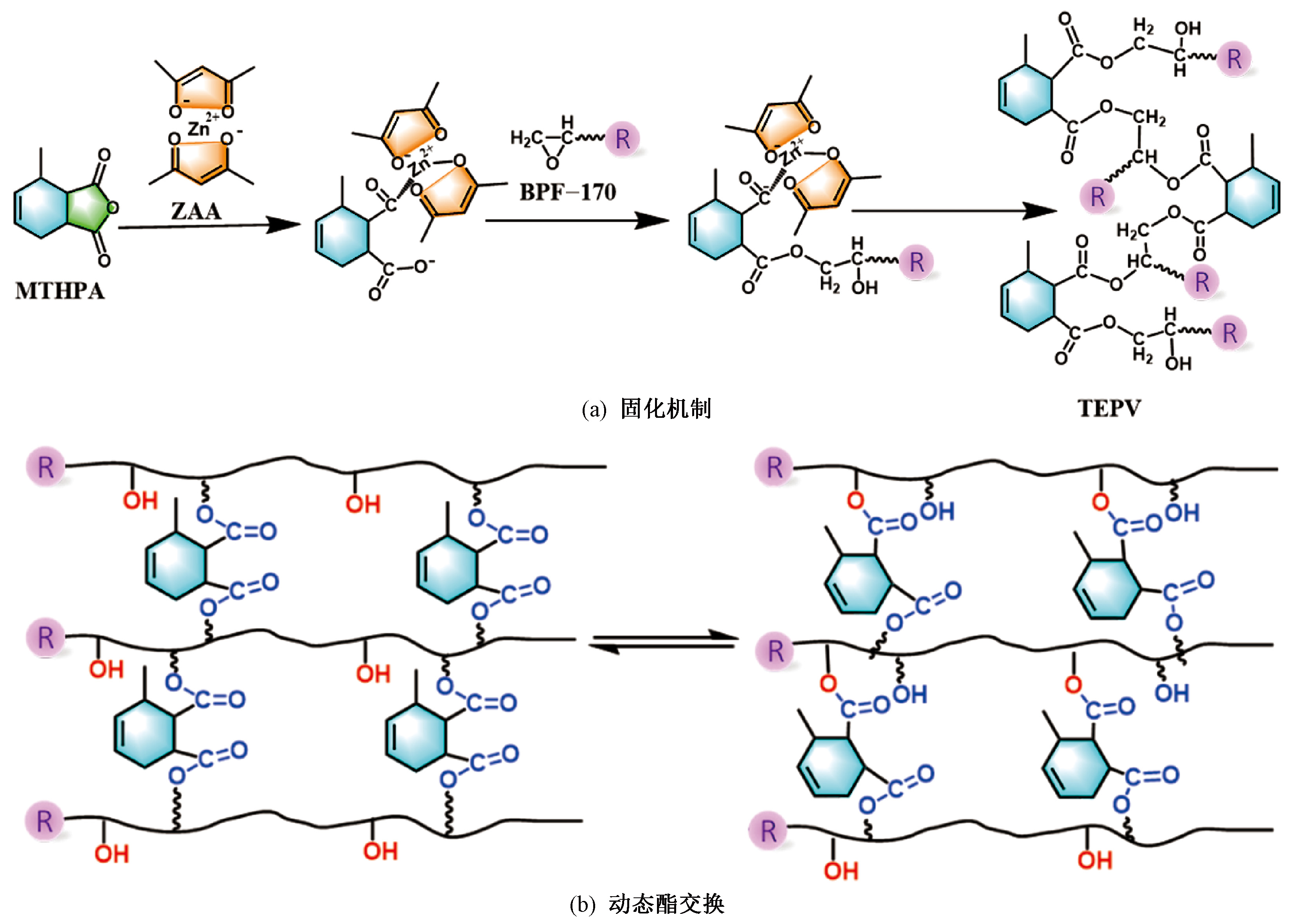
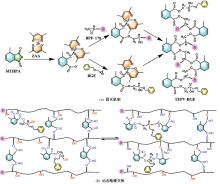
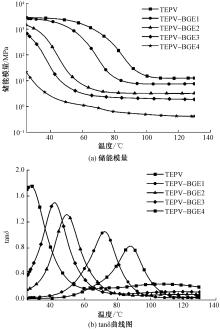
摘要: 针对环氧类玻璃高分子材料自修复时间长和再加工温度高的问题,通过引入小分子活性稀释剂苄基缩水甘油醚(BGE)调控网络结构,增加聚合物链段迁移率,提高酯交换反应速率。进一步通过分子结构分析,揭示了其固化机制和动态键交换机制。结果表明:当双酚F型环氧树脂(BPF-170)与BGE的环氧当量比例为7∶3时,改性环氧类玻璃高分子TEPV-BGE3的玻璃化转变温度从87.2 ℃降至60.4 ℃;拓扑网络冻结转变温度从80 ℃降至52 ℃;在120 ℃下,自修复时间从132.3 min缩短至25.3 min;碳纤维层压板在180 ℃、60 min内可再加工;该材料热稳定性高,热失重5%所对应的温度为270 ℃,拉伸强度达(17.81 ± 1.05) MPa。
中图分类号:
| [1] | CAPRICHO J C, FOX B, HAMEED N. Multifunctionality in epoxy resins[J]. Polymer Reviews, 2019, 60: 1-41. |
| [2] | 阮芳涛, 施建, 徐珍珍, 等. 碳纤维增强树脂基复合材料的回收及其再利用研究进展[J]. 纺织学报, 2019, 40(6): 153-158. |
| RUAN Fangtao, SHI Jian, XU Zhenzhen, et al. Research progress on the recycling and reuse of carbon fiber reinforced resin matrix composites[J]. Journal of Textile Research, 2019, 40 (6): 153-158. | |
| [3] | CHEN M, ZHOU L, CHEN Z, et al. Multi-functional epoxy vitrimers: controllable dynamic properties, multiple-stimuli response, crack-healing and fracture-welding[J]. Composites Science and Technology, 2022. DOI: 10.1016/j.compscitech.2022.109364. |
| [4] | YANG Y, XU Y S, JI Y, et al. Functional epoxy vitrimers and composites[J]. Progress in Materials Science, 2021. DOI: 10.1016/j.pmatsci.2020.100710. |
| [5] | LIU X, FAN W F, YANG X N. Bio based epoxy anhydride thermosets from multi-armed cardanol-derived epoxy oligomers[J]. Polymers for Advanced Technologies, 2022, 33(8): 2571-2580. |
| [6] | SI H W, ZHOU L, WU Y P, et al. Rapidly reprocessable, degradable epoxy vitrimer and recyclable carbon fiber reinforced thermoset composites relied on high contents of exchangeable aromatic disulfide crosslinks[J]. Composites Part B: Engineering, 2020. DOI: 10.1016/j.compositesb.2020.108278. |
| [7] | FEI M G, CHANG Y C, HAO C, et al. Highly engineerable schiff base polymer matrix with facile fiber composite manufacturability and hydrothermal recyclability[J]. Composites Part B: Engineering, 2023. DOI: 10.1016/j.compositesb.2022.110366. |
| [8] | CVEK M, SEVCIK J, VILCAKOVA J, et al. Self healing recyclable bio based magnetic composites with boronic ester vitrimer matrix[J]. Applied Materials Today, 2023. DOI: 10.1016/j.apmt.2023.101997. |
| [9] | KUMAR A, CONNAL L A. Biobased transesterification vitrimers[J]. Macromolecular Rapid Communications, 2023. DOI: 10.1002/marc.202200892. |
| [10] | 李博, 樊威, 高兴忠, 等. 碳纤维增强类玻璃环氧高分子复合材料闭环回收利用[J]. 纺织学报, 2022, 43(1): 15-20. |
| LI Bo, FAN Wei, GAO Xingzhong, et al. Closed loop recycling of carbon fiber reinforced glass epoxy polymer composites[J]. Journal of Textile Research, 2022, 43(1): 15-20. | |
| [11] | LI W B, XIAO L H, HUANG J R, et al. Bio-based epoxy vitrimer for recyclable and carbon fiber reinforced materials: synthesis and structure-property relation-ship[J]. Composites Science and Technology, 2022. DOI: 10.1016/j.compscitech.2022.109575. |
| [12] | LIU T, ZHAO B M, ZHANG J W. Recent development of repairable, malleable and recyclable thermosetting polymers through dynamic transesterification[J]. Polymer, 2020. DOI: 10.1016/j.polymer.2020.122392. |
| [13] | NIU X L, WANG F F, LI X H, et al. Using Zn2+ ionomer to catalyze transesterification reaction in epoxy vitrimer[J]. Industrial & Engineering Chemistry Research, 2019, 58(14): 5698-5706. |
| [14] | FANG M, LIU X, FENG Y Z, et al. Influence of Zn2+ catalyst stoichiometry on curing dynamics and stress relaxation of polyester-based epoxy vitrimer[J]. Polymer, 2023. DOI: 10.1016/j.polymer.2023.126010. |
| [15] | TANG Q, JIANG J, LI J, et al. Effects of chemical composition and cross-linking degree on the thermo-mechanical properties of bio-based thermosetting resins: a molecular dynamics simulation study[J]. Polymers, 2024. DOI: 10.3390/polym16091229. |
| [16] | ZHAO S, ABU-OMAR M M. Catechol mediated glycidylation toward epoxy vitrimers/polymers with tunable properties[J]. Macromolecules, 2019, 52(10): 3646-3654. |
| [17] | ZHAO S Z, YANG H K, WANG D, et al. A simple, efficient route to modify the properties of epoxy dynamic polymer networks[J]. Soft Matter, 2022, 18(2): 382-389. |
| [18] | LEE J, NANTHANANON P, KIM A, et al. Malleable and recyclable thermoset network with reversible β-hydroxyl esters and disulfide bonds[J]. Journal of Applied Polymer Science, 2023. DOI: 10.1002/app.53369. |
| [19] | PENG J Y, XIE S Y, LIU T, et al. High performance epoxy vitrimer with superior self healing, shape memory, flame retardancy, and antibacterial properties based on multifunctional curing agent[J]. Composites Part B: Engineering, 2022. DOI: 10.1016/j.compositesb.2022.110109. |
| [20] | CHEN M F, LUO W H, LIN S F, et al. Recyclable, reprocessable, self healing elastomer like epoxy vitrimer with low dielectric permittivity and its closed loop recyclable carbon fiber reinforced composite[J]. Composites Part B: Engineering, 2023. DOI: 10.1016/j.compositesb.2023.110666. |
| [21] | BOHRA B S, SINGH P, RANA A, et al. Specific functionalized graphene oxide based vitrimer epoxy nanocomposites for self healing applications[J]. Composites Science and Technology, 2023. DOI: 10.1016/j.compscitech.2023.110143. |
| [22] | DAI C N, SHI Y, LI Z, et al. The design, synthesis, and characterization of epoxy vitrimers with enhanced glass transition temperatures[J]. Polymers, 2023. DOI: 10.3390/polym15224346. |
| [23] | CAO Q, LI J H, LIU B T, et al. Toward versatile biobased epoxy vitrimers by introducing aromatic N-heterocycles with stiff and flexible segments[J]. Chemical Engineering Journal, 2023. DOI: 10.1016/j.cej.2023.143702. |
| [24] | VASHCHUK A, KOBZAR Y. Chemical welding of polymer networks[J]. Materials Today Chemistry, 2022. DOI: 10.1016/j.mtchem.2022.100803. |
| [25] | YANG Y, PENG G R, WU S, et al. A repairable anhydride epoxy system with high mechanical properties inspired by vitrimers[J]. Polymer, 2018, 159: 162-168. |
| [26] | FENG Y, QIU H, DENG P H, et al. Tuning the static and dynamic properties of epoxy vitrimers through modulation of cross link density[J]. European Polymer Journal, 2023. DOI: 10.1016/j.eurpolymj.2023.112308. |
| [1] | 方周倩, 苗沛源, 金肖克, 祝成炎, 田伟. 碳纤维复合材料孔洞损伤超声波C扫描无损检测[J]. 纺织学报, 2022, 43(10): 71-76. |
| [2] | 吴瑕, 姚菊明, 王琰, RIPON Das, JIRI Militky, MOHANAPRIYA Venkataraman, 祝国成. 碳纤维复合材料无人机叶片的仿真与分析[J]. 纺织学报, 2022, 43(08): 80-87. |
| [3] | 陈玉, 夏鑫. 锂离子电池液态GaSn自修复负极材料的制备及其电化学性能[J]. 纺织学报, 2021, 42(06): 57-62. |
| [4] | 刘淑强, 靖逸凡, 杨雅茹, 吴改红, 余娟娟, 王凯文, 李惠敏, 李甫, 张曼. 自修复双层微胶囊的制备及其在玄武岩织物上的应用[J]. 纺织学报, 2021, 42(04): 127-131. |
|
||
 京公网安备11010502044800号