纺织学报 ›› 2025, Vol. 46 ›› Issue (04): 187-196.doi: 10.13475/j.fzxb.20240705201
荆建伟1, 胡裕鹏1, 马王菲1, 袁子舜1,2,3( ), 顾冰菲1,2,3, 徐望4
JING Jianwei1, HU Yupeng1, MA Wangfei1, YUAN Zishun1,2,3(), GU Bingfei1,2,3, XU Wang4
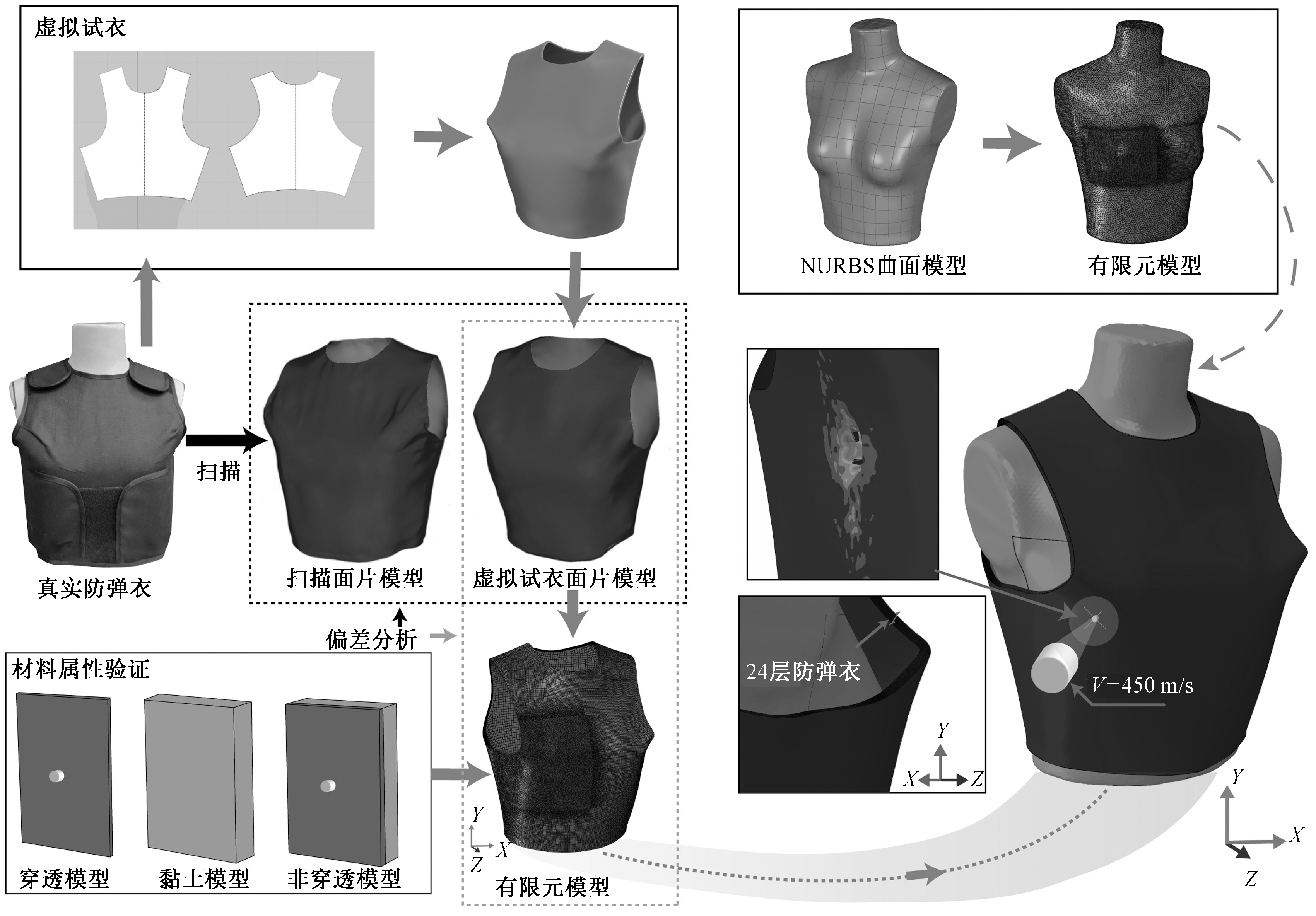
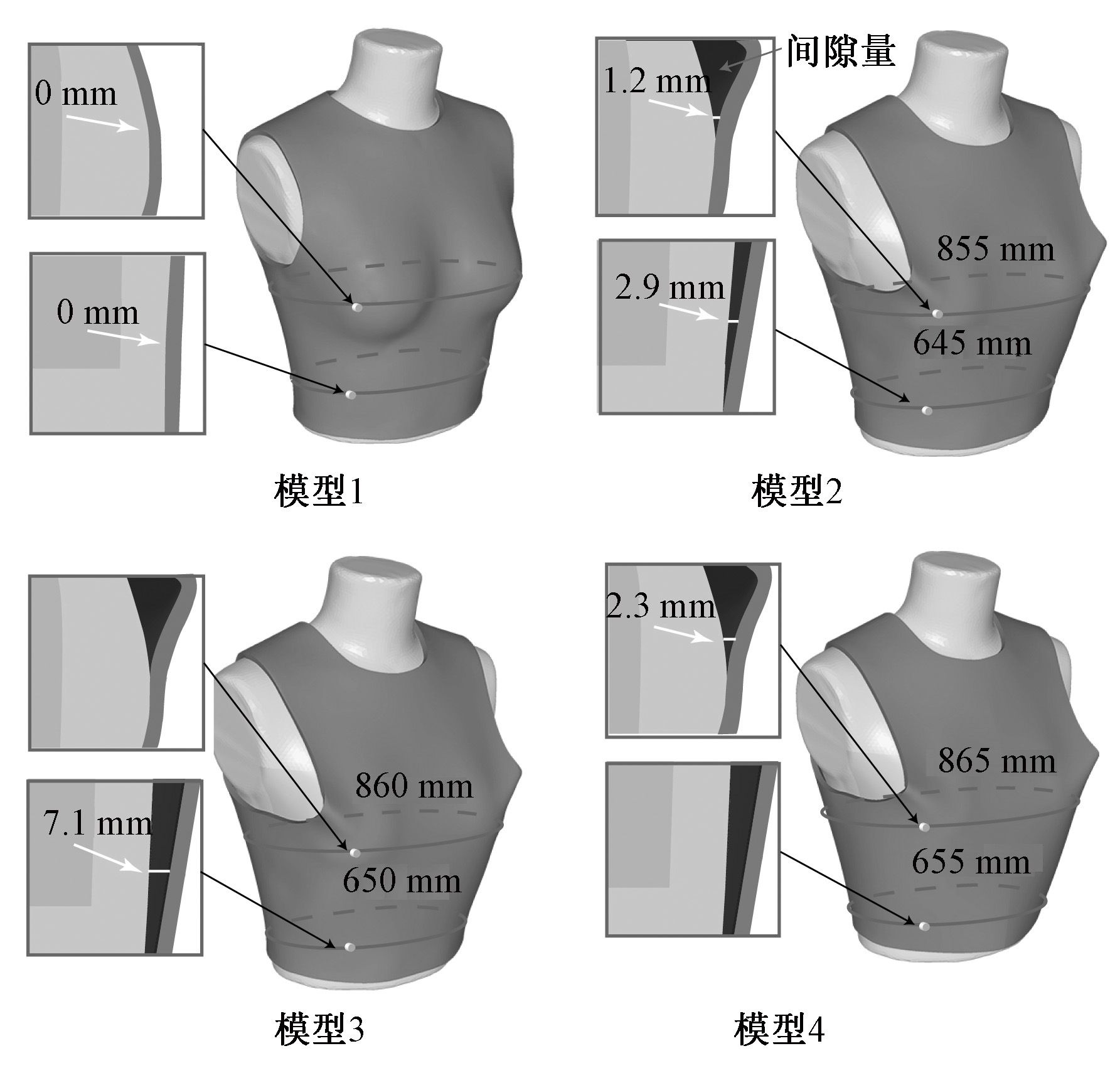
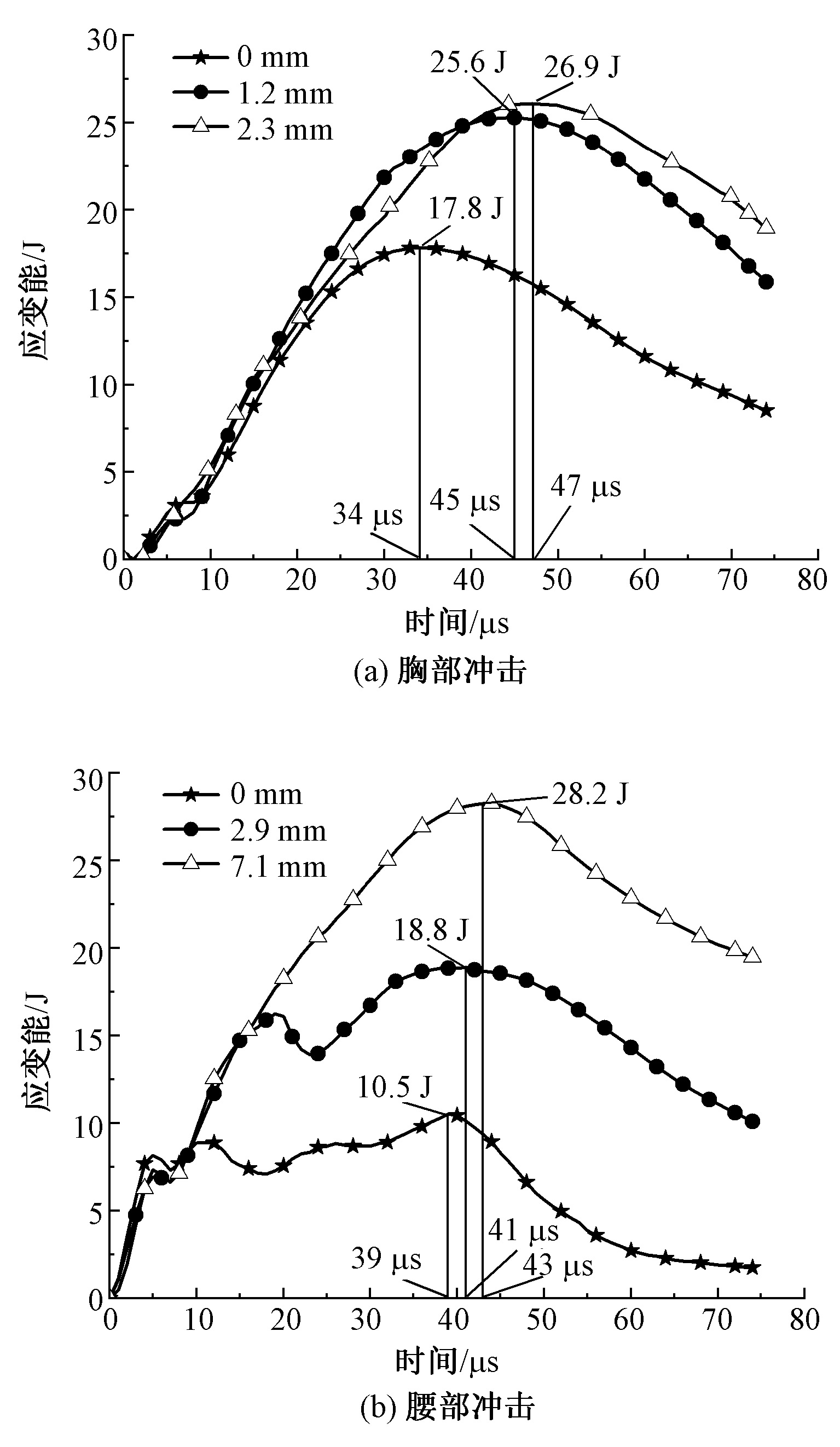
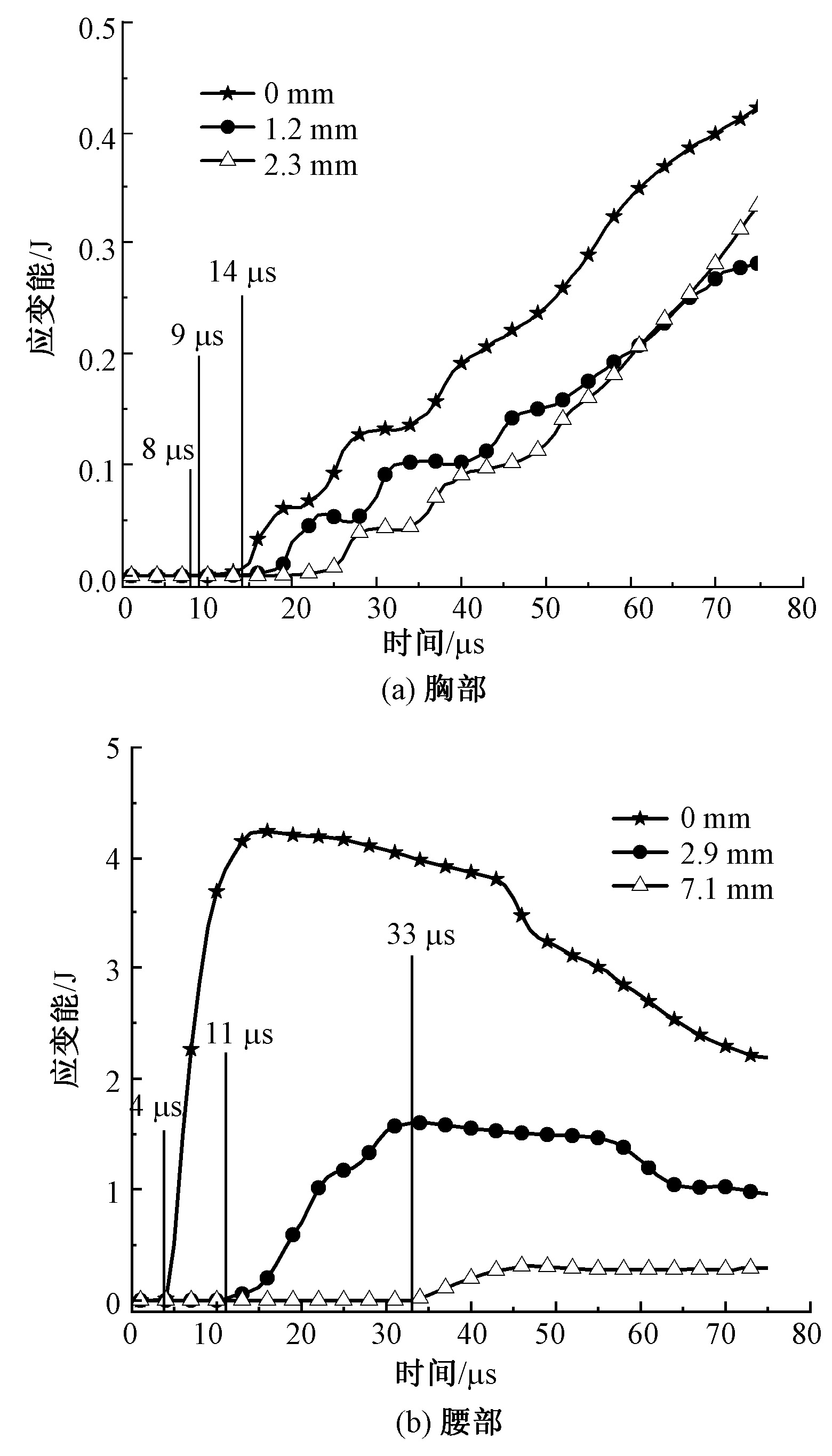
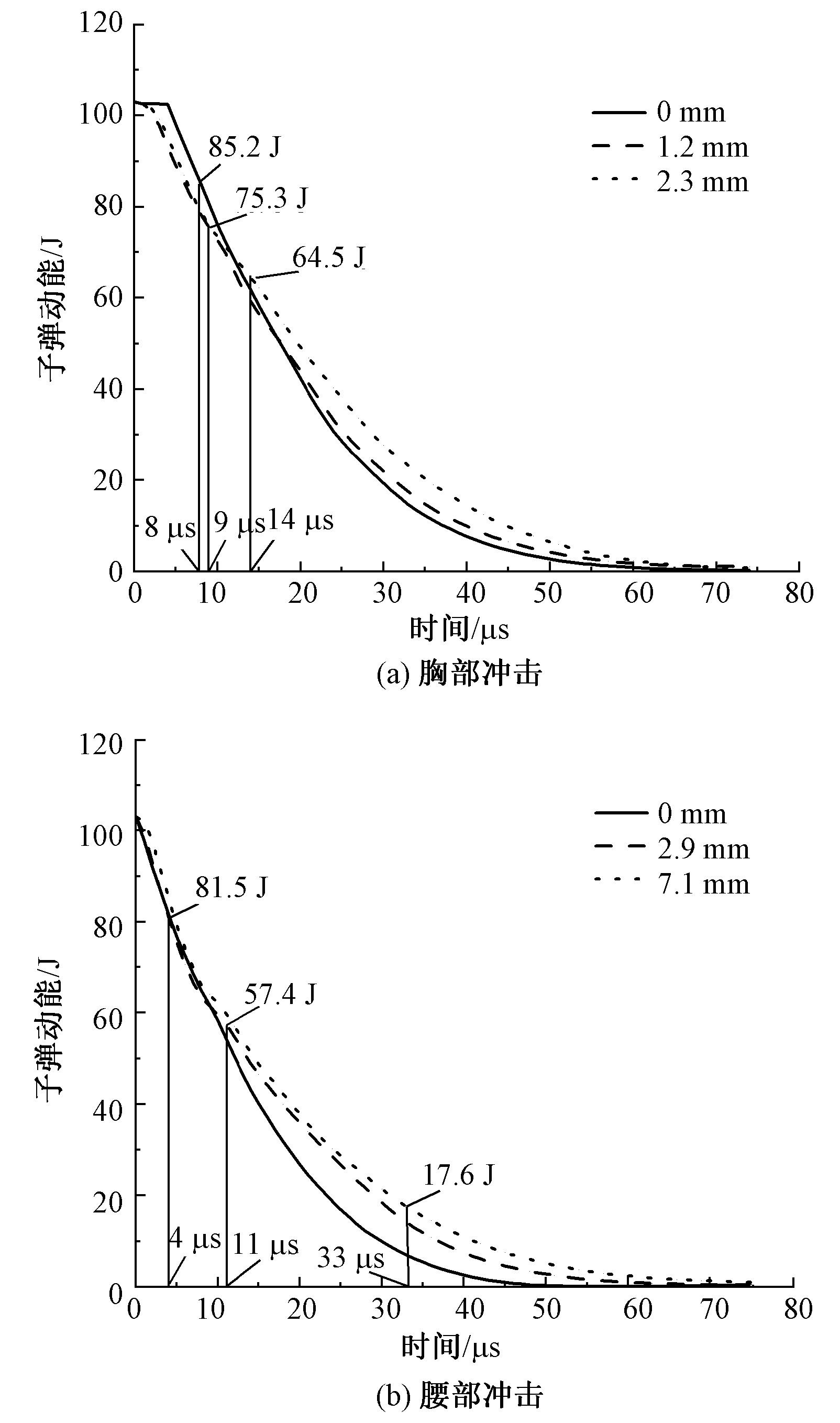
摘要: 为研究防弹衣间隙量对防护性能的影响,建立了不同尺码防弹衣的冲击有限元模型,分析了不同间隙量对防弹衣能量吸收和人体形变的作用机制;通过虚拟试衣和逆向工程软件建立防弹衣几何模型,调整胸围和腰围参数,构建4款不同尺码的防弹衣有限元模型,在胸部和腰部进行冲击模拟。结果表明:胸部冲击处当间隙量从0 mm增加到2.3 mm时,人体形变宽度和深度减少了1.27倍和1.25倍,防弹衣吸收应变能最大值提高1.51倍,人体受冲击响应时间延长6 μs;腰部冲击处间隙量从0 mm增加到7.1 mm时,人体形变宽度和深度减少了2.06倍和3.14倍,防弹衣应变能吸收最大值提高2.69倍,人体响应时间延长29 μs;适当增加间隙量能够显著提升防弹衣的防护性能。
中图分类号:
| [1] | GILSON L, RABET L, IMAD A, et al. Experimental and numerical assessment of non-penetrating impacts on a composite protection and ballistic gelatine[J]. International Journal of Impact Engineering, 2020. DOI: 10.1016/j.ijimpeng.2019.103417. |
| [2] | CRONIN D S, BUSTAMANTE M C, BARKER J, et al. Assessment of thorax finite element model response for behind armor blunt trauma impact loading using an epidemiological database[J]. Journal of Biomechanical Engineering, 2021.DOI: 10.1115/1.4048644. |
| [3] | 陈洁如, 邱诗苑, 杨青青, 等. 基于可调张力装置的芳纶织物交织阻力研究[J]. 纺织学报, 2021, 42(1):67-72. |
| CHEN Jieru, QIU Shiyuan, YANG Qingqing, et al. Research on inter-yarn friction of aramid fabric based on adjustable tension device[J]. Journal of Textile Research, 2021, 42(1):67-72. | |
| [4] | WANG X, ZHANG J, BAO L, et al. Enhancement of the ballistic performance of aramid fabric with polyurethane and shear thickening fluid[J]. Materials & Design, 2020. DOI:10.1016/j.matdes.2020.109015. |
| [5] | BAJYA M, MAJUMDAR A, BUTOLA B S, et al. Design strategy for optimising weight and ballistic performance of soft body armour reinforced with shear thickening fluid[J]. Composites Part B: Engineering, 2020. DOI:10.1016/j.compositesb.2019.107721. |
| [6] | TANG F, DONG C, YANG Z, et al. Protective performance and dynamic behavior of composite body armor with shear stiffening gel as buffer material under ballistic impact[J]. Composites Science and Technology, 2022.DOI:10.1016/j.compscitech.2021.109190. |
| [7] | CHOUDHURY S, YERRANALLI C S, GUHA A., et al. Prediction and mitigation of behind armor blunt trauma in composite plate armor using rubber backing or air gaps[J]. European Journal of Mechanics - A/Solids, 2022. DOI:10.1016/j.euromechsol.2022.104533. |
| [8] | 余玉坤, 孙玥, 侯珏, 等. 单层服装间隙量的动态有限元模型构建与仿真[J]. 纺织学报, 2022, 43(4): 124-132. |
| YU Yukun, SUN Yue, HOU Jue, et al. Construction and simulation of dynamic finite element model of single-layer clothing gap[J]. Journal of Textile Research, 2022, 43(4): 124-132. | |
| [9] | TILSLEY L, CARR D J, LANKESTER C, et al. Do air-gaps behind soft body armour affect protec-tion?[J]. Journal of the Royal Army Medical Corps, 2018, 164(1): 15-18. |
| [10] | COLTMAN CELESTE E, BRISBINE BROOKE R, MOLLOW RICHARD H, et al. Identifying problems that female soldiers experience with current-issue body armour[J]. Applied Ergonomics, 2021. DOI:10.1016/j.apergo.2021.103384. |
| [11] | SHEN W, NIU Y, BYKANOVA L, et al. Characterizing the interaction among bullet, body armor, and human and surrogate targets[J]. Journal of Biomechanical Engineering, 2010.DOI:10.1115/1.4002699. |
| [12] | 马王菲, 胡裕鹏, 袁子舜, 等. 层后空间对防弹织物防护性能的影响[J]. 纺织高校基础科学学报, 2023, 36(5):1-8. |
| MA Wangfei, HU Yupeng, YUAN Zishun, et al. Influence of the space behind the layer on the protective performance of bulletproof fabrics[J]. Journal of Basic Science of Textile Universities, 2023, 36(5):1-8. | |
| [13] | COLTMAN C E, BRISBINE B R, STEELE J R. Bra-body armour integration, breast discomfort and breast injury associated with wearing body armour[J]. Ergonomics, 2021, 64(12): 1623-1633. |
| [14] | YANG Y, CHEN X. Investigation on energy absorption efficiency of each layer in ballistic armour panel for applications in hybrid design[J]. Composite Structures, 2017, 164: 1-9. |
| [15] | YANG Y, CHEN X. Investigation of energy absorption mechanisms in a soft armor panel under ballistic impact[J]. Textile Research Journal, 2017, 87(20): 2475-2486. |
| [16] |
SUN Y, CHEN L, YICK K, et al. Optimization method for the determination of Mooney-Rivlin material coefficients of the human breasts in-vivo using static and dynamic finite element models[J]. Journal of the Mechanical Behavior of Biomedical Materials, 2019, 90: 615-625.
doi: S1751-6161(18)30500-9 pmid: 30500699 |
| [17] | 胡裕鹏, 孙玥, 顾冰菲, 等. 人体穿着防弹服的有限元模型构建与仿真[J]. 纺织高校基础科学学报, 2023, 36(2):64-70. |
| HU Yupeng, SUN Yue, GU Bingfei, et al. Finite element model construction and simulation of human body wearing bulletproof clothing[J]. Journal of Basic Science of Textile Universities, 2023, 36(2):64-70. | |
| [18] | SAMANI A, PLEWES D. A method to measure the hyperelastic parameters of ex vivo breast tissue samples[J]. Physics in Medicine and Biology, 2004, 49(18): 4395-4405. |
| [19] | LI Z, XIANG H Y, LI Z Q, et al. The research of reverse engineering based on geomagic studio[J]. Applied Mechanics and Materials, 2013, 365: 133-136. |
| [20] | HUANG S, HUANG L. CLO3D-based 3D virtual fitting technology of down jacket and simulation research on dynamic effect of cloth[J]. Wireless Communications and Mobile Computing, 2022, 2022: 1-11. |
| [21] | SUN Y, YICK K, CAI Y, et al. Finite element analysis on contact pressure and 3D Breast deformation for application in women's bras[J]. Fibers and Polymers, 2021, 22(10): 2910-2921. |
| [22] | 徐继红. 服装廓体松量与面料力学性能相关性及其预测模型的研究[D]. 上海: 东华大学,2008:13-16. |
| XU Jihong. Research on the correlation between garment silhouette looseness and fabric mechanical properties and its prediction model[D]. Shanghai: Donghua University, 2008:13-16. | |
| [23] | LI Jun, ZHANG Zhaohua. The relationship between air gap sizes and clothing heat transfer performance[J]. Journal of The Textile Institute, 2013, 104(12): 1327-1336. |
| [24] | 何琴. 人体着装胸腰截面间隙量分布特征及其影响因素分析[D]. 杭州: 浙江理工大学,2019:15-18. |
| HE Qin. Analysis of distribution characteristics and influencing factors of gaps in thoracolumbar section of human body clothing[D]. Hangzhou: Zhejiang Science and Technology University, 2019: 15-18. | |
| [25] | YANG Y. Study on ballistic performance of hybrid soft body armour[D]. Manchester: University of Manchester, 2016:27-31. |
| [26] | UGURAL A C, FENSTER S K. Advanced strength and applied elasticity[M]. 4th ed. New Jersey: New Jersey Institute of Technology, 2003:71-93. |
| [1] | 钱江瑞, 刘文武, 李俊, 方以群, 徐佳骏. 防爆服装冲击防护性能测评技术研究进展[J]. 纺织学报, 2025, 46(01): 238-247. |
| [2] | 吕汉明, 梁金辉, 马崇启, 端木德庆. 热风黏合烘箱有限元仿真分析与结构优化[J]. 纺织学报, 2024, 45(10): 216-223. |
| [3] | 侯珏, 丁焕, 杨阳, 陆寅雯, 余灵婕, 刘正. 基于混合知识蒸馏和特征增强技术的轻量级无解析式虚拟试衣网络[J]. 纺织学报, 2024, 45(09): 164-174. |
| [4] | 岳旭, 王蕾, 孙丰鑫, 潘如如, 高卫东. 基于ABAQUS的平纹织物同面对向弯曲有限元模拟[J]. 纺织学报, 2024, 45(08): 165-172. |
| [5] | 陆寅雯, 侯珏, 杨阳, 顾冰菲, 张宏伟, 刘正. 基于姿态嵌入机制和多尺度注意力的单张着装图像视频合成[J]. 纺织学报, 2024, 45(07): 165-172. |
| [6] | 杨光, 杨小兵, 栗丽, 姚之凤, 周川, 张明明. 新修定的化学防护服国家标准解析[J]. 纺织学报, 2024, 45(03): 163-168. |
| [7] | 冯清国, 巫鳌飞, 任家智, 陈宇恒. 棉纺精梳机分离罗拉连杆驱动机构动力学仿真及有限元分析[J]. 纺织学报, 2023, 44(09): 197-204. |
| [8] | 袁甜甜, 王鑫, 罗炜豪, 梅琛楠, 韦京艳, 钟跃崎. 基于注意力机制和视觉转换器的三维虚拟试衣网络[J]. 纺织学报, 2023, 44(07): 192-198. |
| [9] | 叶勤文, 王朝晖, 黄荣, 刘欢欢, 万思邦. 虚拟服装迁移在个性化服装定制中的应用[J]. 纺织学报, 2023, 44(06): 183-190. |
| [10] | 陈萌, 何瑞东, 程怡昕, 李纪伟, 宁新, 王娜. 磁控溅射银/锌改性聚苯乙烯/聚偏氟乙烯复合纤维膜的制备及其性能[J]. 纺织学报, 2023, 44(03): 19-27. |
| [11] | 鲁虹, 宋佳怡, 李圆圆, 滕峻峰. 基于合体两片袖的内旋造型结构设计[J]. 纺织学报, 2022, 43(08): 140-146. |
| [12] | 栗辰飞, 刘元军, 赵晓明. 生化防护服的研究进展[J]. 纺织学报, 2022, 43(07): 207-216. |
| [13] | 朱晓荣, 何佳臻, 王敏. 相变材料在热防护服上的应用研究进展[J]. 纺织学报, 2022, 43(04): 194-202. |
| [14] | 余玉坤, 孙玥, 侯珏, 刘正, 易洁伦. 单层服装间隙量的动态有限元模型构建与仿真[J]. 纺织学报, 2022, 43(04): 124-132. |
| [15] | 王春茹, 袁月, 曹晓梦, 范依琳, 钟安华. 立领结构参数对服装造型的影响[J]. 纺织学报, 2022, 43(03): 153-159. |
|
||
 京公网安备11010502044800号