纺织学报 ›› 2025, Vol. 46 ›› Issue (08): 173-182.doi: 10.13475/j.fzxb.20250201801
沈忱思, 王欣悦, 李方( )
)
SHEN Chensi, WANG Xinyue, LI Fang()
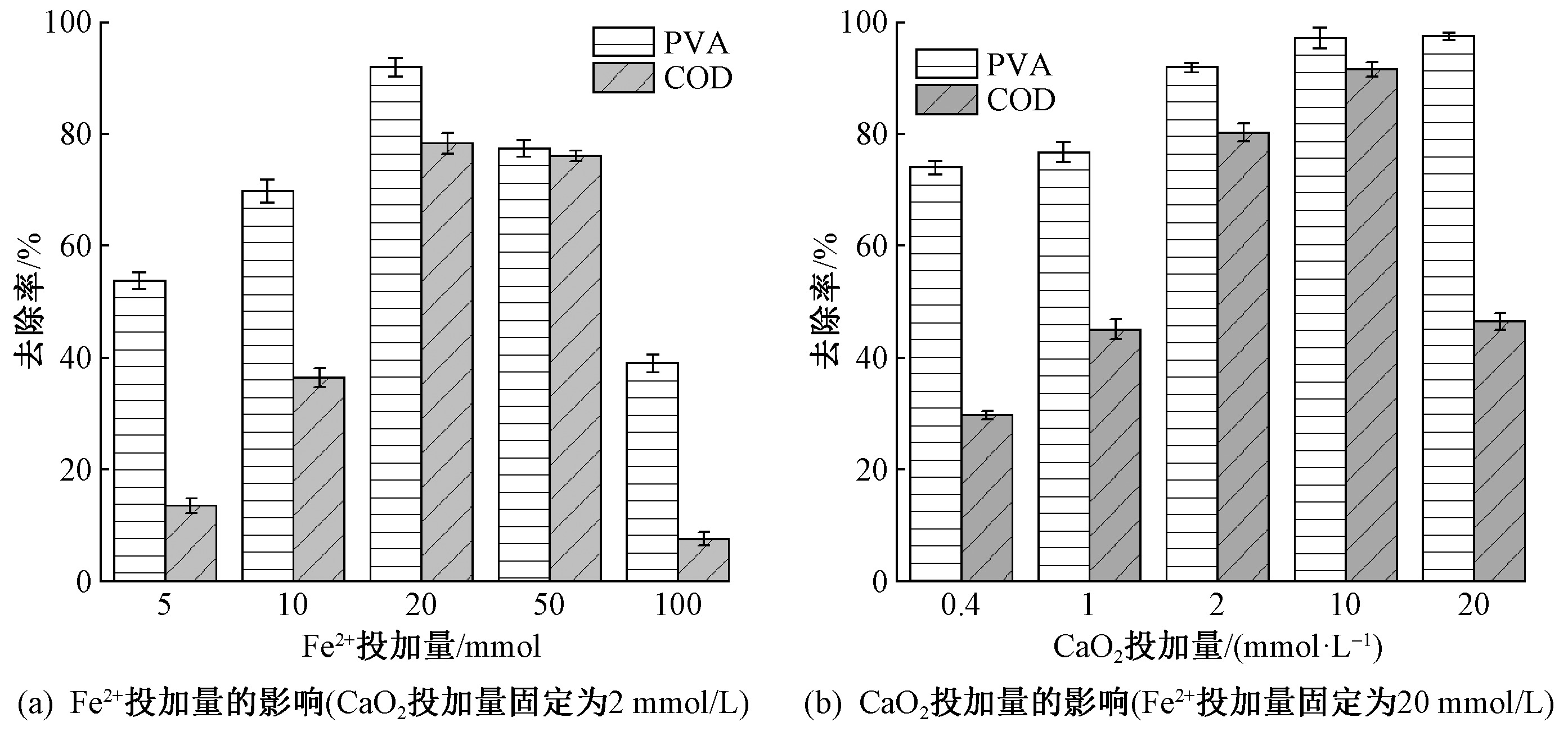
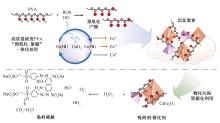
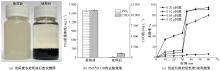
摘要: 聚乙烯醇(PVA)的高聚合度、电中性和强分子内/间氢键,导致其难降解也难脱稳沉淀。为此,提出一种基于Fe2+/CaO2体系的一体化“预氧化-絮凝沉淀”处理技术,利用CaO2水解释放H2O2,在Fe2+催化下生成氧化活性物种,强化PVA的可絮凝性并通过生成的Fe3+和Ca2+实现高效絮凝沉淀。通过药剂Fe与Ca的量比、反应pH值及处理时间等关键影响因素的调控,结合X射线光电子能谱、扫描电子显微镜等表征技术手段,对Fe2+/CaO2体系处理含PVA退浆废水的效能、机制以及污泥资源化潜力进行研究。结果表明:Fe2+投加量为20 mmol/L、CaO2投加量为2 mmol/L时,对于PVA质量浓度为0.5 ~ 2 g/L的退浆废水,其PVA和COD去除率分别可达97.1%和92.2%以上,且对含有改性淀粉等其它高聚物的实际退浆废水COD去除率也可达90%以上;处理过程中产生的污泥富含铁有机络合物及铁氧体,具有良好的吸附和催化性能,投加氧化剂30 min内对10 mg/L活性黑5模拟废水的去除率可达94.29%。
中图分类号:
| [1] | WANG D B, ZHENG Y Y, DENG Q, et al. Water-soluble synthetic polymers: Their environmental emission relevant usage, transport and transformation, persistence, and toxicity[J]. Environmental Science & Technology, 2023, 57(16): 6387-6402. |
| [2] | WANG Z, SAADÉ N K, ARIYA P A. Advances in ultra-trace analytical capability for micro/nanoplastics and water-soluble polymers in the environment: Fresh falling urban snow[J]. Environmental Pollution, 2021. DOI:10.1016/j.envpol.2021.116698. |
| [3] | JULINOVÁ M, VANHAROVA L, JURCA M. Water-soluble polymeric xenobiotics-polyvinyl alcohol and polyvinyl pyrrolidon-and potential solutions to environmental issues: a brief review[J]. Journal of Environmental Management, 2018, 228: 213-222. |
| [4] | CHEN L H, REDDY N, YANG Y Q. Remediation of environmental pollution by substituting poly(vinyl alcohol) with biodegradable warp size from wheat gluten[J]. Environmental Science & Technology, 2013, 47(9): 4505-4511. |
| [5] | ANDREANI T, NOGUEIRA V, PINTO V V, et al. Influence of the stabilizers on the toxicity of metallic nanomaterials in aquatic organisms and human cell lines[J]. Science of the Total Environment, 2017, 607: 1264-1277. |
| [6] | HUPPERTSBERG S, ZAHN D, PAUELSEN F, et al. Making waves: water-soluble polymers in the aquatic environment: an overlooked class of synthetic poly-mers?[J]. Water Research, 2020. DOI:10.1016/j.watres.2020.115931. |
| [7] | WEI Y H, FU J, WU J Y, et al. Bioinformatics analysis and characterization of highly efficient polyvinyl alcohol (PVA)-degrading enzymes from the novel PVA degrader stenotrophomonas rhizophila QL-P 4 [J]. Applied and Environmental Microbiology, 2018. DOI:10.1128/AEM.01898-17. |
| [8] | 潘玉婷, 李方, 沈忱思, 等. 退浆废水中聚乙烯醇的膜蒸馏-超滤二级膜浓缩[J]. 纺织学报, 2018, 39(11): 96-102. |
| PAN Yuting, LI Fang, SHEN Chensi, et al. Two-stage membrane concentration of poly(vinyl alcohol) in desizing wastewater by membrane distillation and ultrafiltration[J]. Journal of Textile Research, 2018, 39(11): 96-102. | |
| [9] |
沈忱思, 王曼, 徐晨烨, 等. 退浆废水中自由基引发的聚乙烯醇交联沉淀研究[J]. 纺织学报, 2021, 42(11): 117-123.
doi: 10.13475/j.fzxb.20201204207 |
|
SHEN Chensi, WANG Man, XU Chenye, et al. Radical-induced crosslinking of poly(vinyl alcohol) from desizing wastewater[J]. Journal of Textile Research, 2021, 42(11): 117-123.
doi: 10.13475/j.fzxb.20201204207 |
|
| [10] | SONG Q, CHEN X G, TANG L J, et al. Treatment of polyvinyl alcohol containing wastewater in two stage spiral symmetrical stream anaerobic bioreactors coupled a sequencing batch reactor[J]. Bioresource Technology, 2021. DOI:10.1016/j.biortech.2021.125702. |
| [11] | LI F, MA H J, SHEN C S, et al. From the accelerated production of ·OH radicals to the crosslinking of polyvinyl alcohol: the role of free radicals initiated by persulfates[J]. Applied Catalysis B: Environmental, 2021. DOI:10.1016/j.apcatb.2020.119763. |
| [12] | PAN Y T, LIU Y B, WU D L, et al. Application of Fenton pre-oxidation, Ca-induced coagulation, and sludge reclamation for enhanced treatment of ultra-high concentration poly(vinyl alcohol) wastewater[J]. Journal of Hazardous Materials, 2020. DOI:10.1016/j.jhazmat.2019.121866. |
| [13] |
庞悦, 楼洪海, 郜睿, 等. 芬顿氧化深度处理实际印染废水研究[J]. 水处理技术, 2023, 49(5): 40-44.
doi: 10.16796/j.cnki.1000-3770.2023.05.008 |
|
PANG Yue, LOU Honghai, GAO Rui, et al. Study on advanced treatment of dyeing wastewater by Fenton oxidation[J]. Technology of Water Treatment, 2023, 49(5): 40-44.
doi: 10.16796/j.cnki.1000-3770.2023.05.008 |
|
| [14] | CHEN M Q, CHEN Z H, WU P X, et al. Simultaneous oxidation and removal of arsenite by Fe(III)/CaO2 Fenton-like technology [J]. Water Research, 2021. DOI:10.1016/j.watres.2021.117312. |
| [15] | XUE Y, LU S, FU X, et al. Simultaneous removal of benzene, toluene, ethylbenzene and xylene (BTEX) by CaO2 based Fenton system: enhanced degradation by chelating agents[J]. Chemical Engineering Journal, 2018, 331: 255-264. |
| [16] | XUE Y F, SUI Q, BRUSSEAU M L, et al. Insight into CaO2-based Fenton and Fenton-like systems: strategy for CaO2-based oxidation of organic contaminants[J]. Chemical Engineering Journal, 2019, 361: 919-928. |
| [17] | PAN Y, SU H, ZHU Y, et al. CaO2based Fenton-like reaction at neutral pH: accelerated reduction of ferric species and production of superoxide radicals[J]. Water Research, 2018, 145: 731-740. |
| [18] |
ZHANG X, GU X, LU S, et al. Degradation of trichloroethylene in aqueous solution by calcium peroxide activated with ferrous ion[J]. Journal of Hazardous Materials, 2015, 284: 253-260.
doi: 10.1016/j.jhazmat.2014.11.030 pmid: 25463240 |
| [19] | 顾润南, 林苗. 退浆废水中聚乙烯醇(PVA)含量的测定[J]. 东华大学学报(自然科学版), 2005, 31(2): 106-109. |
| GU Runnan, LIN Miao. Determination of PVA content in desizing wastewater[J]. Journal of Donghua University (Natural Science), 2005, 31(2): 106-109. | |
| [20] | 王继鹏, 任永芳. 基于重铬酸钾快速检测法的废水中COD测定探究[J]. 化工管理, 2017 (24): 140-141. |
| WANG Jipeng, REN Yongfang. Determination of COD in wastewater based on potassium dichromate rapid detection method[J]. Chemical Management, 2017(24): 140-141. | |
| [21] | CHEN M, CHEN Z, WU P, et al. Simultaneous oxidation and removal of arsenite by Fe(III)/CaO2 Fenton-like technology [J]. Water Research, 2021. DOI:10.1016/j.watres.2021.117312. |
| [22] | PIGNATELLO J J, OLIVEROS E, MACKAY A. Advanced oxidation processes for organic contaminant destruction based on the Fenton reaction and related chemistry[J]. Critical Reviews in Environmental Science and Technology, 2006, 36(1): 1-84. |
| [23] | BARB W G, BAXENDALE J H, GEORGE P, et al. Reactions of ferrous and ferric lons with hydrogen peroxide.[J]. Nature, 1949, 163(4148): 692-694. |
| [24] | BUXTON G V, GREENSTOCK C L, HELMAN W P, et al. Critical review of rate constants for reactions of hydrated electrons, hydrogen atoms and hydroxyl radicals (·OH/·O-) in aqueous solution[J]. Journal of Physical and Chemical Reference Data, 1988, 17(2): 513-886. |
| [25] | SAWYER D T, VALENTINE J S. How super is superoxide?[J]. Accounts of Chemical Research, 1981, 14(12): 393-400. |
| [26] | DE LAAT J, GALLARD H. Catalytic decomposition of hydrogen peroxide by Fe(III) in homogeneous aqueous solution: mechanism and kinetic modeling[J]. Environmental Science & Technology, 1999, 33(16): 2726-2732. |
| [27] | NARDELLO V. Identification of the precursor of singlet oxygen (1O2, 1Δg) involved in the disproportionation of hydrogen peroxide catalyzed by calcium hydroxide[J]. Chemical Communications, 1998(5): 599-600. |
| [28] | 刘静, 王杰, 孙金诚, 等. Fenton及改进Fenton氧化处理难降解有机废水的研究进展[J]. 水处理技术, 2015, 41(2): 6-10. |
| LIU Jing, WANG Jie, SUN Jincheng, et al. Research advances in Fonton and improvements of the Fenton oxidation process for organic wastewater treatment[J]. Technology of Water Treatment, 2015, 41(2): 6-10. | |
| [29] | STOYANOV P, AKHTER S, WHITE J M. XPS study of metal/polymer interaction: Evaporated aluminum on polyvinyl alcohol polymer[J]. Surface and Interface Analysis, 1990, 15(9): 509-515. |
| [30] | STEVIE F A, DONLEY C L. Introduction to X-ray photoelectron spectroscopy[J]. Journal of Vacuum Science & Technology A, 2020. DOI:10.1116/6.0000412. |
| [31] | 平郑骅, 叶匀分, 丁雅娣, 等. 傅里叶红外光谱法研究高分子共混物的相容性[J]. 复旦学报(自然科学版), 1997, 36(4): 439-444. |
| PING Zhenghua, YE Yunfen, DING Yadi, et al. Investigation of polymer blends compatibility by FTIR[J]. Journal of Fudan University (Natural Science), 1997, 36(4): 439-444. | |
| [32] | 黄显南, 杨崎峰, 骆莲新, 等. 膨化处理胶粘物的红外光谱分析[J]. 中国造纸学报, 2005, 20(2): 106-108. |
| HUANG Xiannan, YANG Qifeng, LUO Lianxin, et al. The IR spectrum analysis of stickies treated by explo-sion[J]. Transactions of China Pulp and Paper, 2005, 20(2): 106-108. | |
| [33] | 兰明. 含PVA的退浆废水处理工艺研究[D]. 广州: 华南理工大学, 2016: 5. |
| LAN Ming. Study on treatment technology of desizing wastewater containing PVA[D]. Guangzhou: South China University of Technology, 2016: 5. | |
| [34] | SUDHAMANI S R, PRASAD M S, UDAYA SANKAR K. DSC and FTIR studies on gellan and polyvinyl alcohol (PVA) blend films[J]. Food Hydrocolloids, 2003, 17(3): 245-250. |
| [35] | FLEMING I, WILLIAMS D. Infrared and raman spec-tra[M]. Cham: Springer International Publishing, 2019: 85-121. |
| [1] | 梁锋, 方沿, 张伟华, 唐余玲, 李双洋, 周建飞, 石碧. 基于金属-多酚网络的胶原蛋白基纤维制备及其力学性能[J]. 纺织学报, 2025, 46(08): 10-17. |
| [2] | 陈亚娟, 郭瀚宇, 张陈恬, 李欣欣, 张雪萍. 聚乙烯醇/海藻酸钠/锦纶66复合水凝胶包芯纱的制备及其吸湿性能[J]. 纺织学报, 2025, 46(06): 103-110. |
| [3] | 王春翔, 李姣, 解开放, 薛宏坤, 徐广标. 天麻多糖/聚乙烯醇静电纺抗菌保鲜膜的制备与性能[J]. 纺织学报, 2025, 46(06): 73-79. |
| [4] | 杨鑫, 张昕, 潘志娟. 丝素纳米原纤增强再生丝素蛋白/聚乙烯醇纤维的结构与性能[J]. 纺织学报, 2024, 45(11): 1-9. |
| [5] | 王文, 张乐乐, 黄阳杰, 谭浩, 方舒婷, 向晨雪, 王栋. 聚乙烯醇-乙烯/SiO2复合柔性驱动膜的制备及其性能[J]. 纺织学报, 2024, 45(07): 10-17. |
| [6] | 杨美慧, 李博, 沈艳琴, 武海良. 再生角蛋白凝胶对纺织退浆废水中浆料分子的吸附性能[J]. 纺织学报, 2024, 45(02): 142-152. |
| [7] | 姚双双, 付少举, 张佩华, 孙秀丽. 再生丝素蛋白/聚乙烯醇共混取向纳米纤维膜的制备与性能[J]. 纺织学报, 2023, 44(09): 11-19. |
| [8] | 施静雅, 王慧佳, 易雨青, 李妮. 聚氨酯/聚乙烯醇缩丁醛复合纳米纤维膜的制备及其过滤性能[J]. 纺织学报, 2023, 44(08): 26-33. |
| [9] | 范洋瑞, 钱建华, 徐凯杨, 王澳, 陶正龙. 基于氯化聚氯乙烯/聚乙烯醇缩丁醛共混膜的界面聚合改性[J]. 纺织学报, 2023, 44(07): 33-41. |
| [10] | 狄友波, 陈燮阳, 阎智锋, 殷轩, 邱纯利, 马伟良, 张向兵. 壳聚糖-聚乙烯醇协同对籽用大麻浆粕铁离子的脱除[J]. 纺织学报, 2023, 44(06): 175-182. |
| [11] | 王双华, 王冬, 付少海, 仲鸿天, 董朋. 海岛纤维用增塑改性聚乙烯醇的制备及其性能[J]. 纺织学报, 2023, 44(04): 8-15. |
| [12] | 周泠卉, 曾佩, 鲁瑶, 付少举. 聚乙烯醇纳米纤维膜/罗纹空气层织物复合吸声材料的制备及其性能[J]. 纺织学报, 2023, 44(03): 73-78. |
| [13] | 李方, 潘航, 章耀鹏, 马慧婕, 沈忱思. 印染废水中聚乙烯醇浆料的高效去除及六价铬的协同还原[J]. 纺织学报, 2023, 44(03): 147-157. |
| [14] | 解开放, 罗凤香, 包新军, 周衡书, 徐广标. 高耐磨性复合涂层涤纶通丝的制备及其性能[J]. 纺织学报, 2022, 43(03): 123-131. |
| [15] | 沈忱思, 王曼, 徐晨烨, 王华平, 李方. 退浆废水中自由基引发的聚乙烯醇交联沉淀研究[J]. 纺织学报, 2021, 42(11): 117-123. |
|
||
 京公网安备11010502044800号