纺织学报 ›› 2025, Vol. 46 ›› Issue (11): 196-202.doi: 10.13475/j.fzxb.20250301301
张帆1,2, 蔡再生1( ), 刘慧景2, 陆少锋2, 黄旭明3
ZHANG Fan1,2, CAI Zaisheng1(), LIU Huijing2, LU Shaofeng2, HUANG Xuming3
摘要:
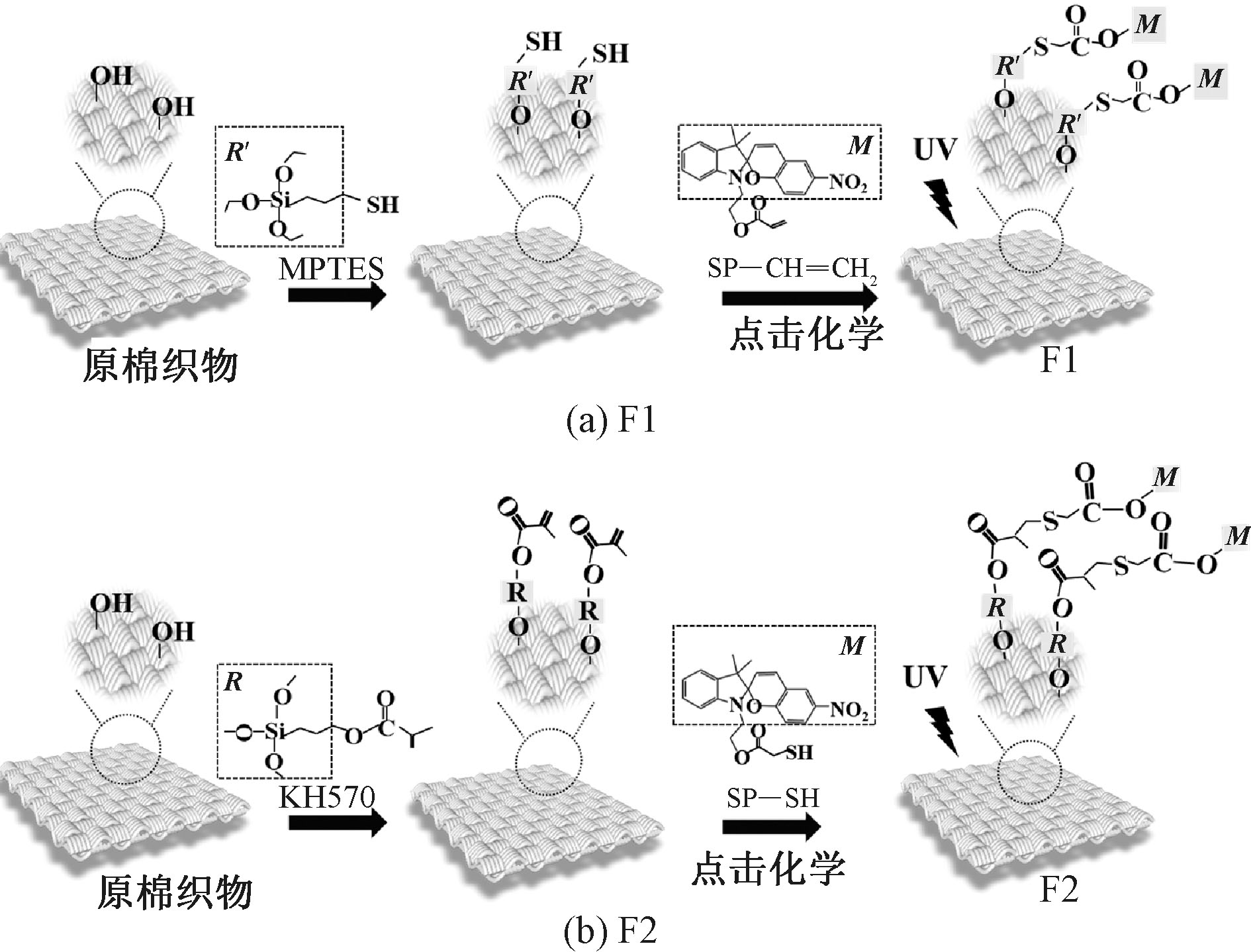
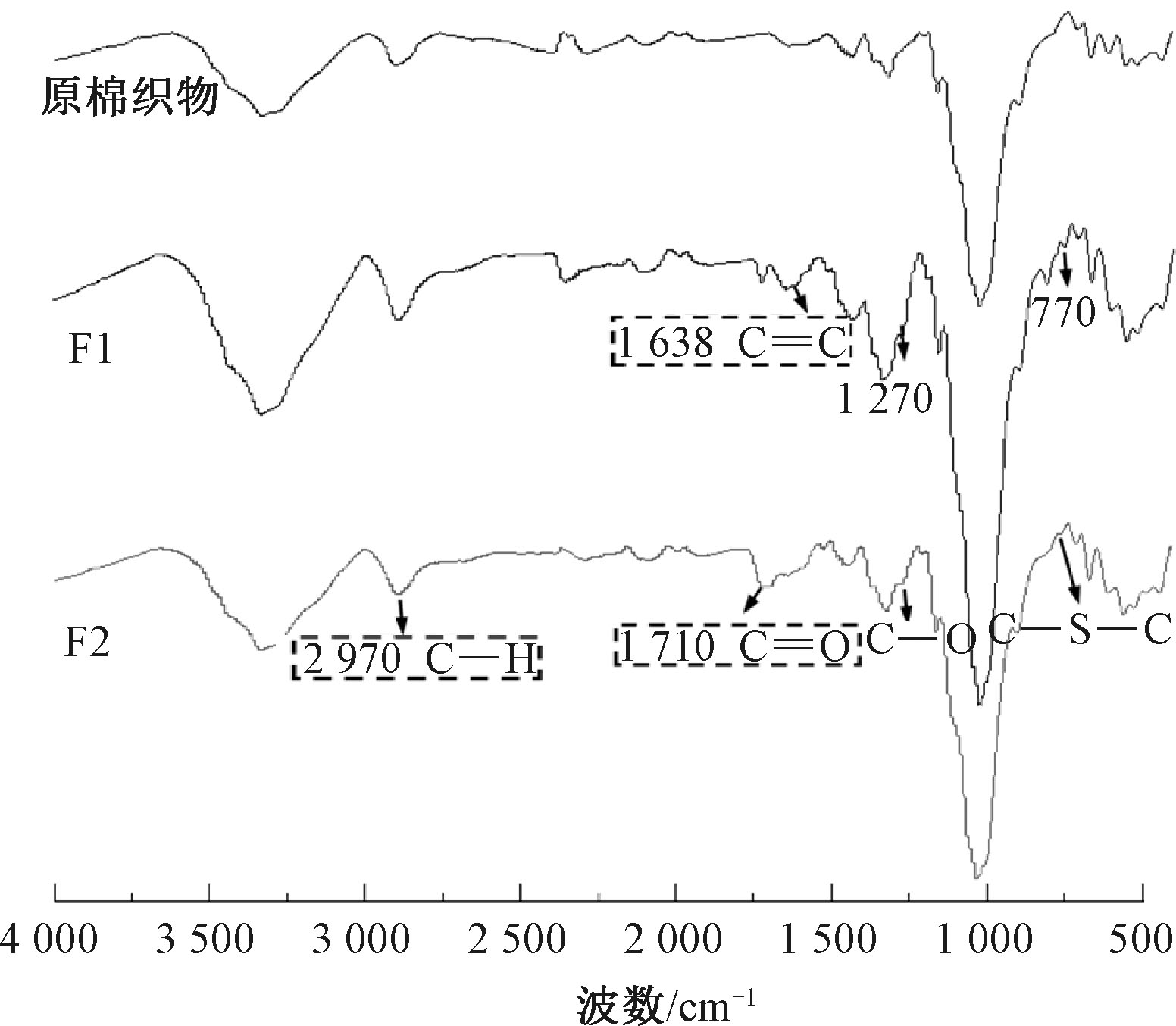
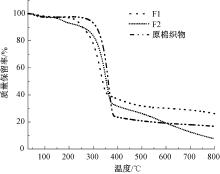
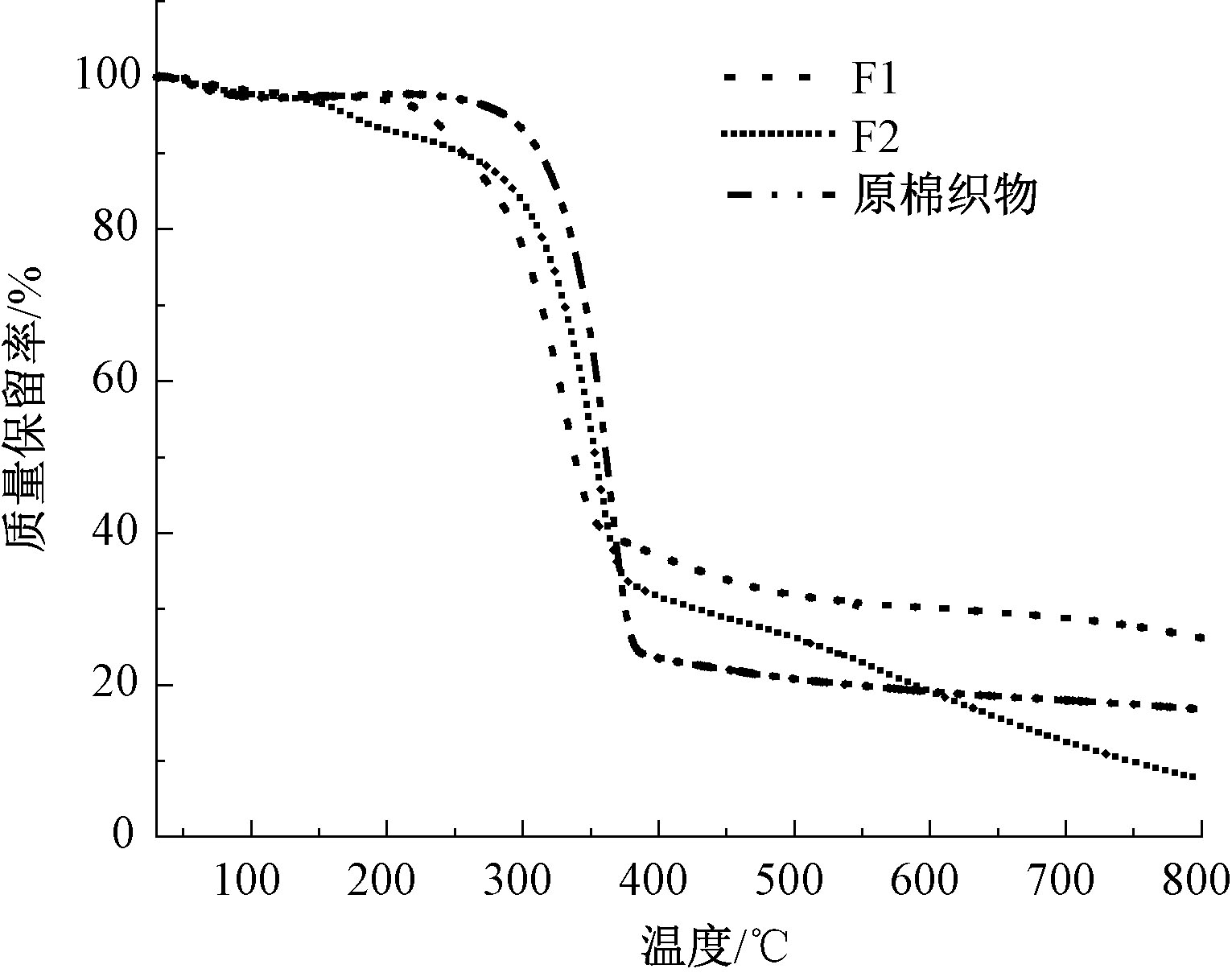
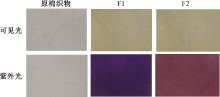
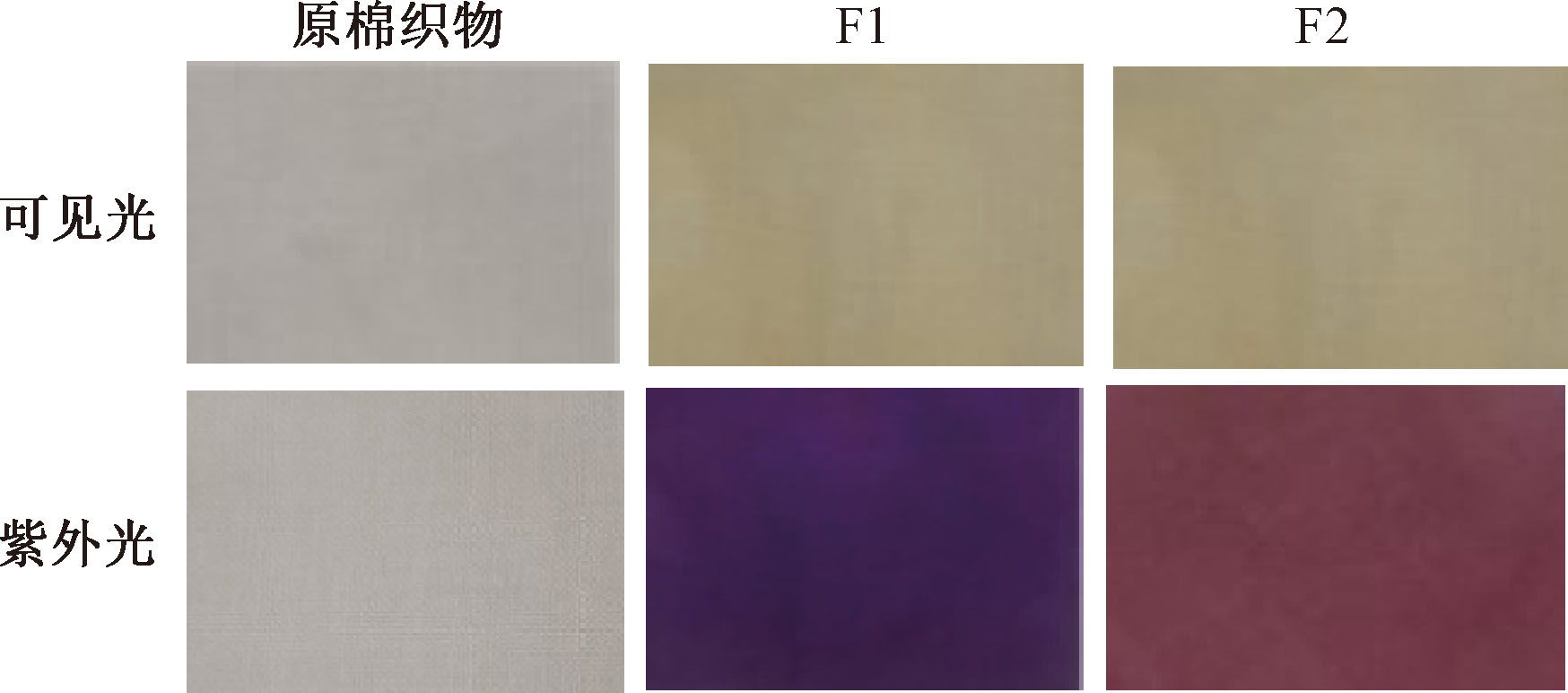
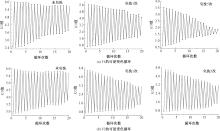
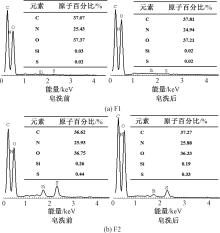
针对螺吡喃化合物难以直接上染织物且牢度低的问题,通过硫醇-烯点击化学法,分别使乙烯基螺吡喃与3-巯丙基三乙氧基硅烷改性棉织物、巯基螺吡喃与[3-(甲基丙烯酰氧基)丙基]三甲氧基硅烷改性棉织物发生化学键合,成功制备出高牢固光致变色棉织物F1、F2。借助扫描电子显微镜能谱分析仪、傅里叶红外光谱仪等表征光致变色棉织物的表面元素含量和化学组成。采用热重分析仪和接触角测量仪表征光致变色棉织物的热稳定性及表面亲疏水性。以外观、颜色参数、可逆变色循环次数评价光致变色棉织物的可逆变色性、耐光疲劳性和耐皂洗性能。结果表明:乙烯基螺吡喃和巯基螺吡喃均能与改性棉织物发生点击化学反应,光致变色棉织物F1上Si、S原子含量分别为0.03%和0.02%;与F1上元素组成分布相比,F2上Si、S原子含量分别提高0.26%和0.44%,皂洗后表面Si、S原子百分比下降较少,证明巯基螺吡喃的接枝率更高;F2能发生20次以上的可逆变色,皂洗1次和5次后其K/S值未发生明显变化,且仍能保持15次以上的可逆变色;此外,巯基螺吡喃接枝后的光致变色棉织物在紫外光照和可见光光照后接触角分别为96.8°和125.8°,呈现疏水性,可赋予织物一定的拒水性能。
中图分类号:
| [1] |
HU J, ZHOU H J, WANG X Y, et al. Preparation of photochromic microcapsules with a diarylethene and polyurethane/chitosan for smart textiles[J]. Dyes and Pigments, 2025, 234: 112546.
doi: 10.1016/j.dyepig.2024.112546 |
| [2] |
LI J, LIU Y C, GU Z X, et al. Scalable, green, flexible photochromic bacterial cellulose for multicolor switching, photo-patterning, and daily sunlight UV monitoring[J]. Small, 2024, 20(30): 2309514.
doi: 10.1002/smll.v20.30 |
| [3] | 鲍艳, 韩旆, 张文博, 等. 螺吡喃类刺激响应变色聚合物的研究进展[J]. 材料导报, 2024, 38(17): 273-281. |
| BAO Yan, HAN Pei, ZHANG Wenbo, et al. Research progress of spiropyrans stimuli-responsive chromotropic polymers[J]. Materials Reports, 2024, 38(17): 273-281. | |
| [4] | 鲁辉, 蔡钦泽, 张国庆, 等. 多元色素光敏变色微胶囊的制备及其在织物中的变色性能[J]. 纺织学报, 2025, 46(1): 111-118. |
| LU Hui, CAI Qinze, ZHANG Guoqing, et al. Preparation of multi-colorant photochromic microcapsules and their photochromic properties in fabrics[J]. Journal of Textile Research, 2025, 46(1): 111-118. | |
| [5] | 杨梦凡, 王潮霞, 殷允杰, 等. 棉织物的螺吡喃微胶囊印花及其光致变色性能[J]. 纺织学报, 2022, 43(9): 137-142. |
| YANG Mengfan, WANG Chaoxia, YIN Yunjie, et al. Printing and photochromic properties of spiropyran microcapsules on cotton fabrics[J]. Journal of Textile Research, 2022, 43(9): 137-142. | |
| [6] |
YI G, SON J, YOO J, et al. Application of click chemistry in nanoparticle modification and its targeted delivery[J]. Biomaterials Research, 2018, 22: 13.
doi: 10.1186/s40824-018-0123-0 pmid: 29686885 |
| [7] | 方进, 张广知, 徐珍珍. 点击化学在功能纺织品制备中的应用研究进展[J]. 纺织学报, 2024, 45(3): 227-235. |
| FANG Jin, ZHANG Guangzhi, XU Zhenzhen. Research progress in applied research on click chemistry for preparation of functional textiles[J]. Journal of Textile Research, 2024, 45(3): 227-235. | |
| [8] | 飞中琳, 黄怡婧, 阮凌峰. 纺织品功能整理中的点击化学[J]. 毛纺科技, 2023, 51(12): 47-51. |
| FEI Zhonglin, HUANG Yijing, RUAN Lingfeng. Click chemistry in functional finishing of textiles[J]. Wool Textile Journal, 2023, 51(12): 47-51. | |
| [9] |
FEI Z L, LIU B J, ZHU M F, et al. Antibacterial finishing of cotton fabrics based on thiol-maleimide click chemistry[J]. Cellulose, 2018, 25(5): 3179-3188.
doi: 10.1007/s10570-018-1771-x |
| [10] | 飞中琳, 王炜, 俞丹. 基于点击化学的羊毛耐久防毡缩抗起毛起球整理[J]. 印染, 2017, 43(19): 1-5, 10. |
| FEI Zhonglin, WANG Wei, YU Dan. Durable antifelting and antipilling finishing of wool fabrics based on click chemistry[J]. Dyeing & Finishing, 2017, 43(19): 1-5, 10. | |
| [11] |
QI Y G, FAN J, CHANG Y Q, et al. Smart photochromic fabric prepared via thiol-ene click chemistry for image information storage applications[J]. Dyes and Pigments, 2021, 193: 109507.
doi: 10.1016/j.dyepig.2021.109507 |
| [12] |
FAN J, WANG W, YU D. Preparation of photochromic silk fabrics based on thiol-halogen click chemistry[J]. IOP Conference Series: Materials Science and Engineering, 2018, 307(1): 012026.
doi: 10.1088/1757-899X/307/1/012026 |
| [13] |
FAN J, BAO B W, WANG Z H, et al. High tri-stimulus response photochromic cotton fabrics based on spiropyran dye by thiol-ene click chemistry[J]. Cellulose, 2020, 27(1): 493-510.
doi: 10.1007/s10570-019-02786-2 |
| [14] |
BAO B W, BAI S A, FAN J, et al. A novel and durable photochromic cotton-based fabric prepared via thiol-ene click chemistry[J]. Dyes and Pigments, 2019, 171: 107778.
doi: 10.1016/j.dyepig.2019.107778 |
| [15] |
韩画宇, 杨文龙, 王甫, 等. 苯并[a]吩恶嗪基功能染料制备及其在改性涤纶织物上的应用[J]. 纺织学报, 2024, 45(10): 128-136.
doi: 10.13475/j.fzxb.20231102501 |
|
HAN Huayu, YANG Wenlong, WANG Fu, et al. Preparation of benzo [a] phenoxazine based functional dyes and their application on modified polyester fabrics[J]. Journal of Textile Research, 2024, 45(10): 128-136.
doi: 10.13475/j.fzxb.20231102501 |
|
| [16] |
XUE C H, GUO X J, ZHANG M M, et al. Fabrication of robust superhydrophobic surfaces by modification of chemically roughened fibers via thiol-ene click chemis-try[J]. Journal of Materials Chemistry A, 2015, 3(43): 21797-21804.
doi: 10.1039/C5TA04802H |
| [17] | 张帆, 毛钺程, 申路阳, 等. 纤维素基光致变色水凝胶制备及织物应用性能[J]. 精细化工, 2025, 42(1): 203-214. |
| ZHANG Fan, MAO Yuecheng, SHEN Luyang, et al. Preparation and fabric application performance of cellulose-based photochromic hydrogels[J]. Fine Chemicals, 2025, 42(1): 203-214. |
| [1] | 龙红霞, 吴伟, 刘娅岚, 徐红, 毛志平. 纤维素纤维孔道吸湿溶胀行为的分子动力学模拟[J]. 纺织学报, 2025, 46(11): 155-163. |
| [2] | 王莎莎, 李超婧, 李彦, 毛吉富, 王富军, 王璐. 智能可穿戴健康纺织品应用研究进展[J]. 纺织学报, 2025, 46(10): 265-273. |
| [3] | 赵捷清, 王瑧, 秦孝天, 王成成, 张丽平. 模拟绿叶颜色变化的温致变色织物制备及其性能[J]. 纺织学报, 2025, 46(09): 19-26. |
| [4] | 傅林, 钱建华, 单江音, 林灵, 卫梦蓉, 翁可欣, 吴晓睿. 银纳米线/聚氨酯纳米纤维膜柔性传感器制备及其性能[J]. 纺织学报, 2025, 46(09): 74-83. |
| [5] | 王子涵, 李勇, 陈晓川, 汪军, 梁凌杰. 废旧棉织物破碎加工过程的建模与仿真[J]. 纺织学报, 2025, 46(07): 136-143. |
| [6] | 刘烨, 王俊胜, 金星. 消防员个人防护装备用智能纺织品研究进展[J]. 纺织学报, 2025, 46(05): 105-115. |
| [7] | 陈枭, 赵继忠, 董凯. 基于接触起电效应的新型机电转化纤维性能提升策略[J]. 纺织学报, 2025, 46(05): 41-48. |
| [8] | 韩力杰, 刘樊, 张其冲. 纤维状水系锌离子电池的研究进展与展望[J]. 纺织学报, 2025, 46(05): 59-69. |
| [9] | 赵强强, 王韩星, 张奉轩, 何瑾馨, 周俊, 周兆昌, 董霞. 聚六亚甲基双胍盐酸盐改性对棉织物耐日晒色牢度的影响[J]. 纺织学报, 2025, 46(04): 109-118. |
| [10] | 黄春月, 黄鑫, 杜海娟, 徐文杰, 杨雪梅, 万科研, 李旭, 高杰. 钼氧簇复合物整理剂制备及其整理棉织物的防紫外线性能[J]. 纺织学报, 2025, 46(04): 138-145. |
| [11] | 廖喜林, 曾媛, 刘淑萍, 李亮, 李淑静, 刘让同. 磷/氮/硅复配协效阻燃棉织物制备及其性能[J]. 纺织学报, 2025, 46(03): 151-157. |
| [12] | 王小艳, 杨书康, 肖国威, 杜金梅, 许长海. 光响应螺噁嗪掺杂长余辉发光纤维的制备及其性能[J]. 纺织学报, 2025, 46(02): 1-9. |
| [13] | 张洁, 郭鑫源, 关晋平, 程献伟, 陈国强. 磷/氮阻燃剂原位沉积对棉织物的耐久阻燃改性[J]. 纺织学报, 2025, 46(02): 180-187. |
| [14] | 袁华彬, 王沂沨, 王家朋, 向永翾, 陈国强, 邢铁玲. 基于山嵛酸和ZIF-8改性的超疏水防结冰棉织物[J]. 纺织学报, 2025, 46(02): 197-206. |
| [15] | 巢探宇, 叶韵, 李娜, 廖思含, 马琪凯, 崔莉. 基于脂肪酶固定化的棉织物易去油污整理及其应用[J]. 纺织学报, 2025, 46(01): 130-137. |
|
||
 京公网安备11010502044800号