纺织学报 ›› 2025, Vol. 46 ›› Issue (10): 176-186.doi: 10.13475/j.fzxb.20250400201
刘玉婉1, 钟泽君1, 孙玥1,2,3, 顾冰菲1,4,5( )
)
LIU Yuwan1, ZHONG Zejun1, SUN Yue1,2,3, GU Bingfei1,4,5()
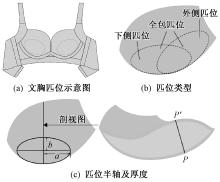
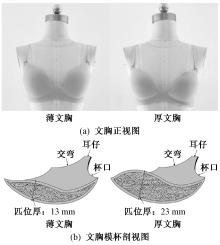
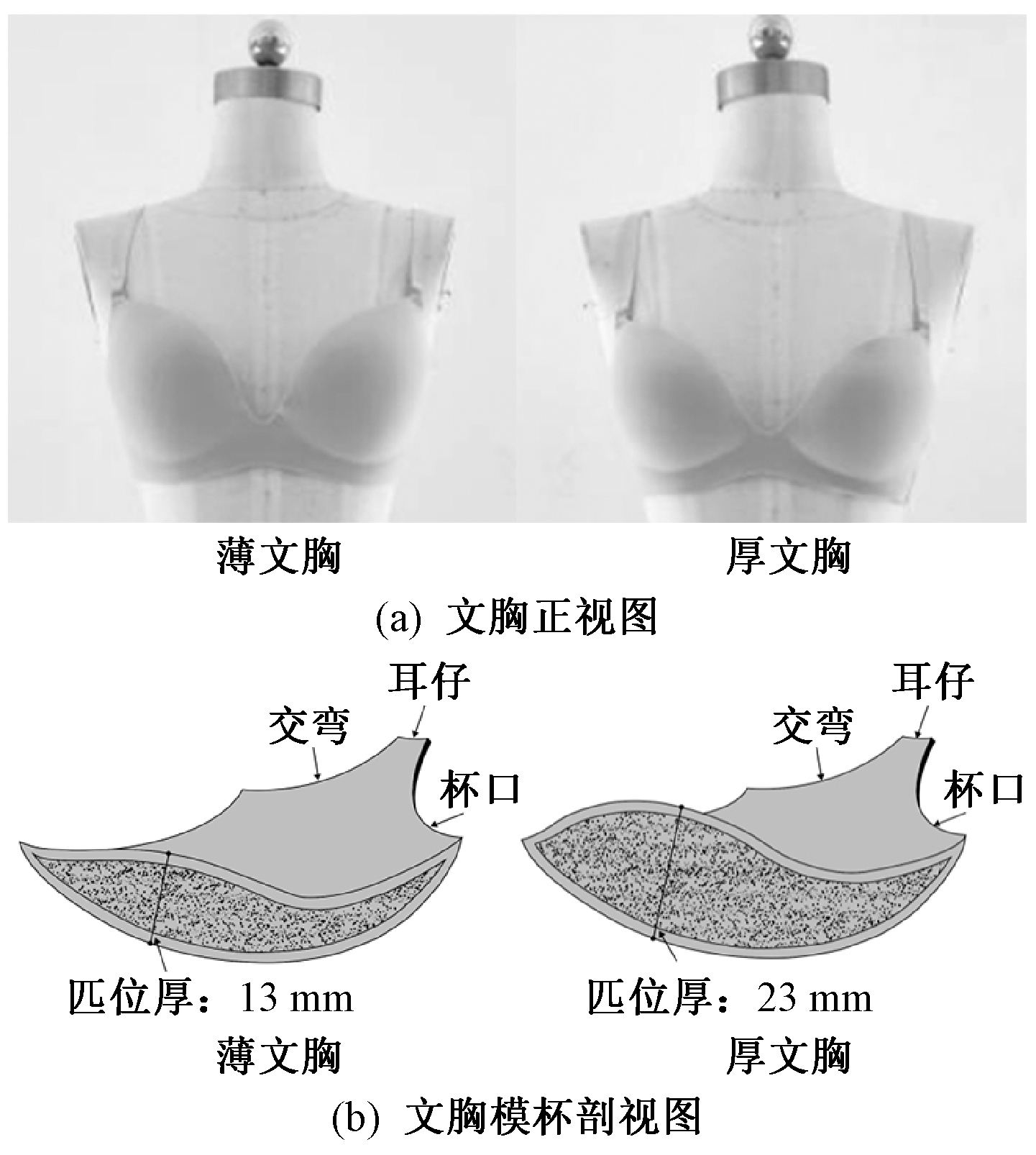
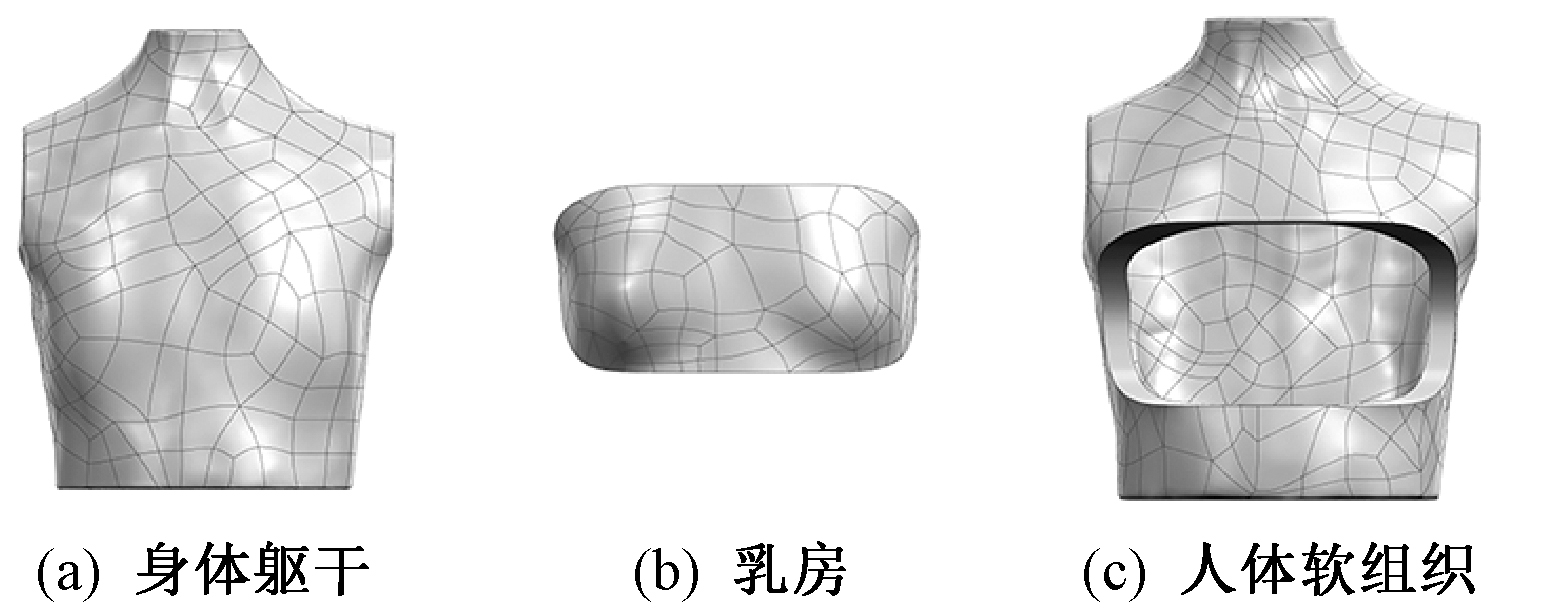
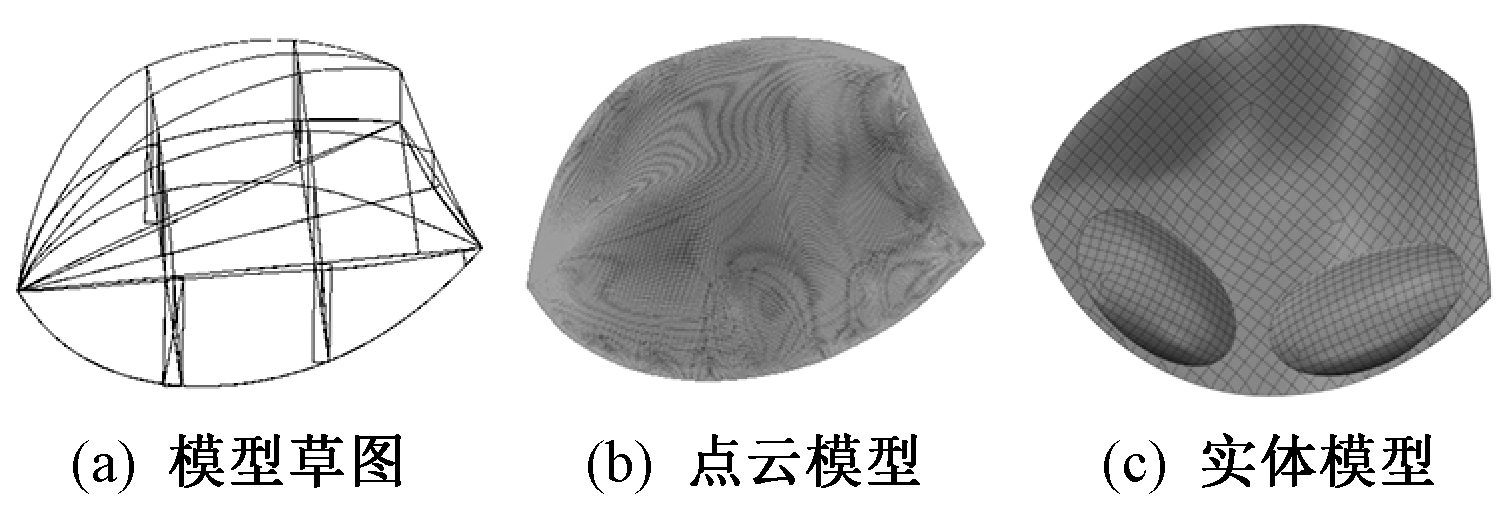
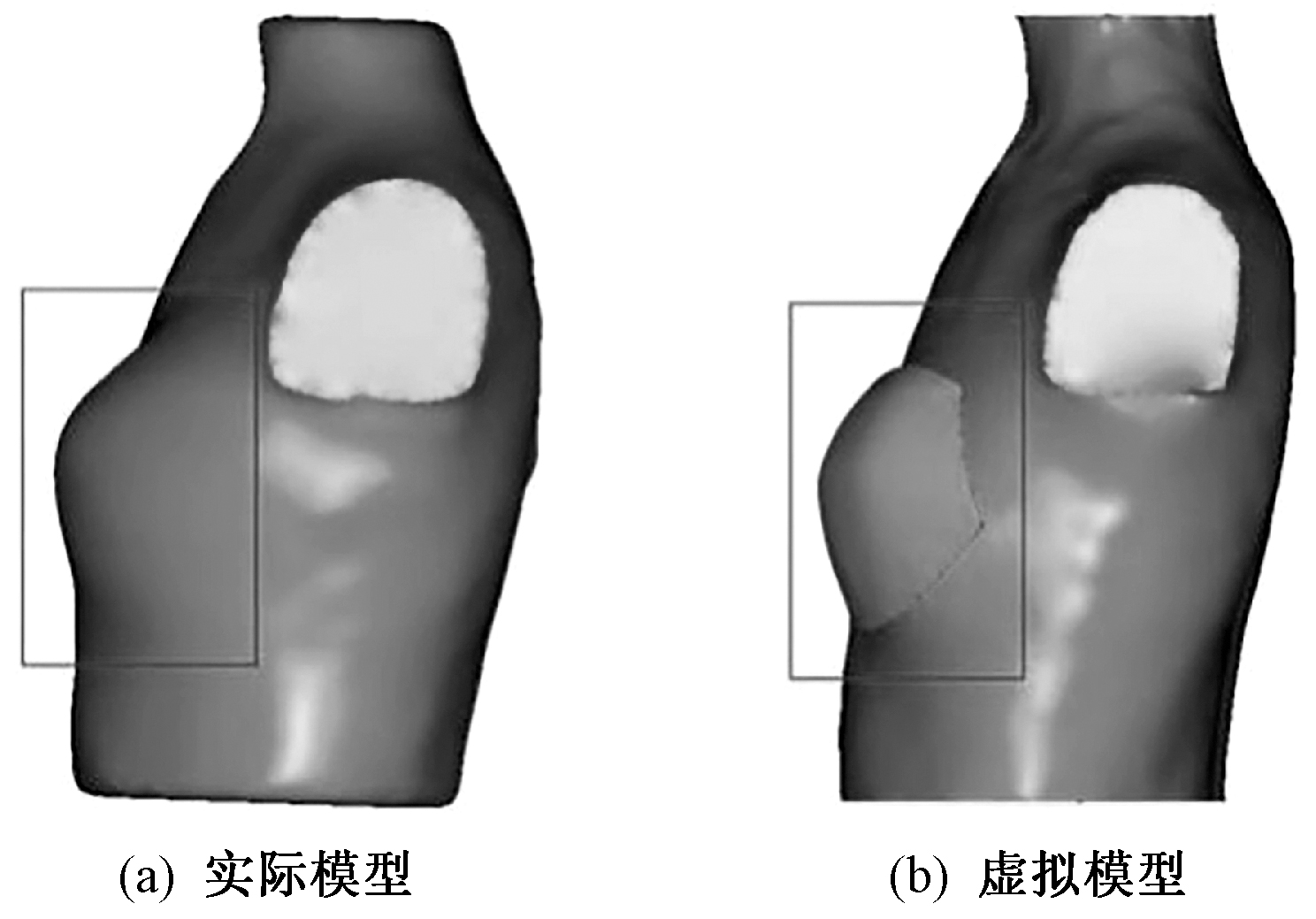
摘要: 为提高文胸的合体性和穿着舒适度,优化文胸模杯匹位参数,建立了人体与文胸模杯的有限元模型,并探究不同模杯匹位参数的文胸对乳房形态的影响。首先确定文胸模杯匹位参数的选取,通过三维人体扫描获得人体点云数据,提取人体乳房特征点与形态参数。再运用逆向工程软件对人体点云数据进行处理,得到身体躯干、乳房和软组织的几何模型。使用手持式三维扫描仪扫描文胸外表面,以薄文胸为基础模型,使用建模软件构建不同匹位参数的模杯几何模型。通过计算物体轮廓Hu矩的欧氏距离和执行独立样本T检验,比较实际扫描与虚拟模型的差异,以验证有限元模型的准确性。在此模型的基础上进一步对文胸模杯匹位参数进行优化,讨论了穿戴不同模杯匹位参数的文胸时不同乳房形态的变化与压力分布。结果表明,对于下垂且外扩的扁平圆型乳房来说,选择匹位厚度为15 mm、匹位短半轴长为20 mm、匹位长半轴长介于20~40 mm的模杯时,对乳房的塑形效果最佳,且不会对乳房产生较大压力,舒适性较优。以上方法和结果可指导文胸模杯匹位的设计,节省模杯原料从而降低生产成本。
中图分类号:
| [1] | 李臻颖, 苏军强, 吴志明. 青年女体三维扫描数据的特征围度计算方法[J]. 纺织学报, 2017, 38(5): 110-114. |
| LI Zhenying, SU Junqiang, WU Zhiming. Calculating method of characteristics girth of young female body by 3-D scanning data[J]. Journal of Textile Research, 2017, 38(5): 110-114. | |
| [2] | 叶勤文, 王朝晖, 黄荣, 等. 虚拟服装迁移在个性化服装定制中的应用[J]. 纺织学报, 2023, 44(6): 183-190. |
|
YE Qinwen, WANG Zhaohui, HUANG Rong, et al. Application of virtual garment transfer in garment customization[J]. Journal of Textile Research, 2023, 44(6): 183-190.
doi: 10.1177/004051757404400306 |
|
| [3] | 顾明月, 罗凯文, 刘宿慧, 等. 基于角度指标的青年女性乳房形态细分与判别[J]. 服装学报, 2023, 8(6): 495-501. |
| GU Mingyue, LUO Kaiwen, LIU Suhui, et al. Research on subdivision and discrimination of breast morphology in young women based on angle indicators[J]. Journal of Clothing Research, 2023, 8(6): 495-501. | |
| [4] | COLTMAN C E, STEELE J R, MCGHEE D E. Which bra components contribute to incorrect bra fit in women across a range of breast sizes?[J]. Clothing and Textiles Research Journal, 2023, 8(6): 495-501. |
| [5] |
CHEN Y, YING B, ZHANG X, et al. Characteristic parameters analysis on breast shape for moulded bra cup and bra structure design[J]. Journal of Fiber Bioengineering and Informatics, 2014, 7(3): 429-439.
doi: 10.3993/jfbi |
| [6] | 常丽霞, 张欣, 齐静. 基于三维人体测量技术的女性乳房形态细分研究[J]. 纺织学报, 2006, 27(12): 21-24. |
| CHANG Lixia, ZHANG Xin, QI Jing. Research on subdividing of female breast shapes based on 3-D body measurement[J]. Journal of Textile Research, 2006, 27(12): 21-24. | |
| [7] |
ZHENG R, YU W, FAN J. Development of a new Chinese bra sizing system based on breast anthropometric measurements[J]. International Journal of Industrial Ergonomics, 2007, 37(8): 697-705.
doi: 10.1016/j.ergon.2007.05.008 |
| [8] |
LIU Y, WANG J, ISTOOK C L. Study of optimum parameters for Chinese female underwire bra size system by 3D virtual anthropometric measurement[J]. The Journal of The Textile Institute, 2017, 108(6): 877-882.
doi: 10.1080/00405000.2016.1195954 |
| [9] | 高月美. 60-75岁老年女性的胸部形态与文胸结构研究[D]. 武汉: 武汉纺织大学, 2020: 16-44. |
| GAO Yuemei. Research in breast morphology and bra structure of older women between 60 and 75 years old[D]. Wuhan: Wuhan Textile University, 2020: 16-44. | |
| [10] |
PEI J, FAN J, ASHDOWN S P. Detection and comparison of breast shape variation among different three-dimensional body scan conditions: nude, with a structured bra, and with a soft bra[J]. Textile Research Journal, 2019, 89(21/22): 4595-4606.
doi: 10.1177/0040517519839398 |
| [11] |
SUN Y, YICK K, CAI Y, et al. Finite element analysis on contact pressure and 3D breast deformation for application in women's bras[J]. Fibers and Polymers, 2021, 22(10): 2910-2921.
doi: 10.1007/s12221-021-0878-0 |
| [12] | 盛欣洋, 陈晓娜, 卢娅娅, 等. 面料拉伸性能与运动文胸防震功能的定量关系[J]. 纺织学报, 2024, 45(1): 161-167. |
| SHENG Xinyang, CHEN Xiaona, LU Yaya, et al. Quantitative relationship between fabric elasticity and shock absorption performance of sports bras[J]. Journal of Textile Research, 2024, 45(1): 161-167. | |
| [13] | 夏静. 基于3D打印技术的文胸模杯个性化定制及胸部塑形机理研究[D]. 西安: 西安工程大学, 2023: 25-32. |
| XIA Jing. Research on the mechanism of bra mold cup customization and chest shaping based on 3D printing technology[D]. Xi'an: Xi'an Polytechnic University, 2023: 25-32. | |
| [14] | 王悦, 任军, 马飞, 等. 基于服装个性化智能定制的三维人体测量系统物-像结构算法的研究[J]. 计算机科学, 2024, 51(S1): 1122-1126. |
| WANG Yue, REN Jun, MA Fei, et al. Study on object image structure algorithm of 3D human body measurement system based on personalized intelligent customization of clothing[J]. Computer Science, 2024, 51(S1): 1122-1126. | |
| [15] |
钟泽君, 张贝贝, 徐凯忆, 等. 基于特征参数的青年女性乳房形态分析[J]. 纺织学报, 2022, 43(10): 148-154.
doi: 10.13475/j.fzxb.20210907607 |
|
ZHONG Zejun, ZHANG Beibei, XU Kaiyi, et al. Research on breast shape of young females using characteristic parameters[J]. Journal of Textile Research, 2022, 43(10): 148-154.
doi: 10.13475/j.fzxb.20210907607 |
|
| [16] |
MALBON C, KNOCK C, CRITCHLEY R, et al. The effect of underwired and sports bras on breast shape, key anthropometric dimensions, and body armour com-fort[J]. The Police Journal, 2022, 95(3): 436-458.
doi: 10.1177/0032258X211011619 |
| [17] | 孙玥, 周凌芳, 周祺旋, 等. 运动内衣承托及其动态舒适性能的有限元分析[J]. 纺织学报, 2023, 44(9): 180-187. |
| SUN Yue, ZHOU Lingfang, ZHOU Qixuan, et al. Finite element analysis of supportive performance and dynamic comfort of sports bra[J]. Journal of Textile Research, 2023, 44(9): 180-187. | |
| [18] |
ZHONG Z, ZHANG B, HU Y, et al. Comparative morphological evaluation of young women's breast-bra resha** by different bra cups[J]. International Journal of Environmental Research and Public Health, 2023, 20(5): 3856.
doi: 10.3390/ijerph20053856 |
| [19] | 钟泽君, 顾冰菲. 基于特征点自动定位的乳房形态参数提取[J]. 服装学报, 2023, 8(3): 211-216. |
| ZHONG Zejun, GU Bingfei. Breast morphological parameters extraction based on automatic position of feature points[J]. Journal of Clothing Research, 2023, 8(3): 211-216. | |
| [20] | 左凯悦, 王永荣, 温惠华, 等. 基于有限元力学模型的文胸-胸部接触仿真研究进展[J]. 丝绸, 2022, 59(12): 71-80. |
| ZUO Kaiyue, WANG Yongrong, WEN Huihua, et al. Research progress of the brassiere-chest contact simulation based on the finite element mechanical model[J]. Journal of Silk, 2022, 59(12): 71-80. | |
| [21] |
RUIXIN L, YIP J, YU W, et al. Computational modelling methods for sports bra-body interactions[J]. International Journal of Clothing Science and Technology, 2020, 32(6): 921-934.
doi: 10.1108/IJCST-09-2019-0143 |
| [22] |
JU M L, JMAL H, DUPUIS R, et al. Visco-hyperelastic constitutive model for modeling the quasi-static behavior of polyurethane foam in large deforma-tion[J]. Polymer Engineering & Science, 2015, 55(8): 1795-1804.
doi: 10.1002/pen.v55.8 |
| [23] | 孙静, 马千清, 沈春云, 等. 多模态超声结合免疫组化参数构建列线图预测乳腺癌分子分型相关预后[J]. 中国超声医学杂志, 2024, 40(6): 632-636. |
| SUN Jing, MA Qianqing, SHEN Chunyun, et al. The predictive value of multimodal ultrasound combined with immunohistochemical parameters to construct nomogram for molecular typing related breast cancer[J]. Chinese Journal of Ultrasound in Medicine, 2024, 40(6): 632-636. | |
| [24] |
赵鹏宇, 王宗彦, 丁培燎, 等. 基于机器视觉的并联机器人工件识别定位[J]. 制造技术与机床, 2021(12): 15-20.
doi: 10.19287/j.cnki.1005-2402.2021.12.002 |
| ZHAO Pengyu, WANG Zongyan, DING Peiliao, et al. Location identification of parallel robot based on machine vision[J]. Manufacturing Technology & Machine Tool, 2021(12): 15-20. | |
| [25] |
GALBREATH S, GOSWAMI T. Biomechanical behavior of female breast: a review[J]. BioMed, 2025, 5(1): 5.
doi: 10.3390/biomed5010005 |
| [26] | 潘隽媛, 顾依然, 张梅, 等. 基于三维扫描的文胸模杯建模研究[J]. 毛纺科技, 2022, 50(4): 48-52. |
| PAN Junyuan, GU Yiran, ZHANG Mei, et al. Research on modeling of bra cup based on 3D scan-ning[J]. Wool Textile Journal, 2022, 50(4): 48-52. | |
| [27] |
MITSUNO T, YANAGISAWA A K. Comfortable pressure feeling and clothing pressure on abdomen[J]. International Journal of Clothing Science and Technology, 2022, 34(1): 110-118.
doi: 10.1108/IJCST-12-2017-0194 |
| [28] | 何崟, 房雨, 杨秀丽, 等. 女性健康监测智能文胸的研发[J]. 针织工业, 2025(4): 66-71. |
| HE Yin, FANG Yu, YANG Xiuli, et al. Development of intelligent bra with health monitoring function[J]. Knitting Industries, 2025(4): 66-71. |
| [1] | 钟泽君, 张贝贝, 徐凯忆, 王若雯, 顾冰菲. 基于特征参数的青年女性乳房形态分析[J]. 纺织学报, 2022, 43(10): 148-154. |
| [2] | 鲍陈, 缪永伟, 孙瑜亮, 张旭东. 基于散乱点云的三维人体自动测量[J]. 纺织学报, 2019, 40(01): 120-129. |
| [3] | 徐瑶瑶 朱俐莎 杜磊 邹奉元. 文胸模杯曲面形态特征曲线提取与分析[J]. 纺织学报, 2016, 37(11): 103-108. |
| [4] | 张吉生 吴志明 储云明. 经编无缝女束身上衣的塑身性能[J]. 纺织学报, 2014, 35(3): 109-0. |
| [5] | 李晓志 李晓久. 基于部位划分的三维人体曲面模型的构建[J]. 纺织学报, 2013, 34(9): 145-0. |
| [6] | 王晓霞 戴建国 王春霞 端丹. 青年女性体表角度分析[J]. 纺织学报, 2013, 34(7): 106-110. |
| [7] | 陈益松 夏明 林琳. 光栅相移法用于三维人体测量的实验研究[J]. 纺织学报, 2013, 34(6): 83-87. |
| [8] | 王珊珊 王鸿博. 基于三维人体测量的江浙在职男青年颈部形态[J]. 纺织学报, 2013, 34(10): 131-0. |
| [9] | 张宁, 王宏付. 基于三维人体测量的江浙女模特体型分类[J]. 纺织学报, 2012, 33(6): 71-75. |
| [10] | 张金花;王宏付. 基于三维人体测量的女性肩部研究[J]. 纺织学报, 2011, 32(5): 95-97. |
| [11] | 郑娟;戴建国;徐蓉蓉;陈美珍;邵新阳. 立体裁剪专用松量模型的开发[J]. 纺织学报, 2011, 32(3): 105-109. |
| [12] | 钱晓农;尹兵. 基于三维人体测量的人体体型细分识别的研究[J]. 纺织学报, 2011, 32(2): 107-111. |
| [13] | 齐静;李毅;张欣. 我国西部地区青年男性体型描述与体型分类研究[J]. 纺织学报, 2010, 31(5): 107-111. |
| [14] | 陈敏之;邹奉元;张渭源. 女体体型识别专家系统的设计与实现[J]. 纺织学报, 2009, 30(11): 141-144. |
| [15] | 邹奉元;张苏豫;丁笑君;朱小行. 基于C/S模式的女子体型识别及应用[J]. 纺织学报, 2008, 29(6): 101-104. |
|
||
 京公网安备11010502044800号