纺织学报 ›› 2024, Vol. 45 ›› Issue (12): 144-151.doi: 10.13475/j.fzxb.20231103601
赵方1,2, 邵光伟1,2( ), 邵慧奇1,3, 毕思伊1,2, 李明昊1,2, 海文清1,2, 张鑫1,2, 姜子洋1,2, 蒋金华1,2, 陈南梁1,2
ZHAO Fang1,2, SHAO Guangwei1,2(), SHAO Huiqi1,3, BI Siyi1,2, LI Minghao1,2, HAI Wenqing1,2, ZHANG Xin1,2, JIANG Ziyang1,2, JIANG Jinhua1,2, CHEN Nanliang1,2
摘要:
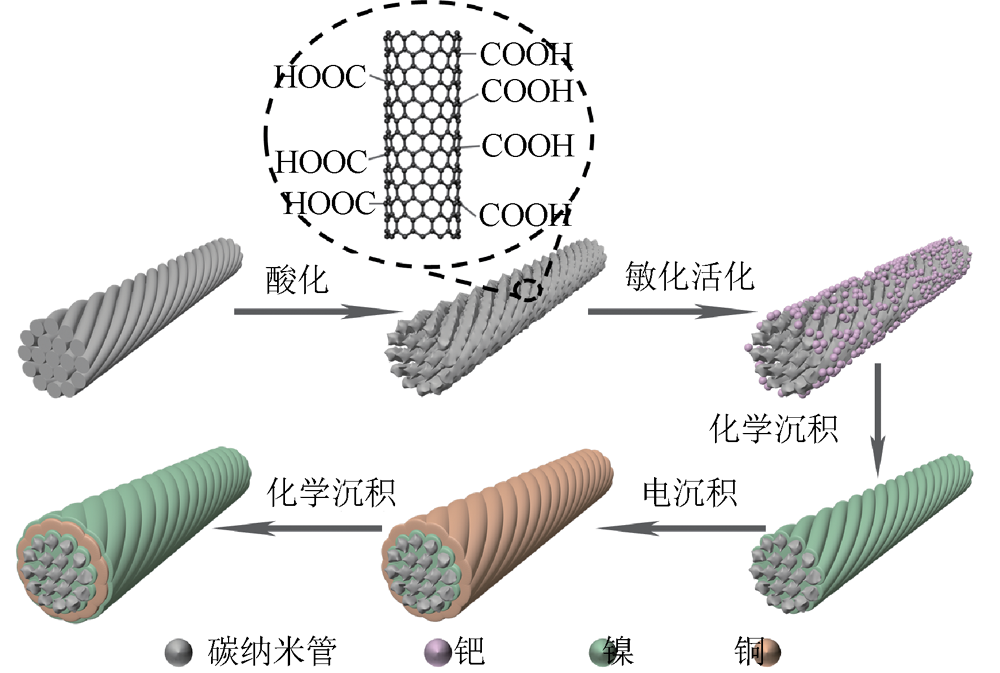
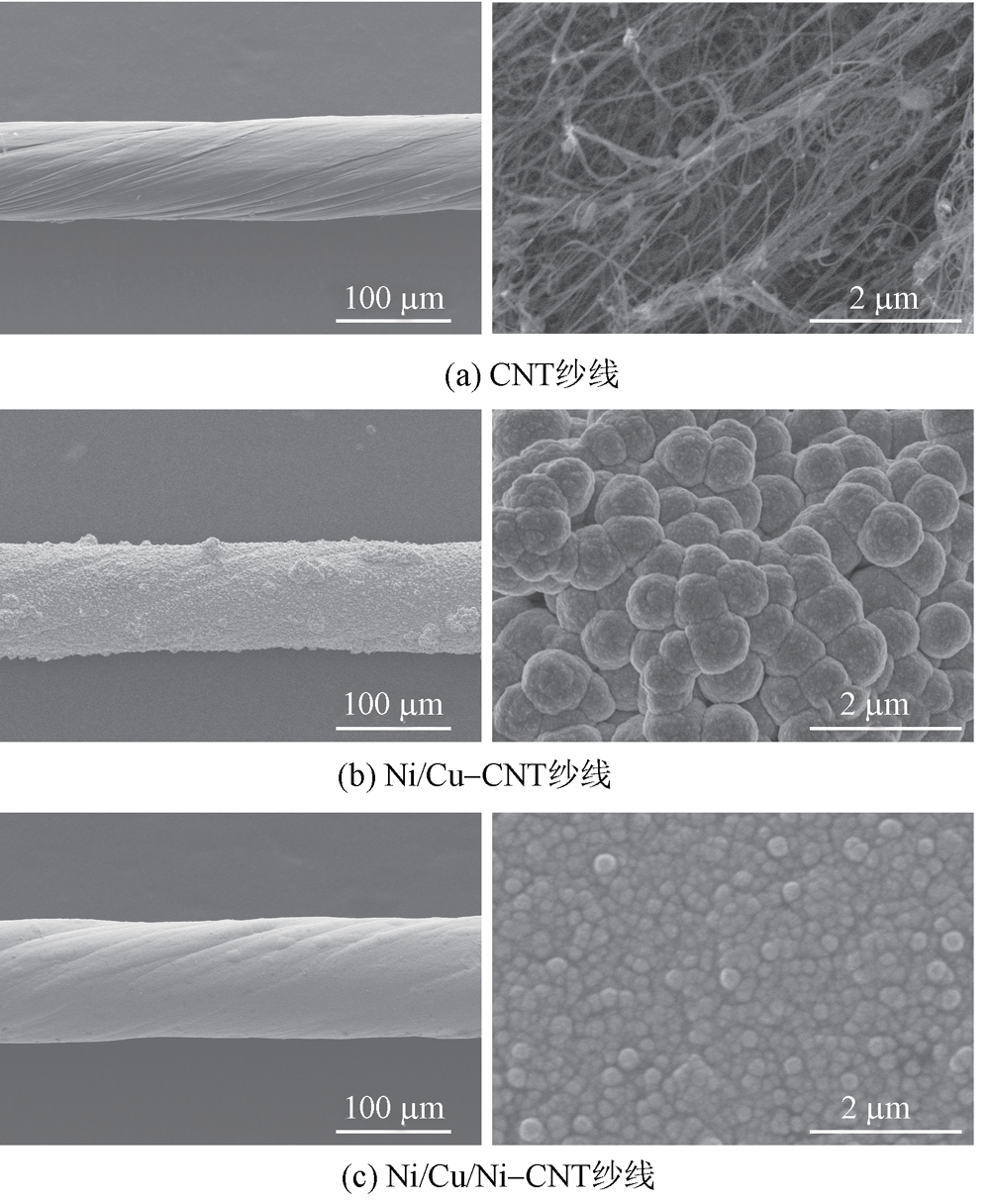
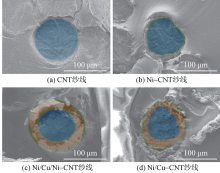
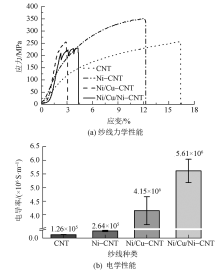
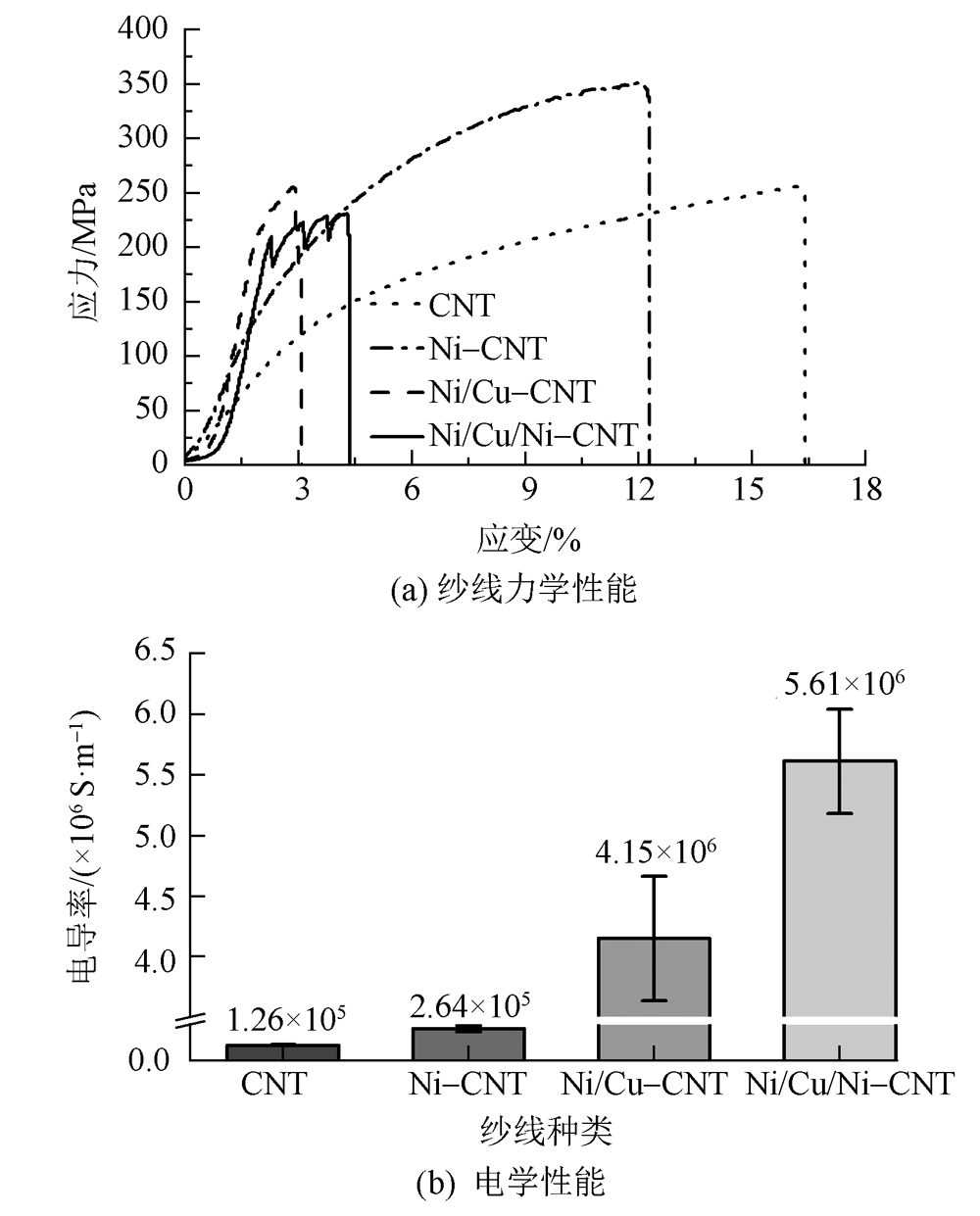
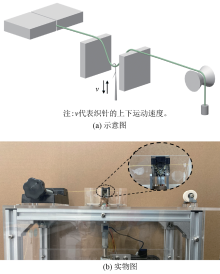
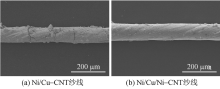
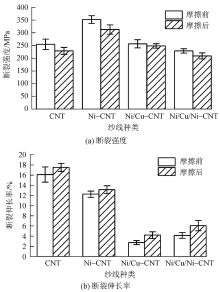
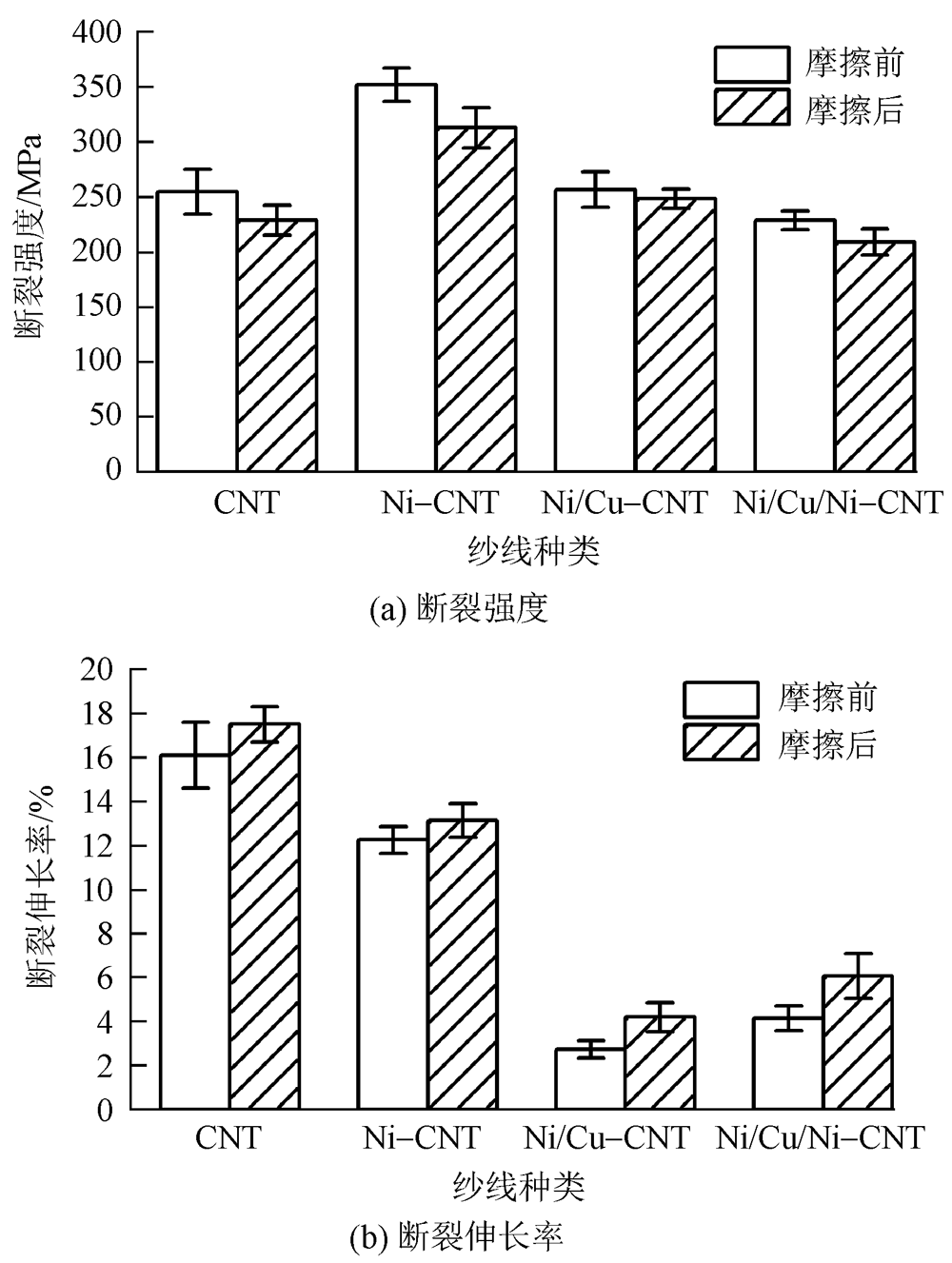
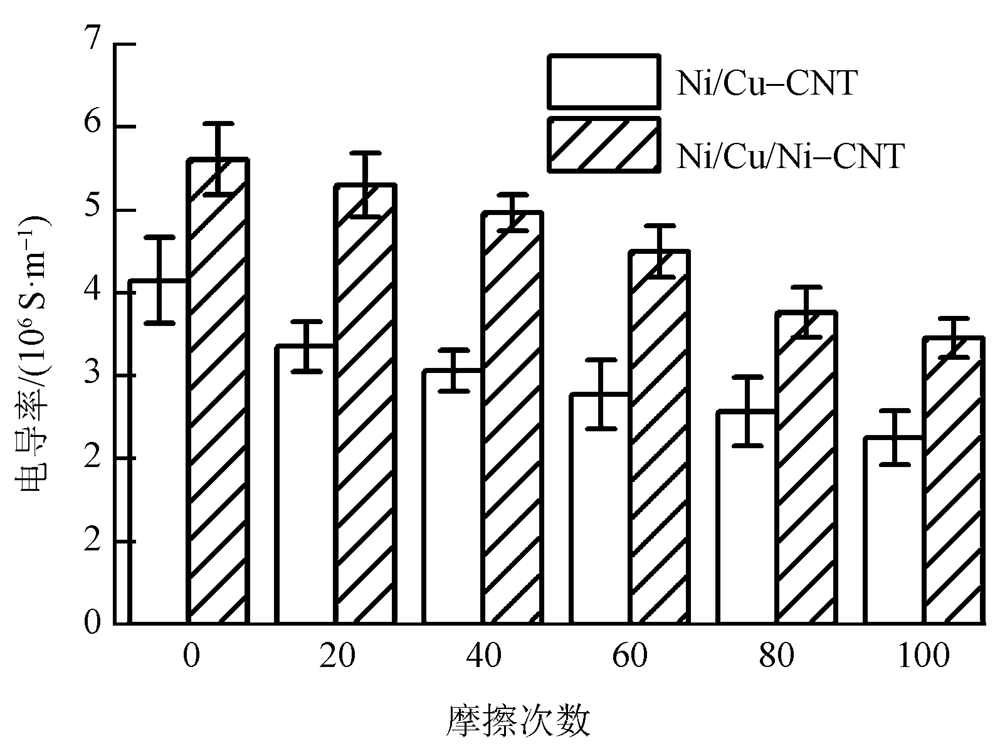
为制备轻质高强高电导率材料,以碳纳米管(CNT)纱线为原料,通过化学沉积和电沉积技术制备了镍/铜/镍-碳纳米管(Ni/Cu/Ni-CNT)复合纱线,确定最优电沉积铜工艺,并系统分析复合纱线的形貌、力学性能及电学性能,通过模拟织针编织过程,对比复合纱线摩擦前后的性能,研究了镍界面层对复合纱线结构和性能的影响。结果表明:最优工艺制得的Ni/Cu/Ni-CNT复合纱线表面均匀细致、性能优异;与原始CNT纱线相比,在断裂强度基本保持不变(90%)的情况下,复合材料电导率提高了44倍;镍界面层能够有效增强Cu镀层的结合牢度,Ni/Cu/Ni-CNT复合纱线在100次模拟编织后仅有微米级裂痕,断裂强度和电导率分别保持91%和62%。
中图分类号:
| [1] | 马珮珮, 李龙, 吴磊. 导电纱线的制备及其在智能可穿戴装置中的应用研究进展[J]. 材料工程, 2021, 49(10): 31-42. |
| MA Peipei, LI Long, WU Lei. Research progress in preparation of conductive yarn and its application in smart wearable devices[J]. Journal of Materials Engineering, 2021, 49(10): 31-42. | |
| [2] | SUNDARAM R M, SEKIGUCHI A, SEKIYA M, et al. Copper/carbon nanotube composites: research trends and outlook[J]. Royal Society Open Science, 2018.DOI:10.1098/rsos.180814. |
| [3] | BAI Y X, ZHANG R F, YE X, et al. Carbon nanotube bundles with tensile strength over 80 GPa[J]. Nature Nanotechnology, 2018, 13(7): 589-595. |
| [4] | LI Q W, LI Y, ZHANG X F, et al. Structure-dependent electrical properties of carbon nanotube fibers[J]. Advanced Materials, 2007, 19(20): 3358-3363. |
| [5] | LEKAWA-RAUS A, PATMORE J, KURZEPA L, et al. Electrical properties of carbon nanotube based fibers and their future use in electrical wiring[J]. Advanced Functional Materials, 2014, 24(24): 3661-3682. |
| [6] | 宋启良, 胡振峰, 杜晓坤, 等. 非金属表面化学镀覆的研究现状[J]. 电镀与涂饰, 2019, 38(3): 125-131. |
| SONG Qiliang, HU Zhenfeng, DU Xiaokun, et al. Research progress in preparation of conductive yarn and its application in smart wearable devices[J]. Electropating & Finishing, 2019, 38(3): 125-131. | |
| [7] | LEGGIERO A P, DRIESS S D, LOUGHRAN E D, et al. Platinum nanometal interconnection of copper-carbon nanotube hybrid electrical conductors[J]. Carbon, 2020, 168: 290-301. |
| [8] | LEGGIERO A P, TRETTNER K J, URSINO H L, et al. High conductivity copper-carbon nanotube hybrids via site-specific chemical vapor deposition[J]. ACS Applied Nano Materials, 2019, 2(1): 118-126. |
| [9] | TRAN T Q, LEE J K Y, CHINNAPPAN A, et al. Strong, lightweight, and highly conductive CNT/Au/Cu wires from sputtering and electroplating methods[J]. Journal of Materials Science & Technology, 2020, 40: 99-106. |
| [10] | 赵超锋, 郑小燕, 李凯瑞, 等. 碳纳米管膜表面金属化用于高电流输出柔性锂离子电池[J]. 材料研究学报, 2022, 36(5): 373-380. |
| ZHAO Chaofeng, ZHENG Xiaoyan, LI Kairui, et al. Surface metallization of carbon nanotube film for flexible lithium-ion batteries with high output current[J]. Chinese Journal of Materials Research, 2022, 36(5): 373-380. | |
| [11] | LIU Y, HU Q Q, CAO Y, et al. High-performance ultrabroadband photodetector based on photother-moelectric effect[J]. ACS Applied Materials & Interfaces, 2022, 14(25): 29077-29086. |
| [12] | PARK J S, PARK J Y, LEE K, et al. Large-scalable, ultrastable thin films for electromagnetic interference shielding[J]. Journal of Materials Chemistry A, 2023, 11(34): 18188-18194. |
| [13] | 席佳琦, 戴亚光, 夏雷, 等. 轻质高导电金属化碳纳米管薄膜的制备及其雷击防护性能[J]. 复合材料学报, 2024, 41(1): 196-206. |
| XI Jiaqi, DAI Yaguang, XIA Lei, et al. Preparation and lightning strike protection properties of lightweight high conductive metallized carbon nanotube film[J]. Acta Materiae Compositae Sinica, 2024, 41(1): 196-206. | |
| [14] | SHI Y Y, LIAO S Y, WANG Q F, et al. Enhancing the interaction of carbon nanotubes by metal-organic decomposition with improved mechanical strength and ultra-broadband EMI shielding performance[J]. Nano-Micro Letters, 2024, 16(1): 134. |
| [15] | XU G, ZHAO J N, LI S, et al. Continuous electrodeposition for lightweight, highly conducting and strong carbon nanotube-copper composite fibers[J]. Nanoscale, 2011, 3(10): 4215-4219. |
| [16] | HANNULA P M, JUNNILA M, JANAS D, et al. Carbon nanotube fiber pretreatments for electrodeposition of copper[J]. Advances in Materials Science and Engineering, 2018.DOI:10.1155/2018/3071913. |
| [17] | KIM B J, BAE K M, LEE Y S, et al. EMI shielding behaviors of Ni-coated MWCNTs-filled epoxy matrix nanocomposites[J]. Surface & Coatings Technology, 2014, 242: 125-131. |
| [18] | ZHANG D H, ZHANG Y H, MIAO M H. Metallic conductivity transition of carbon nanotube yarns coated with silver particles[J]. Nanotechnology, 2014. DOI:10.1088/0957-4484/25/27/275702. |
| [19] | 邵怡沁. 碳纳米管纱线复合材料界面力学及应变传感性能研究[D]. 上海: 东华大学, 2019: 25-28. |
| SHAO Yiqin. Interfacial properties and strain sensing performance of carbon nanotube yarn reinforced composites[D]. Shanghai: Donghua University, 2019: 25-28. | |
| [20] | 范同祥, 刘悦, 杨昆明, 等. 碳/金属复合材料界面结构优化及界面作用机制的研究进展[J]. 金属学报, 2019, 55(1): 16-32. |
| FAN Tongxiang, LIU Yue, YANG Kunming, et al. Recent progress on interfacial structure optimization and their influencing mechanism of carbon reinforced metal matrix composites[J]. Acta Metallurgica Sinica, 2019, 55(1): 16-32. | |
| [21] | 吴昆杰, 张永毅, 勇振中, 等. 碳纳米管纤维的连续制备及高性能化[J]. 物理化学学报, 2022, 38(9): 80-104. |
| WU Kunjie, ZHANG Yongyi, YONG Zhenzhong, et al. Continuous preparation and performance enhancement techniques of carbon nanotube fibers[J]. Acta Physico-Chimica Sinica, 2022, 38(9): 80-104. | |
| [22] | ZOU J Y, LIU D D, ZHAO J N, et al. Ni nanobuffer layer provides light-weight CNT/Cu fibers with superior robustness, conductivity, and ampacity[J]. ACS Applied Materials & Interfaces, 2018, 10(9): 8197-8204. |
| [23] | RHO H, PARK M, PARK M, et al. Metal nanofibrils embedded in long free-standing carbon nanotube fibers with a high critical current density[J]. NPG Asia Materials, 2018, 10: 146-155. |
| [1] | 卢道坤, 王仕飞, 董倩, 史纳蔓, 李思琦, 干露露, 周爽, 沙莎, 张如全, 罗磊. 基于MXene的导电织物构筑及其多功能应用[J]. 纺织学报, 2024, 45(09): 137-145. |
| [2] | 王楠, 孙辉, 于斌, 许磊, 朱祥祥. 基于熔喷非织造材料的温度传感器制备及其传感性能[J]. 纺织学报, 2024, 45(05): 138-146. |
| [3] | 贾笑娅, 王蕊宁, 孙润军. SiO2/聚乙二醇200/碳纳米管剪切增稠液浸渍芳纶织物及其复合材料防刺性能[J]. 纺织学报, 2024, 45(04): 151-159. |
| [4] | 宋功吉, 王煜煜, 王善龙, 王建南, 许建梅. 碳纳米管掺杂高聚物制备人工神经导管的研究进展[J]. 纺织学报, 2023, 44(11): 232-239. |
| [5] | 张少月, 岳江昱, 杨家乐, 柴晓帅, 冯增国, 张爱英. 环境友好聚己内酯基复合相变纤维膜的制备及其性能[J]. 纺织学报, 2023, 44(03): 11-18. |
| [6] | 蒲海红, 贺芃鑫, 宋柏青, 赵丁莹, 李欣峰, 张天一, 马建华. 纤维素/碳纳米管复合纤维的制备及其功能化应用[J]. 纺织学报, 2023, 44(01): 79-86. |
| [7] | 楚艳艳, 李施辰, 陈超, 刘莹莹, 黄伟韩, 张越, 陈晓钢. 柔性抗冲击纺织材料及其结构的研究进展[J]. 纺织学报, 2022, 43(12): 203-212. |
| [8] | 娄辉清, 朱斐超, 李磊磊, 丁会龙, 普丹丹, 王相飞. 碳纳米管/Ni/聚苯胺纤维状超级电容器的制备及其电化学性能[J]. 纺织学报, 2022, 43(11): 35-40. |
| [9] | 李建娜, 陈玺, 邵慧奇, 邵光伟, 蒋金华, 陈南梁. 动态力学载荷对超细镀金钼丝力学与电学性能的影响[J]. 纺织学报, 2022, 43(10): 45-52. |
| [10] | 胡铖烨, 周歆如, 范梦晶, 洪剑寒, 刘永坤, 韩潇, 赵晓曼. 皮芯结构微纳米纤维复合纱线的制备及其性能[J]. 纺织学报, 2022, 43(09): 95-100. |
| [11] | 薛超, 朱浩, 杨晓川, 任煜, 刘婉婉. 聚氨酯基碳纳米管-液态金属导电纤维的制备及其性能[J]. 纺织学报, 2022, 43(07): 29-35. |
| [12] | 聂文琪, 孙江东, 许帅, 郑贤宏, 徐珍珍. 柔性纺织纤维基超级电容器研究进展[J]. 纺织学报, 2022, 43(07): 200-206. |
| [13] | 姚明远, 刘宁娟, 王嘉宁, 许福军, 刘玮. 功能化碳纳米管复合薄膜及其膜卷纱的电热性能[J]. 纺织学报, 2022, 43(05): 86-91. |
| [14] | 禄倩倩, 唐俊雄, 刘元军, 赵晓明. 碳纳米管基吸波复合材料的制备及其在纺织领域的应用研究进展[J]. 纺织学报, 2022, 43(04): 187-193. |
| [15] | 徐晓彤, 江振林, 郑钦超, 朱科宇, 王朝生, 柯福佑. 导热结构对聚对苯二甲酸乙二醇酯非等温结晶行为的影响[J]. 纺织学报, 2022, 43(03): 44-49. |
|
||
 京公网安备11010502044800号