纺织学报 ›› 2024, Vol. 45 ›› Issue (12): 80-88.doi: 10.13475/j.fzxb.20230905001

• 纺织工程 • 上一篇    下一篇

基于聚氨酯/炭黑/锦纶导电纱线的织物应变传感器制备及其性能

阳腾, 孙志慧, 伍思钰, 于晖(), 王飞   

  1. 五邑大学 纺织材料与工程学院, 广东 江门 529000
  • 收稿日期:2023-09-20 修回日期:2024-05-30 出版日期:2024-12-15 发布日期:2024-12-31
  • 通讯作者: 于晖(1979—),男,教授,博士。主要研究方向为生物医卫用纺织品、智能可穿戴纺织品、微流控纺丝与应用等。E-mail: yuhuihui_2000@163.com
  • 作者简介:阳腾(2000—),女,硕士生。主要研究方向为可穿戴智能纺织品。
  • 基金资助:
    广东省教育厅创新强校重点领域专项项目(2020ZDZX2038)

Preparation and performance of fabric sensor based on polyurethane/ carbon black/polyamide conductive yarn

YANG Teng, SUN Zhihui, WU Siyu, YU Hui(), WANG Fei   

  1. College of Textile Materials and Engineering, Wuyi University, Jiangmen, Guangdong 529000, China
  • Received:2023-09-20 Revised:2024-05-30 Published:2024-12-15 Online:2024-12-31

摘要:

镀银锦纶纱线制备的织物应变传感器存在镀层氧化腐蚀的问题,影响测量精度,严重时可致传感器失效。为改善织物应变传感器的环境稳定性,基于同轴湿法纺丝技术制备以锦纶(PA)纱线为芯层,聚氨酯(TPU)和炭黑(CB)复合材料为皮层的芯鞘结构的TPU/CB/PA导电纱线,然后将其作为嵌花部分与成品氨纶纱线共同编织成针织物应变传感器,该传感器样品采用平针、1×1罗纹、双罗纹、双反面4种针织组织编织。同时探究了组织结构、导电嵌花图案类型以及导电部分嵌花密度对传感器性能的影响。结果表明:平针组织和1×1罗纹组织的传感器样品采用间隔导电电路制备方式在30%~45%的应变传感范围内可有效提升传感器的信号稳定性,疲劳寿命至少为500次;织物密度减小可扩大传感器的有效应变传感范围(20%~50%)。此传感器能够初步实现对不同呼吸深度的监测以及关节运动幅度的监测。

关键词: 织物应变传感器, 针织物, 湿法纺丝, 呼吸监测, 运动监测, 导电纱线

Abstract:

Objective The fabric strain sensor made of silver-coated nylon yarn has the problem of coating oxidation corrosion, which affects the measurement accuracy and can cause the sensor failure. In order to improve the environmental stability of fabric strain sensor, a new design concept is proposed in this paper, where TPU/CB/PA conductive yarns with polyamide(PA) yarn as core layer and polyurethane (TPU) and carbon black (CB) composite material as core sheath structure were prepared based on coaxial wet spinning technology. Then the conductive yarns were knitted together with finished spandex yarns to form a knitted fabric strain sensor. Due to the absence of active chemical elements, this type of sensor theoretically has the advantages of oxidation resistance, corrosion resistance and sweat resistance.

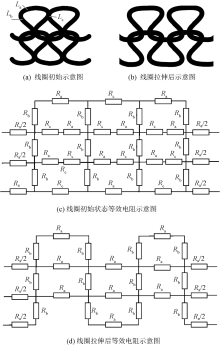
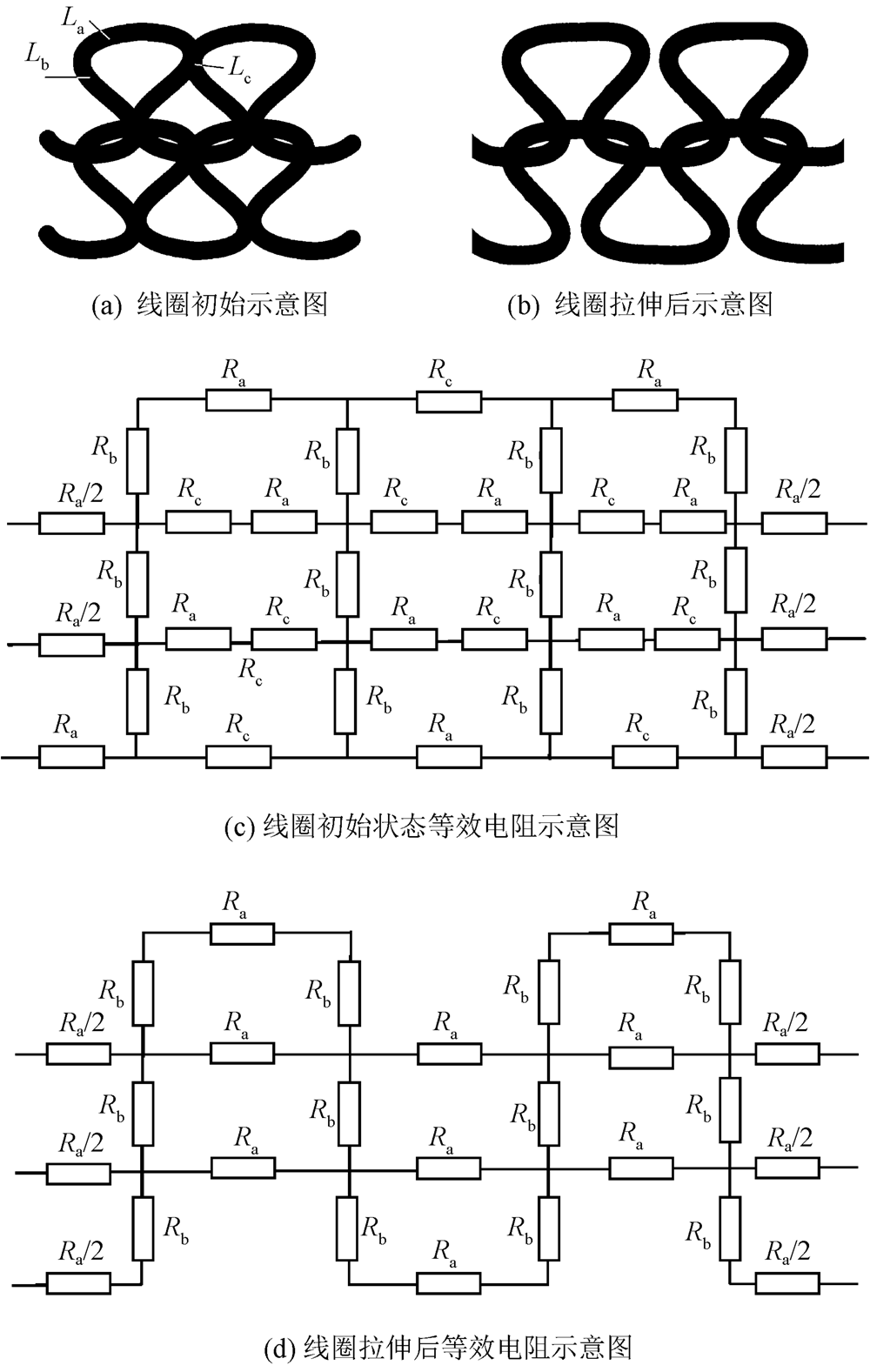
Method TPU/CB/PA conductive yarns with polyamide (PA) yarn as core layer and polyurethane (TPU) and carbon black (CB) composite material as core sheath structure were prepared based on coaxial wet spinning technology. The conductive yarn was knitted together with spandex yarn as an inlaid part for fabric strain sensor. The sensor samples were prepared with four types of knitted structures, namely plain grain, 1×1 rib, double rib, double reverse, four different Mosaic schemes and different densities. When the external strain was applied to the sensor, the conductive part of the coil was deformed, so that the sensor resistance changed, and the received mechanical signal was converted into an electrical signal output. Different strains made the degree of deformation of the coil different. In this paper, the resistance change of the sensor under 5%-50% tensile strain is measured to study the performance of the sensor and its influence parameters.

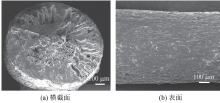
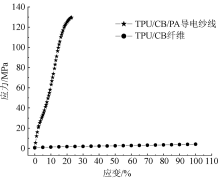
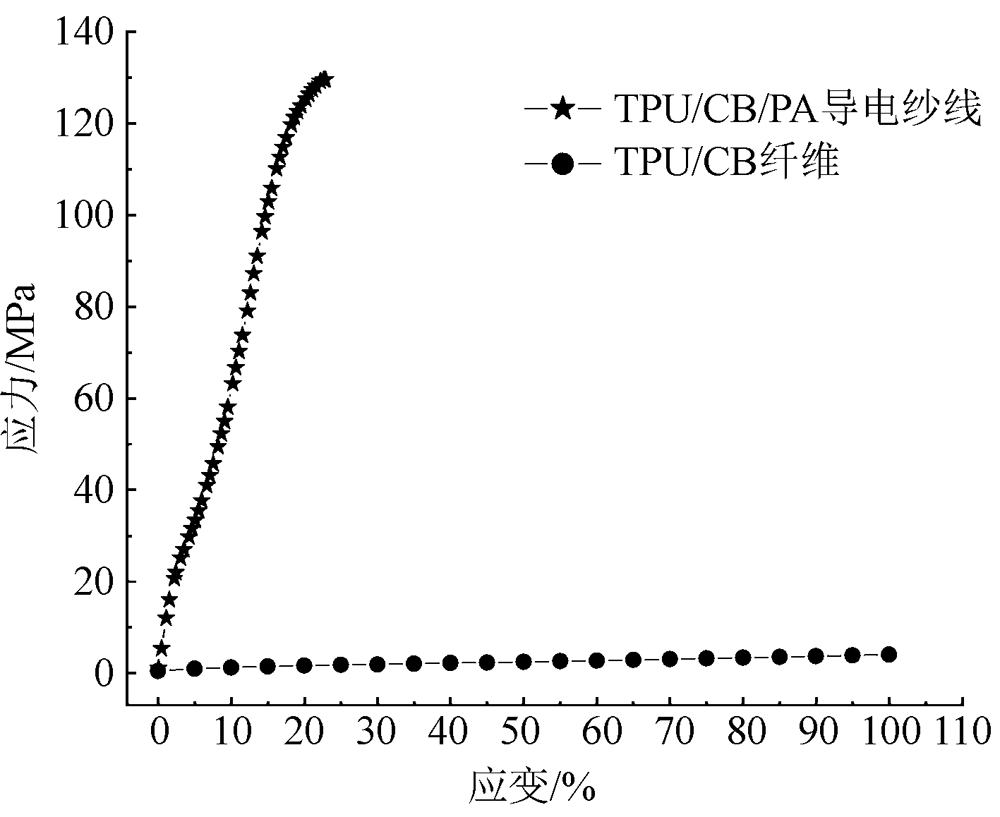
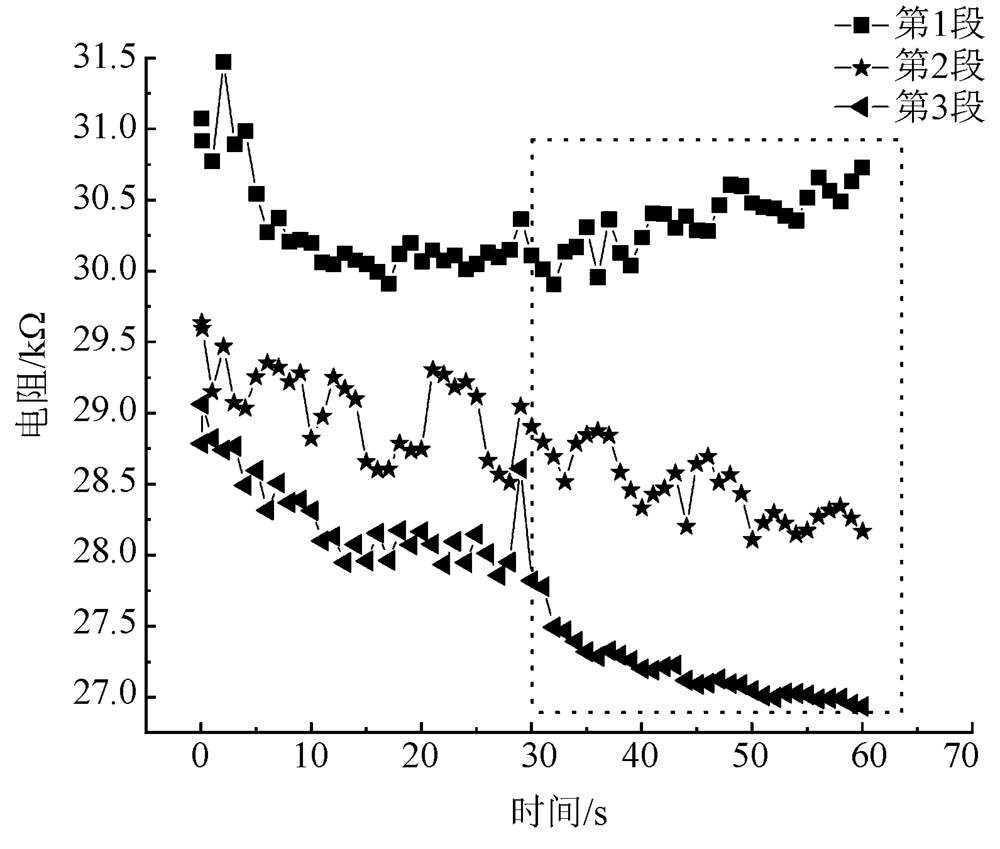
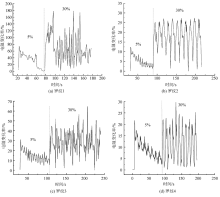
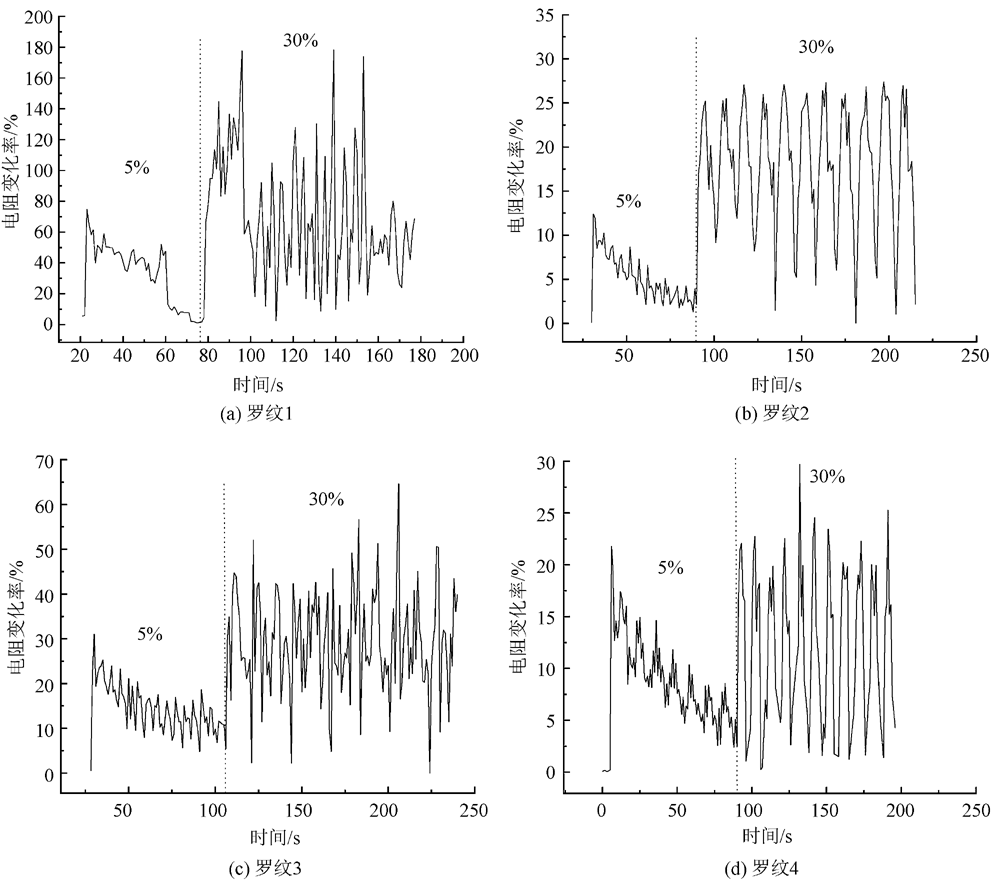
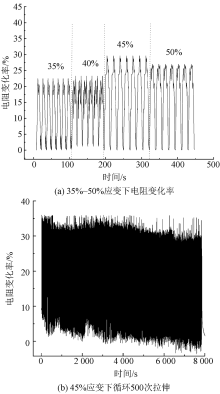
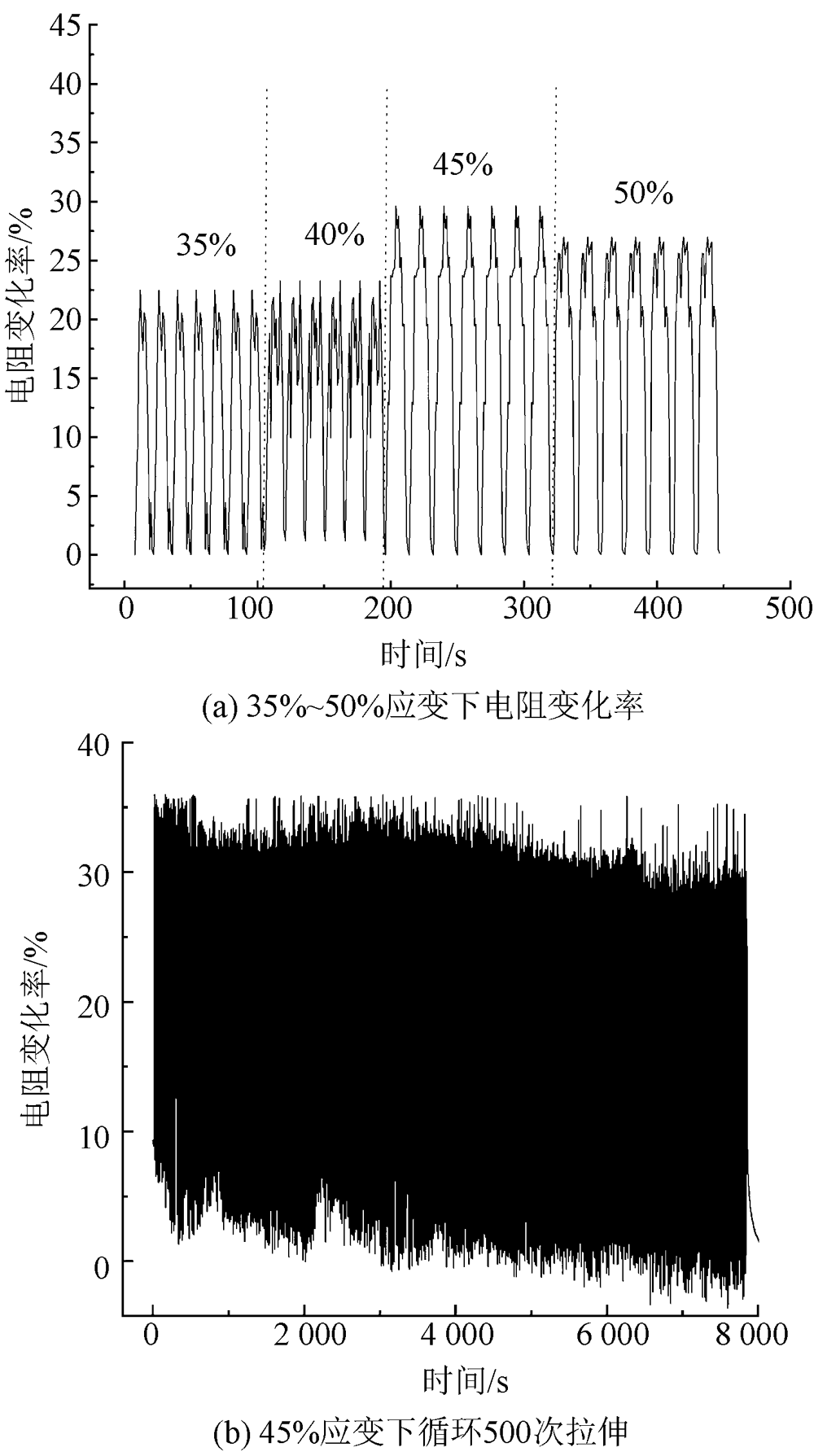
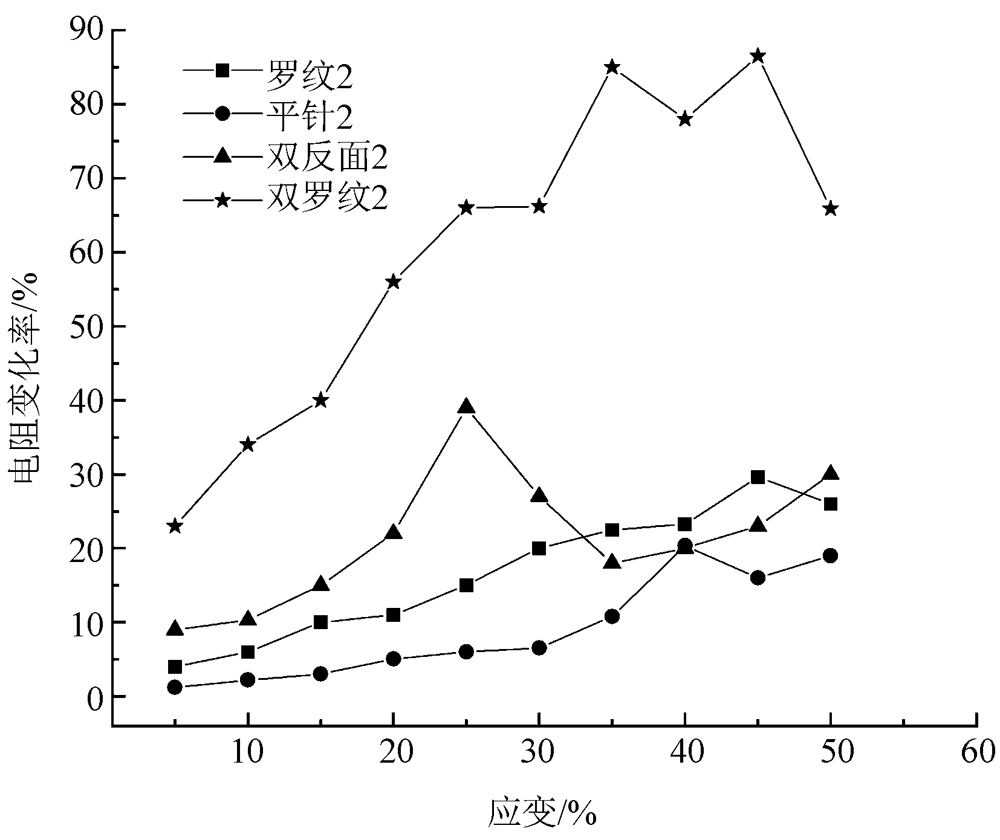
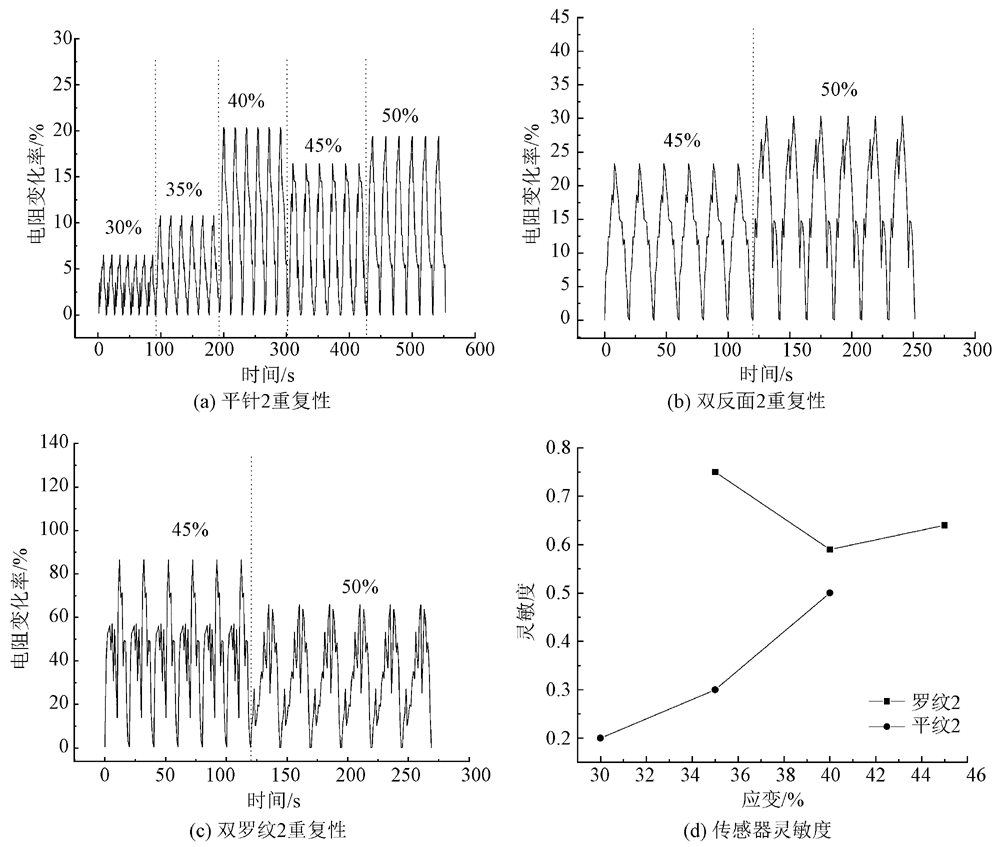
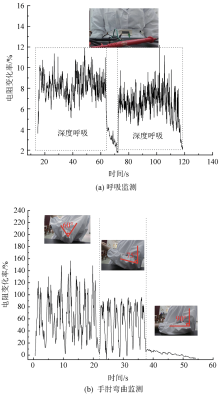
Results The prepared conductive yarn skin and core layer were tightly bonded. The resistance value of the 5 cm length of the yarn was within 27-31 kΩ, indicating relatively stable resistance, and the resistance value met the requirements of the preparation of the sensor. The sensor properties of the four types of structures prepared by inlay scheme 2 were better than those prepared by other inlay schemes. The relation between the resistance change rate and strain of the four types of structures sensor samples prepared under the strain of 5%~50%. The resistance change rate of the ribbed sample began to decrease after 45% strain, the resistance change rate of plain sample began to decrease after 40% strain, the resistance change rate of double-reverse sample fluctuated after 25% strain, and the resistance change rate of double-ribbed sample fluctuated after 35% strain. The repeatability range of the sensor stable resistance of the four types of structures of the embedded scheme 2 was 35%-50% for the rib sample, 30%-50% for the plain sample, and the double reflex 2 and double rib samples were stable under the strain of 45%-50%. The ribbed sensor sample passed 500 fatigue tests. On the basis of the ribbed sensor sample, the density of the fabric was reduced, and the effective strain range of the sensor was expanded to 20%-50%, and the life fatigue reached at least 500 times. The ribbed sample was sewn on the elastic belt, which initially achieved the monitoring of human respiration and joint movement.

Conclusion A conductive yarn with a skin core structure is prepared by using wet spinning technology to wrap a conductive layer of polyurethane/carbon black on nylon yarn, and the prepared conductive yarn is further used for the preparation of sensors. Based on the characterization of the sensor properties, It can be concluded that the sensor properties of the four types of structures prepared by inlay scheme 2 are better than those prepared by other inlay schemes. In the four types of knitted fabric, plain, 1×1 rib, double reverse, double rib, the effective strain range of the sensor sample of plain and 1×1 rib is 30%-45%, and the fatigue life is at least 500 times. Plain grain and 1×1 rib are more suitable as knitted fabric for preparing strain sensors. The density of the fabric sensor coil is found to affect the stability of the sensor. When the density of ribbed sensor samples is reduced, the effective strain range of the sensor is expanded from 35%-45% to 20%-50%. However, when the density decreases, the relative resistance of the sensor also decreases. It is a problem to balance the effective strain range and the relative resistance change. The sensor can effectively monitor breathing, joint movement, and other signals, and has a good development prospect in the field of flexible intelligent wearable.

Key words: fabric-based strain sensor, knitted fabric, wet spinning, breathing monitoring, motion monitoring, conductive yarn

中图分类号: 

  • TP212

图1

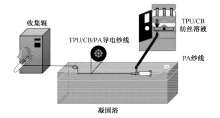
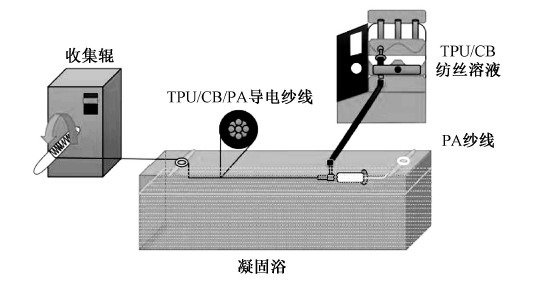
导电纱线制备示意图"

图2

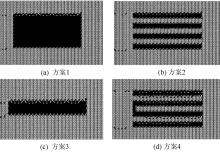
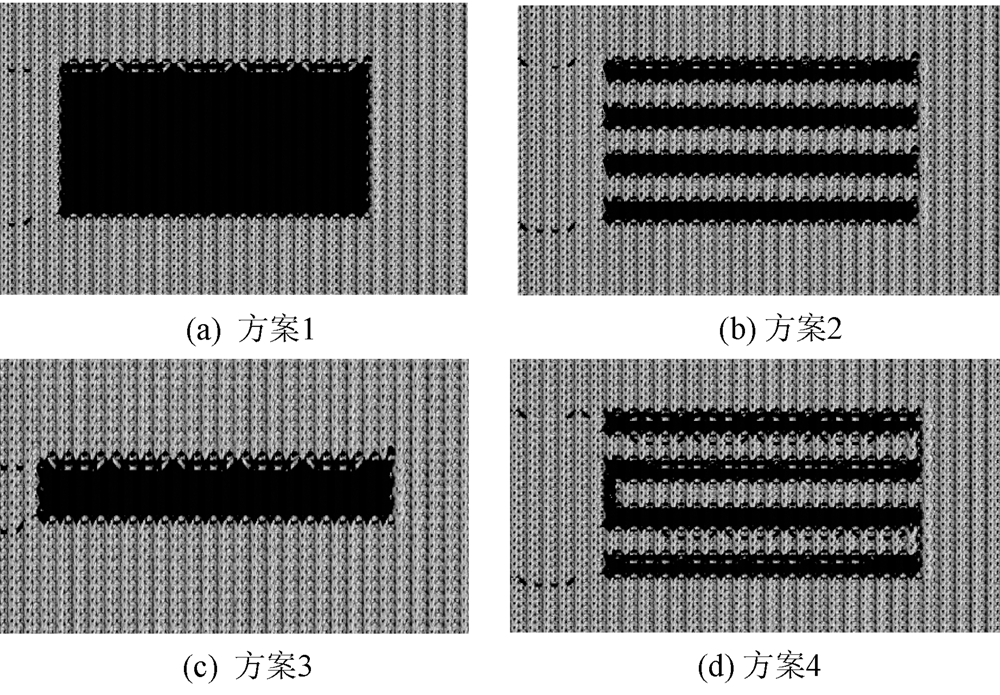
不同方案编织后织物传感器仿真图"

图3

织物应变传感器传感的原理示意图"

图4

TPU/CB/PA导电纱线的SEM照片"

图5

纱线拉伸断裂曲线"

图6

TPU/CB/PA导电纱线电阻测试"

表1

织物传感器基本参数"

组织名称 样品名称 样品尺寸
(长×宽×
厚度)/cm
导电部分
横列数
导电部分
纵行数
1×1罗纹 罗纹1 6.5×4.2×0.1 20 20
罗纹2 6.5×4.2×0.1 3 80
罗纹3 6.5×4.2×0.1 6 22
罗纹4 6.5×4.2×0.1 12 80
平针 平针1 10×5×0.1 20 40
平针2 10×5×0.1 3 156
平针3 10×5×0.1 8 45
平针4 10×5×0.1 12 156
双反面 双反面1 10.5×4.4×0.1 20 40
双反面2 10×4×0.1 3 160
双反面3 10×4×0.1 8 42
双反面4 10×4×0.1 12 160
双罗纹 双罗纹1 10.5×4.7×0.1 20 20
双罗纹2 10×4.7×0.1 2 140
双罗纹3 10×4.7×0.1 4 23
双罗纹4 10×4.7×0.1 5 140

图7

不同组织的导电线圈形貌"

图8

罗纹传感器样品在5%、30%应变下电阻信号变化"

图9

罗纹2传感器样品回复性图像"

图10

电阻变化率与应变的关系"

图11

罗纹1和罗纹2传感器样品在35% 应变下3次拉伸线圈变化图像"

图12

不同组织的传感器样品重复性及灵敏度对比"

表2

罗纹2不同总密度的传感器样品参数"

样品名称 横密/
(纵行·
(5 cm)-1)
纵密/
(横列·
(5 cm)-1)
总密度/
(线圈个数·
(25 cm2)-1)
罗纹2 30 90 2 700
罗纹2-240 28 60 1 680
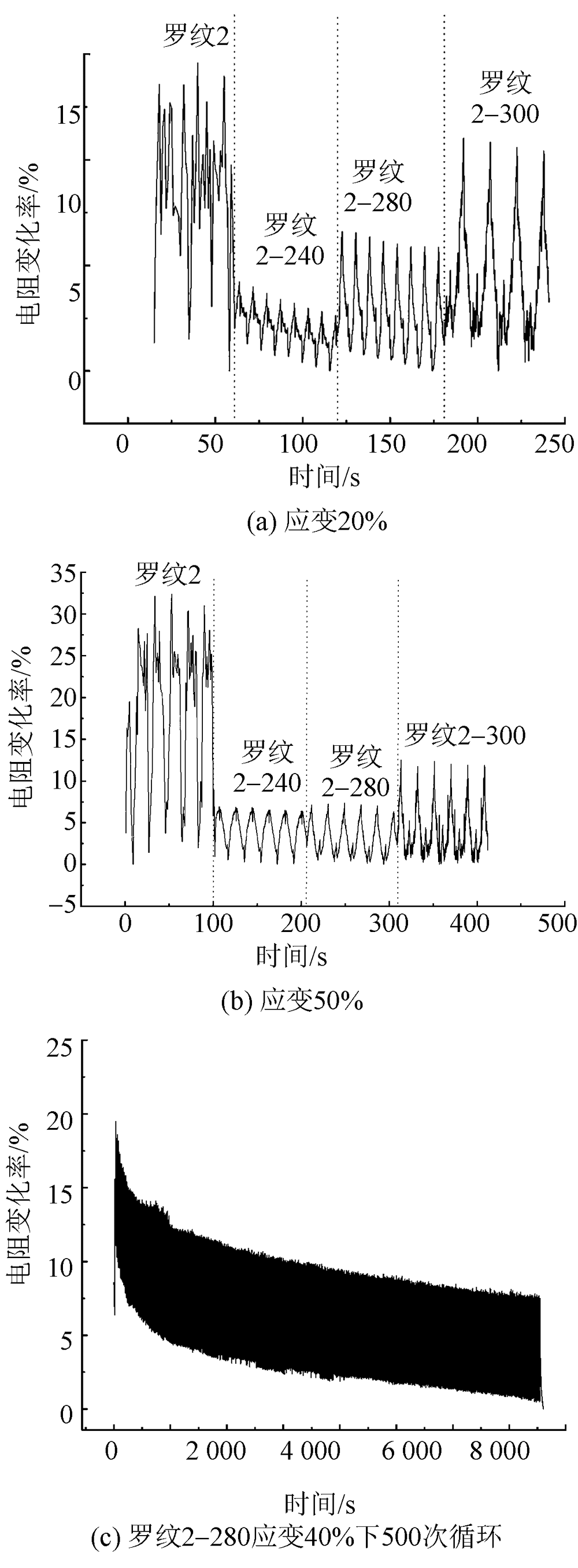
罗纹2-280 25 50 1 250
罗纹2-300 20 40 800

图13

罗纹2不同总密度传感器样品性能"

图14

传感器的应用"

[1] 温雯, 方方. 智能纺织品中柔性传感器及其应用[J]. 服装学报, 2019, 4(3): 223-229.
WEN Wen, FANG Fang. Application and research progress of flexible sensor for smart textiles[J]. Journal of Clothing Research, 2019, 4(3): 223-229.
[2] 王钰, 李斌. 柔性触觉传感器主要技术[J]. 传感器与微系统, 2012, 31(12): 1-4, 8.
WANG Yu, LI Bin. Main technology of flexible tactile sensor[J]. Transducer and Microsystem Technologies, 2012, 31(12): 1-4, 8.
[3] 张奕. 柔性复合型导电高聚物传感器的设计[J]. 纺织导报, 2008, 27(8): 92-94.
ZHANG Yi. Design of flexible conductive polymer composite sensors[J]. China Textile Leader, 2008, 27(8): 92-94.
[4] 马艳丽, 刘茜, 刘玮. 用于智能纺织品的柔性传感器研究进展[J]. 传感器与微系统, 2015, 34(4): 1-7.
MA Yanli, LIU Qian, LIU Wei. Research progress of flexible sensor for smart textiles[J]. Transducer and Microsystem Technologies, 2015, 34(4): 1-7.
[5] 韩晓雪, 缪旭红. 氨纶纬编导电织物纵向电力学性能[J]. 纺织学报, 2019, 40(4): 60-65.
HAN Xiaoxue, MIAO Xuhong. Longitudinal electrical physical properties of spandex weft-knitted conductive fabric[J]. Journal of Textile Research, 2019, 40(4): 60-65.
[6] 蔡倩文, 王金凤, 陈慰来. 纬编针织柔性传感器结构及其导电性能[J]. 纺织学报, 2016, 37(6): 48-53.
CAI Qianwen, WANG Jinfeng, CHEN Weilai. Structures and electrical properties of weft-knitted flexible sensors[J]. Journal of Textile Research, 2016, 37(6): 48-53.
[7] ATALAY Ozgur, KENNON William Richard, DEMIROK Erhan. Weft-knitted strain sensor for monitoring respiratory rate and its electro mechanical modeling[J]. IEEE Sensors Journal, 2015, 15(1): 110-122.
[8] CHEN Q, XIANG D, WANG L, et al. Facile fabrication and performance of robust polymer/carbon nanotube coated spandex fibers for strain sensing[J]. Composites Part A Applied Science & Manufacturing, 2018, 112(9): 186-196.
[9] 王晨露, 马金星, 杨雅晴, 等. 聚苯胺涂层经编织物的应变传感性能及其在呼吸监测中的应用[J]. 纺织学报, 2022, 43(8): 113-118.
WANG Chenlu, MA Jinxing, YANG Yaqing, et al. Strain sensing property and respiration monitoring of polyaniline-coated warp-knitted fabrics[J]. Journal of Textile Research, 2022, 43(8): 113-118.
[10] ZHENG Y, YIN R, ZHAO Y, et al. Conductive MXenelcotton fabric based pressure sensor with both high sensitivity and wide sensing range for human motion detection and E-skin[J]. Chemical Engineering Journal, 2021, 420: 1-8.
[11] ZHANG L, LI H, LAI X, et al. Carbonized cotton fabric-based multilayer piezoresistive pressure sen-sors[J]. Cellulose, 2019, 26(8): 5001-5014.
[12] ZHAO Yinan, LIU Lin, LI Zhen, et al. Facile fabrication of highly sensitive and durable cotton fabric-based pressure sensors for motion and pulse monito-ring[J]. Journal of Materials Chemistry C, 2021, 9: 12605-12614.
[13] 齐琨, 代云玲, 欧康康, 等. 嵌入银纳米线的织物型应变传感器的制备与性能[J]. 上海纺织科技, 2023, 51(3): 31-35.
QI Kun, DAI Yunling, OU Kangkang, et al. Preparation of textile-based strain sensor embedded with silver nanowires and its properties[J]. Shanghai Textile Science & Technology, 2023, 51(3): 31-35.
[14] 马飞祥, 丁晨, 凌忠文, 等. 导电织物制备方法及应用研究进展[J]. 材料导报, 2020, 34(1): 1114-1125.
MA Feixiang, DING Chen, LING Zhongwen, et al. Research progress on preparation and application of conductive fabrics[J]. Materials Reports, 2020, 34(1): 1114-1125.
[15] 顾琴, 杨通辉, 胡光凯, 等. AgNPs/TPU导电纤维的制备及性能研究[J]. 合成纤维工业, 2023, 46(3): 27-33.
GU Qin, YANG Tonghui, HU Guangkai, et al. Preparation and properties of AgNPs/TPU conductive fibers[J]. China Synthetic Fiber Industry, 2023, 46(3): 27-33.
[16] QU Xiangyang, WU Yuchen, JI Peng, et al. Crack-based core-sheath fiber strain sensors with an ultralow detection limit and an ultrawide working range[J]. ACS Appl Mater Interfaces, 2022, 14(25): 29167-29175.
[17] 张钰晶, 龙海如. 嵌花添纱针织应变传感器的制备与性能[J]. 东华大学学报(自然科学版), 2020, 46(6): 889-895.
ZHANG Yujing, LONG Hairu. Preparation and properties of intarsia-plated knitting strain sensor[J]. Journal of Donghua University(Natural Science), 2020, 46(6): 889-895.
[1] 韩炜, 邢晓梦, 张海宝, 姜茜, 刘天威, 卢佳浩, 闫志强, 巩继贤, 吴利伟. 基于粒子群算法对纬编针织物Johnson-Champoux-Allard模型参数反分析研究[J]. 纺织学报, 2024, 45(10): 103-112.
[2] 罗梦颖, 陈慧君, 夏明, 王栋, 李沐芳. 弹性导电复合纤维的制备及其应变与温度传感性能[J]. 纺织学报, 2024, 45(10): 9-15.
[3] 吴帆, 梁凤玉, 肖奕葶, 杨智博, 王文婷, 樊威. 聚(3,4-乙撑二氧噻吩):聚苯乙烯磺酸基复合导电纤维的制备及其性能[J]. 纺织学报, 2024, 45(08): 99-106.
[4] 葛美彤, 董智佳, 丛洪莲, 丁玉琴. 凹凸点阵双面织物的结构与湿热管理评价[J]. 纺织学报, 2024, 45(07): 47-54.
[5] 李倩倩, 郭晓玲, 崔文豪, 许宇真, 王林峰. 汽车座椅用抗菌涤纶针织物制备及其性能[J]. 纺织学报, 2024, 45(06): 127-133.
[6] 胥家辉, 郭肖青, 王伟, 王怀芳, 张传杰, 宫兆庆. 海藻酸钠/纳米蒙脱土纤维制备及其增强增韧机制[J]. 纺织学报, 2024, 45(06): 16-22.
[7] 胡旭东, 汤炜, 曾志发, 汝欣, 彭来湖, 李建强, 王博平. 基于轻量化卷积神经网络的纬编针织物组织结构分类[J]. 纺织学报, 2024, 45(05): 60-69.
[8] 常辰玉, 王雨薇, 原旭阳, 刘锋, 卢致文. 基于交织点改进弹簧-质点模型的纬编针织物动态变形模拟[J]. 纺织学报, 2024, 45(01): 99-105.
[9] 范梦晶, 吴玲娅, 周歆如, 洪剑寒, 韩潇, 王建. 镀银聚酰胺6/聚酰胺6纳米纤维包芯纱电容传感器的构筑[J]. 纺织学报, 2023, 44(11): 67-73.
[10] 丁雪婷, 王建萍, 潘婷, 姚晓凤, 袁鲁宁. 仿蜻蜓翅膀结构的冬季针织面料研发及其性能[J]. 纺织学报, 2023, 44(09): 75-83.
[11] 李龙, 张弦, 吴磊. 导电纱线制备方法与应用的研究进展[J]. 纺织学报, 2023, 44(07): 214-221.
[12] 俞旭良, 丛洪莲, 孙菲, 董智佳. 仿猪笼草口缘结构功能针织物的设计与应用[J]. 纺织学报, 2023, 44(07): 72-78.
[13] 史伟民, 简强, 李建强, 汝欣, 彭来湖. 基于非线性扩散和多特征融合的提花针织物疵点检测[J]. 纺织学报, 2023, 44(07): 86-94.
[14] 关振虹, 李丹, 宋金苓, 冷向阳, 宋西全. 易染间位芳纶的制备及其性能[J]. 纺织学报, 2023, 44(06): 28-32.
[15] 徐瑞东, 刘红, 王航, 朱士凤, 曲丽君, 田明伟. 离子型水凝胶复合织物构筑及其应变传感性能[J]. 纺织学报, 2023, 44(06): 137-143.
Viewed
Full text


Abstract

Cited

  Shared   
  Discussed   
No Suggested Reading articles found!