纺织学报 ›› 2025, Vol. 46 ›› Issue (03): 27-33.doi: 10.13475/j.fzxb.20240300101
乔思杰, 邢桐贺, 童爱心, 史芷丞, 潘恒, 刘可帅, 余豪( ), 陈凤翔
QIAO Sijie, XING Tonghe, TONG Aixin, SHI Zhicheng, PAN Heng, LIU Keshuai, YU Hao(), CHEN Fengxiang
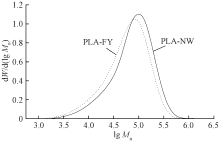
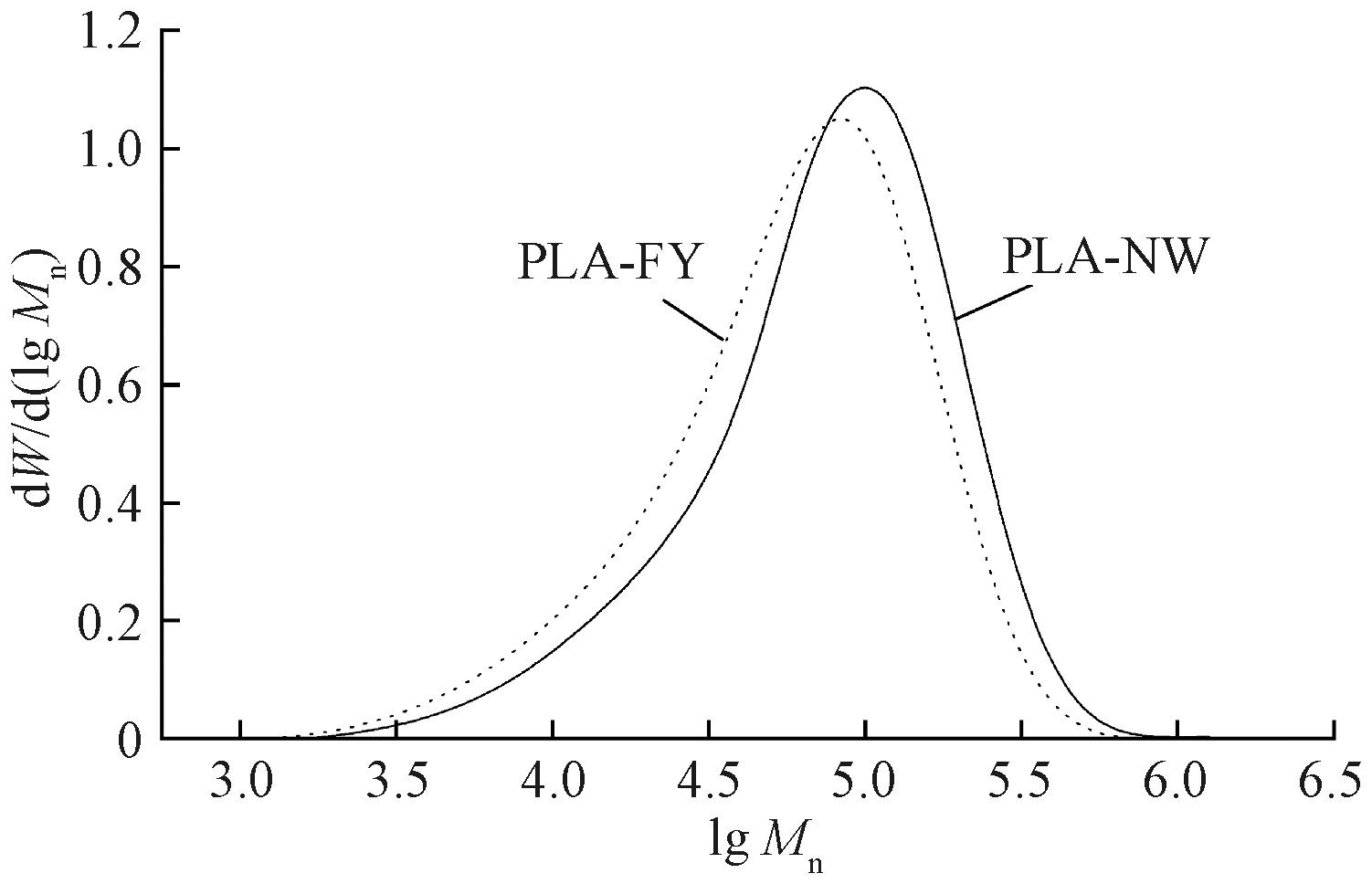
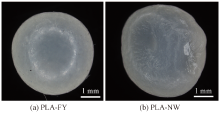
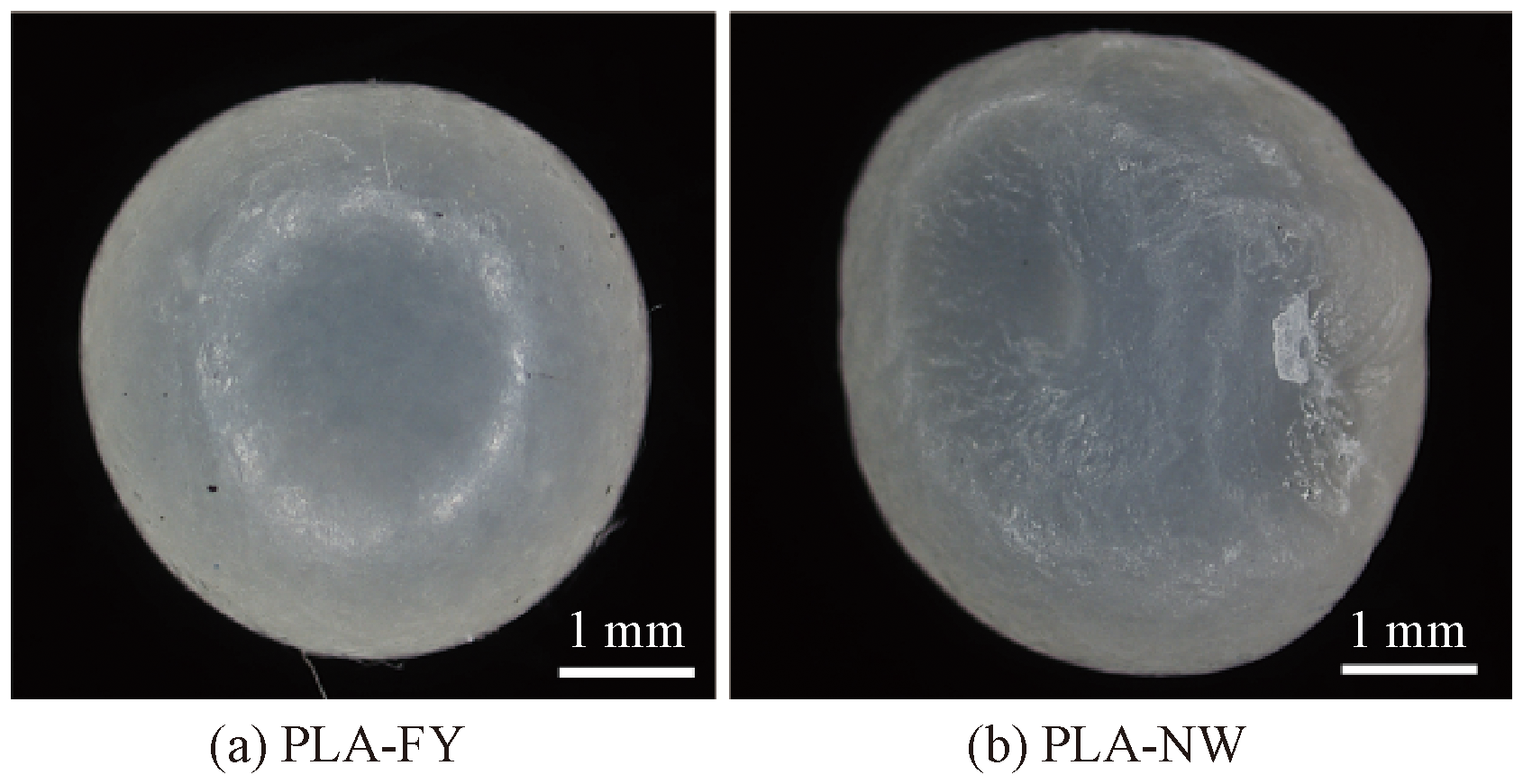
摘要: 为进一步揭示国内外产聚乳酸(PLA)性能间的差异,选用国内外某公司生产的聚乳酸粒料和有益母粒为研究对象,借助凝胶渗透色谱仪、光学显微镜、自动旋光仪、X射线衍射仪、黏度仪、流变仪、热重分析仪、熔融指数仪表征2种粒料的分子量、表面形貌及光学纯度、结晶度、熔体流变性能及热稳定性间的差异。结果显示:国外某公司生产的聚乳酸平均分子量及其分布、结晶度、光学纯度优于国内某公司产品,其热稳定性略优于国内某公司产品,且国外某公司聚乳酸产品表现出更高的储能模量、损耗模量和复数黏度和更优异的加工性能。该研究结果可为我国的PLA加工提供参考。
中图分类号:
| [1] | HAMAS A, MOON H, ZHENG JJ, et al. Degradation rates of plastics in the environment[J]. ACS Sustainable Chemistry & Engineering, 2020, 8: 3494-3511. |
| [2] |
王正祥. 我国聚乳酸产业发展现状与对策研究[J]. 中国工程科学, 2021, 23(6): 155-166.
doi: 10.15302/J-SSCAE-2021.06.015 |
|
WANG Zhengxiang. China's polylactic acid industry: current status and development strategies[J]. Strategic Study of CAE, 2021, 23(6): 155-166.
doi: 10.15302/J-SSCAE-2021.06.015 |
|
| [3] | 黄智宇, 邢桐贺, 何安南, 等. 废旧纺织品的资源化循环再生利用研究进展[J]. 科学通报, 2023, 68(2/3): 188-203. |
| HUANG Zhiyu, XING Tonghe, HE Annan, et al. Research progress on resource recycling and reusing of waste textiles[J]. Chin Sci Bull, 2023, 68(2/3): 188-203. | |
| [4] | 张玉, 骆宇新, 邢桐贺, 等. 双碳目标下废旧聚酯纺织品的回收再利用研究进展[J]. 高分子材料科学与工程, 2023, 39(10): 182-190. |
| ZHANG Yu, LUO Yuxin, XING Tonghe. Progress in research of resource recycling and reusing of waste polyester textiles under dual carbon target[J]. Polymer Materials Science & Engineering, 2023, 39(10): 182-190. | |
| [5] | SHEN MC, LI YG, SONG B, et al. Smoked cigarette butts: unignorable source for environmental microplastic fibers[J]. Science of the Total Environment, 2021. DOI: 10.1016/j.scitotenv.2021.148384. |
| [6] | LUNT J, SHAFER A L. Polylactic acid polymers from corn: applications in the textiles industry[J]. Journal of Textile Industry, 2000, 29(3): 191-205. |
| [7] | VAN W P, DUSSELIER M, VANLEEUW E, et al. Lactide synthesis and chirality control for polylactic acid production[J]. Chem Sus Chem, 2016, 9(9): 907-921. |
| [8] | MOON S I, LEE C W, MIYAMOTO M, et al. Melt polycondensation of L-lactic acid with Sn(II) catalysts activated by various proton acids: a direct manufacturing route to high molecular weight poly(L-lactic acid)[J]. Journal of Polymer Science A Polymer Chemistry, 2000, 38(9): 1673-1679. |
| [9] | PARK S J, LEE S Y, KIM T W, et al. Biosynthesis of lactate containing polyesters by metabolically engineered bacteria[J]. Biotechnology Journal, 2012, 7(2): 199-212. |
| [10] | 王子羽, 何文文, 徐云龙, 等. 有机胍催化法可控合成聚乳酸系环境友好材料[J]. 高分子学报, 2018 (7): 28-38. |
| WANG Ziyu, HE Wenwen, XU Yunlong, et al. Controlled synthesis of PLA-series environment-friendly polymers with guanidine catalysts[J]. Acta Polymerica Sinica, 2018 (7): 28-38. | |
| [11] | MARK J E, MARK J, MARK J, et al. Polymer data handbook[M]. New York: Oxford University Press, 1999. DOI: 10.1093/oso/9780195181012.001.0001. |
| [12] | ELING B, GOGOLEWSKI S, PENNINGS A J. Biodegradable materials of poly(L-lactic acid): 1. melt-spun and solution-spun fibres[J]. Polymer, 1982(23): 1587-1593. |
| [13] | NEERJA Y, LATA N, SUNIL Kumar K. Studies on the degradation and characterization of a novel metal-free polylactic acid synthesized via lipase-catalyzed polymerization:a step towards curing the environmental plastic issue[J]. Environmental Technology & Innovation, 2021. DOI: 10.1016/j.eti.2021.101845. |
| [14] | 张宇静, 陈连节, 张思东, 等. 高熔融指数聚乳酸母粒的制备及其熔喷材料的可纺性[J]. 纺织学报, 2023, 44(2): 55-62. |
| ZHANG Yujing, CHEN Lianjie, ZHANG Sidong et al. Preparation of high melt index polylactic acid masterbatch and spinnability of its meltblown mater-ials[J]. Journal of Textile Research, 2023, 44(2): 55-62. | |
| [15] | FENG L D, SUN B, BIAN X C, et al. Determination of D-lactate content in poly(lactic acid) using polarimetry[J]. Polym Test, 2010, 29(7): 771-776. |
| [16] | SAHA S K, TSUJI H. Effects of molecular weight and small amounts of D-lactide units on hydrolytic degradation of poly(L-lactic acid)s[J]. Polymer Degradation and Stability, 2006, 91(8): 1665-1673. |
| [17] |
DA S D, KADURI M, POLEY M, et al. Biocompatibility, biodegradation and excretion of polylactic acid (PLA) in medical implants and theranostic systems[J]. Chemical Engineering Journal, 2018, 340: 9-14.
doi: 10.1016/j.cej.2018.01.010 pmid: 31384170 |
| [18] | PAN P, LIANG Z, ZHU B, et al. Blending effects on polymorphic crystallization of poly(L-lactide)[J]. Macromolecules, 2009, 42(9): 3374-3380. |
| [19] |
项盛, 邵俊, 冯立栋, 等. 光学纯度对聚左旋乳酸结晶与熔融行为的影响[J]. 应用化学, 2016, 33(8): 887-893.
doi: 10.11944/j.issn.1000-0518.2016.08.150423 |
|
XIANG Sheng, SHAO Jun, FENG Lidong, et al. Effect of optical purities on the crystallization and melting behaviors of poly(L-lactic acid)[J]. Chinese Journal of Applied Chemistry, 2016, 33(8): 887-893.
doi: 10.11944/j.issn.1000-0518.2016.08.150423 |
|
| [20] | LI L, WANG H, JIANG T, et al. Effect of epoxy chain extenders on molecular structure and properties of polylactic acid[J]. Journal of Applied Polymer Science, 2023. DOI: 10.1002/app.54379. |
| [21] | VIRÁG ÁD, TÓTH C, MOLNÁR K. Photodegradation of polylactic acid: characterization of glassy and melt behaviour as a function of molecular weight[J]. International Journal of Biological Macromolecules, 2023. DOI: 10.1016/j.ijbiomac.2023.126336. |
| [22] | 朱斐超. 尼龙11/埃洛石纳米管复合聚乳酸材料及其增强增韧熔喷非织造材料的研究[D]. 杭州: 浙江理工大学, 2019: 29. |
| ZHU Feichao. Study on polyamide 11/halloysite nano-tubes hybrid poly(lactic acid) composites and reinforced and toughened melt-blown nonwovens[D]. Hangzhou: Zhejiang Sci-Tech University, 2019: 29. | |
| [23] | 彭威, 江太君. 热降解法制备喷丝级高熔指聚丙烯及其流变性能研究[J]. 化工技术与开发, 2020, 49(11): 15-17. |
| PENG Wei, JIANG Taijun. Preparation and properties of melt-blown polypropylene manufactured by thermal degradation[J]. Technology & Development of Chemical Industry, 2020, 49(11): 15-17. |
| [1] | 张惠琴, 吴改红, 刘霞, 刘淑强, 赵恒, 刘涛. 生物可降解聚乳酸防护口罩的开发及性能评估[J]. 纺织学报, 2025, 46(03): 116-122. |
| [2] | 赵珂, 张恒, 程文胜, 甄琪, 步青云, 崔景强. 类蒲叶结构聚乳酸熔喷非织造材料的制备及其性能[J]. 纺织学报, 2025, 46(02): 51-60. |
| [3] | 左红梅, 高敏, 阮芳涛, 邹梨花, 徐珍珍. MXene-氧化石墨烯改性碳纤维/聚乳酸复合材料制备及其力学性能[J]. 纺织学报, 2025, 46(01): 9-15. |
| [4] | 刘霞, 吴改红, 闫子豪, 王彩柳. 智能相变调温聚乳酸纤维膜的制备及其性能[J]. 纺织学报, 2024, 45(12): 18-24. |
| [5] | 欧宗权, 于金超, 潘志娟. 光致变色聚乳酸/聚3-羟基丁酸酯共混纤维的纺制及其结构与性能[J]. 纺织学报, 2024, 45(12): 9-17. |
| [6] | 贾笑娅, 王蕊宁, 侯宵, 何彩婷, 刘杰, 孙润军, 王秋实. 多相剪切增稠液增强柔性层合结构防刺材料的制备及其性能[J]. 纺织学报, 2024, 45(10): 113-121. |
| [7] | 闫迪, 王雪芳, 谭文萍, 高国金, 明津法, 宁新. 富咪唑型多孔左旋聚乳酸纳米纤维膜制备及其双重净水性能[J]. 纺织学报, 2024, 45(08): 116-126. |
| [8] | 王文, 张乐乐, 黄阳杰, 谭浩, 方舒婷, 向晨雪, 王栋. 聚乙烯醇-乙烯/SiO2复合柔性驱动膜的制备及其性能[J]. 纺织学报, 2024, 45(07): 10-17. |
| [9] | 于承浩, 王元非, 于腾波, 吴桐. 热致自卷曲左旋聚乳酸/聚乳酸-羟基乙酸共聚物纳米纤维血管支架制备及其性能[J]. 纺织学报, 2024, 45(07): 18-23. |
| [10] | 李曼丽, 季志浩, 龙柱, 王益峰, 金恩琪. 壳聚糖荧光防伪印花涂料的制备及其应用性能[J]. 纺织学报, 2024, 45(03): 114-121. |
| [11] | 翟倩, 张恒, 赵珂, 朱文辉, 甄琪, 崔景强. 仿生竹节纤维基加湿材料的叠层设计及其导湿快干性能[J]. 纺织学报, 2024, 45(02): 1-10. |
| [12] | 魏义慧, 张宇静, 邓辉话, 邓庆辉, 陈浩锵, 张须臻, 于斌, 朱斐超. 高熔融指数聚乙烯母粒的制备及其红外透射熔喷材料的可纺性[J]. 纺织学报, 2024, 45(02): 28-35. |
| [13] | 杨奇, 刘高慧, 黄琪帏, 胡睿, 丁彬, 俞建勇, 王先锋. 熔喷聚乳酸/聚偏氟乙烯电晕驻极空气过滤材料电荷存储与过滤性能相关性研究[J]. 纺织学报, 2024, 45(01): 12-22. |
| [14] | 王镕琛, 张恒, 翟倩, 刘瑞焱, 黄鹏宇, 李霞, 甄琪, 崔景强. 聚乳酸超细纤维敷料的熔喷成形工艺及其快速导液特性[J]. 纺织学报, 2024, 45(01): 30-38. |
| [15] | 戎成宝, 孙辉, 于斌. 银-铜双金属纳米粒子/聚乳酸复合纳米纤维膜的制备及其抗菌性能[J]. 纺织学报, 2024, 45(01): 48-55. |
|
||
 京公网安备11010502044800号