纺织学报 ›› 2025, Vol. 46 ›› Issue (06): 17-22.doi: 10.13475/j.fzxb.20241201401
• 纤维新材料与纺织绿色发展青年科学家沙龙专栏 • 上一篇 下一篇
李沐芳, 魏琬茹, 李倩倩, 宋引男, 王栋, 罗梦颖( )
)
LI Mufang, WEI Wanru, LI Qianqian, SONG Yinnan, WANG Dong, LUO Mengying()
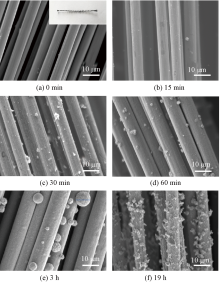
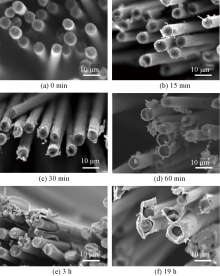
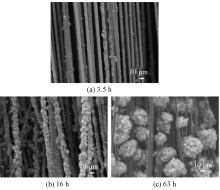
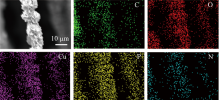
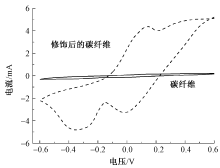
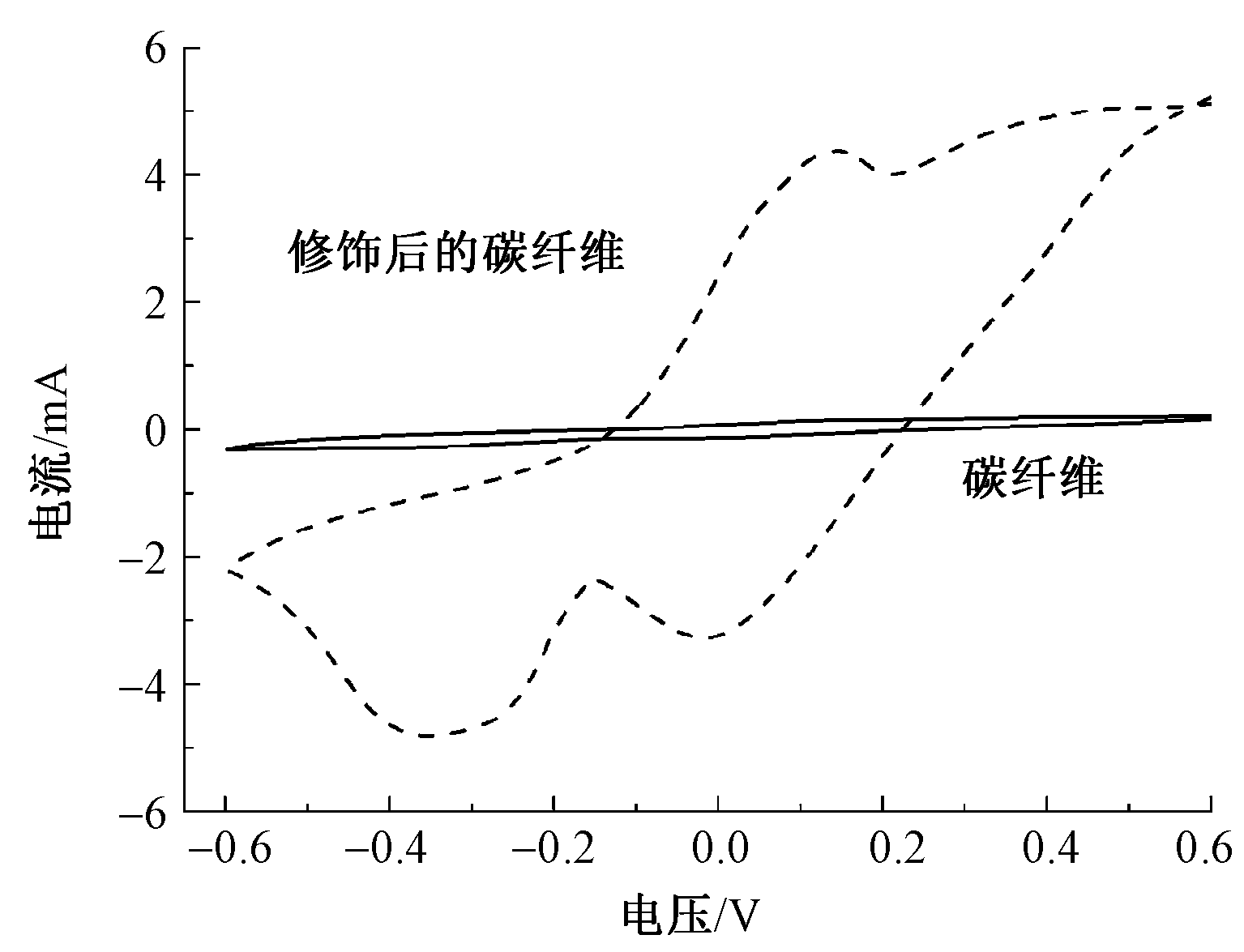
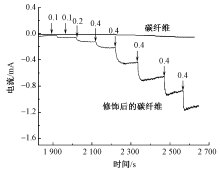
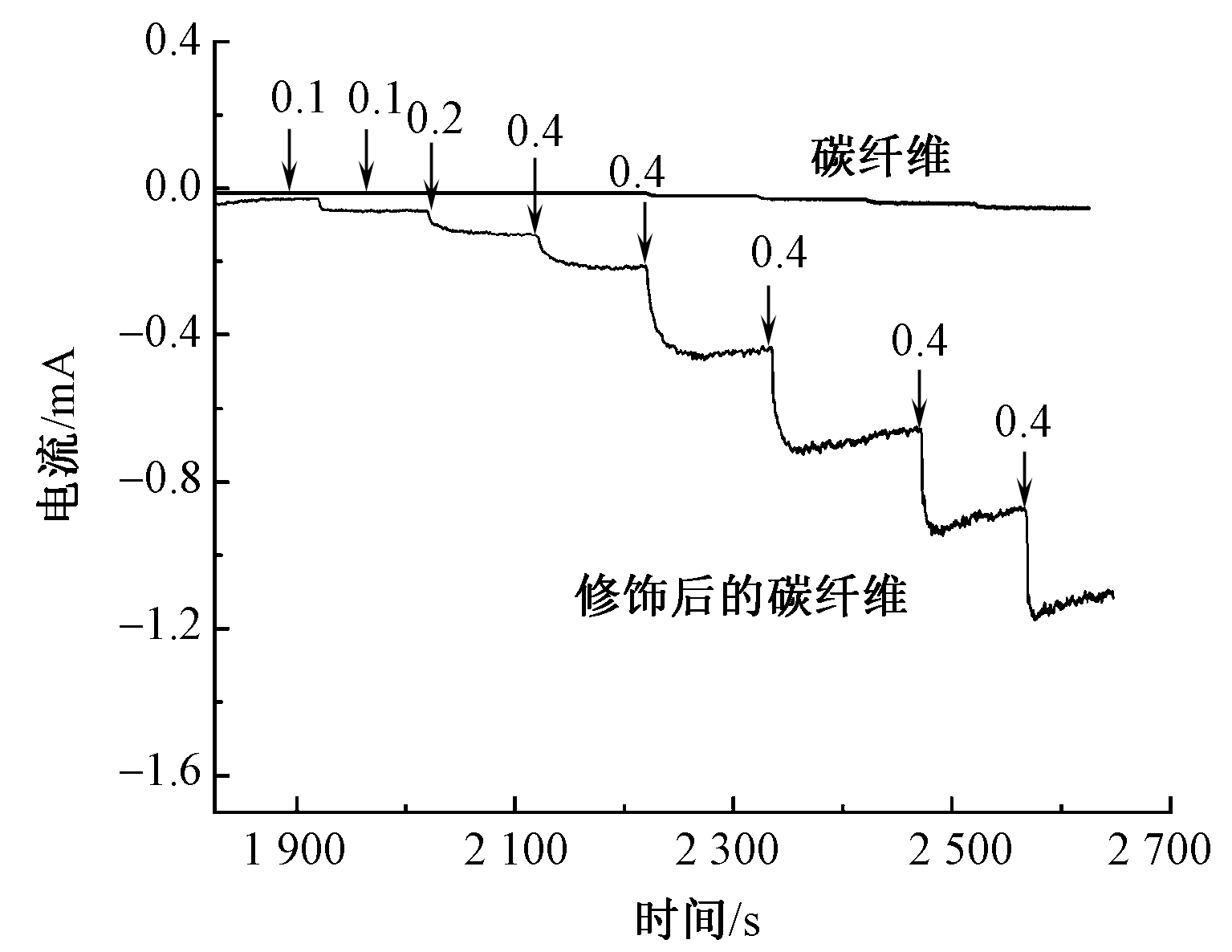
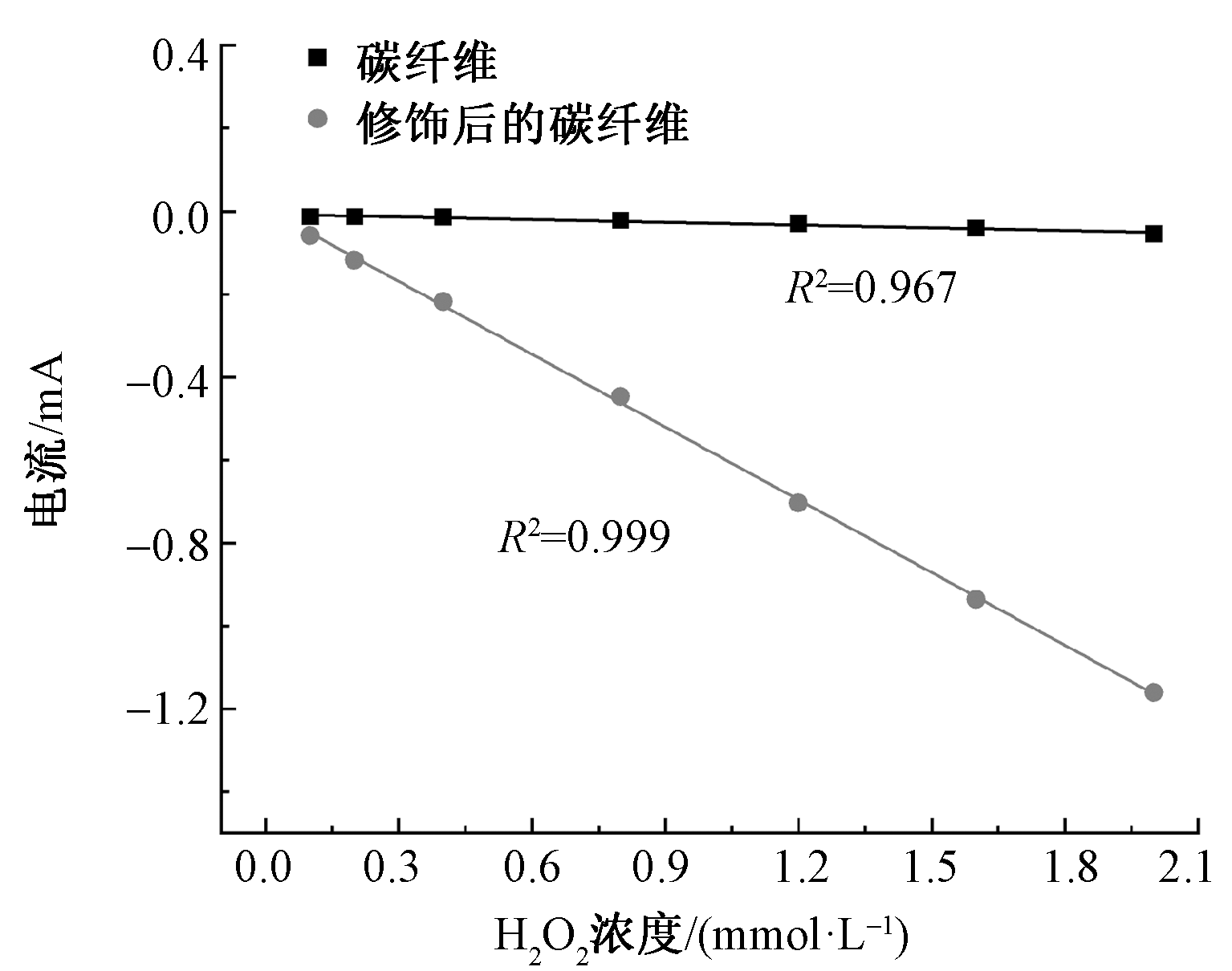
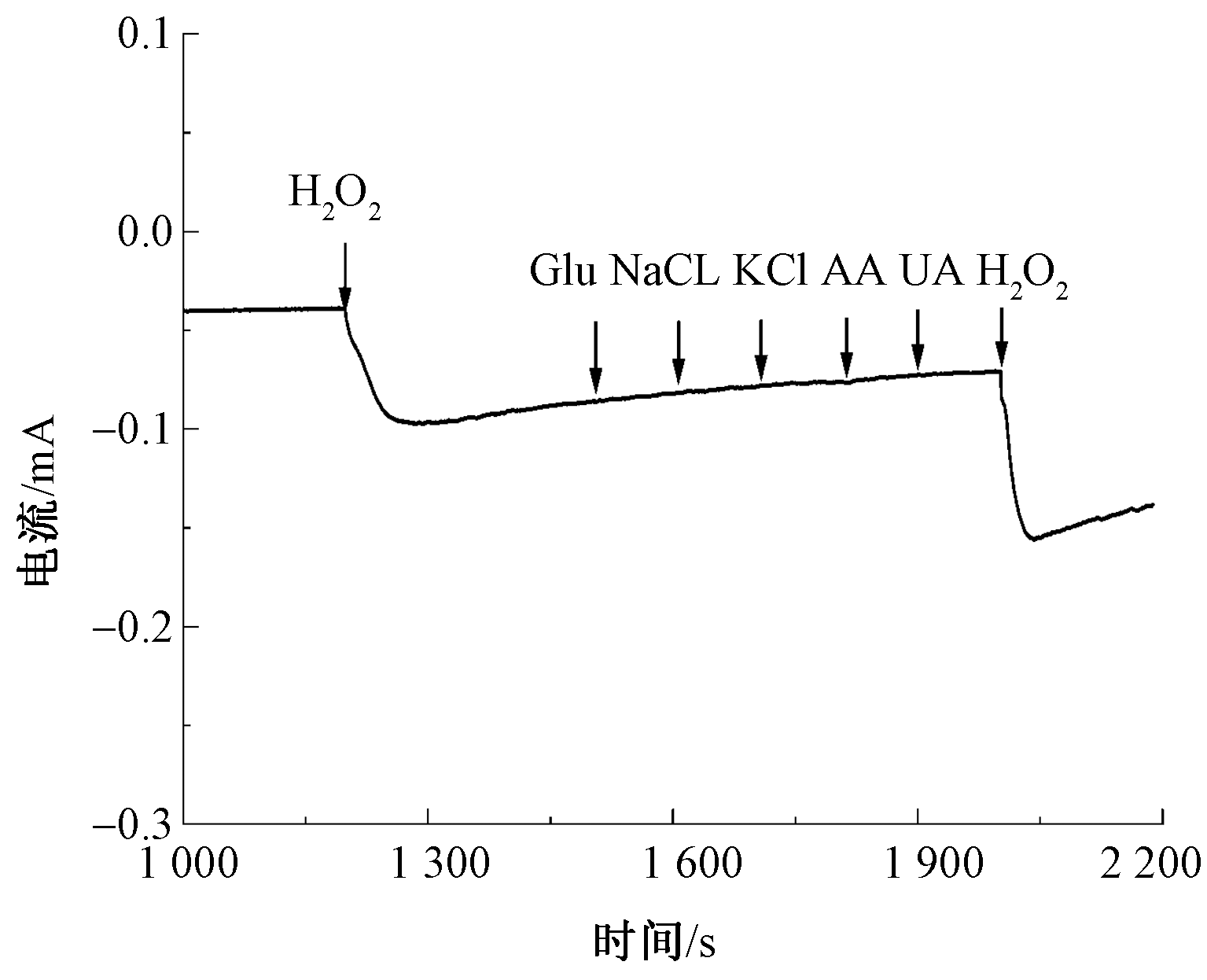
摘要: 为解决生物传感器灵敏度低、选择性差、制备工艺复杂等问题,以高导电的碳纤维为基材,通过原位生长法在其表面构筑辣根过氧化物酶(HRP)/磷酸铜(Cu3(PO4)2)有机/无机纳米花,制备出具有高灵敏性的过氧化氢(H2O2)电化学传感器,探讨了施镀时间、浸渍时间对其形貌结构的影响,借助扫描电子显微镜和能量色散X射线光谱仪研究其形态结构、化学结构,揭示其形成机制,并利用电化学工作站考察其对H2O2的检测性能。结果表明:在室温条件下对碳纤维化学施镀30 min,然后在HRP溶液中浸渍16 h,可在其表面构筑出HRP/Cu3(PO4)2有机/无机纳米花;所制备的表面带有HRP/Cu3(PO4)2有机/无机纳米花的碳纤维电极具有优异的电催化性能,在H2O2浓度范围为0.1~2 mmol/L时,响应电流与H2O2浓度呈现良好的线性关系,相关系数R2为0.999,灵敏度为146.3 μA/(mmol·L-1·cm),检测限为0.441 μmol/L;该电极对葡萄糖、NaCl、KCl、抗坏血酸、尿素均无电流响应,具有优异的抗干扰性能。
中图分类号:
| [1] | XU Yun, HUANG Wei, DUAN Hongwei, et al. Bimetal-organic framework-integrated electrochemical sensor for on-chip detection of H2S and H2O2 in cancer tissues[J]. Biosensors and Bioelectronics, 2024. DOI: 10.1016/j.bios.2024.116463. |
| [2] | 张子雯, 李林, 李慧琳, 等. 基于MWCNTs和Co-Fe双金属普鲁士蓝类似物的电化学传感检测牛奶中的H2O2[J]. 分析测试学报, 2024, 43(6): 866-874. |
| ZHANG Ziwen, LI Lin, LI Huilin, et al. Electrochemical sensor based on MWCNTs and Co-Fe bimetallic prussian blue analogues for the detection of H2O2 in milk[J]. Journal of Analytical Sciences, 2024, 43(6): 866-874. | |
| [3] |
向忠, 王宇航, 吴金波, 等. 过氧化氢检测方法研究进展[J]. 纺织学报, 2020, 41(10): 197-204.
doi: 10.13475/j.fzxb.20200102308 |
|
XIANG Zhong, WANG Yuhang, WU Jinbo, et al. Research progress in detection of hydrogen peroxide concentration[J]. Journal of Textile Research, 2020, 41(10): 197-204.
doi: 10.13475/j.fzxb.20200102308 |
|
| [4] | 杨锦锋, 张柏爽, 胡彬, 等. 铁碳纳米纤维电沉积普鲁士蓝用于过氧化氢的高灵敏检测[J]. 分析科学学报, 2023, 39(6): 629-634. |
| YANG Jinfeng, ZHANG Boshuang, HU Bin, et al. Prussian blue deposition on Fe-CNF by in-situ Fe releasing and highly sensitive detection of hydrogen peroxide[J]. Journal of Analytical Sciences, 2023, 39(6): 629-634. | |
| [5] | 赵思佳, 王静, 贺锋, 等. 基于MB@ZIF-8/COOH-MWCNTs复合材料的比率型电化学传感器检测过氧化氢[J]. 分析化学, 2023, 51(9): 1452-1462. |
| ZHAO Sijia, WANG Jing, HE Feng, et al. MB@ZIF-8/COOH-MWCNTs composite-based ratiometric electrochemical sensor for detection of hydrogen pero-xide[J]. Chinese Journal of Analytical Chemistry, 2023, 51(9): 1452-1462. | |
| [6] | LUO M Y, SONG Y N, KHAN N A, et al. Facile fabrication of HRP-Cu3(PO4)2 hybrid nanoflowers on screen-printed electrode for electrochemical detection of H2O2[J]. Microchemical Journal, 2024. DOI: 10.1016/j.microc.2023.109845. |
| [7] | SONG J, SHEN X, LIU F S, et al. Ca2+-based metal-organic framework as enzyme preparation to promote the catalytic activity of amylase[J]. Materials Today Chemistry, 2023. DOI: 10.1016/j.mtchem.2023.101522. |
| [8] | HUANG J J, JIAO L, XU W Q, et al. Amorphous metal-organic frameworks on PtCu hydrogels: enzyme immobilization platform with boosted activity and stability for sensitive biosensing[J]. Journal of Hazardous Materials, 2022. DOI: 10.1016/j.jhazmat.2022. 128707. |
| [9] | GE J, LEI J D, ZARE R N. Protein-inorganic hybrid nanoflowers[J]. Nature Nanotech, 2012(7): 428-432. |
| [10] | TAN X F, SUN X M, LI Y, et al. Biomineralized Mn3(PO4)2/aptamer nanosheets for enhanced electrochemical determination of C-reactive protein[J]. Sensors and Actuators B: Chemical, 2021. DOI: 10.1016/j.snb.2021.129510. |
| [11] | 张润可, 吕汪洋, 陈文兴. 钴酞菁与碳纳米管共修饰碳纤维织物传感器的制备及其电化学性能[J]. 纺织学报, 2021, 42(4): 121-126. |
| ZHANG Runke, LÜ Wangyang, CHEN Wenxing. Preparation and electrochemical properties of carbon fiber fabric sensors co-modified by cobalt phthalocyanine and carbon nanotubes[J]. Journal of Textile Research, 2021, 42(4): 121-126. | |
| [12] | HUANG Y, LIN J X, DUAN Y C, et al. Preparation of carbon fiber composite modified by cobalt lanthanum oxides and its electrochemical simultaneous determination of amlodipine and acetaminophen[J]. Advanced Fiber Material, 2022, 4: 1153-1163. |
| [13] | LUO M Y, LI M F, JIANG S, et al. Supported growth of inorganic-organic nanoflowers on 3D hierarchically porous nanofibrous membrane for enhanced enzymatic water treatment[J]. Journal of Hazardous Materials, 2020. DOI: 10.1016/j.jhazmat.2019.120947. |
| [1] | 梁琦敏, 鄢卓君, 李长昕, 刘志锋, 何思斯. 纤维及织物基电化学传感器与水系电池的研究进展与展望[J]. 纺织学报, 2025, 46(05): 89-95. |
| [2] | 黎靖康, 黄亮, 陈诗诗, 毕曙光, 冉建华, 唐加功. 苄基缩水甘油醚改性环氧类玻璃高分子材料的自修复与再加工性能[J]. 纺织学报, 2025, 46(04): 20-28. |
| [3] | 刘仁义, 杨琴, 孙宝忠, 顾伯洪, 张威. 织物增强复合材料的电热驱动形状记忆回复行为[J]. 纺织学报, 2025, 46(01): 72-79. |
| [4] | 左红梅, 高敏, 阮芳涛, 邹梨花, 徐珍珍. MXene-氧化石墨烯改性碳纤维/聚乳酸复合材料制备及其力学性能[J]. 纺织学报, 2025, 46(01): 9-15. |
| [5] | 肖鑫, 李伟, 卢润, 姜会钰, 李青. 等离子体协同过氧化氢活化体系对纯棉水刺非织造布的练漂处理[J]. 纺织学报, 2024, 45(12): 118-127. |
| [6] | 姜梦敏, 王一璠, 金欣, 王闻宇, 肖长发. 聚吡咯共轭结构对碳纤维增强树脂基复合材料热循环稳定性能的影响[J]. 纺织学报, 2024, 45(10): 23-30. |
| [7] | 李天宇, 沈伟, 陈立峰, 竺铝涛. 三维角联锁机织复合材料的制备及其弯曲压缩失效机制[J]. 纺织学报, 2024, 45(08): 183-189. |
| [8] | 张诗雨, 姚依婷, 董晨珊, 张如全, 杨红军, 顾绍金, 黄菁菁, 杜杰毫. 金属有机框架/聚丙烯纤维基复合材料对化学战剂模拟物的快速降解[J]. 纺织学报, 2024, 45(06): 134-141. |
| [9] | 徐振凯, 马鸣, 蔺多佳, 刘航, 张剑峰, 夏鑫. 自支撑聚吡咙基碳纤维负极材料的制备及其电化学性能[J]. 纺织学报, 2024, 45(06): 23-31. |
| [10] | 高志浩, 宁新, 明津法. 生物质基碳气凝胶及其在储能器件中应用研究进展[J]. 纺织学报, 2024, 45(06): 210-218. |
| [11] | 向宇, 周爱晖, 王思翔, 季巧, 文馨可, 袁久刚. 基于拉曼光谱的羊毛二硫键及构象含量分析[J]. 纺织学报, 2024, 45(02): 45-51. |
| [12] | 徐志豪, 徐丹瑶, 李彦, 王璐. 基于表面增强拉曼光谱的纳米纤维基生物传感器的研究进展[J]. 纺织学报, 2023, 44(11): 216-224. |
| [13] | 刘其霞, 张天昊, 季涛, 葛建龙, 单浩如. 锆基金属有机骨架材料/活性碳纤维复合材料的制备及其降解性能[J]. 纺织学报, 2023, 44(09): 134-143. |
| [14] | 夏良君, 曹根阳, 刘欣, 徐卫林. 高性能纤维及其制品颜色构建的研究进展[J]. 纺织学报, 2023, 44(06): 1-9. |
| [15] | 王赫, 王洪杰, 赵紫奕, 张晓婉, 孙冉, 阮芳涛. 多孔与连通结构碳纳米纤维电极的设计及其电化学性能[J]. 纺织学报, 2023, 44(06): 41-49. |
|
||
 京公网安备11010502044800号