纺织学报 ›› 2025, Vol. 46 ›› Issue (09): 163-170.doi: 10.13475/j.fzxb.20241207401

• 纺织工程 • 上一篇    下一篇

基于ABAQUS模拟的准零刚度织物隔振器制备

张兆栋, 王蕾(), 潘如如   

  1. 江南大学 纺织科学与工程学院, 江苏 无锡 214122
  • 收稿日期:2024-12-31 修回日期:2025-04-17 出版日期:2025-09-15 发布日期:2025-11-12
  • 通讯作者: 王蕾(1987—),女,副研究员,博士。主要研究方向为数字化纺织技术。E-mail: wangl_jn@163.com
  • 作者简介:张兆栋(2001—),男,硕士生。主要研究方向为数字化纺织技术。
  • 基金资助:
    国家自然科学基金项目(61802152);中国博士后科学基金面上资助项目(2020M681736);中国纺织工业联合会应用基础研究项目(J202109);江南大学研究生科研与实践创新项目(KYCX-23-ZD01);江南大学研究生科研与实践创新项目(KYCX-23-ZD02)

Preparation of quasi-zero stiffness fabric isolator based on ABAQUS simulation

ZHANG Zhaodong, WANG Lei(), PAN Ruru   

  1. College of Textile Science and Engineering, Jiangnan University, Wuxi, Jiangsu 214122, China
  • Received:2024-12-31 Revised:2025-04-17 Published:2025-09-15 Online:2025-11-12

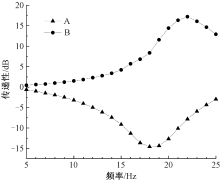
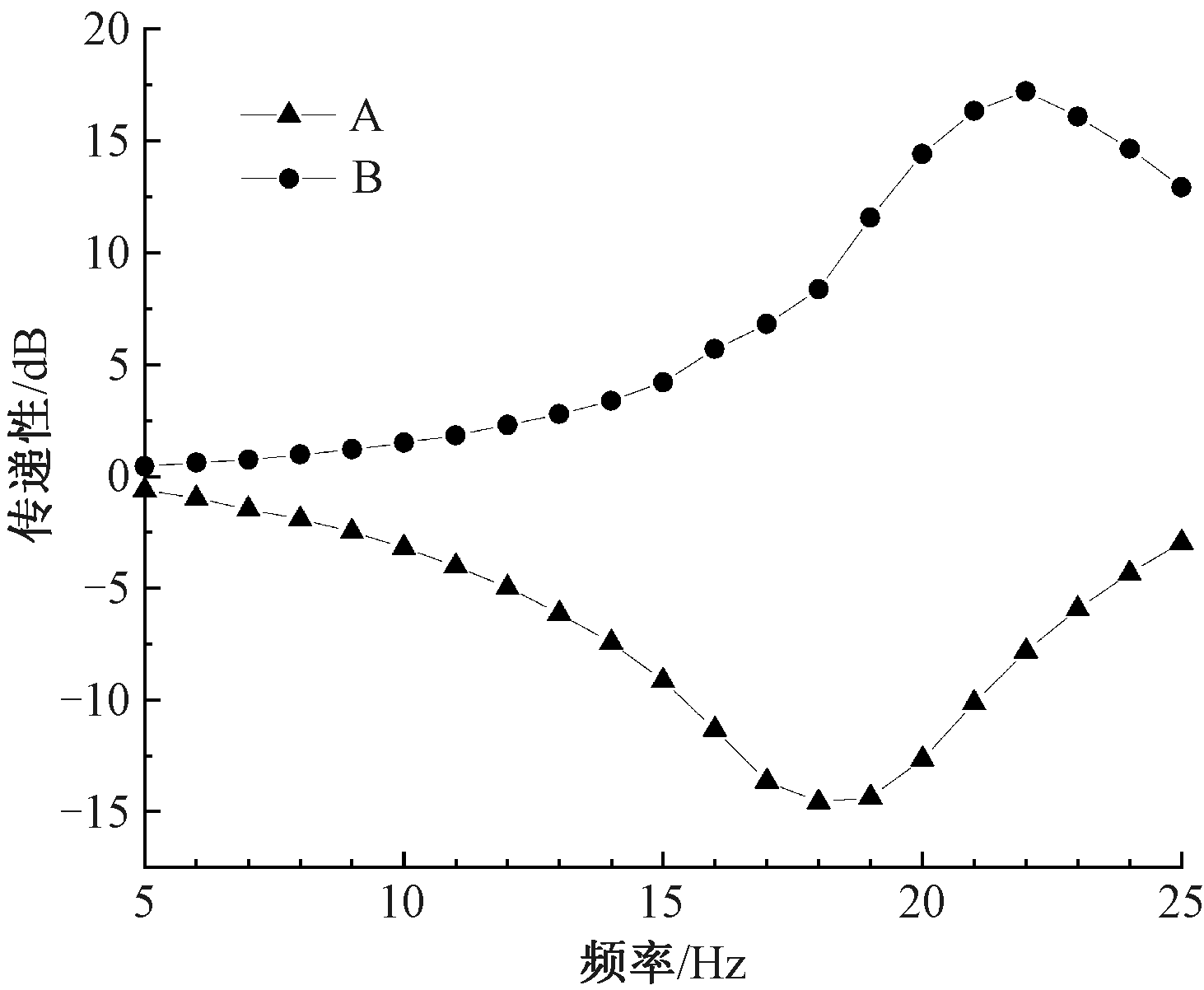
摘要: 为解决线性隔振器在低频条件下隔振性能与承载能力之间的矛盾,通过设计具备非线性刚度的结构来构建准零刚度隔振器。受弯曲折纸启发,首先构建一种弯曲折痕模型,通过有限元模拟的方法发现其具有非线性压缩力,进而研究了模型参数对力-位移的影响,揭示了准零刚度原理,并通过织物压缩实验验证,阐明了非线性刚度的可调机制;然后以缝合方式制备2种不同折痕曲率的织物立体单元,利用仿真模拟和压缩实验验证其具备不同刚度特性;最后通过施加正弦激励信号检测2种织物立体单元阵列的振动响应。结果表明,两种织物单元的压缩力-位移曲线实验结果与模拟值呈显著相关,准零刚度织物单元阵列在18 Hz下隔振性能最优,振幅传递性为-14.5 dB,在低频(5~25 Hz)下较正刚度织物单元阵列有着良好的隔振性能,可以用作非线性隔振器。

关键词: 弯曲折痕模型, 隔振性能, 刚度可调, 织物单元, 织物隔振器

Abstract:

Objective In order to solve the contradiction between the isolation bearing capacity and isolation frequency of linear isolators at low frequencies, a quasi-zero stiffness fabric isolator with this characteristic is designed using diagonal fabric based on the principle of nonlinear stiffness. A sinusoidal excitation signal is applied to the vibration isolator to evaluate its vibration isolation performance through vibration testing.

Method A bending crease model was developed in SolidWorks, and finite element analysis (FEA) was conducted using ABAQUS to simulate the compression behavior of the model. The same bending crease pattern was then applied to the fabric, followed by compression experiments. Two fabric solid elements with different crease curvatures were designed based on the bending crease model. Finite element simulations and experimental compression tests were performed. Vibration isolation performance tests were carried out on different fabric three-dimensional unit arrays to verify the low-frequency vibration isolation performance of the quasi-zero stiffness fabric isolator.

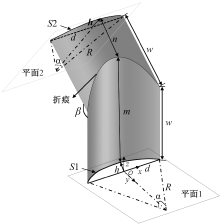
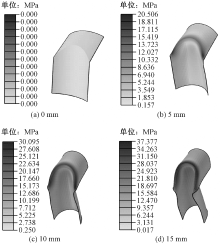
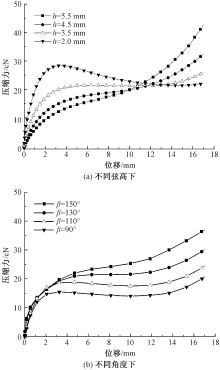
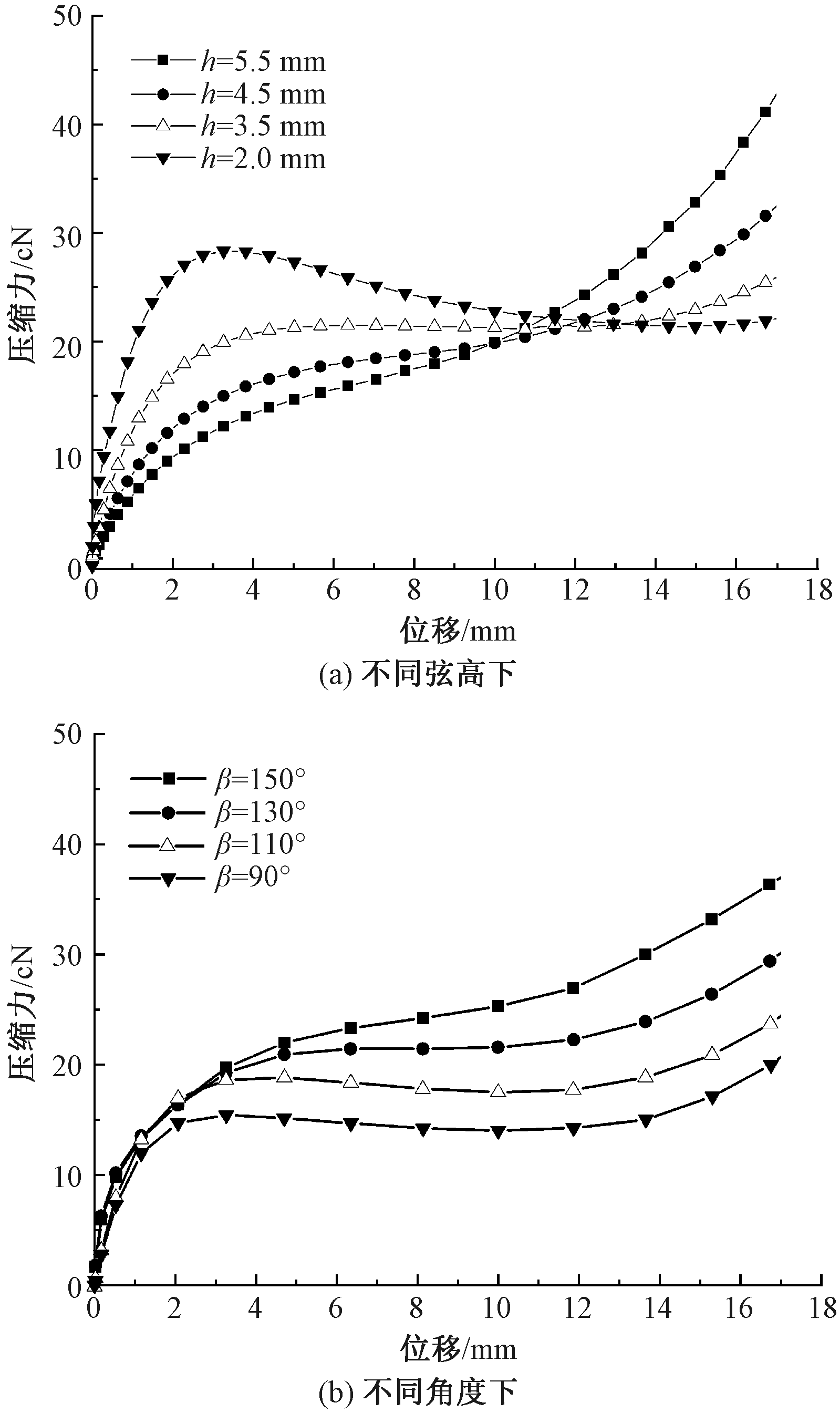
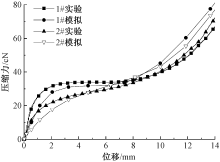
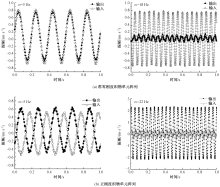
Results Finite element simulation compression was performed on the bending crease model. The simulation results showed that during the compression process of the model, the stress was first concentrated at the creases on both sides with a symmetrical distribution. As the degree of bending increased, the stress was transferred to the middle of the crease. The stress value on the bending surface was always lower than that at the crease throughout the process. The compression force-displacement curve was analyzed to assess the performance. Three different types of stiffness curves were obtained by changing the model parameters (chord height h, folding angle β). When other parameters were held constant, the chord height h was increases from 2.0 mm to 5.5 mm, the stiffness of the model was changed from negative stiffness to quasi-zero stiffness and then to positive stiffness, and the initial compression force value demonstrated a decrease from 30 cN to 21 cN. As the crease angle β varied from 90° to 150°, the model's stiffness was changed from negative stiffness to positive stiffness. Compression experiments were performed on fabric samples using the same bending crease pattern. The compression force displacement curves of the fabric at folding angles β of 110°, 130°, and 150° were highly similar to those obtained from finite element simulation, verifying the correctness of the finite element simulation and jointly elucidating the adjustable mechanism of nonlinear stiffness. Finite element simulation and experimental compression were conducted on fabric units with two different fold curvatures. The correlation coefficients between the simulation results and the experimental results were both above 0.833. Two types of fabric unit arrays were placed on an excitation table. Loads were applied to them to achieve quasi-zero stiffness and positive stiffness, respectively. The experimental results demonstrated that the designed quasi-zero stiffness fabric unit exhibited superior isolation performance compared to the positive stiffness fabric unit in the frequency range of 5-25 Hz.

Conclusion A fabric three-dimensional unit isolator was designed to solve the problem of low-frequency isolation in linear isolators. A bending crease model was proposed, which was subjected to finite element simulation compression and fabric experimental compression. The influence of model parameters on the compression force displacement curve was revealed in two ways. Three distinct stiffness curves were obtained, which elucidate the mechanism of nonlinear stiffness adjustment. Based on this mechanism, two types of fabric three-dimensional units with different bending crease curvatures were designed and simulated and experimentally verified. The experimental compression force-displacement curves of the two fabric units exhibited a strong correlation with the simulation results, with quasi-zero stiffness and positive stiffness demonstrated, respectively. The results show that in the low-frequency range, the vibration transmission of quasi-zero stiffness fabric array is negative, while that of positive stiffness fabric array is positive. The quasi-zero stiffness fabric array exhibits better isolation performance than the positive stiffness fabric array, indicating that the former can be used as a nonlinear isolator.

Key words: bending crease model, vibration isolation performance, adjustable stiffness, fabric unit, fabric vibration isolator

中图分类号: 

  • TS101.8

图1

弯曲折痕模型"

图2

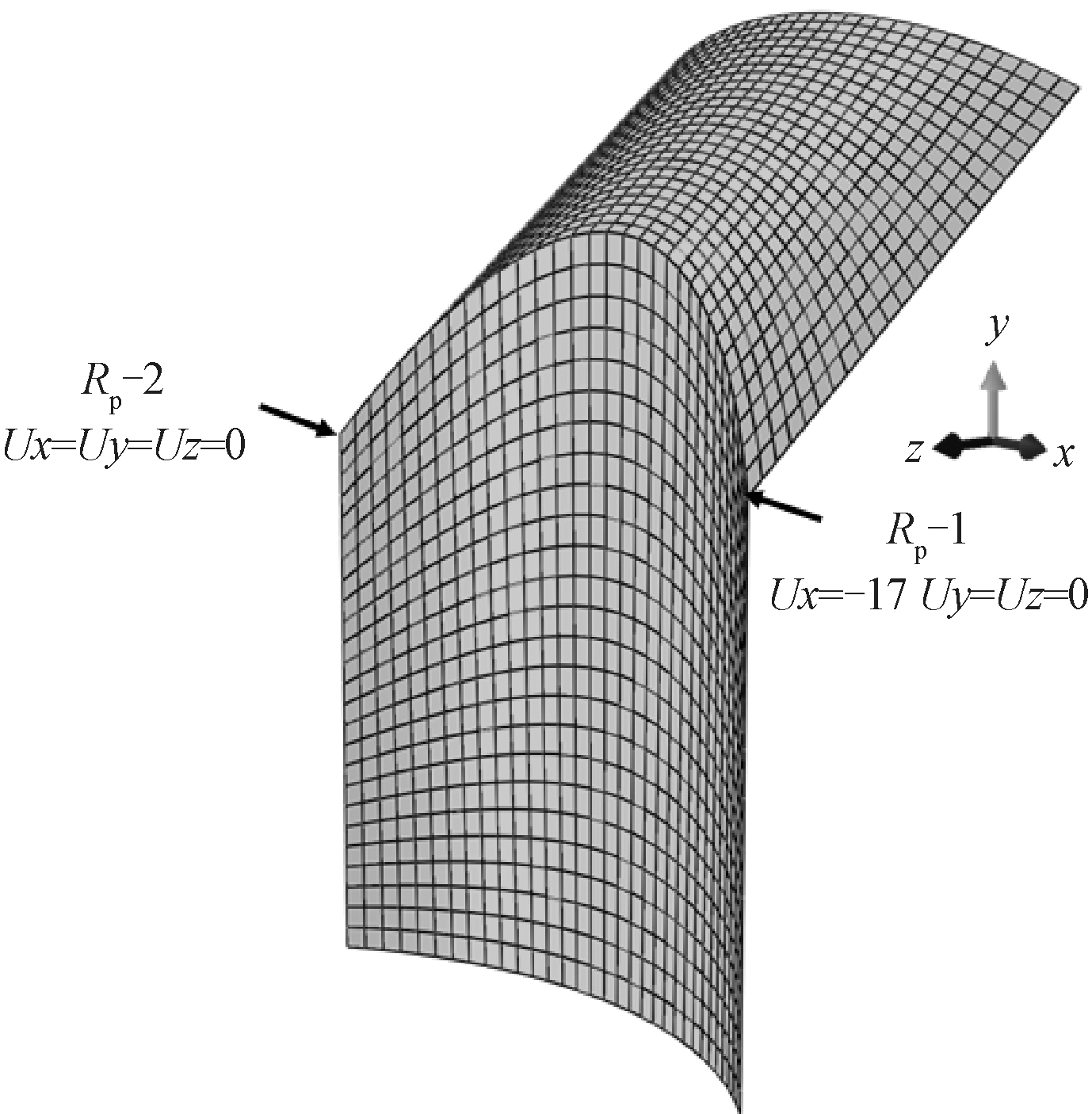
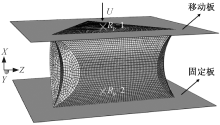
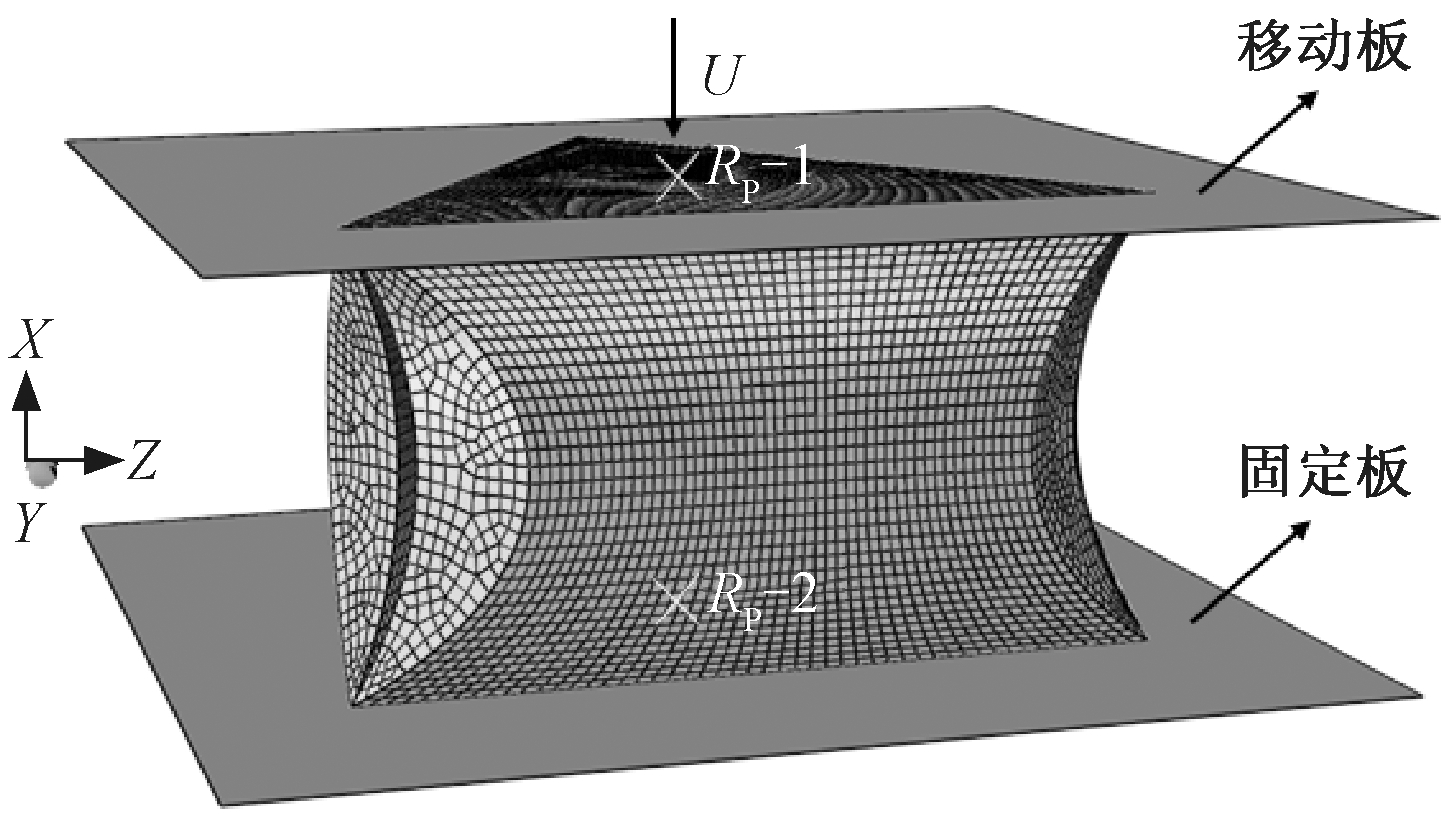
载荷设置与网格划分"

图3

模型应力变化情况"

图4

模型压缩力-位移曲线"

表1

不同织物样布的规格参数"

样品
编号
原料 组织 纱线线密度/tex 密度/(根·(10 cm)-1) 面密度/
(g·m-2)
厚度/
mm
经纱 纬纱 经密 纬密
1 100%棉 斜纹 29.50 29.50 300 250 387 0.68
2 100%棉 斜纹 36.88 36.88 232 228 435 0.74
3 涤纶/棉(70/30) 平纹 45.38 45.38 107 92 446 1.20
4 100%棉 斜纹 39.33 39.33 266 178 470 0.93
5 100%棉 斜纹 36.88 36.88 285 174 350 0.76
6 100%棉 斜纹 36.88 36.88 259 167 415 0.90
7 100%棉 平纹 15.94 15.94 180 173 283 0.47
8 100%棉 平纹 36.88 36.88 242 161 378 0.76
9 涤纶/棉(65/35) 平纹 39.33 39.33 112 90 487 1.07

图5

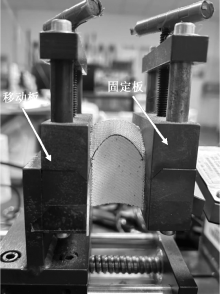
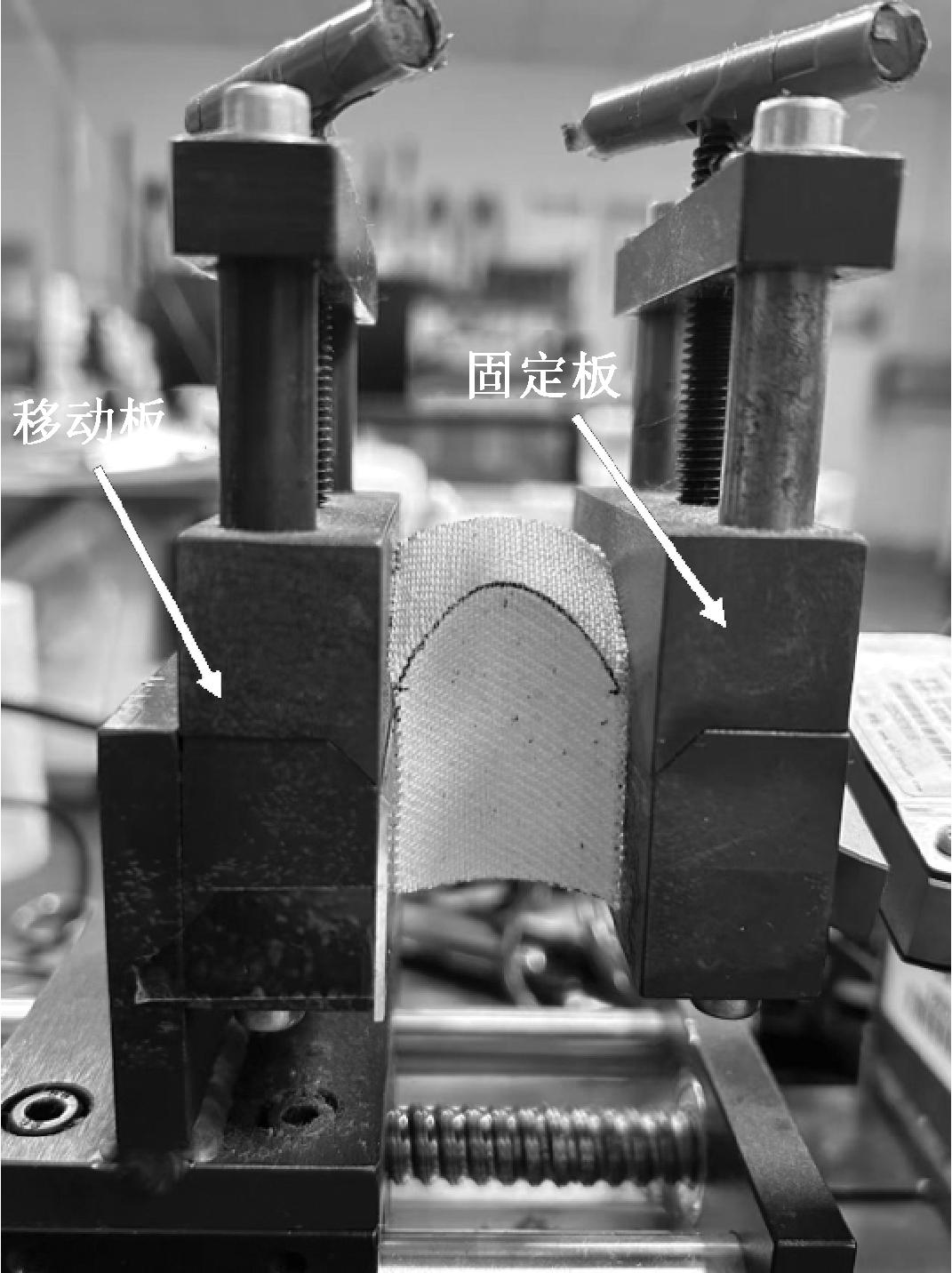
织物保形性测试系统"

图6

织物压缩力-位移曲线"

图7

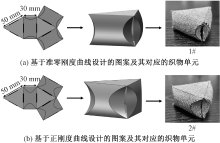
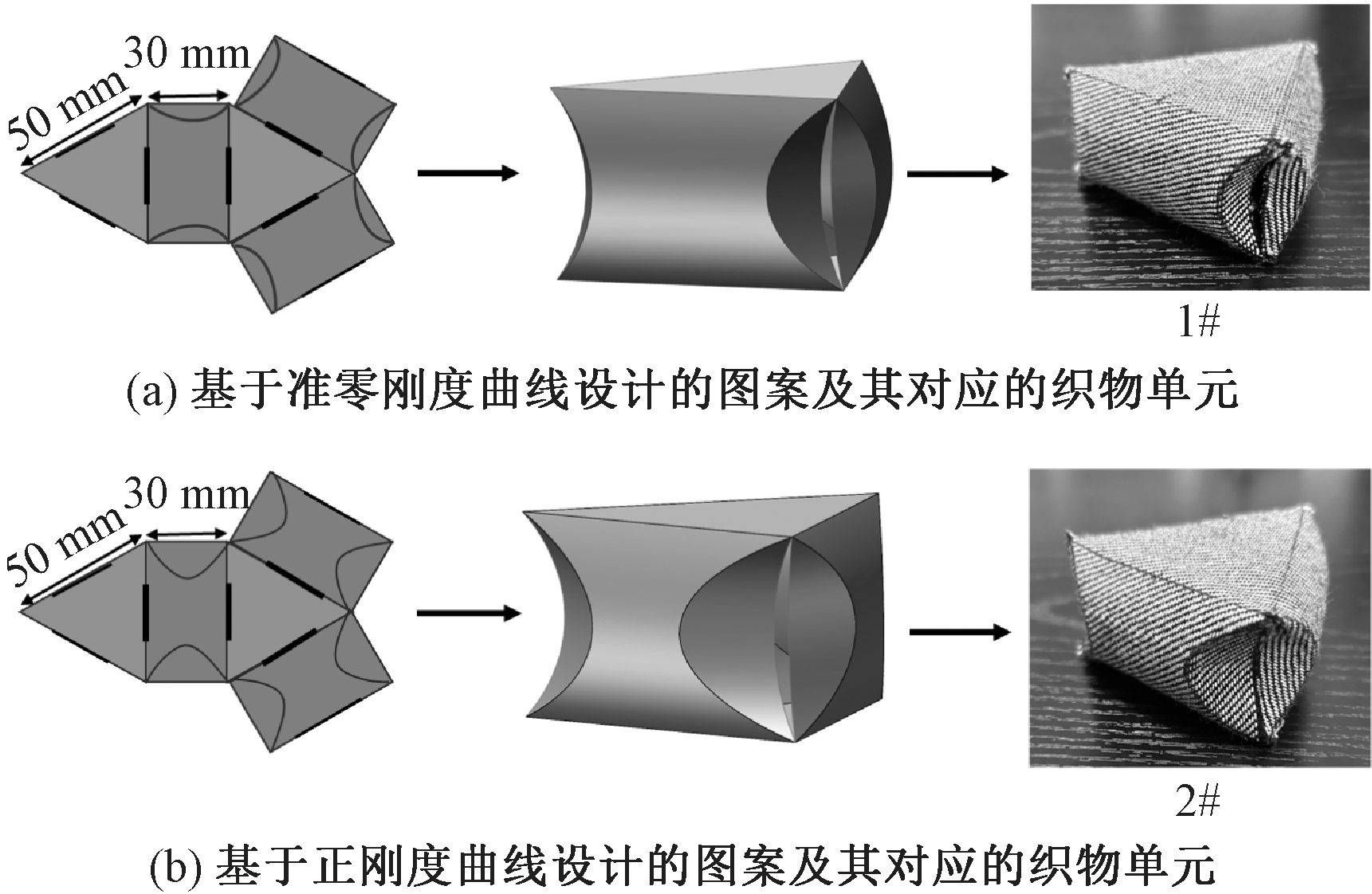
折痕图案和织物立体单元的设计"

图8

织物单元有限元模拟条件"

图9

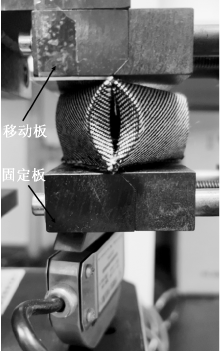
织物单元压缩测试"

图10

织物立体单元压缩力-位移对比曲线"

图11

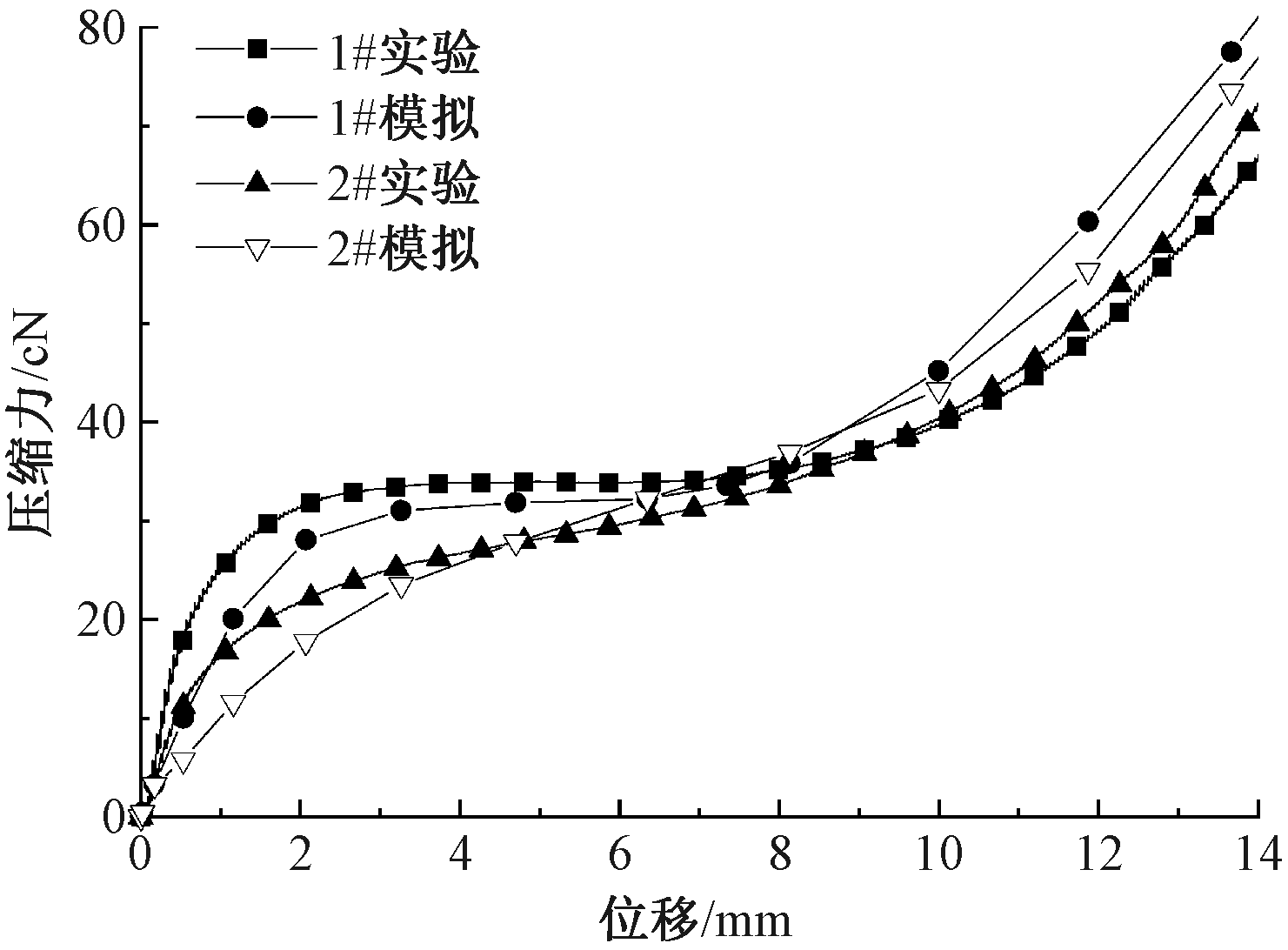
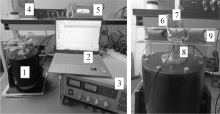
用于测量织物单元的振幅传递率的实验装置 注:1—激振台;2—输出显示器;3—功率放大器;4—信号采集器;5—信号发生器;6—砝码;7—输出传感器;8—输入传感器;9—织物单元阵列"

图12

不同刚度织物单元阵列的振幅-时间响应"

图13

不同刚度织物单元阵列振动传递性"

[1] 徐鉴. 振动控制研究进展综述[J]. 力学季刊, 2015, 36(4): 547-565.
doi: 10.15959/j.cnki.0254-0053.2015.04.001
XU Jian. Review of research progress in vibration control[J]. Chinese Quarterly of Mechanics, 2015, 36(4): 547-565.
doi: 10.15959/j.cnki.0254-0053.2015.04.001
[2] 朱石坚, 楼京俊, 何其伟, 等. 振动理论与隔振技术[M]. 北京: 国防工业出版社, 2006: 296-299.
ZHU Shijian, LOU Jingjun, HE Qiwei, et al. Vibration theory and isolation technology[M]. Beijing: National Defense Industry Press, 2006: 296-299.
[3] ZHAO Feng, JI Jinchen, LUO Quantian, et al. An improved quasi-zero stiffness isolator with two pairs of oblique springs to increase isolation frequency band[J]. Nonlinear Dynamics, 2021, 104(3): 349-365.
doi: 10.1007/s11071-021-06296-4
[4] DALELA S, BALAJI P S, JENA D P. Design of a metastructure for vibration isolation with quasi-zero-stiffness characteristics using bistable curved beam[J]. Nonlinear Dynamics, 2022, 108(3): 1931-1971.
doi: 10.1007/s11071-022-07301-0
[5] 嵇雯, 刘彦琦, 宋春芳. 带非线性弹簧的两自由度准零刚度隔振系统力传递率特性[J]. 固体力学学报, 2021, 42(2): 200-210.
JI Wen, LIU Yanqi, SONG Chunfang. Force trans-mission rate characteristics of a two degree of freedom quasi-zero stiffness isolation system with nonlinear springs[J]. Chinese Journal of Solid Mechanics, 2021, 42 (2): 200-210.
[6] LU Jiajia, YAN Ge, QI Wenhao, et al. Load-adaptive quasi-zero stiffness vibration isolation via dual electromagnetic stiffness regulation[J]. Journal of Sound and Vibration, 2023, 567: 118059.
doi: 10.1016/j.jsv.2023.118059
[7] LIU Xingtian, HUANG Xiuchang, HUA Hongxing. On the characteristics of a quasi-zero stiffness isolator using Euler buckled beam as negative stiffness corrector[J]. Journal of Sound and Vibration, 2013, 332(14): 3359-3376.
doi: 10.1016/j.jsv.2012.10.037
[8] ZHENG Yisheng, ZHANG Xinong, LUO Yajun, et al. Harnessing the compressed-spring mechanism for a six-degrees-of-freedom quasi-zero-stiffness vibration isolation platform[J]. Journal of Vibration and Control, 2021, 27(15/16): 1793-1805.
doi: 10.1177/1077546320948399
[9] ZHOU N, LIU K. A tunable high-static-low-dynamic stiffness vibration isolator[J]. Journal of Sound and Vibration, 2010, 329(9): 1254-1273.
doi: 10.1016/j.jsv.2009.11.001
[10] HAN Hesheng, SOROKIN V, TANG Lihua, et al. Lightweight origami isolators with deployable mechanism and quasi-zero-stiffness property[J]. Aerospace Science and Technology, 2022, 121: 107319.
doi: 10.1016/j.ast.2021.107319
[11] LIU Shiwei, PENG Gaoliang, JIN Kang. Design and characteristics of a novel QZS vibration isolation system with origami-inspired corrector[J]. Nonlinear Dynamics, 2021, 106(1): 255-277.
doi: 10.1007/s11071-021-06821-5
[12] ZHAI Zirui, WANG Yong, LIN Ken, et al. In situ stiffness manipulation using elegant curved origami[J]. Science Advances, 2020, 6(47): eabe2000.
doi: 10.1126/sciadv.abe2000
[13] 王延庆, 沈竞兴, 吴海全. 3D打印材料应用和研究现状[J]. 航空材料学报, 2016, 36(4): 89-98.
doi: 10.11868/j.issn.1005-5053.2016.4.013
WANG Yanqing, SHEN Jingxing, WU Haiquan. Application and research status of 3D printing mater-ials[J]. Journal of Aeronautical Materials, 2016, 36 (4): 89-98.
doi: 10.11868/j.issn.1005-5053.2016.4.013
[14] 王楠, 苏军强. 平纹织物逐层分离过程中的屈曲模拟与分析[J]. 丝绸, 2022, 59(9): 36-44.
WANG Nan, SU Junqiang. Buckling simulation and analysis of plain fabric during layer-by-layer separ-ation[J]. Journal of Silk, 2022, 59(9): 36-44.
[1] 吴晋瑶, 钟毅, 张琳萍, 徐红, 毛志平. 基于聚苯胺的柔性红外隐身薄膜的制备与性能[J]. 纺织学报, 2025, 46(09): 1-8.
[2] 张晓婷, 赵鹏宇, 潘如如, 高卫东. 基于深度特征融合的格子织物图像检索方法[J]. 纺织学报, 2025, 46(08): 89-95.
[3] 权英, 张爱琴, 张曼, 刘淑强, 张钰晶. 基于三维编织结构的柔性应变传感器制备及其性能[J]. 纺织学报, 2025, 46(08): 136-144.
[4] 梁琦敏, 鄢卓君, 李长昕, 刘志锋, 何思斯. 纤维及织物基电化学传感器与水系电池的研究进展与展望[J]. 纺织学报, 2025, 46(05): 89-95.
[5] 杨露, 孟家光, 陈雨青, 支超. 基于废旧纺织品的湿度响应纤维素/聚氨酯复合材料的制备及其性能[J]. 纺织学报, 2025, 46(02): 26-34.
[6] 朱雪, 钱鑫, 郝梦圆, 张永刚. MXene/碳纳米纤维膜的静电纺丝-电泳沉积复合工艺制备及其电磁屏蔽性能[J]. 纺织学报, 2025, 46(01): 1-8.
[7] 夏梦, 成悦, 刘蓉, 李大伟, 付译鋆. 普鲁士蓝涂层非织造材料在细菌检测中的应用[J]. 纺织学报, 2024, 45(12): 166-171.
[8] 史雅楠, 马颜雪, 樊平, 薛文良, 李毓陵. 织边结构弹性传感机织带的制备及其传感性能影响因素[J]. 纺织学报, 2024, 45(11): 114-120.
[9] 李文雅, 梁建行, 薛涛, 董真真. 基于点云的三维纱线参数化建模[J]. 纺织学报, 2024, 45(11): 80-87.
[10] 贾笑娅, 王蕊宁, 侯宵, 何彩婷, 刘杰, 孙润军, 王秋实. 多相剪切增稠液增强柔性层合结构防刺材料的制备及其性能[J]. 纺织学报, 2024, 45(10): 113-121.
[11] 岳旭, 王蕾, 孙丰鑫, 潘如如, 高卫东. 基于ABAQUS的平纹织物同面对向弯曲有限元模拟[J]. 纺织学报, 2024, 45(08): 165-172.
[12] 王建萍, 邵熠萌, 杨雅岚, 何苑溪. 针迹类型对表面肌电用刺绣型织物电极性能影响[J]. 纺织学报, 2024, 45(07): 55-62.
[13] 时吉磊, 陈廷彬, 付少海, 张丽平. 低红外发射率控温热红外伪装材料的制备与性能[J]. 纺织学报, 2024, 45(06): 32-38.
[14] 朱凌云, 王晨宇, 赵悦莹. 基于多度量多模型图像投票的织物表面瑕疵检测方法[J]. 纺织学报, 2024, 45(06): 89-97.
[15] 何芳, 郭嫣, 韩朝旭, 刘铭燊, 杨瑞瑞. 汽车座椅用织物的复合工艺及其性能[J]. 纺织学报, 2024, 45(05): 79-84.
Viewed
Full text


Abstract

Cited

  Shared   
  Discussed   
No Suggested Reading articles found!