纺织学报 ›› 2025, Vol. 46 ›› Issue (10): 54-61.doi: 10.13475/j.fzxb.20250103601

• 纺织工程 • 上一篇    下一篇

精梳过程中棉短纤排除机制及实验研究

王旭真1, 任家智1(), 贾国欣2, 杨天琪1, 李季平1   

  1. 1.中原工学院, 河南 郑州 451191
    2.河南工程学院, 河南 郑州 450007
  • 收稿日期:2025-01-14 修回日期:2025-07-17 出版日期:2025-10-15 发布日期:2025-10-15
  • 通讯作者: 任家智(1959—),男,教授。主要研究方向为棉纺精梳关键技术。E-mail:rjzhi@163.com
  • 作者简介:王旭真(1998—),女,硕士生。主要研究方向为纺纱新技术、新工艺。
  • 基金资助:
    泉州市科技计划资助项目(2021C001R)

Mechanism and experimental study of short fiber elimination during combing process

WANG Xuzhen1, REN Jiazhi1(), JIA Guoxin2, YANG Tianqi1, LI Jiping1   

  1. 1. Zhongyuan University of Technology, Zhengzhou, Henan 451191, China
    2. Henan University of Engineering, Zhengzhou, Henan 450007, China
  • Received:2025-01-14 Revised:2025-07-17 Published:2025-10-15 Online:2025-10-15

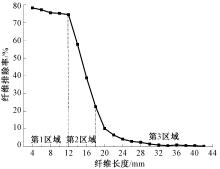
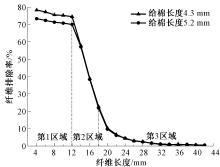
摘要: 为研究精梳过程中不同纤维长度排除的机制,提出了落纤有效梳理次数的概念,根据精梳过程中梳理、给棉及纤维分离的机制,构建了落纤有效梳理次数的数学模型,得出了纤维长度、给棉长度、给棉方式等参数对落纤有效梳理次数的影响规律;运用落纤有效梳理次数较好地解释了精梳过程中不同纤维长度排除率的变化规律。为找出精梳过程中不同纤维长度的排除规律,设计了4种实验方案,利用新疆细绒棉分别进行了精梳实验。结果表明,精梳过程中不同纤维长度的排除率随着纤维长度的增加而减小,并有3个明显特征:纤维长度在4~12 mm区段其排除率最大,且缓慢减少;纤维长度在12~18 mm区段纤维排除率快速下降;纤维长度大于18 mm时,其排除率随着纤维长度的增加缓慢减少至零。减小给棉长度,长度在4~12 mm的纤维排除率明显增大,而纤维长度在12 mm以上纤维排除率增幅很小;采用后退给棉或增大落棉隔距,均使长度在4~20 mm区段的纤维排除率显著增大。

关键词: 棉精梳机, 落纤有效梳理次数, 纤维长度分布, 纤维排除率, 精梳工艺参数

Abstract:

Objective The existing combing theory and research literature do not involve the exclusion rate of fibers of different lengths and its change pattern in the combing process. In order to study the mechanism of the exclusion of different fiber lengths during combing, the concept of "the number of effective combing times" was put forward to provide theoretical and practical basis for the reasonable formulation of combing process parameters and accurate control of the falling rate of different fiber lengths.

Method Based on the movement of fibers during the carding and separation and joining processes of the cotton comber cylinder, the concept of effective carding times of the comber's waste fibers was proposed, and a mathematical model of the relationship between the effective carding times of the waste fibers and parameters such as fiber length, separation distance, and feed length was established. Using Xinjiang upland cotton, combed cotton laps were made through the normal spinning process, and comber experiments were conducted on the FAZY600 comber. The comber waste rate was tested, and the AFIS PRO 2 single fiber tester was used to test the percentage of different fiber lengths in the cotton laps and waste fibers. The exclusion rates of various fiber lengths for the four experimental schemes were calculated. The exclusion rates of various fiber lengths and their variation rules under different comber process parameters such as waste fiber distance, feed length, and feed method were analyzed.

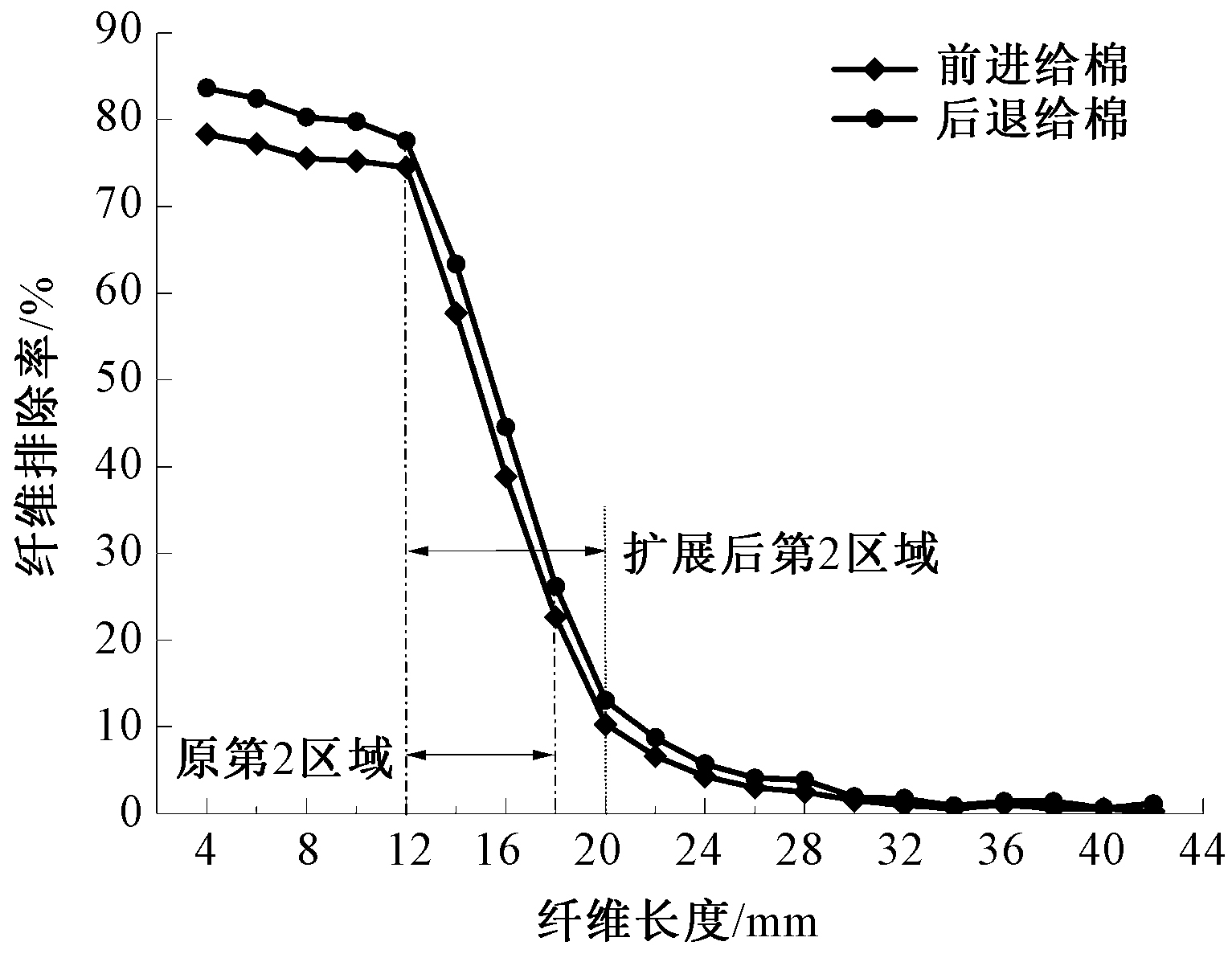
Results Through combing experiments of four different process schemes, the pattern of exclusion of different fiber lengths was obtained, and the following experimental results were obtained. The greater the number of effective carding times led to greater probability of the fiber being caught by the tin during the combing process. The number of effective carding times decreased with the increase of fiber length, that is, the longer the fiber is, the lower the probability of falling during the carding process. When the fiber length was greater than the fiber bundle length outside the mouth of the clamp plate, the probability of the fiber being caught by the tin in the carding process became less. Reducing the feed length, increasing the spacing of the noil and using the backward feed all increased the effective carding times of the noil, thus increasing the probability of the fiber falling during the carding process of the tin forest. During the combing process, the fiber exclusion rate decreased with the increase of fiber length, but the decrease of the fiber exclusion rate was different in different length sections, with a slow decrease in the 4-12 mm section and rapid decrease in the 12-18 mm range. The fiber length in the section above 18 mm slowly decreased to zero. Reducing the feed length significantly improved the exclusion rate of 4-12 mm fiber, but has little effect on the exclusion rate of fibers longer than 12 mm. The fiber exclusion rate of 4-20 mm section was significantly improved by increasing the spacing of noil or using backward feeding.

Conclusion During combing, the exclusion rate of different fiber lengths decreased with the increase of fiber length, with three obvious characteristics of fiber exclusion rate, i.e. slow decrease for fiber lengths of 4 mm to 12 mm, rapid decrease in the 12 mm to 18 mm fiber length range, and zero approaching decrease when the fiber length is greater than 18 mm. When the feed length was reduced, the fiber exclusion rate increased significantly when the fiber length is from 4mm to 12 mm, while the fiber exclusion rate increases little when the fiber length is above 12 mm. The fiber exclusion rate in the 4 mm to 20 mm section is significantly increased by using backfeed or increasing the spacing of the noil.

Key words: cotton combing machine, effective combing times of dropped fiber, fiber length distribution, fiber exclusion rate, combing process parameter

中图分类号: 

  • TS114.1

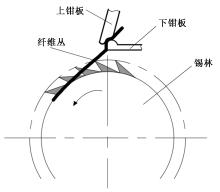
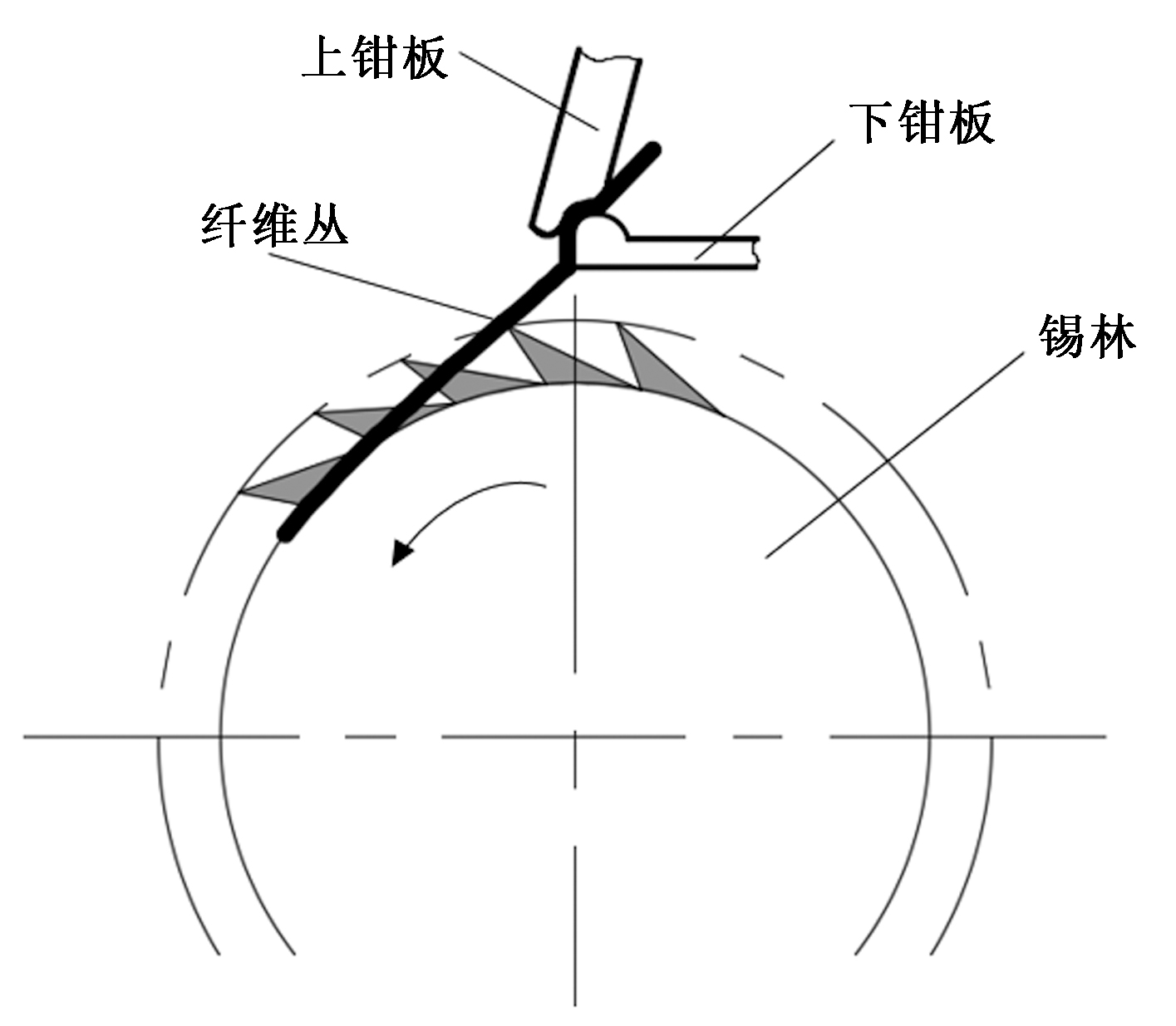
图1

锡林梳理"

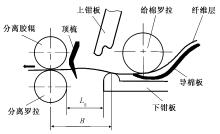
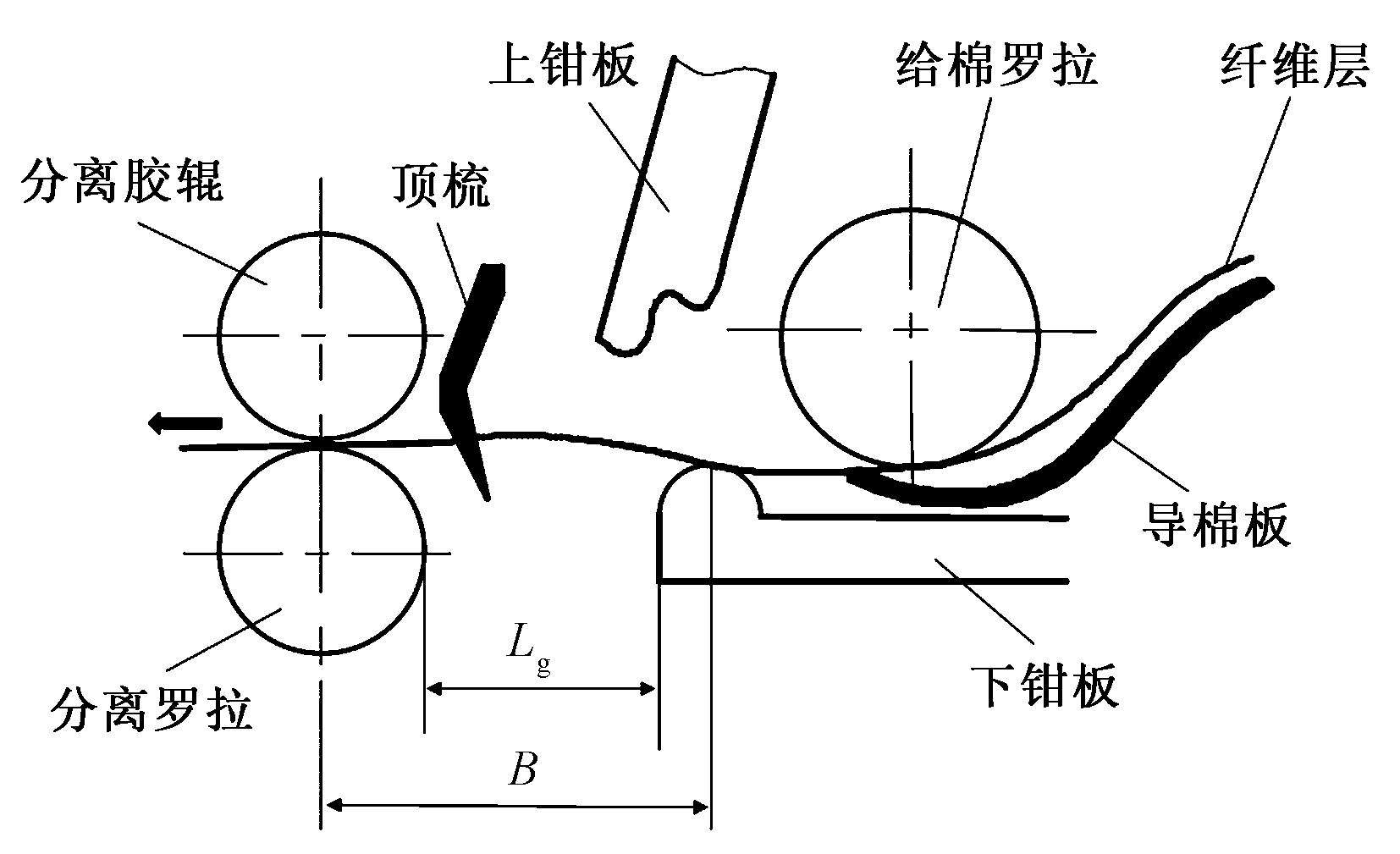
图2

分离接合 注:Lg—落棉隔距; B—分离隔距。"

图3

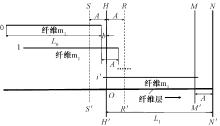
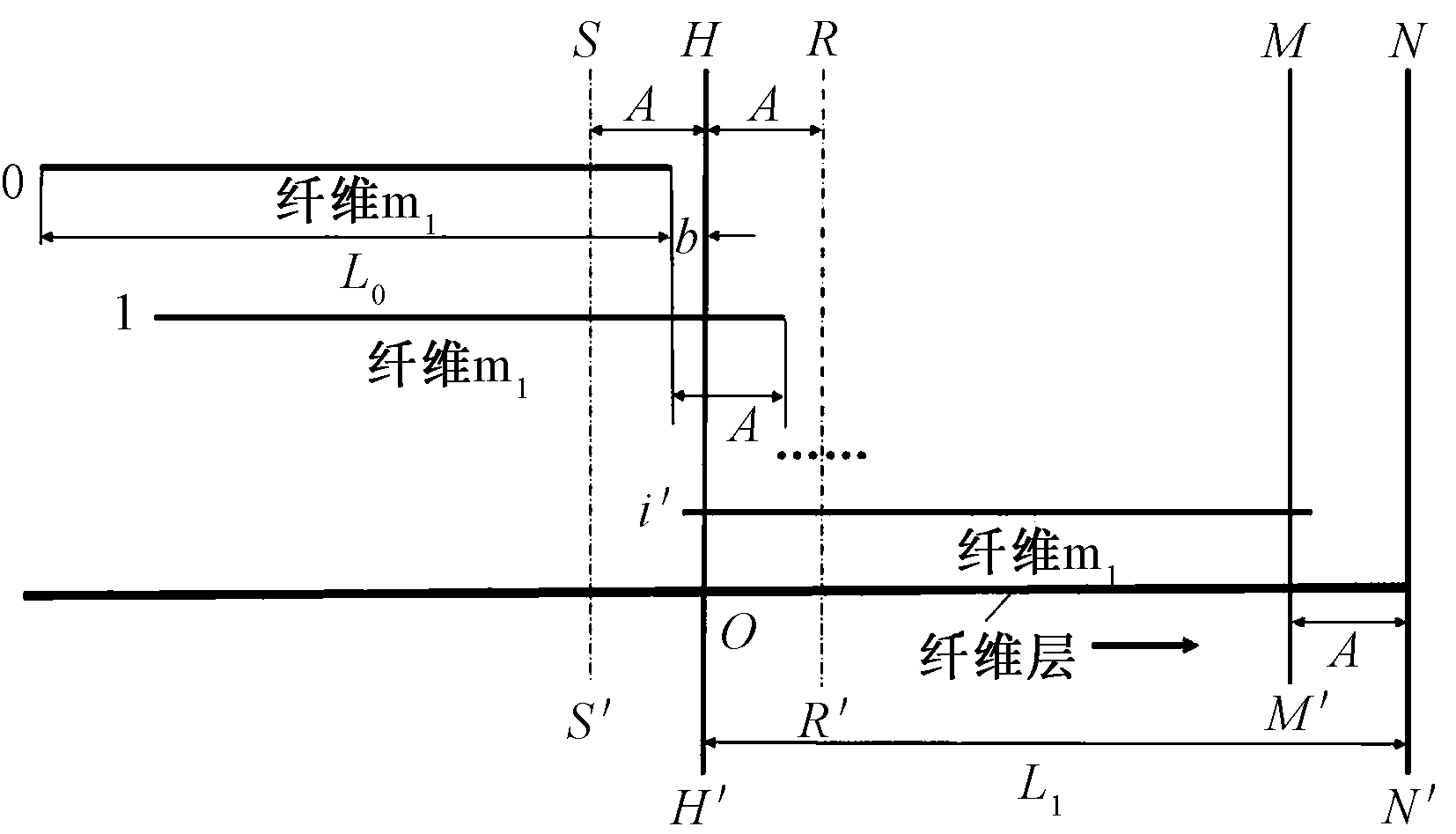
锡林梳理及分离过程中纤维运动示意图"

图4

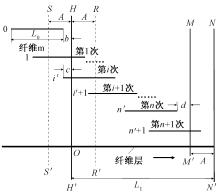
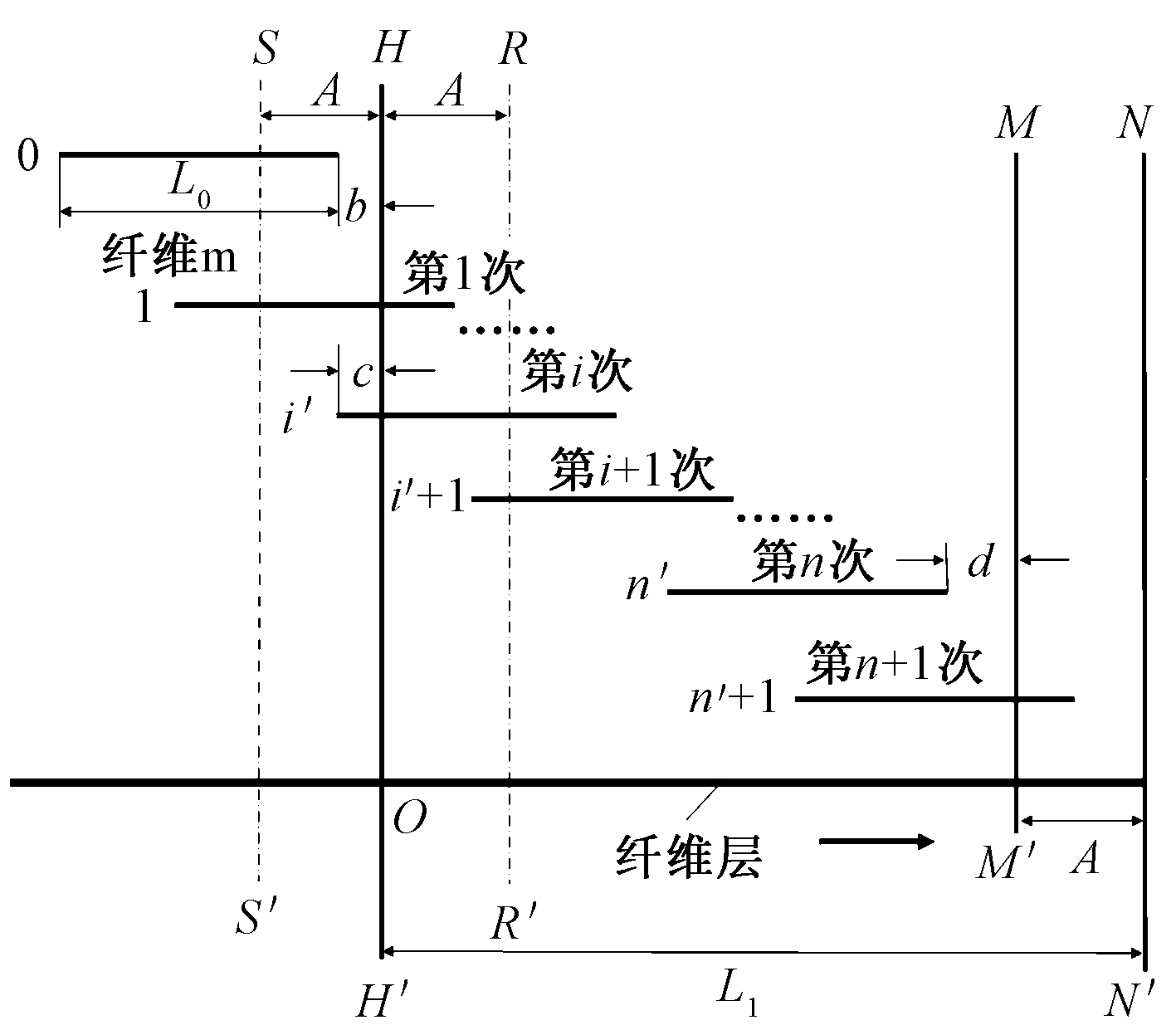
长纤维梳理及分离过程"

表1

精梳机梳理隔距"

分度 梳理隔距/mm 分度 梳理隔距/mm
35 0.6 1 0.45
36 0.55 2 0.5
37 0.5 3 0.5
38 0.45 4 0.55
39 0.4 5 0.6
0 0.4 6 0.6

表2

实验方案"

实验方案 给棉长度/mm 给棉方式 落棉隔距/mm
A 4.3 前进给棉 9
B 5.2 前进给棉 9
C 4.3 后退给棉 9
D 4.3 前进给棉 11

表3

不同方案的落纤有效梳理次数"

纤维长度/mm A方案 B方案 C方案 D方案
4 4 3 4 4
6 3 3 4 4
8 3 2 4 3
10 3 2 3 3
12 2 2 3 3
14 2 1 2 2
16 1 1 2 2
18 1 0 1 1
20 0 0 1 1
22 0 0 0 0

图5

纤维排除的规律"

图6

给棉长度对纤维排除率的影响"

图7

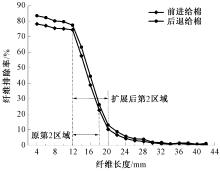
给棉方式对纤维排除率的影响"

图8

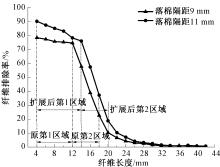
落棉隔距对纤维排除率的影响"

[1] 陈可, 张娣, 吉宜军, 等. 精梳涤纶条含量对涤纶针织物性能的影响[J]. 纺织学报, 2021, 42(9): 66-69.
CHEN Ke, ZHANG Di, JI Yijun, et al. Effect of combed polyester top content on properties of polyester knitted fabrics.[J]. Journal of Textile Research, 2021, 42(9): 66-69.
[2] 陈玉峰, 陆振挺. 短纤维对棉纺质量的影响与控制[J]. 棉纺织技术, 2012, 40(2): 40-43.
CHEN Yufeng, LU Zhenting. Effect and control of short fiber on cotton spinning quality.[J]. Cotton Textile Technology, 2012, 40(2): 40-43.
[3] 任家智. 国产棉纺精梳机的创新发展与展望[J]. 棉纺织技术, 2023, 51(10): 25-32.
REN Jiazhi. Innovative development and prospect of domestic cotton comber.[J]. Cotton Textile Technology, 2023, 51(10): 25-32.
[4] 傅恩福. 我国精梳纱生产现状及开发建议[J]. 棉纺织技术, 2011, 39(6): 20-23.
FU Enfu. Production situation and development suggestion of chinese combed yarn.[J]. Cotton Textile Technology, 2011, 39(6): 20-23.
[5] 郁崇文. 纺纱学[M]. 北京: 中国纺织出版社, 2015: 105-109.
YU Chongwen. Spinning technology[M]. Beijing: China Textile & Apparel Press, 2015: 105-109.
[6] 任家智. 纺纱工艺学[M]. 上海: 东华大学出版社, 2010: 64-67.
REN Jiazhi. Technology of yarn pinning[M]. Shanghai: Donghua University Press, 2010: 64-67.
[7] 刘允光, 肖际洲. 精梳落棉率控制和成纱质量的关系[J]. 纺织器材, 2020, 48(1): 46-52.
LIU Yunguang, XIAO Jizhou. Relationship between noil rate control of combing and yarn quality[J]. Textile Accessories, 2020, 48(1): 46-52.
[8] 陈宇恒, 任家智, 冯清国. 精梳机给棉工艺对短纤维排除效果的影响[J]. 棉纺织技术, 2019, 47(8): 60-64.
CHEN Yuheng, REN Jiazhi, FENG Qingguo. Influence of comber feeding process on short fiber removal[J]. Cotton Textile Technology, 2019, 47(8): 60-64.
[9] 刘红艳, 任家智, 尚龙飞, 等. 精梳锡林针齿密度分布对梳理效果的影响[J]. 棉纺织技术, 2017, 45(5): 17-19.
LIU Hongyan, REN Jiazhi, SHANG Longfei, et al. Influence of comb cylinder tooth density distribution on carding effect[J]. Cotton Textile Technology, 2017, 45(5): 17-19.
[10] 刘允光, 李子信. 现代精梳机给棉方式对梳理质量的影响[J]. 棉纺织技术, 2018, 46(4): 37-41.
LIU Yunguang, LI Zixin. Influence of modern comber feeding method on carding quality[J]. Cotton Textile Technology, 2018, 46(4): 37-41.
[11] 张立彬, 冯斌. JSFA588 型精梳机的设计理念与应用效果[J]. 棉纺织技术, 2013, 41(5): 65-68.
ZHANG Libin, FENG Bin. Design concept and application effect of JSFA588 comber[J]. Cotton Textile Technology, 2013, 41(5): 65-68.
[12] 高卫东. 棉纺织手册(上卷)[M]. 北京: 中国纺织出版社, 2020: 1123-1176.
GAO Weidong. Cotton textile handbook(Volume Ⅰ)[M]. Beijing: China Textile & Apparel Press, 2020: 1123-1176.
[13] 杨磊, 任家智, 陈宇恒, 等. 棉纺精梳机锡林不同梳理区梳理效果分析[J]. 棉纺织技术, 2024, 52(9): 8-13.
YANG Lei, REN Jiazhi, CHEN Yuheng, et al. Analysis of carding effect in different carding area of cotton combing machine cylinder[J]. Cotton Textile Technology, 2024, 52(9): 8-13.
[1] 楚祥婷, 高见, 章红豆, 陆惠文, 刘新金, 苏旭中. 基于质量分布法的棉集合体中纤维弯钩研究[J]. 纺织学报, 2025, 46(07): 69-77.
[2] 贾国欣 任家智 冯清国. 基于纤维长度根数分布的精梳加工模拟及棉网质量预测[J]. 纺织学报, 2017, 38(06): 23-27.
[3] 王晓维 周国庆 李新荣. 棉精梳机钳板开闭口时间的研究[J]. 纺织学报, 2015, 36(07): 121-125.
[4] 曹继鹏 张志丹 孙鹏子. 锡林速度对盖板花纤维长度分布的影响[J]. 纺织学报, 2015, 36(03): 24-27.
[5] 张明光;孙鹏子;曹继鹏. 梳棉机盖板速度对盖板花纤维长度分布的影响[J]. 纺织学报, 2011, 32(3): 47-50.
[6] 苏玉恒;严广松;任家智. 牵伸区浮游纤维动态行为的随机模拟[J]. 纺织学报, 2011, 32(3): 30-35.
[7] 孙鹏子;张明光;王兰. 梳针分梳板对纤维长度分布的影响[J]. 纺织学报, 2008, 29(11): 39-43.
[8] 孙鹏子;王兰;张志丹;张明光. 梳棉机刺辊落棉和盖板花纤维长度分布[J]. 纺织学报, 2006, 27(5): 80-83.
[9] 王兰;孙鹏子;张明光. 给棉板与刺辊隔距对纤维长度分布的影响[J]. 纺织学报, 2006, 27(4): 70-73.
Viewed
Full text


Abstract

Cited

  Shared   
  Discussed   
No Suggested Reading articles found!