纺织学报 ›› 2025, Vol. 46 ›› Issue (11): 126-136.doi: 10.13475/j.fzxb.20241004201
李欣田1, 周玄1, 王展翾1, 杜忠华1,2, 徐立志1( )
)
LI Xintian1, ZHOU Xuan1, WANG Zhanhuan1, DU Zhonghua1,2, XU Lizhi1()
摘要:
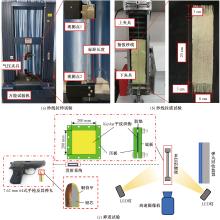
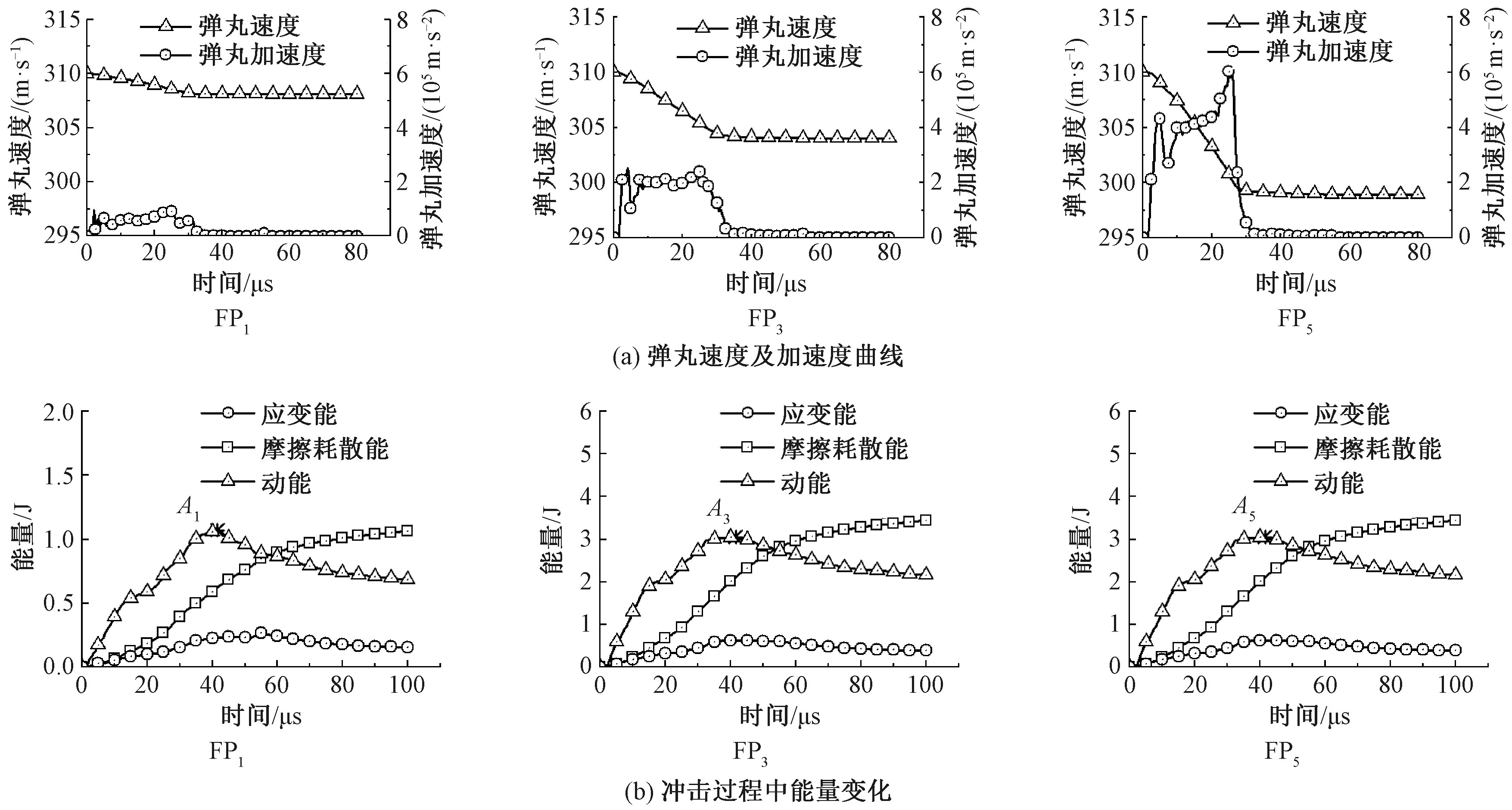
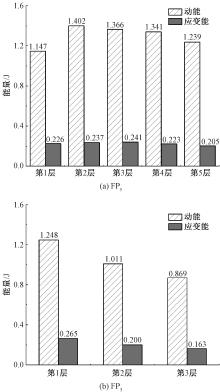
为探究多层芳纶平纹织物铺层对破坏模式的影响机制,以芳纶平纹机织物为研究对象,用7.62 mm手枪子弹为被防护对象,采用四周夹紧方式,设置单层、三层、五层3种常规铺层织物靶板和五层30°间隔铺层([0°/30°/60°/90°/120°])织物靶板,通过弹道试验和有限元仿真探究了织物层数和铺层方式对其能量吸收水平的影响。结果表明:在常规铺层织物靶板中,随着层数的增加,吸能水平和吸能效率均呈现增长趋势,五层靶板吸能水平较三层靶板和单层靶板分别高45.49%和472.82%;三层靶板比吸能较单层靶板高14.63%,五层靶板比吸能较三层靶板高3.0%;单层靶板缺少层间摩擦作用,吸能效率与三层、五层靶板相差较大。将五层靶板采用30°间隔铺层后,面内应力波传播方向发生变化,靶板较难发生破坏,与弹丸的接触时间延长,从而表现出更强的抗侵彻能力,其吸收能量较常规铺层五层靶板提升12.47%。
中图分类号:
| [1] | 翟文, 魏汝斌, 甄建军, 等. 高性能复合材料在人体防弹防刺技术领域的应用与展望[J]. 纺织导报, 2017(S1): 66-72. |
| ZHAI Wen, WEI Rubin, ZHEN Jianjun, et al. Application and prospect of high performance composite materials in the field of bullet-proof and stab-proof technology of human body[J]. China Textile Leader, 2017(S1): 66-72. | |
| [2] | 虢忠仁, 杜文泽, 王树伦, 等. 芳纶纤维抗弹复合材料研究进展[J]. 工程塑料应用, 2009, 37(1): 75-78. |
| GUO Zhongren, DU Wenze, WANG Shulun, et al. Research development in aramid antiballistic compo-site[J]. Engineering Plastics Application, 2009, 37(1): 75-78. | |
| [3] |
TRAN P, NGO T, YANG E C, et al. Effects of architecture on ballistic resistance of textile fabrics: numerical study[J]. International Journal of Damage Mechanics, 2014, 23(3): 359-376.
doi: 10.1177/1056789513495246 |
| [4] |
CAVALLARO P V. Effects of weave styles and crimp gradients in woven kevlar/epoxy composites[J]. Experimental Mechanics, 2016, 56(4): 617-635.
doi: 10.1007/s11340-015-0075-4 |
| [5] |
ZHOU Y, CHEN X G. A numerical investigation into the influence of fabric construction on ballistic performance[J]. Composites Part B: Engineering, 2015, 76: 209-217.
doi: 10.1016/j.compositesb.2015.02.008 |
| [6] | PHAM Q H, HA-MINH C, CHU T L, et al. Numerical investigation of fibre failure mechanisms of one single Kevlar yarn under ballistic impact[J]. International Journal of Solids and Structures, 2022, 239: 111436. |
| [7] |
ZHOU Y, LI H, XIONG Z M, et al. The structural effects on the impact response of ultra-high-molecular-weight polyethylene plain weaves[J]. Textile Research Journal, 2021, 91(7/8): 911-924.
doi: 10.1177/0040517520966728 |
| [8] |
ZHOU Y, YAO W T, ZHANG Z W, et al. Ballistic performance of the structure-modified plain weaves with the improved constraint on yarn mobility: experimental investigation[J]. Composite Structures, 2022, 280: 114913.
doi: 10.1016/j.compstruct.2021.114913 |
| [9] |
CHEESEMAN B A, BOGETTI T A. Ballistic impact into fabric and compliant composite laminates[J]. Composite Structures, 2003, 61(1/2): 161-173.
doi: 10.1016/S0263-8223(03)00029-1 |
| [10] |
PARK J L, YOON B I, PAIK J G, et al. Ballistic performance of p-aramid fabrics impregnated with shear thickening fluid: Part I-effect of laminating sequence[J]. Textile Research Journal, 2012, 82(6): 527-541.
doi: 10.1177/0040517511420753 |
| [11] |
TABIEI A, NILAKANTAN G. Ballistic impact of dry woven fabric composites: a review[J]. Applied Mechanics Reviews, 2008, 61: 010801.
doi: 10.1115/1.2821711 |
| [12] |
NILAKANTAN G, GILLESPIE J W. Ballistic impact modeling of woven fabrics considering yarn strength, friction, projectile impact location, and fabric boundary condition effects[J]. Composite Structures, 2012, 94(12): 3624-3634.
doi: 10.1016/j.compstruct.2012.05.030 |
| [13] |
INGLE S, YERRAMALLI C S, GUHA A, et al. Effect of material properties on ballistic energy absorption of woven fabrics subjected to different levels of inter-yarn friction[J]. Composite Structures, 2021, 266: 113824.
doi: 10.1016/j.compstruct.2021.113824 |
| [14] |
DUAN Y, KEEFE M, BOGETTI T A, et al. A numerical investigation of the influence of friction on energy absorption by a high-strength fabric subjected to ballistic impact[J]. International Journal of Impact Engineering, 2006, 32(8): 1299-1312.
doi: 10.1016/j.ijimpeng.2004.11.005 |
| [15] |
GRUJICIC M, BELL W C, HE T, et al. Development and verification of a meso-scale based dynamic material model for plain-woven single-ply ballistic fabric[J]. Journal of Materials Science, 2008, 43(18): 6301-6323.
doi: 10.1007/s10853-008-2893-6 |
| [16] |
YANG Y F, LIU Y C, XUE S N, et al. Multi-scale finite element modeling of ballistic impact onto woven fabric involving fiber bundles[J]. Composite Structures, 2021, 267: 113856.
doi: 10.1016/j.compstruct.2021.113856 |
| [17] |
PALTA E, FANG H. On a multi-scale finite element model for evaluating ballistic performance of multi-ply woven fabrics[J]. Composite Structures, 2019, 207: 488-508.
doi: 10.1016/j.compstruct.2018.09.080 |
| [18] |
MEYER C S, O'BRIEN D J, (GAMA) HAQUE B Z, et al. Mesoscale modeling of ballistic impact experiments on a single layer of plain weave compo-site[J]. Composites Part B: Engineering, 2022, 235: 109753.
doi: 10.1016/j.compositesb.2022.109753 |
| [19] |
CHOCRON S, FIGUEROA E, KING N, et al. Modeling and validation of full fabric targets under ballistic impact[J]. Composites Science and Technology, 2010, 70(13): 2012-2022.
doi: 10.1016/j.compscitech.2010.07.025 |
| [1] | 谢宜轩, 钟林, 徐柠浩, 黄晓梅, 曹海建. 三维深角联芳纶织物/环氧树脂复合材料的弯曲性能[J]. 纺织学报, 2025, 46(11): 118-125. |
| [2] | 杜雨杭, 侯东昱, 齐鹏飞. 基于摩擦纳米发电机原理的智能服装供能设计与优化[J]. 纺织学报, 2025, 46(11): 211-220. |
| [3] | 陈馨蔚, 顾冰菲, 田佳莉, 周思凡, 刘瑜希, 刘金灵, 易洁伦, 孙玥. 基于参数化设计和数值模拟仿真技术的运动文胸版型优化[J]. 纺织学报, 2025, 46(04): 162-170. |
| [4] | 马莹, 陈奡, 胡月鹏, 潘俊, 胡瀚杰, 禄盛. 芳纶平纹织物单纱抽拔力学性能分析[J]. 纺织学报, 2024, 45(03): 58-64. |
| [5] | 陶静, 汪俊亮, 张洁. 数据驱动与有限元仿真融合的纱线断裂强力分析方法[J]. 纺织学报, 2024, 45(02): 238-245. |
| [6] | 张志颖, 王亦秋, 眭建华. 超高分子量聚乙烯纤维增强中空蜂窝模压复合材料性能研究[J]. 纺织学报, 2022, 43(11): 81-87. |
| [7] | 吴佳玥, 吴巧英. 羽绒制品热传递的有限元仿真[J]. 纺织学报, 2022, 43(11): 154-162. |
| [8] | 肖琪, 王瑞, 张淑洁, 孙红玉, 王静茹. 基于ABAQUS的涤/棉混纺机织物起球过程有限元仿真[J]. 纺织学报, 2022, 43(06): 70-78. |
| [9] | 牛雪娟, 徐妍慧. 不同流通间隙排布条件下碳纤维束展纤行为研究[J]. 纺织学报, 2022, 43(06): 165-170. |
| [10] | 马莹, 刘岳岩, 赵洋, 陈翔, 禄盛, 胡瀚杰. 基于芳纶平纹织物微观几何结构的纱线抽拔力学性能分析[J]. 纺织学报, 2022, 43(04): 47-54. |
| [11] | 孙亚博, 李立军, 马崇启, 吴兆南, 秦愈. 基于ABAQUS的筒状纬编针织物拉伸力学性能模拟[J]. 纺织学报, 2021, 42(02): 107-112. |
| [12] | 宋星, 金肖克, 祝成炎, 蔡冯杰, 田伟. 玻璃纤维/光敏树脂复合材料的3D打印及其力学性能[J]. 纺织学报, 2021, 42(01): 73-77. |
| [13] | 戴宁, 彭来湖, 胡旭东, 崔英, 钟垚森, 王越峰. 纬编针织机织针自由状态下固有频率测试方法[J]. 纺织学报, 2020, 41(11): 150-155. |
| [14] | 周熠, 李杭, 严祥邦, 梁耀庭, 张中威. 层间间距对平纹双层结构靶体抗侵彻性能的影响[J]. 纺织学报, 2020, 41(11): 59-65. |
| [15] | 李瑛慧 谢春萍 刘新金. 三原组织织物拉伸力学性能有限元仿真[J]. 纺织学报, 2017, 38(11): 41-47. |
|
||
 京公网安备11010502044800号