纺织学报 ›› 2026, Vol. 47 ›› Issue (02): 94-102.doi: 10.13475/j.fzxb.20251002501
李豪1, 曹巧丽1( ), 钱丽莉1, 郁崇文1,2
LI Hao1, CAO Qiaoli1(), QIAN Lili1, YU Chongwen1,2
摘要:
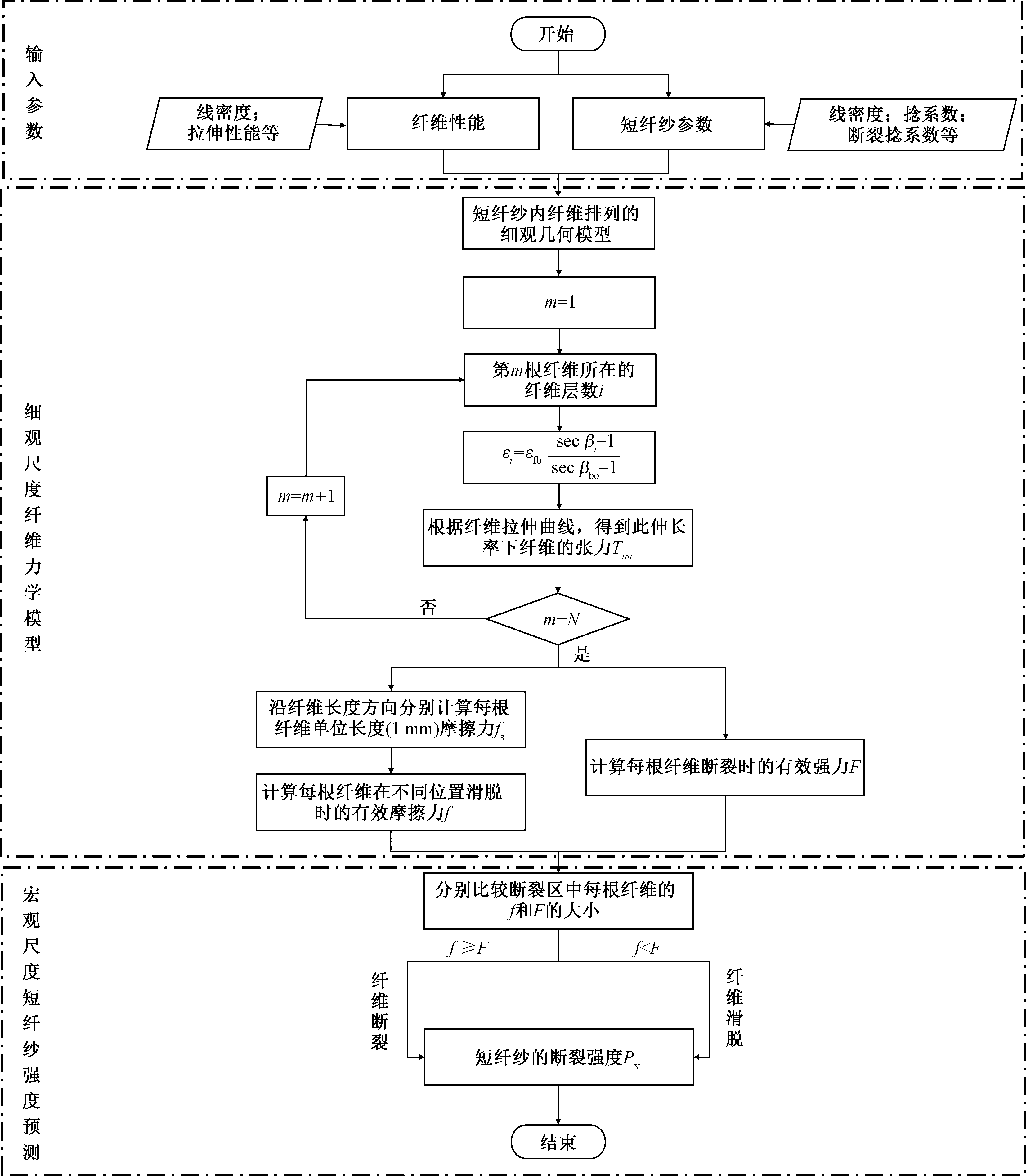
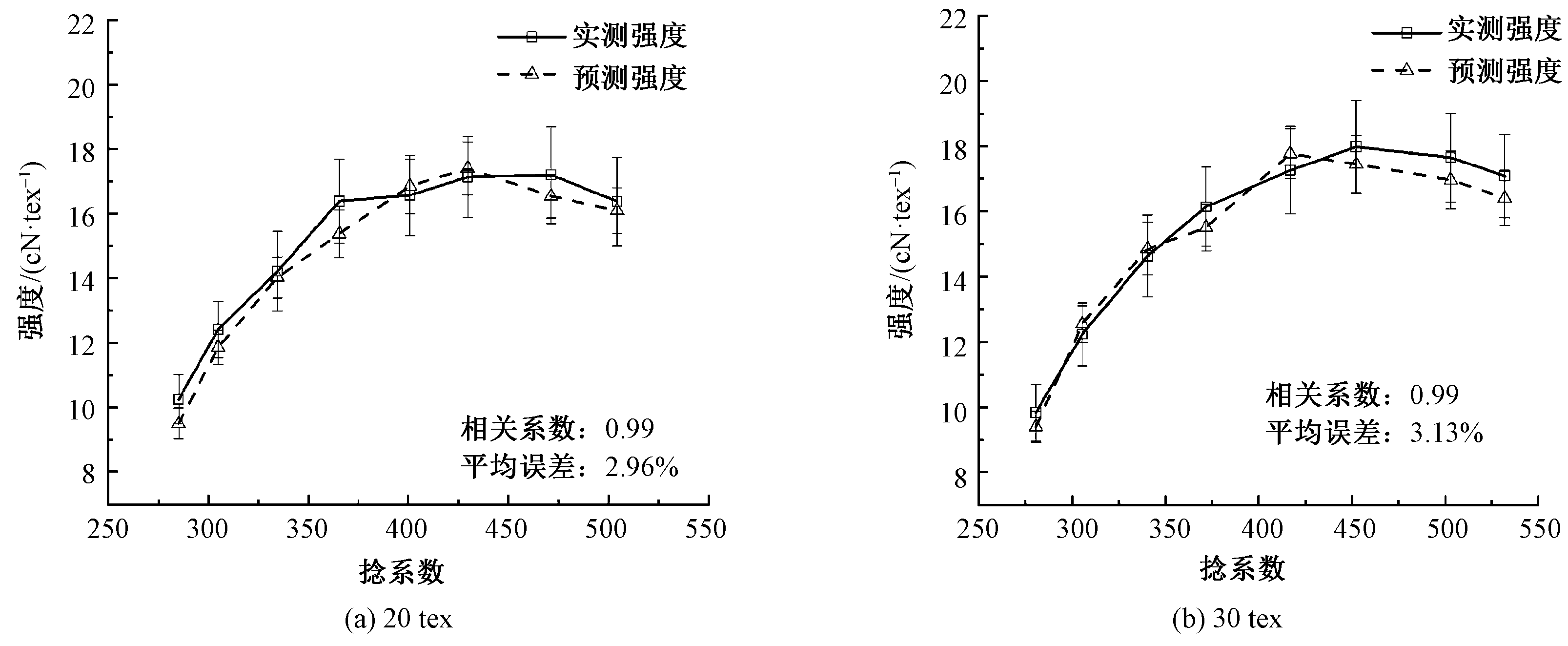
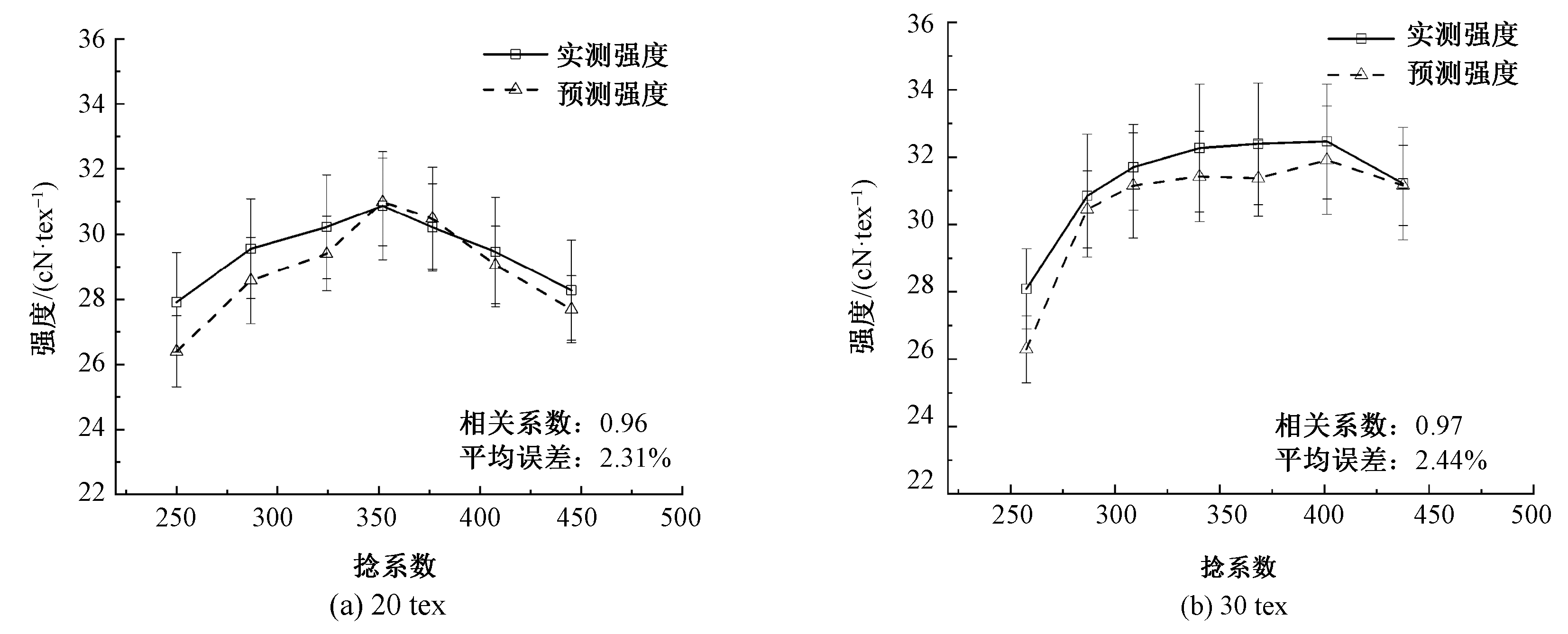
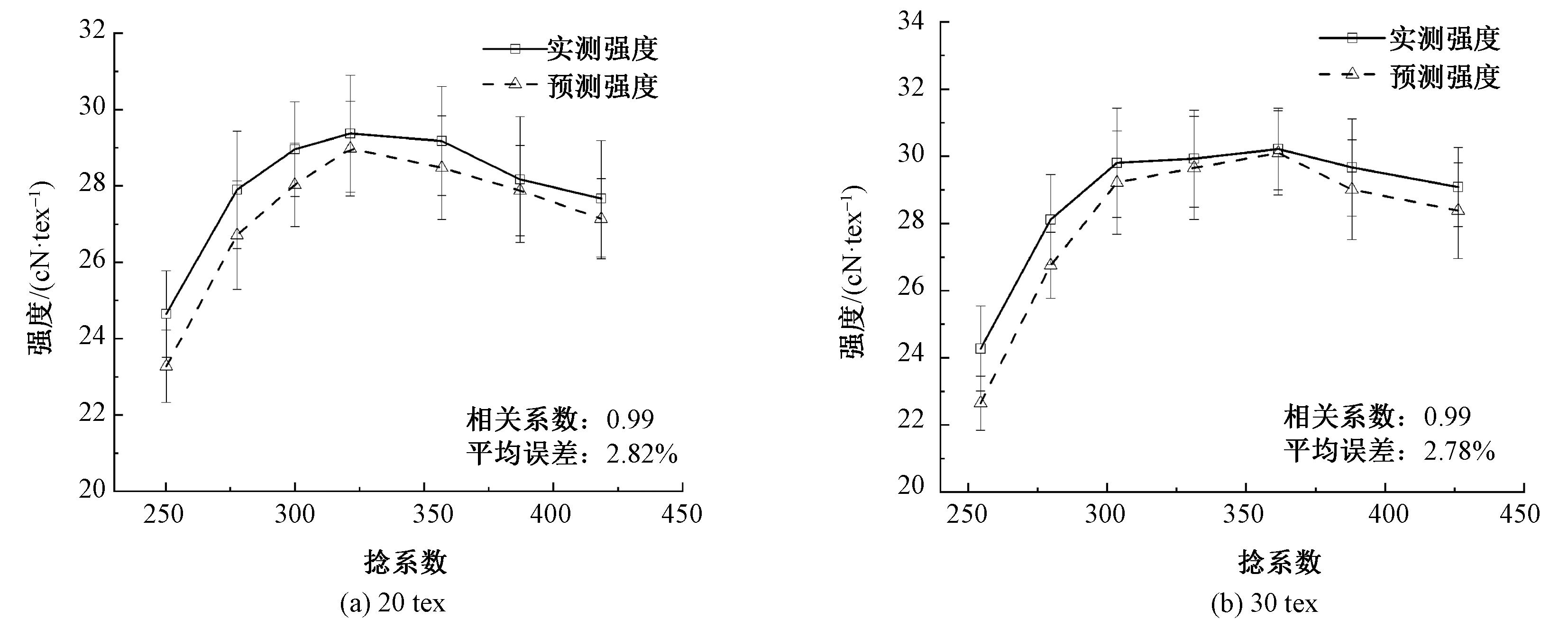
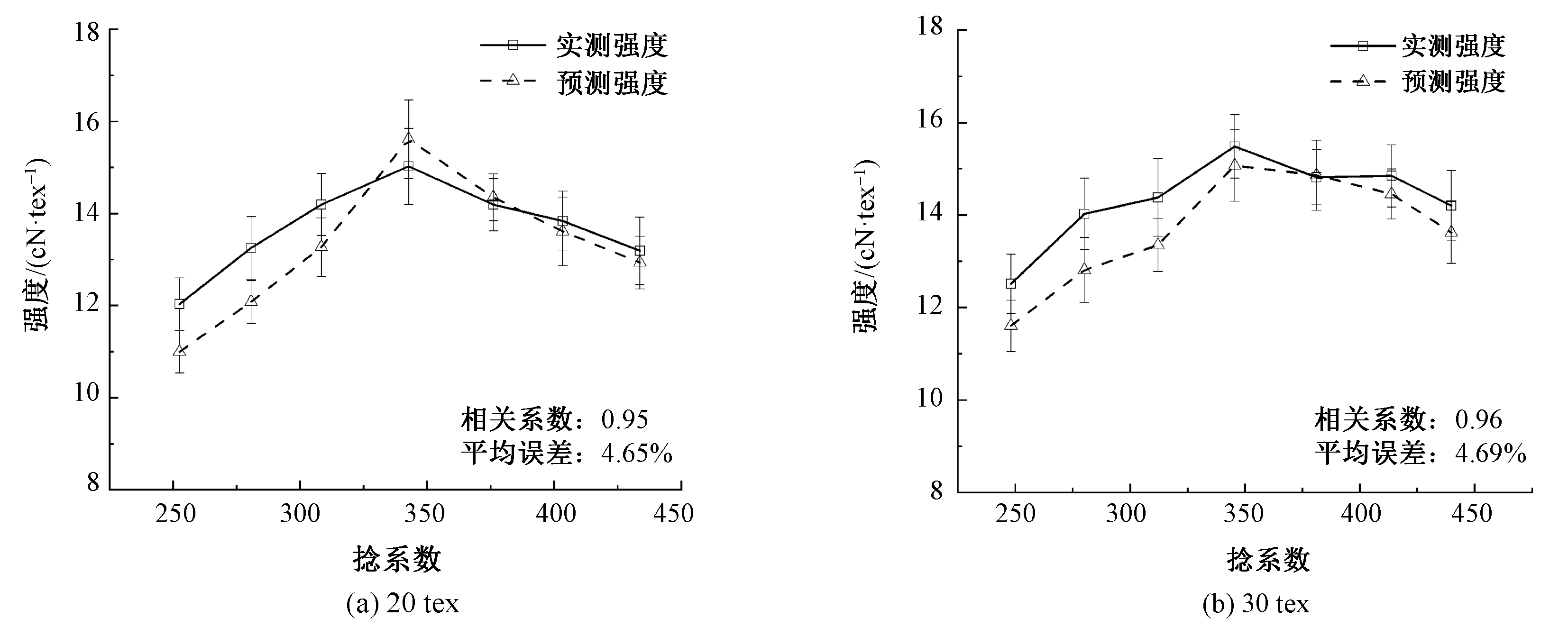
为揭示纤维性能与短纤纱参数对短纤纱强度的影响机制并实现其强度的预测,基于单纤维拉伸曲线,结合纤维性能和短纤纱参数,通过分析短纤纱内部纤维受力,建立了细观尺度的纤维力学模型。该模型量化了宏观参数(线密度和捻系数)对纤维应力和纤维间摩擦力的影响机制,建立了纤维断裂/滑脱的判定准则,从而构建了从细观到宏观的短纤纱强度双尺度预测模型。为验证模型的准确性与适用性,通过实验制备并测试了不同线密度和捻系数的棉、涤纶、维纶及粘胶等纺织行业常用的环锭纺短纤纱。结果表明:相同条件下,增加短纤纱线密度和捻系数均可抑制纤维滑脱;对不同原料、线密度及捻系数的环锭纺短纤纱,模型预测强度与实测强度的相关系数均大于0.95,二者均随着捻系数的增大先增大至最大值后下降,变化趋势一致性显著,且平均误差小于5%。综上,该双尺度预测模型具备良好的准确性与普适性,可用于环锭纺短纤纱强度预测。
中图分类号:
| [1] | GOSWAMI B C, MARTINDALE J G, SCARDINO F L. Textile yarns: technology, structure, and applications[M]. New York: Wiley & Sons, 1977: 102-104. |
| [2] |
WANG J C, ZHOU H, LIU Z K, et al. Statistical modelling of tensile properties of natural fiber yarns considering probability distributions of fiber crimping and effective yarn elastic modulus[J]. Composites Science and Technology, 2022, 218: 109142.
doi: 10.1016/j.compscitech.2021.109142 |
| [3] |
LI H, ZHENG G M, CAO Q L, et al. Computational modeling of the strength of staple yarn based on the random arrangement of fibers[J]. Textile Research Journal, 2024, 94(11/12): 1297-1305.
doi: 10.1177/00405175241227932 |
| [4] |
RAMEY H H Jr, LAWSON R Jr, WORLEY S Jr. Relationship of cotton fiber properties to yarn tenacity[J]. Textile Research Journal, 1977, 47(10): 685-691.
doi: 10.1177/004051757704701008 |
| [5] |
NURWAHA D, WANG X H. Comparison of the new methodologies for predicting the CSP strength of rotor yarn[J]. Fibers and Polymers, 2008, 9(6): 782-784.
doi: 10.1007/s12221-008-0122-1 |
| [6] |
LIU Y L, TODD CAMPBELL B, DELHOM C. Study to relate mini-spun yarn tenacity with cotton fiber strength[J]. Textile Research Journal, 2019, 89(21/22): 4491-4501.
doi: 10.1177/0040517519837725 |
| [7] | 吴志刚, 张圣男, 徐洁, 等. 纤维性能及细纱捻系数对棉纱断裂强度的影响[J]. 棉纺织技术, 2020, 48(2): 1-5. |
| WU Zhigang, ZHANG Shengnan, XU Jie, et al. Influence of fiber property and spun yarn twist factor on breaking tenacity of cotton yarn[J]. Cotton Textile Technology, 2020, 48(2): 1-5. | |
| [8] |
DAS S, GHOSH A. Decision rule prediction for assessment of rotor spun cotton yarn strength using rough set[J]. Journal of Natural Fibers, 2022, 19(17): 15919-15929.
doi: 10.1080/15440478.2022.2140376 |
| [9] |
RAZBIN M, GHAREHAGHAJI A A, SALEHIAN M, et al. Artificial neural network-assisted theoretical model to predict the viscoelastic-plastic tensile behavior of polyamide-6 multi-ply yarns[J]. Neural Computing and Applications, 2024, 36(29): 18107-18123.
doi: 10.1007/s00521-024-10048-x |
| [10] |
ZHANG B W, SONG J X, ZHAO S N, et al. Prediction of yarn strength based on an expert weighted neural network optimized by particle swarm optimization[J]. Textile Research Journal, 2021, 91(23/24): 2911-2924.
doi: 10.1177/00405175211022619 |
| [11] |
HEARLE J W S. Theoretical analysis of the mechanics of twisted staple fiber yarns[J]. Textile Research Journal, 1965, 35(12): 1060-1071.
doi: 10.1177/004051756503501202 |
| [12] |
PAN N. Development of a constitutive theory for short fiber yarns: mechanics of staple yarn without slippage effect[J]. Textile Research Journal, 1992, 62(12): 749-765.
doi: 10.1177/004051759206201208 |
| [13] |
PAN N. Development of a constitutive theory for short fiber yarns: part II: mechanics of staple yarn with slippage effect[J]. Textile Research Journal, 1993, 63(9): 504-514.
doi: 10.1177/004051759306300902 |
| [14] |
FRYDRYCH I. A new approach for predicting strength properties of yarn[J]. Textile Research Journal, 1992, 62(6): 340-348.
doi: 10.1177/004051759206200606 |
| [15] | 陶静, 汪俊亮, 张洁. 数据驱动与有限元仿真融合的纱线断裂强力分析方法[J]. 纺织学报, 2024, 45(2): 238-245. |
| TAO Jing, WANG Junliang, ZHANG Jie. Data-driven finite element simulation for yarn breaking strength analysis[J]. Journal of Textile Research, 2024, 45(2): 238-245. | |
| [16] |
JIANG Z, YU C W, YANG J P, et al. Estimation of yarn strength based on critical slipping length and fiber length distribution[J]. Textile Research Journal, 2019, 89(2): 182-194.
doi: 10.1177/0040517517741160 |
| [17] |
姚江薇, 邹专勇, 闫琳琳, 等. 喷气涡流纺纱线拉伸断裂强力预测模型构建与验证[J]. 纺织学报, 2018, 39(10): 32-37.
doi: 10.13475/j.fzxb.20171100606 |
|
YAO Jiangwei, ZOU Zhuanyong, YAN Linlin, et al. Prediction model on tensile strength of air jet vortex spinning yarn and its verification[J]. Journal of Textile Research, 2018, 39(10): 32-37.
doi: 10.13475/j.fzxb.20171100606 |
|
| [18] | HEARLE J W S, GROSBERG P, BACKER S. Structural mechanics of fibers, yarns, and fabrics[M]. New York: Wiley-Interscience, 1969: 65-66. |
| [19] |
SCHWARZ E R. Certain aspects of yarn structure[J]. Textile Research Journal, 1951, 21(3): 125-136.
doi: 10.1177/004051755102100301 |
| [20] | 姚穆. 纺织材料学[M]. 3版. 北京: 中国纺织出版社, 2009: 179-180. |
| YAO Mu. Textile materials science[M]. 3rd ed. Beijing: China Textile & Apparel Press, 2009: 179-180. | |
| [21] | 郁崇文. 纺纱学[M]. 4版. 北京: 中国纺织出版社有限公司, 2023:152-153. |
| YU Chongwen. Spinning science[M]. 4th ed. Beijing: China Textile & Apparel Press, 2023:152-153. | |
| [22] | 李豪, 钱丽莉, 曹巧丽, 等. 基于纤维拉伸曲线的短纤纱中纤维张力的数值模拟[J/OL]. 棉纺织技术, 2025: 1-6. (2025-05-15). https://kns.cnki.net/KCMS/detail/detail.aspx?filename=MFJS20250513001&dbname=CJFD&dbcode=CJFQ. |
| LI Hao, QIAN Lili, CAO Qiaoli, et al. Numerical simulation of fiber tension in staple yarn based on fiber tensile curve[J/OL]. Cotton Textile Technology, 2025: 1-6. (2025-05-15). https://kns.cnki.net/KCMS/detail/detail.aspx?filename=MFJS20250513001&dbname=CJFD&dbcode=CJFQ. | |
| [23] |
ZHU G Q, WANG X, LIU M N, et al. Simulation of fiber arrangement in slivers based on image processing[J]. Textile Research Journal, 2025, 95(13/14): 1691-1697.
doi: 10.1177/00405175241291799 |
| [1] | 郭梦瑶, 吴佳庆, 王迎. 全包覆结构聚氨酯膜条带/棉复合纱制备及其力学性能[J]. 纺织学报, 2025, 46(11): 69-76. |
| [2] | 尹文博, 叶帆, 杨瑞华. 基于包芯-包缠结构复合纱的锦纶/棉机织物服用性能[J]. 纺织学报, 2025, 46(11): 77-85. |
| [3] | 陶静, 汪俊亮, 张洁. 数据驱动与有限元仿真融合的纱线断裂强力分析方法[J]. 纺织学报, 2024, 45(02): 238-245. |
| [4] | 左祺, 吴华伟, 王春红, 杜娟娟. 纱线结构对苎麻短纤纱复合材料拉伸性能的影响[J]. 纺织学报, 2023, 44(10): 81-89. |
| [5] | 陈泰芳, 周亚勤, 汪俊亮, 徐楚桥, 李冬武. 基于视觉特征强化的环锭纺细纱断头在线检测方法[J]. 纺织学报, 2023, 44(08): 63-72. |
| [6] | 刘帅, 郭晨宇, 陈鹤文, 杨瑞华. 赛络菲尔包缠纱结构建模分析与性能优化[J]. 纺织学报, 2023, 44(04): 63-69. |
| [7] | 郑小虎, 刘正好, 陈峰, 刘志峰, 汪俊亮, 侯曦, 丁司懿. 环锭纺纱全流程机器人自动化生产关键技术[J]. 纺织学报, 2022, 43(09): 11-20. |
| [8] | 郭明瑞, 高卫东. 两通道环锭纺单区牵伸纺制段彩竹节纱的方法及其特点[J]. 纺织学报, 2022, 43(08): 21-26. |
| [9] | 杨瑞华, 潘博, 郭霞, 王利军, 李健伟. 环锭纺及转杯纺和喷气涡流纺混色纱的纤维混合效果研究[J]. 纺织学报, 2021, 42(07): 76-81. |
| [10] | 倪洁, 杨建平, 郁崇文. 股线与单纱捻系数比对粘胶股线性能的影响[J]. 纺织学报, 2021, 42(05): 46-50. |
| [11] | 殷士勇, 鲍劲松, 唐仕喜, 杨芸. 环锭纺纱信息物理生产系统建模方法[J]. 纺织学报, 2021, 42(02): 65-73. |
| [12] | 张婷婷, 薛元, 徐志武, 于健, 陈连光. 三通道数码纺混色纱色谱体系构建及其彩色纱性能分析[J]. 纺织学报, 2019, 40(09): 48-55. |
| [13] | 殷士勇, 鲍劲松, 孙学民, 王佳铖. 基于信息物理系统的环锭纺纱智能车间温度闭环精准控制方法[J]. 纺织学报, 2019, 40(02): 159-165. |
| [14] | 李沛赢 郭明瑞 高卫东. 应用给湿装置改善环锭纺成纱毛羽[J]. 纺织学报, 2018, 39(05): 108-112. |
| [15] | 吕汉明 吴擎擎 吕鑫 马崇启 周鹏飞. 基于数据库的环锭纺细纱机细纱断头检测与信息显示[J]. 纺织学报, 2018, 39(04): 123-129. |
|
||
 京公网安备11010502044800号