纺织学报 ›› 2025, Vol. 46 ›› Issue (11): 69-76.doi: 10.13475/j.fzxb.20250203201

• 纺织工程 • 上一篇    下一篇

全包覆结构聚氨酯膜条带/棉复合纱制备及其力学性能

郭梦瑶, 吴佳庆, 王迎()   

  1. 大连工业大学 纺织与材料工程学院, 辽宁 大连 116034
  • 收稿日期:2025-02-19 修回日期:2025-08-01 出版日期:2025-11-15 发布日期:2025-11-15
  • 通讯作者: 王迎(1976—),女,教授,博士。主要研究方向为新型纺纱技术。E-mail:wangying@dlpu.edu.cn
  • 作者简介:郭梦瑶(1999—),女,硕士生。主要研究方向为多功能纳米纤维膜制备及性能。
  • 基金资助:
    辽宁省属本科高校基本科研业务费专项资金资助项目(LJ212410152018)

Fabrication of fully covered polyurethane-film-strip/cotton composite yarns and its mechanical properties

GUO Mengyao, WU Jiaqing, WANG Ying()   

  1. College of Textile and Materials Engineering, Dalian Polytechnic University, Dalian, Liaoning 116034, China
  • Received:2025-02-19 Revised:2025-08-01 Published:2025-11-15 Online:2025-11-15

摘要:

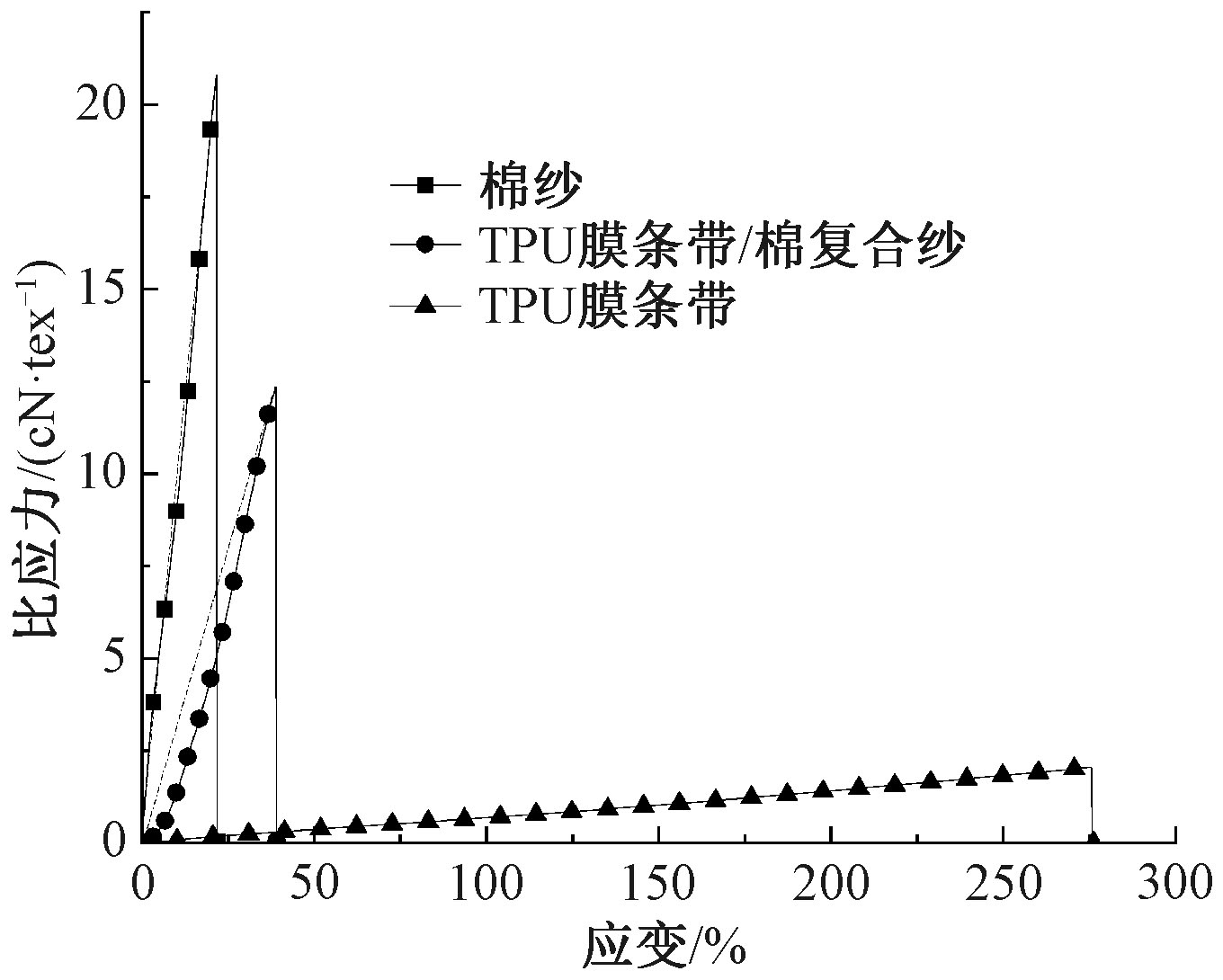
为丰富条带纺纱线品种,基于环锭纺纱方法,以静电纺膜条带为纱芯、棉纤维为外包层,制备内置条带的静电纺热塑性聚氨酯(TPU)膜条带/棉复合纱。从模型构建和纱线纺制2个方面,探讨TPU膜条带/棉复合纱全包覆结构关键参数。通过建立最小全包覆量结构模型,获得外包层线密度理论临界值;通过实验研究前罗拉处喂入须条宽度,获得外包层线密度实际临界值。以TPU纳米纤维膜条带为芯纱,分别采用不同线密度棉粗纱为包覆层,通过双粗纱喂入模式制备3种复合纱。结果表明:当外包层线密度是理论临界值的2倍以上时,可制备出全包覆结构复合纱;此条件下制备的TPU膜条带/棉复合纱无漏芯现象,其断裂强度为13.43 cN/tex,断裂伸长率为45%。内置TPU膜条带纺纱技术可解决纳米纤维膜应用中力学性能低的瓶颈问题,并赋予复合纱较好的弹性。

关键词: 热塑性聚氨酯, 纳米纤维膜, 条带纺, 复合纱, 全包覆结构, 棉纱, 环锭纺

Abstract:

Objective In order to increase the diversity of yarns, a composite yarn was produced using a polyurethane (TPU) nanofiber film strip as the core and cotton fibers as the sheath (TPU-film-strip/cotton) through ring spinning. During the spinning process, core exposure emerged as an issue that affects the quality of the composite yarn. Basic theoretical research on fully covered composite yarns is limited. Therefore, the fundamental principles and key parameters for achieving a completely covered structure were theoretically investigated. Three types of TPU-film-strip/cotton composite yarns were prepared, and their mechanical properties were evaluated.
Method For obtaining a fully covered yarn, a theoretical model was developed to describe the relationship between the film strip size and the parameters of the outer fibers under ideal conditions. Using this model, the theoretical linear density equation for sheath layer was established. The width of the cotton strand at the nip of front roller was experimentally investigated, and the actual linear density equation of the sheath was derived through linear fitting. Guided by both the theoretical and actual linear density equations, TPU-film-strip/cotton composite yarns were fabricated. Based on the spinning results, the theoretical linear density equation was subsequently revised.
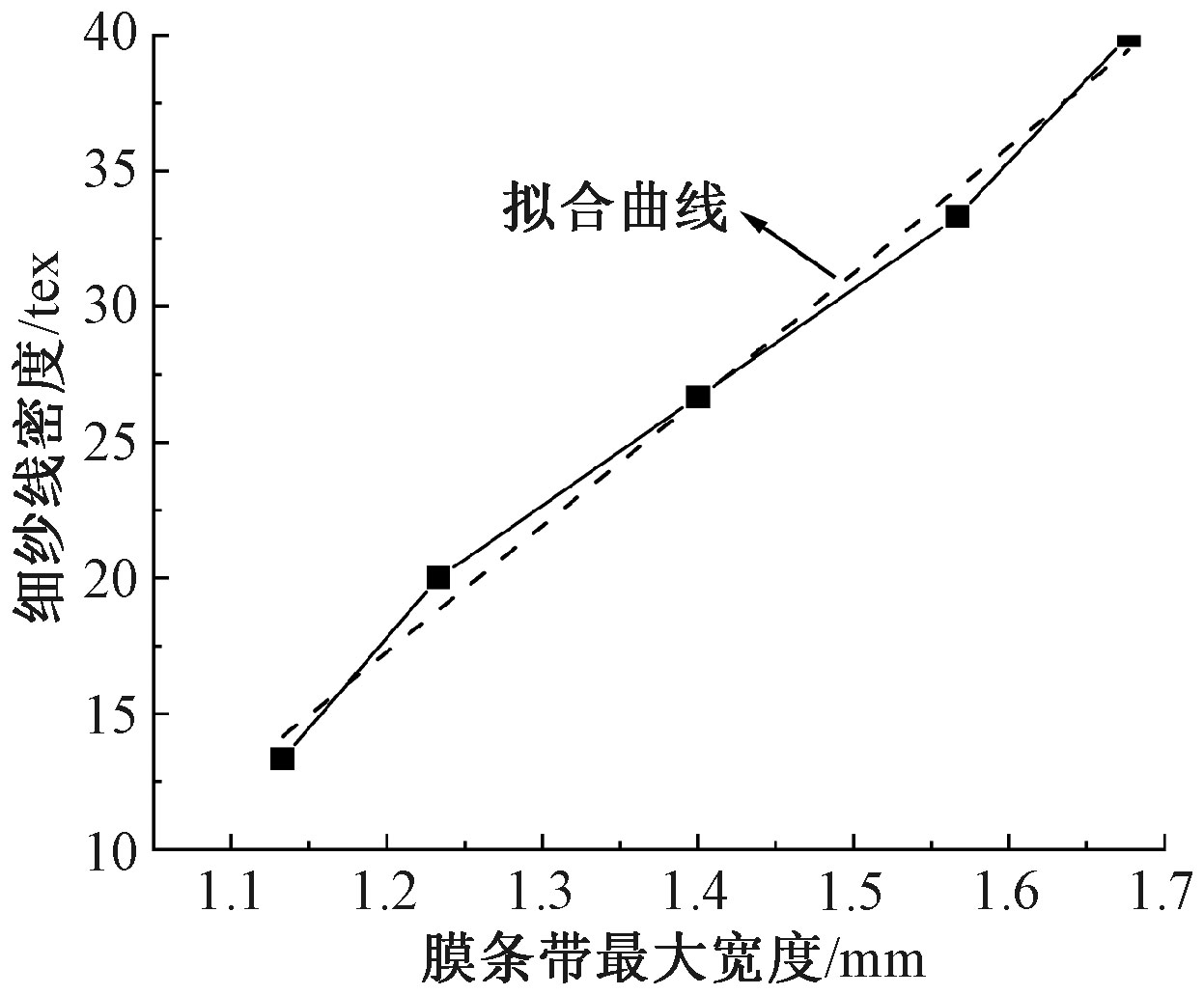
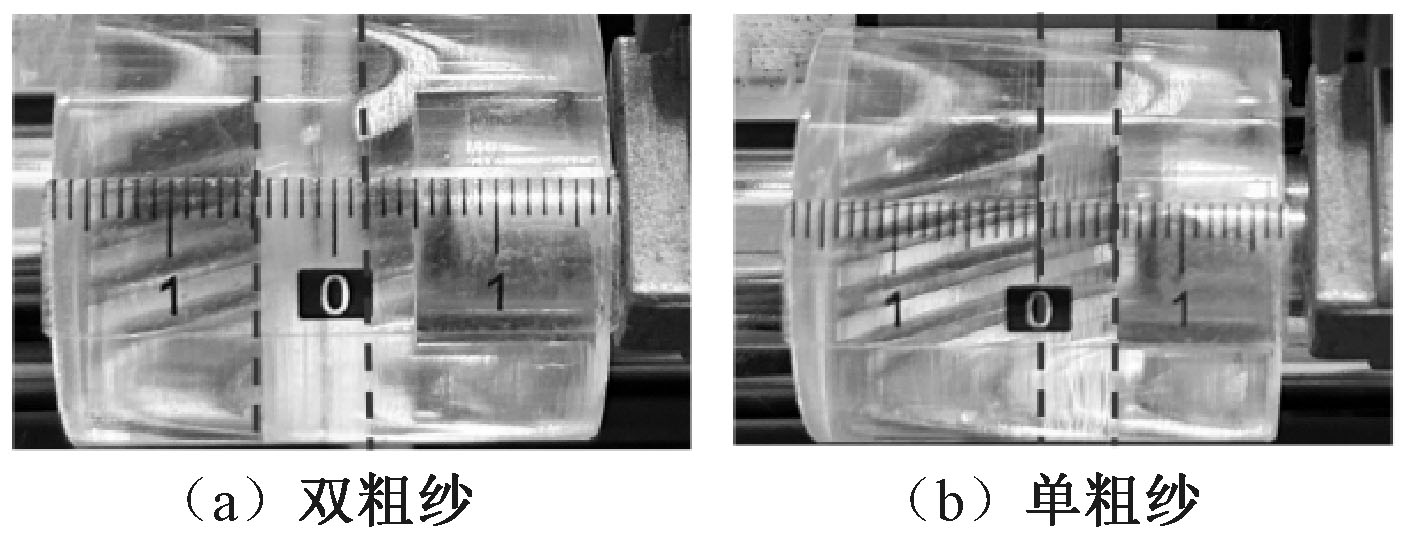
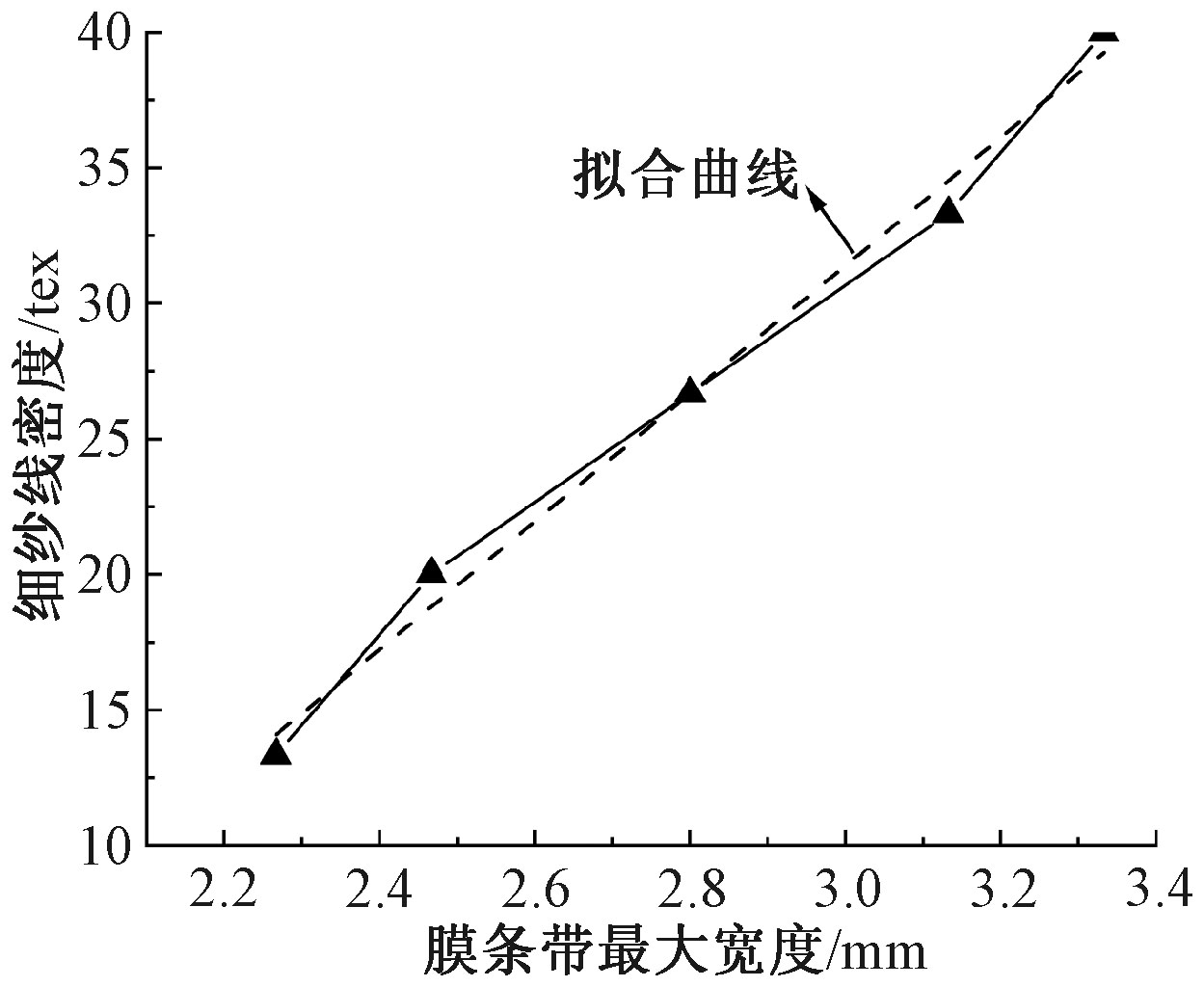
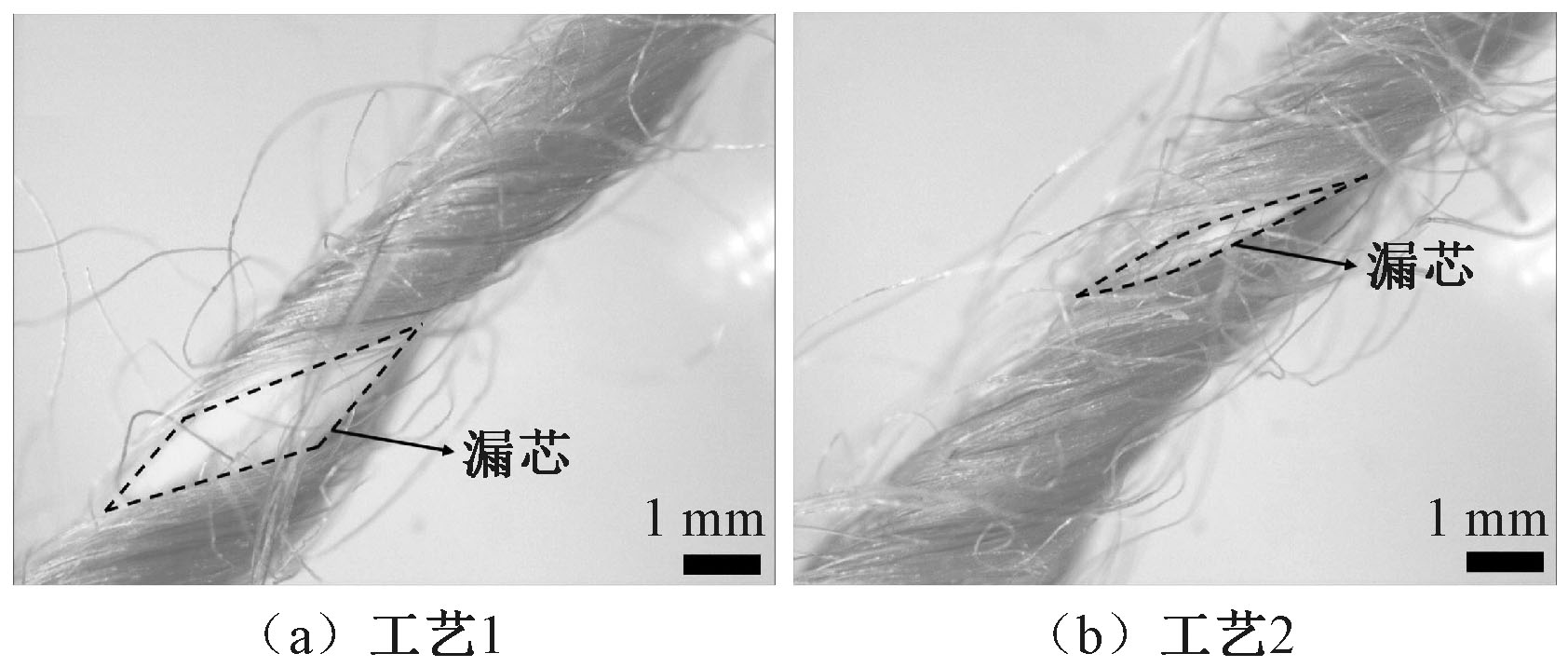
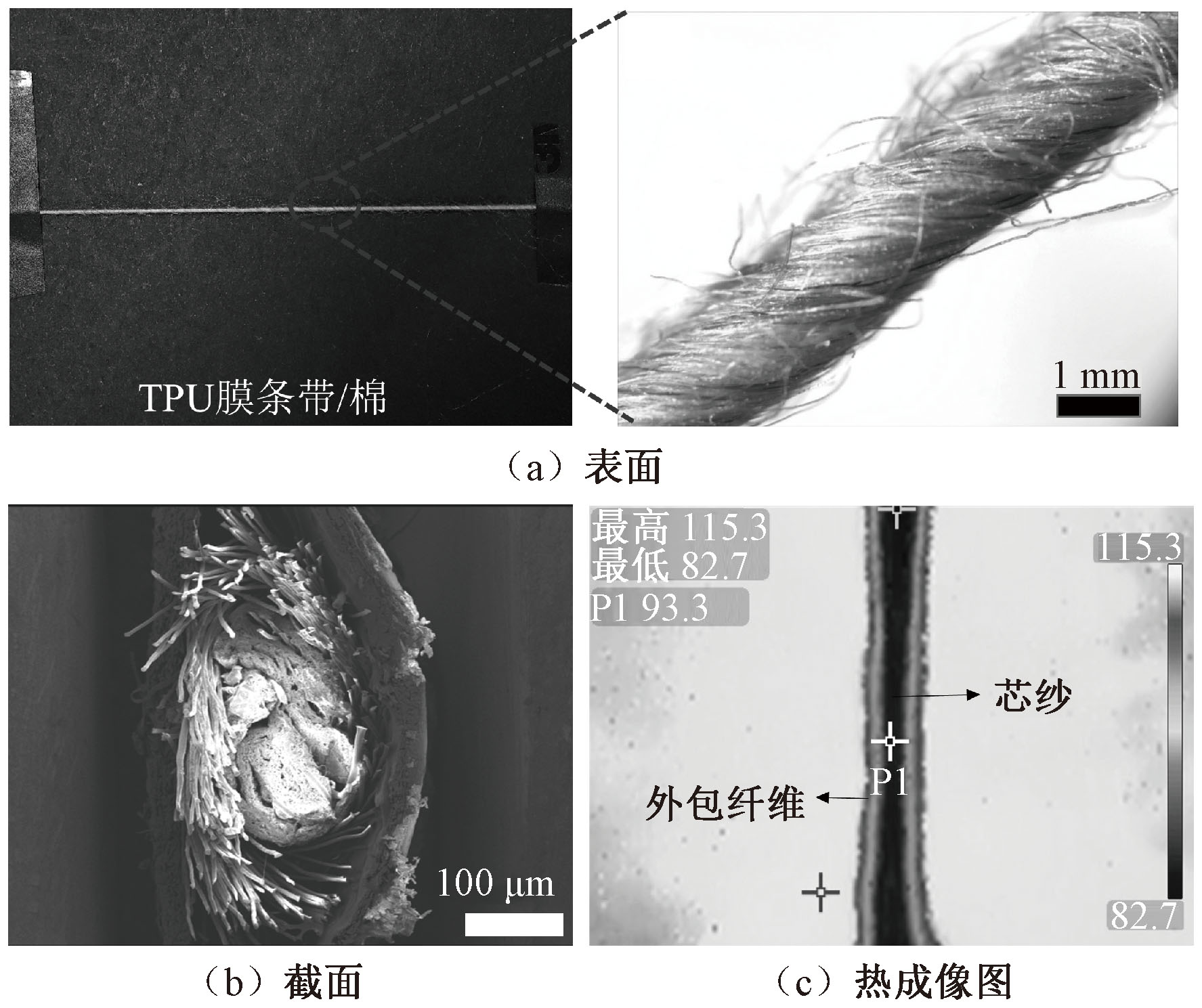
Results Based on the theoretical model, the mathematical relationship between the film strip size and the parameters of the outer fibers was established. The theoretical linear density equation of the composite yarn sheath is given. Linear fitting was applied to derive the relationships between the yarn linear density and the 1/3 width of the strand at the nip of front roller, resulting in the actual linear density equations of the composite yarn sheath for the single roving feeding mode and the double roving feeding mode. The double roving feeding was found an satisfactory method. +++Using a TPU nanofiber film strip measuring 2.4 mm×0.1 mm as the core and cotton fibers as the sheath, the theoretical linear density of the sheath was calculated to be 32.33 tex, while the actual linear density was 17.21 tex. Therefore, the design linear density of the composite yarn sheath needed to be greater than 32.33 tex. Three types of TPU-film-strip/cotton composite yarns were spun using the double roving feeding method under the following process parameters: (1) design linear density to be 33.33 tex, which is close to 32.33 tex; (2) design linear density to be 50.00 tex, about 1.5 times of 32.33 tex; and (3) design linear density to be 66.70 tex, about twice of 32.33 tex. The results indicated that core exposure occurred in the yarns produced under situations (1) and (2), whereas a fully covered composite yarn was successfully achieved under situation (3). The spinning trials revealed that the theoretical linear density was insufficient in practice. Achieving a completely covered structure, the actual amount of sheath needed to be more than twice the theoretical linear density. Thus, the coefficient in theoretical linear density equation was doubled, resulting in a modified equation. During the actual spinning process of the composite yarns with strip as core, both the modified theoretical and actual linear densities of the composite yarn sheath should be calculated first. The maximum of these two values was defined as the critical linear density. A necessary condition for producing a fully covered composite yarn is that the linear density of the sheath must be greater than this critical value.Under situation (3), the produced TPU-film-strip/cotton composite yarn using TPU strip 33 tex and cotton 66 tex exhibited no core exposure and demonstrated a breaking strength of 13.43 cN/tex and an elongation at break of 45%.
Conclusion By integrating an electrospun film strip into cotton fibers, fully covered TPU-film-strip/cotton composite yarns were successfully produced using the ring spinning method. The fully covered yarn improves the evenness uniformity of the composite yarn and provides a certain protection to the core strips. This spinning approach overcomes the bottleneck of low mechanical properties that has limited the application of nanofiber membranes. Furthermore, electrospun films can be easily functionalized to exhibit a wide range of properties. The theory of strip-spinning may offer a new pathway for producing micro-nano composite yarns, particularly for specialized multi-functional yarns and fabrics.

Key words: thermoplastic polyurethane, nano-fiber film, strip spinning, composite yarn, completely covered structure, cotton yarn, ring spinning

中图分类号: 

  • TS104.7

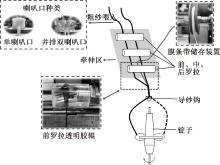
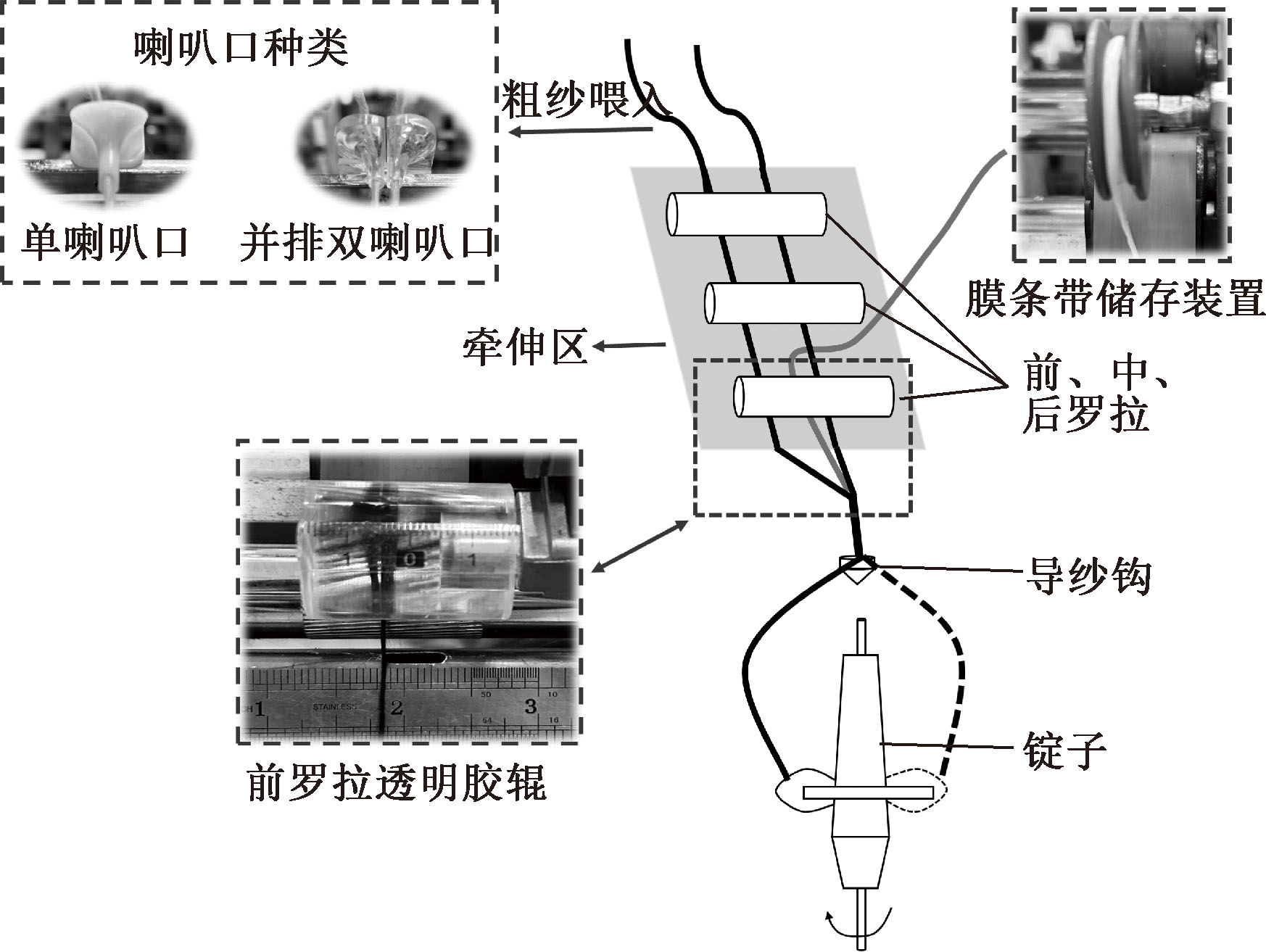
图1

纺纱示意图"

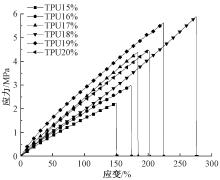
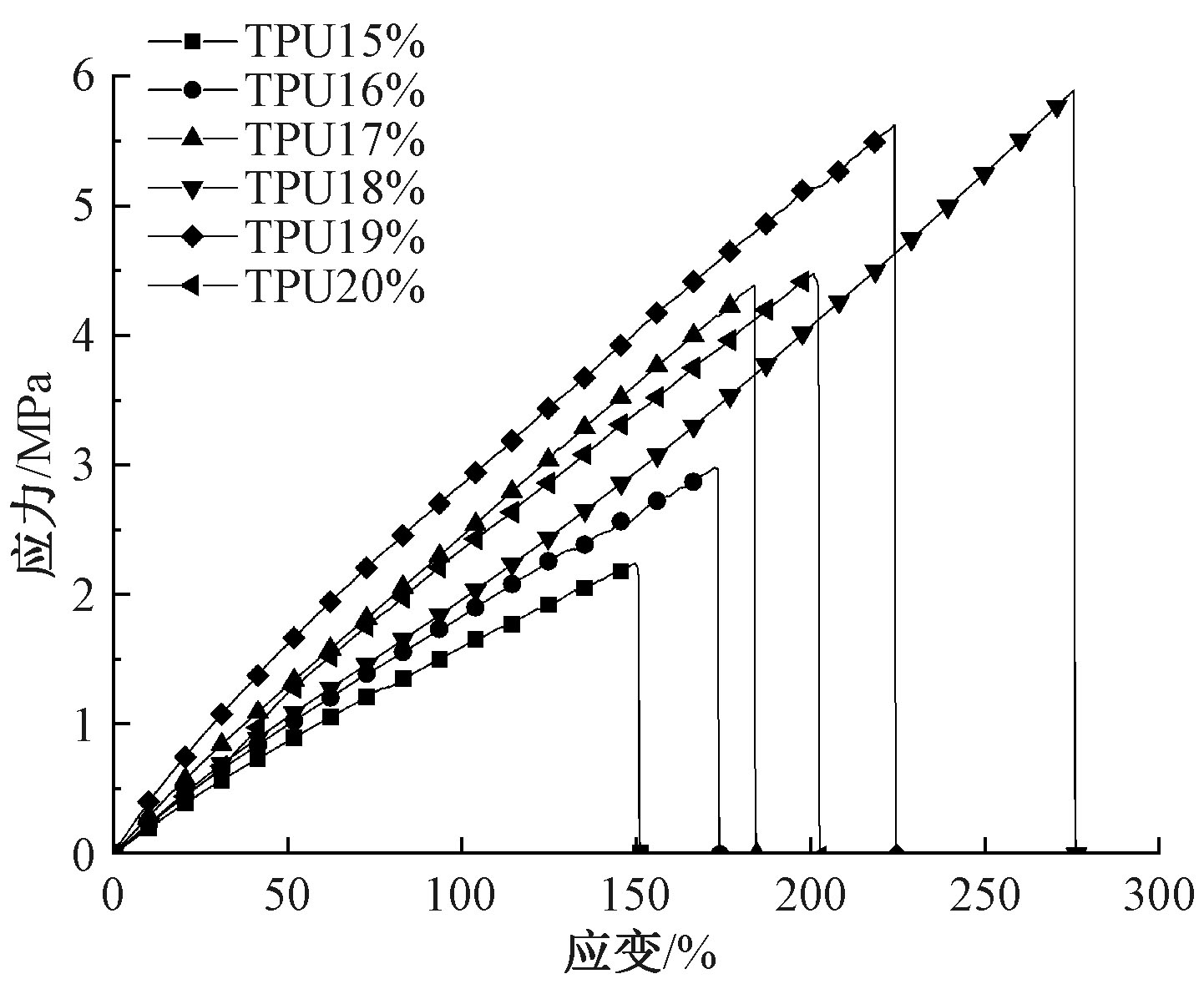
图2

不同质量分数TPU纳米纤维膜应力-应变曲线"

图3

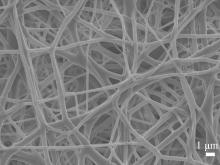
TPU纳米纤维膜SEM照片(18%)"

图4

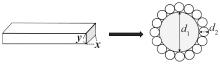
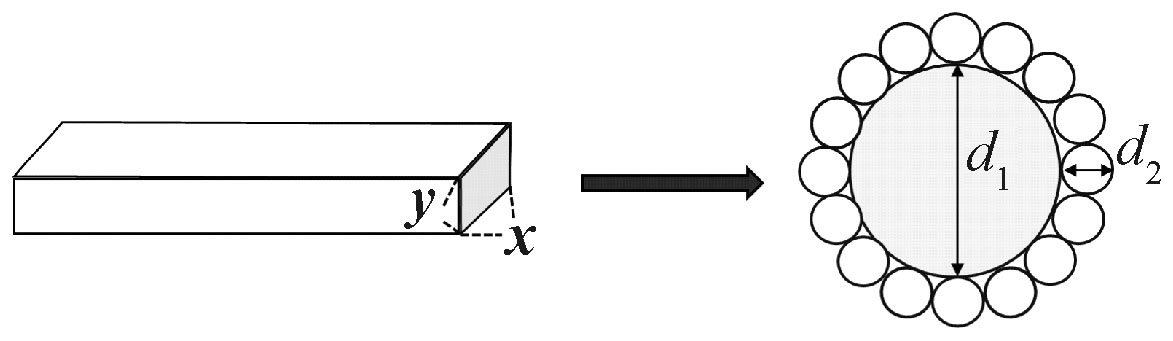
理想条件下复合纱最小全包覆量结构模型"

图5

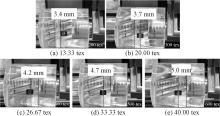
前罗拉钳口处棉须条宽度"

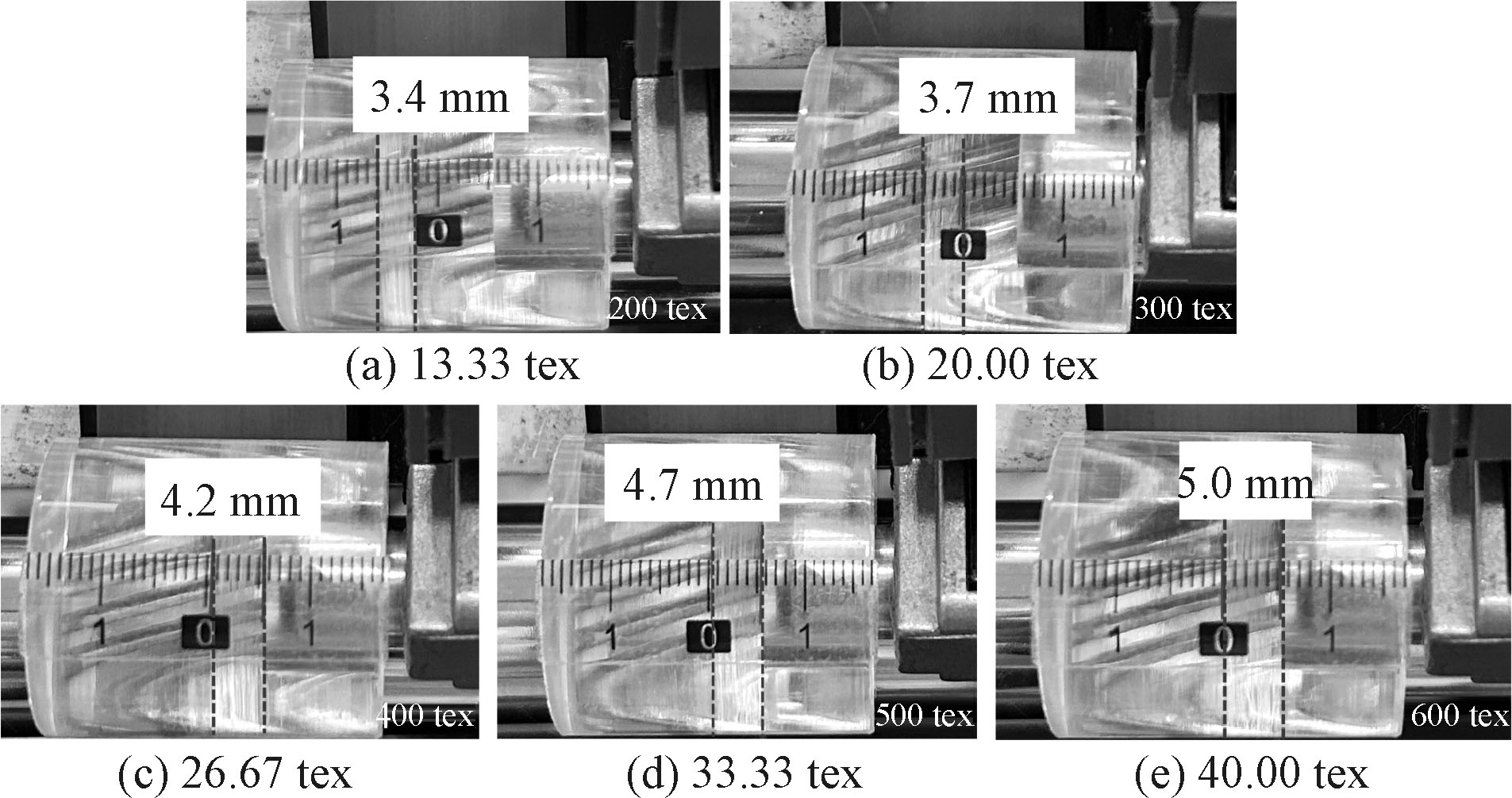
表1

细纱线密度与前罗拉钳口处棉须条宽度关系"

细纱线密度/tex 粗纱线密度/tex 须条宽度/mm
13.33 200 3.4
20.00 300 3.7
26.67 400 4.2
33.33 500 4.7
40.00 600 5.0

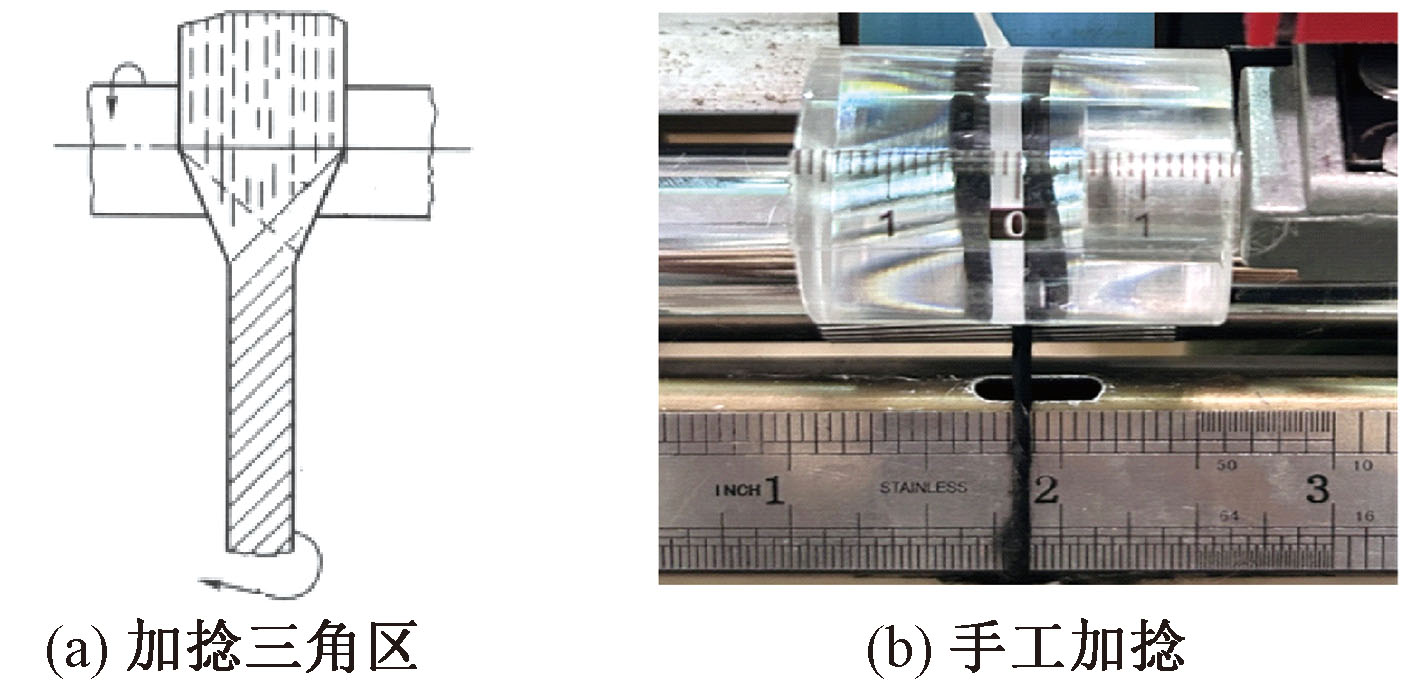
图6

加捻三角区及手工加捻示意图"

图7

细纱线密度与膜条带最大宽度拟合曲线(单粗纱)"

图8

前钳口处棉须条宽度"

图9

细纱线密度与膜条带最大宽度拟合曲线(双粗纱)"

表2

纺纱工艺参数"

工艺
编号
膜条带
线密度/
tex
粗纱
线密度/
tex
牵伸
倍数
捻度/
(捻·
(10 cm)-1)
预估外
包层线
密度/tex
工艺1 33 300 18 50 33.33
工艺2 400 16 50.00
工艺3 500 15 66.70

图10

采用工艺1和工艺2制备的复合纱外观照片"

图11

复合纱表面与截面SEM照片及热成像图"

图12

棉纱、复合纱、膜条带应力-应变曲线"

[1] QIU Q H, CHEN S Y, LI Y P, et al. Functional nanofibers embedded into textiles for durable antibacterial properties[J]. Chemical Engineering Journal, 2020, 384: 123241.
[2] MAO N, PENG H, QUAN Z Z, et al. Wettability control in tree structure-based 1D fiber assemblies for moisture wicking functionality[J]. ACS Applied Materials & Interfaces, 2019, 11(47):44682-44690.
[3] MAO N, CHEN W C, MENG J, et al. Enhanced electrochemical properties of hierarchically sheath-core aligned carbon nanofibers coated carbon fiber yarn electrode-based supercapacitor via polyaniline nanowire array modification[J]. Journal of Power Sources, 2018, 399: 406-413.
doi: 10.1016/j.jpowsour.2018.07.022
[4] PANT H R, BAEK W I, NAM K T, et al. Fabrication of polymeric microfibers containing rice-like oligomeric hydrogel nanoparticles on their surface: a novel strategy in the electrospinning process[J]. Materials Letters, 2011, 65(10): 1441-1444.
doi: 10.1016/j.matlet.2011.02.029
[5] SHANG L L, WU Z P, LI X Y, et al. A breathable and highly impact-resistant shear-thickened fluid (STF) based TENG via hierarchical liquid-flow spinning for intelligent protection[J]. Nano Energy, 2023, 118: 108955.
[6] TAN Y H, MA Y X, LIU J Y, et al. Breathable and impact-resistant shear thickening gel based three-dimensional woven fabric composites constructed by an efficient weaving strategy for wearable protective equipment[J]. Composites Part A: Applied Science and Manufacturing, 2024, 177: 107886.
[7] 陈灿, 拖晓航, 王迎. 取向聚氨酯纳米纤维膜卷纱的制备及其力学性能[J]. 纺织学报, 2024, 45(8): 134-141.
CHEN Can, TUO Xiaohang, WANG Ying. Preparation and mechanical properties of yarns made from rolling oriented polyurethane nanofiber membranes[J]. Journal of Textile Research, 2024, 45(8): 134-141.
[8] 徐卫林, 夏治刚, 刘欣. 一种内置粉体材料的复合纱线成型方法:20181012642611[P]. 2018-07-17.
XU Weilin, XIA Zhigang, LIU Xin. A built-in powder material composite yarn molding method: 20181012642611[P]. 2018-07-17.
[9] 夏治刚, 付驰宇, 丁彩玲. 一种超短难纺纤维短流程成纱方法:2018101264556[P]. 2021-05-07.
XIA Zhigang, FU Chiyu, DING Cailing. An ultra-short hard-to-spin fiber short process yarn formation method: 2018101264556[P]. 2021-05-07.
[10] 钱栋霞. 柞绢包芯纱的研究[D]. 苏州: 苏州大学, 2005:1-20.
QIAN Dongxia. Research of oak silk covering yarn[D]. Suzhou: Soochow University, 2005:1-20.
[11] 郁崇文. 纺纱学[M]. 3版. 北京: 中国纺织出版社, 2019: 134.
YU Chongwen. Spinning science[M]. 3rd ed. Beijing: China Textile & Apparel Press, 2019: 134.
[12] 吴佳庆, 王迎, 郝新敏, 等. 长丝喂入位置对赛络纺包芯纱结构与性能影响[J]. 纺织学报, 2021, 42(8): 64-70.
WU Jiaqing, WANG Ying, HAO Xinmin, et al. Effect of filament feeding positions on structure and properties of siro-spinning core-spun yarns[J]. Journal of Textile Research, 2021, 42(8): 64-70.
[13] 张长乐, 蔡韵梅. 弹力包芯纱弹性与包覆效果的研究[J]. 棉纺织技术, 2000, 28(9): 5-9.
ZHANG Changle, CAI Yunmei. Research of elastic performance and covered effect on elastic core-spun yarn[J]. Cotton Textile Technology, 2000, 28(9): 5-9.
[14] 王府梅, 李京歌, 谢璇妍. PTT等弹性纤维的弹性回复性能比较[J]. 东华大学学报(自然科学版), 2004, 30(3): 90-92.
WANG Fumei, LI Jingge, XIE Xuanyan. Comparative study on elasticity of PTT and other elastic fibers[J]. Journal of Donghua University (Natural Science), 2004, 30(3): 90-92.
[1] 尹文博, 叶帆, 杨瑞华. 基于包芯-包缠结构复合纱的锦纶/棉机织物服用性能[J]. 纺织学报, 2025, 46(11): 77-85.
[2] 唐曾华, 李宏杰, 毕思伊, 邵光伟, 蒋金华, 陈南梁, 邵慧奇. 增强结构对碳纤维/热塑性聚氨酯柔性复合材料电磁屏蔽性能的影响[J]. 纺织学报, 2025, 46(10): 111-119.
[3] 吴乐然, 吴霓欢, 李林耿, 钟意, 陈鸿鹏, 汤南. 负载厚朴酚的抗菌纳米纤维膜的制备及其性能[J]. 纺织学报, 2025, 46(10): 30-38.
[4] 郑小虎, 杜思淇, 刘永青, 王健, 陈峰. 基于一维卷积神经网络的棉纱线质量预测[J]. 纺织学报, 2025, 46(09): 120-127.
[5] 毛泽, 高俊, 凌磊, 武丁胜, 陶云, 张春, 李申, 凤权. 聚丙烯腈/聚吡咯纳米纤维膜的制备及其对铬离子的吸附性能[J]. 纺织学报, 2025, 46(09): 57-65.
[6] 傅林, 钱建华, 单江音, 林灵, 卫梦蓉, 翁可欣, 吴晓睿. 银纳米线/聚氨酯纳米纤维膜柔性传感器制备及其性能[J]. 纺织学报, 2025, 46(09): 74-83.
[7] 史蜜, 王文聪, 范雪荣, 高卫东. 聚乙烯醇聚合度和醇解度对棉浆纱性能的影响[J]. 纺织学报, 2025, 46(09): 181-187.
[8] 马晓远, 包伟. 防水透湿纳米纤维复合织物研究现状及发展趋势[J]. 纺织学报, 2025, 46(08): 254-262.
[9] 张利平, 郭羽晴, 丁博, 孙洁. 芳纶纳米纤维/热塑性聚氨酯复合微孔膜与可呼吸覆膜织物制备及其性能[J]. 纺织学报, 2025, 46(07): 19-27.
[10] 林玉婷, 许仕林, 胡毅. 多色彩热塑性聚氨酯/聚丙烯腈纳米纤维纱线的制备及其性能[J]. 纺织学报, 2025, 46(07): 78-86.
[11] 王春翔, 李姣, 解开放, 薛宏坤, 徐广标. 天麻多糖/聚乙烯醇静电纺抗菌保鲜膜的制备与性能[J]. 纺织学报, 2025, 46(06): 73-79.
[12] 时晓聪, 陈莉, 杜迅. 茜素-聚乳酸/胶原蛋白纳米纤维膜的制备及其氨气检测性能[J]. 纺织学报, 2025, 46(05): 143-150.
[13] 刘锦锋, 杜康存, 肖畅, 付少海, 张丽平. 多孔MXene/热塑性聚氨酯纤维的制备及其应力应变传感性能[J]. 纺织学报, 2025, 46(03): 41-48.
[14] 张瑞成, 张文清, 吕哲, 许多, 刘可帅, 徐卫林. 基于自捻纺的嵌入式低扭矩复合纱性能分析[J]. 纺织学报, 2025, 46(02): 78-85.
[15] 朱雪, 钱鑫, 郝梦圆, 张永刚. MXene/碳纳米纤维膜的静电纺丝-电泳沉积复合工艺制备及其电磁屏蔽性能[J]. 纺织学报, 2025, 46(01): 1-8.
Viewed
Full text


Abstract

Cited

  Shared   
  Discussed   
No Suggested Reading articles found!