纺织学报 ›› 2026, Vol. 47 ›› Issue (06): 262-273.doi: 10.13475/j.fzxb.20250705402
夏之虎1,2, 黄文海1,2, 吴柳烟2, 黄齐3, 杨自治3, 夏治刚1,2( )
)
XIA Zhihu1,2, HUANG Wenhai1,2, WU Liuyan2, HUANG Qi3, YANG Zizhi3, XIA Zhigang1,2()
摘要:
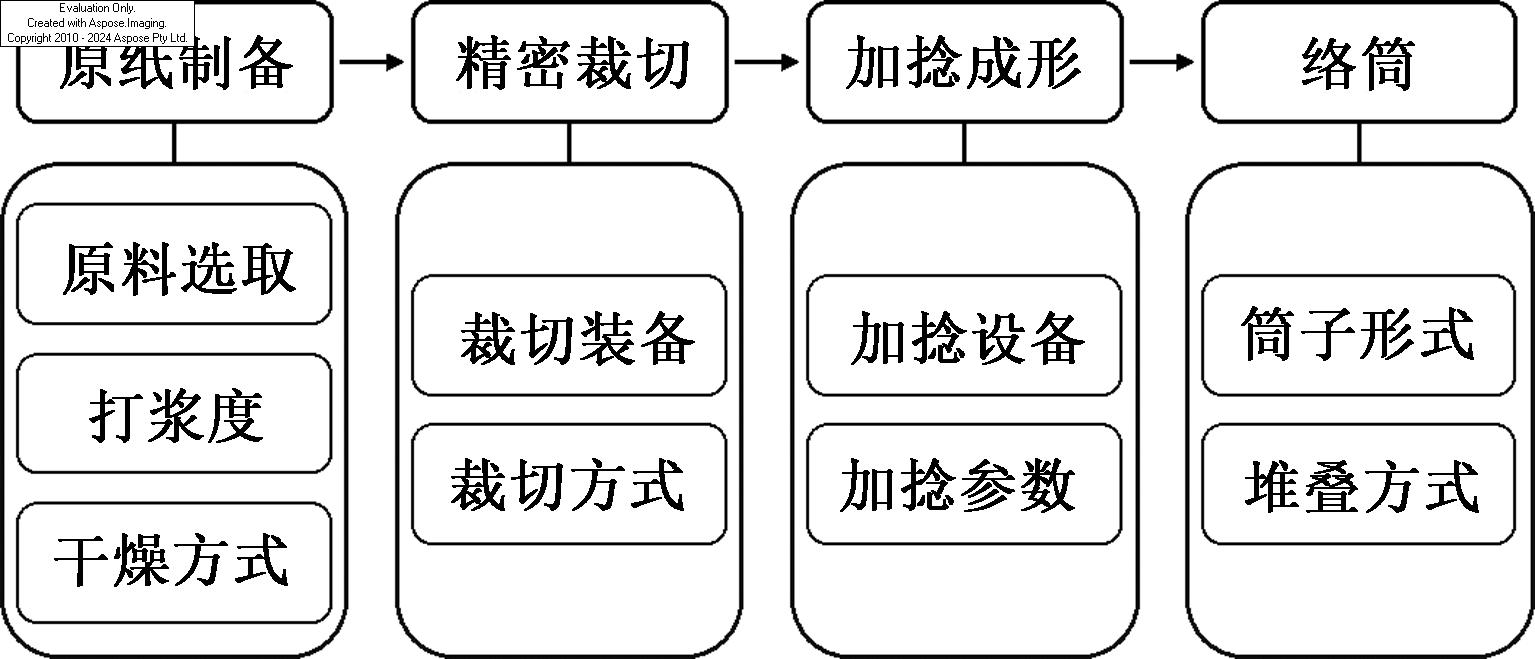
为破解纸基材料在纺织应用中固有的脆性大、成纱可靠性差等技术瓶颈,弥补现有研究对纸基成纱全流程系统性整合的不足,推动可持续纺织材料的技术升级与产业化应用,系统阐明了纸基成纱过程中纸张精密分切、窄条力学传递和纸纱加捻结构三大核心机制,对比分析了不同文化纸种与工业纸种的纤维特性及成纱适配潜力;逐层梳理了从原纸制备、裁切成条、加捻成形、功能化整理到络筒工序的全链条工艺路径,深入探讨了纤维形态、打浆工艺、裁切方式、加捻参数等关键因素对成纱性能的影响规律与调控策略;同时分析了纸纱的织造适配性、后整理工艺要点与织物性能特征,论述了纸纱织物全生命周期循环利用的技术路径与生态优势。最后总结了纸基材料成纱技术的发展现状,指出了当前产业化面临的高强度与高柔韧性难兼顾、功能化处理易引发结构僵化、多阶工艺推高生产成本三大核心矛盾,并指明了未来需聚焦成纱专用纸材定制设计、生物基绿色功能改性、裁切-加捻一体化专用装备开发及高附加值应用场景拓展的核心发展方向。
中图分类号:
| [1] | GUAN Y H, YAN L, LIU H, et al. Cellulose-derived raw materials towards advanced functional transparent papers[J]. Carbohydrate Polymers, 2024, 336: 122109. |
| [2] | ZHANG F, XU K, BAI Y G, et al. Multifunctional cellulose paper-based materials[J]. Cellulose, 2023, 30(14): 8539-8569. |
| [3] | PETERSON J, ECKARD A, HJELM J, et al. Mechanical-property-based comparison of paper yarn with cotton, viscose, and polyester yarns[J]. Journal of Natural Fibers, 2021, 18(4): 492-501. |
| [4] | LIU H Y, YANO H, ABE K. Reinforcement of dry and wet paper sheets by cellulose nanofibers[J]. Cellulose, 2023, 30(1): 211-222. |
| [5] | WANG J L, WU Y T, CHEN W, et al. Cellulose nanofibrils with a three-dimensional interpenetrating network structure for recycled paper enhancement[J]. Cellulose, 2022, 29(7): 3773-3785. |
| [6] | HUANG M L, ZHANG C H, HOU F Q, et al. Enhancing quartz fiber dispersibility and wettability with bacterial cellulose for high-performance quartz paper[J]. Carbohydrate Polymers, 2025, 357: 123481. |
| [7] | 卢郁静, 谭静, 付小航, 等. 传统拖染施胶工艺下骨胶用量对宣纸物理性能的影响[J]. 林产化学与工业, 2023, 43(3): 61-69. |
| LU Yujing, TAN Jing, FU Xiaohang, et al. Effect of bone glue concentration on the physical properties of Xuan paper under traditional drag-dye sizing technology[J]. Chemistry and Industry of Forest Products, 2023, 43(3): 61-69. | |
| [8] | KURNIAWAN N A, VOS B E, BIEBRICHER A, et al. Fibrin networks support recurring mechanical loads by adapting their structure across multiple scales[J]. Biophysical Journal, 2016, 111(5): 1026-1034. |
| [9] | TAKAHASHI T, KUNITAKE T, YOKOTA H, et al. The effects of traditional hand-crumpling on the performance of Manila hemp paper[J]. Textile Research Journal, 2014, 84(6): 614-625. |
| [10] | HEO Y J, LEE J W, SON Y R, et al. Supercapacitors: large-scale conductive yarns based on twistable Korean traditional paper (Hanji) for supercapacitor applications: toward high-performance paper supercapacitors[J]. Advanced Energy Materials, 2018, 8(27): 1870120. |
| [11] | 李易蔚, 童伟, 孙旭, 等. 宣纸原料纤维分析[J]. 中国造纸, 2018, 37(11): 36-42. |
| LI Yiwei, TONG Wei, SUN Xu, et al. Analysis of Xuan paper's fiber raw material[J]. China Pulp & Paper, 2018, 37(11): 36-42. | |
| [12] | 张静语, 刘鹏, 黄艳燕. 日本和纸的演进和创新进展[J]. 中国造纸, 2024, 43(10): 151-157, 202. |
| ZHANG Jingyu, LIU Peng, HUANG Yanyan. Progress of evolution and innovation of Japanese washi[J]. China Pulp & Paper, 2024, 43(10): 151-157, 202. | |
| [13] | SOOD S, SHARMA C. Study on fiber furnishes and fiber morphological properties of commonly used Indian food packaging papers and paperboards[J]. Cellulose Chemistry and Technology, 2021, 55(1/2): 125-131. |
| [14] | 王欢欢, 杨谷旸. 市场视域下中国传统麻纸发展研究[J]. 中国民族博览, 2021(12): 104-105, 117. |
| WANG Huanhuan, YANG Guyang. Research on the development of China traditional hemp paper from the perspective of market[J]. China National Exhibition, 2021(12): 104-105, 117. | |
| [15] | KHANTAYANUWONG S, YIMLAMAI P, CHITBANYONG K, et al. Fiber morphology, chemical composition, and properties of kraft pulping handsheet made from four Thailand bamboo species[J]. Journal of Natural Fibers, 2023, 20(1): 2150924. |
| [16] | 苏文会, 范少辉, 余林, 等. 3种丛生竹化学成分与纤维形态研究[J]. 中国造纸学报, 2011, 26(2): 1-5. |
| SU Wenhui, FAN Shaohui, YU Lin, et al. Study on chemical compositions and fiber morphologies of bambusa sinospinosa, bambusa blumeana and dendrocalamus yunnanicus stem[J]. Transactions of China Pulp and Paper, 2011, 26(2): 1-5. | |
| [17] | AUTRAN P O, DEJOIE C, DUGAND C, et al. Illustrating papyrus in ancient Egypt[J]. Scientific Reports, 2023, 13: 524. |
| [18] | MORAIS F P, CARTA A M M S, AMARAL M E, et al. Cellulose fiber enzymatic modification to improve the softness, strength, and absorption properties of tissue papers[J]. BioResources, 2020, 16(1): 846-861. |
| [19] | ZHOU S Y, STRØMME M, XU C. Highly transparent, flexible, and mechanically strong nanopapers of cellulose nanofibers @Metal-organic frameworks[J]. Chemistry - A European Journal, 2019, 25(14): 3515-3520. |
| [20] | CHOKSHI S, PARMAR V, GOHIL P, et al. Chemical composition and mechanical properties of natural fibers[J]. Journal of Natural Fibers, 2022, 19(10): 3942-3953. |
| [21] | WANG Y F, TUO X L, YE G. Self-healing heterocyclic aramid nanofibers as dynamic interfacial cement for fabricating hybrid aramid paper[J]. Chemical Engineering Journal, 2025, 511: 161662. |
| [22] | SUN W H, HUI L F, YANG Q, et al. Nanofiltration filter paper based on multi-walled carbon nanotubes and cellulose filter papers[J]. RSC Advances, 2021, 11(2): 1194-1199. |
| [23] | 王颖, 曹琳. 手造纸工艺的流程及实用原则[J]. 传播力研究, 2019, 3(28): 253. |
| WANG Ying, CAO Lin. Process flow and practical principle of hand-made paper making process[J]. Research on Transmission Competence, 2019, 3(28): 253. | |
| [24] | 胡莉萍, 杨祥建, 何志阳, 等. 九种阔叶木浆的性能分析及用于卷烟纸的探讨[J]. 中华纸业, 2025, 46(6): 73-78. |
| HU Liping, YANG Xiangjian, HE Zhiyang, et al. Properties analysis of nine hardwood pulps and exploration of their application in cigarette paper[J]. China Pulp & Paper Industry, 2025, 46(6): 73-78. | |
| [25] | 胡莉萍, 杨祥建, 贾志欣. 10种针叶木浆的性能分析及用于卷烟纸的探索[J]. 中华纸业, 2025, 46(3): 47-52. |
| HU Liping, YANG Xiangjian, JIA Zhixin. Properties analysis of 10 kinds of softwood fibers and exploration of their application in cigarette paper[J]. China Pulp & Paper Industry, 2025, 46(3): 47-52. | |
| [26] | 吴新生, 谢益民. 基于人工神经网络优化抄纸浆料配比[J]. 中国造纸, 2005, 24(5): 44-46. |
| WU Xinsheng, XIE Yimin. Optimization of paper formulation based on artificial neural network[J]. China Pulp & Paper, 2005, 24(5): 44-46. | |
| [27] | 刘凯, 何北海, 黎小敏, 等. 利用新型纤维形态分析仪分析杉木CTMP浆纤维形态[J]. 中国造纸, 2009, 28(12): 14-17. |
| LIU Kai, HE Beihai, LI Xiaomin, et al. Morphological analysis of the fibers in CTMP pulp and its white water[J]. China Pulp & Paper, 2009, 28(12): 14-17. | |
| [28] | 杨维红, 刘忠, 朱荣耀, 等. 涂布液体石蜡对植物纤维基地膜纸的影响[J]. 天津科技大学学报, 2024, 39(3): 28-34, 80. |
| YANG Weihong, LIU Zhong, ZHU Rongyao, et al. Effect of coated liquid paraffin on agricultural cellulose film[J]. Journal of Tianjing University of Science & Technology, 2024, 39(3): 28-34, 80. | |
| [29] | 高玲玲, 周万鹏, 童伟, 等. 打浆度对宣纸原料纤维形态及成纸性能的影响[J]. 中国造纸, 2019, 38(2): 23-28. |
| GAO Lingling, ZHOU Wanpeng, TONG Wei, et al. Effect of different beating degree on fiber morphology and paper properties in Xuan paper production[J]. China Pulp & Paper, 2019, 38(2): 23-28. | |
| [30] | 汪继明, 张思晗, 赵光磊. 壳聚糖再生纤维预处理及打浆性能研究[J]. 造纸科学与技术, 2020, 39(3): 54-59. |
| WANG Jiming, ZHANG Sihan, ZHAO Guanglei. Study on chitosan regenerated fiber pretreatment and beating performance[J]. Paper Science & Technology, 2020, 39(3): 54-59. | |
| [31] | 党洪洋, 龙柱. 高湿强型纸基功能性地膜的制备及性能[J]. 中华纸业, 2020, 41(2): 13-21. |
| DANG Hongyang, LONG Zhu. The preparation of high wet strength paper base mulching film and its performance[J]. China Pulp & Paper Industry, 2020, 41(2): 13-21. | |
| [32] | 李会丽, 刘文, 陈雪峰. 锌银电池隔膜纸的制备及性能研究[J]. 中国造纸, 2017, 36(6): 1-6. |
| LI Huili, LIU Wen, CHEN Xuefeng. Preparation of separator paper used in zinc-silver battery[J]. China Pulp & Paper, 2017, 36(6): 1-6. | |
| [33] | 吕晓慧, 阳路, 刘文波. 纸张的孔隙及其结构性能[J]. 中国造纸, 2016, 35(3): 64-70. |
| LÜ Xiaohui, YANG Lu, LIU Wenbo. Pore in paper and its structural functions[J]. China Pulp & Paper, 2016, 35(3): 64-70. | |
| [34] | 梁延腾, 聂思颖, 俞科静, 等. 膜切加捻成纱技术研究进展[J]. 纺织导报, 2024(1): 65-68. |
| LIANG Yanteng, NIE Siying, YU Kejing, et al. Research progress on film cutting and twisting into yarn[J]. China Textile Leader, 2024(1): 65-68. | |
| [35] | 吴泽明. 如何保持切纸机的裁切精度[J]. 中国造纸, 2013, 32(11): 51-53. |
| WU Zeming. How to keep the cutting precision of the paper cutter[J]. China Pulp & Paper, 2013, 32(11): 51-53. | |
| [36] | ZHOU X, FANG S L, LENG X Q, et al. The power of fiber twist[J]. Accounts of Chemical Research, 2021, 54(11): 2624-2636. |
| [37] | LAU Y S, LI L. A novel approach to fabricate a random-oriented staple fibre yarn (RO-SFY) by using a nonwoven spinning system[J]. Journal of Industrial Textiles, 2025, 55: 15280837241311299. |
| [38] | SYRÉN F, ANDERSSON DRUGGE G, PETERSON J, et al. Enhanced knittability of paper yarn from the Swedish forest by using textile finishing materials[J]. Polymers, 2021, 13(21): 3628. |
| [39] | CHUMMUN J, ROSUNEE S. Manufacture of folded and twisted paper yarn[J]. Research Journal of Textile and Apparel, 2012, 16(4): 93-99. |
| [40] | PARK T Y, LEE S G. A study on coarse Hanji yarn manufacturing and properties of the Hanji fabric[J]. Fibers and Polymers, 2013, 14(2): 311-315. |
| [41] | CHUMMUN J, ROSUNEE S, CARR C M. The effect of twist on the strength of paper yarns: the case of paper made from softwood pulp[C/OL]// Proceedings of the 50th Textile Research Symposium. Springer, Singapore, 2024: 125-139[2025-08-18]. https://link.springer.pubapi.xyz/chapter/10.1007/978-981-97-4422-0_10. |
| [42] | LIU J X, QI S, WANG H S, et al. Durable Fe3O4/PPy particle flow spun textile for electromagnetic interference shielding and joule heating[J]. Advanced Fiber Materials, 2025, 7(2): 513-527. |
| [43] | LIU J X, DU Z L, WANG Q, et al. Particle flow spinning mass-manufactured stretchable magnetic yarn for self-powered mechanical sensing[J]. ACS Applied Materials & Interfaces, 2022, 14(1): 2113-2121. |
| [44] | JIA Z, SHEN Y P, GONG X, et al. Development of a novel approach to middle-tube asymmetric spinning via generic rollers[J]. Journal of Materials Processing Technology, 2024, 326: 118342. |
| [45] | 金波, 张克敏, 李军宏, 等. 陶瓷导纱钩的使用分析[J]. 上海纺织科技, 2012, 40(11): 25-25, 61. |
| JIN Bo, ZHANG Kemin, LI Junhong, et al. Use and analysis of ceramic yarn guiding hook[J]. Shanghai Textile Science & Technology, 2012, 40(11): 25-25, 61. | |
| [46] | PARK T Y, LEE S G. Properties of hybrid yarn made of paper yarn and filament yarn[J]. Fibers and Polymers, 2017, 18(6): 1208-1214. |
| [47] | 唐文辉. 棉纺环锭细纱机最高工艺锭速研究[J]. 纺织器材, 2016, 43(2): 1-5. |
| TANG Wenhui. Probing into the maximum process speed of the cotton ring spinning frame[J]. Textile Accessories, 2016, 43(2): 1-5. | |
| [48] | 何江林, 乐名菊, 余愚智. 饱和牛皮纸吸水性能影响因素的应用研究[J]. 中华纸业, 2023, 44(S3): 81-84. |
| HE Jianglin, LE Mingju, YU Yuzhi. Study on the influencing factors of water absorption performance of saturated kraft paper[J]. China Pulp & Paper Industry, 2023, 44(S3): 81-84. | |
| [49] | 梁延腾, 朱蓉萍, 聂思颖, 等. 和纸/涤纶复合纱结构与性能[J]. 上海纺织科技, 2024, 52(12): 27-29. |
| LIANG Yanteng, ZHU Rongping, NIE Siying, et al. Structure of paper/polyester composite yarn and its properties[J]. Shanghai Textile Science & Technology, 2024, 52(12): 27-29. | |
| [50] | 党育红, 王志杰, 李鸿魁. 纺织用纸线原纸的研究[J]. 中国造纸学报, 2006, 21(4): 56-61. |
| DANG Yuhong, WANG Zhijie, LI Hongkui. Study on base paper of paper yarn for textile[J]. Transactions of China Pulp and Paper, 2006, 21(4): 56-61. | |
| [51] | 张便芝, 刘忠, 惠岚峰, 等. 聚乙烯醇纤维对纸纱原纸性能的影响[J]. 中国造纸, 2021, 40(1): 27-33. |
| ZHANG Bianzhi, LIU Zhong, HUI Lanfeng, et al. Study on the effects of polyvinyl alcohol fiber on the properties of paper yarn[J]. China Pulp & Paper, 2021, 40(1): 27-33. | |
| [52] | 温亚兵, 修慧娟, 王志雄, 等. 纳米纤维素对纸纱原纸有机颜料的留着和固定化研究[J]. 中国造纸, 2023, 42(4): 64-71. |
| WEN Yabing, XIU Huijuan, WANG Zhixiong, et al. Study on retention and immobilization of organic pigments on paper yarn original paper by nanocellulose[J]. China Pulp & Paper, 2023, 42(4): 64-71. | |
| [53] | CHEN Q F, LIU G H, CHEN G X, et al. Green synthesis of silver nanoparticles with corn straw for the preparation of antibacterial paper[J]. Bioresources, 2017, 12(4): 9063-9074. |
| [54] | PERZON A, JØRGENSEN B, ULVSKOV P. Sustainable production of cellulose nanofiber gels and paper from sugar beet waste using enzymatic pre-treatment[J]. Carbohydrate Polymers, 2020, 230: 115581. |
| [55] | LIU Y F, WANG L Q, WANG F J, et al. Water-resistant, antibacterial, PDA@ZnO/PLA cellulose composite paper with thermoformability[J]. Materials Letters, 2024, 354: 135339. |
| [56] | MAO T, TANG Y J, MAO J C, et al. Surface treatment for imparting solar-reflective thermal insulating properties to cellulosic paper[J]. International Journal of Biological Macromolecules, 2018, 120: 1810-1816. |
| [57] | HUO J Q, LV X Y, DUAN Q H, et al. Antimicrobial and hydrophobic cellulose paper prepared by covalently attaching cinnamaldehyde for strawberries preservation[J]. International Journal of Biological Macromolecules, 2024, 268: 131790. |
| [58] | JIANG S J, ZHOU S S, DU B, et al. Preparation of the temperature-responsive superhydrophobic paper with high stability[J]. ACS Omega, 2021, 6(24): 16016-16028. |
| [59] | CELIK N, TORUN I, RUZI M, et al. Robust superhydrophobic fabrics by infusing structured polydimethylsiloxane films[J]. Journal of Applied Polymer Science, 2021, 138(41): 51358. |
| [60] | MURATE H, TERASAKI F, SHIGEMATSU M, et al. Improvement in the stretching property of paper yarn by shape memorization produced with high-pressure steam treatment[J]. Sen'i Gakkaishi, 2008, 64(3): 74-78. |
| [61] | 孙理, 杨梅, 吕秀君, 等. 羧甲基豌豆淀粉制备及其纸纱增强研究[J]. 毛纺科技, 2022, 50(7): 24-30. |
| SUN Li, YANG Mei, LÜ Xiujun, et al. Preparation of carboxymethyl pea starch and strength enhancement study on paper yarn[J]. Wool Textile Journal, 2022, 50(7): 24-30. | |
| [62] | 史蜜, 王文聪, 范雪荣, 等. 聚乙烯醇聚合度和醇解度对棉浆纱性能的影响[J]. 纺织学报, 2025, 46(9): 181-187. |
| SHI Mi, WANG Wencong, FAN Xuerong, et al. Influence of polyvinyl alcohol polymerization and alcoholysis degrees on performance of cotton-sized yarns[J]. Journal of Textile Research, 2025, 46(9): 181-187. | |
| [63] | 唐建东, 倪春燕, 夏治刚, 等. 基于柔顺光洁纺棉/麻纱线的研发[J]. 纺织器材, 2018, 45(5): 4-7, 32. |
| TANG Jiandong, NI Chunyan, XIA Zhigang, et al. Research and development of the cotton and linen yarn based on soft and smooth spinning technology[J]. Textile Accessories, 2018, 45(5): 4-7, 32. | |
| [64] | 陈定伟, 凌文漪, 付驰宇, 等. 短纤维成纱结构演化与创新[J]. 毛纺科技, 2024, 52(7): 9-15. |
| CHEN Dingwei, LING Wenyi, FU Chiyu, et al. Evolution and innovation of staple yarn structure[J]. Wool Textile Journal, 2024, 52(7): 9-15. | |
| [65] | 张华, 刘帅, 杨瑞华. 长丝包覆复合包芯纱拉伸性能建模研究[J]. 纺织学报, 2023, 44(8): 57-62. |
| ZHANG Hua, LIU Shuai, YANG Ruihua. Tensile property modelling of composite core/sheath yarn with double filaments[J]. Journal of Textile Research, 2023, 44(8): 57-62. | |
| [66] | 敖利民, 唐雯, 王爱林. 亚麻/有色涤纶长丝包缠复合纱的外观与性能[J]. 纺织学报, 2019, 40(8): 40-47. |
| AO Limin, TANG Wen, WANG Ailin. Appearance and performance of linen/colored polyester wrapping composite yarn[J]. Journal of Textile Research, 2019, 40(8): 40-47. | |
| [67] | 吴展鹏, 缪莹, 王洪山, 等. 摩擦纺功能纱线的现状和发展趋势[J]. 棉纺织技术, 2024, 52(9): 1-7. |
| WU Zhanpeng, MIAO Ying, WANG Hongshan, et al. Status and development trend of friction spinning functional yarn[J]. Cotton Textile Technology, 2024, 52(9): 1-7. | |
| [68] | 程海峰. 棉织生产络筒工艺控制[J]. 化纤与纺织技术, 2014, 43(2): 12-14. |
| CHENG Haifeng. Controlling the process of winding in cotton weaving[J]. Chemical Fiber & Textile Technology, 2014, 43(2): 12-14. | |
| [69] | 田瑞芳, 李雪海, 付晓艳, 等. 影响络筒机纱线接头质量的因素分析[J]. 纺织器材, 2024, 51(2): 5-9. |
| TIAN Ruifang, LI Xuehai, FU Xiaoyan, et al. Analysis of factors affecting yarn joint quality of winding machine[J]. Textile Accessories, 2024, 51(2): 5-9. | |
| [70] | YUAN-SHING P, ICHEN W, CHEN Y L, et al. Effects of fiber morphological characteristics and refining on handsheet properties[J]. Taiwan Journal of Forest Science, 2009, 24: 127-139. |
| [71] | 袁汝旺, 王连伟. 剑杆织机电子引纬机构设计方法[J]. 毛纺科技, 2025, 53(4): 118-124. |
| YUAN Ruwang, WANG Lianwei. Design method of electronic weft insertion mechanism for rapier loom[J]. Wool Textile Journal, 2025, 53(4): 118-124. | |
| [72] | 胡忠会, 柯梦园, 许长海, 等. 基于静电纺丝技术的棉纤维直接染料少水着色工艺[J]. 印染, 2025, 51(9): 39-42. |
| HU Zhonghui, KE Mengyuan, XU Changhai, et al. Low water coloration of cotton fiber with direct dye based on electrostatic spinning technology[J]. China Dyeing & Finishing, 2025, 51(9): 39-42. | |
| [73] | KHAN M R, ALI RAZA Z, JAVID A, et al. Co-reductive vat dyeing and silver nano-finishing of cellulose fabric using aloe vera leaf extract as a bio-based reductant[J]. Fibers and Polymers, 2026, 27(1): 341-354. |
| [74] | 崔世渤, 包楸铄, 何禹辰, 等. 聚乳酸纤维非水介质染色体系的构筑和染色性能研究[J]. 纺织导报, 2025(6): 67-70. |
| CUI Shibo, BAO Qiushuo, HE Yuchen, et al. Construction and dyeing performance of polylactic acid fiber in a non-aqueous medium dyeing system[J]. China Textile Leader, 2025(6): 67-70. | |
| [75] | 沈焰枝, 蔡严飞, 邓永龙, 等. 基于稳定同位素技术的混纺纱线染色行为[J]. 功能高分子学报, 2025, 38(5): 447-456. |
| SHEN Yanzhi, CAI Yanfei, DENG Yonglong, et al. Dyeing behavior of blended yarns based on stable isotope technology[J]. Journal of Functional Polymers, 2025, 38(5): 447-456. | |
| [76] | KUKREJA K, PANDA P K. Exhaust dyeing of meta-aramid yarn at low temperature and time[J]. Coloration Technology, 2023, 139(5): 519-526. |
| [77] | GUPTA V B. Heat setting[J]. Journal of Applied Polymer Science, 2002, 83(3): 586-609. |
| [78] | ERTEKIN G, MARMARALI A. The effect of heat-setting conditions on the performance characteristics of warp knitted spacer fabrics[J]. Journal of Engineered Fibers and Fabrics, 2016, 11(3): 155892501601100309. |
| [79] | 张亮, 刘成跃, 李南华, 等. 温度处理对纤维素基隔膜性能的影响研究[J]. 中国造纸, 2025, 44(10): 67-76. |
| ZHANG Liang, LIU Chengyue, LI Nanhua, et al. Study on the effect of temperature treatment on the properties of cellulose-based separators[J]. China Pulp & Paper, 2025, 44(10): 67-76. | |
| [80] | NURU A M. Simultaneously dyeing and durable press finishing of cotton fabric[J]. Advance Research in Textile Engineering, 2023, 8(2): 1-5. |
| [81] | 钟林新, 付时雨, 周雪松, 等. 纸基摩擦材料的磨损机理分析[J]. 中国造纸, 2011, 30(6): 26-31. |
| ZHONG Linxin, FU Shiyu, ZHOU Xuesong, et al. Wear mechanisms of paper-based friction material: analysis of worn surface and thermal decay[J]. China Pulp & Paper, 2011, 30(6): 26-31. | |
| [82] | 王贝贝, 陆赵情, 陈杰. 纸基摩擦材料摩擦磨损性能的研究[J]. 中国造纸, 2015, 34(3): 25-30. |
| WANG Beibei, LU Zhaoqing, CHEN Jie. Friction and wear properties of paper-based friction materials[J]. China Pulp & Paper, 2015, 34(3): 25-30. | |
| [83] | 胡蝶飞, 王琰, 姚菊明, 等. 纸纱∕再生涤复合纱及其针织面料的性能[J]. 现代纺织技术, 2023, 31(2): 152-158. |
| HU Diefei, WANG Yan, YAO Juming, et al. Properties of paper yarn/recycled polyester composite yarn and its knitted fabric[J]. Advanced Textile Technology, 2023, 31(2): 152-158. | |
| [84] | LI X, CHEN X D, ZHAO C L, et al. Fabrication and research of superhydrophobic paper for oil-water separation[J]. Materials Chemistry and Physics, 2023, 304: 127808. |
| [85] | YE M T, TIAN Z J, WANG S D, et al. Simple preparation of environmentally friendly and durable superhydrophobic antibacterial paper[J]. Cellulose, 2023, 30(4): 2427-2440. |
| [86] | BAHRAMI B, JAFARI P. Paper recycling, directions to sustainable landscape[J]. International Journal of Environmental Science and Technology, 2020, 17(1): 371-382. |
| [87] | BAHRAMI M, JAFARI S, SANGERLAUB S. Expert survey on the impact of cardboard and paper recycling processes, fiber-based compositeslamin[J]. Sustainability, 2024, 16: 6610. |
| [88] | XIE Z Y, TIAN Z J, ZHAO Q Q, et al. A compound enzyme with synergistic interaction to treat cotton stalk chemi-mechanical pulp to improve the properties of wastepaper pulp[J]. Cellulose, 2023, 30(14): 9013-9026. |
| [89] | DONG X, SHI C W, WANG Y N, et al. Customized hemp pulp extraction via laccase-pectinase pretreatment for improved waste pulp papermaking[J]. ACS Omega, 2026, 11(3): 3984-3992. |
| [90] | ARACHCHILAGE E, STEGSCHUSTER G, CETIN M, et al. Effective dye removal from recycled cotton textile materials and its influence on the quality of the textiles[J]. Trends in Textile Engineering & Fashion Technology, 2025, 2(10):1284-1298. |
| [1] | 程尔骕, 王豪杰, 刘宇清, 孟凯, 赵荟菁. 气流辅助静电纺丝聚四氟乙烯血管支架覆膜的抗凝血和促内皮化研究[J]. 纺织学报, 2026, 47(05): 45-55. |
| [2] | 桂振宇, 兰平, 杨晓达, 陈昊, 庄静. 肝素化铜基金属有机框架/聚乙烯醇复合膜的制备及其血液净化性能[J]. 纺织学报, 2026, 47(05): 56-64. |
| [3] | 敖利民, 潘柳菲, 唐雯, 方瑞峰. 四轴系喂入包覆纱的复合结构与性能[J]. 纺织学报, 2025, 46(01): 52-61. |
| [4] | 江文杰, 郭明瑞, 高卫东. 环锭纺棉/涤短纤皮芯纱的皮芯层捻度分布[J]. 纺织学报, 2024, 45(12): 58-66. |
| [5] | 刘文静, 张欣睿, 赵晓曼, 洪剑寒, 王鸿博, 韩潇. 相变材料微胶囊的研究进展[J]. 纺织学报, 2024, 45(09): 235-243. |
| [6] | 刘嘉炜, 季东晓, 覃小红. 空气过滤用静电纺纳米纤维材料研究进展[J]. 纺织学报, 2024, 45(08): 35-43. |
| [7] | 贾冰凡, 敖利民, 唐雯, 郑元生, 尚珊珊. 毛纱/锦纶长丝包覆纱的纺制及其性能与应用[J]. 纺织学报, 2023, 44(12): 58-66. |
| [8] | 何铠君, 沈加加, 刘国金. 石墨烯改性蚕丝的制备方法及其应用研究进展[J]. 纺织学报, 2023, 44(09): 223-231. |
| [9] | 辛华, 李阳帆, 罗浩. 复合改性氧化石墨烯接枝水性聚氨酯的制备及其性能[J]. 纺织学报, 2023, 44(08): 133-142. |
| [10] | 胡蝶飞, 王琰, 姚菊明, 祝国成. 纳米纤维复合结构空气过滤材料性能研究[J]. 纺织学报, 2023, 44(05): 77-83. |
| [11] | 楚艳艳, 李施辰, 陈超, 刘莹莹, 黄伟韩, 张越, 陈晓钢. 柔性抗冲击纺织材料及其结构的研究进展[J]. 纺织学报, 2022, 43(12): 203-212. |
| [12] | 戴家木, 聂渡, 李素英, 张瑜, 张伟, 刘蓉. 纤维基人工神经导管的研究进展[J]. 纺织学报, 2022, 43(12): 190-196. |
| [13] | 孔维庆, 胡述锋, 俞森龙, 周哲, 朱美芳. 木质纤维素功能材料的研究进展[J]. 纺织学报, 2022, 43(04): 1-9. |
| [14] | 徐英俊, 王芳, 倪延朋, 陈琳, 宋飞, 王玉忠. 纺织品的阻燃及多功能化研究进展[J]. 纺织学报, 2022, 43(02): 1-9. |
| [15] | 张蓓蕾, 沈明武, 史向阳. 静电纺短纤维的制备及其生物医学应用[J]. 纺织学报, 2021, 42(05): 1-8. |
|
||
 京公网安备11010502044800号