纺织学报 ›› 2026, Vol. 47 ›› Issue (06): 79-85.doi: 10.13475/j.fzxb.20251004301
蒋超朋1, 李勇2, 陈晓川1( ), 汪军3
JIANG Chaopeng1, LI Yong2, CHEN Xiaochuan1(), WANG Jun3
摘要:
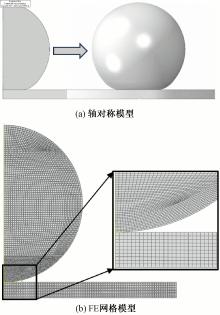
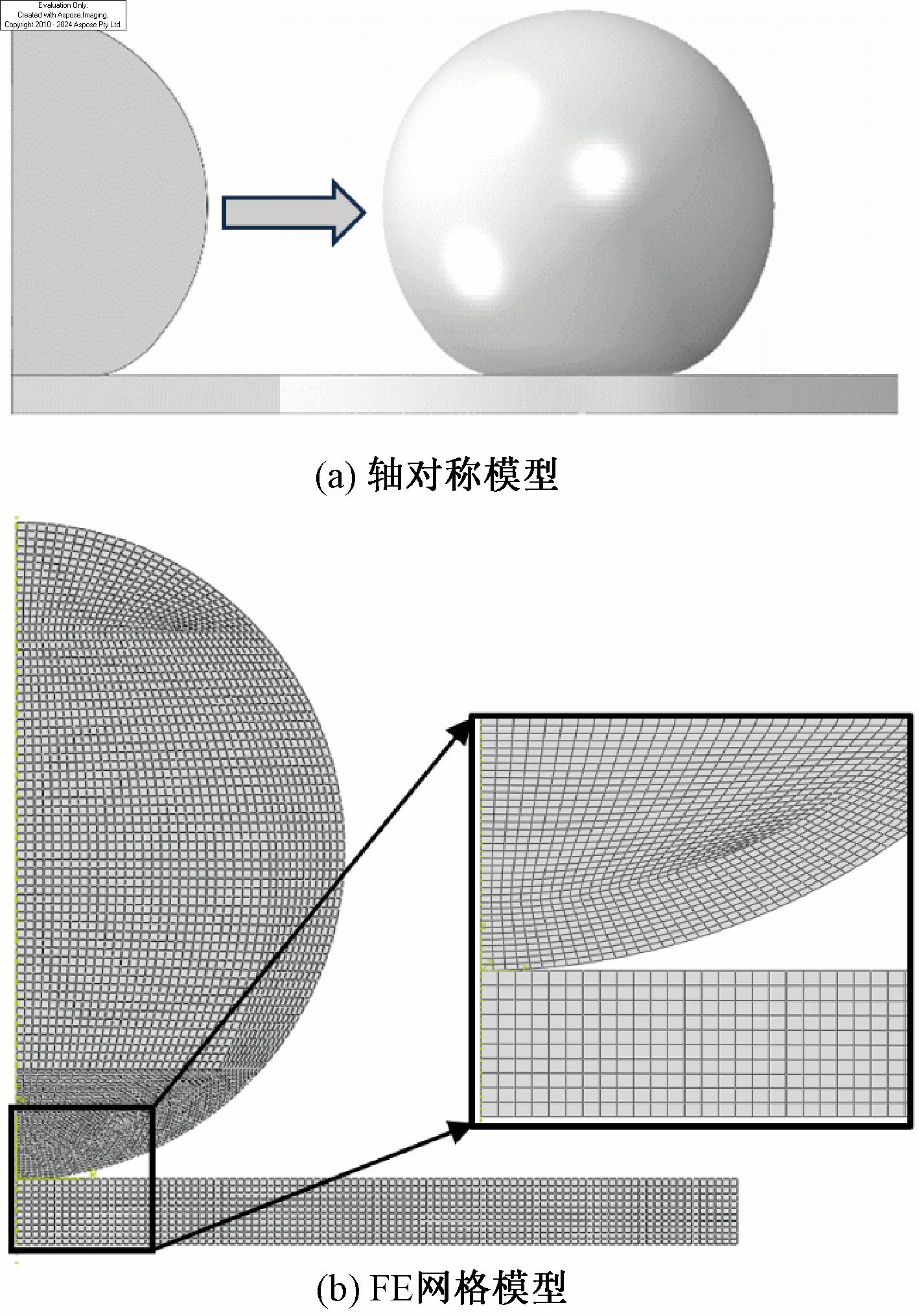
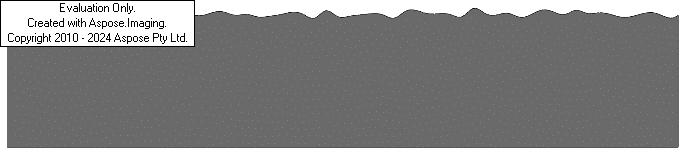
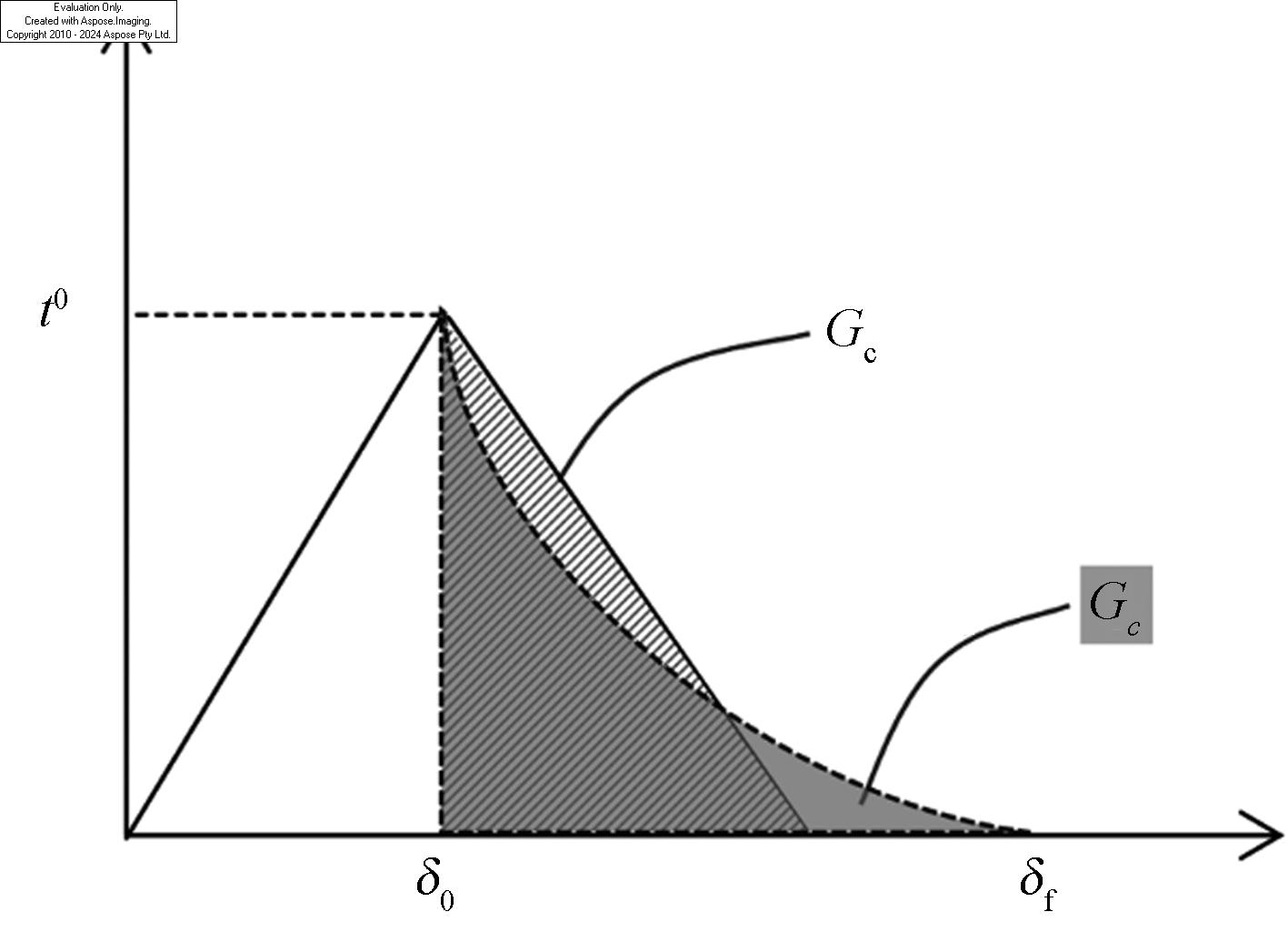
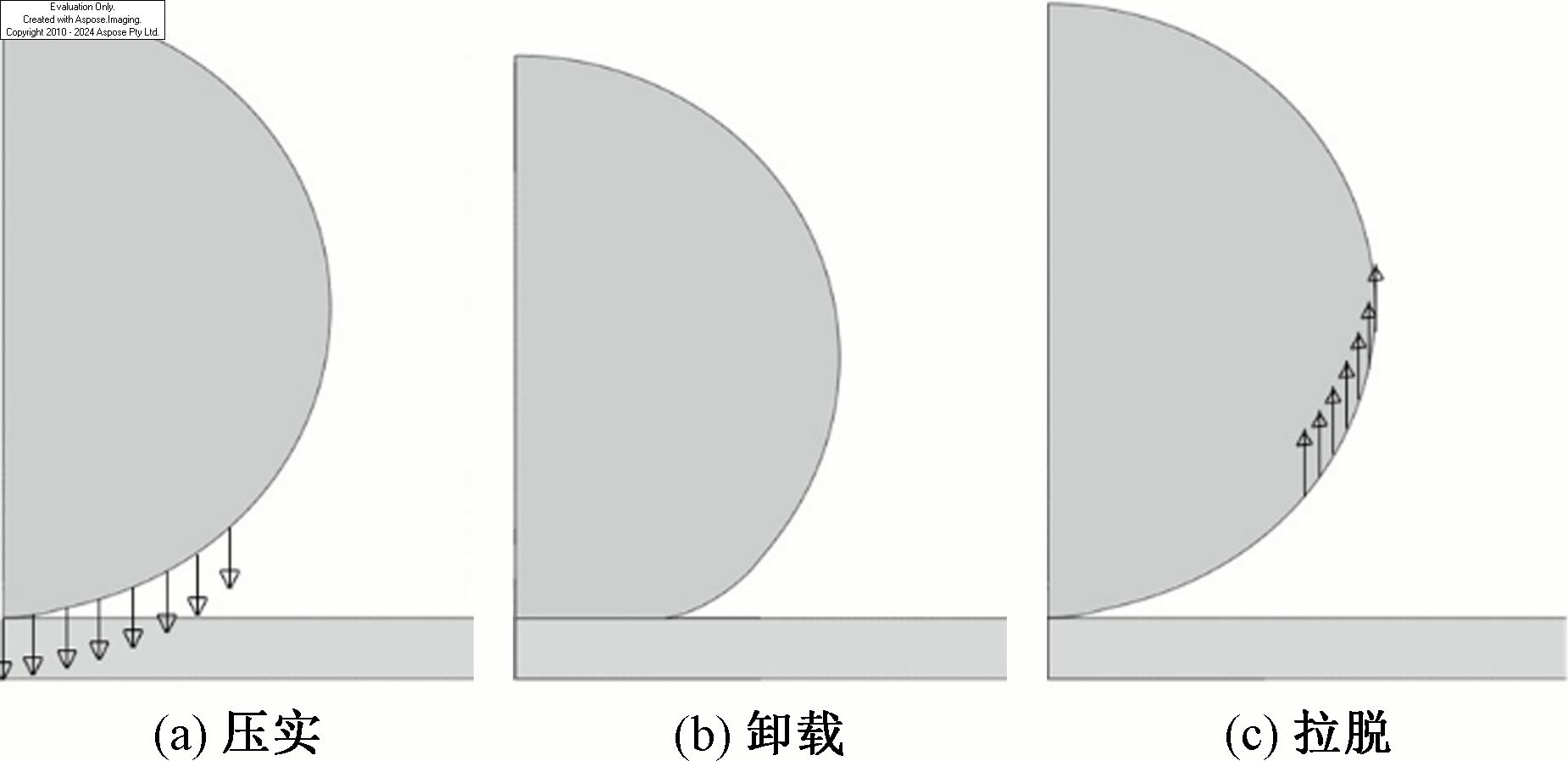
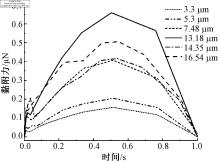
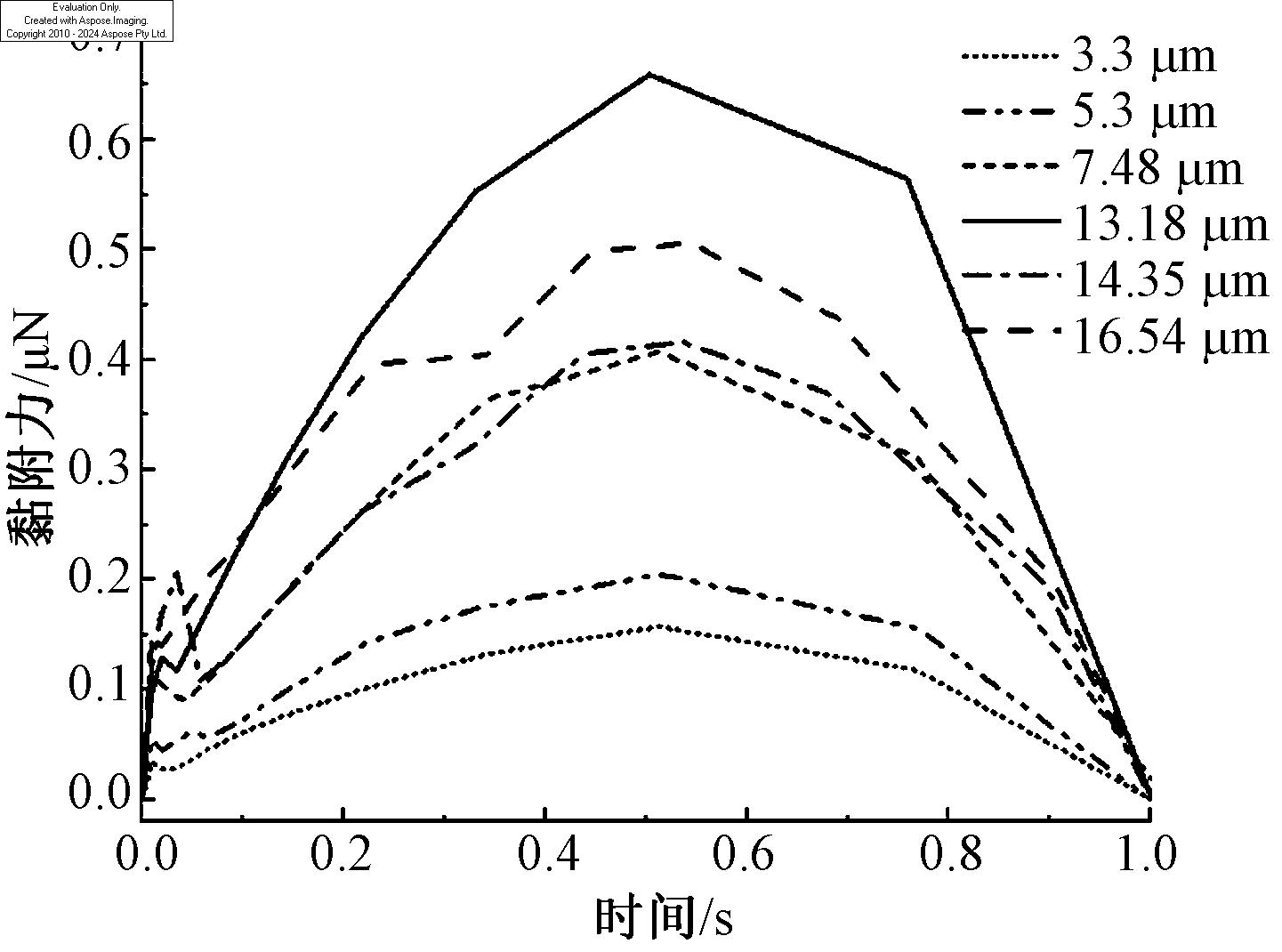
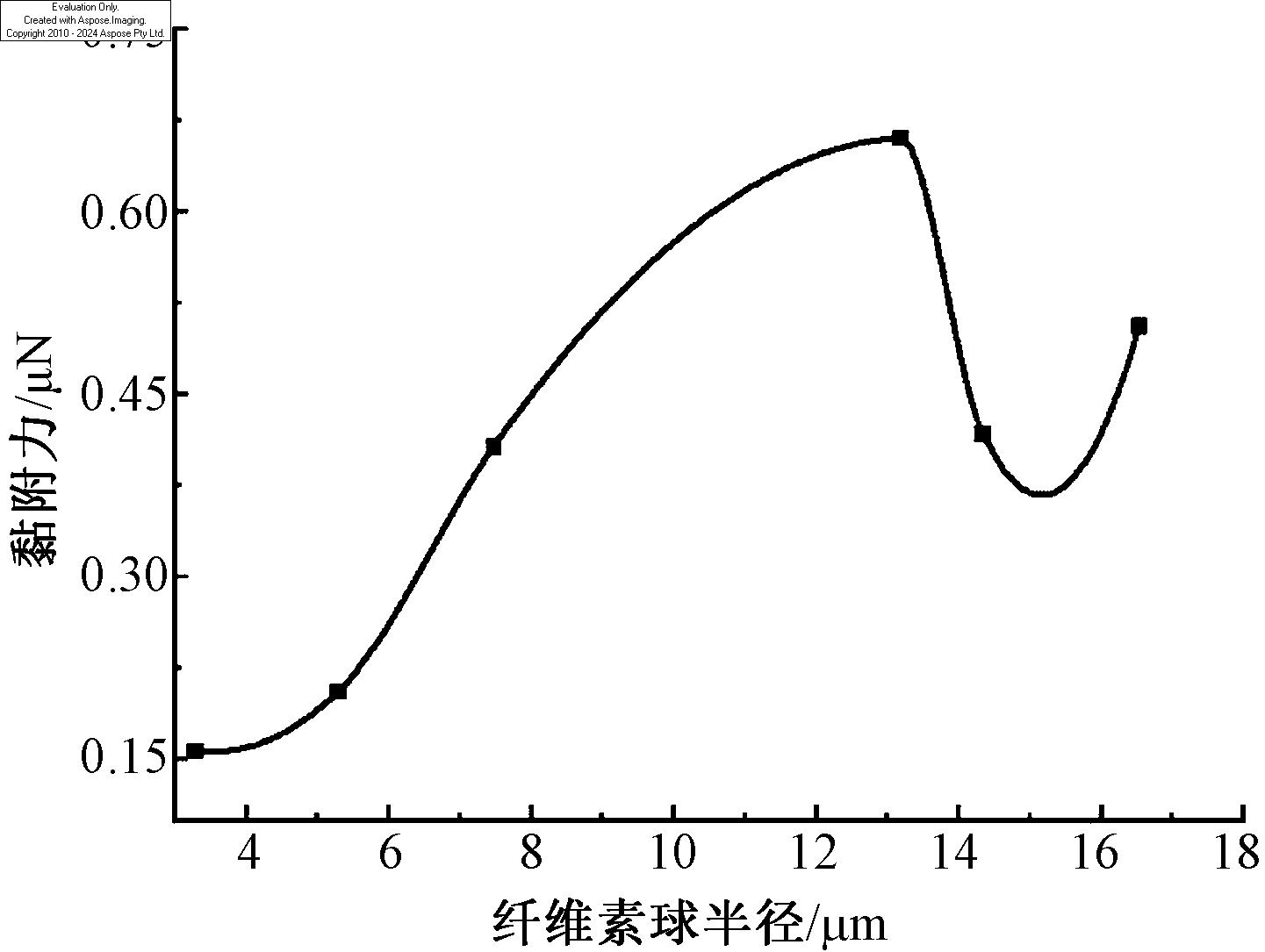
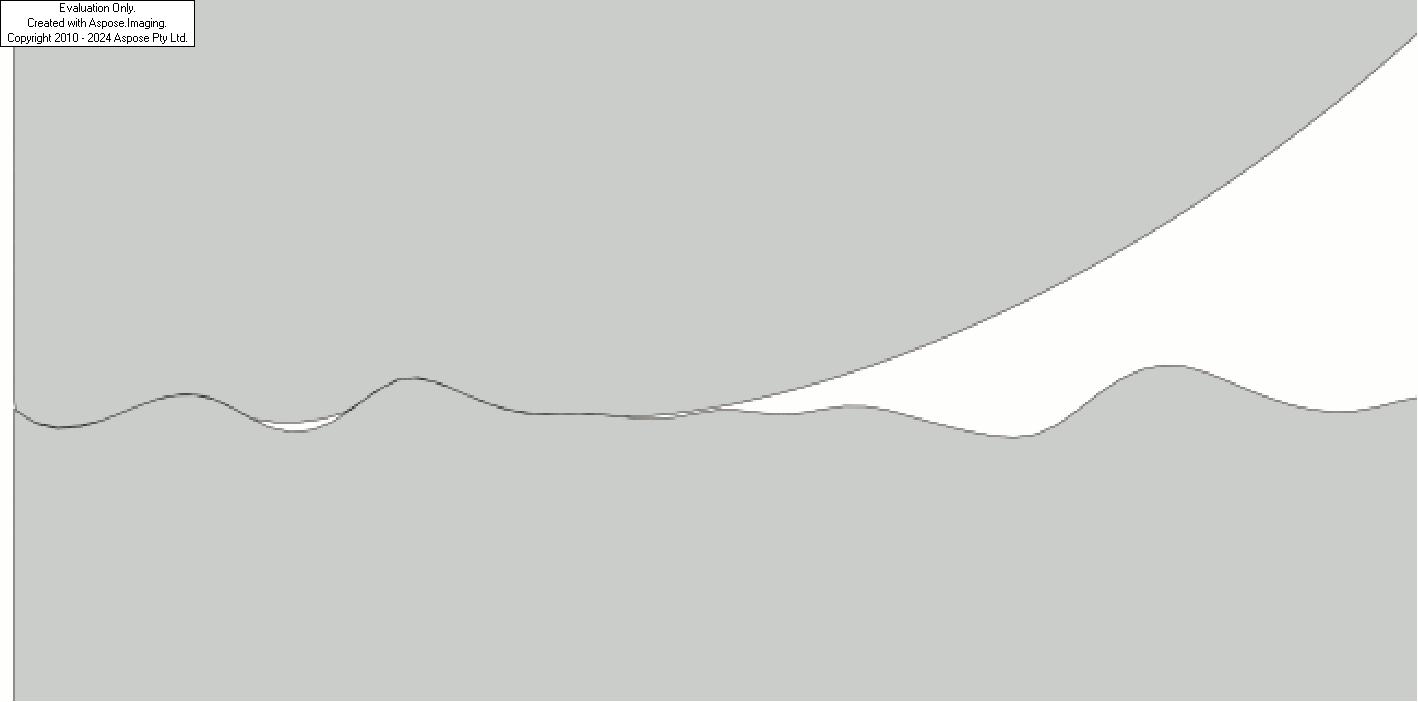
为深入研究棉质针刺非织造布中棉纤维之间的表面黏附机制,基于有限元方法构建了二维轴对称模型,采用“纤维素球-纤维素膜”接触构型,模拟微观球-面之间的界面黏附行为。模型引入双线性内聚力本构关系,考虑拉脱路径中的非线性响应,并分析球体半径变化对黏附力的影响。仿真过程中结合表面粗糙度、材料非线性等因素设定合理接触参数。模拟结果与实验的变化趋势基本一致,最大偏差不超过15%。揭示了黏附力随球体半径变化的非单调规律:在半径3.3~13.18 μm范围内,黏附力随半径增大而稳定增加,表明接触面积增大增强了黏附力;当半径进一步增大至14.35 μm和16.54 μm时,黏附力显著下降,此现象源于粗糙纤维素膜表面的微尺度形貌,较大球体无法充分嵌入表面谷底,仅能与凸起接触,导致有效接触面积减小,体现了表面粗糙度对黏附力的“屏蔽效应”。该研究提出的基于内聚力模型的棉纤维表面黏附仿真方法,可为针刺非织造布中纤维结合力的定量分析与优化设计提供理论参考。
中图分类号:
| [1] | 王世豪, 徐晓禹, 郑挺, 等. 碳纤维非织造材料的研究应用及展望[J]. 纺织学报, 2026, 47(1): 240-249. |
| WANG Shihao, XU Xiaoyu, ZHENG Ting, et al. Research applications and prospect of carbon fiber nonwovens[J]. Journal of Textile Research, 2026, 47(1): 240-249. | |
| [2] | 邓黎黎, 徐剑. 针刺非织造革基布结构与性能的影响因素研究[J]. 河南工程学院学报(自然科学版), 2025, 37(2): 12-15, 20. |
| DENG Lili, XU Jian. Study on the influencing factors on the structure and properties of needle punched non-woven synthetic leather substrate[J]. Journal of Henan Institute of Engineering (Natural Science Edition), 2025, 37(2): 12-15, 20. | |
| [3] | GENG J Y, ZHANG H, MENG X H, et al. Usage of colloidal AFM probe for research in effects of water layer evaporation on interfacial adhesion between cellulose surfaces[C]//2022 12th International Conference on CYBER Technology in Automation, Control, and Intelligent Systems (CYBER). New York: IEEE, 2022: 1323-1328. |
| [4] | HIRN U, SCHENNACH R. Fiber-fiber bond formation and failure: mechanisms and analytical techni-ques[C]//Trans. of the XVIth Fund. Res. Symp. Oxford, 2017. Fundamental Research Committee (FRC), Manchester, 2017: 839-863. |
| [5] | HUANG F, LI K C, KULACHENKO A. Measurement of interfiber friction force for pulp fibers by atomic force microscopy[J]. Journal of Materials Science, 2009, 44(14): 3770-3776. |
| [6] | 张威, 苏玉, 刘芳慧, 等. 利用胶体探针技术研究多巴与纳米、微米及微纳复合结构表面之间的相互作用[J]. 物理化学学报, 2017, 33(8): 1644-1654. |
| ZHANG Wei, SU Yu, LIU Fanghui, et al. Study of interactions between 3, 4-dihydroxyphenylalanine and surfaces with nano-, micro-and hierarchical structures using colloidal probe technology[J]. Acta Physico-Chimica Sinica, 2017, 33(8): 1644-1654. | |
| [7] | LAI Y L, ZHANG H, SUGANO Y, et al. Correlation of surface morphology and interfacial adhesive behavior between cellulose surfaces: quantitative measurements in peak-force mode with the colloidal probe technique[J]. Langmuir, 2019, 35(22): 7312-7321. |
| [8] | 邱俊, 李际军. 机织物的三维真实感建模与参数化设计[J]. 纺织学报, 2025, 46(10): 95-102. |
| QIU Jun, LI Jijun. 3-D realistic modeling and parametric design of woven fabrics[J]. Journal of Textile Research, 2025, 46(10): 95-102. | |
| [9] | 万小东, 孙其勋, 刘健犇, 等. 基于界面相互作用的黏附接触数学模型研究进展[J]. 表面技术, 2024, 53(1): 33-47, 77. |
| WAN Xiaodong, SUN Qixun, LIU Jianben, et al. Research progress on mathematical model of adhesive contact based on interface interaction[J]. Surface Technology, 2024, 53(1): 33-47, 77. | |
| [10] | 朱玉东, 郑志军. 圆柱弹性吸附接触Maugis模型的改进和检验[J]. 科学通报, 2025, 70(22): 3735-3743. |
| ZHU Yudong, ZHENG Zhijun. Modification and verification of the Maugis model for elastic cylinder adhesive contact[J]. Chinese Science Bulletin, 2025, 70(22): 3735-3743. | |
| [11] | WU F, LI C. Theory of adhesive contact on multi-ferroic composite materials: conical indenter[J]. International Journal of Solids and Structures, 2021, 233: 111217. |
| [12] | YANG T H, LIECHTI K M, HUANG R. A multiscale cohesive zone model for rate-dependent fracture of interfaces[J]. Journal of the Mechanics and Physics of Solids, 2020, 145: 104142. |
| [13] | KAPLAN M, ÖSTLUND S. A numerical model for understanding the development of adhesion during drying of cellulose model surfaces[J]. Materials, 2023, 16(4): 1327. |
| [14] | LI H L, MYSTEK K, WÅGBERG L, et al. Development of mechanical properties of regenerated cellulose beads during drying as investigated by atomic force microscopy[J]. Soft Matter, 2020, 16(28): 6457-6462. |
| [15] | MOONEY M. A theory of large elastic deformation[J]. Journal of Applied Physics, 1940, 11(9): 582-592. |
| [16] | RIVLIN R S. Large elastic deformations of isotropic materials IV. further developments of the general theory[J]. Philosophical Transactions of the Royal Society of London Series A, Mathematical and Physical Sciences, 1948, 241(835): 379-397. |
| [17] | SPRING D W, PAULINO G H. A growing library of three-dimensional cohesive elements for use in ABAQUS[J]. Engineering Fracture Mechanics, 2014, 126: 190-216. |
| [1] | 席立锋, 张爱军, 贾伟, 马丕波, 蒋高明. 体外膜肺氧合膜织物模型构建与编织损伤机制[J]. 纺织学报, 2026, 47(02): 162-171. |
| [2] | 李欣田, 周玄, 王展翾, 杜忠华, 徐立志. 层数与铺层方式对多层芳纶平纹织物抗侵彻性能的影响[J]. 纺织学报, 2025, 46(11): 126-136. |
| [3] | 杜雨杭, 侯东昱, 齐鹏飞. 基于摩擦纳米发电机原理的智能服装供能设计与优化[J]. 纺织学报, 2025, 46(11): 211-220. |
| [4] | 刘婧瑜, 史晟, 胡晓睿, 李小燕, 张美玲, 高承永, 王华. 纤维素的溶解体系及废旧棉纤维循环再生研究进展[J]. 纺织学报, 2025, 46(07): 236-243. |
| [5] | 贾潞, 周苏秦, 郭龙灿, 刘淑强, 张瑜. 负载MXene的棉/氨纶导电包芯纱制备及其传感性能[J]. 纺织学报, 2025, 46(07): 96-102. |
| [6] | 秦建锋, 史书伟, 孟永法, 李梦辉, 夏彬. 轧花前籽棉加湿对北疆机采细绒棉加工质量的影响[J]. 纺织学报, 2025, 46(06): 96-102. |
| [7] | 陈馨蔚, 顾冰菲, 田佳莉, 周思凡, 刘瑜希, 刘金灵, 易洁伦, 孙玥. 基于参数化设计和数值模拟仿真技术的运动文胸版型优化[J]. 纺织学报, 2025, 46(04): 162-170. |
| [8] | 邵秋, 杨瑞华. 再循环棉/原棉转杯纺纱线的耐磨性[J]. 纺织学报, 2025, 46(03): 64-71. |
| [9] | 许秋歌, 郭寻, 朵永超, 吴若楠, 钱晓明, 宋兵, 符浩, 赵宝宝. 高收缩聚酯/聚酰胺6中空橘瓣型纺黏针刺非织造布的制备及其性能[J]. 纺织学报, 2024, 45(12): 41-49. |
| [10] | 王波, 蒋志青, 鲍军方, 刘津玮. 棉纤维产地溯源技术及研究进展[J]. 纺织学报, 2024, 45(11): 244-250. |
| [11] | 朱蕾, 李勇, 陈晓川, 汪军. 基于分形与三维编织理论的棉纤维集合体梳理过程有限元建模与仿真[J]. 纺织学报, 2024, 45(11): 65-72. |
| [12] | 陶静, 汪俊亮, 张洁. 数据驱动与有限元仿真融合的纱线断裂强力分析方法[J]. 纺织学报, 2024, 45(02): 238-245. |
| [13] | 马承诺, 姜开翔, 陈春晖, 刘园玲, 张有强. 新疆单根长绒棉纤维力学特性及断裂形态分析[J]. 纺织学报, 2024, 45(02): 36-44. |
| [14] | 苏旭中, 梁巧敏, 王汇锋, 张娣, 崔益怀. 棉/生物基弹性聚酯纤维混纺针织物的服用性能[J]. 纺织学报, 2023, 44(05): 119-124. |
| [15] | 吴佳玥, 吴巧英. 羽绒制品热传递的有限元仿真[J]. 纺织学报, 2022, 43(11): 154-162. |
|
||
 京公网安备11010502044800号