纺织学报 ›› 2025, Vol. 46 ›› Issue (03): 64-71.doi: 10.13475/j.fzxb.20231104601

• 纺织工程 • 上一篇    下一篇

再循环棉/原棉转杯纺纱线的耐磨性

邵秋, 杨瑞华()   

  1. 江南大学 纺织科学与工程学院, 江苏 无锡 214122
  • 收稿日期:2023-11-22 修回日期:2024-06-23 出版日期:2025-03-15 发布日期:2025-04-16
  • 通讯作者: 杨瑞华(1981—),女,教授,博士。主要研究方向为新型纺纱方法、再循环纺织品回收利用。E-mail:yangrh@jiangnan.edu.cn
  • 作者简介:邵秋(1999—),女,硕士生。主要研究方向为再循环纺织品回收利用。
  • 基金资助:
    国家自然科学基金面上项目(52273034);江苏省自然科学基金面上项目(BK20181350)

Abrasion resistance of recycled cotton/raw cotton rotor spun yarn

SHAO Qiu, YANG Ruihua()   

  1. College of Textile Science and Engineering, Jiangnan University, Wuxi, Jiangsu 214122, China
  • Received:2023-11-22 Revised:2024-06-23 Published:2025-03-15 Online:2025-04-16

摘要: 为进一步提升再循环转杯纱的成纱性能,采用由旧纺织品制备的再循环棉与原棉进行混纺,制成再循环棉/原棉转杯纺混纺纱。分析纱线线密度、转杯转速、捻系数、分梳速度等工艺参数对制备的转杯纱质量指标(如断裂强度、疵点、条干CV值、毛羽等)之间的相关性。针对再循环纱线耐磨性差的缺点,运用因子分析法对断裂强度、断裂伸长率、条干CV值、粗节、细节、毛羽等纱线基本指标参数进行分析,提取力学因子、外观因子和毛羽因子3个主因子,分析了各主因子与纱线耐磨性能的关系,探究纱线基本性能对其耐磨性能的影响规律。结果表明:纱线耐磨性随外观因子、力学因子和毛羽因子的增大整体呈现降低趋势;并在此基础上,利用加权综合法对外观因子、力学因子和毛羽因子综合计算不同纱线的综合得分,结果表明耐磨性能随综合得分的增大而降低,二者之间接近线性关系。

关键词: 再循环棉纤维, 碳中和, 转杯纺, 成纱性能, 再循环棉/原棉混纺纱, 纱线耐磨性

Abstract:

Objective Fibers recycled from waste textiles is known for their reduced length, hence it is hard to spin as yarn again. However, it can be spun by rotor spinning which is well known for its low raw material requirements. The method to spun recycled yarns gives highlight of extremely useful of waste textiles. However, the yarn showed some disadvantages, such as low strength and poor abrasion resistance. Taking recycled rotor spun yarn as the research object, the correlation between different rotor spinning processes parameters, basic yarn performance indicators, and abrasion resistance of recycled rotor yarns is investigated.

Method Compared to raw cotton, the quality of recycled cotton fibers such as the fiber length, strength, and so on deteriorated to varying degrees. Recycled cotton is difficult to form yarn. Rotor spinning is adopted to mix raw cotton(length of 28 mm) and recycled cotton (length of 9.5 mm) at a ratio of 65/35 to form recycled rotor spinning yarn. Spinning was carried out under different process parameters including linear density, rotor speed, twist coefficient, and carding speed. Performance of yarns such as strength, evenness, and hairiness were evaluated. Correlation analysis is adopted to study the influence of yarn process parameters on yarn performance. Factor analysis is adopted to comprehensively study the influence of yarn performance indicators on abrasion resistance.

Results The performance of recycled rotor spun yarn with different parameters is compared. It is found that the breaking strength(correlation coefficients of 0.697*) and elongation (correlation coefficients of 0.769*) are significantly correlated with the twist coefficient. With the increaseing twist coefficient, the strength and elongation of the recycled rotor spun yarn also increases. The carding speed has the greatest correlation with CV(correlation coefficient of 0.540) value. As the carding speed increases, CV value first decreases and then increases. A significant correlation exists between hairiness and linear density(correlation coefficient of 0.750*), and hairiness increases with the increase of linear density.

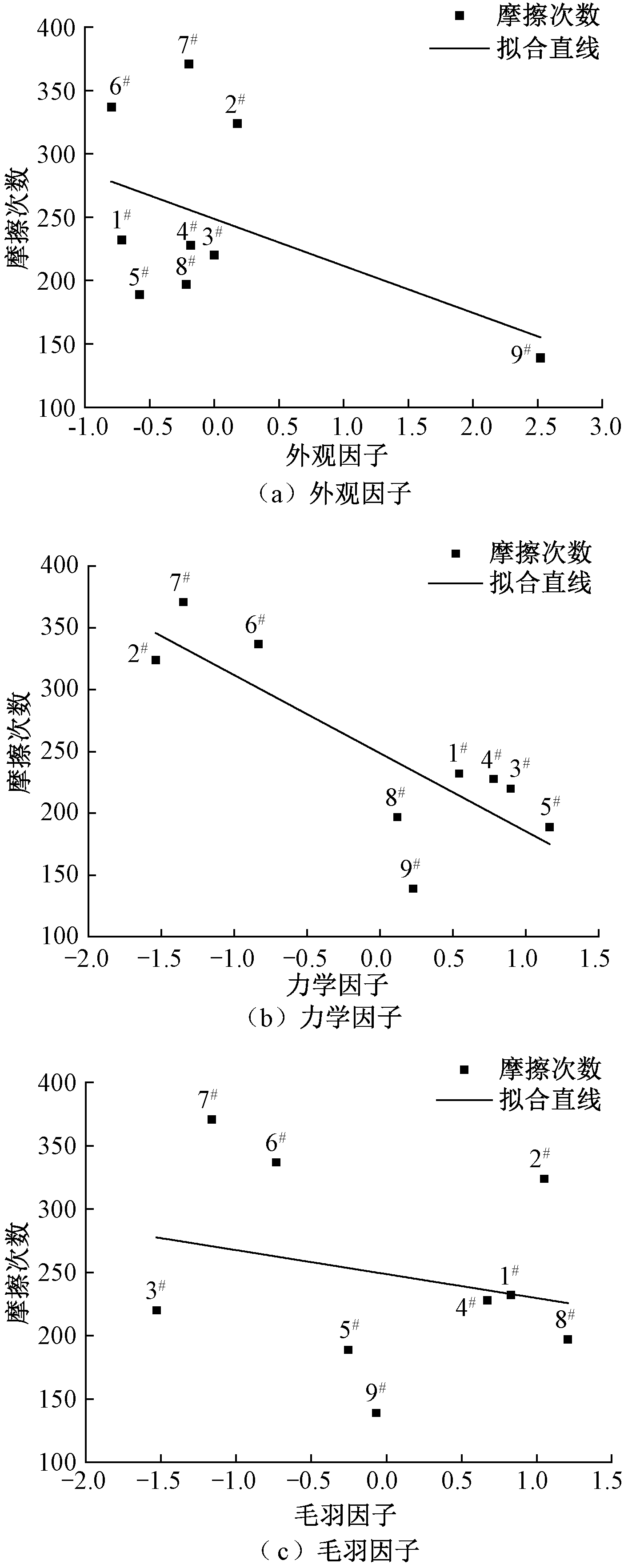
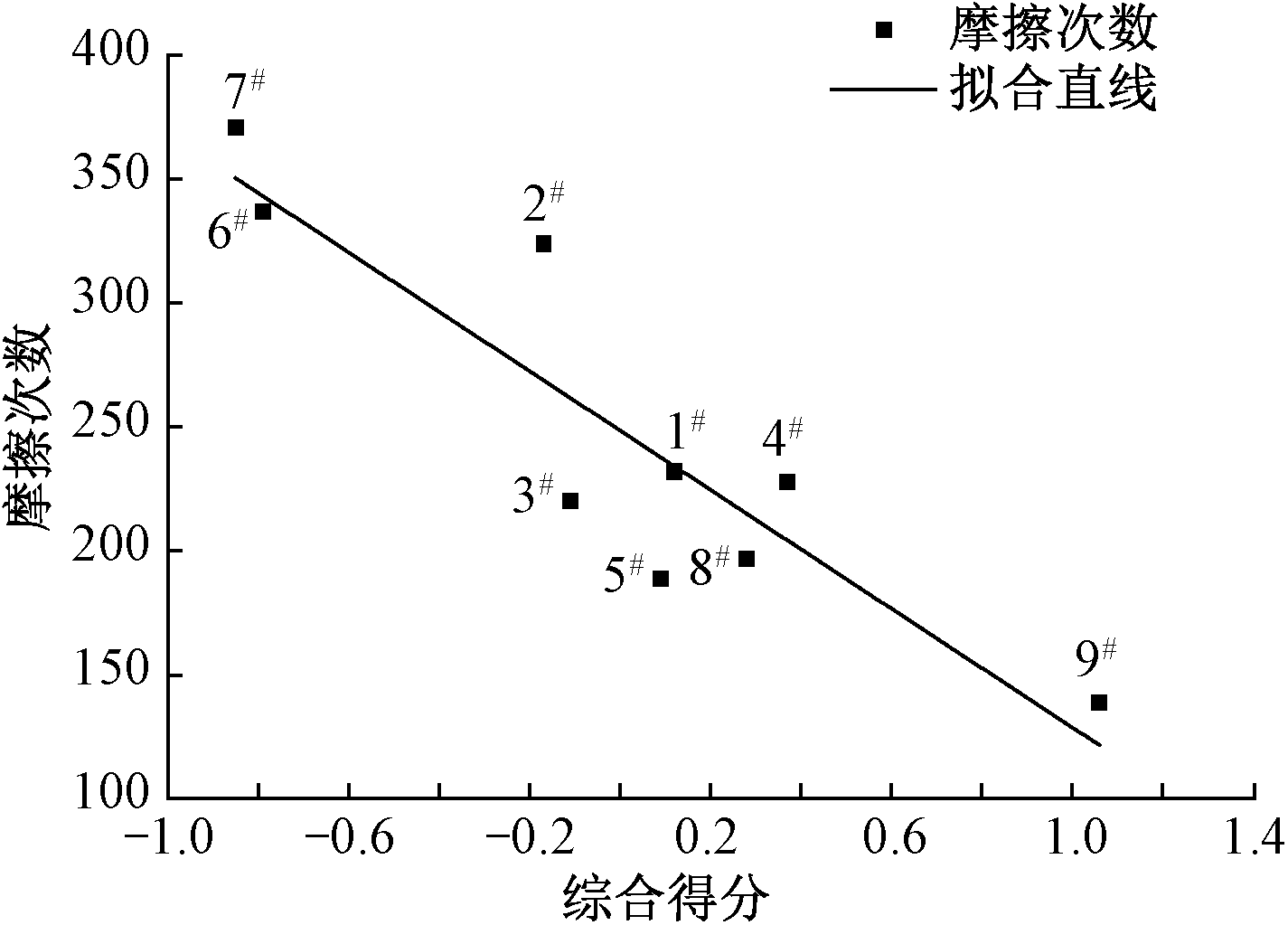
The abrasion resistance of yarn is the result of the comprehensive effect of multiple performance indicators of yarn, and a certain correlation exists between multiple performance indicators The information reflected between some performance indicator parameters is duplicated. The correlation between the quality indicators of recycled rotor spun yarn was analyzed using SPSS. Using factor analysis method, the quality indicators of recycled rotor spun yarn are reduced in dimensionality. Three principal factors, namely appearance factor(F1), mechanical factor(F2), and hairiness factor(F3), were extracted from it. And scatter plots were drawn for the number of rubbing times and the three quality factors mentioned above, and it was found that the abrasion resistance decreased with the increase of F1, F2, and F3. A yarn comprehensive score model was established by weighting the three factors (fitting equation R2 value of 0.817 2). The comprehensive score values of yarns (1#-9#) were obtained. It was found that the abrasion resistance of yarns decreased with the increase of the comprehensive score value, and the relationship between the two was close to linear.

Conclusion The correlation between process parameters (linear density, rotor speed, twist coefficient, and carding speed) and the basic performance indicators of recycled rotor spinning are investigated. Due to the low abrasion resistance of recycled rotor spinning, the relationship between basic performance indicators and abrasion resistance was studied using SPSS software, and a regression model was established. It was found that the abrasion resistance showed a decreasing trend with the increase of appearanceity, mechanical factor and hairiness factor. According to the yarn comprehensive score model, the abrasion resistance of the yarn decreases with the increase of the comprehensive score value, and the relationship between them is close to linearity. Improving the abrasion resistance of recycled yarn can be achieved by increasing the twist to increase yarn strength and selecting an appropriate combing speed to reduce yarn unevenness.

Key words: recycled cotton fiber, carbon neutrality, rotor spinning, yarn property, recycled cotton/raw cotton yarn, abrasion resistance of yarn

中图分类号: 

  • TS111

表1

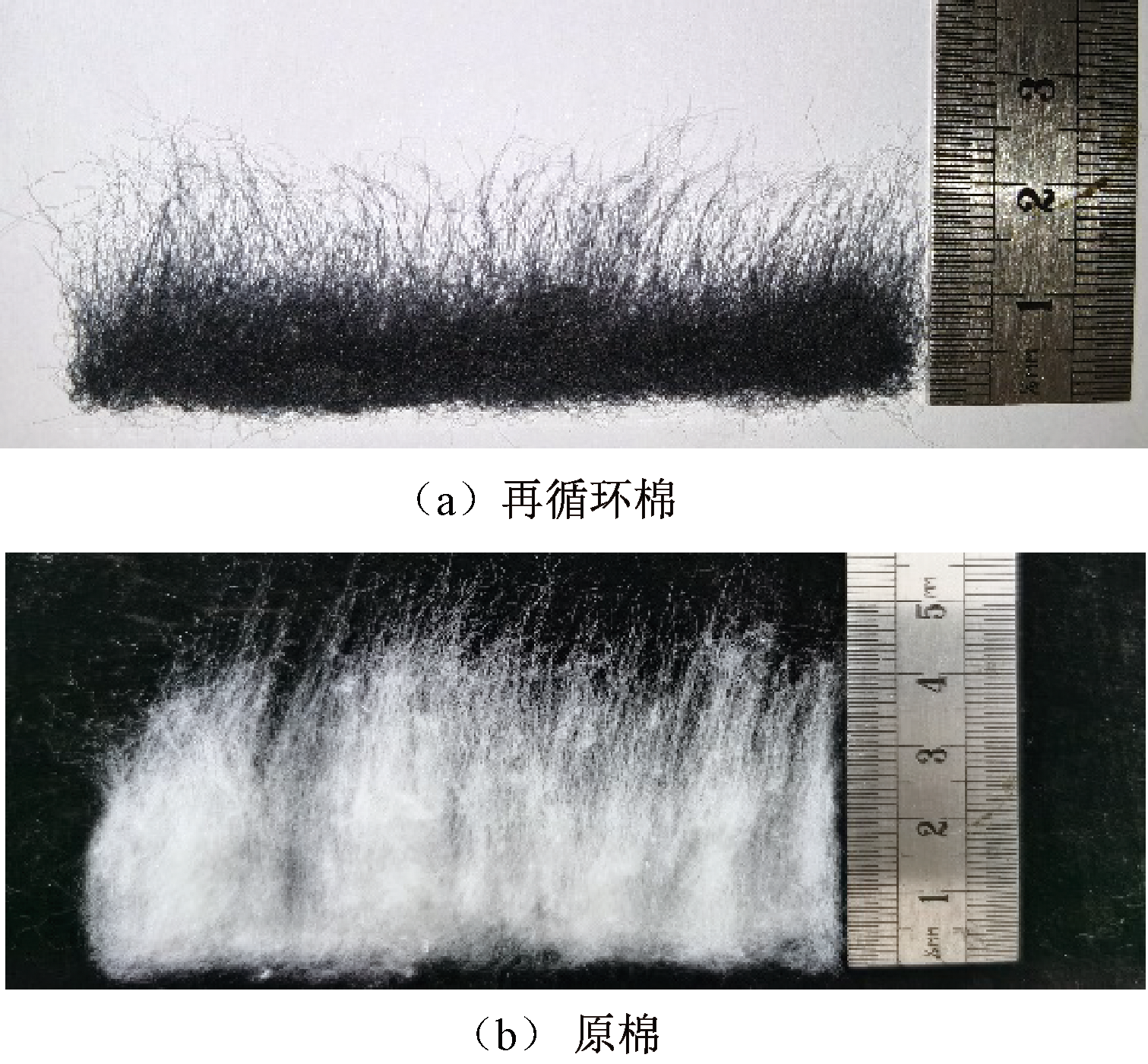
再循环棉与原棉长度与性能"

样品
名称
主体长度/
mm
(根数)短纤维率
(低于16 mm)/%
断裂强力/
cN
断裂
伸长率/%
再循环棉 9.5 73.08 3.73 6.28
原棉 28.0 18.00 8.34 17.29

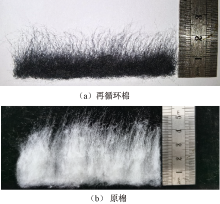
图1

再循环棉与原棉长度对比"

表2

纺纱工艺参数"

纱线
编号
线密度/
tex
转杯转速/
(r·min-1)
捻系数 分梳速度/
(r·min-1)
1# 58.3 65 000 415 7 000
2# 44.9 65 000 415 7 000
3# 27.8 65 000 415 7 000
4# 44.9 55 000 415 7 000
5# 44.9 75 000 415 7 000
6# 44.9 65 000 430 7 000
7# 44.9 65 000 445 7 000
8# 44.9 65 000 415 6 000
9# 44.9 65 000 415 8 000

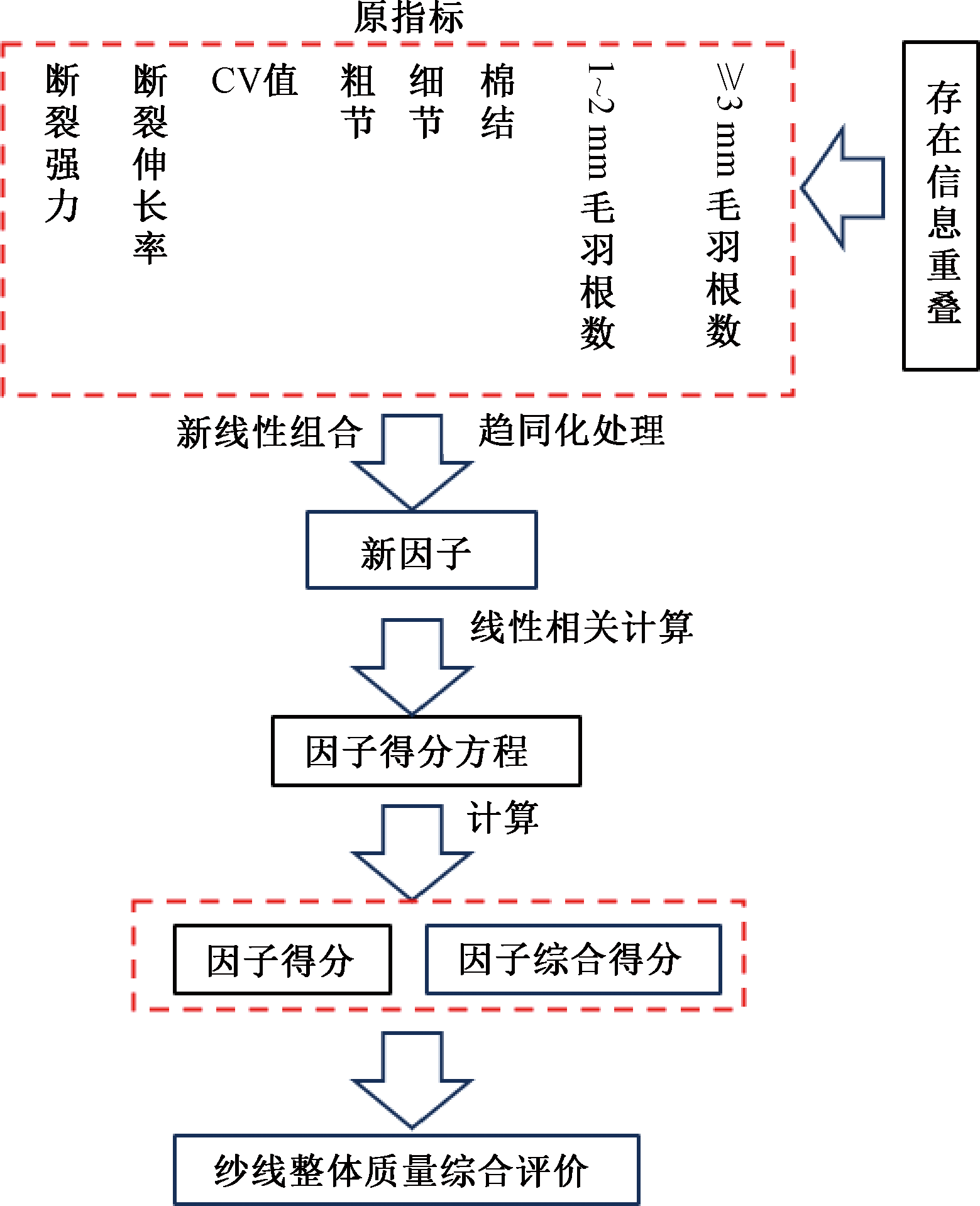
图2

因子分析流程图"

表3

纱线性能"

纱线
编号
断裂强力/
cN
断裂伸长
率/%

CV值/%
疵点/(个·km-1) (根·(100 m)-1) 摩擦
次数
细节(-50%) 粗节(+50%) 棉结(+280%) 毛羽根数1~2 mm 毛羽根数≥3 mm)
1# 438.6 6.60 11.97 0 0 0 7 634 1 784 232
2# 610.3 10.29 11.67 0 33.3 36.7 8 460 1 464 324
3# 198.0 5.16 15.16 20.0 33.3 20.0 5 134 492 220
4# 289.9 6.54 14.32 3.3 30.0 3.0 7 630 1 592 228
5# 281.8 4.22 13.19 0 16.7 6.7 6 532 1 184 189
6# 615.4 10.92 8.94 0 10.0 10.0 5 646 1 148 337
7# 629.2 11.76 12.04 0 26.7 26.7 4 926 920 371
8# 293.5 6.39 12.92 0 13.3 30.0 7 924 1 852 197
9# 273.8 5.94 18.87 120.0 160.0 6.7 6 646 1 044 139

表4

相关系数矩阵"

指标 线密度 转杯
转速
捻系数 分梳
速度
断裂
强力
断裂
伸长率
条干
CV值
细节
(-50%)
粗节
(+50%)
棉结
(+280%)
毛羽根数 摩擦
次数
1~2 mm ≥3 mm
线密度 1 0.000 0.028 0.000 0.376 0.168 -0.295 -0.117 -0.148 -0.352 0.502 0.750* 0.056
转杯转速 0.000 1 0.000 0.000 -0.012 -0.213 -0.103 -0.021 -0.069 0.070 -0.215 -0.232 -0.126
捻系数 0.028 0.000 1 0.000 0.679* 0.769* -0.428 -0.213 -0.164 0.226 -0.647 -0.337 0.759*
分梳速度 0.000 0.000 0.000 1 -0.029 -0.041 0.540 0.758* 0.765* -0.442 -0.250 -0.460 -0.187
断裂强力 0.376 -0.012 0.679* -0.029 1 0.943** -0.725* -0.366 -0.293 0.347 -0.067 0.086 0.902**
断裂伸长率 0.168 -0.213 0.769* -0.041 0.943** 1 -0.615 -0.281 -0.188 0.453 -0.182 -0.035 0.923**
条干CV值 -0.295 -0.103 -0.428 0.540 -0.725* -0.615 1 0.825** 0.822** -0.214 0.001 -0.270 -0.759*
细节(-50%) -0.117 -0.021 -0.213 0.758* -0.366 -0.281 0.825** 1 0.977** -0.243 -0.095 -0.305 -0.561
粗节(+50%) -0.148 -0.069 -0.164 0.765* -0.293 -0.188 0.822** 0.977** 1 -0.128 -0.055 -0.309 -0.474
棉结(+280%) -0.352 0.070 0.226 -0.442 0.347 0.453 -0.214 -0.243 -0.128 1 0.073 -0.074 0.441
毛羽根数(1~2mm) 0.502 -0.215 -0.647 -0.250 -0.067 -0.182 0.001 -0.095 -0.055 0.073 1 0.852** -0.270
毛羽根数(≥3 mm) 0.750* -0.232 -0.337 -0.460 0.086 -0.035 -0.270 -0.305 -0.309 -0.074 0.852** 1 -0.117
摩擦次数 0.056 -0.126 0.759* -0.187 0.902** 0.923** -0.759* -0.561 -0.474 0.441 -0.270 -0.117 1

表5

方差贡献率计算结果"

项目 初始特征值方差 提取的主因子方差载荷 旋转后主因子方差载荷
总值 贡献率/% 累积
贡献率/%
总值 贡献率/% 累积
贡献率/%
总值 贡献率/% 累积
贡献率/%
第1因子(F1) 3.655 45.689 45.689 3.655 45.689 45.689 2.766 34.577 34.577
第2因子(F2) 2.036 25.454 71.143 2.036 25.454 71.143 2.363 29.533 64.110
第3因子(F3) 1.304 16.297 87.440 1.304 16.297 87.440 1.866 23.330 87.440
第4因子(F4) 0.809 10.113 97.553
第5因子(F5) 0.094 1.169 98.722
第6因子(F6) 0.069 0.868 99.590
第7因子(F7) 0.025 0.317 99.907
第8因子(F8) 0.007 0.093 100.000

表6

旋转后的因子载荷矩阵"

因子 y1 y2 y3 y4 y5 y6 y7 y8
F1 0.299 0.186 0.835 0.954 0.986 -0.010 0.035 -0.248
F2 0.895 0.943 0.484 0.150 0.038 -0.643 0.033 0.007
F3 0.019 0.126 -0.051 -0.116 -0.088 0.053 0.978 0.931

表7

成分得分系数矩阵"

因子 y1 y2 y3 y4 y5 y6 y7 y8
F1 -0.044 -0.093 0.275 0.389 0.430 0.132 0.116 -0.012
F2 0.399 0.439 0.084 -0.108 -0.174 -0.333 -0.059 -0.012
F3 -0.020 0.025 0.028 0.028 0.056 0.074 0.553 0.497

图3

主因子与耐磨性的关系"

表8

主因子得分表"

编号 F1 F2 F3 综合得分 综合排名
1# -0.714 70 0.542 10 0.826 23 0.12 6
2# 0.175 41 -1.536 91 1.049 81 -0.17 3
3# -0.002 85 0.896 07 -1.530 59 -0.11 4
4# -0.183 51 0.777 84 0.669 53 0.37 8
5# -0.581 19 1.162 04 -0.254 82 0.09 5
6# -0.797 64 -0.834 32 -0.734 65 -0.79 2
7# -0.198 20 -1.350 79 -1.164 32 -0.85 1
8# -0.219 83 0.117 85 1.207 96 0.28 7
9# 2.522 52 0.226 12 -0.069 15 1.06 9

图4

综合得分与耐磨性的关系"

[1] 杨瑞华, 邵秋, 张欣, 等. 废旧涤棉纺织品的回收循环再利用技术[J]. 服装学报, 2022, 7(4): 283-290.
YANG Ruihua, SHAO Qiu, ZHANG Xin, et al. Recycling and reuse technology of waste polyester and cotton textiles[J]. Journal of Clothing Research, 2022, 7(4): 283-290.
[2] 韩非, 郎晨宏, 邱夷平. 废旧纺织品资源化循环利用研究进展[J]. 纺织学报, 2022, 43(1):96-105.
HAN Fei, LANG Chenhong, QIU Yiping. Research progress in resource recycling based on waste textiles[J]. Journal of Textile Research, 2022, 43(1):96-105.
[3] DEMIROZ GA, ONER E. Investigation of the quality properties of open end spun recycled yarns made from blends of recycled fabric scrap wastes and virgin polyester fibre[J]. The Journal of The Textile Institute, 2019, 110(11): 1569-1579.
[4] AWGICHEW D, SAKTHIVEL S, SOLOMON E, et al. Experimental study and effect on recycled fibers blended with rotor/OE yarns for the production of handloom fabrics and their properties[J]. Advances in Materials Science and Engineering, 2021(1): 1-9.
[5] 龚新霞, 邵秋, 刘林兵, 等. 转杯纺发展现状及成纱关键技术研究[J]. 棉纺织技术, 2023, 51(5): 79-84.
GONG Xinxia, SHAO Qiu, LIU Linbing, et al. Rotor spinning development status and yarn-forming key technology[J]. Cotton Textile Technology, 2023, 51(5): 79-84.
[6] 刘宇, 宁继荣, 段东晓, 等. 图像法测量棉纤维长度的最佳取样量研究[J]. 棉纺织技术, 2017, 45(11): 21-24.
LIU Yu, NING Jirong, DUAN Dongxiao, et al. Study of optimized sample number to test cotton fiber length with image method[J]. Cotton Textile Technology, 2017, 45(11): 21-24.
[7] 瑞士USTER公司. Uster Statistics2018[EB/OL]. (2018-10-21) [2023-03-20]. https://www.uster.com/cn/%E5%A2%9E%E5%80%BC%E6%9C%8D%E5%8A%A1/uster-statistics-%E5%85%AC%E6%8A%A5/.
[8] 徐文昉, 何加浩, 黎俊妤, 等. 纱线基本参数对其耐磨性的影响[J]. 上海纺织科技, 2018, 46(5): 17-20.
XU Wenfang, HE Jiahao, LI Junyu, et al. Effect of the basic parameters on wear resistance of yarns[J]. Shanghai Textile Science & Technology, 2018, 46(5): 17-20.
[9] 汪荣鑫. 数理统计[M]. 西安: 西安交通大学出版社, 1986: 241.
WANG Rongxin. Mathematical statistics[M]. Xi'an: Xi'an Jiaotong University Press, 1986: 241.
[10] 黄帅, 张毅, 周志华. 采用因子分析法的服用织物电磁屏蔽性能影响因素分析[J]. 纺织学报, 2016, 37(2): 149-154.
HUANG Shuai, ZHANG Yi, ZHOU Zhihua. Analysis of influencing factors of clothing fabric on electromagnetic shielding performance based on factor analysis[J]. Journal of Textile Research, 2016, 37(2): 149-154.
[11] 赵书林, 王恩清, 郭会勇. 基于因子分析的纺纱工艺优化[J]. 纺织学报, 2007, 28(8): 35-38.
ZHAO Shulin, WANG Enqing, GUO Huiyong. Optimization of spinning techniques based on factor analysis[J]. Journal of Textile Research, 2007, 28(8): 35-38.
[12] 李孟芹, 徐先林. 基于因子分析的纱线质量的四种综合评定处理方法对比[J]. 天津工业大学学报, 2011, 30(5): 21-25, 29.
LI Mengqin, XU Xianlin. Comparsion of four kinds of comprehensive assessment treatments on yarn quality based on factor analysis[J]. Journal of Tiangong University, 2011, 30(5): 21-25, 29.
[13] CHOI K, KIM K. Fiber segment length distribution on the yarn surface in relation to yarn abrasion resistance[J]. Textile Research Journal, 2004, 74(7): 603-606.
[1] 李金键, 薛元, 陈宥融. 时序分布的段彩竹节纱及三通道转杯成纱工艺设计[J]. 纺织学报, 2025, 46(03): 72-81.
[2] 李玲, 史倩倩, 田顺, 汪军. 输纤通道对称性对双喂入双分梳转杯纺气流场以及纱线特性的影响[J]. 纺织学报, 2025, 46(02): 69-77.
[3] 张定眺, 王倩茹, 邱芳, 李凤艳. 改进转杯纺输纤通道气流场及其纤维伸直形态的模拟[J]. 纺织学报, 2025, 46(02): 100-105.
[4] 汪燕燕, 薛元, 陈宥融, 陈国方. 四基色纤维构建的全色域混色模型及彩色纱纺制[J]. 纺织学报, 2025, 46(01): 62-71.
[5] 龚新霞, 邵秋, 杨瑞华. 纤维在转杯纺纺纱器中的运动和形态变化分析[J]. 纺织学报, 2024, 45(12): 199-205.
[6] 张定眺, 王倩茹, 邱芳, 李凤艳. 转杯纺分梳排杂区气流场的多维数值模拟对比[J]. 纺织学报, 2024, 45(10): 64-71.
[7] 杨瑞华, 邵秋, 王翔. 再循环棉及涤纶短纤维的成纱性能与面料特征[J]. 纺织学报, 2024, 45(08): 127-133.
[8] 李玲, 丁倩, 汪军. 转杯纺并合效应模型的构建与解析[J]. 纺织学报, 2023, 44(12): 43-49.
[9] 吕金丹, 程隆棣. 凹槽形状对气流槽聚纺纱集聚区流场及成纱性能的影响[J]. 纺织学报, 2023, 44(01): 188-193.
[10] 杨瑞华, 何闯, 龚新霞, 陈鹤文. 转杯纺分梳排杂区的气流场数值模拟[J]. 纺织学报, 2022, 43(10): 31-35.
[11] 汪军, 史倩倩, 李玲, 张玉泽. 双喂给双分梳转杯纺技术研究进展[J]. 纺织学报, 2022, 43(08): 12-20.
[12] 杨星, 李轻舟, 吴敏, 周永凯. 欧盟纺织产业链上的绿色循环及废旧纺织品处理关键问题[J]. 纺织学报, 2022, 43(01): 106-112.
[13] 唐政坤, 刘艳缤, 徐晨烨, 刘艳彪, 沈忱思, 李方, 王华平. 面向减污降碳目标的纺织工业环境治理发展趋势[J]. 纺织学报, 2022, 43(01): 131-140.
[14] 夏治刚, 徐傲, 万由顺, 卫江, 张慧霞, 唐建东, 郑敏博, 郭沁生, 丁彩玲, 杨圣明, 徐卫林. 基于碳中和的人-机-料-法-环五位一体纺纱新技术解析[J]. 纺织学报, 2022, 43(01): 58-66.
[15] 杨瑞华, 潘博, 郭霞, 王利军, 李健伟. 环锭纺及转杯纺和喷气涡流纺混色纱的纤维混合效果研究[J]. 纺织学报, 2021, 42(07): 76-81.
Viewed
Full text


Abstract

Cited

  Shared   
  Discussed   
No Suggested Reading articles found!