纺织学报 ›› 2025, Vol. 46 ›› Issue (09): 46-56.doi: 10.13475/j.fzxb.20241206601

• 纤维材料 • 上一篇    下一篇

聚酰胺6基弹性体及其并列弹性纤维的制备及其性能

李雨洁1,2, 王承勤1,2, 王伟3, 袁如超1,2, 俞建勇2, 李发学1,2()   

  1. 1.东华大学 纺织学院, 上海 201620
    2.东华大学 纺织科技创新中心, 上海 201620
    3.江苏省纺织研究所股份有限公司, 江苏 无锡 214425
  • 收稿日期:2024-12-26 修回日期:2025-04-16 出版日期:2025-09-15 发布日期:2025-11-12
  • 通讯作者: 李发学(1977—),男,教授,博士。主要研究方向为功能纤维新材料。E-mail:fxlee@dhu.edu.cn
  • 作者简介:李雨洁(2000—),女,硕士生。主要研究方向为功能纤维新材料。
  • 基金资助:
    国家自然科学基金青年科学基金项目(52203057);上海市启明星项目(扬帆专项)项目(22YF1400600);中央高校基本科研业务费专项资金资助项目(2232022D-14)

Fabrication and properties of polyamide 6-based elastomers and their side-by-side elastic fibers

LI Yujie1,2, WANG Chengqin1,2, WANG Wei3, YUAN Ruchao1,2, YU Jianyong2, LI Faxue1,2()   

  1. 1. College of Textiles, Donghua University, Shanghai 201620, China
    2. Innovation Center for Textile Science and Technology, Donghua University, Shanghai 201620, China
    3. Jiangsu Textile Research Institute, Wuxi, Jiangsu 214425, China
  • Received:2024-12-26 Revised:2025-04-16 Published:2025-09-15 Online:2025-11-12

摘要: 为解决现有聚酰胺6基弹性纤维强度不高、弹性不足、难以满足弹性纺织品应用要求的问题,从本征弹性(嵌段共聚改性)与形态弹性(并列复合纺丝)结合的角度制备了PA6基并列纤维f(PA6/TPAEE6)。首先开发高强度的聚醚酯酰胺6热塑性弹性体(TPAEE6),借助核磁共振氢谱(1H NMR)、傅里叶红外光谱(FT-IR)、凝胶渗透色谱(GPC)、相对黏度、动态热力学分析(DMA)、广角X射线衍射(WAXD)、小角X射线散射(SAXS)、热失重(TGA)、差示扫描量热法(DSC)和拉伸测试分析了TPAEE6的分子结构、相态结构和热力学性能。结果表明:TPAEE6的软、硬链段通过酯键成功相连;TPAEE6具有较高的分子量;双重玻璃化转变和散射峰的变化展示出TPAEE6优异的微相分离结构;TPAEE6的断裂强度为23~47 MPa,断裂伸长率为373%~758%。将其与PA6并列熔融纺丝,得到的并列弹性纤维f(PA6/TPAEE6)断裂强度可达3.12 cN/dtex,高于现有研究的PA6基并列弹性纤维与商业弹力丝T400(2.44 cN/dtex),在定伸长5%~20%下弹性回复率与弹性持久性均优于T400,为弹性纤维市场提供了更多选择。

关键词: 聚酰胺6纤维, 聚醚酯酰胺6弹性体, 微相分离结构, 并列弹性纤维, 弹性回复率

Abstract:

Objective This study aimed to address the inherent elasticity limitations of polyamide 6 (PA6) fibers by combining intrinsic elasticity through block copolymerization and morphological elasticity through side-by-side spinning. The research is focused on developing high-strength polyether-ester-amide 6 thermoplastic elastomers (TPAEE6) and fabricating f(PA6/TPAEE6) side-by-side elastic fibers, so as to overcome the challenges of low strength and declining elasticity in existing PA6-based elastic fibers.

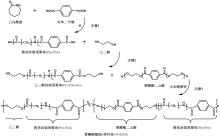
Method A novel TPAEE6 elastomer was synthesized using a three-step melt copolymerization process involving non-crystalline polyether-ester diols and PA6. Characterization techniques, including proton nuclear magnetic resonance spectroscopy (1H NMR), Fourier-transform infrared spectroscopy (FT-IR), wide-angle X-ray diffraction (WAXD), small-angle X-ray scattering (SAXS), thermogravimetric analysis (TGA), differential scanning calorimetry (DSC), dynamic mechanical analysis (DMA), and tensile testing, were employed to verify the synthesis and evaluate the structural and thermodynamic properties of TPAEE6s. Side-by-side elastic fibers were prepared by blending PA6 with TPAEE6 elastomers at specific ratios and varying draw ratios.

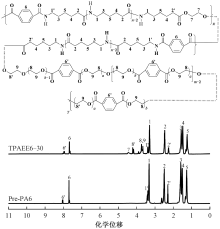
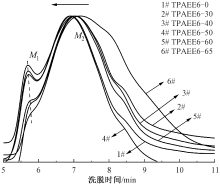
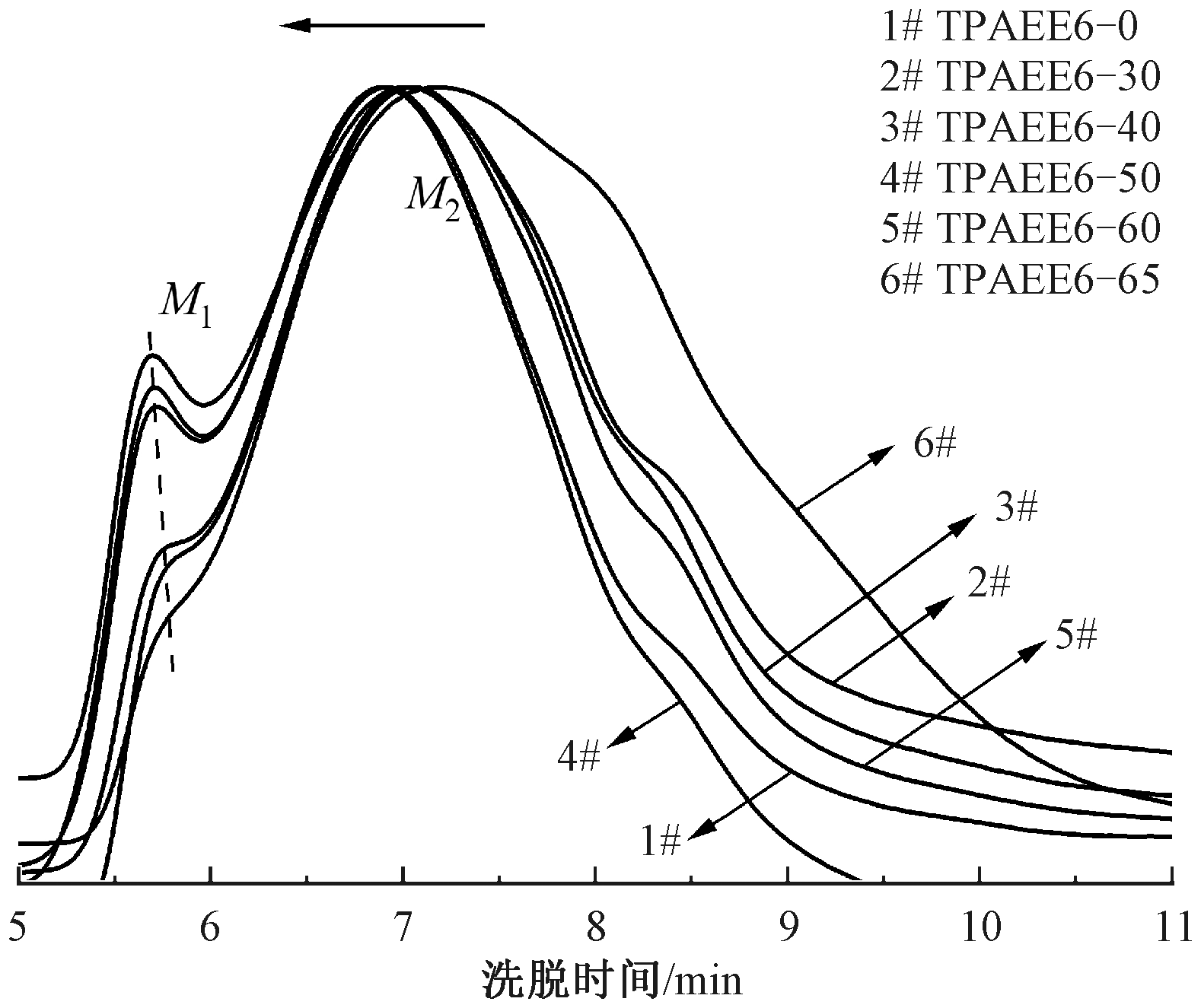
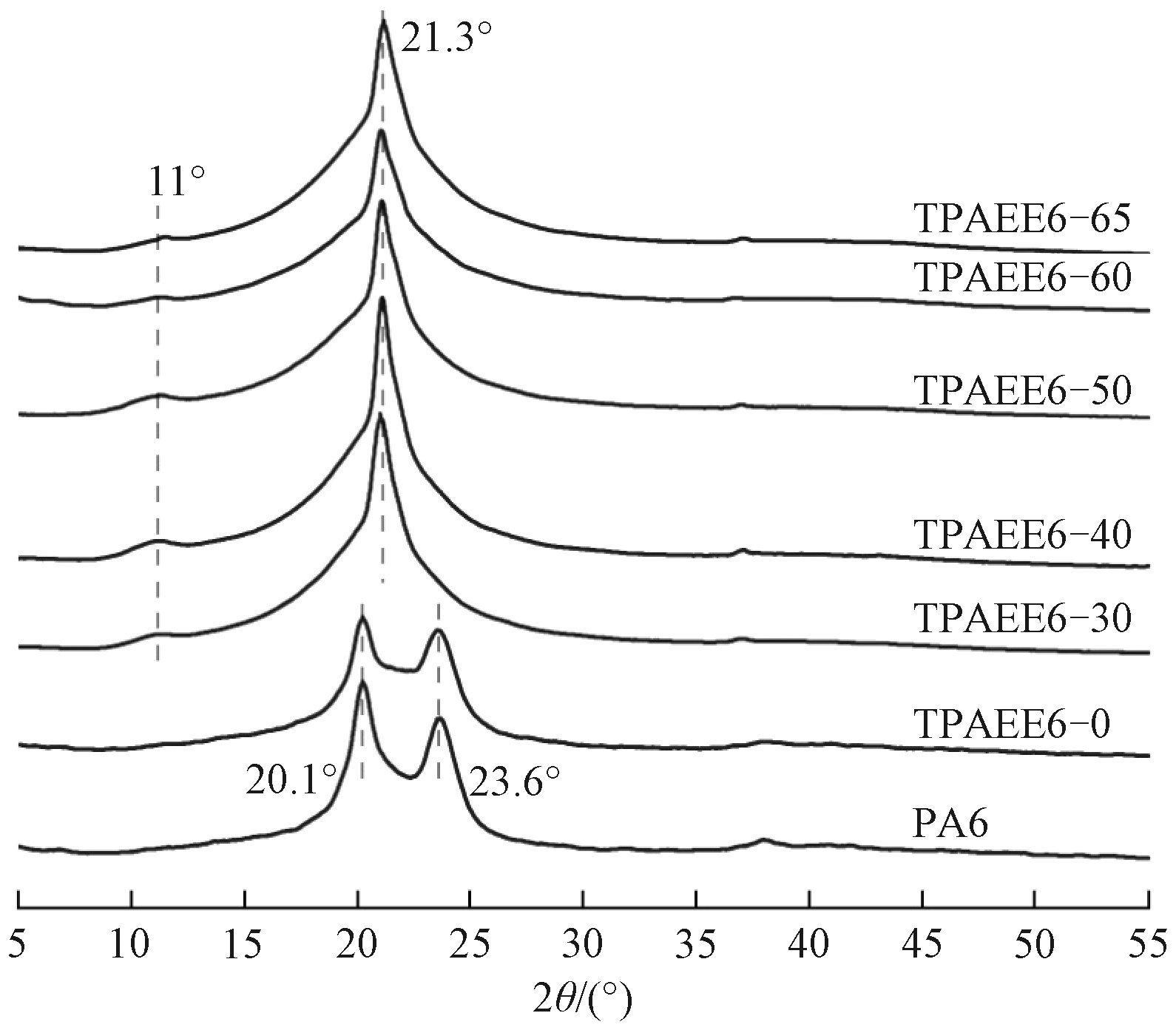
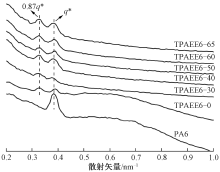
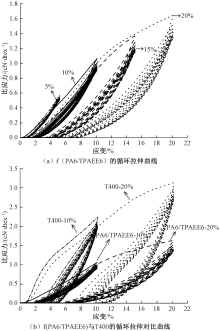
Results 1H NMR and FT-IR results confirmed that TPAEE6 is composed of soft and hard segments connected by ester bonds. GPC analysis revealed that the molecular weight of the elastomer ranged from 36.5 to 45.7 kg/mol, while viscosity testing indicated a relative viscosity between 1.21 and 1.68, suggesting a high molecular weight for the elastomer. DMA exhibited dual glass transition temperatures, and structural changes in the crystalline regions observed in WAXD and SAXS demonstrated the excellent microphase-separated morphology of TPAEE6. Additionally, SAXS calculations indicated that the addition of polyether-ester segments did not alter the interplanar distance of the pure PA6 crystalline phase, confirming that the incorporation of soft segments did not disrupt the crystalline structure of pure PA6. Tensile testing results showed that the elastomer exhibited a tensile strength of 23-47 MPa and an elongation at break of 373%-758%. Cyclic tensile testing revealed a significant improvement in elastic recovery with increasing soft segment content. Beyond the first cycle, the subsequent tensile cycles showed minimal loss in elasticity. The f(PA6/TPAEE6) elastic fibers, prepared by side-by-side spinning of PA6 and TPAEE6-30 at a composite ratio of 4∶1, achieved a tensile strength of 3.12 cN/dtex, significantly outperforming previously reported PA6/TPAE composite fibers (2.14 cN/dtex), PA6/TPA6510 fibers (1.4 cN/dtex), PA6/PBTE fibers (2.4 cN/dtex), and commercial elastic fibers like T400 (2.44 cN/dtex). Under fixed elongations of 5%-20%, the elastic recovery rate and durability of the PA6/TPAEE6 fibers were significantly superior to those of T400, with recovery rates exceeding 90% in low-strain cycles and significantly reduced hysteresis losses.The microphase-separated structure of TPAEE6 balances flexibility and strength, imparting exceptional elasticity and mechanical performance to the fibers.

Conclusion The developed TPAEE6 thermoplastic elastomer exhibits excellent thermodynamic properties and a well-defined microphase-separated structure, offering new approaches and choices for the elastomer market. The PA6/TPAEE6 elastic fibers developed significantly outperform existing PA6-based and commercial elastic fibers in terms of strength and elasticity, showcasing broad application potential. This research integrates intrinsic and morphological elasticity, providing a new pathway for developing high-performance elastic fibers with the potential to enhance production and manufacturing efficiency.

Key words: polyamide 6 fiber, polyether-ester-amide 6 elastomer, microphase-separated structure, side-by-side elastic fiber, elastic recovery rate

中图分类号: 

  • TQ342.1

图1

TPAEE6的合成路线"

图2

TPAEE6-30和Pre-PA6的1H NMR谱图"

表1

TPAEE6的分子结构指标"

样品编号 MnPA6/
(kg·mol-1)
η/η0 MnTPAEE6/
(kg·mol-1)
PDI 转化率/
%
TPAEE6-0 2.9 1.68 43.5 5.9 -
TPAEE6-30 3.0 1.24 40.4 7.2 91.7
TPAEE6-40 3.1 1.21 36.9 8.4 85.7
TPAEE6-50 3.0 1.29 45.7 3.7 88.9
TPAEE6-60 2.8 1.25 39.0 3.3 87.5
TPAEE6-65 2.9 1.24 36.5 4.0 89.1

图3

TPAEE6的GPC曲线"

图4

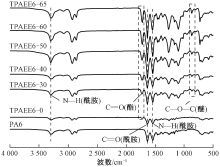
TPAEE6和PA6的FT-IR谱图"

图5

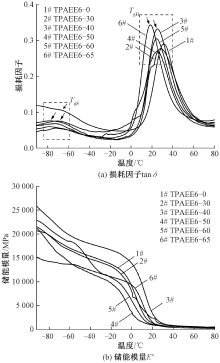
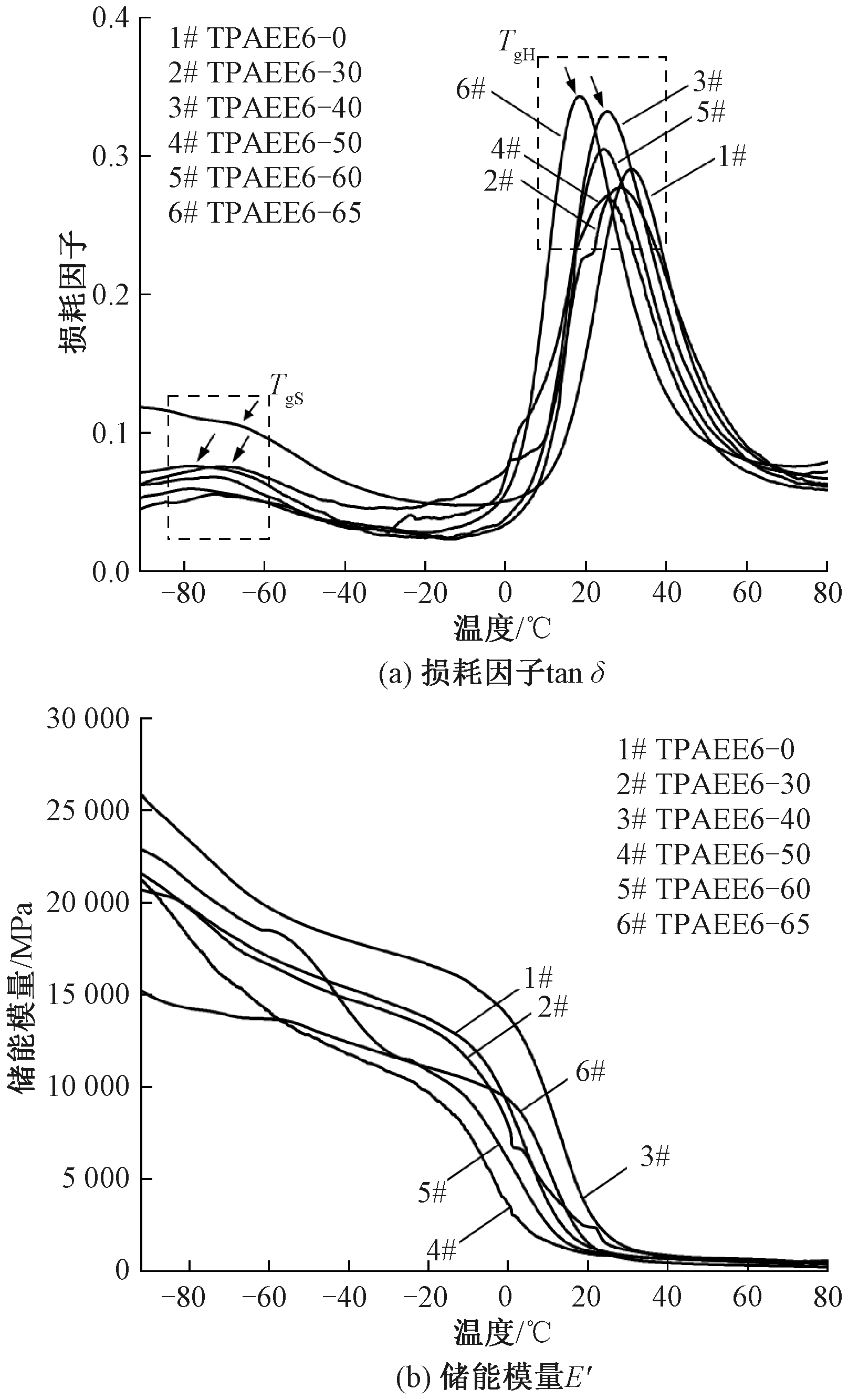
TPAEE6的DMA曲线"

表2

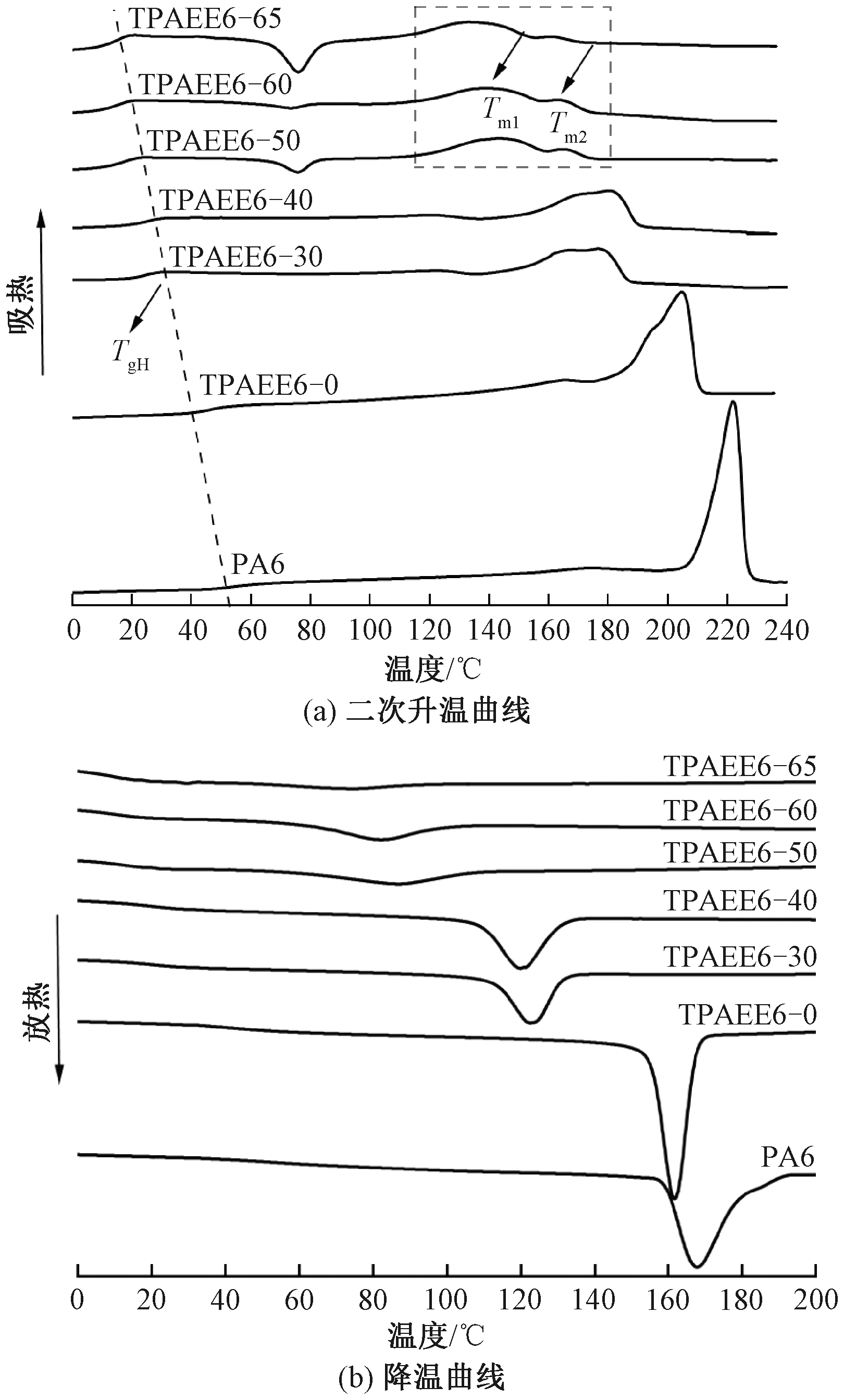
TPAEE6的热性能"

样品编号 TgH/
Tm/
Tc/
ΔHm/
(J·g-1)
Xc/
%
T5%/
PA6 51 220 175 52 27.4 355
TPAEE6-0 45 205 162 47 24.7 364
TPAEE6-30 25 166~177 123 26 19.5 352
TPAEE6-40 23 171~181 120 28 22.8 354
TPAEE6-50 17 144、166 85 24 12.6 352
TPAEE6-60 14 138、164 82 16 21.1 351
TPAEE6-65 14 133、162 74 15 14.4 351

图6

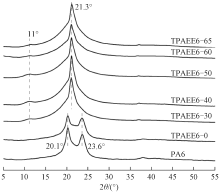
TPAEE6和PA6的WAXD谱图"

图7

TPAEE6和PA6的SAXS谱图"

图8

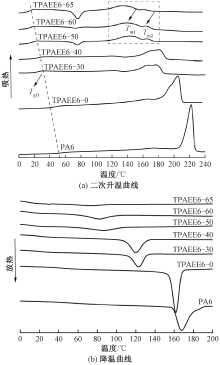
TPAEE6和PA6的DSC曲线"

图9

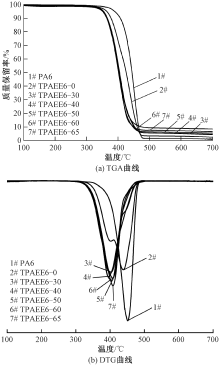
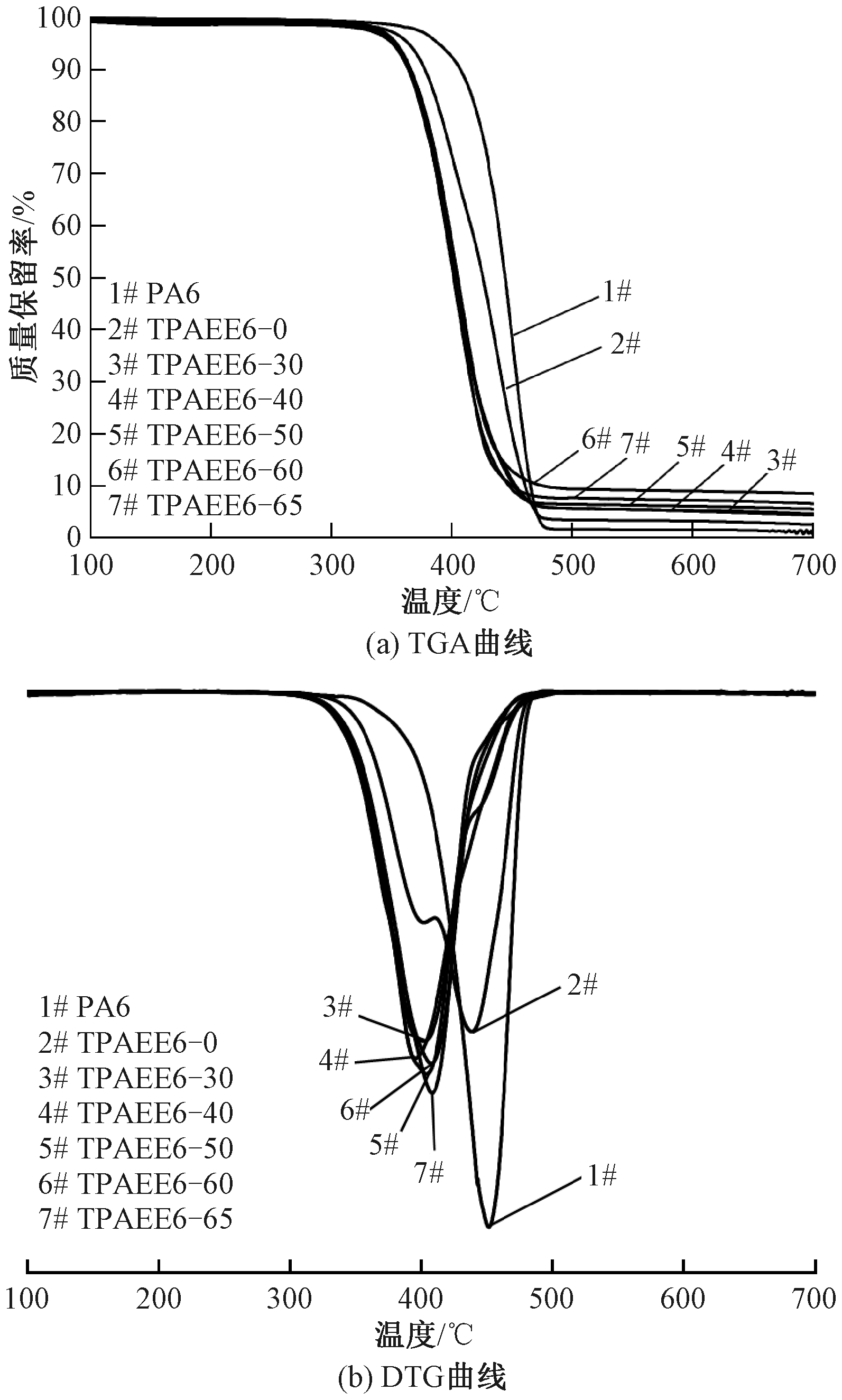
TPAEE6和PA6的热重曲线"

图10

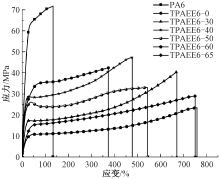
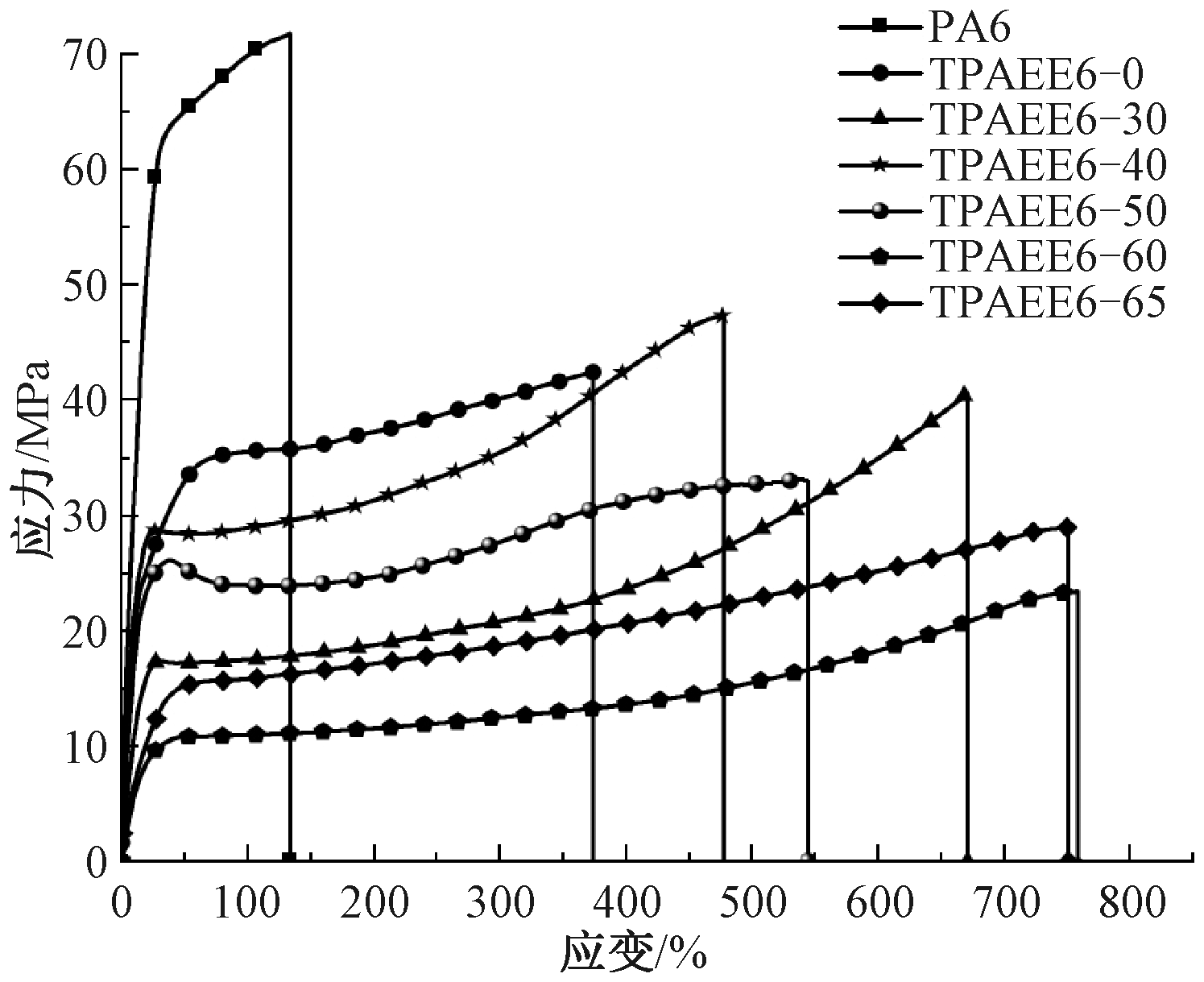
PA6和TPAEE6的拉伸断裂曲线"

表3

TPAEE6的力学性能"

样品
编号
弹性模
量/MPa
断裂强
度/MPa
断裂伸
长率/%
缺口冲击强度/
(kJ·m-2)
拉伸韧
性/(J·m-3)
PA6 416 72 133 1.4 8.20×10⁹
TPAEE6-0 281 42 373 1.8 1.35×10¹⁰
TPAEE6-30 129 41 670 27 1.60×10¹⁰
TPAEE6-40 292 47 474 38 1.64×10¹⁰
TPAEE6-50 212 33 544 42 1.49×10¹⁰
TPAEE6-60 64 23 758 74 1.10×10¹⁰
TPAEE6-65 82 29 750 52 1.54×10¹⁰

图11

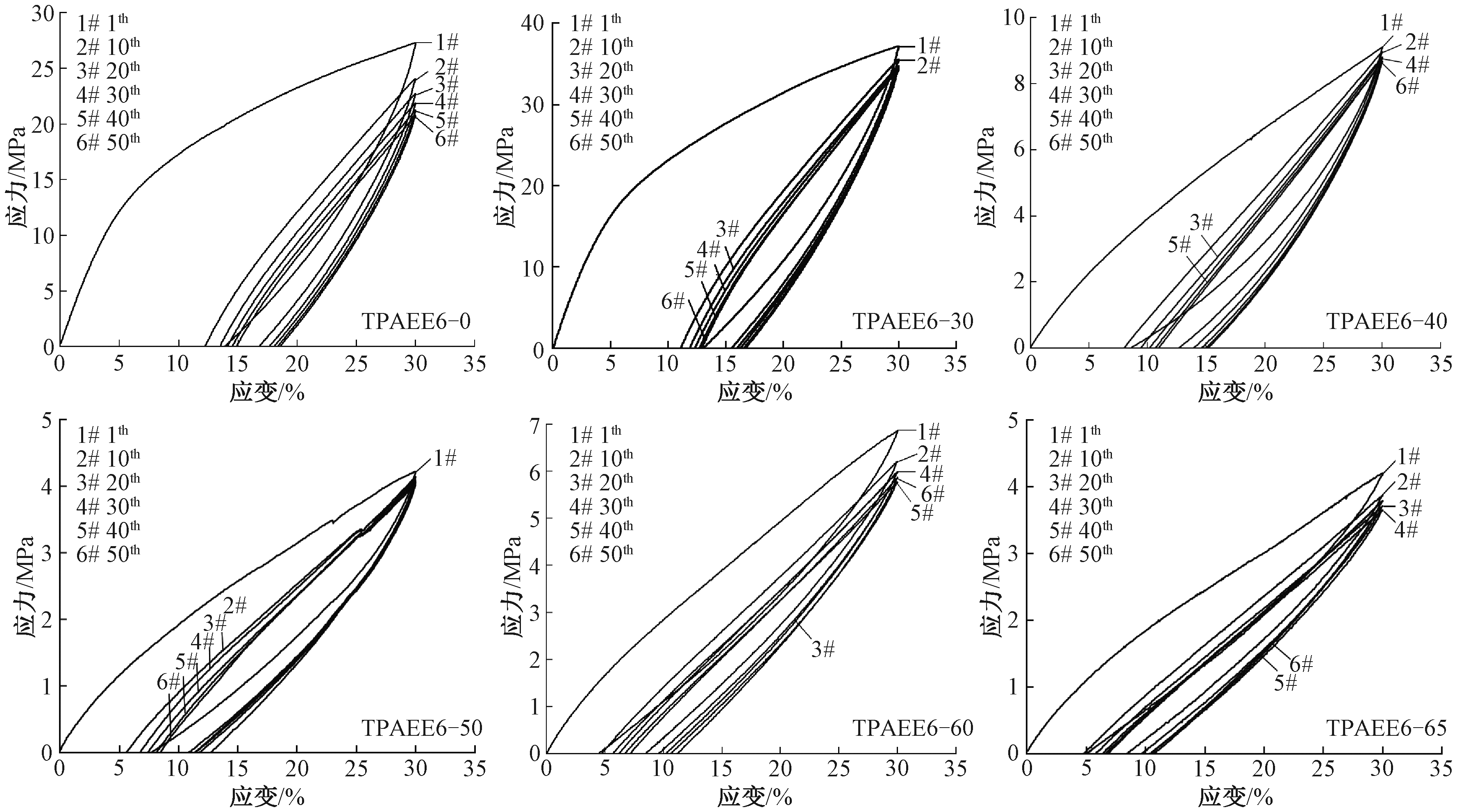
TPAEE6的循环拉伸曲线"

图12

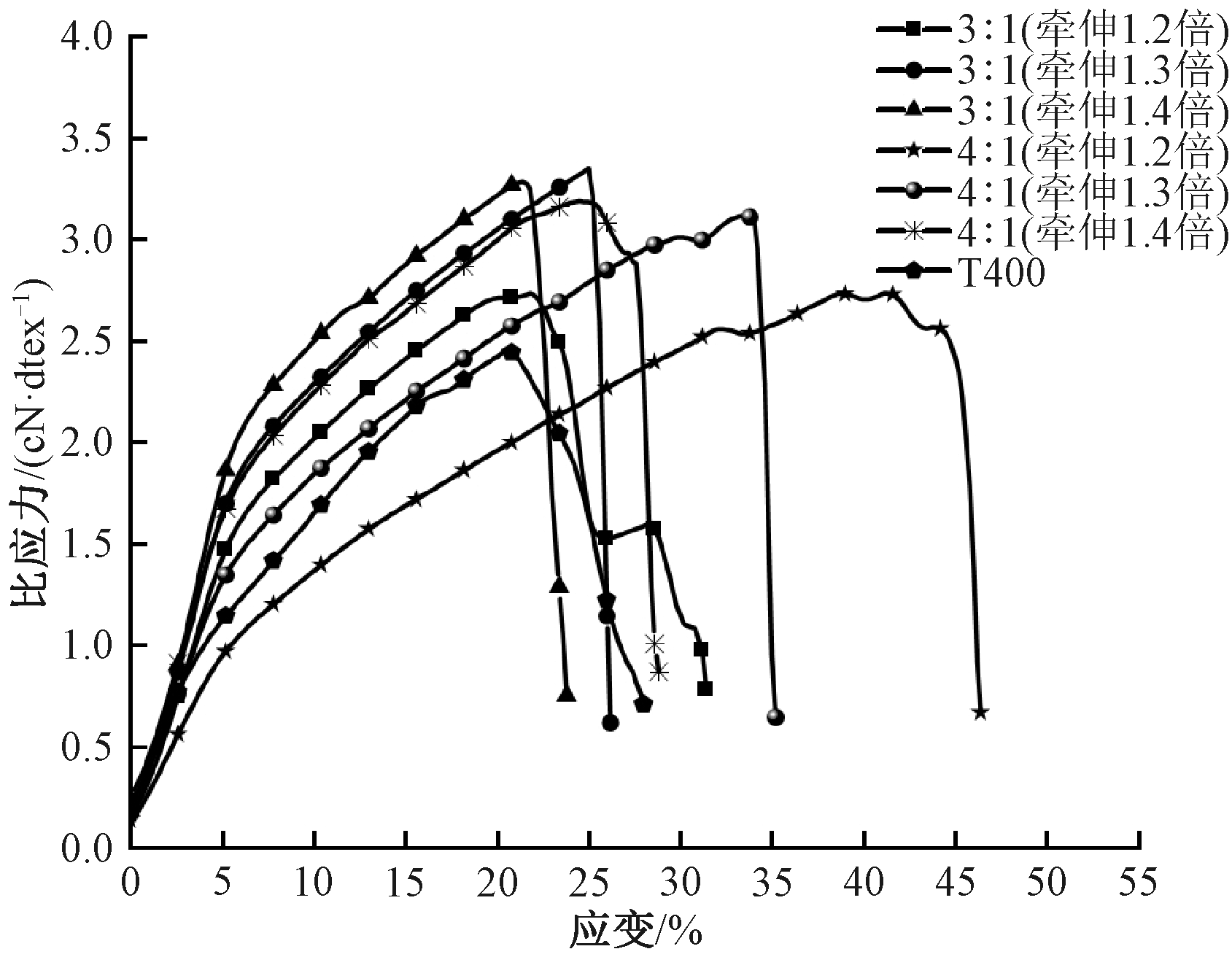
f(PA6/TPAEE6)和T400的拉伸断裂曲线"

表4

f(PA6/TPAEE6)和T400的力学性能"

PA6与
TPAEE6
质量比
牵伸
倍数
线密度/
dtex
断裂
伸长
率/%
断裂强度/
(cN·
dtex-1)
模量/
( cN·
dtex-1)
取向
因子
3∶1 1.2 50.0±2.1 31±5 3.11±0.13 19.38±2.87 0.624
1.3 44.5±1.9 26±4 3.37±0.18 19.69±3.03 0.681
1.4 43.4±1.8 24±3 3.30±0.17 22.60±4.12 0.709
4∶1 1.2 50.8±2.5 46±6 2.75±0.12 13.66±2.09 0.609
1.3 49.1±2.0 35±4 3.12±0.15 16.38±3.42 0.646
1.4 45.1±1.9 29±3 3.20±0.16 20.34±4.01 0.699
T400 56.0±2.8 21±2 2.44±0.11 22.09±2.69

图13

纤维的循环拉伸曲线"

[1] 郎嘉瑞. 聚酰胺基并列复合纤维的制备及其性能研究[D]. 上海: 东华大学, 2023: 56.
LANG Jiarui. Preparation and properties of polyamide parallel composite fibers[D]. Shanghai: Donghua University, 2023: 56.
[2] 杨倩. PA/TPAE偏心皮芯复合纤维的制备和性能研究[D]. 杭州: 浙江理工大学, 2023: 39-51.
YANG Qian. Preparation and properties of PA/TPAE eccentric sheath-core composite fibers[D]. Hangzhou: Zhejiang Sci-tech University, 2023: 39-51.
[3] YUAN R, FAN S, WU D, et al. Facile synthesis of polyamide 6 (PA6)-based thermoplastic elastomers with a well-defined microphase separation structure by melt polymerization[J]. Polymer Chemistry, 2018, 9(11): 1327-1336.
doi: 10.1039/C8PY00068A
[4] INOUE M. Studies on crystallization of high polymers by differential thermal analysis[J]. Journal of Polymer Science Part A: General Papers, 1963, 1(8): 2697-2709.
doi: 10.1002/pol.10.v1:8
[5] JIANG J, TANG Q, PAN X, et al. Facile synthesis of thermoplastic polyamide elastomers based on amorphous polyetheramine with damping performance[J]. Polymers, 2021, 13(16): 2645.
doi: 10.3390/polym13162645
[6] CHI D, LIU F, NA H, et al. Poly(neopentyl glycol 2,5-furandicarboxylate): a promising hard segment for the development of bio-based thermoplastic poly(ether-ester) elastomer with high performance[J]. ACS Sustainable Chemistry & Engineering, 2018, 6(8): 9893-9902.
[7] CHEN J, GONG C, YANG C, et al. Flexible preparation of polyamide-6 based thermoplastic elastomers via amide exchange[J]. Journal of Materials Science, 2021, 56: 12018-12029.
doi: 10.1007/s10853-021-06057-z
[8] HO J C, WEI K H. Induced γ→α crystal transformation in blends of polyamide 6 and liquid crystalline copolyester[J]. Macromolecules, 2000, 33(14), 5181-5186.
doi: 10.1021/ma991702f
[9] RAMESH C, GOWD E B. High-temperature x-ray diffraction studies on the crystalline transitions in the α- and γ-forms of nylon-6[J]. Macromolecules, 2001, 34(10): 3308-3313.
doi: 10.1021/ma0006979
[10] YU Y C, JO W H. Segmented block copolyetheramides based on nylon 6 and polyoxypropylene: II: structure and properties[J]. Journal of Applied Polymer Science, 1995, 56(8): 895-904.
doi: 10.1002/app.07.v56:8
[11] TODROS S, NATALI A N, PACE G, et al. Correlation between chemical and mechanical properties in renewable poly(ether-block-amide)s for biomedical applications[J]. Macromolecular Chemistry and Physics, 2013, 214(18): 2061-2072.
doi: 10.1002/macp.v214.18
[12] JIANG Q, YANG C C, LI J C. Size-dependent melting temperature of polymers[J]. Macromolecular Theory and Simulations, 2003, 12(1): 57-60.
doi: 10.1002/mats.v12:1
[13] 袁如超. 热塑性弹性体及其纤维的制备与结构性能研究[D]. 上海: 东华大学, 2020: 41.
YUAN Ruchao. Fabrication and properties of thermoplastic elastomers and corresponding elastic fibers[D]. Shanghai: Donghua University, 2020: 41.
[14] SAIANI A, DAUNCH W A, VERBEKE H, et al. Origin of multiple melting endotherms in a high hard block content polyurethane: 1: thermodynamic investigation[J]. Macromolecules, 2001.DOI:10.1021/mao105993.
[15] KROL P. Synthesis methods, chemical structures and phase structures of linear polyurethanes: properties and applications of linear polyurethanes in polyurethane elastomers, copolymers and ionomers[J]. Progress in Materials Science, 2007, 52(6): 915-1015.
doi: 10.1016/j.pmatsci.2006.11.001
[16] BIEMOND G J E, FEIJEN J, GAYMANS R J. Poly(ether amide) segmented block copolymers with adipic acid based tetraamide segments[J]. Journal of Applied Polymer Science, 2007, 105(2): 951-963.
doi: 10.1002/app.v105:2
[17] LIU Y, ZHAO R, LIU Y, et al. Flexible preparation of PA6-based thermoplastic elastomer filaments with enhanced elasticity, melt spinnability and transparency enabled by high-molecular-weight soft segments[J]. Polymer Chemistry, 2023, 14, 4352-4361.
doi: 10.1039/D3PY00489A
[18] ZHANG S, WANG K, SANG S, et al. Study on properties of polyurethane elastomers prepared with different hard segment structure[J]. Journal of Applied Polymer Science, 2022, 139(27): e52479.
doi: 10.1002/app.v139.27
[19] 刘雅丽, 袁如超, 俞建勇, 等. PA6/PBTE并列复合弹性纤维的制备及其性能研究[J]. 东华大学学报(自然科学版), 2024: 1-10.
LIU Yali. Preparation of PA6/PBTE side-by-side composite elastic fibers and study of their proper-ties[J]. Journal of Donghua University(Natural Science), 2024: 1-10.
[20] ZHU M, LIU Y, SUN B, et al. A novel highly resilient nanocomposite hydrogel with low hysteresis and ultrahigh elongation[J]. Macromolecular Rapid Communications, 2006 27(13): 1023-1028.
doi: 10.1002/marc.v27:13
[1] 张梦茹, 王灿, 肖汪洋, 廖梦蝶, 王秀华. 聚醚酯弹性纤维的制备及其结构与性能[J]. 纺织学报, 2024, 45(08): 81-88.
[2] 郑晓頔, 盛平厚, 蒋佳岑, 李睿, 焦红娟, 邱志成. 铜改性抗菌防螨聚酰胺6纤维的制备及其性能[J]. 纺织学报, 2024, 45(03): 19-27.
[3] 赵亚茹, 肖红, 陈剑英. 不锈钢短纤维/棉包覆氨纶纱的弹性与电学性能[J]. 纺织学报, 2020, 41(03): 45-50.
[4] 李丹丹 权利军 金肖克 田伟 祝成炎. 氨纶与双组分复合长丝/棉包芯纱的拉伸弹性[J]. 纺织学报, 2017, 38(05): 31-36.
[5] 冯志红.;朱良均;闵思佳;蔡杰;吕洁. 高弹高保暖丝绵的性能[J]. 纺织学报, 2007, 28(4): 22-25.
[6] 李慧;王府梅. PTT织物与棉氨包芯纱织物的弹性比较[J]. 纺织学报, 2005, 26(3): 32-34.
[7] 殷英贤;王懽;张建春;郭玉海. 聚四氟乙烯-聚氨酯复合膜的工艺探讨[J]. 纺织学报, 2004, 25(04): 36-37.
Viewed
Full text


Abstract

Cited

  Shared   
  Discussed   
No Suggested Reading articles found!