纺织学报 ›› 2025, Vol. 46 ›› Issue (09): 57-65.doi: 10.13475/j.fzxb.20241105401
毛泽1, 高俊1, 凌磊1, 武丁胜1, 陶云1, 张春2, 李申2, 凤权1( )
)
MAO Ze1, GAO Jun1, LING Lei1, WU Dingsheng1, TAO Yun1, ZHANG Chun2, LI Shen2, FENG Quan1()
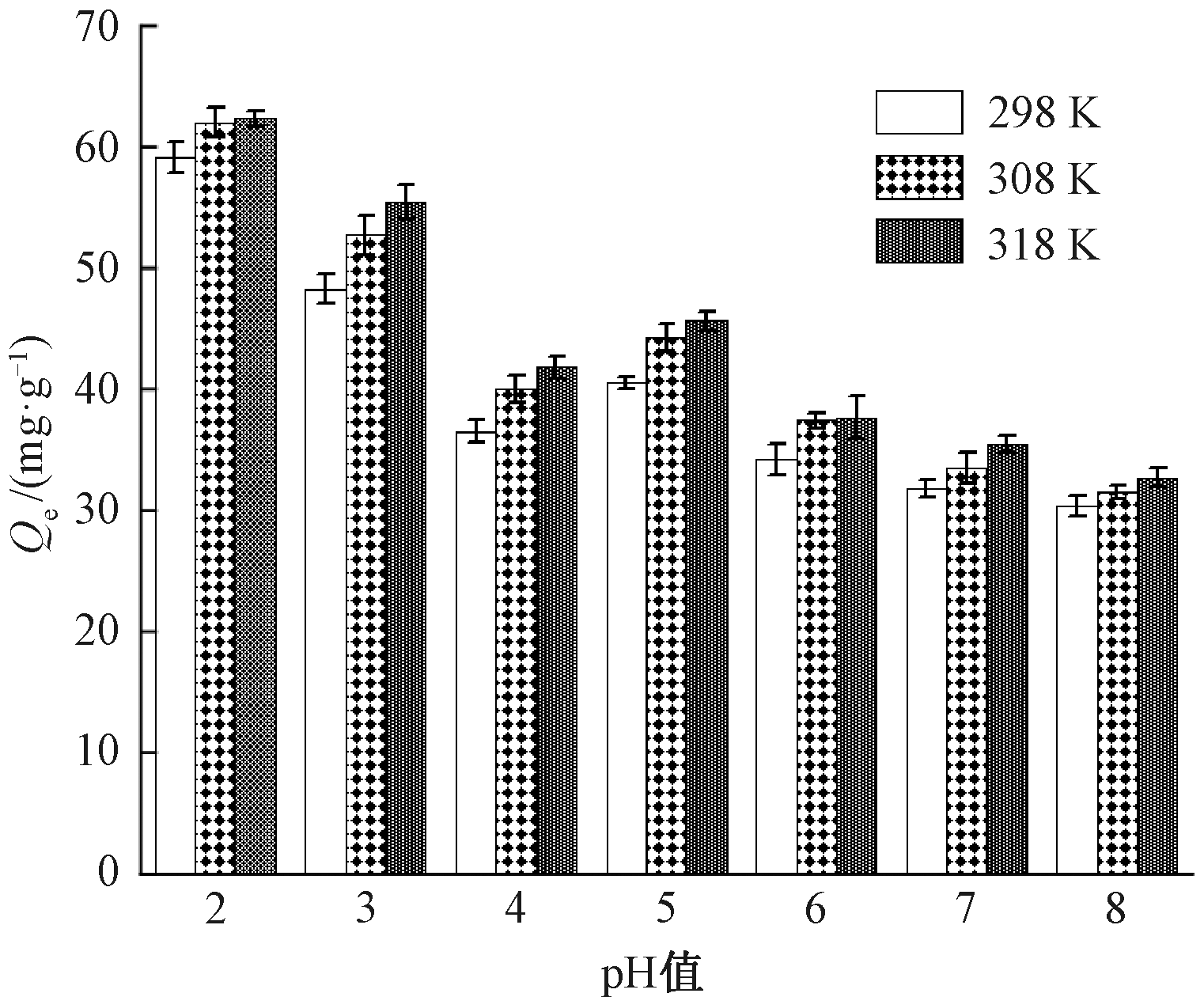
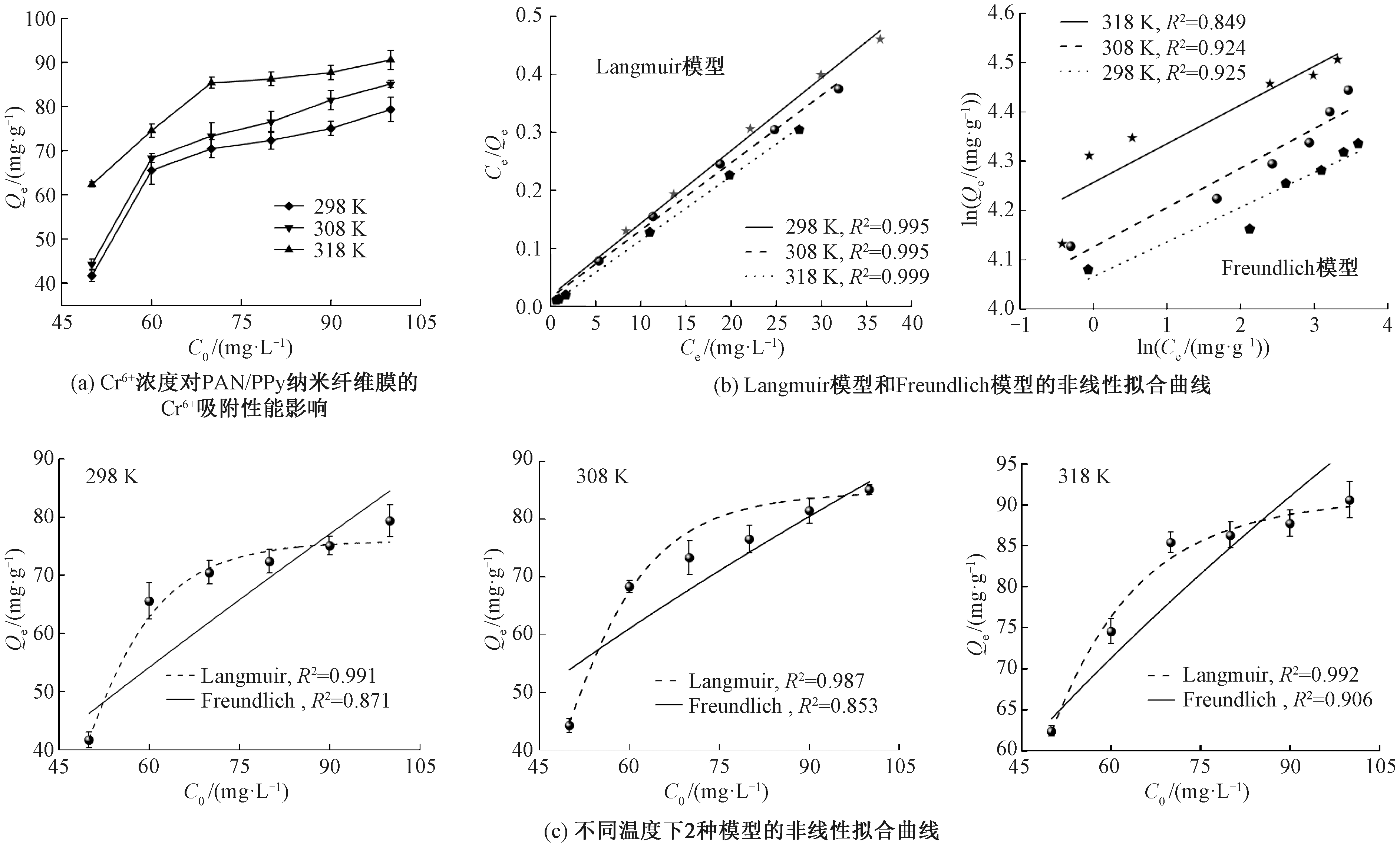
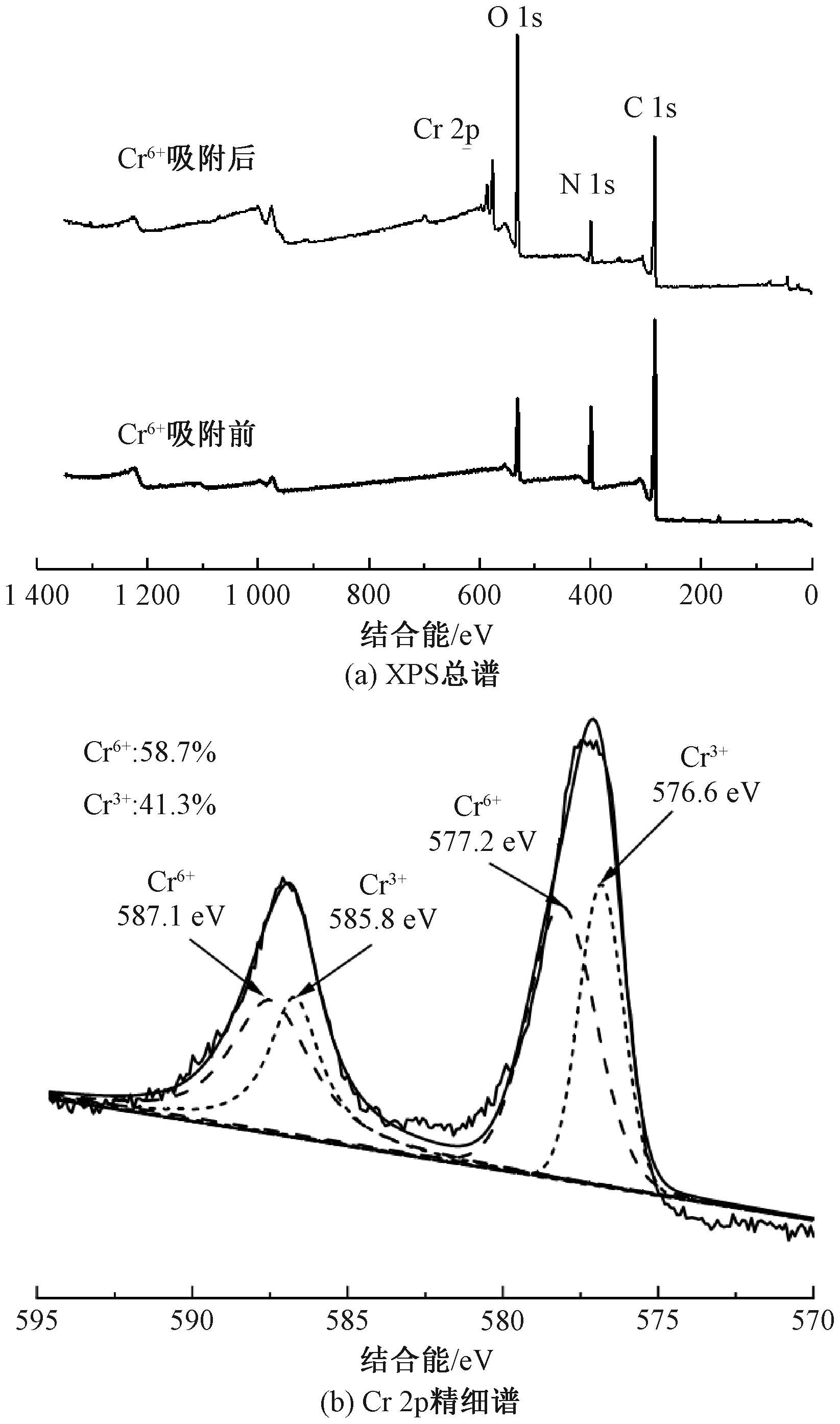
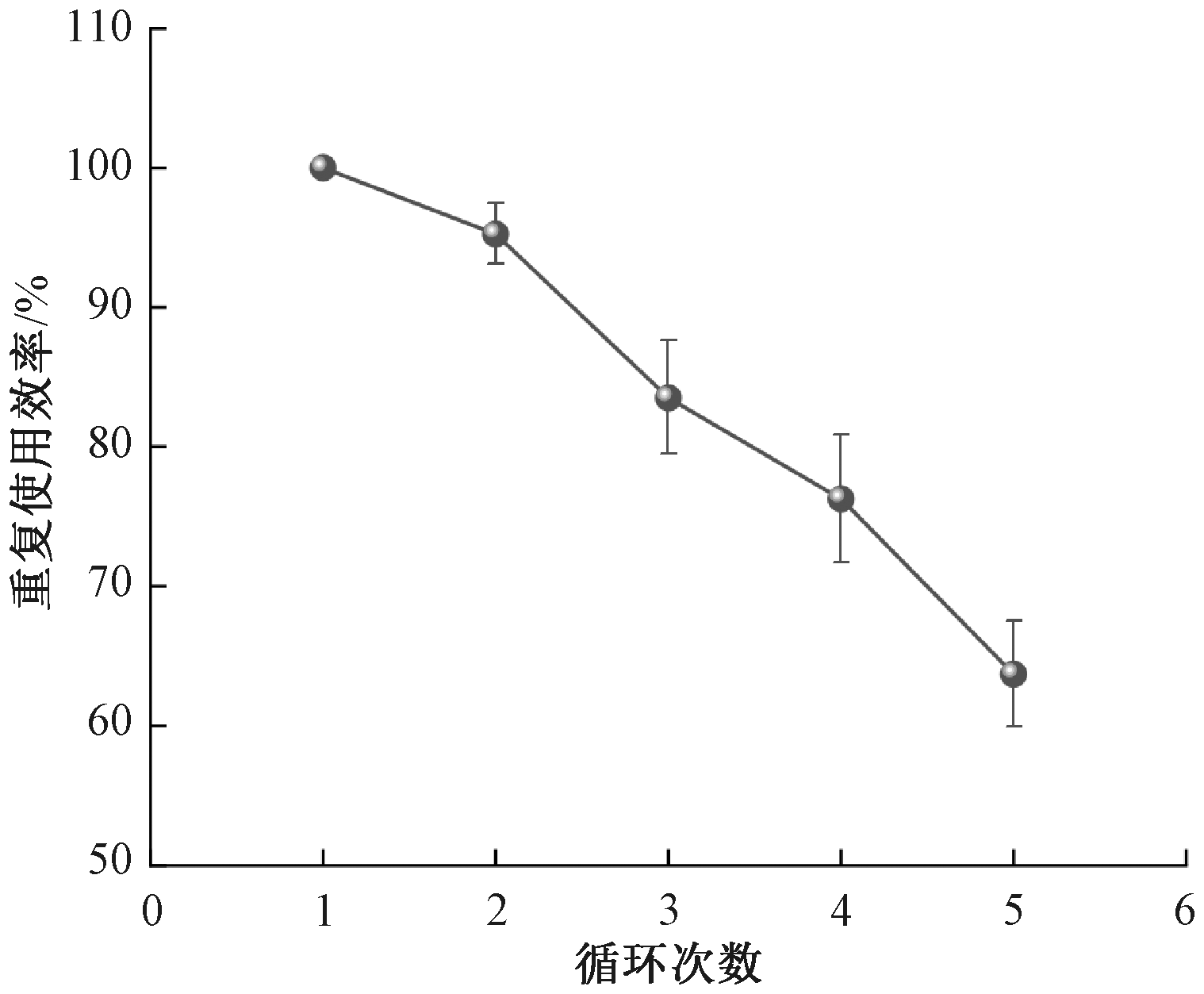
摘要: 针对六价铬离子(Cr6+)具有高毒性且难去除的问题,采用静电纺丝和原位氧化的方法制备聚丙烯腈/聚吡咯(PAN/PPy)纳米纤维膜。对PAN/PPy纳米纤维膜的形貌和结构进行表征,并探究其吸附性能和吸附行为。结果表明:PAN/PPy纳米纤维膜被成功制备,在温度为318 K、pH为2、Cr6+质量浓度为100 mg/L时,PAN/PPy纳米纤维膜达到最佳吸附容量(91.3 mg/g)。吸附等温线证实PAN/PPy纳米纤维膜对Cr6+吸附符合Langmuir吸附等温模型,说明PAN/PPy纳米纤维膜对Cr6+是单分子层吸附;吸附热力学结果表明,吸附过程是非自发的吸热反应;吸附动力学符合准二级动力学,属于化学吸附。PAN/PPy纳米纤维膜对Cr6+具有一定的还原能力,其中约41.3%的Cr6+被还原为Cr3+,且具有良好的可重复使用性能。
中图分类号:
| [1] | ZHOU Jianhua, DU Xiaosen, LU Kai, et al. MXene@polydopamine/oxidized sodium alginate modified collagen composite aerogel as sustainable bio-adsorbent for heavy metal ion adsorption and solar driven water evapo-ration[J]. Separation and Purification Technology, 2025. DOI: 10.1016/j.seppur.2024.129045. |
| [2] | PANJALAK Meetam, KUNLARAT Phonlakan, SUPINYA Nijpanich, et al. Chitosan-grafted hydrogels for heavy metal ion adsorption and catalytic reduction of nitroaromatic pollutants and dyes[J]. International Journal of Biological Macromolecules, 2024. DOI: 10.1016/j.ijbiomac.2023.128261. |
| [3] | LI Wenbin, GUO Mengting, WANG Yinfei, et al. Selective adsorption of heavy metal ions by different composite-modified semi-carbonized fibers[J]. Separation and Purification Technology, 2024. DOI: 10.1016/j.seppur.2023.125022. |
| [4] | SHAKTI Katiyar, RAJESH Katiyar. A comprehensive review on synthesis and application of nanocomposites for adsorption of chromium: status and future pros-pective[J]. Applied Water Science, 2024. DOI: 10.1007/s13201-023-02062-6. |
| [5] | DRISS Mazkad, AYOUB El Idrissi, SALAH Eddine Marrane, et al. An innovative diatomite-polypyrrole composite for highly efficient Cr(VI) removal through optimized adsorption via surface response method-ology[J]. Colloids and Surfaces A: Physicochemical and Engineering Aspects, 2024. DOI: 10.1016/j.colsurfa.2024.133172. |
| [6] | MAO Ze, WU Dingsheng, SARKODIE Bismark, et al. Scalable, acid-resistant polyaniline deposited amidoxime PAN nanofibers for efficient adsorption and detoxification of Cr (VI) wastewater[J]. Journal of Environmental Chemical Engineering, 2024. DOI: 10.1016/j.jece.2024.113153. |
| [7] | POLEPALLE Thiripelu, JAGADEESAN Manjunathan, MEYYAPPAN Revathi, et al. Removal of hexavalent chromium from electroplating wastewater by ion-exchange in presence of Ni(II) and Zn(II) ions[J]. Journal of Water Process Engineering, 2024. DOI: 10.1016/j.jwpe.2024.104815. |
| [8] | 裴宇翔, 张阳, 张淏泉, 等. 纤维素氨基甲酸酯/MoS2分离膜的制备及光催化还原Cr(Ⅵ)研究[J]. 离子交换与吸附, 2021, 37(3): 207-219. |
| PEI Yuxiang, ZHANG Yang, ZHANG Haoquan, et al. Preparation of cellulose carbamate/molybdenum disulfide composite membrane for photocatalytic reduction of Cr(VI)[J]. Ion Exchange and Adsorption, 2021, 37(3): 207-219. | |
| [9] | LI Diandi, HE Haijun, XU Zhongxuan, et al. Investigation on the effect of Cu2+, Mn2+ and Fe3+ on biotreatment of Cr(VI) by Shewanella oneidensis and Bacillus subtilis in bimetallic system[J]. Surfaces and Interfaces, 2024. DOI: 10.1016/j.surfin.2023.103742. |
| [10] | LI Ningning, GU Junhong, LIU Zhi, et al. New insight into multi-functional MOG@COP/SA beads for co-adsorption and mono-detection in CTC-Cr(Ⅵ) co-contamination system and efficient anti-counterfeiting[J]. Chemical Engineering Journal, 2024. DOI: 10.1016/j.cej.2024.154243. |
| [11] | RACHID El Kaim Billah, MD Aminul Islam, MAZEN K Nazal, et al. A novel glutaraldehyde cross-linked chitosan@acid-activated bentonite composite for effective Pb(II) and Cr(VI) adsorption: experimental and theoretical studies[J]. Separation and Purification Technology, 2024. DOI: 10.1016/j.seppur.2023.126094. |
| [12] | LIU Yanan, GAO Yiman, SHI Hongpu, et al. Enhanced absorption capacity and fundamental mechanism of electrospun MIL-101(Cr)-NH2/PAN nanofibrous membranes for Mo(VI) removal[J]. Surfaces and Interfaces, 2024. DOI: 10.1016/j.surfin.2024.105192. |
| [13] | 王杰, 汪滨, 杜宗玺, 等. 磺胺化聚丙烯腈纳米纤维膜的制备及其对Cr(Ⅵ)和Pb(Ⅱ)的吸附性能[J]. 纺织学报, 2020, 41(1): 1-7. |
|
WANG Jie, WANG Bing, DU Zongxi, et al. Preparation of sulfonated polyacrylonitrile nanofiber membranes and adsorption capacity for Cr(VI) and Pb(II)[J]. Journal of Textile Research, 2020, 41(1): 1-7.
doi: 10.1177/004051757104100101 |
|
| [14] | 蒋达, 许倩倩, 吴雪兰, 等. 氨基功能化壳聚糖微球对Cr(VI)的吸附性能及其机理[J]. 高分子材料科学与工程, 2024, 40(1): 45-56. |
| JIANG Da, XU Qianqian, WU Xuelan, et al. Adsorption performance and mechanism of Cr(VI) by amino-functionalized chitosan microspheres[J]. Polymer Materials Science & Engineering, 2024, 40(1): 45-56. | |
| [15] | LI Lele, YANG Qinqin, SHI Yiling, et al. Polypyrrole-modified natural eggplant aerogel with high shape recovery for simultaneous efficient clean water generation and heavy metal ion adsorption from wastewater[J]. Separation and Purification Technology, 2024. DOI: 10.1016/j.seppur.2023.125669. |
| [16] | LAILA S Alqarni, JARI S Algethami, RACHID EL Kaim Billah, et al. A novel chitosan-alginate@Fe/Mn mixed oxide nanocomposite for highly efficient removal of Cr (VI) from wastewater: experiment and adsorption mechanism[J]. International Journal of Biological Macromolecules, 2024. DOI: 10.1016/j.ijbiomac.2024.129989. |
| [17] | RAJESH Juturu, VYTLA Ramachandra Murty, RAJA Selvaraj. Efficient adsorption of Cr(VI) onto hematite nanoparticles: ANN, ANFIS modelling, isotherm, kinetic, thermodynamic studies and mechanistic insights[J]. Chemosphere, 2024. DOI: 10.1016/j.chemosphere.2023.140731. |
| [18] | WANG Meng, CHEN Yingbo, ZHANG Yuanyuan, et al. Selective removal of Cr(VI) from solution by polyethyleneimine modified hydrochar loaded nanoscale zero-valent iron with high adsorption capacity[J]. Separation and Purification Technology, 2024. DOI: 10.1016/j.seppur.2023.125150. |
| [19] | AMNAH Mohammed Alsuhaibani, ABDULAZIZ A Alyyafi, LAMIA A Albedair, et al. Efficient fabrication of a composite sponge for Cr (VI) removal via citric acid cross-linking of metal-organic framework and chitosan: adsorption isotherm, kinetic studies, and optimization using Box-Behnken design[J]. Materials Today Sustainability, 2024. DOI: 10.1016/j.mtsust.2024.100732. |
| [20] | SHREYA Kotnala, BRIJ Bhushan, ARUNIMA Nayak. Hydroxyapatite@cellulose@nZVI composite: fabrication and adsorptive removal of doxycycline, Cr(VI) and As(III) from wastewater[J]. Chemical Engineering Science, 2024. DOI: 10.1016/j.ces.2024.119796. |
| [21] |
PENG Yinyin, PAN Ting, CHEN Chuang, et al. In situ synthesis of NH2-MIL-53-Al/PAN nanofibers for removal Co(II) through an electrospinning process[J]. Langmuir, 2024, 40(5): 2567-2576.
doi: 10.1021/acs.langmuir.3c02837 |
| [22] | AASIM Hussain, RITA Kumari, FARHA Jabeen, et al. Ion beam irradiation induced modification of PPy/ZnO nanocomposite thin films for supercapacitor applic-ations[J]. Surfaces and Interfaces, 2024. DOI: 10.1016/j.surfin.2024.104647. |
| [23] |
DEEP S Sharma, AKASH P Patel, SAURABH S Soni, et al. Electrospun PbS/PAN-PANI carbon nanofibers decorated on carbon cloth as pseudo-electrochemical capacitor material[J]. ACS Applied Electronic Materials, 2024, 6(5): 3617-3629.
doi: 10.1021/acsaelm.4c00320 |
| [24] | DUAN Lijun, XU Jinhao, CAO Lingzhi, et al. Enhanced electrocatalytic performance of the FePt/PPy-C composite toward methanol oxidation[J]. ACS Applied Materials & Interfaces, 2024, 16(34): 44718-44727. |
| [25] | TAYYBA Mukhtar, RANA Zafar Abbas Manj, IJAZ Ahmad Khan, et al. A prime synergistic BC@PPy flexible conductive matrix proposed candidate for boosting the breakthrough in smart e-textiles power supplies[J]. Materials Today Communications, 2024. DOI: 10.1016/j.mtcomm.2024.108208. |
| [26] | GURPREET Kaur, AKASH Erick Toppo, GARIMA, et al. Synthesis of polypyrrole(PPy) functionalized halloysite nanotubes (HNTs): an electrochemical sensor for ibuprofen[J]. Applied Surface Science, 2024. DOI: 10.1016/j.apsusc.2023.159280. |
| [27] | IBRAHIM Korkut, EBUBEKIR Siddik Aydin. Electrospun PAN-PS membranes with improved hydrophobic properties for high-performance oil/water separation[J]. Separation and Purification Technology, 2024. DOI: 10.1016/j.seppur.2023.125590. |
| [28] | LIANG Pei, LIU Sijia, LI Mei, et al. Effective adsorption and removal of Cr(VI) from wastewater using magnetic composites prepared by synergistic effect of polypyrrole and covalent organic frameworks[J]. Separation and Purification Technology, 2024. DOI: 10.1016/j.seppur.2023.126222. |
| [29] | WANG Yueyang, JIN Mingzhu, LU Weiwei, et al. Recognizing adsorption of aqueous Cr (VI), As (III), Cd (II), and Pb (II) ions by amino groups hollow polymer adsorbent[J]. Journal of Environmental Chemical Engineering, 2024. DOI: 10.1016/j.jece.2023.111701. |
| [30] | GAO Huihui, HAN Xiaoyu, WANG Rong, et al. Adsorption and catalytic degradation of bisphenol A and p-chlorophenol by magnetic carbon nanotubes[J]. Environmental Research, 2023. DOI: 10.1016/j.envres.2023.116314. |
| [31] | TANG Qian, LI Nana, LU Qingchen, et al. Study on preparation and separation and adsorption performance of knitted tube composite β-cyclodextrin/chitosan porous membrane[J]. Polymers, 2019. DOI: 10.3390/polym11111737. |
| [32] | HUANG Chong, MA Qiang, ZHOU Man, et al. Adsorption effect of oxalic acid-chitosan-bentonite composite on Cr6+ in aqueous solution[J]. Water, Air, & Soil Pollution, 2023. DOI: 10.1007/s11270-023-06543-x. |
| [33] | LÜ Zepeng, ZHANG Huaku, LIU Chenhui, et al. Oxygen-bridged cobalt-chromium atomic pair in MOF-Derived cobalt phosphide networks as efficient active sites enabling synergistic electrocatalytic water splitting in alkaline media[J]. Advanced Science, 2024. DOI: 10.1002/advs.202306678. |
| [1] | 傅林, 钱建华, 单江音, 林灵, 卫梦蓉, 翁可欣, 吴晓睿. 银纳米线/聚氨酯纳米纤维膜柔性传感器制备及其性能[J]. 纺织学报, 2025, 46(09): 74-83. |
| [2] | 王泓力, 张辉, 刘建宇, 尉海泽, 张雅宁, 王丽丽, 许学潮. 棉基生物炭-ZIF-L(Zn)-壳聚糖/聚丙烯复合膜的制备及其吸附-光催化性能[J]. 纺织学报, 2025, 46(09): 84-93. |
| [3] | 刘健, 潘山山, 刘泳汝, 尹兆松, 任康佳, 赵庆浩. 多尖端锯齿状静电纺丝喷头的设计及优化[J]. 纺织学报, 2025, 46(08): 217-225. |
| [4] | 马晓远, 包伟. 防水透湿纳米纤维复合织物研究现状及发展趋势[J]. 纺织学报, 2025, 46(08): 254-262. |
| [5] | 时虎, 王赫, 王洪杰, 潘显苗. 多孔交联纳米纤维基超级电容器隔膜的设计[J]. 纺织学报, 2025, 46(08): 45-52. |
| [6] | 林玉婷, 许仕林, 胡毅. 多色彩热塑性聚氨酯/聚丙烯腈纳米纤维纱线的制备及其性能[J]. 纺织学报, 2025, 46(07): 78-86. |
| [7] | 贾陈诺瓦, 张勇, 朱威岩, 刘赛, 唐宁. 芯纱种类对聚丙烯腈纳米纤维导电包芯纱性能的影响[J]. 纺织学报, 2025, 46(07): 87-95. |
| [8] | 徐丽亚, 汪瑱, 杨鸿杰, 汪蔚. 氧化锌-银/生物基聚酰胺56纳米纤维膜的制备及其抗菌性能[J]. 纺织学报, 2025, 46(07): 37-45. |
| [9] | 陈亚娟, 郭瀚宇, 张陈恬, 李欣欣, 张雪萍. 聚乙烯醇/海藻酸钠/锦纶66复合水凝胶包芯纱的制备及其吸湿性能[J]. 纺织学报, 2025, 46(06): 103-110. |
| [10] | 丁圆, 赵云霞, 靳高岭, 杨涛, 徐静, 柯福佑, 陈烨. 阻燃聚丙烯腈长丝织物的层层自组装法制备及其性能[J]. 纺织学报, 2025, 46(06): 168-177. |
| [11] | 王春翔, 李姣, 解开放, 薛宏坤, 徐广标. 天麻多糖/聚乙烯醇静电纺抗菌保鲜膜的制备与性能[J]. 纺织学报, 2025, 46(06): 73-79. |
| [12] | 张嘉诚, 于影, 左雨欣, 顾志清, 汤腾飞, 陈洪立, 吕勇. 聚丙烯腈/二硫化钼纤维薄膜的挠曲电效应与扭转传感特性[J]. 纺织学报, 2025, 46(06): 80-87. |
| [13] | 邱月, 杨询, 李昊, 李海东, 吴国忠, 张彩丹. 聚琥珀酰亚胺纳米纤维膜改性及其染料吸附性能[J]. 纺织学报, 2025, 46(06): 88-95. |
| [14] | 时晓聪, 陈莉, 杜迅. 茜素-聚乳酸/胶原蛋白纳米纤维膜的制备及其氨气检测性能[J]. 纺织学报, 2025, 46(05): 143-150. |
| [15] | 闫静, 王亚倩, 刘晶晶, 李好义, 杨卫民, 康卫民, 庄旭品, 程博闻. 熔融静电纺长丝纱的制备及其在摩擦纳米发电机中的应用[J]. 纺织学报, 2025, 46(05): 23-29. |
|
||
 京公网安备11010502044800号