纺织学报 ›› 2025, Vol. 46 ›› Issue (08): 45-52.doi: 10.13475/j.fzxb.20241001501

• 纤维材料 • 上一篇    下一篇

多孔交联纳米纤维基超级电容器隔膜的设计

时虎, 王赫(), 王洪杰, 潘显苗   

  1. 安徽工程大学 纺织服装学院, 安徽 芜湖 241000
  • 收稿日期:2024-10-10 修回日期:2025-04-28 出版日期:2025-08-15 发布日期:2025-08-15
  • 通讯作者: 王赫(1987—),男,副教授,博士。主要研究方向为功能化纳米纤维材料的制备及应用。E-mail:wanghe@ahpu.edu.cn
  • 作者简介:时虎(1998—),男,硕士生。主要研究方向为静电纺纳米纤维膜的功能化设计及应用。
  • 基金资助:
    安徽省教育厅重点研究项目(2022AH050986);安徽省教育厅重点研究项目(2023AH050948);安徽省先进纤维材料工程研究中心开放基金项目(2023AFMC08)

Design of porous and crosslinked nanofiber-based supercapacitor separator

SHI Hu, WANG He(), WANG Hongjie, PAN Xianmiao   

  1. School of Textile and Garment, Anhui Polytechnic University, Wuhu, Anhui 241000, China
  • Received:2024-10-10 Revised:2025-04-28 Published:2025-08-15 Online:2025-08-15

摘要: 为制备高性能储能器件隔膜材料,采用聚丙烯腈(PAN)、淀粉、聚乙烯吡咯烷酮(PVP)为前驱体,先后通过静电纺丝法、水溶解和戊二醛交联改性,获得多孔交联的纳米纤维膜。分别测试了纳米纤维膜的表面形貌、接触角、孔隙率以及力学性能。结果表明:在交联处理后的纳米纤维膜中纤维之间出现黏结点,纤维直径为100~300 nm,改性后纤维膜的亲水性、力学强度和孔隙率均得到一定程度的提高;当三者的质量比为5∶4∶1时,纳米纤维膜的综合性能最佳,厚度为0.09 mm,拉伸断裂强度为11.44 MPa,接触角为36.46°,孔隙率高达88.02%;此外,当其作为隔膜应用于超级电容器中,所制备的器件表现出较好的电化学性能,经过5 000次充放电循环后比电容保持率高达96.22%,显示出优异的循环稳定性。

关键词: 静电纺丝, 纳米纤维, 超级电容器, 隔膜, 戊二醛交联, 聚丙烯腈, 淀粉, 聚乙烯吡咯烷酮

Abstract:

Objective As a key component of supercapacitors, the separator's main function is to prevent direct contact between the positive and negative electrodes, avoid short circuits, and ensure the safe and stable operation of supercapacitors. The separator also plays a role in providing a transport channel for electrolyte ions in supercapacitors, which facilitates the rapid movement of ions and improves the charging and discharging efficiency and performance of supercapacitors. The performance of the separator directly affects the cycle life, charge and discharge performance, energy density, and power density of supercapacitors. However, in practical applications, nanofiber-based supercapacitor separators still face the following problems. It's difficult to balance ion permeability and mechanical strength. Costs are increased while improving the performance of fiber membranes. It's difficult to meet environmental adaptability and durability requirements in specific applications. Therefore, the development of polyacrylonitrile (PAN) nanofiber-based supercapacitor separator materials with low cost and high performance is of great research significance.

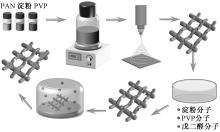
Method Porous and crosslinked electrospun nanofibers were prepared using polyacrylonitrile, high amylose starch, and polyvinylpyrrolidone (PVP) as precursors followed by water dissolution and glutaraldehyde cross-linking treatment. PVP dissolves in water to form a porous structure, while glutaraldehyde crosslinks with starch to form a bonding structure within fibers. During electrospinning, the voltage, distance, extrusion speed, and rotary speed were set as 15 kV, 15 cm, 1.0 mL/h, and 250 r/min, respectively. The electrospun nanofibers were immersed in deionized water for 5 h under room temperature. Then, the treated nanofibers were placed in a vacuum reactor and crosslinked in glutaraldehyde vapor for 5 h to obtain a porous and crosslinked nanofiber membrane.

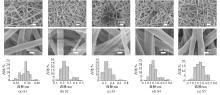
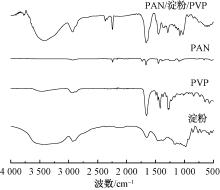
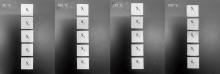
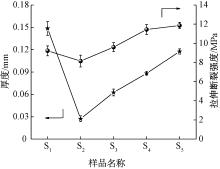
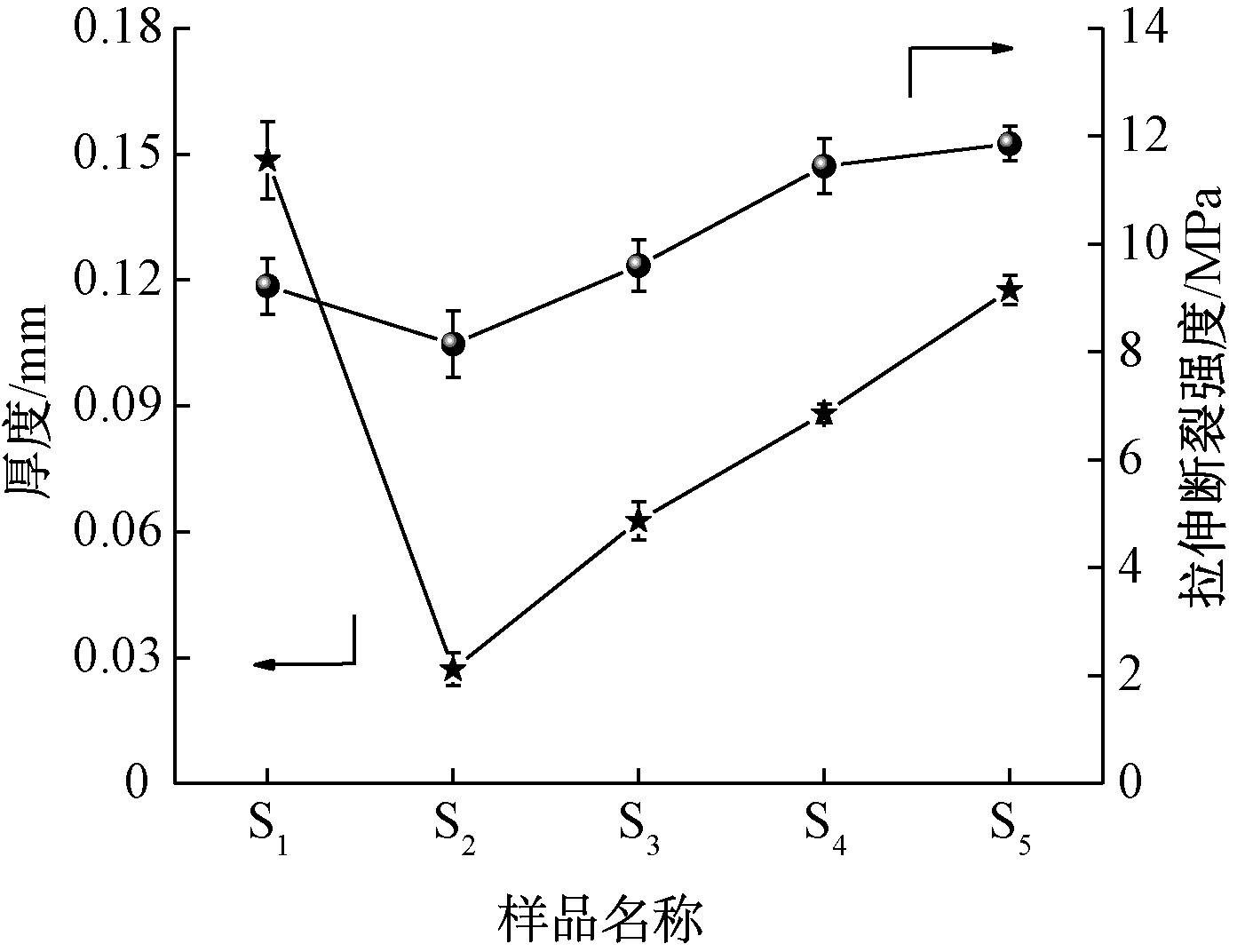
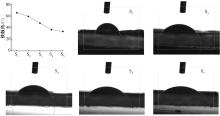
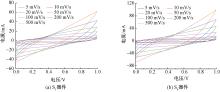
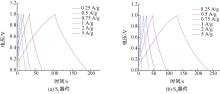
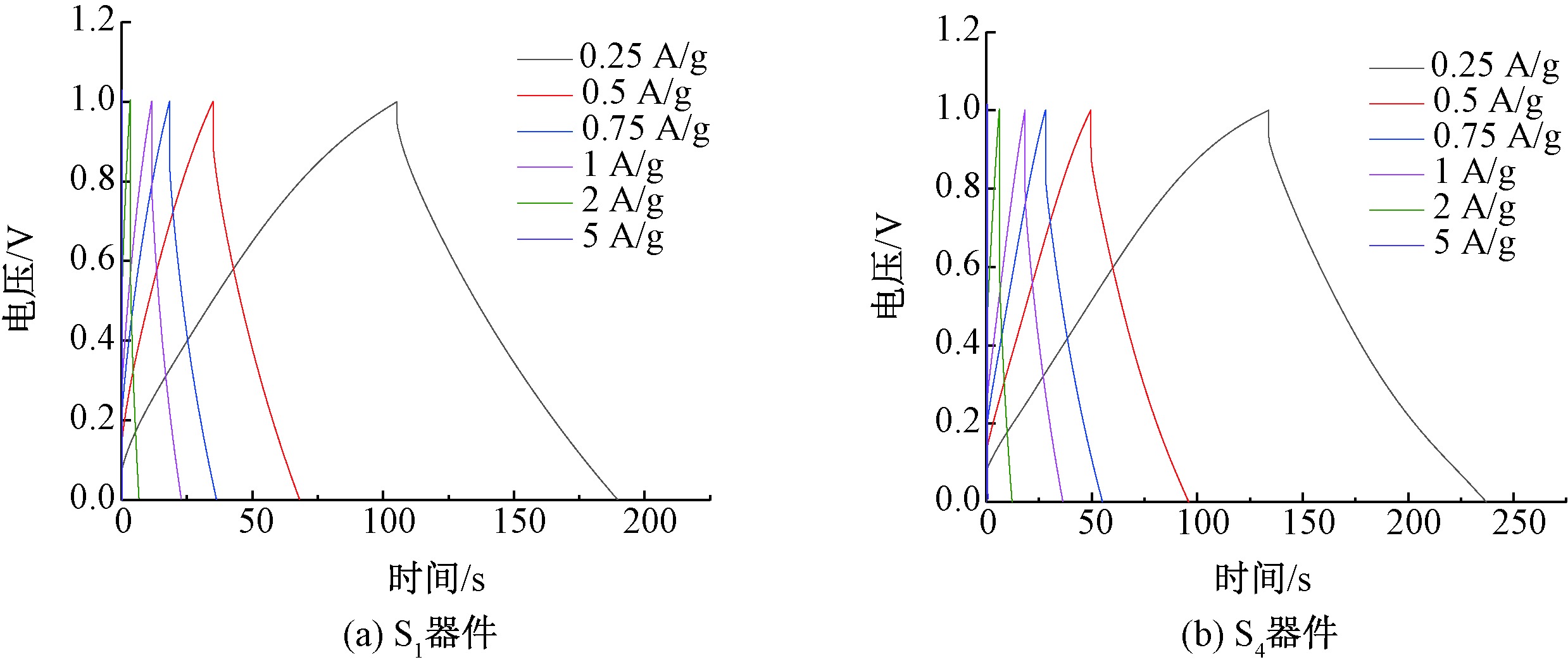
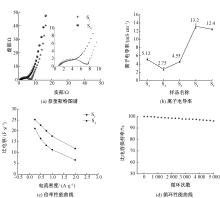
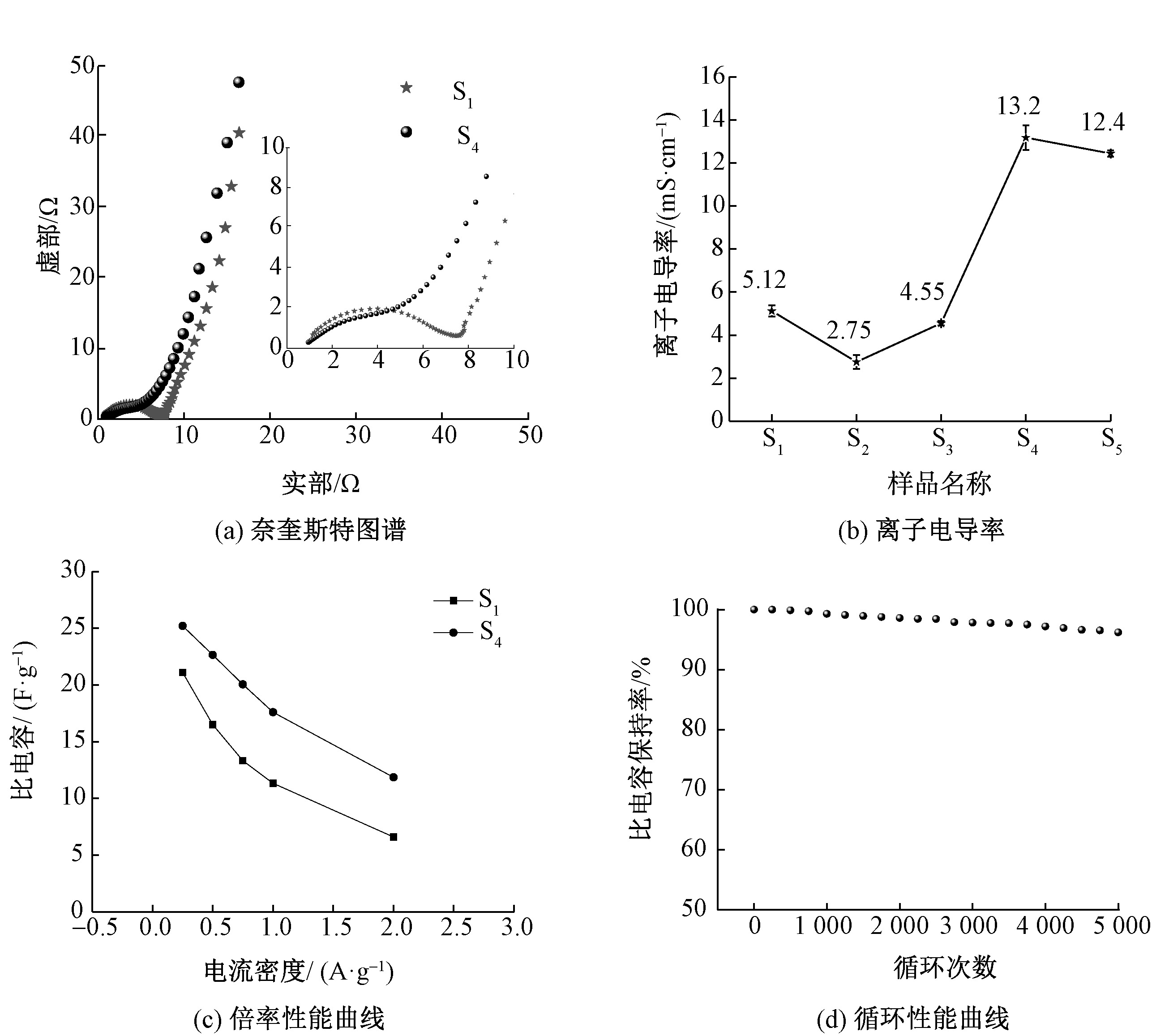
Results It was found that the addition of starch and glutaraldehyde crosslinking had a great effect on the morphologies of nanofibers. After adding a certain amount of starch and crosslinking with glutaraldehyde, obvious bonding points appeared at the fiber intersections, with the increase of starch content, the average fiber diameter increased from 290 nm to 310 nm. For the blended nanofiber membrane, all characteristic absorption peaks of the three polymers PAN, starch, and PVP were observed on its FT-IR curve. The above results prove the successful preparation of ternary polymer nanofibers. As the temperature increased, none of the five samples showed shrinkage, and the original square size was maintained even when the temperature was raised to 200 ℃. The results demonstrate that the prepared nanofiber membrane exhibits excellent heat stability, providing a guarantee for the subsequent application of supercapacitor separators. After adding starch and performing vacuum glutaraldehyde cross-linking treatment on the fiber membrane, bonding points were formed between the fibers to reinforce the fiber network, resulting in an increase in the tensile strength and thickness of the fiber membrane. With the addition of PVP and starch, the contact angle of the fiber membrane decreased, further improving the hydrophilicity of the fiber membrane. With an increase in starch content, the hydrophilic properties of the fiber membrane were improved, resulting in more complete dissolution of PVP. However, excessive starch content and cross-linking led to a further decrease in porosity. The supercapacitor device was prepared using nanofiber membrane as separator and tested under cyclic voltammetry and galvanostatic charge-discharge in a two-electrode system. Under a current density of 0.25 A/g, the specific capacitance of device was 25.72 F/g, retaining 47.1% at a high current density of 2 A/g. In addition, after 5 000 charge and discharge cycles, the capacitance retention rate was as high as 96.22%, showing excellent cycle durability.

Conclusion After adding PVP, the fiber membrane thickness decreased to 0.03 mm, resulting in a decrease in tensile strength to 8.15 MPa. Addition of starch improved, the effect of PVP on the tensile strength of the fiber membrane, and with the increase of starch content, the contact angle of the fiber membrane decreased, indicating improvement the hydrophilic performance. By sequentially dissolving in water and crosslinking with glutaraldehyde, the thickness of the fiber membrane was decreased from 0.15 mm to 0.12 mm, while its tensile strength increased from 9.22 MPa to 11.86 MPa. When m(PAN)∶m(starch)∶m(PVP)=5∶4∶1 (mass ratio), the fiber membrane had a high porosity (88.02%). The assembled supercapacitor had a specific capacitance of 25.72 F/g at a current density of 0.25 A/g, an energy density of 3.57 W·h/kg at a power density of 124.45 W/kg, and a specific capacitance retention rate of 96.22% after 5 000 charge discharge cycles, demonstrating potential applications in supercapacitor separator materials.

Key words: electrospinning, nanofiber, supercapacitor, separator, glutaraldehyde cross-linking, polyacrylonitrile, starch, polyvinylpyrrolidone

中图分类号: 

  • TB324

图1

多孔交联PAN纤维膜制备流程图"

图2

纳米纤维膜的SEM照片及纤维直径分布图"

图3

PAN/淀粉/PVP共混纳米纤维膜、PAN、PVP和淀粉的傅里叶红外光谱图"

图4

S1、S2、S3、S4和S5在不同温度下的宏观状态(样品尺寸为1.5 cm×1.5 cm)"

图5

纤维膜厚度与力学性能分析"

图6

不同纤维膜(S1, S2, S3, S4, S5)的接触角及接触角图像"

图7

S1和S4器件在不同扫描速率下的CV曲线"

图8

S1和S4器件在不同电流密度下的GCD曲线"

图9

奈奎斯特图谱、离子电导率、倍率性能曲线和循环性能曲线"

[1] 李琴, 李兴兴, 解芳芳, 等. 静电纺丝和炭化法制备纳米纤维素储能材料研究进展[J]. 纺织学报, 2022, 43(5): 178-184.
LI Qin, LI Xingxing, XIE Fangfang, et al. Research progress in preparation of nanocelluloses energy storage materials by electrospinning and carbonization[J]. Journal of Textile Research, 2022, 43(5): 178-184.
[2] 王赫, 王洪杰, 赵紫奕, 等. 多孔与连通结构碳纳米纤维电极的设计及其电化学性能[J]. 纺织学报, 2023, 44 (6): 41-49.
WANG He, WANG Hongjie, ZHAO Ziyi, et al. Design and electrochemical properties of porous and connected carbon nanofiber electrodes[J]. Journal of Textile Research, 2023, 44(6): 41-49.
[3] WU Hongqin, MU Jiahui, XU Yanglei, et al. Heat-resistant, robust, and hydrophilic separators based on regenerated cellulose for advanced supercapacitors[J]. Small, 2023. DOI: 10.1002/smll.202205152.
[4] HUANG Haocun, WU Hongqin, ZHANG Xiao, et al. Enhanced ion transport in ultrathin regenerated cellulose supercapacitor separators[J]. Journal of Materials Chemistry C, 2024, 12(25): 9189-9199.
[5] JIN Jialun, GENG Xiangshun, CHEN Qiang, et al. A better Zn-ion storage device: recent progress for Zn-ion hybrid supercapacitors[J]. Nano-Micro Letters, 2022. DOI: 10.1007/s40820-022-00793-w.
[6] KIM Kwang M, LEE Young G, SHIN Dong O, et al. Supercapacitive properties of activated carbon electrode in potassium-polyacrylate hydrogel electrolytes[J]. Journal of Applied Electrochemistry, 2016, 46(54): 567-573.
[7] WANG He, WANG Hongjie, SUN Ran, et al. Preparation of hierarchical micro-meso porous carbon and carbon nanofiber from polyacrylonitrile/polysulfone polymer via one-step carbonization for supercapacitor electrodes[J]. Electrochimica Acta, 2023. DOI: 10.1016/j.electacta.2023.141827.
[8] XU Daman, HENG Yingqi, QIN Xiang, et al. Membrane-based symmetric supercapacitors composed of cellulose solution-derived polydopamine-modified separators and polypyrrole/graphene-doped polydopamine-modified electrodes[J]. Journal of Energy Storage, 2022. DOI: 10.1016/j.est.2022.104640.
[9] YAN Bing, ZHENG Jiaojiao, FENG Li, et al. All-cellulose-based high-rate performance solid-state supercapacitor enabled by nitrogen doping and porosity tuning[J]. Diamond and Related Materials, 2022. DOI: 10.1016/j.diamond.2022.109238.
[10] WANG He, WANG Hongjie, RUAN Fangtao, et al. High-porosity carbon nanofibers prepared from polyacrylonitrile blended with amylose starch for application in supercapacitors[J]. Materials Chemistry and Physics, 2023. DOI: 10.1016/j.matchemphys.2022.126896.
[11] HUSSAIN Arshad, MOHAMED Mostafa M, AIJAZ Muhammad O, et al. Electrospun PEI/PAN membrane for advanced Zn ion hybrid supercapacitors[J]. Journal of Energy Storage, 2024. DOI: 10.1016/j.est.2024.110974.
[12] TANG Liping, WU Yankang, HE Dan, et al. Electrospun PAN membranes toughened and strengthened by TPU/SHNT for high-performance lithium-ion batteries[J]. Journal of Electroanalytical Chemistry, 2023. DOI: 10.1016/j.jelechem.2023.117181.
[13] FONSECA Laura M, CRUZ Elder P d, CRIZEL Rosane L, et al. New advances of electrospun starch fibers, encapsulation, and food applications: a review[J]. Trends in Food Science & Technology, 2024. DOI: 10.1016/j.tifs.2024.104467.
[14] ZOU Yiyuan, YUAN Chao, CUI Bo, et al. Formation of high amylose corn starch/konjac glucomannan composite film with improved mechanical and barrier properties[J]. Carbohydrate Polymers, 2021. DOI: 10.1016/j.carbpol.2020.117039.
[15] WANG Wenyu, JIN Xin, ZHU Yonghao, et al. Effect of vapor-phase glutaraldehyde crosslinking on electrospun starch fibers[J]. Carbohydrate Polymers, 2016, 140: 356-361.
doi: 10.1016/j.carbpol.2015.12.061 pmid: 26876862
[16] WEI Haonan, LIU Xinyue, WANG Chenchen, et al. Characteristics of corn starch/polyvinyl alcohol composite film with improved flexibility and UV shielding ability by novel approach combining chemical cross-linking and physical blending[J]. Food Chemistry, 2024. DOI: 10.1016/j.foodchem.2024.140051.
[1] 刘健, 潘山山, 刘泳汝, 尹兆松, 任康佳, 赵庆浩. 多尖端锯齿状静电纺丝喷头的设计及优化[J]. 纺织学报, 2025, 46(08): 217-225.
[2] 马晓远, 包伟. 防水透湿纳米纤维复合织物研究现状及发展趋势[J]. 纺织学报, 2025, 46(08): 254-262.
[3] 张利平, 郭羽晴, 丁博, 孙洁. 芳纶纳米纤维/热塑性聚氨酯复合微孔膜与可呼吸覆膜织物制备及其性能[J]. 纺织学报, 2025, 46(07): 19-27.
[4] 徐丽亚, 汪瑱, 杨鸿杰, 汪蔚. 氧化锌-银/生物基聚酰胺56纳米纤维膜的制备及其抗菌性能[J]. 纺织学报, 2025, 46(07): 37-45.
[5] 林玉婷, 许仕林, 胡毅. 多色彩热塑性聚氨酯/聚丙烯腈纳米纤维纱线的制备及其性能[J]. 纺织学报, 2025, 46(07): 78-86.
[6] 贾陈诺瓦, 张勇, 朱威岩, 刘赛, 唐宁. 芯纱种类对聚丙烯腈纳米纤维导电包芯纱性能的影响[J]. 纺织学报, 2025, 46(07): 87-95.
[7] 陈亚娟, 郭瀚宇, 张陈恬, 李欣欣, 张雪萍. 聚乙烯醇/海藻酸钠/锦纶66复合水凝胶包芯纱的制备及其吸湿性能[J]. 纺织学报, 2025, 46(06): 103-110.
[8] 丁圆, 赵云霞, 靳高岭, 杨涛, 徐静, 柯福佑, 陈烨. 阻燃聚丙烯腈长丝织物的层层自组装法制备及其性能[J]. 纺织学报, 2025, 46(06): 168-177.
[9] 余厚咏, 黄程玲, 陈毅, 高智英. 天然纤维素的多维结构演变及其功能材料研究进展[J]. 纺织学报, 2025, 46(06): 45-55.
[10] 丁振华, 袁开宇, 周敬, 叶冬冬. 面向渗透能收集的纤维素纳米流体系统研究进展[J]. 纺织学报, 2025, 46(06): 56-62.
[11] 王春翔, 李姣, 解开放, 薛宏坤, 徐广标. 天麻多糖/聚乙烯醇静电纺抗菌保鲜膜的制备与性能[J]. 纺织学报, 2025, 46(06): 73-79.
[12] 张嘉诚, 于影, 左雨欣, 顾志清, 汤腾飞, 陈洪立, 吕勇. 聚丙烯腈/二硫化钼纤维薄膜的挠曲电效应与扭转传感特性[J]. 纺织学报, 2025, 46(06): 80-87.
[13] 邱月, 杨询, 李昊, 李海东, 吴国忠, 张彩丹. 聚琥珀酰亚胺纳米纤维膜改性及其染料吸附性能[J]. 纺织学报, 2025, 46(06): 88-95.
[14] 孙洁, 郭羽晴, 屈芸, 张利平. 芳纶纳米纤维/MXene同轴纤维电极制备及其性能[J]. 纺织学报, 2025, 46(05): 125-134.
[15] 王薇, 高建南, 裴笑涵, 陆鑫, 孙银银, 吴建兵. 纤维素/甲基三甲氧基硅烷气凝胶的制备及其油水分离效能[J]. 纺织学报, 2025, 46(05): 135-142.
Viewed
Full text


Abstract

Cited

  Shared   
  Discussed   
No Suggested Reading articles found!