纺织学报 ›› 2025, Vol. 46 ›› Issue (09): 143-153.doi: 10.13475/j.fzxb.20240805801
张欣1, 周康辉1, 姜茜1,2, 吴利伟1,2( )
)
ZHANG Xin1, ZHOU Kanghui1, JIANG Qian1,2, WU Liwei1,2()
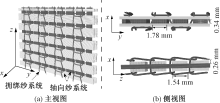
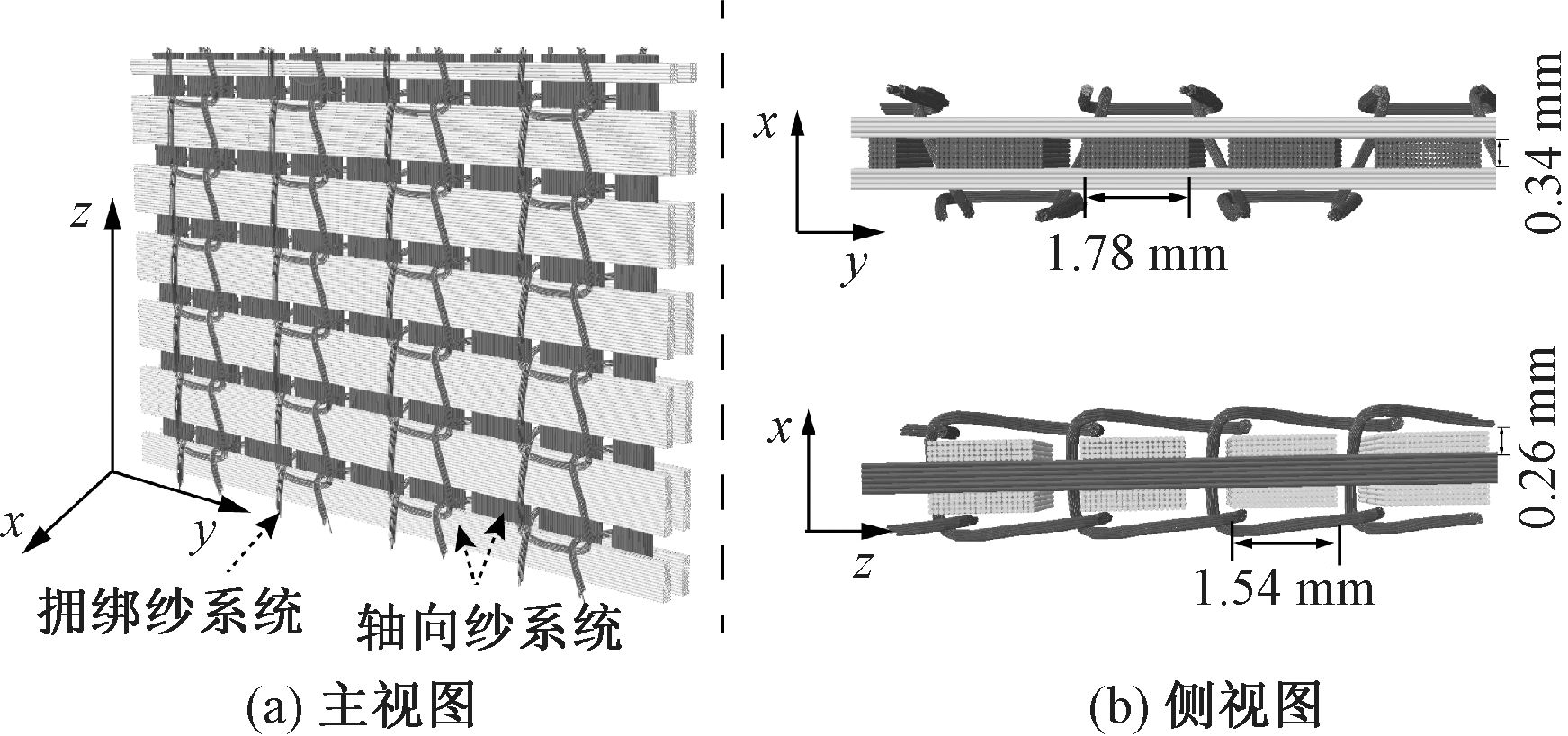
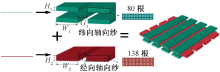
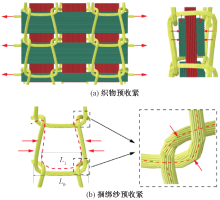
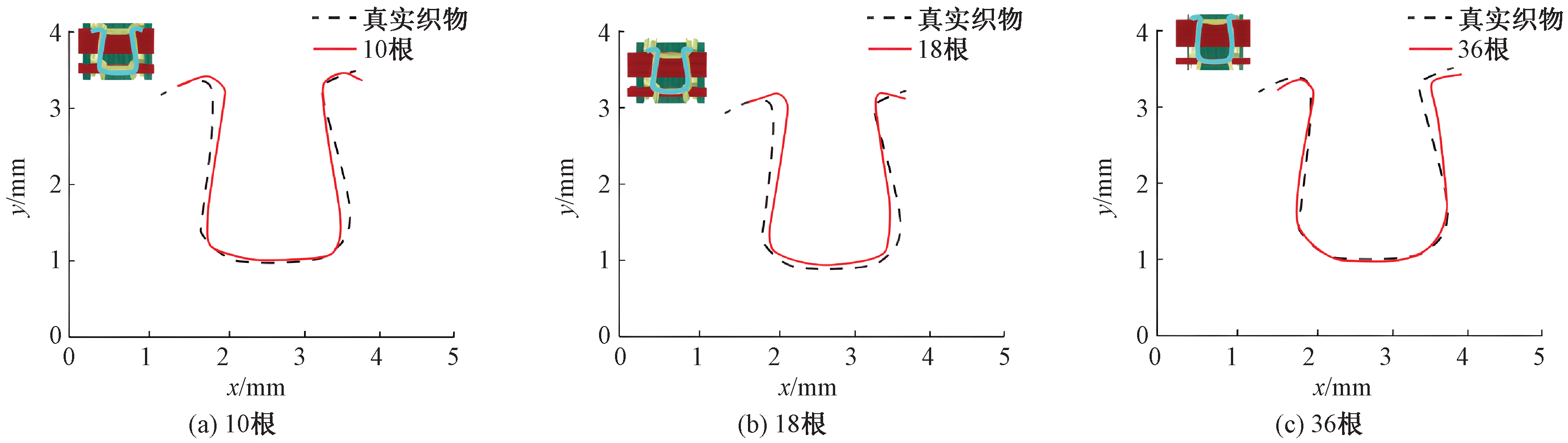
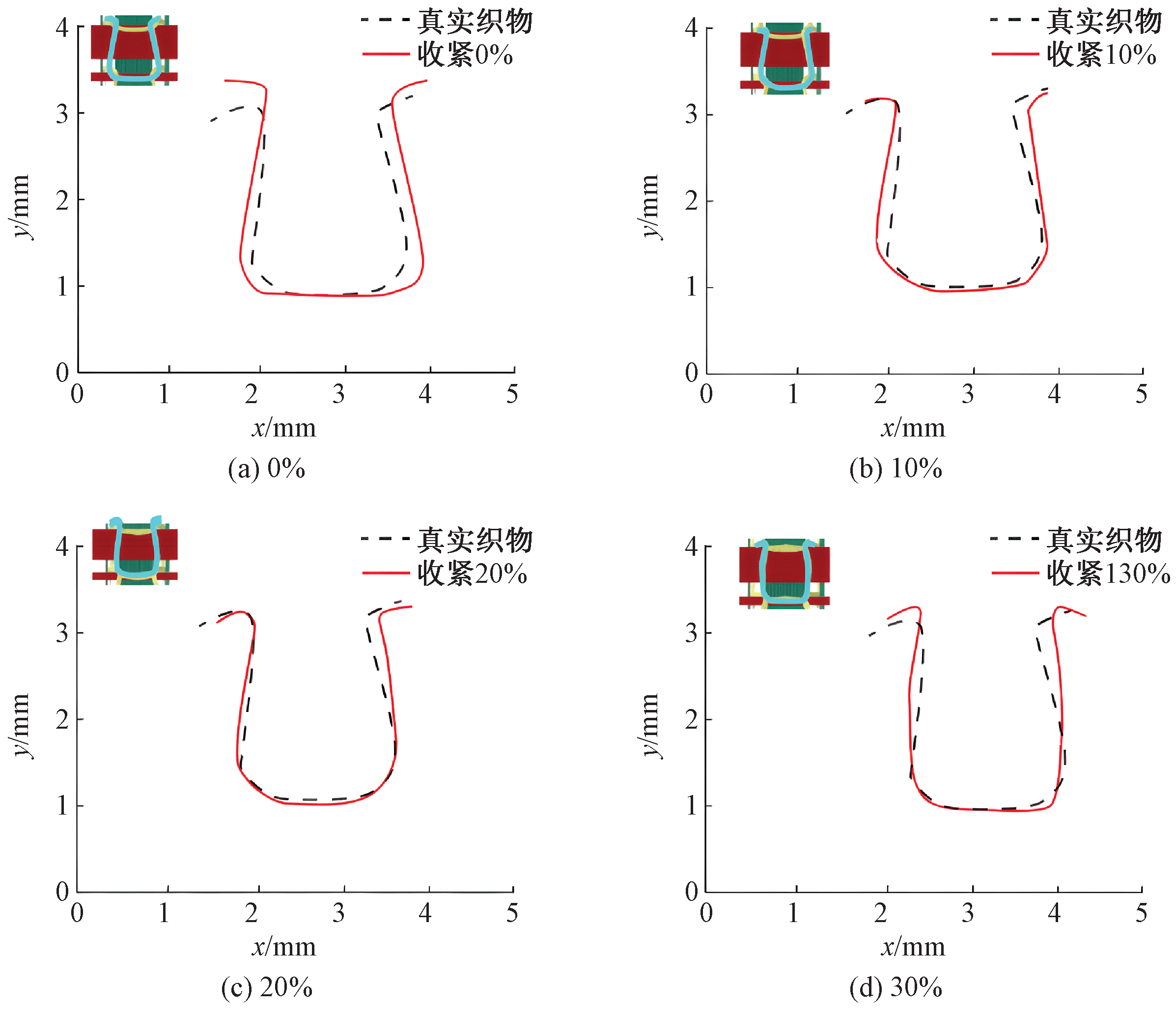
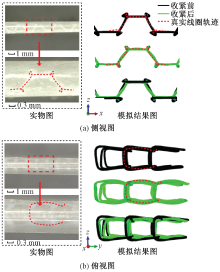
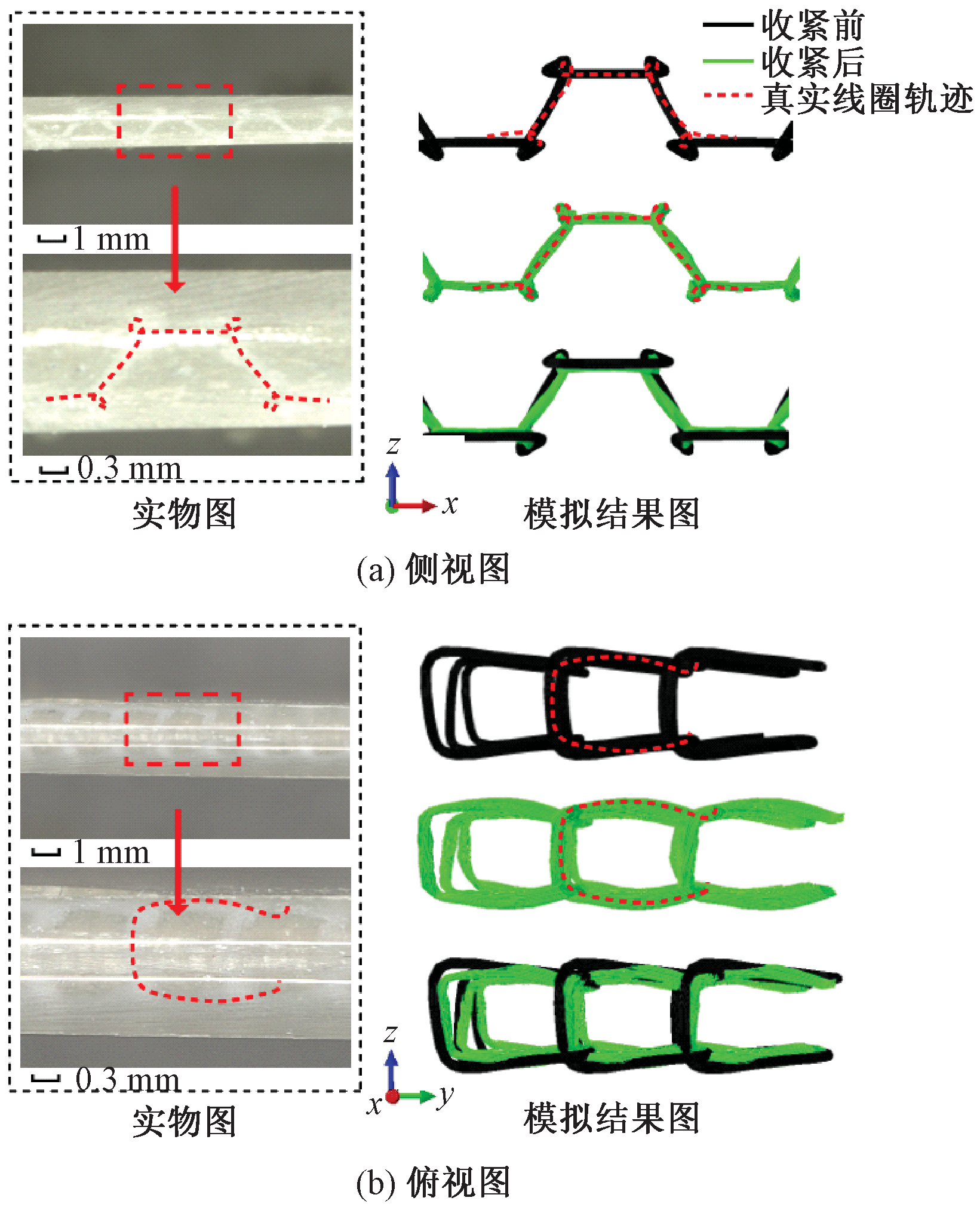
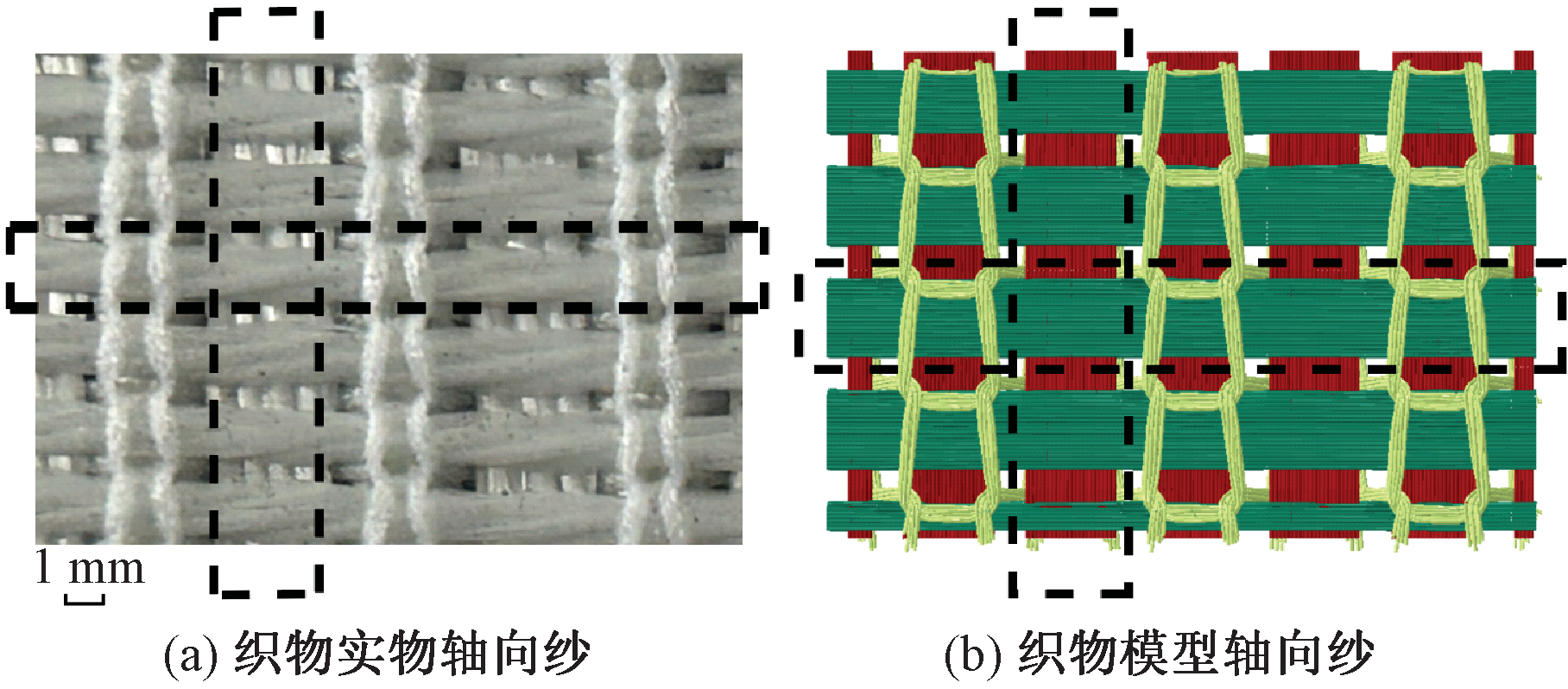
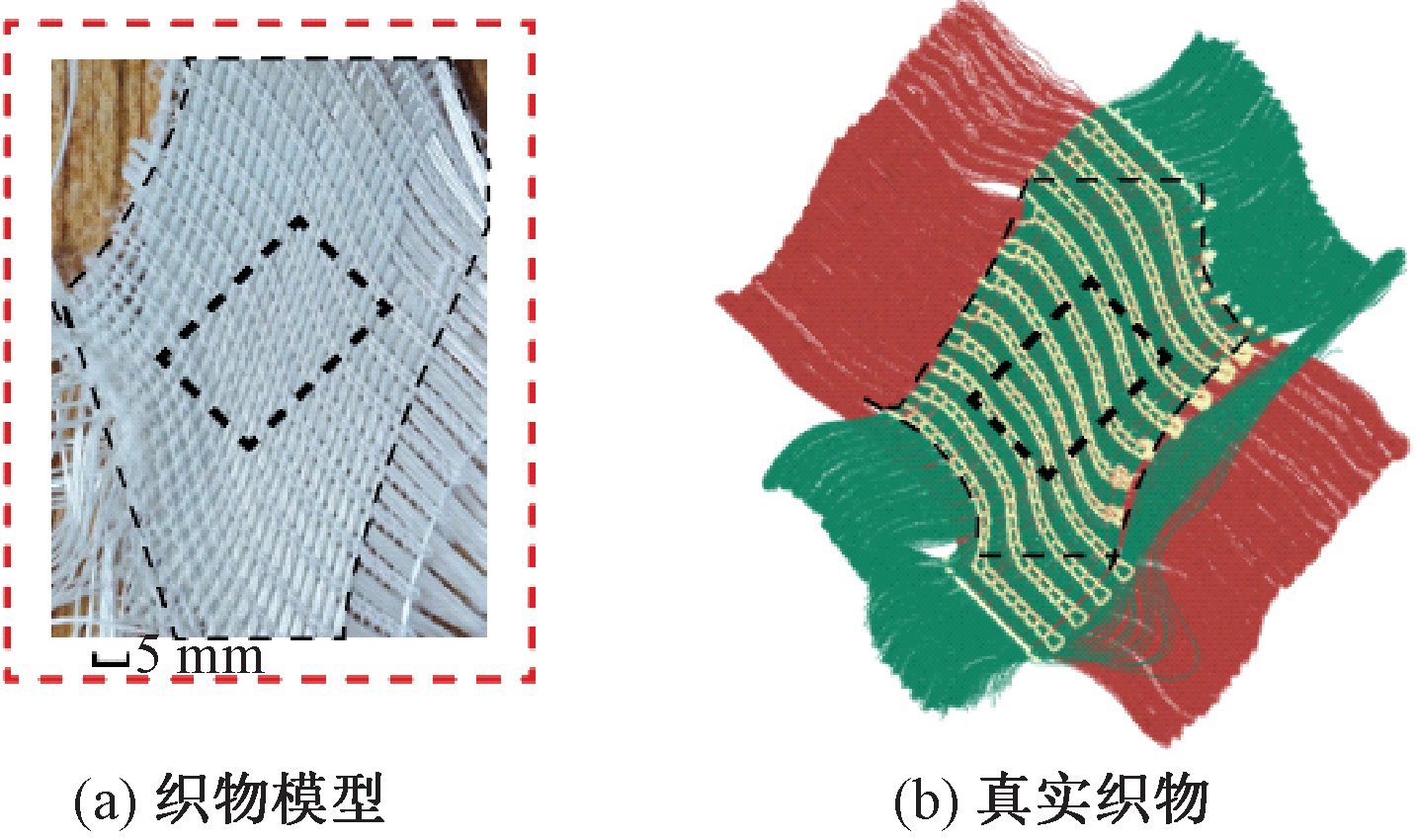
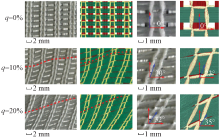
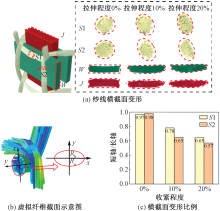
摘要: 为更准确地模拟纬编双轴向针织物的面内变形行为,参考纬编双轴向针织物中纱线的空间位置,基于虚拟纤维的概念,利用三维建模软件构建纬编双轴向针织物的织物模型。通过收紧程序对织物模型进行预收紧处理,并与真实织物形态对比得到高精度的织物模型。然后,利用有限元方法研究其面内变形性能和力学行为。将模型的变形行为与真实织物的形貌、线圈倾斜角度及纱线截面变化进行对比分析。结果表明:36 根虚拟纤维组成的捆绑纱织物模型在20%的收紧程度下,线圈轨迹与真实织物相关性系数接近 0.9,能有效反映真实织物形貌;偏轴拉伸模拟结果表明,织物模型与真实织物不同阶段单个线圈倾斜角度相差不超过4°;另外利用虚拟纤维构建的织物模型可以反映纱线的截面变形情况。以此验证了该模型可以有效模拟纬编双轴向针织物的面内变形行为。
中图分类号:
| [1] | STEPAN V Lomov, MAARTEN Moesen, RUDY Stalmans, et al. Finite element modelling of SMA textiles: superelastic behaviour[J]. The Journal of the Textile Institute, Part 3. Technologies for a New Century, 2011, 102(3):232-247. |
| [2] |
陈利, 焦伟, 王心淼, 等. 三维机织复合材料力学性能研究进展[J]. 材料工程, 2020, 48(8):62-72.
doi: 10.11868/j.issn.1001-4381.2020.000210 |
|
CHEN Li, JIAO Wei, WANG Xinmiao, et al. Research progress on mechanical properties of three-dimensional woven composites[J]. Journal of Materials Engineering. 2020, 48(8):62-72.
doi: 10.11868/j.issn.1001-4381.2020.000210 |
|
| [3] | LIU D, CHRISTE D, SHAKIBAJAHROMI B, et al. Onthe role of material architecture in the mechanical behavior of knitted textiles[J]. International Journal of Solids & Structures, 2017, 109:101-111. |
| [4] |
YANG Z, JIAO Y, XIE J, et al. Modeling of 3D woven fibre structures by numerical simulation of the weaving process[J]. Composites Science and Technology, 2021, 206(8):108679.
doi: 10.1016/j.compscitech.2021.108679 |
| [5] | 常辰玉, 王雨薇, 原旭阳, 等. 基于交织点改进弹簧-质点模型的纬编针织物动态变形模拟[J]. 纺织学报, 2024, 45(1):99-105. |
| CHANG Chenyu, WANG Yuwei, YUAN Xuyang, et al. Dynamic deformation simulation of weft-knitted fabrics based onimproved spring-mass model at interlacing points[J]. Journal of Textile Research, 2024, 45(1):99-105. | |
| [6] | 曹竞哲, 陶晨, 白琳琳. 基于变形网格的织物悬垂形态模拟[J]. 纺织学报, 2024, 45(6):59-67. |
| CAO Jingzhe, TAO Chen, BAI Linlin. Simulation of fabric drapemorphology based on deformed grids[J]. Journal of Textile Research, 2024, 45(6):59-67. | |
| [7] | 王青弘, 王迎, 郝新敏, 等. 静电纺聚酰胺纳米纤维复合织物制备工艺优化[J]. 纺织学报, 2023, 44(6):144-151. |
| WANG Qinghong, WANG Ying, HAO Xinmin, et al. Optimization of preparation process of electrostatically spun polyamide nanofiber composite fabric[J]. Journal of Textile Research, 2023, 44(6):144-151. | |
| [8] | 熊莹, 缪旭红, 蒋高明, 等. 经编起绒织物的计算机仿真[J]. 纺织学报, 2015, 36(7):147-151. |
| XIONG Ying, MIAO Xuhong, IANG Gaoming, et al. Computer simulation of warp-knitted pile fabric[J]. Journal of Textile Research, 2015, 36(7):147-151. | |
| [9] | 杨文权, 蒋金华, 陈南梁. 玻璃纤维织物在剪切变形作用下的渗透率[J]. 纺织学报, 2018, 39(8):58-62. |
| YANG Wenquan, JIANG Jinhua, CHEN Nanliang. Permeability of glass fiber fabrics under shear deformartion[J]. Journal of Textile Research, 2018, 39(8):58-62. | |
| [10] |
WANG Y, SUN X. Digital-element simulation of textile processes[J]. Composites Science and Technology, 2001, 61(2):311-319.
doi: 10.1016/S0266-3538(00)00223-2 |
| [11] |
JUNBO X, CHEN X, ZHANG Y, et al. Experimental and numerical investigation of the needling processfor quartz fibers[J]. Composites Science and Technology, 2018, 165: 115-123.
doi: 10.1016/j.compscitech.2018.06.009 |
| [12] |
LIU C, XIE J, SUN Y, et al. Micro-scale modeling of textile composites based on the virtual fiber embedded models[J]. Composite Structures, 2024, 230:111552-111552.
doi: 10.1016/j.compstruct.2019.111552 |
| [13] | 朱琬清, 谢军波, 吴兰芳, 等. 3D机织预制体准纤维尺度建模方法[J]. 复合材料学报, 2024, 41(3):1528-1538. |
| ZHU W, XIE J, WU L, et al. Quasi-fiber scale modeling method of 3D woven preforms[J]. Acta Materiae Compositae Sinica. 2024, 41(3):1528-1538. | |
| [14] |
XIE J, CHEN X, ZHANG Y, et al. Experimental and numerical investigation of the needling process for quartz fibers[J]. Composites Science and Technology, 2018, 165:115-123.
doi: 10.1016/j.compscitech.2018.06.009 |
| [15] |
DURVILLE D. Simulation of the mechanical behaviour of woven fabrics at the scale of fibers[J]. International Journal of Material Forming, 2010, 3(2):1241-1251.
doi: 10.1007/s12289-009-0674-7 |
| [16] |
DAELEMANS L, TOMME B, CAGLARr B, et al. Kinematic and mechanical response of dry woven fabrics in through-thickness compression: virtual fiber modeling with mesh overlay technique and experimental valid-ation[J]. Composites Science and Technology, 2021, 207:108706.
doi: 10.1016/j.compscitech.2021.108706 |
| [17] |
MAHADIK Y, HALLETT S R. Finite element modelling of tow geometry in 3D woven fabrics[J]. Composites Part A: Applied Science and Manufacturing, 2010, 41(9):1192-1200.
doi: 10.1016/j.compositesa.2010.05.001 |
| [18] |
左祺, 吴华伟, 王春红, 等. 纱线结构对苎麻短纤纱复合材料拉伸性能的影响[J]. 纺织学报, 2023, 44(10):81-89.
doi: 10.13475/j.fzxb.20220804801 |
|
ZUO Qi, WU Huawei, WANG Chunhong, et al. Influence of yarn structure on the tensile properties of ramie staple yarn composites[J]. Journal of Textile Research, 2023, 44(10):81-89.
doi: 10.13475/j.fzxb.20220804801 |
|
| [19] |
WU L, ZHAO F, XIE J, et al. The deformation behaviors and mechanism of weft knitted fabric based on micro-scale virtual fiber model[J]. International Journal of Mechanical Sciences, 2020, 187(19):105929.
doi: 10.1016/j.ijmecsci.2020.105929 |
| [20] | 朱生群, 袁嫣红, 李跃珍. 基于TexGen的筒状纬编针织物的三维仿真[J]. 现代纺织技术, 2019, 27(6):57-61. |
| ZHU Shengqun, YUAN Yanhong, LI Yuezhen. Three-dimensional simulation of cylindrical weft-knitted fabrics based on TexGen[J]. Modern Textile Technology, 2019, 27(6):57-61. | |
| [21] | 吴周镜, 宋晖, 李柏岩, 等. 纬编针织物在计算机中的三维仿真[J]. 东华大学学报(自然科学版), 2011, 37(2):210-214. |
| WU Zhoujing, SONG Hui, LI Boyan, et al. 3D simulation of weft knitted fabrics in computers[J]. Journal of Donghua University (Natural Science Edition), 2011, 37(2): 210-241. | |
| [22] |
DINH T D, WEEGER O, KAIJIMA S, et al. Prediction of mechanical properties of knitted fabrics under tensile and shear loading: mesoscale analysis using representative unit cells and its validation[J]. Composites Part B: Engineering, 2018, 148:81-92.
doi: 10.1016/j.compositesb.2018.04.052 |
| [23] | VASSILIADIS S G, KALLIVRETAKI A E, PROVATIDIS C G. Mechanical simulation of the plain weft knitted fabrics[J]. International Journal of Clothing Science& Technology, 2007, 19(2):109-130. |
| [24] |
BAI R, COLLMARS J, NAOUAR N, et al. A specific 3D shell approach for textile composite reinforcementsunder large deformation[J]. Composites Part A: Applied Science and Manufacturing, 2020, 139:106135.
doi: 10.1016/j.compositesa.2020.106135 |
| [25] |
XU J, ZHANG Y, ZHANG Y, et al. Meso-FE modelling for homogenization of the nonlinear orthotropic behavior of PTFE-coated fabric based on virtual fiber method[J]. Composite Structures, 2024, 338(15): 118093.
doi: 10.1016/j.compstruct.2024.118093 |
| [26] | WANG J, FANG J, WANG J, et al. Quasi-fiber scale modeling of 3D needled composites based on the virtuafiber embedded method[J]. Materials & Design, 2024, 243:113085. |
| [27] | WEI Q, ZHANG D. A textile architecture-based discrete modeling approach to simulating fabric draping processes[J]. Journal of Industrial Textiles, 2023, 243:113085. |
| [28] |
KUANG Y, LI J, WANG W, et al. Off-axis compression behavior and failure mechanisms of needled carbon/quartz fiber reinforced phenolic resin composite based on acoustic emission[J]. Polymer Composites, 2024, 45(9):8147-8162.
doi: 10.1002/pc.v45.9 |
| [29] |
YAO T, CHEN X, LI J, et al. Experimental and numerical study of interlaminar shear property and failure mechanism of none-felt needled composites[J]. Composite Structures, 2022, 290:115507.
doi: 10.1016/j.compstruct.2022.115507 |
| [1] | 张定眺, 王倩茹, 邱芳, 李凤艳. 改进转杯纺输纤通道气流场及其纤维伸直形态的模拟[J]. 纺织学报, 2025, 46(02): 100-105. |
| [2] | 李玲, 史倩倩, 田顺, 汪军. 输纤通道对称性对双喂入双分梳转杯纺气流场以及纱线特性的影响[J]. 纺织学报, 2025, 46(02): 69-77. |
| [3] | 宋凯莉, 郭明瑞, 高卫东. 装有气流导向装置的网格圈式集聚纺数值模拟与实验验证[J]. 纺织学报, 2025, 46(01): 34-41. |
| [4] | 李慧敏, 刘淑强, 杜琳琳, 张曼, 吴改红. 玄武岩/聚酰亚胺三维间隔机织物的参数化建模及高温环境传热数值模拟[J]. 纺织学报, 2025, 46(01): 87-94. |
| [5] | 王珏, 晏石林, 李永静, 何龙飞, 谢翔宇, 孟晓旭. 剪切变形对各向异性织物主渗透率及浸润特性的影响[J]. 纺织学报, 2024, 45(12): 109-117. |
| [6] | 奚传智, 王家源, 王泳智, 陈革, 裴泽光. 低能耗喷气涡流纺喷嘴气流场数值模拟与纺纱实验[J]. 纺织学报, 2024, 45(12): 206-214. |
| [7] | 张定眺, 王倩茹, 邱芳, 李凤艳. 转杯纺分梳排杂区气流场的多维数值模拟对比[J]. 纺织学报, 2024, 45(10): 64-71. |
| [8] | 田少萌, 张丽, 石浩轩, 徐阳. 基于ANSYS Workbench的高密机织滤料动态形变模拟与分析[J]. 纺织学报, 2024, 45(09): 63-69. |
| [9] | 张琦, 左露娇, 屠佳妮, 聂美婷. 经编贾卡鞋面材料透气性的数值模拟[J]. 纺织学报, 2024, 45(09): 78-83. |
| [10] | 岳旭, 王蕾, 孙丰鑫, 潘如如, 高卫东. 基于ABAQUS的平纹织物同面对向弯曲有限元模拟[J]. 纺织学报, 2024, 45(08): 165-172. |
| [11] | 谢红, 张林蔚, 沈云萍. 基于人体臂部的连续动态服装压力预测模型及准确性表征方法[J]. 纺织学报, 2024, 45(07): 150-158. |
| [12] | 刘倩倩, 尤健明, 王琰, 孙成磊, 祝国成. 纤维弯曲对其集合体过滤特性影响的稳态数值分析[J]. 纺织学报, 2024, 45(07): 31-39. |
| [13] | 韩烨, 田苗, 蒋青昀, 苏云, 李俊. 织物-空气层-皮肤三维结构建模及其传热模拟[J]. 纺织学报, 2024, 45(02): 198-205. |
| [14] | 王青, 梁高翔, 殷俊清, 盛晓超, 吕绪山, 党帅. 新型气流牵伸通道结构模型的构建与性能分析[J]. 纺织学报, 2023, 44(11): 52-60. |
| [15] | 杨孟想, 刘让同, 李亮, 刘淑萍, 李淑静. 机织物的热传递与强热条件下热防护性能[J]. 纺织学报, 2023, 44(11): 74-82. |
|
||
 京公网安备11010502044800号