纺织学报 ›› 2025, Vol. 46 ›› Issue (09): 197-204.doi: 10.13475/j.fzxb.20250200101
左卓帆1,2,3, 卢凯亮1,2,3, 李倩雯1,2,3, 张维1,2,3( )
)
ZUO Zhuofan1,2,3, LU Kailiang1,2,3, LI Qianwen1,2,3, ZHANG Wei1,2,3()
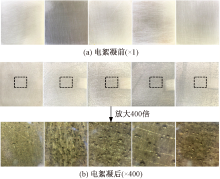
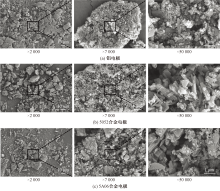
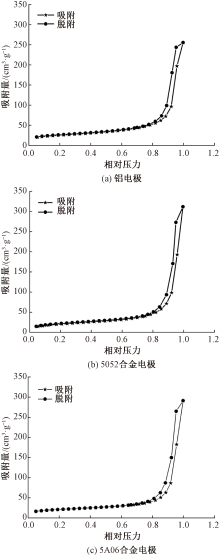
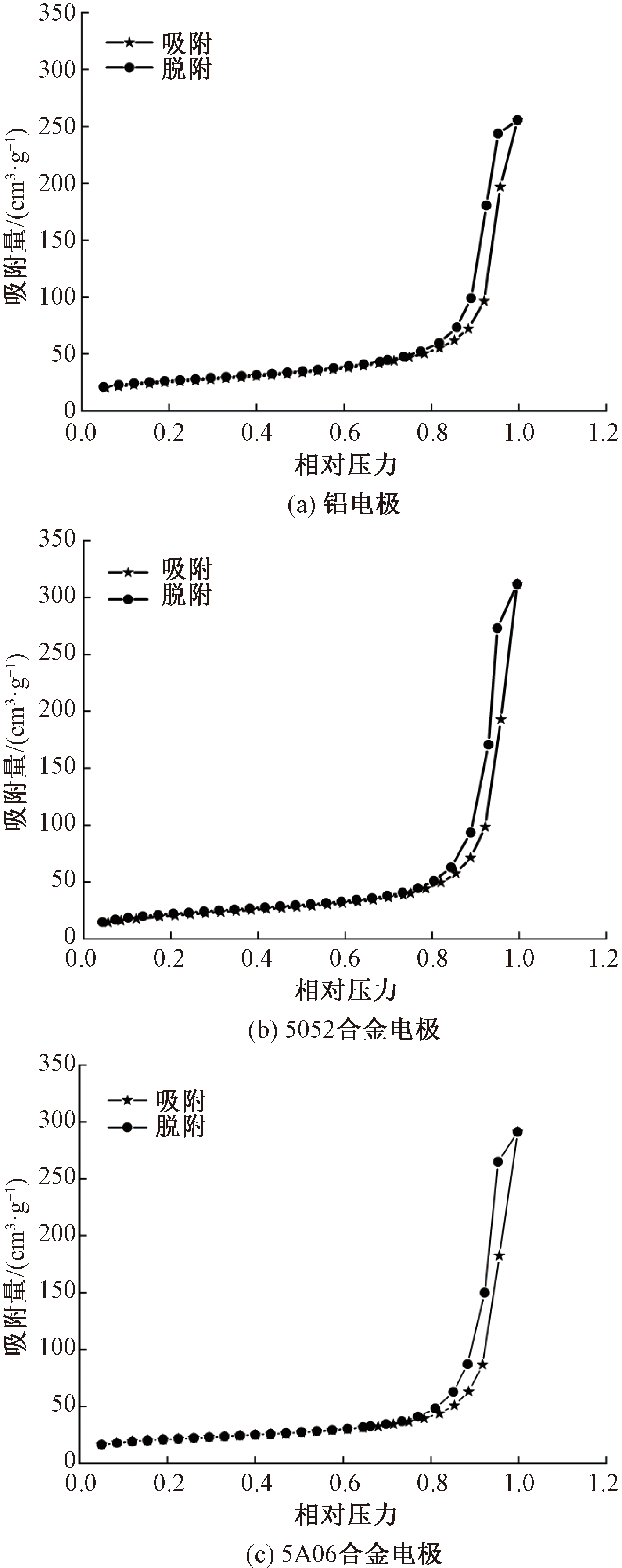
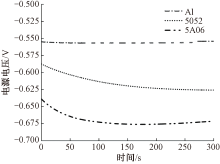
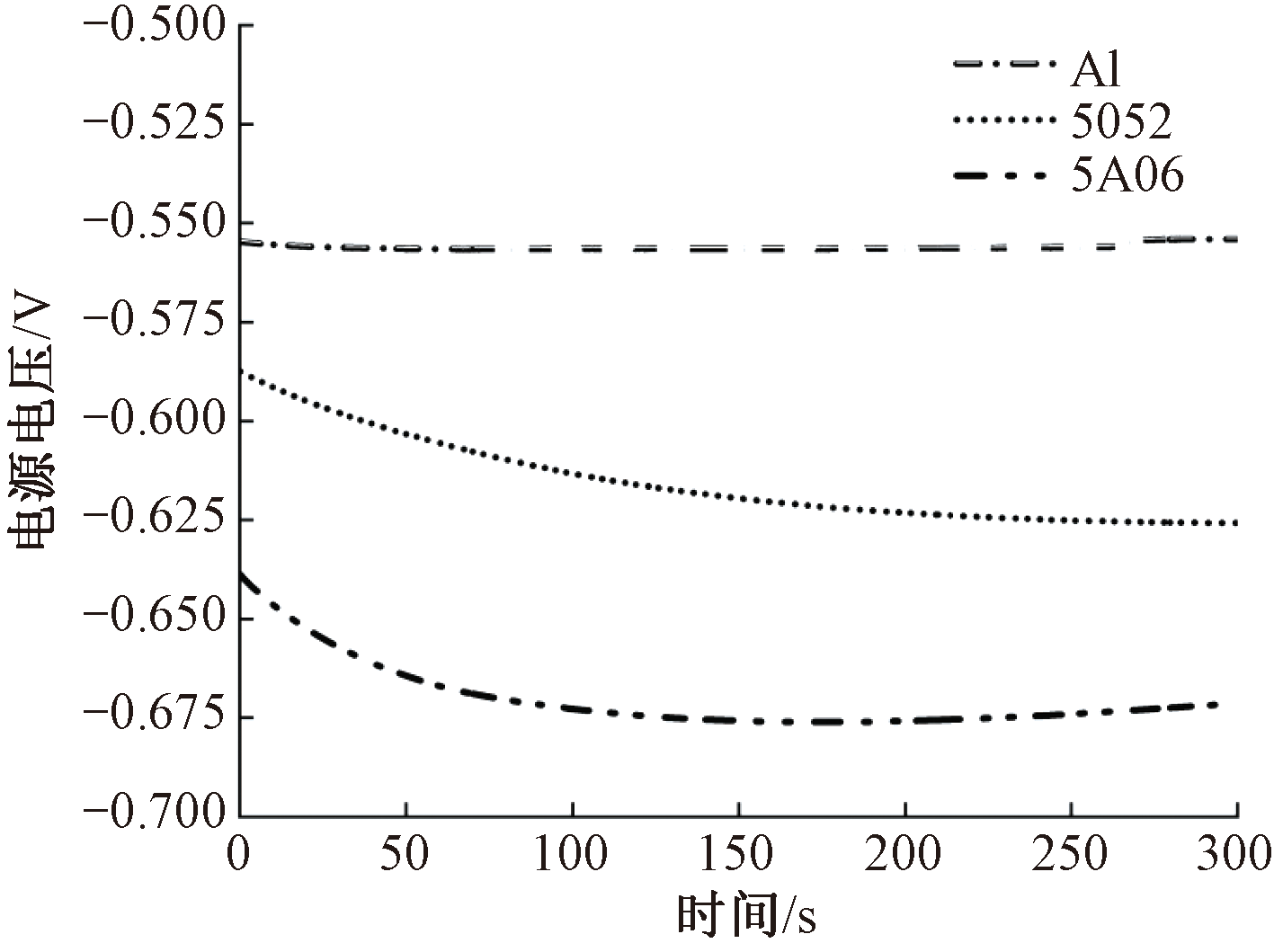
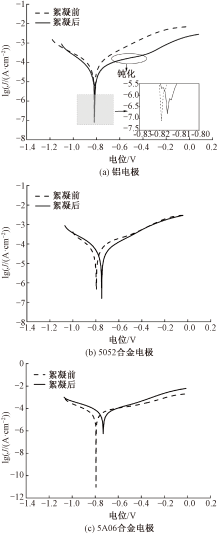
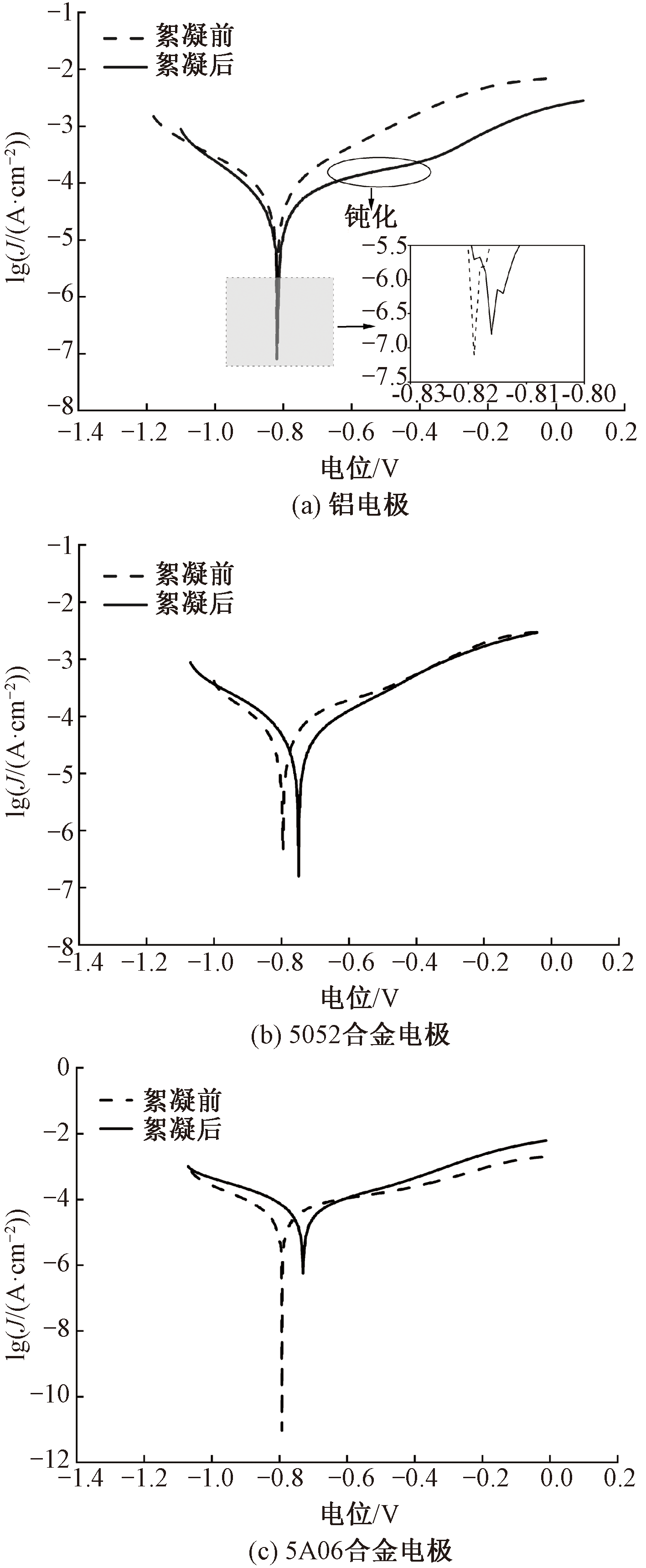
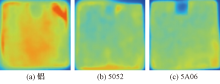
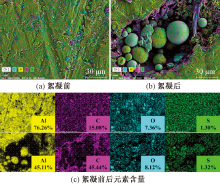
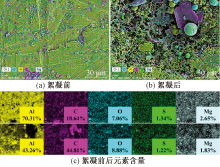
摘要: 为探究镁元素掺杂对铝电极溶解速率及电絮凝性能的影响,选取不同掺杂量的铝镁合金为阳极,与石墨阴极构建靛蓝染色废水电絮凝体系。综合利用极化曲线、开路电位、热红外成像与能量色散X射线光谱等手段,分析铝及铝镁合金电化学性能、微观形貌、表面物质及元素分布。结果表明:经5A06和5052铝镁合金电极电絮凝后的废水,总有机碳(TOC)去除率和色度分别为49%、50倍和48%、50倍,均优于纯铝电极,且5A06阳极体系的化学需氧量(COD)去除率为74.67%,高于纯铝阳极体系的72.56%;5A06电极电絮凝后未出现钝化区间,且开路电位负移,电极活性增强,溶解速率增大;红外热成像图显示钝化层优先在阳极边缘形成,铝电极红色区域面积明显高于铝镁合金电极;铝电极腐蚀坑洞中存在大量Al2O3颗粒,结合元素含量变化证实铝镁合金电极表面氧化物含量低于铝电极,进一步揭示镁元素掺杂抑制了合金电极的钝化进程。
中图分类号:
| [1] | 吕伟伟, 姚继明, 张维. 电极材料对双池电化学降解靛蓝废水的影响[J]. 印染, 2019, 45(5): 8-14. |
| LV Weiwei, YAO Jiming, ZHANG Wei. Effect of different electrode materials on electrochemical degradation of indigo wastewater in double cell[J]. China Dyeing & Finishing, 2019, 45(5): 8-14. | |
| [2] |
ZHANG W, YAO J M, MU Y G, et al. Electroflocculation of indigo dyeing wastewater from industrial production: flocs growth and adsorption mechanism[J]. Arabian Journal of Chemistry, 2023, 16(12): 105335.
doi: 10.1016/j.arabjc.2023.105335 |
| [3] |
ZHANG W, ZHANG M D, YAO J M, et al. Industrial indigo dyeing wastewater purification: effective COD removal with peroxide-AC electrocoagulation system[J]. Arabian Journal of Chemistry, 2023, 16(4): 104607.
doi: 10.1016/j.arabjc.2023.104607 |
| [4] |
LV H M, YANG S, LI C, et al. Suppressing passivation layer of Al anode in aqueous electrolytes by complexation of H2PO4 to Al3+ and an electrochromic Al ion battery[J]. Energy Storage Materials, 2021, 39: 412-418.
doi: 10.1016/j.ensm.2021.04.044 |
| [5] |
SANEI E, MOKHTARANI N. Leachate post-treatment by electrocoagulation process: effect of polarity switching and anode-to-cathode surface area[J]. Journal of Environmental Management, 2022, 319: 115733.
doi: 10.1016/j.jenvman.2022.115733 |
| [6] | 田家宇, 霍佳文, 胡承志, 等. 电絮凝处理腐殖酸过程中阳极钝化影响因素分析[J]. 环境工程学报, 2022, 16(6): 1789-1796. |
| TIAN Jiayu, HUO Jiawen, HU Chengzhi, et al. Influence factors of anode passivation during humic acid electrocoagulation treatment[J]. Chinese Journal of Environmental Engineering, 2022, 16(6): 1789-1796. | |
| [7] |
YU Y, ZHONG Y W, SUN W L, et al. A novel electrocoagulation process with centrifugal electrodes for wastewater treatment: electrochemical behavior of anode and kinetics of heavy metal removal[J]. Chemosphere, 2023, 310: 136862.
doi: 10.1016/j.chemosphere.2022.136862 |
| [8] |
FERDIAN D, PRATESA Y, TOGINA I, et al. Development of Al-Zn-Cu alloy for low voltage aluminum sacrificial anode[J]. Procedia Engineering, 2017, 184: 418-422.
doi: 10.1016/j.proeng.2017.04.112 |
| [16] |
SUN J Q, HUO J W, LI B W, et al. Anode passivation mitigation by homogenizing current density distribution in electrocoagulation[J]. Water Research, 2022, 223: 118966.
doi: 10.1016/j.watres.2022.118966 |
| [17] |
GAO J X, FAN H F, WANG E D, et al. Exploring the effect of magnesium content on the electrochemical performance of aluminum anodes in alkaline batte-ries[J]. Electrochimica Acta, 2020, 353: 136497.
doi: 10.1016/j.electacta.2020.136497 |
| [9] |
LINJEE S, MOONNGAM S, KLOMJIT P, et al. Corrosion behaviour improvement from the ultrafine-grained Al-Zn-In alloys in Al-air battery[J]. Energy Reports, 2022, 8: 5117-5128.
doi: 10.1016/j.egyr.2022.03.132 |
| [10] |
DURA A, BRESLIN C B. Electrocoagulation using aluminium anodes activated with Mg, in and Zn alloying elements[J]. Journal of Hazardous Materials, 2019, 366: 39-45.
doi: S0304-3894(18)31123-3 pmid: 30502571 |
| [11] | 彭晶晶, 刘静, 张弦, 等. 合金元素在Al基牺牲阳极中的作用机理[J]. 材料导报, 2022, 36(17): 141-148. |
| PENG Jingjing, LIU Jing, ZHANG Xian, et al. Activation mechanisms of alloy elements on aluminum-based sacrificial anodes[J]. Materials Reports, 2022, 36(17): 141-148. | |
| [12] | 张梦迪, 张维, 姚继明. 天然黏土矿物在靛蓝染色废水电絮凝中的应用[J]. 纺织学报, 2022, 43(2): 196-201. |
| ZHANG Mengdi, ZHANG Wei, YAO Jiming. Application of natural clay minerals in electrocoagulation of indigo dyeing wastewater[J]. Journal of Textile Research, 2022, 43(2): 196-201. | |
| [13] |
THOMMES M, KANEKO K, NEIMARK A V, et al. Physisorption of gases, with special reference to the evaluation of surface area and pore size distri-bution (IUPAC Technical Report)[J]. Pure and Applied Chemistry, 2015, 87(9/10): 1051-1069.
doi: 10.1515/pac-2014-1117 |
| [14] | 文九巴, 梁明岗, 贺俊光, 等. Mg与In合金化对Al-Ga-Mn阳极合金组织和性能影响[J]. 材料热处理学报, 2016, 37(3): 41-47. |
| WEN Jiuba, LIANG Minggang, HE Junguang, et al. Effect of Mg and in on microstructure and electrochemical performances of Al-Ga-Mn alloys[J]. Transactions of Materials and Heat Treatment, 2016, 37(3): 41-47. | |
| [15] | 张丽华. Cu元素对Al-Si合金的力学性能及耐腐蚀性的影响[J]. 陶瓷, 2020(4): 36-44. |
| ZHANG Lihua Effect of Cu on mechanical properties and corrosion resistance of Al-Si alloys[J]. Ceramics, 2020(4): 36-44. |
| [1] | 王泓力, 张辉, 刘建宇, 尉海泽, 张雅宁, 王丽丽, 许学潮. 棉基生物炭-ZIF-L(Zn)-壳聚糖/聚丙烯复合膜的制备及其吸附-光催化性能[J]. 纺织学报, 2025, 46(09): 84-93. |
| [2] | 项文龙, 杨静冉, 肖晓珍. 铁钴双金属有机框架/稻谷壳复合材料的制备及其染料脱色性能[J]. 纺织学报, 2025, 46(06): 178-186. |
| [3] | 王薇, 高建南, 裴笑涵, 陆鑫, 孙银银, 吴建兵. 纤维素/甲基三甲氧基硅烷气凝胶的制备及其油水分离效能[J]. 纺织学报, 2025, 46(05): 135-142. |
| [4] | 金汝诗, 陈万明, 刘国金, 刘承海, 戚栋明, 翟世民. 生物炭在印染废水处理中的应用研究进展[J]. 纺织学报, 2025, 46(04): 235-243. |
| [5] | 李逢春, 孙辉, 于斌, 谢有秀, 张德伟. 共价有机框架材料/粘胶水刺非织造布的制备及其染料吸附性能[J]. 纺织学报, 2025, 46(02): 170-179. |
| [6] | 杨亮, 孔韩韩, 李韦霖, 祁小芬, 张天芸, 王雪梅, 李文全. 沸石咪唑酯骨架-8的制备及其对刚果红的吸附性能[J]. 纺织学报, 2024, 45(07): 140-149. |
| [7] | 武守营, 黄启超, 张开封, 张琳萍, 钟毅, 徐红, 毛志平. 铁-三联吡啶配合物活化高碘酸盐体系构建及其对染色废水的催化降解机制[J]. 纺织学报, 2024, 45(06): 105-112. |
| [8] | 冯颖, 于汉哲, 张宏, 李可心, 马标, 董鑫, 张建伟. 静电纺壳聚糖基纳米纤维的制备及其在水处理中应用研究进展[J]. 纺织学报, 2024, 45(05): 218-227. |
| [9] | 郑康, 龚文丽, 鲍杰, 刘琳. 两性纤维素多孔凝胶球的制备及其动态吸附性能[J]. 纺织学报, 2024, 45(05): 102-112. |
| [10] | 陆瑶瑶, 叶俊涛, 阮承祥, 娄瑾. 二氧化钛/多孔碳纳米纤维复合材料的制备及其光催化性能[J]. 纺织学报, 2024, 45(04): 67-75. |
| [11] | 李方, 张怡立, 王曼, 孟祥周, 沈忱思. 锑污染物对绿藻及蓝藻的急性毒性效应[J]. 纺织学报, 2024, 45(04): 169-179. |
| [12] | 陈荣轩, 孙辉, 于斌. N-TiO2/聚丙烯复合熔喷非织造材料的制备及其光催化性能[J]. 纺织学报, 2024, 45(03): 137-147. |
| [13] | 李红颖, 徐毅, 杨帆, 任瑞鹏, 周全, 吴丽杰, 吕永康. 三维乒乓菊状CdS/BiOBr催化剂的制备及其光催化降解罗丹明B[J]. 纺织学报, 2023, 44(09): 124-133. |
| [14] | 韩博, 王玉霖, 舒大武, 王涛, 安芳芳, 单巨川. 活性染料染色废水的循环染色[J]. 纺织学报, 2023, 44(08): 151-157. |
| [15] | 王国琴, 付小航, 朱羽科, 吴礼光, 王挺, 蒋孝佳, 陈华丽. 可见光响应的介孔TiO2光降解罗丹明B机制及其降解途径[J]. 纺织学报, 2023, 44(05): 155-163. |
|
||
 京公网安备11010502044800号