纺织学报 ›› 2025, Vol. 46 ›› Issue (10): 39-45.doi: 10.13475/j.fzxb.20250202801
郭燕娜1, 黄琪帏1, 许锦胜1, 丁呈凤1, 黄文胜2, 李凯2, 丁彬3, 俞建勇3, 王先锋1,3( )
)
GUO Yanna1, HUANG Qiwei1, XU Jinsheng1, DING Chengfeng1, HUANG Wensheng2, LI Kai2, DING Bin3, YU Jianyong3, WANG Xianfeng1,3()
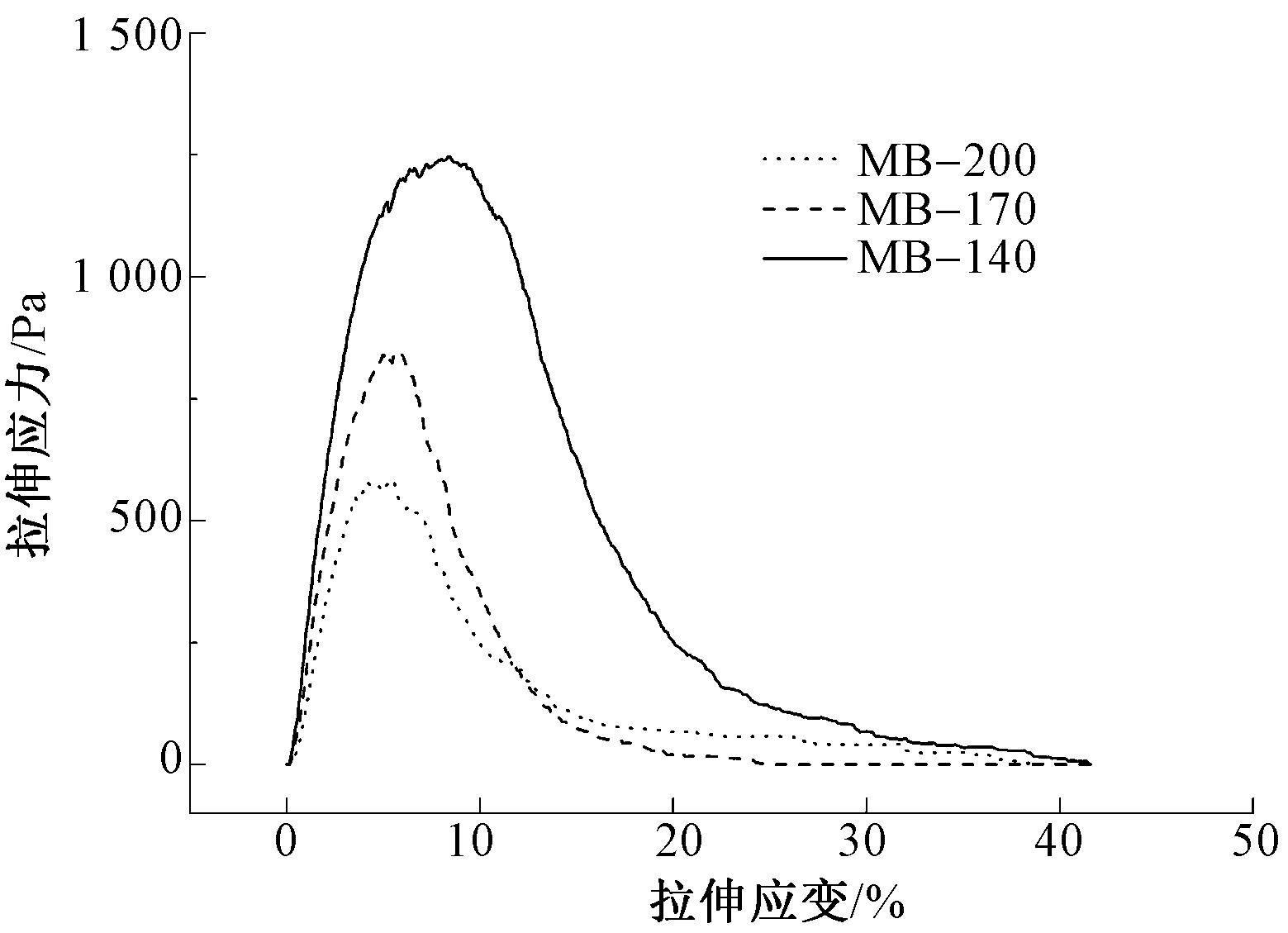
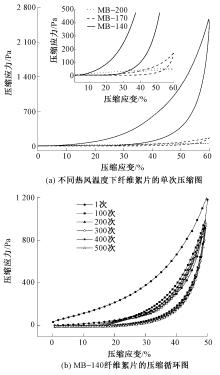
摘要: 针对熔喷复合保暖絮片存在的保暖性能不佳,生产中物料损耗大、絮片结构不稳定等问题,提出了一种熔喷快速热交换策略,以高效制备轻质、蓬松且具有良好弹性的保暖纤维絮片。该策略的核心在于通过优化熔喷工艺中的快速热交换过程,显著提升纤维的成形速率和絮片结构的稳定性。通过该策略制备的纤维结晶度高(47.21%),纤维直径超细(平均直径为2.88 μm),从而赋予纤维絮片良好的力学性能和保暖性能,使其具有高的断裂应力(1 200 Pa)和较大的断裂应变,在500次循环压缩中仅出现5%的塑性形变。结果表明:所得厚度为4 mm的纤维絮片的孔隙率高达99.13%,密度低至13.40 mg/cm3,导热系数为25.50 mW/(m·K),克罗值为2.02 clo,热阻为0.31 m2·K/W,具有优异的保暖性能。
中图分类号:
| [1] |
FAN J, XIAO Y, FENG Y, et al. A systematic review and meta-analysis of cold exposure and cardiovascular disease outcomes[J]. Frontiers in Cardiovascular Medicine, 2023, 10: 1084611.
doi: 10.3389/fcvm.2023.1084611 |
| [2] | QI Z, YU G, TING Y, et al. Global, regional, and national burden of mortality associated with non-optimal ambient temperatures from 2000 to 2019: a three-stage modelling study[J]. The Lancet Planetary Health, 2021, 5(7): 415-425. |
| [3] |
WU M, SHAO Z, ZHAO N, et al. Biomimetic, knittable aerogel fiber for thermal insulation textile[J]. Science, 2023, 382(6677): 1379-1383.
doi: 10.1126/science.adj8013 pmid: 38127754 |
| [4] | 许超. 服装用保暖材料的研究现状及发展前景[J]. 纺织报告, 2020, 39(6): 35-37. |
| XU Chao, Research status and development prospect of warm materials for clothing[J]. Textile Reports, 2020, 39(6): 35-37. | |
| [5] | 吴波, 汪泽幸, 李帅, 等. 保暖材料研究现状与发展前景[J]. 湖南工程学院学报(自然科学版), 2021, 31(1): 74-79. |
| WU Bo, WANG Zexing, LI Shuai, et al. Research status and development prospects of thermal insulation materials[J]. Journal of Hunan Institute of Engineering, 2021, 31(1): 74-79. | |
| [6] |
WANG S, LIU C, WANG F, et al. Recent advances in ultrafine fibrous materials for effective warmth reten-tion[J]. Advanced Fiber Materials, 2023, 5(3): 847-867.
doi: 10.1007/s42765-022-00209-9 |
| [7] |
HU F, WU S, SUN Y. Hollow-structured materials for thermal insulation[J]. Advanced Materials, 2019, 31(38): 1801001.
doi: 10.1002/adma.v31.38 |
| [8] | 吴红炎. 轻质高弹超细纤维海绵的制备及其保暖应用研究[D]. 上海: 东华大学, 2021: 19-23. |
| WU Hongyan. Fabrication of ultralight and superelastic ultrafine fiber sponges and their application in warmth retention[D]. Shanghai: Donghua University, 2021: 19-23. | |
| [9] | VALIPOUR P, BABAAHMADI V, NASOURI K. Fabrication of poly(methyl methacrylate) nanofibers and polyethylene nonwoven with sandwich structures for thermal insulator application[J]. Advances in Polymer Technology, 2014, 33(S1): 21440. |
| [10] | WU H, ZHAO L, ZHANG S, et al. Ultralight and mechanically robust fibrous sponges tailored by semi-interpenetrating polymer networks for warmth reten-tion[J]. ACS Applied Materials & Interfaces, 2021, 13(15): 18165-18174. |
| [11] | 程可为, 刘亚, 于雯, 等. 新型熔喷非织造材料研究进展[J]. 纺织导报, 2021(12): 61-66. |
| CHENG Kewei, LIU Ya, YU Wen, et al. Research progress of new melt blown nonwovens[J]. China Textile Leader, 2021(12): 61-66. | |
| [12] | 刘琛, 杨凯璐, 陈明星, 等. 熔喷非织造材料制备及其应用研究进展[J]. 现代纺织技术, 2024, 32(5): 116-129. |
| LIU Chen, YANG Kailu, CHEN Mingxing, et al, Research progress in the preparation and application of melt-blown nonwovens[J]. Advanced Textile Technology, 2024, 32(5): 116-129. | |
| [13] |
XU S, ZHANG D, HUANG Q, et al. Trap-induced hydro-charging polylactic acid nonwovens with high charge storage capability for stable and efficient air filtration[J]. Separation and Purification Technology, 2024, 343: 127164.
doi: 10.1016/j.seppur.2024.127164 |
| [14] |
GAO H, LIU G, GUAN J, et al. Biodegradable hydro-charging polylactic acid melt-blown nonwovens with efficient PM0.3 removal[J]. Chemical Engineering Journal, 2023, 458: 141412.
doi: 10.1016/j.cej.2023.141412 |
| [15] | 赵爱景, 程博闻, 张伟力, 等. PP/PET混合型熔喷保暖材料的研制[J]. 化纤与纺织技术, 2011, 40(1): 6-8,23. |
| ZHAO Aijing, CHENG Bowen, ZHANG Weili, et al. Development of PP/PET bi-component melt-blown thermal material[J]. Chemical Fiber & Textile Technology, 2011, 40(1): 6-8,23. | |
| [16] | 王智蓉, 马宇新, 王文强, 等. 防寒保暖用非织造材料研究进展[J]. 印染, 2024, 50(10): 98-102. |
| WANG Zhirong, MA Yuxin, WANG Wenqiang, et al. Research progress of nonwoven materials with warm insulation against cold environments[J]. China Dyeing & Finishing, 2024, 50(10): 98-102. | |
| [17] |
KARA Y, MOLNAR K. Revealing of process-structure-property relationships of fine polypropylene fiber mats generated via melt blowing[J]. Polymers for Advanced Technologies, 2021, 32(6): 2416-2432.
doi: 10.1002/pat.v32.6 |
| [18] | 彭孟娜, 贾慧莹, 周彦粉. 热风温度对PP/TPU熔喷非织造布结构与性能的影响[J]. 丝绸, 2018, 55(8): 35-40. |
| PENG Mengna, JIA Huiying, ZHOU Yanfen, et al. Study on effect of hot air temperature on structure and property of PP/TPU melt-blown nonwovens[J]. Journal of Silk, 2018, 55(8): 35-40. | |
| [19] |
HAO X, XIE S, LIU G. Numerical and experimental investigation of thermal insulation property of melt blown materials[J]. Fibers and Polymers, 24(7): 2325-2332.
doi: 10.1007/s12221-023-00223-7 |
| [20] |
WILLERER T, BRINKMANN T, DRECHSLER K. Development and application of a cooling rate dependent PVT model for injection molding simulation of semi crystalline thermoplastics[J]. Polymers, 2022, 16(22): 3194.
doi: 10.3390/polym16223194 |
| [21] |
HU Y, LIAO Y, ZHENG Y, et al. Influence of cooling rate on crystallization behavior of semi-crystalline polypropylene: experiments and mathematical mode-ling[J]. Polymers, 2022, 14(17): 3646.
doi: 10.3390/polym14173646 |
| [22] |
HALLAVANT K, SOCCIO M, GUIDOTTI G, et al. Critical cooling rate of fast-crystallizing polyesters: the example of poly(alkylene trans-1,4-cyclohexane-dicarboxylate)[J]. Polymers, 2024, 16(19): 2792.
doi: 10.3390/polym16192792 |
| [23] |
LIU J, YANG Y, DING J, et al. Microfibers: a preliminary discussion on their definition and sour-ces[J]. Environmental Science and Pollution Research, 2019, 26(28): 29497-29501.
doi: 10.1007/s11356-019-06265-w |
| [24] |
CUI Y, GONG H, WANG Y, et al. A thermally insulating textile inspired by polar bear hair[J]. Advanced Materials, 2018, 30(14): 1706807.
doi: 10.1002/adma.v30.14 |
| [1] | 陶晨, 洪兴华, 印梅芬. 仿真服装压力的虚拟皮肤建模[J]. 纺织学报, 2025, 46(10): 197-205. |
| [2] | 李雨洁, 王承勤, 王伟, 袁如超, 俞建勇, 李发学. 聚酰胺6基弹性体及其并列弹性纤维的制备及其性能[J]. 纺织学报, 2025, 46(09): 46-56. |
| [3] | 王清清, 廖师琴, 魏取福. 光电双响应纱线应变传感器的制备及其性能[J]. 纺织学报, 2025, 46(08): 71-79. |
| [4] | 丁凯, 符芬, 张智翔, 杨语童, 李超婧, 赵帆, 王璐, 王富军. 按压排尿用针织人工膀胱的设计及其力学性能[J]. 纺织学报, 2025, 46(05): 169-178. |
| [5] | 李亿鸿, 蔡君怡, 诸葛晓洁, 吴东芮, 滕德英, 俞建勇, 丁彬, 李召岭. 羧基化纳米纤维素增强的柔性透明导电弹性体[J]. 纺织学报, 2025, 46(04): 11-19. |
| [6] | 张文丽, 刘鑫, 张俏俏, 支超, 李建伟, 樊威. 基于废旧亚麻织物的超弹性气凝胶制备及其性能[J]. 纺织学报, 2025, 46(04): 47-55. |
| [7] | 罗梦颖, 陈慧君, 夏明, 王栋, 李沐芳. 弹性导电复合纤维的制备及其应变与温度传感性能[J]. 纺织学报, 2024, 45(10): 9-15. |
| [8] | 吴建忠, 徐洋, 盛晓伟. 热转印系统色带传动过程张力分析与建模[J]. 纺织学报, 2024, 45(09): 228-234. |
| [9] | 张梦茹, 王灿, 肖汪洋, 廖梦蝶, 王秀华. 聚醚酯弹性纤维的制备及其结构与性能[J]. 纺织学报, 2024, 45(08): 81-88. |
| [10] | 昌康琪, 罗梦颖, 赵青华, 王栋, 李沐芳. 辐射降温聚烯烃纳米纤维膜的制备及其性能[J]. 纺织学报, 2024, 45(07): 24-30. |
| [11] | 马凯, 邓璐璐, 王学琳, 石国民, 邹光龙. 棉浆纤维素/质子型离子液体溶液的流变行为[J]. 纺织学报, 2024, 45(05): 10-18. |
| [12] | 时吉磊, 唐春霞, 付少海, 张丽平. 柔韧隔热纤维素基气凝胶制备与性能[J]. 纺织学报, 2024, 45(04): 8-14. |
| [13] | 方春月, 刘紫璇, 贾立霞, 阎若思. 双等离子体改性超高分子量聚乙烯复合材料的弹道响应[J]. 纺织学报, 2024, 45(02): 77-84. |
| [14] | 盛欣洋, 陈晓娜, 卢娅娅, 李艳梅, 孙光武. 面料拉伸性能与运动文胸防震功能的定量关系[J]. 纺织学报, 2024, 45(01): 161-167. |
| [15] | 艾靓雯, 卢东星, 廖师琴, 王清清. 基于原位冷冻界面聚合法的纱线传感器制备及其应变传感性能[J]. 纺织学报, 2024, 45(01): 74-82. |
|
||
 京公网安备11010502044800号