纺织学报 ›› 2026, Vol. 47 ›› Issue (02): 162-171.doi: 10.13475/j.fzxb.20250908401
席立锋1, 张爱军1, 贾伟2, 马丕波1, 蒋高明1( )
)
XI Lifeng1, ZHANG Aijun1, JIA Wei2, MA Pibo1, JIANG Gaoming1()
摘要:
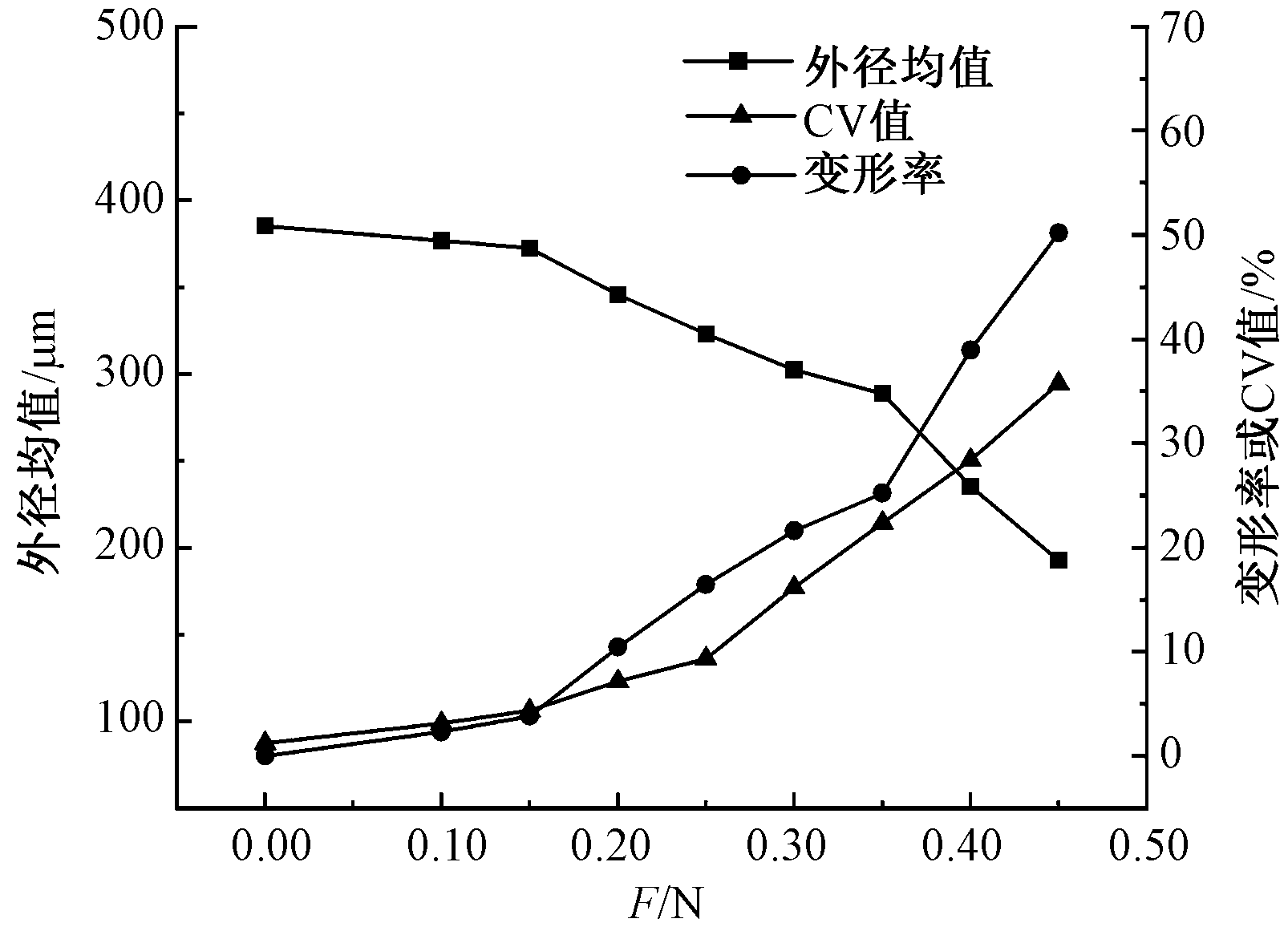
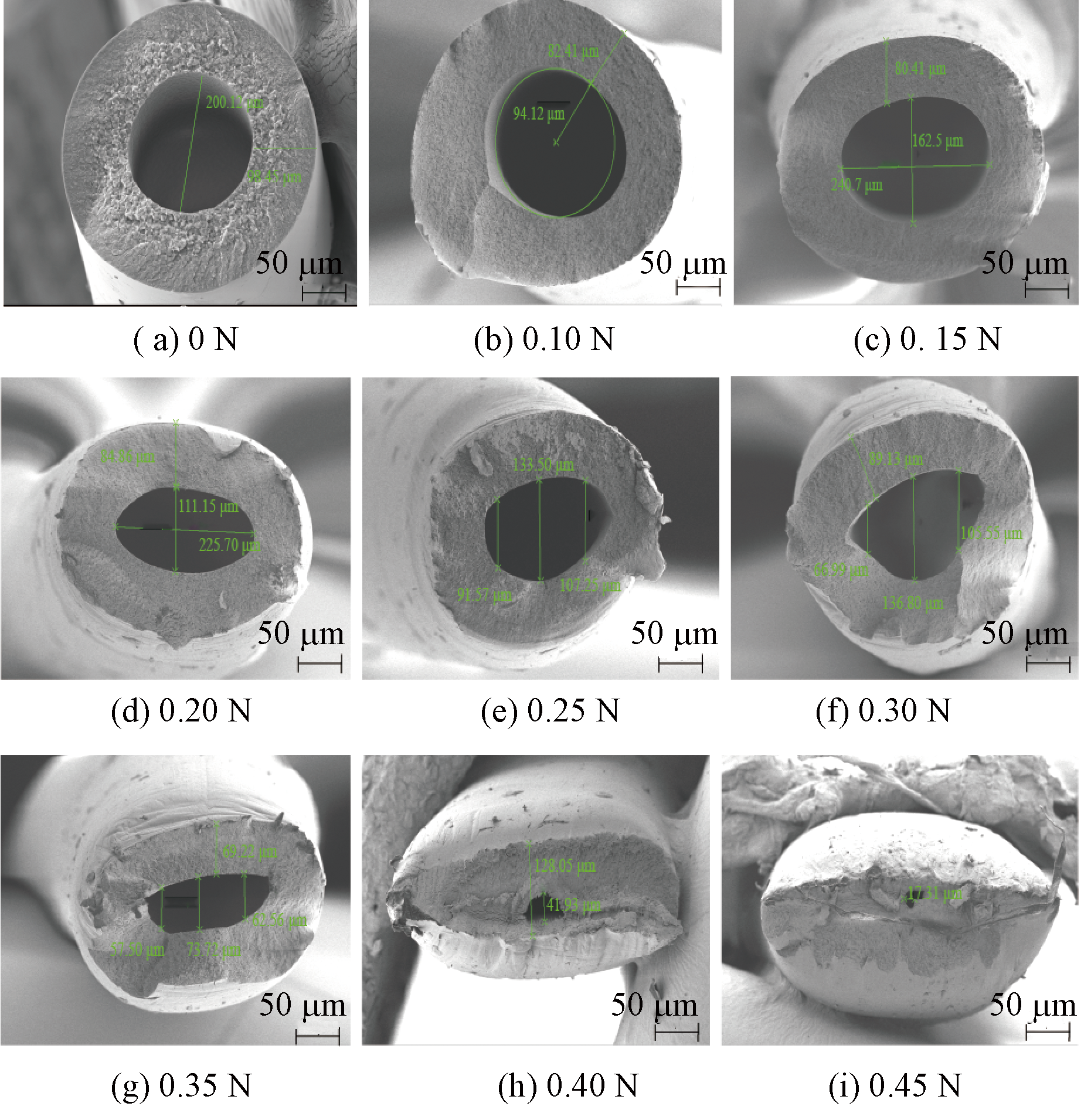
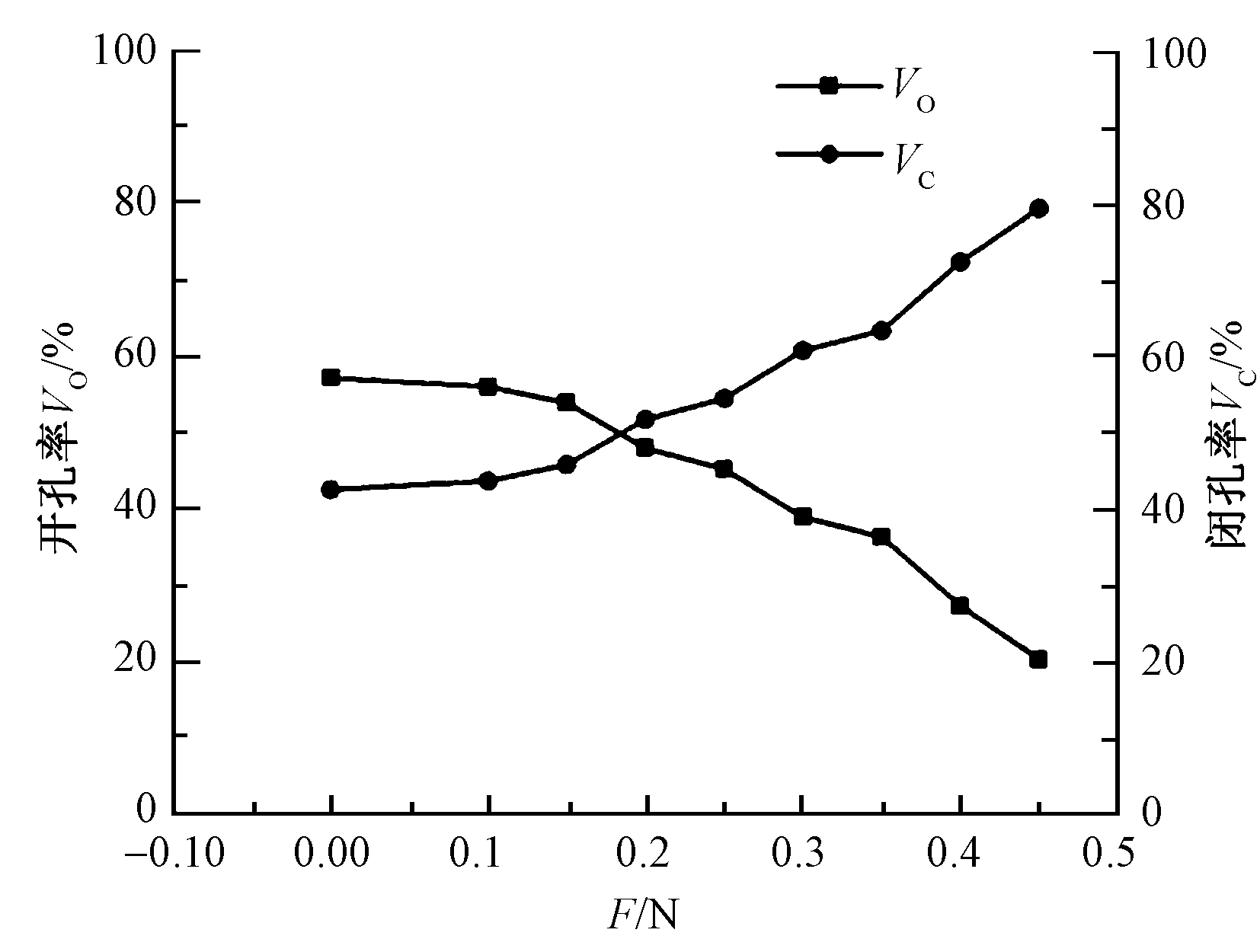
为推动体外膜肺氧合(ECMO)技术的国产化及其膜织物性能优化,研究了聚4-甲基-1-戊烯(PMP)膜织物在制备过程中因纱线张力引起的性能损伤机制。通过结合几何建模、有限元仿真与实验验证,探讨了不同纱线张力对PMP膜形态演变及气体交换能力的影响。研究表明,当纱线张力超过0.20 N时,PMP膜发生显著的塑性变形,导致其孔隙结构塌缩和气体交换性能显著下降。进一步分析表明,控制纱线张力在0.20 N以下有助于保持膜织物的最佳气体交换能力。该研究为ECMO膜织物的优化设计与产业化生产提供了理论依据,并为PMP膜材料的进一步开发与改进提供了重要参考。
中图分类号:
| [1] |
HUANG X, WANG W P, ZHENG Z, et al. Dissipative particle dynamics study and experimental verification on the pore morphologies and diffusivity of the poly (4-methyl-1-pentene)-diluent system via thermally induced phase separation: the effect of diluent and polymer concentration[J]. Journal of Membrane Science, 2016, 514: 487-500.
doi: 10.1016/j.memsci.2016.04.065 |
| [2] | 简萌, 罗先武. ECMO氧合器血液流动数值模拟及损伤评估[J]. 工程热物理学报, 2023, 44(4): 977-986. |
| JIAN Meng, LUO Xianwu. Numerical simulation of blood dynamics and damage risk assessment in ECMO[J]. Journal of Engineering Thermophysics, 2023, 44(4): 977-986. | |
| [3] |
AI J S, ZHOU Q, LIANG Y P, et al. High-sensitivity phase imaging eddy current magneto-optical system for carbon fiber reinforced polymers detection[J]. Journal of Electronic Science and Technology, 2023, 21(4): 100225.
doi: 10.1016/j.jnlest.2023.100225 |
| [4] | 柳含莹, 范春超, 郭君妍, 等. 小动物体外膜氧合模型的研究进展[J]. 中国循环杂志, 2025, 40(3): 302-307. |
| LIU Hanying, FAN Chunchao, GUO Junyan, et al. Research progress on small animal models of extracorporeal membrane oxygenation[J]. Chinese Circulation Journal, 2025, 40(3): 302-307. | |
| [5] | 于文杰, 徐明洲, 李纪念, 等. 基于可用性工程的ECMO系统设计与研究[J]. 设计, 2025, 38(1): 117-121. |
| YU Wenjie, XU Mingzhou, LI Jinian, et al. Design and research of ecmo system based on usability engineering[J]. Design, 2025, 38(1): 117-121. | |
| [6] |
HUANG X, WANG W P, ZHENG Z, et al. Surface monofunctionalized polymethyl pentene hollow fiber membranes by plasma treatment and hemocompatibility modification for membrane oxygenators[J]. Applied Surface Science, 2016, 362: 355-363.
doi: 10.1016/j.apsusc.2015.11.236 |
| [7] |
何俊卿, 陈思思, 程荣, 等. 专利视角下体外膜肺氧合(ECMO)氧合膜技术发展态势[J]. 科技导报, 2023, 41(21): 98-113.
doi: 10.3981/j.issn.1000-7857.2023.21.010 |
| HE Junqing, CHEN Sisi, CHENG Rong, et al. On the development trend of oxygenation membrane technology for extracorporeal membrane oxygenation(ECMO) from a perspective of patents[J]. Science & Technology Review, 2023, 41(21): 98-113. | |
| [8] | 吴芳宇, 林亚凯, 汪林, 等. 聚4-甲基-1-戊烯膜的制备与应用研究进展[J]. 高分子通报, 2022(5): 1-9. |
| WU Fangyu, LIN Yakai, WANG Lin, et al. Research progress in preparation and application of poly(4-methyl-1-pentene) membranes[J]. Polymer Bulletin, 2022(5): 1-9. | |
| [9] |
MARTINS COSTA A, HALFWERK F R, THIEL J N, et al. Influence of utilizing hemodialysis membranes outside-in on solute clearance and filtration efficiency-One step towards a novel combined lung and kidney support device[J]. Journal of Membrane Science, 2024, 698: 122575.
doi: 10.1016/j.memsci.2024.122575 |
| [10] |
BADULAK J, ANTONINI M V, STEAD C M, et al. Extracorporeal membrane oxygenation for COVID-19: updated 2021 guidelines from the extracorporeal life support organization[J]. ASAIO Journal, 2021, 67(5): 485-495.
doi: 10.1097/MAT.0000000000001422 |
| [11] | 卢远波, 王晓源, 吕光宇. 多种评分系统对体外膜氧合支持下心源性休克患者病死率的预测价值[J]. 中国呼吸与危重监护杂志, 2025, 24(3): 192-196. |
| LU Yuanbo, WANG Xiaoyuan, LV Guangyu. Value of different scoring systems in predicting mortality of patients with cardiogenic shock supported by extracorporeal membrane oxygenation[J]. Chinese Journal of Respiratory and Critical Care Medicine, 2025, 24(3): 192-196. | |
| [12] | 童洪杰, 邓鸿胜, 彭伟, 等. 成人体外膜氧合辅助期间感染防控专家共识[J]. 中国循环杂志, 2024, 39(3): 209-216. |
| TONG Hongjie, DENG Hongsheng, PENG Wei, et al. Expert consensus on the prevention and management of infection during extracorporeal membrane oxygenation in adult patients[J]. Chinese Circulation Journal, 2024, 39(3): 209-216. | |
| [13] | 田懿, 朱怡学, 童霄, 等. 基于CO2促进传输的抗凝血非对称PMP膜的构建及其性能研究[J]. 膜科学与技术, 2024, 44(3): 38-48. |
| TIAN Yi, ZHU Yixue, TONG Xiao, et al. Construction and properties research of anticoagulated asymmetric PMP membrane based on CO2 facilitated transport[J]. Membrane Science and Technology, 2024, 44(3): 38-48. | |
| [14] | 杜宇倩, 邵丽萍, 潘福生, 等. 聚-4-甲基-1-戊烯中空纤维氧合膜的研究进展与面临的挑战[J]. 膜科学与技术, 2021, 41(3): 169-178. |
| DU Yuqian, SHAO Liping, PAN Fusheng, et al. Progress and challenges of poly-4-methyl-1-pentene hollow fiber membrane for membrane oxygenators[J]. Membrane Science and Technology, 2021, 41(3): 169-178. | |
| [15] |
ABEDINI R, MOSAYEBI A, MOKHTARI M. Improved CO2 separation of azide cross-linked PMP mixed matrix membrane embedded by nano-CuBTC metal organic framework[J]. Process Safety and Environmental Protection, 2018, 114: 229-239.
doi: 10.1016/j.psep.2017.12.025 |
| [16] |
RAMANATHAN K, SHEKAR K, LING R R, et al. Extracorporeal membrane oxygenation for COVID-19: a systematic review and meta-analysis[J]. Critical Care, 2021, 25(1): 211.
doi: 10.1186/s13054-021-03634-1 pmid: 34127027 |
| [17] |
HE T, YU S H, HE J H, et al. Membranes for extracorporeal membrane oxygenator (ECMO): history, preparation, modification and mass transfer[J]. Chinese Journal of Chemical Engineering, 2022, 49: 46-75.
doi: 10.1016/j.cjche.2022.05.027 |
| [18] |
简萌, 张明奎, 黄健兵, 等. ECMO氧合器膜丝阵列多相流动数值模拟与分析[J]. 清华大学学报(自然科学版), 2023, 63(11): 1820-1832.
doi: 10.16511/j.cnki.qhdxxb.2022.25.024 |
| JIAN Meng, ZHANG Mingkui, HUANG Jianbing, et al. Numerical simulation and analysis of multiphase flow through fiber array structure in extracorporeal membrane oxygenation[J]. Journal of Tsinghua Univer-sity (Science and Technology), 2023, 63(11): 1820-1832. | |
| [19] | 张海彬, 张良震, 黄斯珉, 等. 人工膜肺氧合器技术进展[J]. 安徽工业大学学报(自然科学版), 2023, 40(3): 288-296. |
| ZHANG Haibin, ZHANG Liangzhen, HUANG Simin, et al. Recent development of extracorporeal membrane oxygenator[J]. Journal of Anhui University of Technology (Natural Science), 2023, 40(3): 288-296. | |
| [20] | 张红霞, 俞涤美, 范丽霞, 等. 织物组织对双层结构提花窗帘织物遮光性的影响[J]. 纺织学报, 2014, 35(11): 52-56. |
| ZHANG Hongxia, YU Dimei, FAN Lixia, et al. Effect of fabric weaves on light-proofness of double-layer jacquard curtain fabrics[J]. Journal of Textile Research, 2014, 35(11): 52-56. | |
| [21] | 席立锋, 马丕波, 贾伟, 等. 国内体外膜肺氧合技术研究进展[J]. 纺织学报, 2024, 45(8): 234-240. |
| XI Lifeng, MA Pibo, JIA Wei, et al. Research progress of extracorporeal membrane oxygenation technology in China[J]. Journal of Textile Research, 2024, 45(8): 234-240. | |
| [22] | 席立锋, 蒋高明, 马丕波, 等. 体外膜肺氧合经编膜织物自适应张力的低损伤制备[J]. 纺织学报, 2024, 45(7): 1-9. |
|
XI Lifeng, JIANG Gaoming, MA Pibo, et al. Low-damage preparation of extracorporeal membrane oxygenationwarp knit membrane fabrics with adaptive tension[J]. Journal of Textile Research, 2024, 45(7): 1-9.
doi: 10.1177/004051757504500101 |
|
| [23] | 张天琪, 贾志谦. 低温热致相分离制膜方法研究进展[J]. 膜科学与技术, 2023, 43(5): 202-209. |
| ZHANG Tianqi, JIA Zhiqian. Progress of low temperature thermally induced phase separation method[J]. Membrane Science and Technology, 2023, 43(5): 202-209. | |
| [24] | 荣新雨, 吕晓龙, 刘娟娟, 等. PVC/PVDF-CTFE共混中空纤维膜用于血液氧合的研究[J]. 膜科学与技术, 2024, 44(6): 55-63. |
| RONG Xinyu, LYU Xiaolong, LIU Juanjuan, et al. Research on PVC/PVDF-CTFE blend hollow fiber membranes for blood oxygenation[J]. Membrane Science and Technology, 2024, 44(6): 55-63. | |
| [25] |
SHAO L, SAMSETH J, HÄGG M B. Crosslinking and stabilization of nanoparticle filled PMP nanocomposite membranes for gas separations[J]. Journal of Membrane Science, 2009, 326(2): 285-292.
doi: 10.1016/j.memsci.2008.09.053 |
| [26] | XI L F, JIANG G M, JIA W, et al. Fluid simulation analysis of ECMO hollow-fiber membrane fabrics from knitting technology[J]. Journal of Industrial Textiles, 2024, 54: 15280837241268628. |
| [1] | 单梦琪, 杨则琦, 王富军, 王璐, 毛吉富. 织物-凝胶复合心肌补片的制备及其性能[J]. 纺织学报, 2026, 47(02): 222-229. |
| [2] | 季巧, 于清源, 周爱晖, 马博谋, 徐进, 袁久刚. 细菌纤维素及其复合材料的应用研究进展[J]. 纺织学报, 2025, 46(12): 243-250. |
| [3] | 姚晓军, 徐恩婷, 杨雪媛, 房磊, 包伟, 房宽峻. 聚乙烯吡咯烷酮对聚对苯二甲酸乙二醇酯中空纤维膜结构与性能的调控[J]. 纺织学报, 2025, 46(12): 66-73. |
| [4] | 李欣田, 周玄, 王展翾, 杜忠华, 徐立志. 层数与铺层方式对多层芳纶平纹织物抗侵彻性能的影响[J]. 纺织学报, 2025, 46(11): 126-136. |
| [5] | 杜雨杭, 侯东昱, 齐鹏飞. 基于摩擦纳米发电机原理的智能服装供能设计与优化[J]. 纺织学报, 2025, 46(11): 211-220. |
| [6] | 侯颖慧, 刘肖燕, 柳东辰, 郝矿荣, 邹婷. 基于体外降解的输尿管支架管的多目标优化[J]. 纺织学报, 2025, 46(09): 154-162. |
| [7] | 王晗, 张琦, 刘董, 宋金龙, 席立锋, 郝佳姝, 彭诗语, 李坤磊, 张超. 体外膜肺氧合膜材料的全幅衬纬系统断点续织关键控制技术[J]. 纺织学报, 2025, 46(06): 223-230. |
| [8] | 王惠婷, 陈宇鉴, 刘诗仪, 张显涛, 陆斌, 邹专勇, 王建, 张寅江. 海藻酸盐基非织造医用敷料的研究进展[J]. 纺织学报, 2025, 46(06): 240-249. |
| [9] | 丁凯, 符芬, 张智翔, 杨语童, 李超婧, 赵帆, 王璐, 王富军. 按压排尿用针织人工膀胱的设计及其力学性能[J]. 纺织学报, 2025, 46(05): 169-178. |
| [10] | 陈馨蔚, 顾冰菲, 田佳莉, 周思凡, 刘瑜希, 刘金灵, 易洁伦, 孙玥. 基于参数化设计和数值模拟仿真技术的运动文胸版型优化[J]. 纺织学报, 2025, 46(04): 162-170. |
| [11] | 符芬, 王钰涵, 丁凯, 赵帆, 李超靖, 王璐, 曾泳春, 王富军. 纤维素基止血材料的研究进展[J]. 纺织学报, 2025, 46(04): 226-234. |
| [12] | 李沂蒙, 单梦琪, 李雯昕, 周奉凯, 毛吉富, 王富军, 王璐. 聚吡咯基可拉伸导电心肌补片的制备及其电传导性能[J]. 纺织学报, 2024, 45(12): 89-97. |
| [13] | 项雪雪, 刘娜, 郭佳祺, 高晶, 王璐, 胡修元. 图案化致热涤纶医用绷带的制备及其性能[J]. 纺织学报, 2024, 45(08): 198-204. |
| [14] | 席立锋, 马丕波, 贾伟, 王佳冕, 张红斌, 彭小权, 夏风林, 蒋高明. 国内体外膜肺氧合技术研究进展[J]. 纺织学报, 2024, 45(08): 234-240. |
| [15] | 席立锋, 蒋高明, 马丕波, 贾伟, 张红斌, 王佳冕, 夏风林, 张琦, 刘海桑. 体外膜肺氧合经编膜织物自适应张力的低损伤制备[J]. 纺织学报, 2024, 45(07): 1-9. |
|
||
 京公网安备11010502044800号