纺织学报 ›› 2026, Vol. 47 ›› Issue (02): 264-272.doi: 10.13475/j.fzxb.20250702701
冯峥嵘1, 刘贝芬2, 陈孟元1( )
)
FENG Zhengrong1, LIU Beifen2, CHEN Mengyuan1()
摘要:
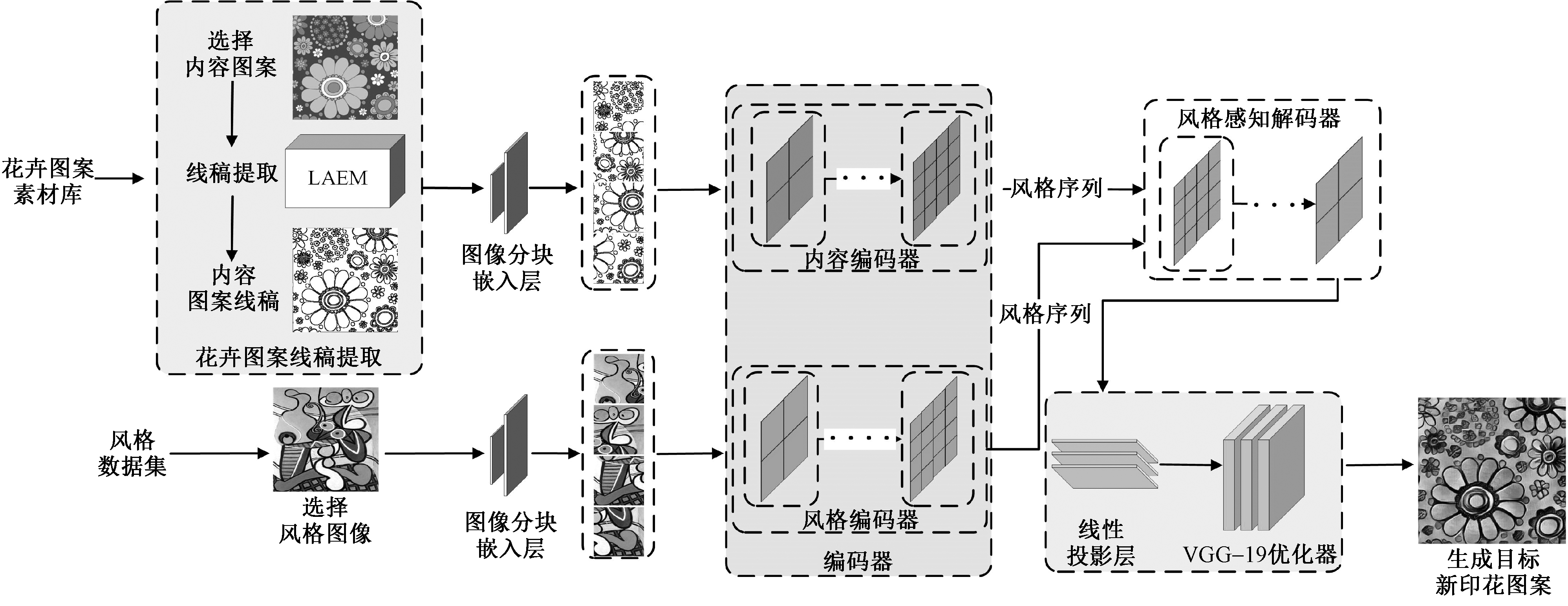
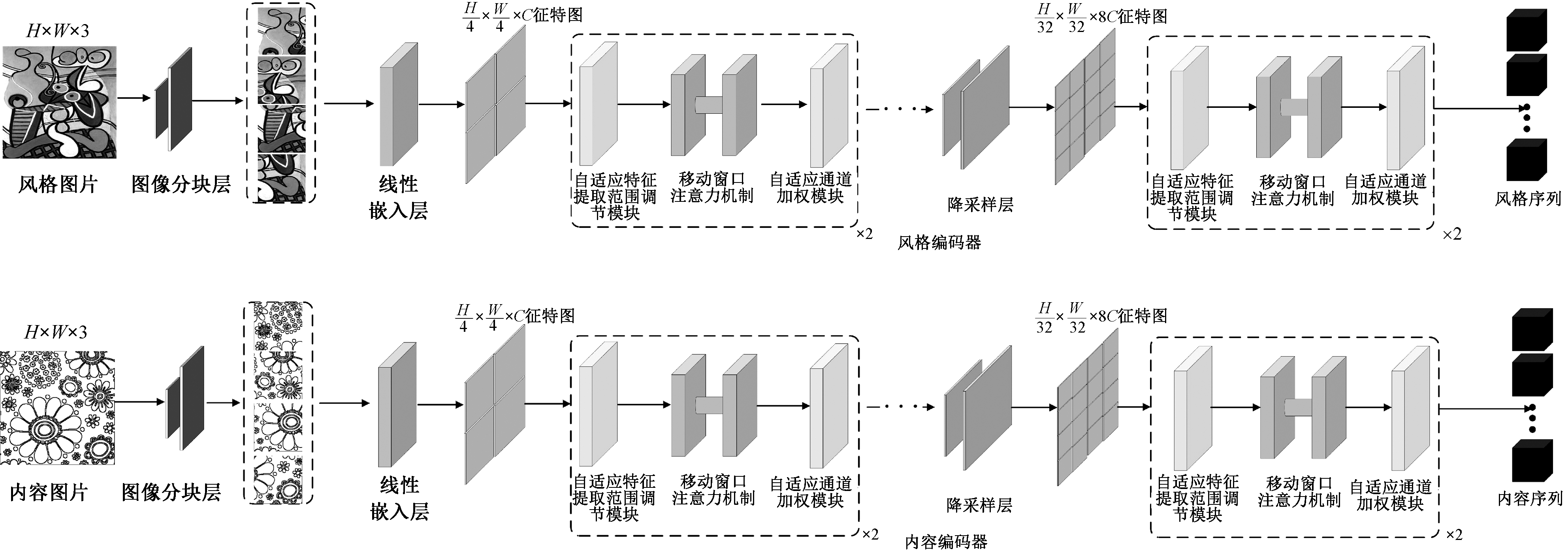
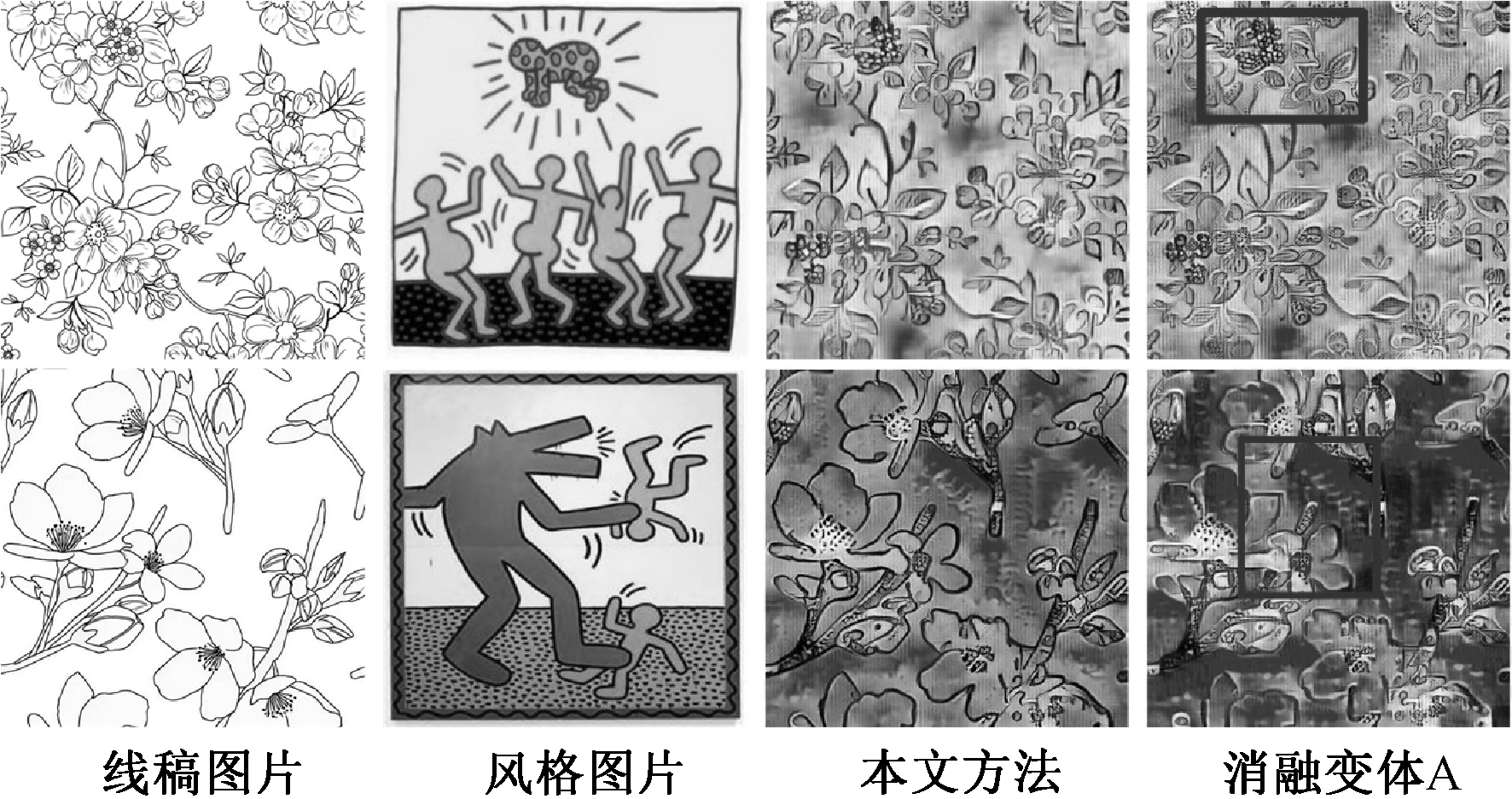
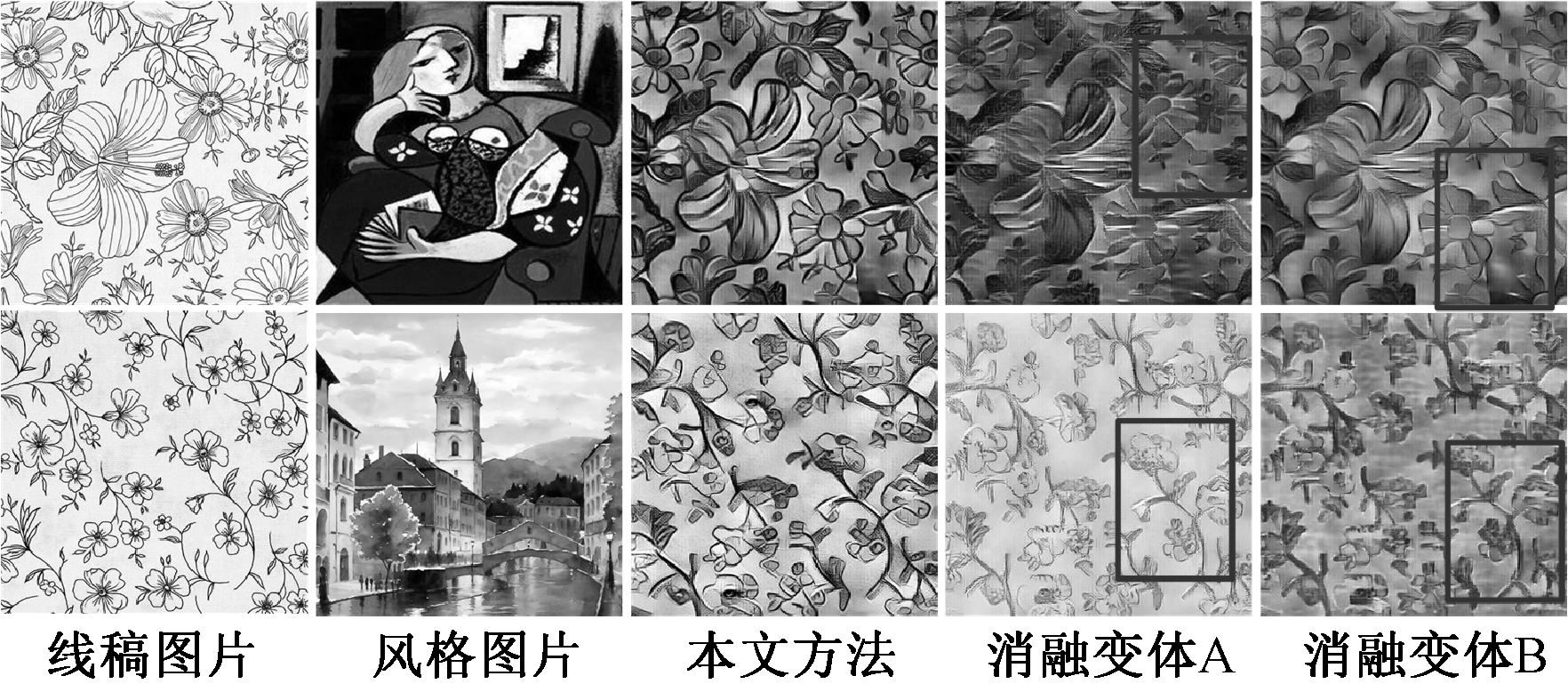
针对纺织品印花图案设计中风格迁移技术存在的纹样扭曲、纹理断层以及棋盘伪影等问题,提出了基于多尺度特征融合的花卉类印花图案风格迁移模型(MFFF-NST)。该模型主要由编码器和解码器组成,在内容图像预处理阶段引入线稿提取模块,可有效解决在迁移后出现的图案内容线条扭曲问题;编码器集成自适应特征提取范围调节模块、移动窗口注意力机制模块、自适应通道加权模块;解码器主要包含风格感知解码器,并通过引入VGG-19卷积网络作为优化器,消除解码过程中产生的棋盘效应,提升生成图像的视觉连贯性。实验结果表明:相较于传统方法,本文改进方法在技术指标上有显著提升,其中结构相似度、均方误差和图像感知相似度分别为0.758、0.032、0.365,且能生成更加细腻的风格纹理,显著减少由注意力机制所引发的伪影,生成更精美的印花图案作品。该研究成果为印花图案智能设计提供了高质量的风格迁移技术支撑,可有效提升纺织品设计的创意表达能力和生产效率。
中图分类号:
| [1] | 李栋高. 纺织品设计学[M]. 北京: 中国纺织出版社, 2006: 45-67 |
| LI Donggao. Textile design[M]. Beijing: China Textile&Apparel Press, 2006: 45-67. | |
| [2] | 田自秉, 吴淑生, 田青. 中国纹样史[M]. 北京: 高等教育出版社, 2003: 15-28. |
| TIAN Zibing, WU Shusheng, TIAN Qing. A history of Chinese decorative designs[M]. Beijing: Higher Education Press, 2003: 15-28. | |
| [3] | 徐进, 张亚丽. “纹” 以载道: 西南地区民族传统纹样的创新设计与实践研究[J]. 装饰, 2023(3): 115-119. |
| XU Jin, ZHANG Yali. Patterns for Tao: the innovative design and practical research on traditional ethnic patterns in Southwest China[J]. Art & Design, 2023(3): 115-119. | |
| [4] | 王楠, 吴金凤, 宋东阳. 基于文创IP产品开发的非遗数字化建档与服务研究: 以传统图案纹样为个案[J]. 档案管理, 2023(4): 61-63. |
| WANG Nan, WU Jinfeng, SONG Dongyang. Research on digital archiving and service of intangible cultural heritage based on Wenchuang IP product development: a case study of traditional patterns[J]. Archives Management, 2023(4): 61-63. | |
| [5] | 丁孝佳. 古韵新歌: 中国传统图案在当代服装设计中的植入路径[J]. 印染, 2022, 48(9): 89-90. |
| DING Xiaojia. New songs of ancient rhyme: the implantation path of Chinese traditional patterns in contemporary fashion design[J]. China Dyeing & Finishing, 2022, 48(9): 89-90. | |
| [6] | 萨拉·凯特利. 智能纺织品设计[M]. 上海: 东华大学出版社, 2018: 123-145. |
| KETTLEY S. Smart textile design[M]. Shanghai: Donghua University Press, 2018: 123-145. | |
| [7] | 文嘉琪, 李新荣, 冯文倩, 等. 印花面料的边缘轮廓快速提取方法[J]. 纺织学报, 2024, 45(5): 165-173. |
| WEN Jiaqi, LI Xinrong, FENG Wenqian, et al. Rapid extraction of edge contours of printed fabrics[J]. Journal of Textile Research, 2024, 45(5): 165-173. | |
| [8] | 冯威, 诸跃进, 肖金球, 等. 面向室内装饰的现代家居设计图像风格迁移研究[J]. 计算机应用与软件, 2020, 37(7): 170-175, 245. |
| FENG Wei, ZHU Yuejin, XIAO Jinqiu, et al. Image style transfer of modern home design for interior decoration[J]. Computer Applications and Software, 2020, 37(7): 170-175, 245. | |
| [9] | 郑畑子, 王建萍. 服装印花图案设计的感性研究[J]. 纺织学报, 2020, 41(8): 101-107. |
|
ZHENG Tianzi, WANG Jianping. Perceptual research on printing pattern design for clothing[J]. Journal of Textile Research, 2020, 41(8): 101-107.
doi: 10.1177/004051757104100203 |
|
| [10] | 姚琳涵, 张颖, 姚岚, 等. 基于多尺度纹理合成的刺绣风格迁移模型[J]. 纺织学报, 2023, 44(9): 84-90. |
| YAO Linhan, ZHANG Ying, YAO Lan, et al. Embroidery style transfer modeling based on multi-scale texture synthesis[J]. Journal of Textile Research, 2023, 44(9): 84-90. | |
| [11] | 茅佳怡, 苏淼. 基于人工智能生成内容技术的八达晕纹二维图像及三维模型生成方法[J]. 纺织学报, 2025, 46(4): 129-137. |
|
MAO Jiayi, SU Miao. 2-D image and 3-D model generation method of Badayun patterns based on artificial intelligence generated content technology[J]. Journal of Textile Research, 2025, 46(4): 129-137.
doi: 10.1177/004051757604600208 |
|
| [12] | 苏燕, 刘畅, 华佳. 基于风格迁移算法的苏州宋锦图案的数字化设计研究[J]. 包装工程, 2025, 46(6): 286-293. |
| SU Yan, LIU Chang, HUA Jia. Digital design of Suzhou song brocade patterns based on image style transfer algorithm[J]. Packaging Engineering, 2025, 46(6): 286-293. | |
| [13] | 罗仕鉴, 张泷予, 田馨, 等. 蜡染产品数智设计技术研究热点与发展趋势[J]. 丝绸, 2024, 61(7): 1-13. |
| LUO Shijian, ZHANG Longyu, TIAN Xin, et al. Hot spots and development trends of digital intelligent design technology research on batik products[J]. Journal of Silk, 2024, 61(7): 1-13. | |
| [14] | GEVINSON T, SPROAT H, LIM T, et al. Pattern: 100 fashion designers, 10 curators[M]. London: Phaidon Press, 2013: 156-189. |
| [15] | 徐鸣, 邱保金. 装饰图案设计[M]. 北京: 清华大学出版社, 2022: 89-112. |
| XU Ming, QIU Baojin. Decorative pattern design[M]. Beijing: Tsinghua University Press, 2022: 89-112. | |
| [16] | 陶晨, 段亚峰, 徐蓉蓉, 等. 蓝印花布纹样建模与重构[J]. 纺织学报, 2019, 40(3): 153-159, 167. |
| TAO Chen, DUAN Yafeng, XU Rongrong, et al. Modeling and reconstruction of blue calico patterns[J]. Journal of Textile Research, 2019, 40(3): 153-159, 167. | |
| [17] | DENG Y Y, TANG F, DONG W M, et al. StyTr2: image style transfer with transformers[C]// 2022 IEEE/CVF Conference on Computer Vision and Pattern Recognition (CVPR). New York: IEEE, 2022: 11316-11326. |
| [18] | LI Y J, FANG C, YANG J M, et al. Universal style transfer via feature transforms[J]. Universal style transfer via feature transforms[C]// Conference and Workshop on Neural Information Processing Systems. Long Beach: NIPS, 2017: 386-396. |
| [19] |
ZHANG C Y, XU X G, WANG L, et al. S2WAT: image style transfer via hierarchical vision transformer using strips window attention[J]. Proceedings of the AAAI Conference on Artificial Intelligence, 2024, 38(7): 7024-7032.
doi: 10.1609/aaai.v38i7.28529 |
| [20] | LIU S H, LIN T W, HE D L, et al. AdaAttN:revisit attention mechanism in arbitrary neural style transfer[C]// 2021 IEEE/CVF International Conference on Computer Vision (ICCV). New York: IEEE, 2021: 6629-6638. |
| [1] | 刘怡鑫, 万美怡, 张宁, 潘如如. 基于特征融合的复杂场景面料图像检索方法[J]. 纺织学报, 2026, 47(02): 188-194. |
| [2] | 张惠, 周璇, 王骏巍, 邓咏梅, 张凯兵. 交叉注意力激励的纺织数码印花图案色彩语义一致性生成[J]. 纺织学报, 2026, 47(01): 176-185. |
| [3] | 冯采伶, 于施佳, 韩曙光. 基于深度学习的服装关键点实时检测模型[J]. 纺织学报, 2026, 47(01): 196-206. |
| [4] | 刘贝芬, 张坦坦, 冯峥嵘. 基于改进Cycle GAN的清代官补风格迁移研究[J]. 纺织学报, 2025, 46(09): 213-224. |
| [5] | 茅佳怡, 苏淼. 基于人工智能生成内容技术的八达晕纹二维图像及三维模型生成方法[J]. 纺织学报, 2025, 46(04): 129-137. |
| [6] | 杨辰晖, 陈檬迪, 关艳, 肖红. 基于光栅动画图案合成光纤织物的设计及其实现[J]. 纺织学报, 2024, 45(07): 40-46. |
| [7] | 詹宇婷, 梅琛楠, 王焰, 肖红, 钟跃崎. 基于背景拼接与纹理模板的全自动迷彩图案设计[J]. 纺织学报, 2024, 45(05): 94-101. |
| [8] | 陈金文, 王鑫, 罗炜豪, 梅琛楠, 韦京艳, 钟跃崎. 面向虚拟现实的着装人体个性化头面部纹理生成技术[J]. 纺织学报, 2023, 44(09): 188-196. |
| [9] | 姚琳涵, 张颖, 姚岚, 郑晓萍, 魏文达, 刘成霞. 基于多尺度纹理合成的刺绣风格迁移模型[J]. 纺织学报, 2023, 44(09): 84-90. |
| [10] | 史伟民, 简强, 李建强, 汝欣, 彭来湖. 基于非线性扩散和多特征融合的提花针织物疵点检测[J]. 纺织学报, 2023, 44(07): 86-94. |
| [11] | 许晗, 沈雷, 陈涵. 居里叶分形在艾德莱斯裙装图案设计中的应用[J]. 纺织学报, 2023, 44(06): 191-199. |
| [12] | 刘军平, 张伏红, 胡新荣, 彭涛, 李丽, 朱强, 张俊杰. 基于多模态融合的个性化服装搭配推荐[J]. 纺织学报, 2023, 44(03): 176-186. |
| [13] | 郑畑子, 王建萍. 服装印花图案设计的感性研究[J]. 纺织学报, 2020, 41(08): 101-107. |
| [14] | 夏海浜, 黄鸿云, 丁佐华. 基于迁移学习与支持向量机的服装舒适度评估[J]. 纺织学报, 2020, 41(06): 125-131. |
| [15] | 朱浩, 丁辉, 尚媛园, 邵珠宏. 多纹理分级融合的织物缺陷检测算法[J]. 纺织学报, 2019, 40(06): 117-124. |
|
||
 京公网安备11010502044800号