纺织学报 ›› 2026, Vol. 47 ›› Issue (02): 188-194.doi: 10.13475/j.fzxb.20250602401

• 纺织工程 • 上一篇    下一篇

基于特征融合的复杂场景面料图像检索方法

刘怡鑫, 万美怡, 张宁(), 潘如如   

  1. 江南大学 纺织科学与工程学院, 江苏 无锡 214122
  • 收稿日期:2025-06-11 修回日期:2025-11-04 出版日期:2026-02-15 发布日期:2026-04-24
  • 通讯作者: 张宁(1992—),男,副研究员,博士。主要研究方向为数字化纺织技术。E-mail:zhangn_jn@jiangnan.edu.cn
  • 作者简介:刘怡鑫(2000—),女,硕士生。主要研究方向为面料图像检索。
  • 基金资助:
    国家自然科学基金项目(62202202)

Feature fusion approach for fabric image retrieval under complex scenarios

LIU Yixin, WAN Meiyi, ZHANG Ning(), PAN Ruru   

  1. College of Textile Science and Engineering, Jiangnan University, Wuxi, Jiangsu 214122, China
  • Received:2025-06-11 Revised:2025-11-04 Published:2026-02-15 Online:2026-04-24

摘要:

为解决光照不均、面料折叠、遮挡等复杂场景下图像特征易丢失的问题,提出一种基于特征融合的面料图像检索方法。通过收集不同场景下的面料图像,构建复杂场景下的面料图像数据集。随后,采用尺度不变特征变换(SIFT)算法提取局部纹理特征,并利用局部聚合描述符向量(VLAD)进行特征聚合生成全局描述;同时,利用预训练卷积神经网络(CNN)模型提取图像深层特征。最后,通过权重分配策略融合图像的低阶特征和高阶特征,实现复杂场景下的面料图像检索。在超28 000幅图像的数据集上进行实验的结果表明:所提方法前50幅图像的平均检索精度达到0.845,前5幅检索结果的查准率为78.8%,召回率为65.1%,验证了所提方法的可行性和有效性,可为织造企业和电商平台的面料检索提供参考。

关键词: 面料检索, 特征融合, 复杂场景图像, 尺度不变特征变换算法, 卷积神经网络

Abstract:

Objective This study focuses on the critical issue of feature loss in fabric image retrieval under complex real-world conditions, including uneven illumination, fabric folding, and occlusions. These challenges significantly degrade retrieval performance, limiting practical applications. To address this, we propose a novel feature fusion-based method that integrates complementary image features to improve retrieval robustness and accuracy. The research is important for facilitating intelligent fabric identification, which benefits textile production workflows and online fabric commerce.

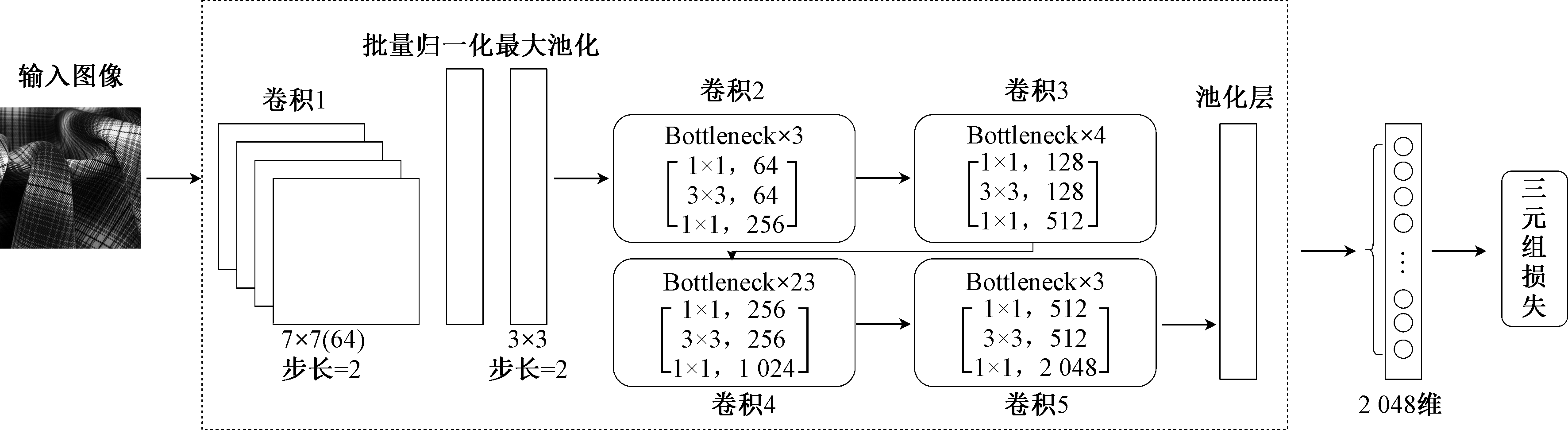
Method A fabric image dataset with over 28 000 images was constructed, covering diverse complex scenes with varying lighting, folds, and occlusions. Local texture features were extracted using the Scale-Invariant Feature Transform (SIFT), which is robust to scale and rotation. These were aggregated into compact global descriptors via the Vector of Locally Aggregated Descriptors (VLAD). Simultaneously, deep semantic features were obtained from a pretrained Convolutional Neural Network (CNN) model to capture high-level information. Finally, a weighted fusion strategy combined low-level handcrafted and high-level deep features to enhance representation and improve retrieval performance under challenging conditions.

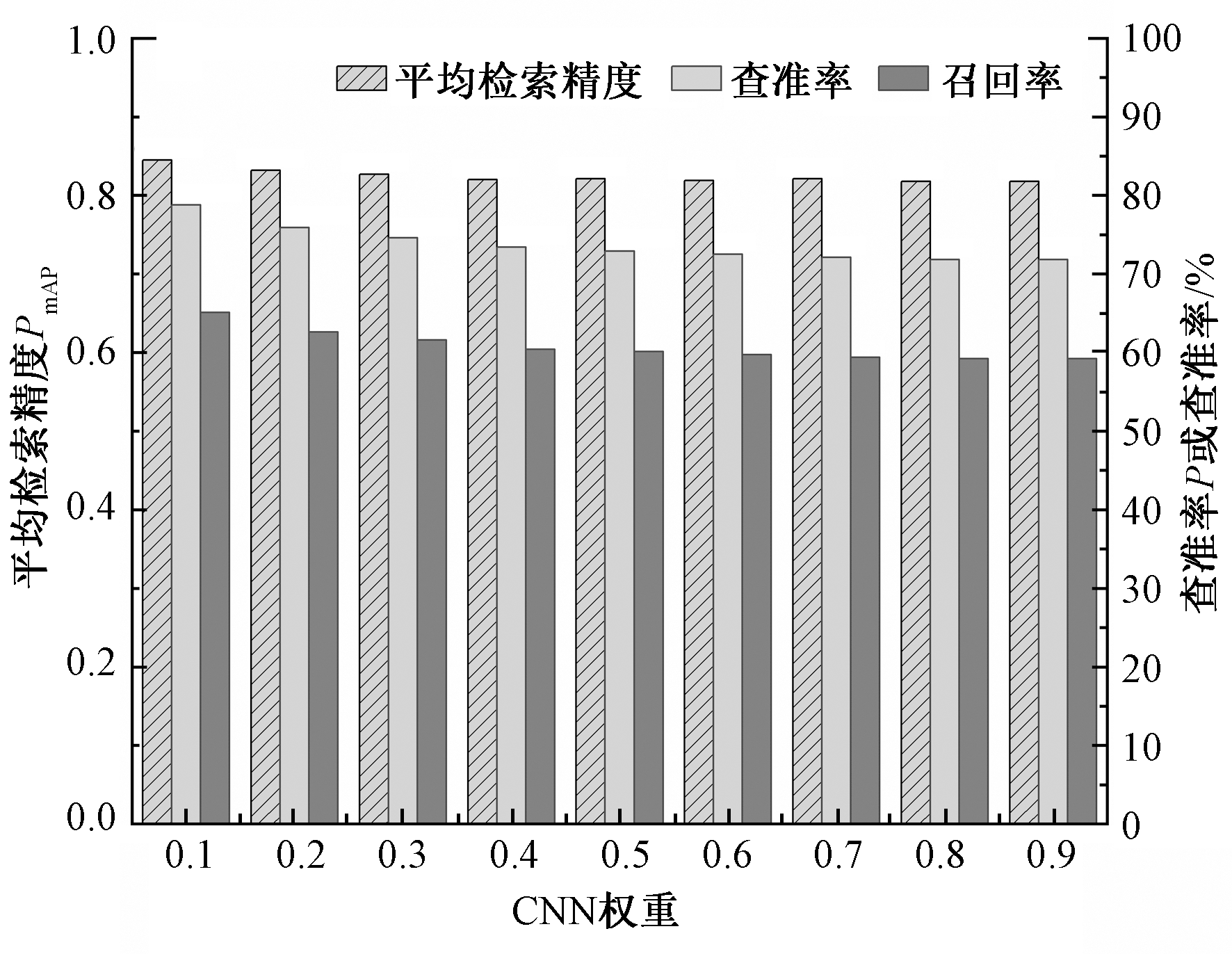
Results Experiments were conducted on a dataset consisting of over 28 000 fabric images collected under diverse and complex conditions. The proposed feature fusion method achieved a mean average precision (PmAP) of 0.845. The precision at top 5 retrieved images (P) was 78.8%, and the recall at top 5 (R) reached 65.1%. These results reflect high top-ranked relevance and broad retrieval coverage under challenging scenarios. Ablation studies were carried out to investigate the influence of key parameters. When varying the number of VLAD dimensions retained after PCA, retrieval performance changed accordingly, with the best results obtained when 1 024 dimensions were preserved. Different CNN backbone networks were evaluated, including AlexNet, VGG16, ResNet18, and ResNet101. Among them, ResNet101 yielded comparatively better retrieval outcomes. Fusion weight of allocation experiments indicated that assigning higher weights to handcrafted features led to higher PmAP, P, and R values. Comparisons with representative methods, including handcrafted approaches (MLBP, SIFT-ORB, GCM, FLBP) and deep learning models (VGG16), showed that the fusion method consistently achieved higher retrieval accuracy. Under varying conditions such as illumination changes, fabric folding, and partial occlusion, the method maintained stable performance. Evaluation across different fabric categories and scene complexities demonstrated consistent ranking results. These findings suggest that combining handcrafted and deep features contributes to improved retrieval performance across a range of scenarios.

Conclusion This paper presents a fabric image retrieval method tailored for complex scenarios by fusing handcrafted and deep features. The integration leverages the fine-grained descriptive power of traditional features and the semantic abstraction capabilities of deep learning, resulting in enhanced discriminability and robustness. Experimental results demonstrate that the proposed approach outperforms both conventional techniques and the VGG16 model, achieving a maximum PmAP 0.875 and P of 78.8% while maintaining efficient retrieval speed. The method exhibits stable performance under challenging conditions such as intricate textures and diverse patterns, making it suitable for practical applications like fabric retrieval and quality inspection. Future work will explore multi-scale feature fusion and lightweight network design to further improve adaptability and scalability across various deployment environments. This study highlights the potential of hybrid feature strategies in bridging the gap between low-level detail and high-level semantics, providing valuable insights for industrial vision systems.

Key words: fabric retrieval, feature fusion, complex scenario image, scale-invariant feature transform, convolutional neural network

中图分类号: 

  • TS941.26

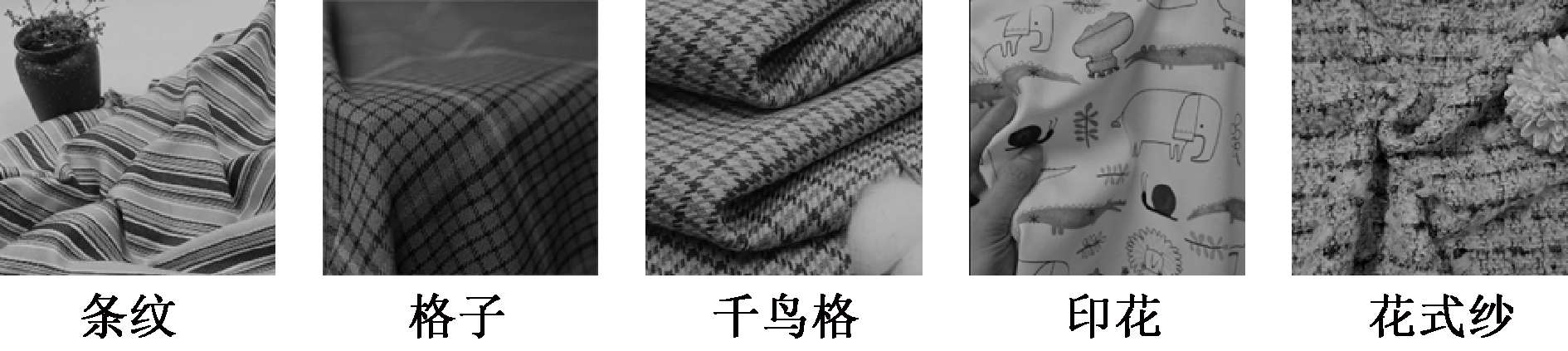
图1

数据集面料示例"

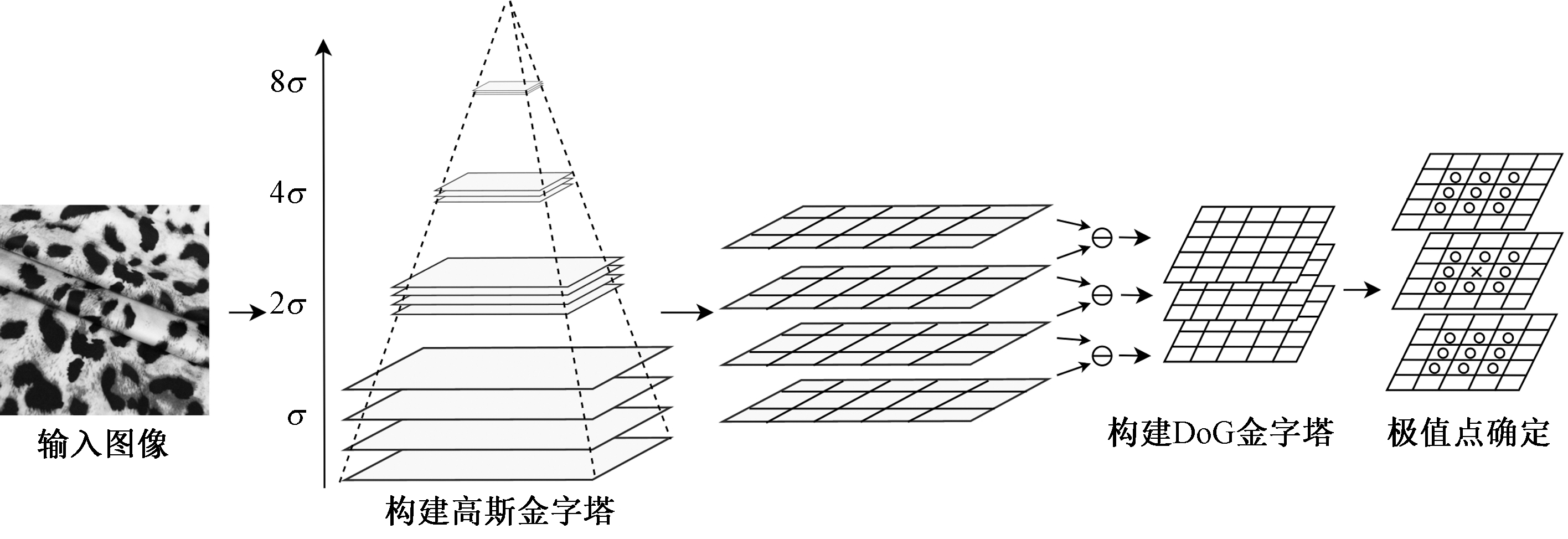
图2

DoG金字塔极值点检测流程"

表1

不同维度下的结果比较"

维度 PmAP P/% R/%
2 048 0.594 60.2 50.2
1 024 0.607 61.8 51.3
512 0.590 61.0 50.6
256 0.574 59.0 48.8

图3

本文使用的ResNet101网络模型架构"

表2

不同高阶特征的结果比较"

CNN模型 PmAP P/% R/%
AlexNet 0.556 51.2 41.8
VGG16 0.492 46.1 37.5
ResNet18 0.635 58.3 47.9
ResNet101 0.688 62.9 51.4

图4

不同权重分配下的检索结果"

图5

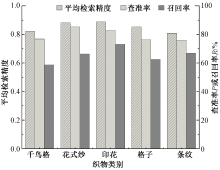
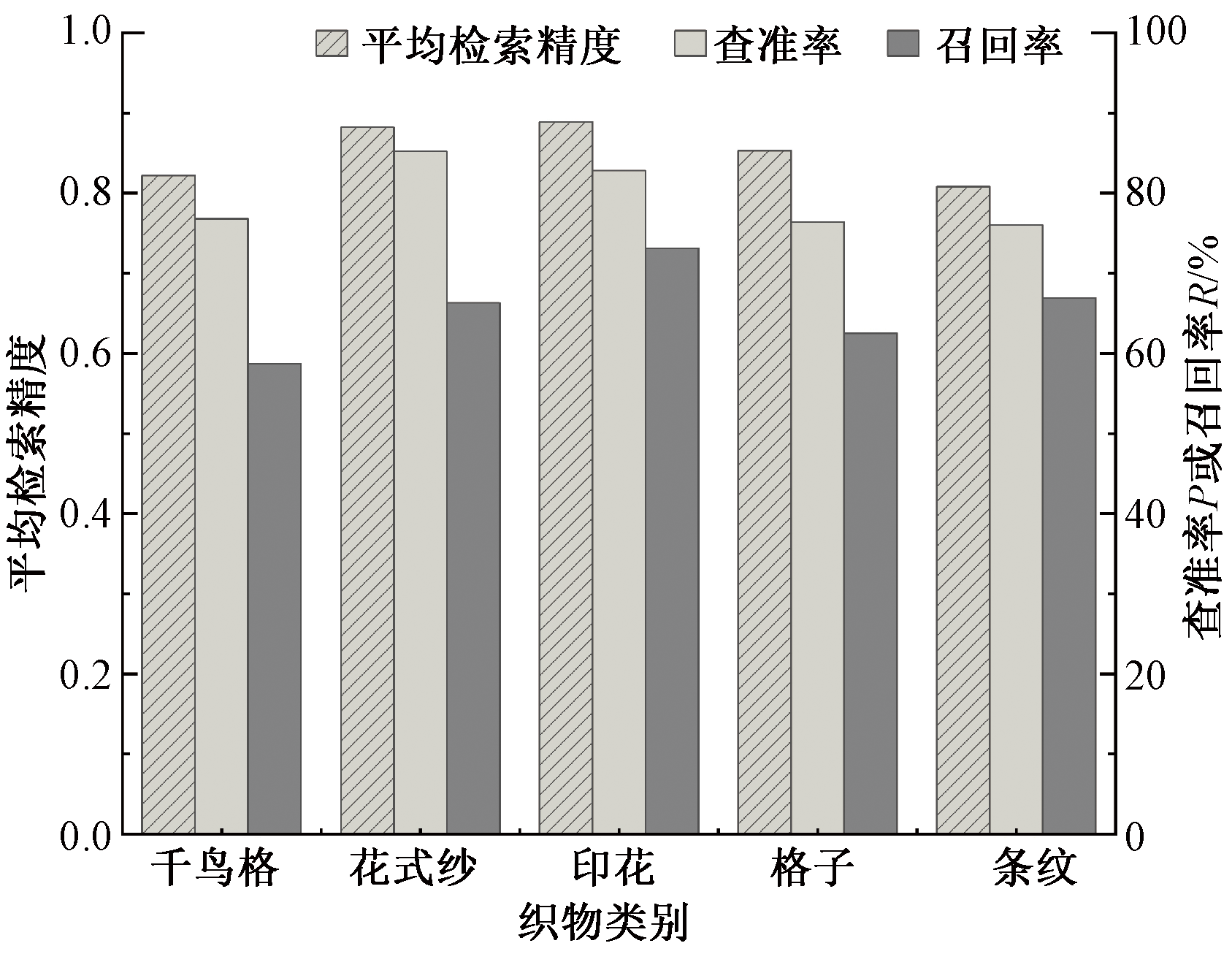
不同织物类别检索结果"

图6

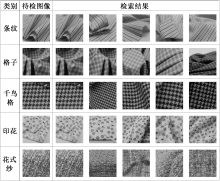
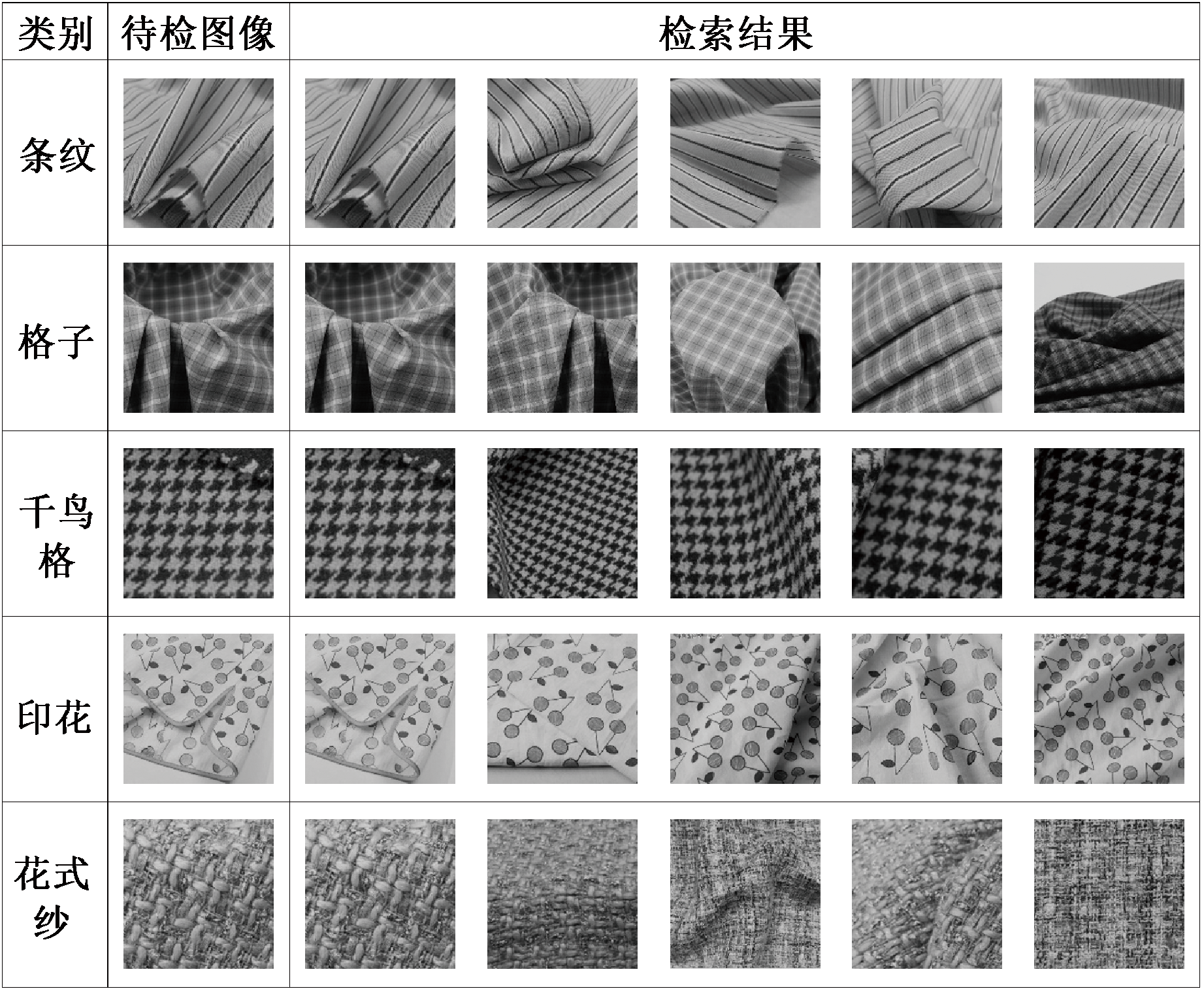
基于特征融合检索结果示例"

表3

低阶特征、高阶特征及融合特征检索性能比较"

指标方法 PmAP P/% R/%
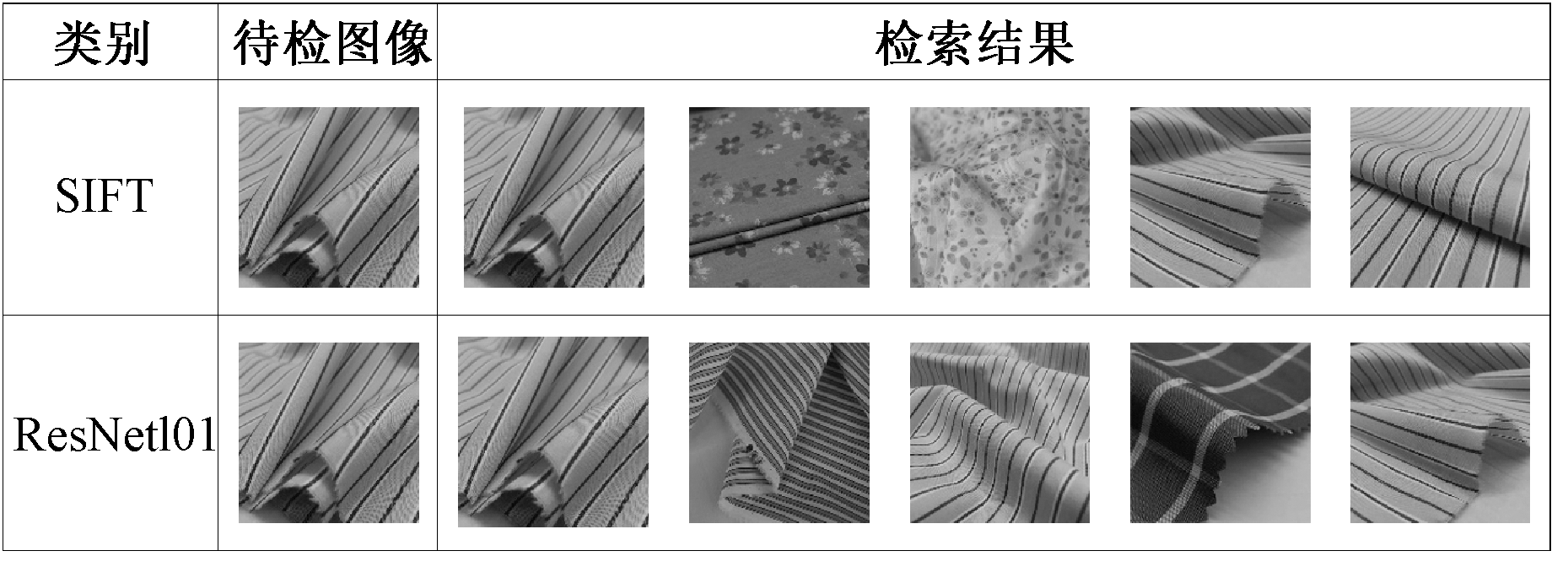
SIFT 0.607 61.8 51.3
ResNet101 0.688 62.9 51.4
本文方法 0.845 78.8 65.1

图7

单独采用SIFT或ResNet101特征的检索结果"

表4

不同检索方法的性能对比"

方法 PmAP P/% R/% 耗时/s
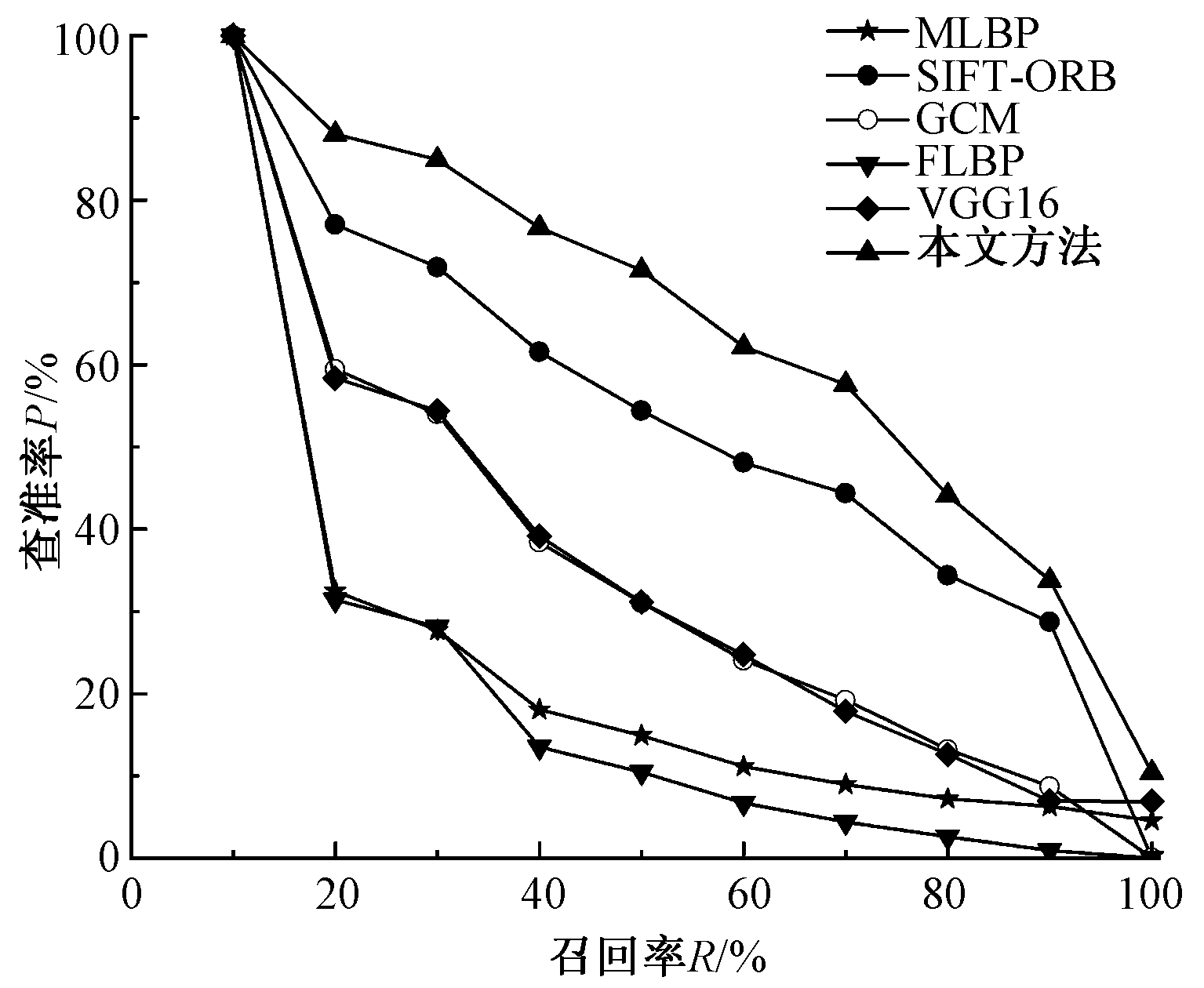
MLBP 0.824 31.6 26.0 1.16
SIFT-ORB 0.609 62.6 52.2 0.53
GCM 0.435 45.4 37.0 0.89
FLBP 0.273 30.7 25.6 0.23
VGG16 0.756 46.1 37.5 0.33
本文方法 0.845 78.8 65.1 0.78

图8

不同图像检索方法的P-R曲线"

[1] 吴传彬, 刘骊, 付晓东, 等. 结合显著区域检测和手绘草图的服装图像检索[J]. 纺织学报, 2019, 40(7): 174-181.
WU Chuanbin, LIU Li, FU Xiaodong, et al. Clothing image retrieval based on salient region detection and hand-drawn sketch[J]. Journal of Textile Research, 2019, 40(7): 174-181.
[2] ZHANG N, XIANG J, WANG L, et al. Image retrieval of wool fabric. part II: based on low-level color features[J]. Textile Research Journal, 2020, 90(7/8): 797-808.
doi: 10.1177/0040517519881819
[3] 赵文浩, 向军, 张宁, 等. 基于SURF和VLAD特征编码的面料图案检索研究[J]. 纺织学报, 2023, 44(8): 110-117.
ZHAO Wenhao, XIANG Jun, ZHANG Ning, et al. Research on fabric pattern retrieval based on SURF and VLAD feature coding[J]. Journal of Textile Research, 2023, 44(8): 110-117.
[4] 谷迁, 袁理, 杨亚莉, 等. 融合高级语义特征的色纺织物图像快速检索[J]. 纺织学报, 2022, 43(3): 89-94.
GU Qian, YUAN Li, YANG Yali, et al. Fast retrieval of colored textile images with advanced semantic features[J]. Journal of Textile Research, 2022, 43(3): 89-94.
[5] 文嘉琪, 李新荣, 冯文倩, 等. 印花面料的边缘轮廓快速提取方法[J]. 纺织学报, 2024, 45(5): 165-173.
WEN Jiaqi, LI Xinrong, FENG Wenqian, et al. Fast edge contour extraction method for printed fabrics[J]. Journal of Textile Research, 2024, 45(5): 165-173.
[6] HUANG G, LIU Z, VAN DER MAATEN L, et al. Densely connected convolutional networks[C]// 2017 IEEE Conference on Computer Vision and Pattern Recognition (CVPR). New York: IEEE, 2017: 2261-2269.
[7] 计蕴容, 周韦润. 基于多特征融合的面料图像检索系统[J]. 计算机与数字工程, 2021, 49(7): 1460-1464.
JI Yunrong, ZHOU Weirun. Fabric image retrieval system based on multi-feature fusion[J]. Computer and Digital Engineering, 2021, 49(7): 1460-1464.
[8] GOU L M, ZHANG J, LI N W, et al. Weighted assignment fusion algorithm of evidence conflict based on Euclidean distance and weighting strategy, and application in the wind turbine system[J]. PLoS One, 2022, 17(1): e0262883.
doi: 10.1371/journal.pone.0262883
[9] ZHANG L, LIU X, LU Z, et al. Lace fabric image retrieval based on multi-scale and rotation invariant lbp[C]// Proceedings of the 7th International Conference on Internet Multimedia Computing and Service. Zhangjiajie: Jishou University, 2015: 1-5.
[10] CHHABRA P, GARG N K, KUMAR M. Content-based image retrieval system using ORB and SIFT features[J]. Neural Computing and Applications, 2020, 32(7): 2725-2733.
doi: 10.1007/s00521-018-3677-9
[11] JING J F, LI Q, LI P F, et al. A new method of printed fabric image retrieval based on color moments and gist feature description[J]. Textile Research Journal, 2016, 86(11): 1137-1150.
doi: 10.1177/0040517515606378
[12] ZHANG N, XIANG J, WANG L, et al. Image retrieval of wool fabric. part I: based on low-level texture features[J]. Textile Research Journal, 2019, 89(19/20): 4195-4207.
doi: 10.1177/0040517519829003
[13] GE Y, JIANG S L, XU Q Y, et al. Exploiting representations from pre-trained convolutional neural networks for high-resolution remote sensing image retrieval[J]. Multimedia Tools and Applications, 2018, 77(13): 17489-17515.
doi: 10.1007/s11042-017-5314-5
[1] 冯峥嵘, 刘贝芬, 陈孟元. 基于多尺度特征融合的花卉类印花图案风格迁移模型[J]. 纺织学报, 2026, 47(02): 264-272.
[2] 冯采伶, 于施佳, 韩曙光. 基于深度学习的服装关键点实时检测模型[J]. 纺织学报, 2026, 47(01): 196-206.
[3] 朱耀麟, 李政, 张强, 陈鑫, 陈锦妮, 张洪松. 基于近红外光谱和多特征网络的羊毛和羊绒定量检测[J]. 纺织学报, 2025, 46(09): 104-111.
[4] 郑小虎, 杜思淇, 刘永青, 王健, 陈峰. 基于一维卷积神经网络的棉纱线质量预测[J]. 纺织学报, 2025, 46(09): 120-127.
[5] 张晓婷, 赵鹏宇, 潘如如, 高卫东. 基于深度特征融合的格子织物图像检索方法[J]. 纺织学报, 2025, 46(08): 89-95.
[6] 顾孟尚, 张宁, 潘如如, 高卫东. 结合频域卷积模块的机织物图像疵点目标检测[J]. 纺织学报, 2025, 46(05): 159-168.
[7] 王小东, 陈俊鹏, 裴泽光. 基于U-Net卷积神经网络的织物压力传感阵列串扰解决方法[J]. 纺织学报, 2024, 45(07): 86-93.
[8] 胡旭东, 汤炜, 曾志发, 汝欣, 彭来湖, 李建强, 王博平. 基于轻量化卷积神经网络的纬编针织物组织结构分类[J]. 纺织学报, 2024, 45(05): 60-69.
[9] 赵文浩, 向军, 张宁, 潘如如. 基于SURF和VLAD特征编码的面料图案检索研究[J]. 纺织学报, 2023, 44(08): 110-117.
[10] 史伟民, 简强, 李建强, 汝欣, 彭来湖. 基于非线性扩散和多特征融合的提花针织物疵点检测[J]. 纺织学报, 2023, 44(07): 86-94.
[11] 刘军平, 张伏红, 胡新荣, 彭涛, 李丽, 朱强, 张俊杰. 基于多模态融合的个性化服装搭配推荐[J]. 纺织学报, 2023, 44(03): 176-186.
[12] 金守峰, 侯一泽, 焦航, 张鹏, 李宇涛. 基于改进AlexNet模型的抓毛织物质量检测方法[J]. 纺织学报, 2022, 43(06): 133-139.
[13] 江学为, 田润雨, 卢方骁, 张艺. 基于模拟评分的服装推荐改进算法[J]. 纺织学报, 2021, 42(12): 138-144.
[14] 孟朔, 夏旭文, 潘如如, 周建, 王蕾, 高卫东. 基于卷积神经网络的机织物密度均匀性检测[J]. 纺织学报, 2021, 42(02): 101-106.
[15] 王奕文, 罗戎蕾, 康宇哲. 基于卷积神经网络的汉服关键尺寸自动测量[J]. 纺织学报, 2020, 41(12): 124-129.
Viewed
Full text


Abstract

Cited

  Shared   
  Discussed   
No Suggested Reading articles found!