纺织学报 ›› 2026, Vol. 47 ›› Issue (02): 195-204.doi: 10.13475/j.fzxb.20250907601

• 染整工程 • 上一篇    下一篇

罗布麻脱胶-染色一浴活性染料筛选及工艺优化

赵君丽1,2, 肖远淑1,2, 陈诚1,2, 李帅1,2, 宋均燕1,2, 单国华1,2()   

  1. 1 新疆大学 特色纺织品与清洁染整技术重点实验室, 新疆 乌鲁木齐 830017
    2 新疆大学 新疆智能与绿色纺织重点实验室, 新疆 乌鲁木齐 830017
  • 收稿日期:2025-09-22 修回日期:2025-11-11 出版日期:2026-02-15 发布日期:2026-04-24
  • 通讯作者: 单国华(1980—),男,副教授,博士。主要研究方向为纺织品清洁染整。E-mail:sgh_116@126.com
  • 作者简介:赵君丽(2000—),女,硕士生。主要研究方向为罗布麻脱胶与染色。

    说明:本文入选中国纺织工程学会第26届陈维稷论文卓越行动计划

  • 基金资助:
    新疆维吾尔自治区重点研发项目(2023B02045-3)

Screening of reactive dyes and process optimization for one-bath degumming-dyeing of Apocynum venetum bast fibers

ZHAO Junli1,2, XIAO Yuanshu1,2, CHEN Cheng1,2, LI Shuai1,2, SONG Junyan1,2, SHAN Guohua1,2()   

  1. 1 Key Laboratory of Characteristic Textiles and Clean Dyeing & Finishing Technology of Xinjiang, Xinjiang University, Urumqi, Xinjiang 830017, China
    2 Key Laboratory of Intelligent and Green Textile of Xinjiang, Xinjiang University, Urumqi, Xinjiang 830017, China
  • Received:2025-09-22 Revised:2025-11-11 Published:2026-02-15 Online:2026-04-24

摘要:

针对罗布麻传统脱胶与染色两浴两步法工艺存在加工效率低、污染排放大的问题,提出脱胶染色一浴法工艺,以实现罗布麻短流程加工。首先,选取M型、BES型及Cibacron型3种活性染料为研究对象,通过测定处理后罗布麻韧皮纤维的颜色参数、耐皂洗色牢度等指标,筛选适配的活性染料;其次,采用响应面法优化一浴法工艺参数,并从耗水量、耗电量及废水化学需氧量(COD)等方面,与两浴法进行比较。最后,借助红外光谱仪、扫描电镜和X射线粉末衍射仪等表征处理后罗布麻韧皮纤维的理化性能。结果表明:M型活性染料染色罗布麻在染色深度、色光均衡性及色牢度方面表现较优;在优化工艺条件(双氧水(30%)用量20%(o.w.f)、生物酶质量浓度1.67 g/L、染色时间60 min)下,罗布麻残胶率降至6.28%,K/S值达3.38,单纤维断裂强力达16.76 cN,耐皂洗色牢度达4~5级;与两浴法相比,一浴法可节水38.7%、节电42.5%、缩短工时12.4%,且废水COD值下降51.8%,显著提升加工效率,兼顾绿色环保性与经济可行性。

关键词: 罗布麻, 脱胶, 染色, 一浴法, 活性染料, 微波预处理, 响应面法

Abstract:

Objective Conventional two-bath/two-step sequence, namely alkaline degumming followed by reactive dyeing, employed for Apocynum venetum, is featured by high water and energy consumption and heavy effluent loads. Herein, a one-bath integrated degumming-dyeing protocol was developed to achieve more efficient processing of Apocynum venetum.

Method Three different types of reactive dyes, namely, M-type, BES-type and Cibacron-type, were used as dyes in one-bath process, and the reactive dye suitable for the process was screened out. Response Surface Methodology (RSM) optimization was then used to optimize the one-bath process. To evaluate the effectiveness of the proposed new strategy, the one-bath process was compared with the two-bath process in terms of water consumption, electricity consumption and chemical oxygen demand (COD) of wastewater. Finally, the physical and chemical properties of the treated Apocynum venetum were characterized by Fourier Transform Infrared(FT-IR), Scanning Electron Microscopy(SEM) and X-Ray Diffraction(XRD).

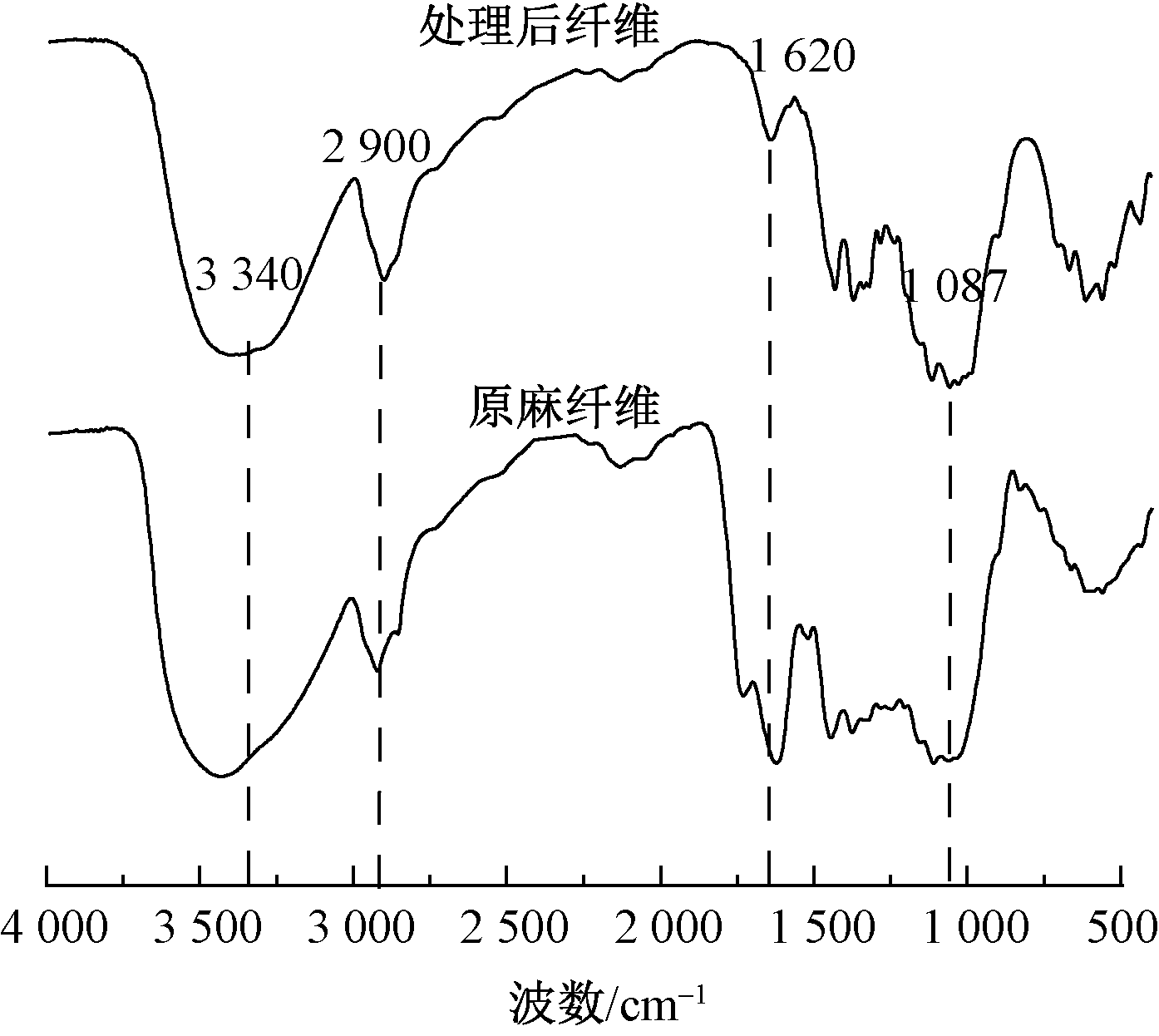
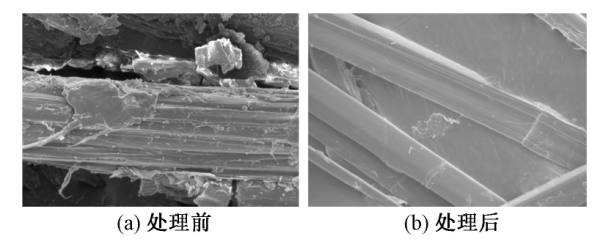
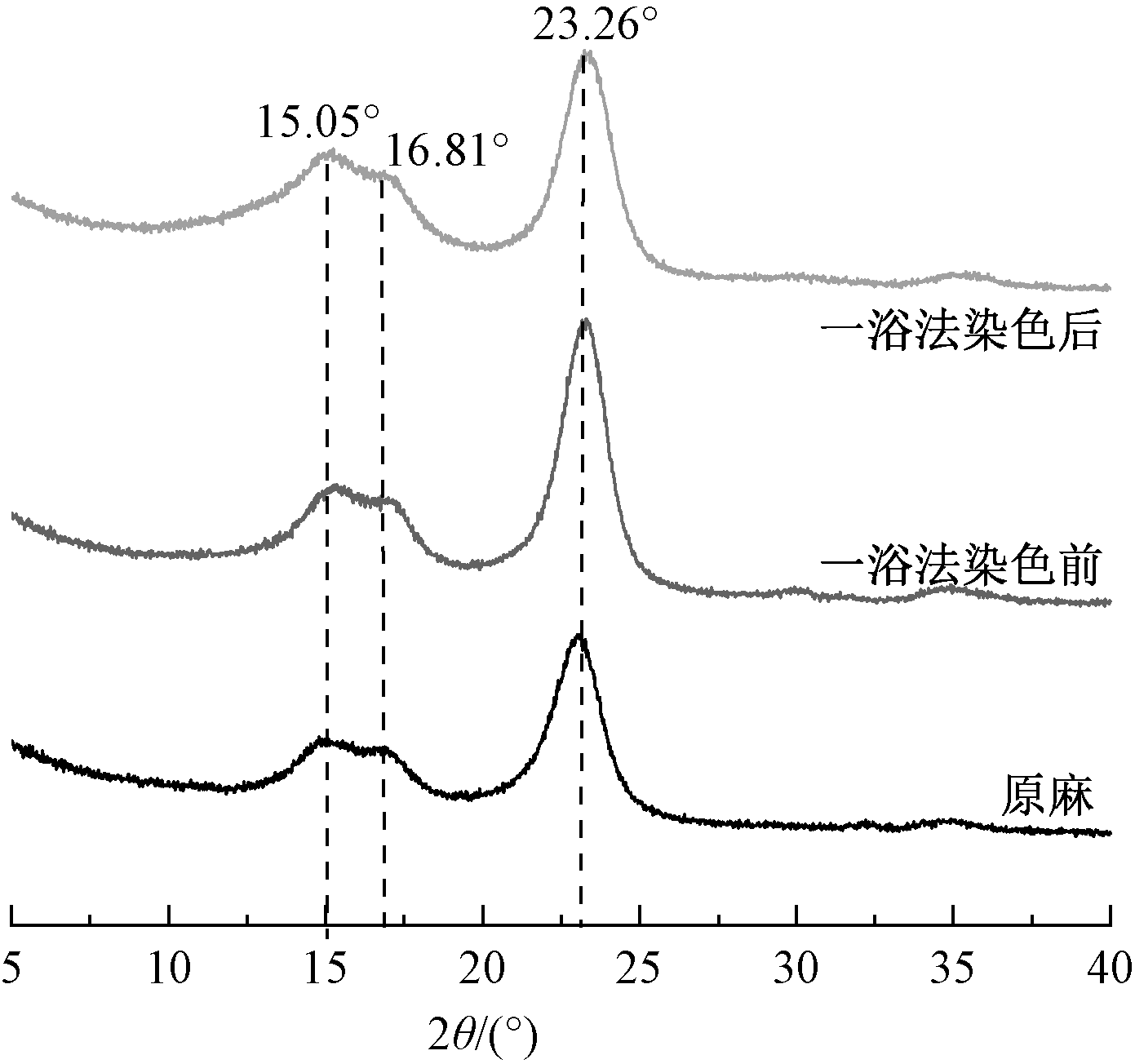
Results Among the three reactive dyes evaluated, M-type demonstrated the best performance in the one-bath process. Optimization via Response Surface Methodology yielded the following conditions: dye concentration 1% (o.w.f), enzyme 1.75 g/L, degumming at 80 ℃, H2O2 (30%) 25% (o.w.f), and dyeing at 60 ℃ for 60 min. These parameters resulted in a residual gum rate of 6.2%, a high K/S value of 3.38, and excellent wash fastness (grade 4-5). The one-bath process showed significant advantages over the conventional two-bath method in reducing water consumption by 38.7%, energy use by 42.5%, processing time by 12.4%, and wastewater COD by 51.8%. Furthermore, the treated fibers exhibited superior mechanical properties, with single-fiber breaking strength increasing to 16.76 cN from 13.05 cN. Physicochemical characterization confirmed effective gum removal and structural changes. FT-IR indicated removal of non-cellulosic components, SEM revealed smoother fiber surfaces, and XRD showed increased crystallinity index from 77.37% to 92.27%.

Conclusion This research successfully established a one-bath degumming and dyeing process for Apocynum venetum fiber using M-type reactive dyes. This integrated approach eliminates intermediate steps, significantly reducing resource consumption, processing time, and environmental impact. The optimized process not only ensured efficient gum removal and high dyeing quality but also remarkably improved the fiber's tensile strength. These findings were corroborated by multiple analytical techniques, confirming the effectiveness and potential of this method as a sustainable and economically viable alternative for valorizing Apocynum venetum fiber.

Key words: Apocynum venetum, degumming, dyeing, one-bath process, reactive dye, microwave pretreatment, response surface methodology

中图分类号: 

  • TS121.8

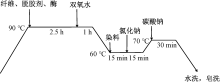
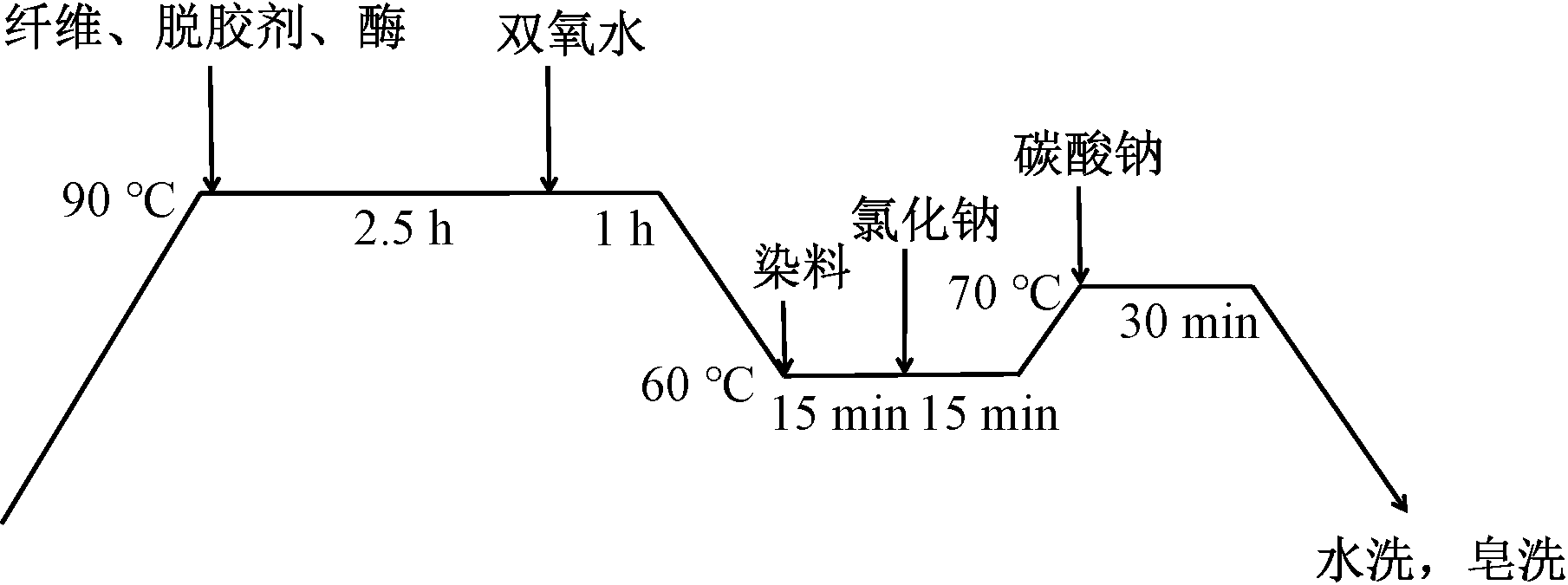
图1

脱胶-染色一浴法工艺流程图"

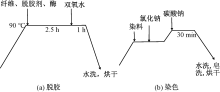
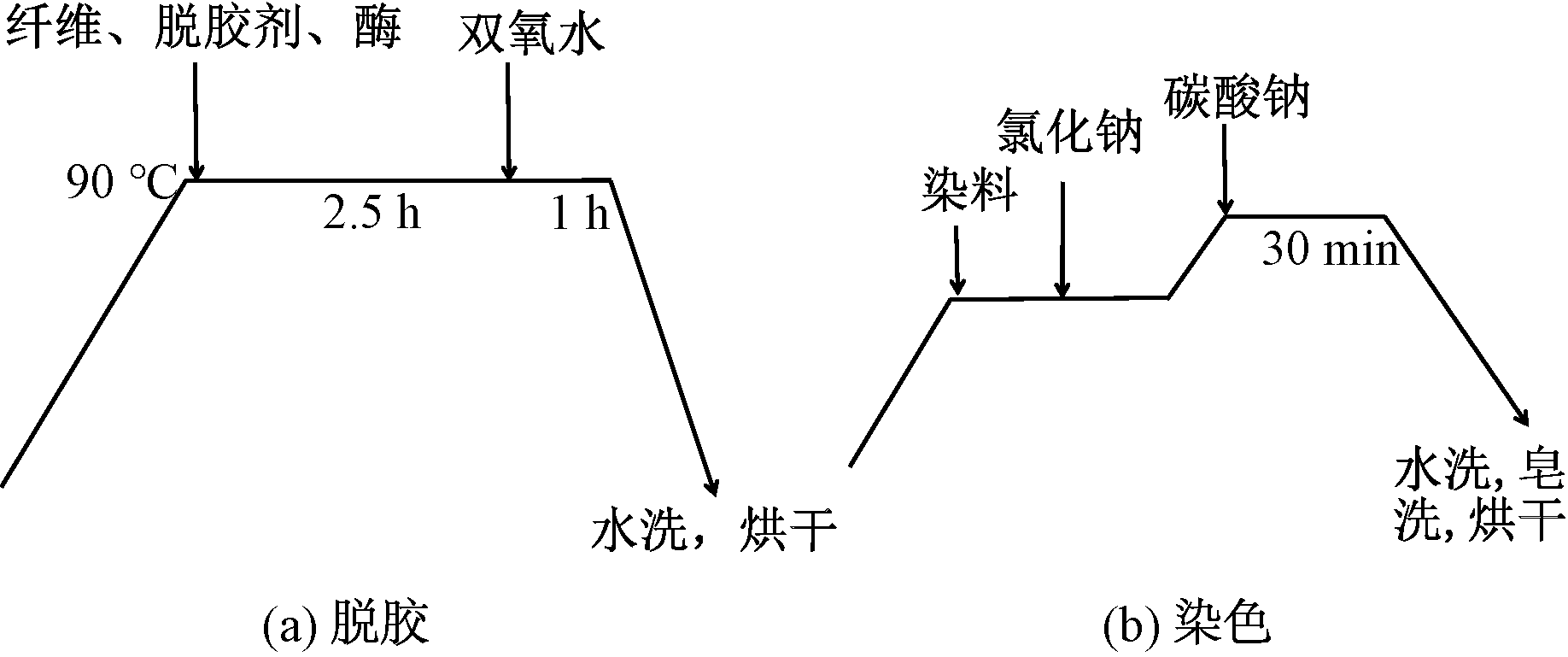
图2

脱胶-染色两浴法工艺流程图"

图3

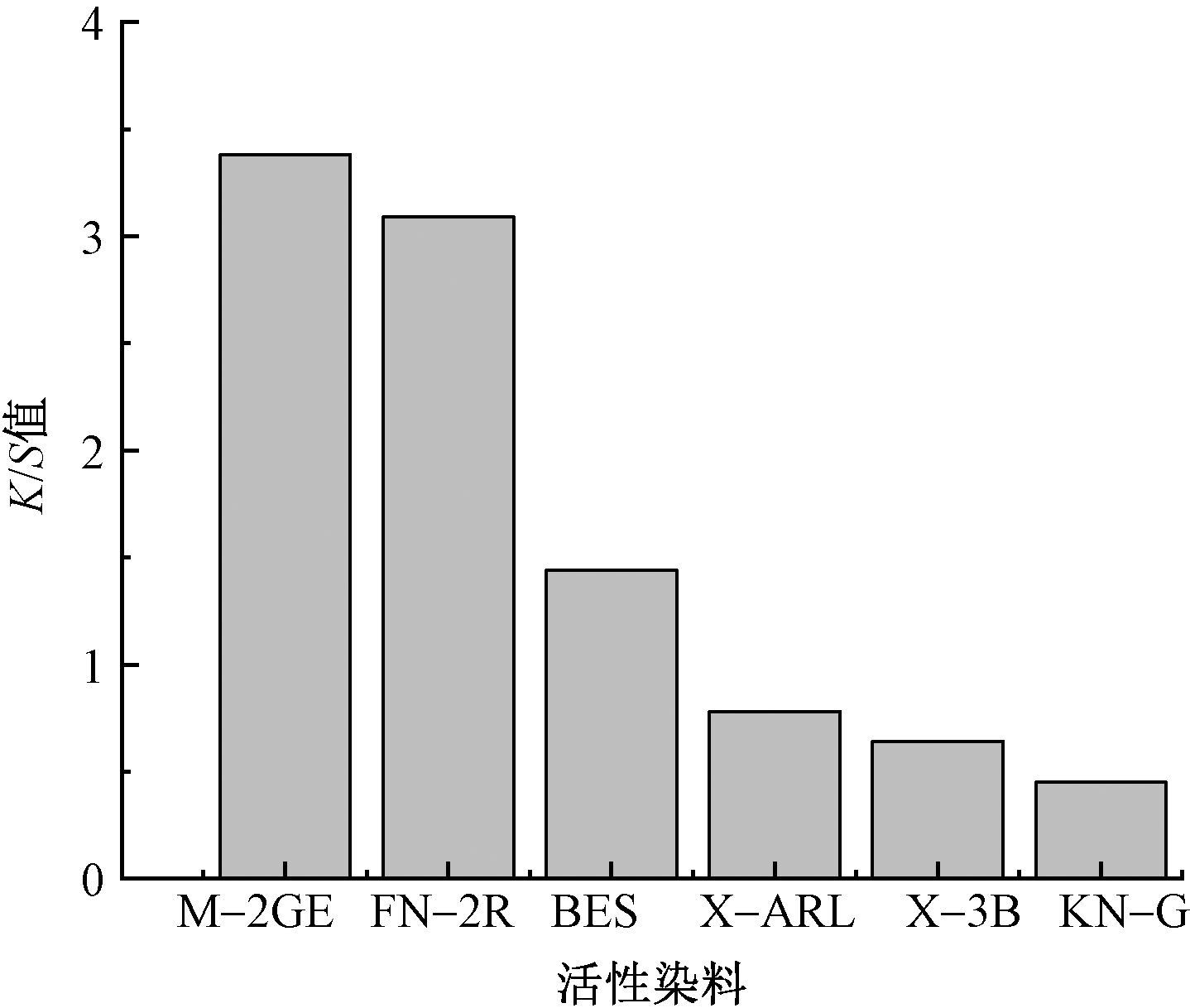
罗布麻韧皮纤维蓝色活性染料一浴法染色后K/S值"

表1

3种不同红色活性染料对罗布麻的染色参数"

颜色 染料类型 染料名称 L* a* b* c* K/S
M M-3BE 50.09 22.10 -4.33 22.52 2.58
红色 BES BES红 46.44 20.36 -4.07 20.77 3.14
CibacronFN FN-2BL 55.11 14.55 -3.96 15.08 1.60
M M-3RE 58.15 8.92 26.23 27.71 3.12
黄色 BES BES黄 60.41 7.94 24.7 25.94 2.49
CibacronFN FN-2R 60.94 9.66 28.95 30.52 2.85
M M-2GE 44.17 -3.03 -8.27 8.81 3.38
蓝色 BES BES蓝 57.10 -2.90 -8.17 8.67 1.44
CibacronFN FN-R 46.26 -2.22 -11.82 12.03 3.09

表2

3种染料染色罗布麻的耐皂洗色牢度"

染料
种类
耐皂洗色牢度/级
变色 沾色
羊毛 腈纶 涤纶 锦纶 醋酯纤维
M 4~5 5 5 5 5 4~5 5
BES 4 4~5 5 5 5 4~5 5
CibacronFN 4 5 4~5 5 5 4~5 5

图4

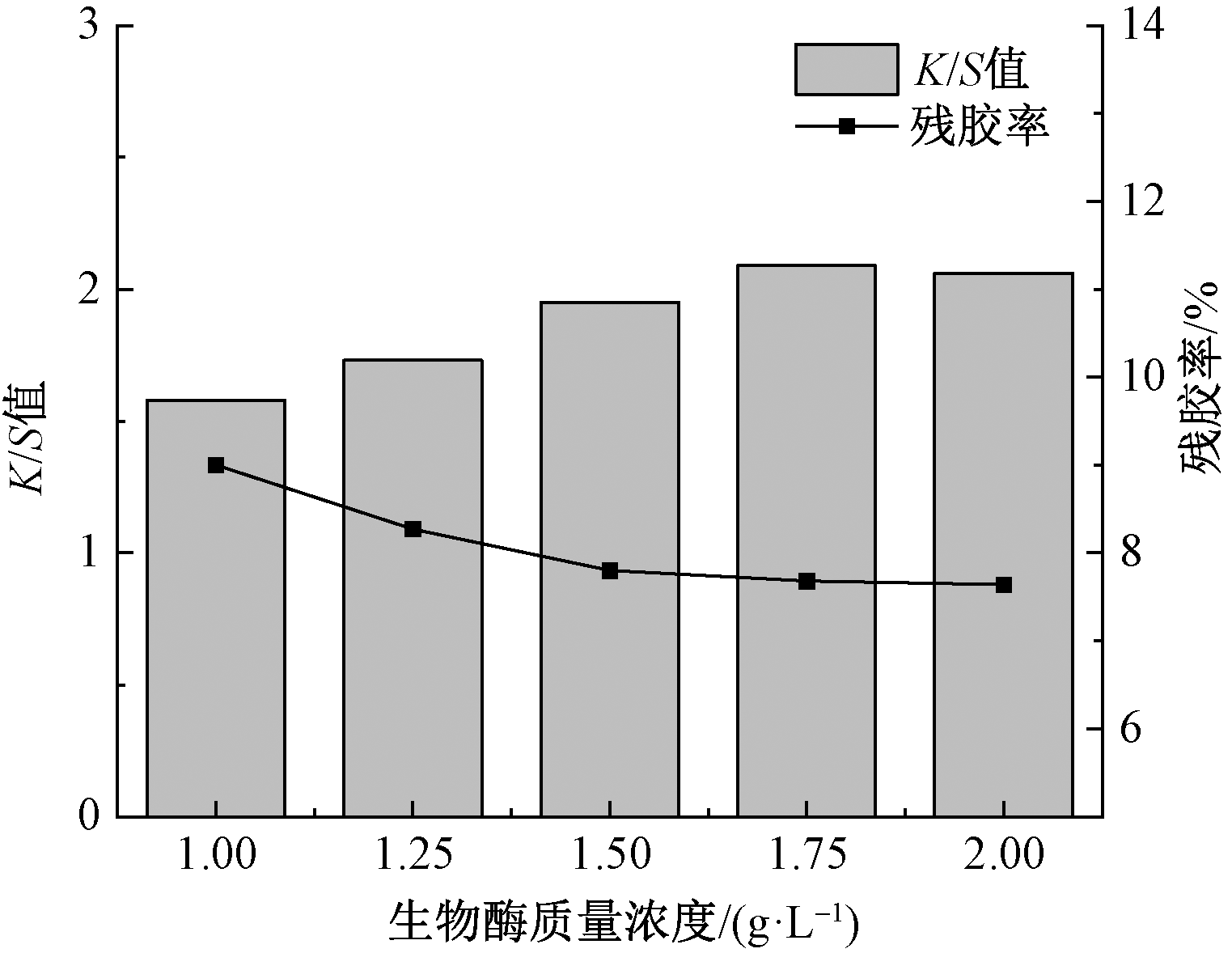
生物酶质量浓度对罗布麻K/S值和残胶率的影响"

图5

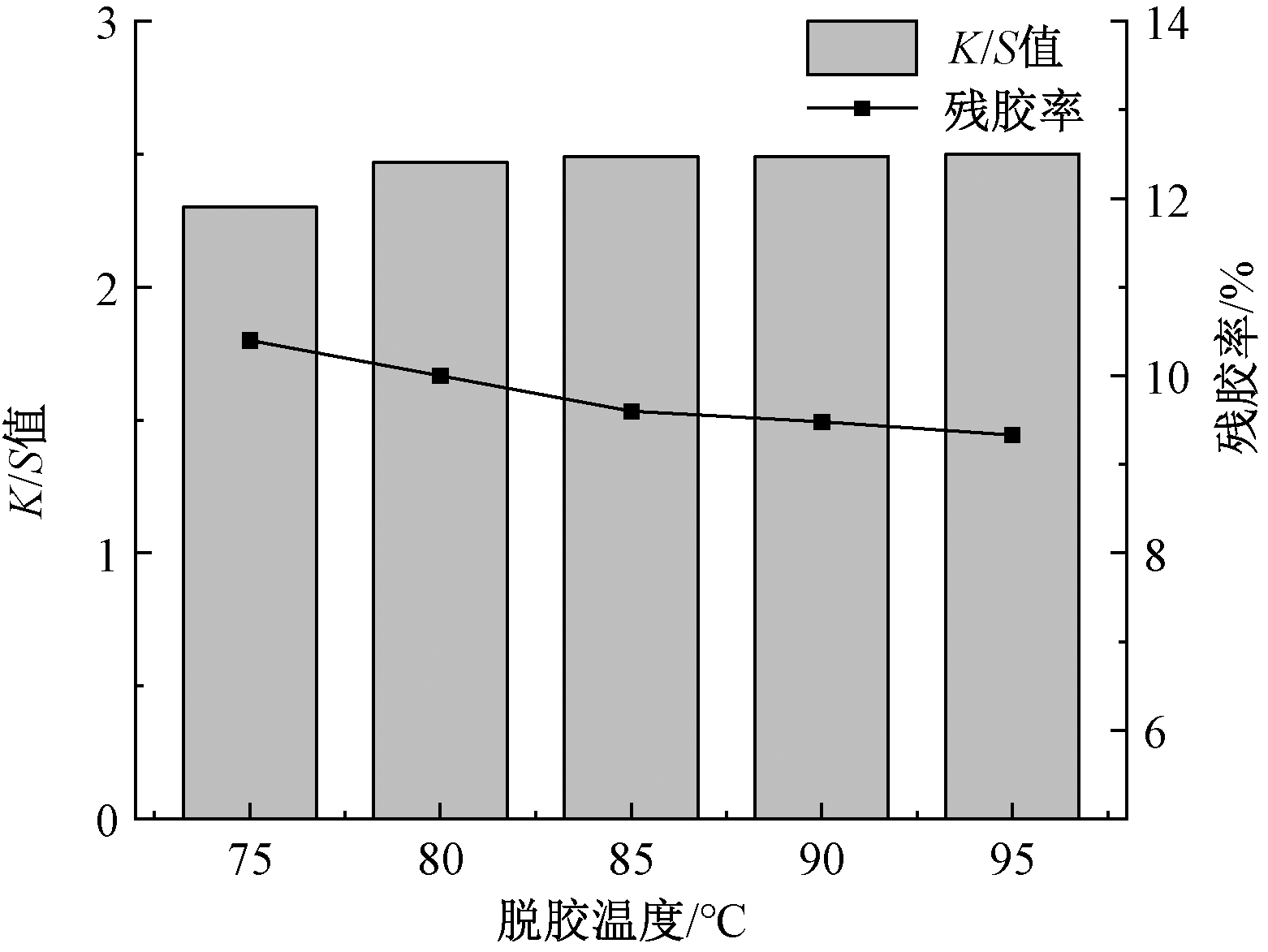
脱胶温度对罗布麻K/S值和残胶率的影响"

图6

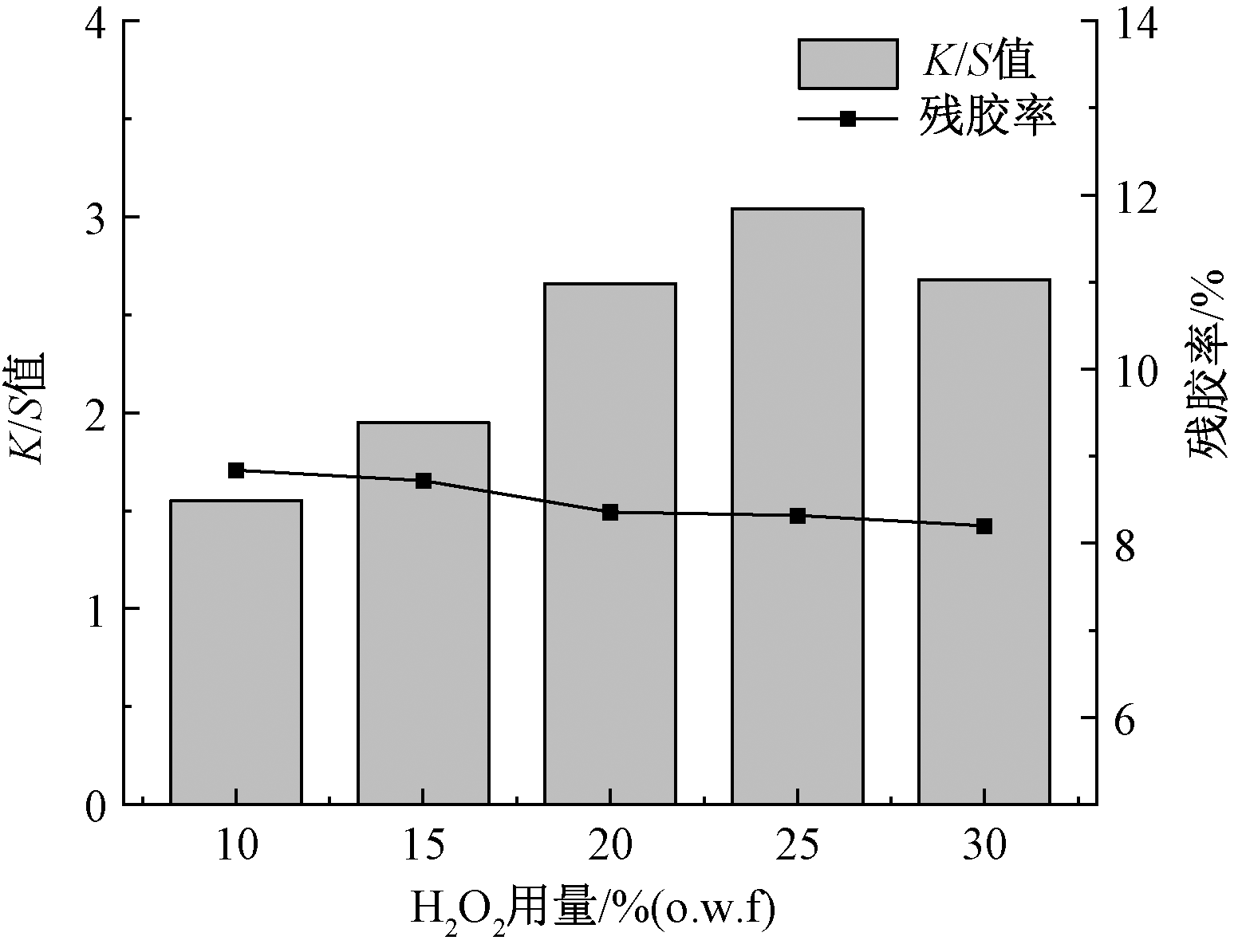
H2O2用量对罗布麻K/S值和残胶率的影响"

表3

染色温度对罗布麻K/S值的影响"

温度/℃ 40 50 60 70 80
K/S 2.09 2.21 2.43 2.36 2.32

表4

染色时间对罗布麻K/S值的影响"

时间/min 40 50 60 70 80
K/S 1.63 1.80 2.02 1.89 2.15

表5

Box-Behnken试验设计因素水平"

水平 A
双氧水用
量/%(o.w.f)
B
生物酶质量
浓度/(g·L-1)
C
染色时间/
min
-1 15.0 1.50 50
0 22.5 1.75 60
1 30.0 2.00 70

表6

响应面试验设置及响应值"

序号 因素 K/S
A B C
1 22.5 2 70 2.77
2 22.5 1.75 60 2.76
3 22.5 2 50 2.68
4 22.5 1.75 60 2.75
5 22.5 1.75 60 2.68
6 15 2 60 2.05
7 30 1.75 70 2.78
8 15 1.75 50 2.23
9 22.5 1.5 70 2.37
10 22.5 1.75 60 2.72
11 15 1.75 70 2.43
12 30 2 60 2.89
13 30 1.5 60 2.43
14 15 1.5 60 1.93
15 22.5 1.75 60 2.74
16 22.5 1.5 50 2.15
17 30 1.75 50 2.48

表7

一浴法试验因素回归模型的方差分析结果"

来源 平方和 自由度 方差 F P 显著性
模型 1.26 9 0.139 5 10.58 0.002 6 **
A 0.470 5 1 0.470 5 35.69 0.000 6 **
B 0.285 0 1 0.285 0 21.62 0.002 3 **
C 0.082 0 1 0.082 0 6.22 0.041 3 *
AB 0.028 9 1 0.028 9 2.19 0.182 2
AC 0.002 5 1 0.002 5 0.189 7 0.676 3
BC 0.004 2 1 0.004 2 0.320 5 0.589 0
A2 0.183 5 1 0.183 5 13.92 0.007 4 **
B2 0.162 2 1 0.162 2 12.30 0.009 9 **
C2 0.007 2 1 0.007 2 0.543 5 0.485 0
残差 0.092 3 7 0.013 2
失拟项 0.088 3 3 0.029 4 29.43 0.003 5 **
纯误差 0.004 0 4 0.001 0
总和 1.35 16

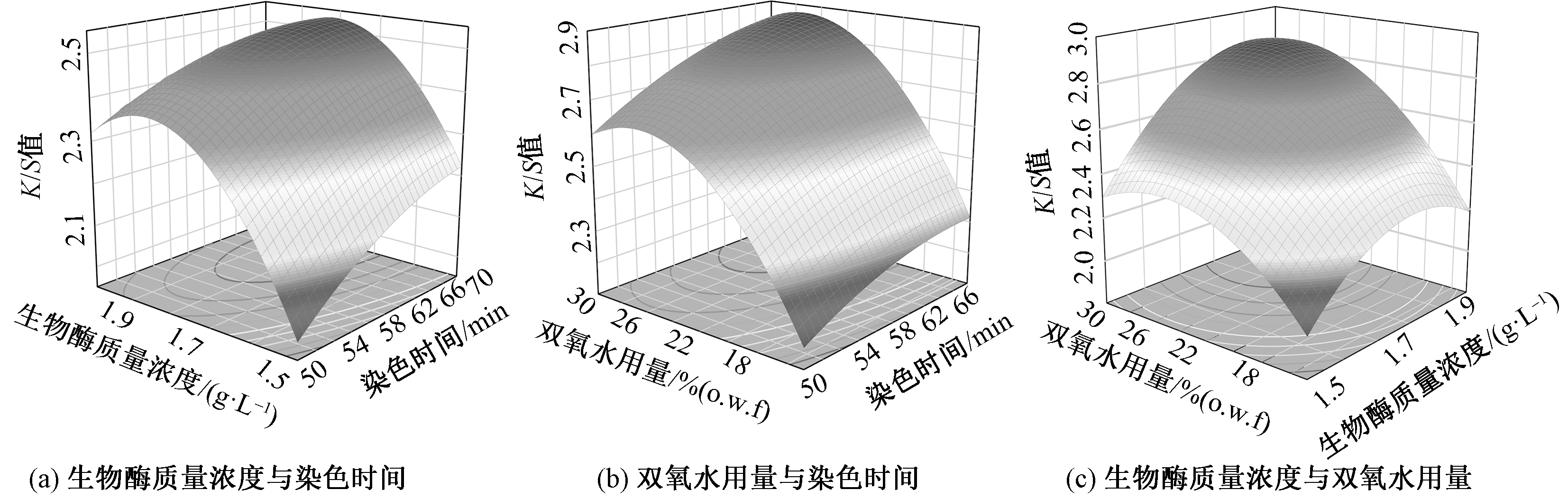
图7

三因素交互作用响应面图"

表8

一浴法处理罗布麻化学组成成分"

处理
前后
成分含量/%
脂蜡质 水溶物 果胶 木质素 半纤维素 纤维素
未处理 2.10 14.77 11.72 8.08 10.13 53.20
处理后 0.93 3.82 3.48 6.06 5.75 79.96

表9

一浴法与两浴法工艺处理后纤维的K/S值与残胶率"

工艺 K/S 残胶
率/%
红M-3BE 黄M-3RE 蓝M-2GE
一浴法 2.58 3.12 3.38 6.28
两浴法 2.79 3.34 3.52 8.35

表10

一浴法与两浴法工艺处理后纤维的断裂强力与细度"

工艺 单纤维
长度/cm
断裂强
力/cN
断裂伸
长率/%
细度/
mm
一浴法 3.23 16.76 2.5 20.97
两浴法 3.19 13.05 2.1 21.34

表11

一浴法和两浴法工艺处理后罗布麻韧皮纤维的耐皂洗色牢度"

工艺 耐皂洗色牢度/级
变色 沾色
羊毛 腈纶 涤纶 锦纶 醋酯纤维
一浴法 4~5 5 5 5 5 4~5 5
两浴法 4~5 5 5 5 5 5 5

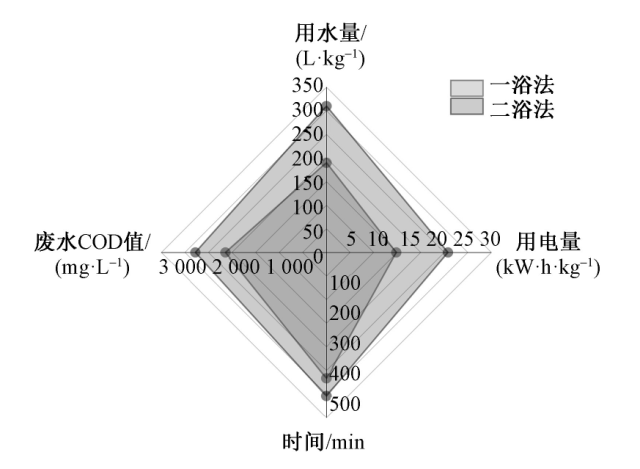
图8

一浴法和两浴法工艺的能耗与环保指标对比"

图9

处理前后罗布麻韧皮纤维的红外图谱"

图10

处理前后罗布麻韧皮纤维的SEM照片(×1 000)"

图11

处理前后罗布麻韧皮纤维的XRD图谱"

[1] DORJEE T, TAN J H, ZUO Q X, et al. Chromosome-scale genome analysis of Apocynum venetum sheds light on Apocynum phylogenetics, bast fiber development, and flavonoid synthesis[J]. Industrial Crops and Products, 2024, 212: 118325.
doi: 10.1016/j.indcrop.2024.118325
[2] GAO G, ABUBAKAR A S, CHEN J K, et al. Comparative genome and metabolome analyses uncover the evolution and flavonoid biosynthesis between Apocynum venetum and Apocynum hendersonii[J]. iScience, 2023, 26(5): 106772.
doi: 10.1016/j.isci.2023.106772
[3] 王佳怡, 孙颖, 孔伟帅, 等. 大麻纤维电化学联合生物酶脱胶工艺分析[J]. 毛纺科技, 2024, 52(10): 42-48.
WANG Jiayi, SUN Ying, KONG Weishuai, et al. Analysis of degumming process of Chinese hemp fiber by electrochemical combined with biological enzyme[J]. Wool Textile Journal, 2024, 52(10): 42-48.
[4] 崔赛赛, 喻红芹, 姜黎. 罗布麻性能及脱胶研究进展[J]. 纤维素科学与技术, 2025, 33(2): 66-70.
CUI Saisai, YU Hongqin, JIANG Li. Research progress on properties and degumming of apocynum venetum[J]. Journal of Cellulose Science and Technology, 2025, 33(2): 66-70.
[5] 姜楠, 王强, 段旬妍, 等. 苎麻新型酶-化学联合脱胶工艺研究[J]. 毛纺科技, 2024, 52(9): 53-60.
JIANG Nan, WANG Qiang, DUAN Xunyan, et al. Research on a new enzymatic and chemical combined degumming process for ramie[J]. Wool Textile Journal, 2024, 52(9): 53-60.
[6] 付佳琦, 吉陈湘, 杨瑞华. 喷气涡流纺成纱气流场及纤维运动模拟分析和实验[J]. 纺织学报, 2026, 47(1): 89-97.
FU Jiaqi, JI Chenxiang, YANG Ruihua. Simulation and experimental study on airflow field and fiber motion in air-jet vortex spinning[J]. Journal of Textile Research, 2026, 47(1): 89-97.
[7] XIANG T, WU L J, ISAH M B, et al. Apocynum venetum, a medicinal, economical and ecological plant: a review update[J]. PeerJ, 2023, 11: e14966.
doi: 10.7717/peerj.14966
[9] NYGREN N, SCHLAPP-HACKL I, HEIMALA S, et al. Spin-dyeing of cellulose fibres with vat dyes using the ioncell process[J]. Carbohydrate Polymers, 2024, 346: 122578.
doi: 10.1016/j.carbpol.2024.122578
[10] 张京彬, 刘淑云, 陈华毅, 等. 涤棉针织物练染一浴工艺[J]. 印染助剂, 2024, 41(3): 38-42.
ZHANG Jingbin, LIU Shuyun, CHEN Huayi, et al. One bath process of bleaching and dyeing of polyester-cotton knitted fabrics[J]. Textile Auxiliaries, 2024, 41(3): 38-42.
[11] LI C H, LIU S Y, SONG Y, et al. A facile and eco-friendly method to extract Apocynum venetum fibers using microwave-assisted ultrasonic degumming[J]. Industrial Crops and Products, 2020, 151: 112443.
doi: 10.1016/j.indcrop.2020.112443
[12] ZHANG X, GUO J, MA Y, et al. Green degumming technology of hemp and a comparison between chemical and biological degumming[J]. ACS Omega, 2021, 6(50): 35067-35075.
doi: 10.1021/acsomega.1c05831 pmid: 34963988
[13] YAN Y, MENG R, PAN Y, et al. Reactive dyes bearing bis(monochlorotriazine) group: synthesis, photophysical properties and realization of salt-free dyeing[J]. ChemistrySelect, 2024, 9(34): e202400667.
doi: 10.1002/slct.v9.34
[14] ZHANG S, REN Y F, ZHAO H Z, et al. Short wet-steaming low-carbon cleaner pad dyeing of cotton/polyamide/lyocell fabric with reactive dyes[J]. Industrial Crops and Products, 2023, 197: 116556.
doi: 10.1016/j.indcrop.2023.116556
[15] DOWLATSHAH S, HAY A O, NORENG L, et al. A practical tutorial for optimizing electromembrane extraction methods by response surface methodology[J]. Advances in Sample Preparation, 2025, 14: 100170.
doi: 10.1016/j.sampre.2025.100170
[16] 沈敏, 杨启, 胡峰, 等. 基于响应面法的辅助喷嘴喷孔结构优化设计[J]. 纺织学报, 2025, 46(3): 196-206.
SHEN Min, YANG Qi, HU Feng, et al. Optimization design of nozzle orifice structure based on response surface method[J]. Journal of Textile Research, 2025, 46(3): 196-206.
[1] 白刚, 孙理, 戴淑娇, 沈修宇, 刘艳春. 活性染料染色促进剂的合成及其应用[J]. 纺织学报, 2026, 47(02): 205-213.
[2] 宋佳怡, 王政驿, 程献伟, 关晋平, 朱亚伟. 液态靛蓝染料的制备及其对棉织物的染色性能[J]. 纺织学报, 2025, 46(12): 133-141.
[3] 陈铭, 张豪, 张子缘, 杨清标, 高吉, 范存伟, 孙戒. 含生物基组分的酸性染料的合成及其染色性能[J]. 纺织学报, 2025, 46(12): 142-151.
[4] 马颖媛, 李建芳, 胡毅. 活性红195在异构烷烃体系中对蚕丝织物的少水染色性能[J]. 纺织学报, 2025, 46(11): 178-187.
[5] 王学林, 胡万锦, 周思婕, 杜立新, 夏良君, 徐卫林. 莱赛尔纤维及其制品颜色构建技术的研究进展[J]. 纺织学报, 2025, 46(11): 247-254.
[6] 金少特, 阎克路, 黄金杰, 陈德芳, 史向阳. 棉散纤维活性染料连续染色技术及其工业化应用[J]. 纺织学报, 2025, 46(10): 129-134.
[7] 王司宇, 王峰, 王鸿博, 苏静. L-半胱氨酸/菠萝蛋白酶协同一浴法羊毛织物防毡缩整理[J]. 纺织学报, 2025, 46(10): 152-158.
[8] 左卓帆, 卢凯亮, 李倩雯, 张维. 基于铝镁合金阳极的靛蓝染色废水电絮凝处理效能优化[J]. 纺织学报, 2025, 46(09): 197-204.
[9] 林科, 胡万锦, 王小凤, 周思婕, 夏良君, 徐卫林. 丙纶颜色构建方法的研究进展[J]. 纺织学报, 2025, 46(08): 236-244.
[10] 张涣东, 纪柏林, 钟毅, 徐红, 毛志平. 接触式预烘对纯棉针织物平幅染色预烘效率及色差的影响[J]. 纺织学报, 2025, 46(07): 154-159.
[11] 刘宇祥, 乌婧, 徐锦龙, 谢锐敏, 王华平. 阳离子可染聚对苯二甲酸丙二醇酯预取向丝的制备及其性能[J]. 纺织学报, 2025, 46(07): 46-52.
[12] 林玉婷, 许仕林, 胡毅. 多色彩热塑性聚氨酯/聚丙烯腈纳米纤维纱线的制备及其性能[J]. 纺织学报, 2025, 46(07): 78-86.
[13] 朱大全, 崔志华, 高普, 朱杰, 张斌, 朱跃文, 陈维国. 丝光羊毛的芳伯胺化修饰及其室温重氮偶合染色[J]. 纺织学报, 2025, 46(05): 186-194.
[14] 张蕙, 杨海伟, 金鲜花, 杨超, 王宗乾. 氯化胆碱低共熔溶剂在蚕丝绵片脱胶和辅助漂白中的应用[J]. 纺织学报, 2025, 46(04): 103-108.
[15] 赵强强, 王韩星, 张奉轩, 何瑾馨, 周俊, 周兆昌, 董霞. 聚六亚甲基双胍盐酸盐改性对棉织物耐日晒色牢度的影响[J]. 纺织学报, 2025, 46(04): 109-118.
Viewed
Full text


Abstract

Cited

  Shared   
  Discussed   
No Suggested Reading articles found!