纺织学报 ›› 2025, Vol. 46 ›› Issue (11): 178-187.doi: 10.13475/j.fzxb.20241001701
马颖媛1,2,3,4, 李建芳5, 胡毅1,2,3,4
MA Yingyuan1,2,3,4, LI Jianfang5, HU Yi1,2,3,4
摘要:
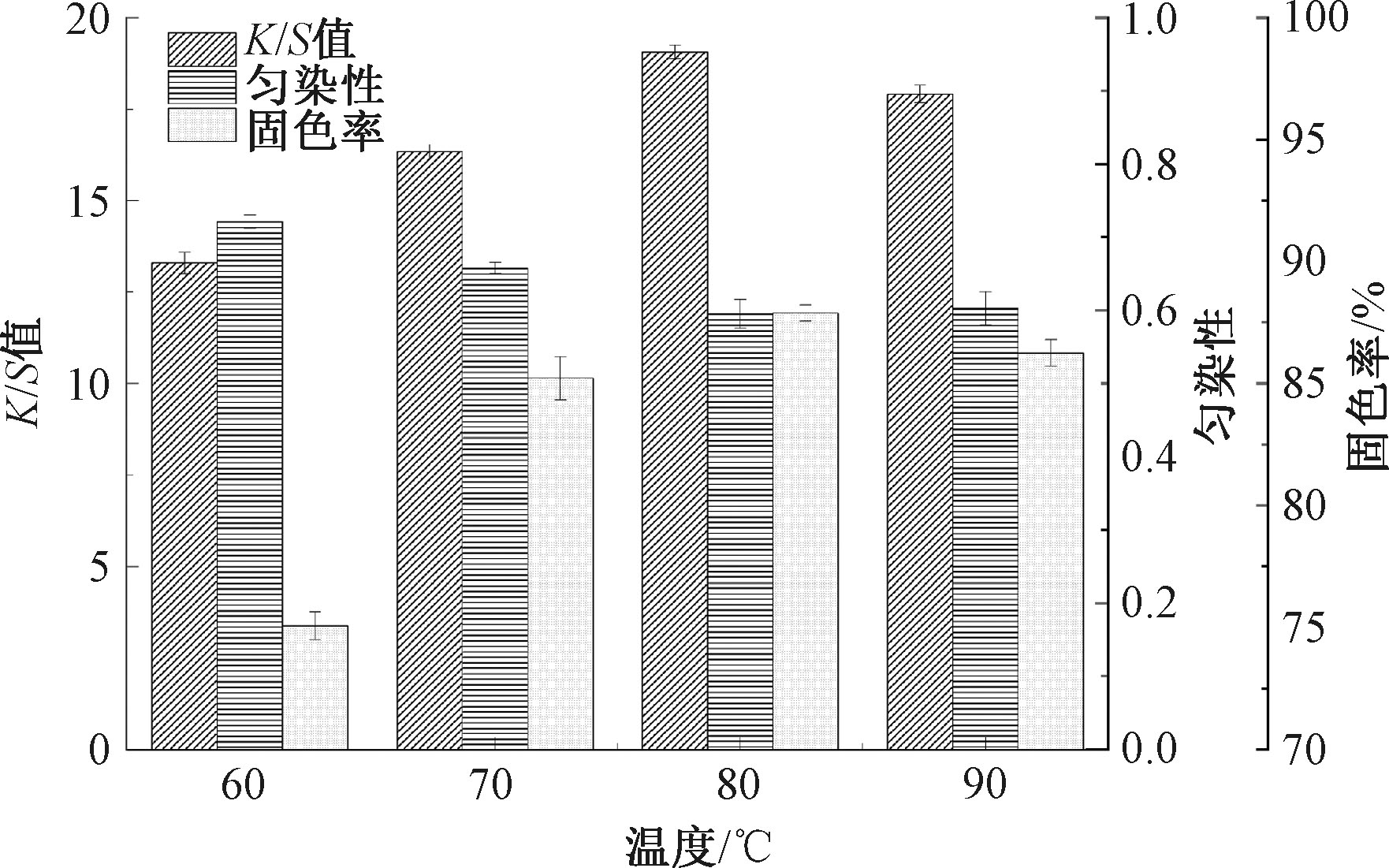
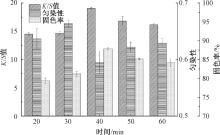
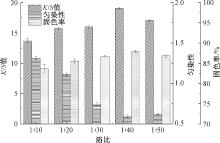
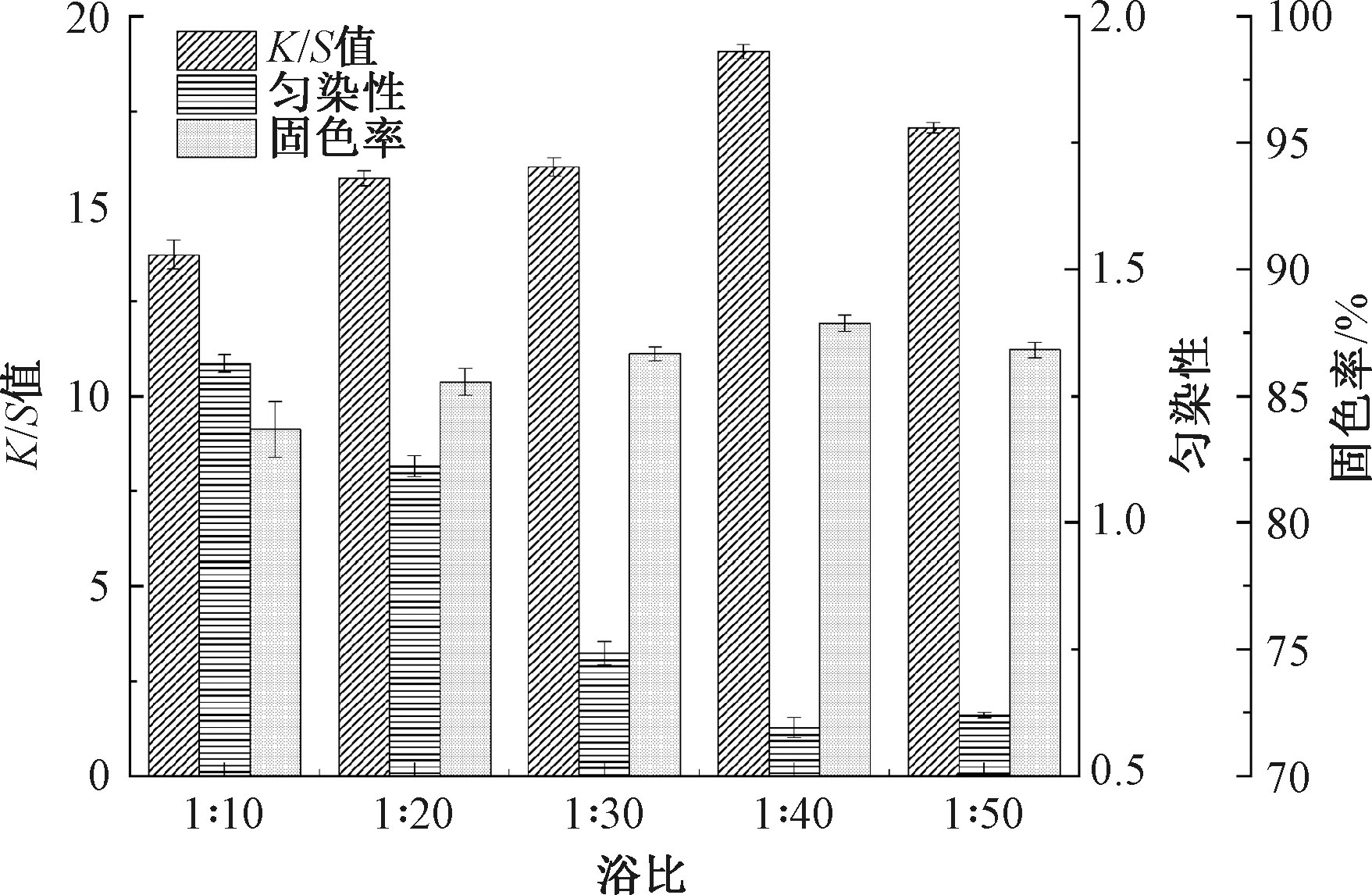
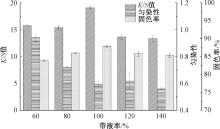
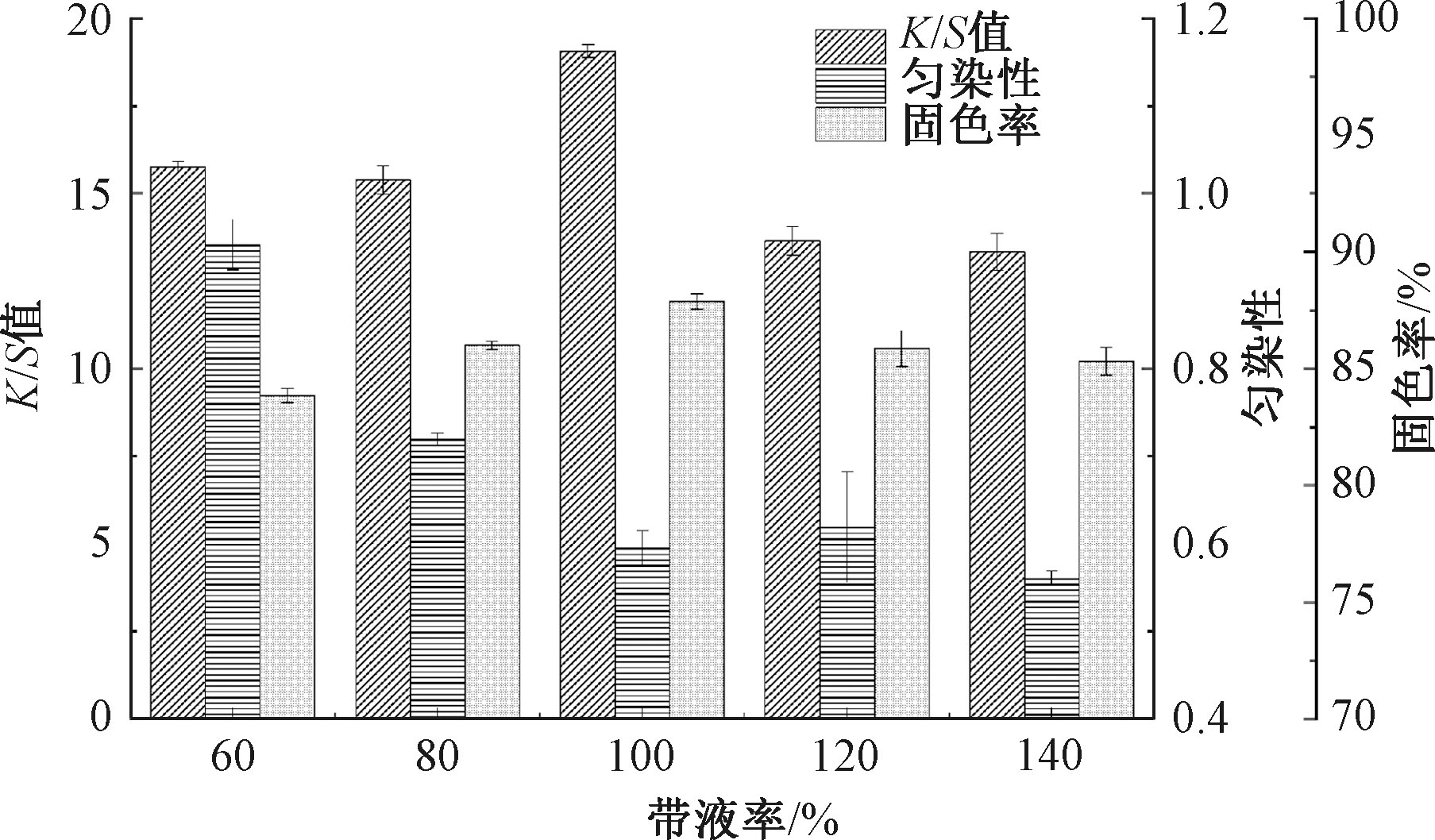
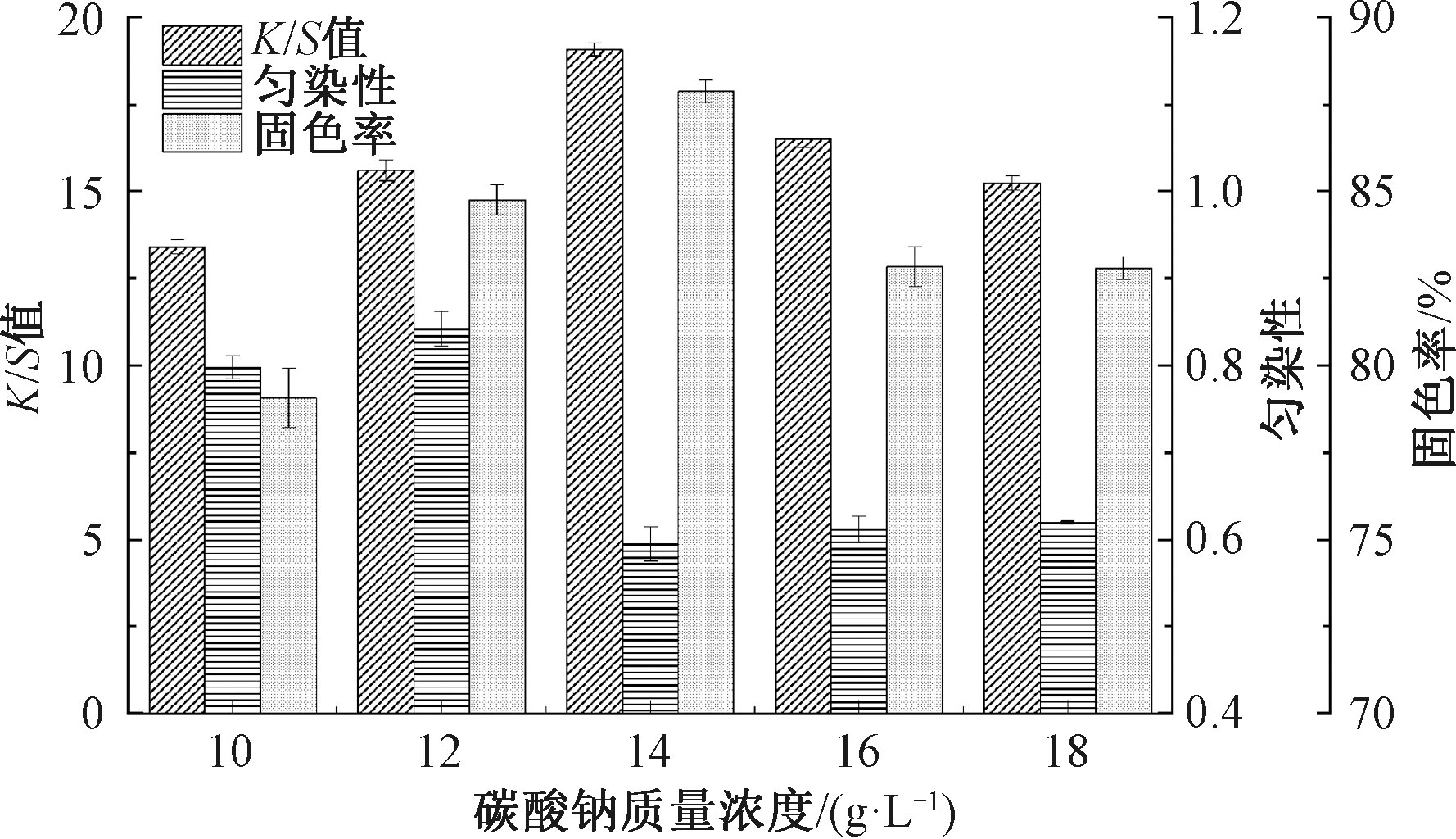
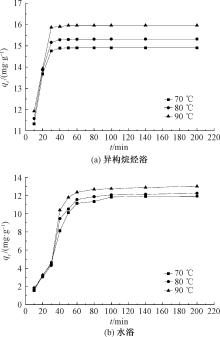
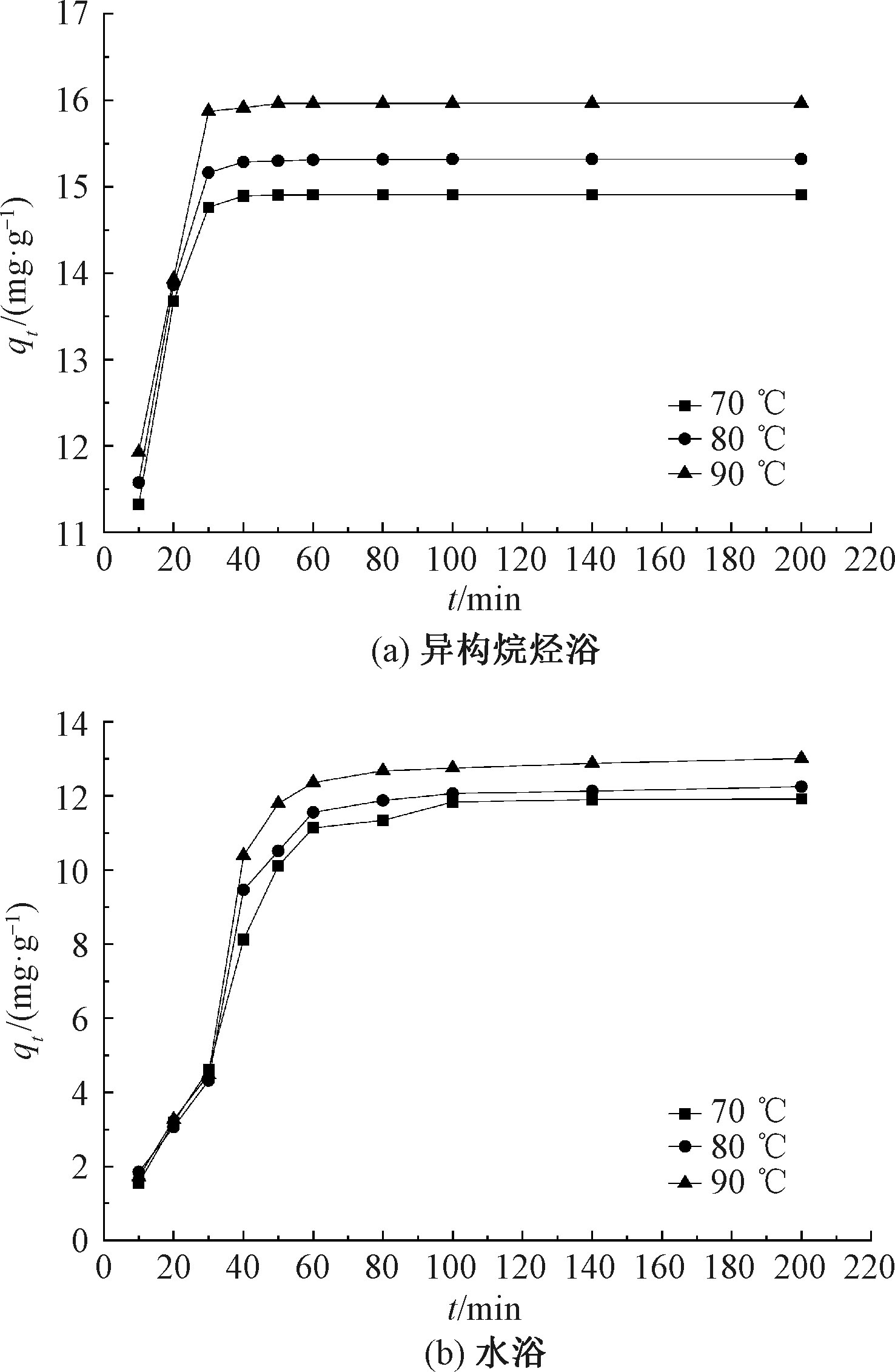
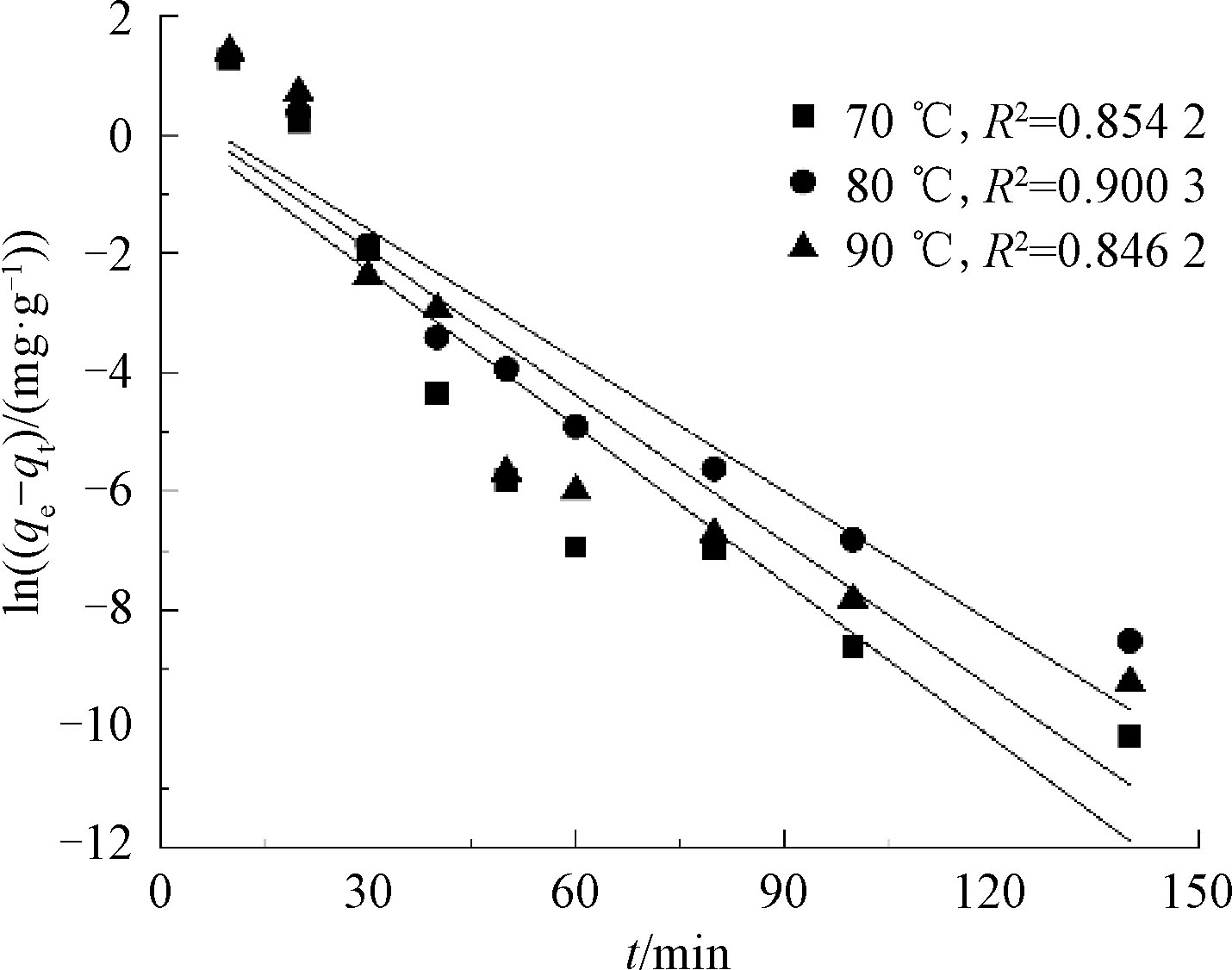
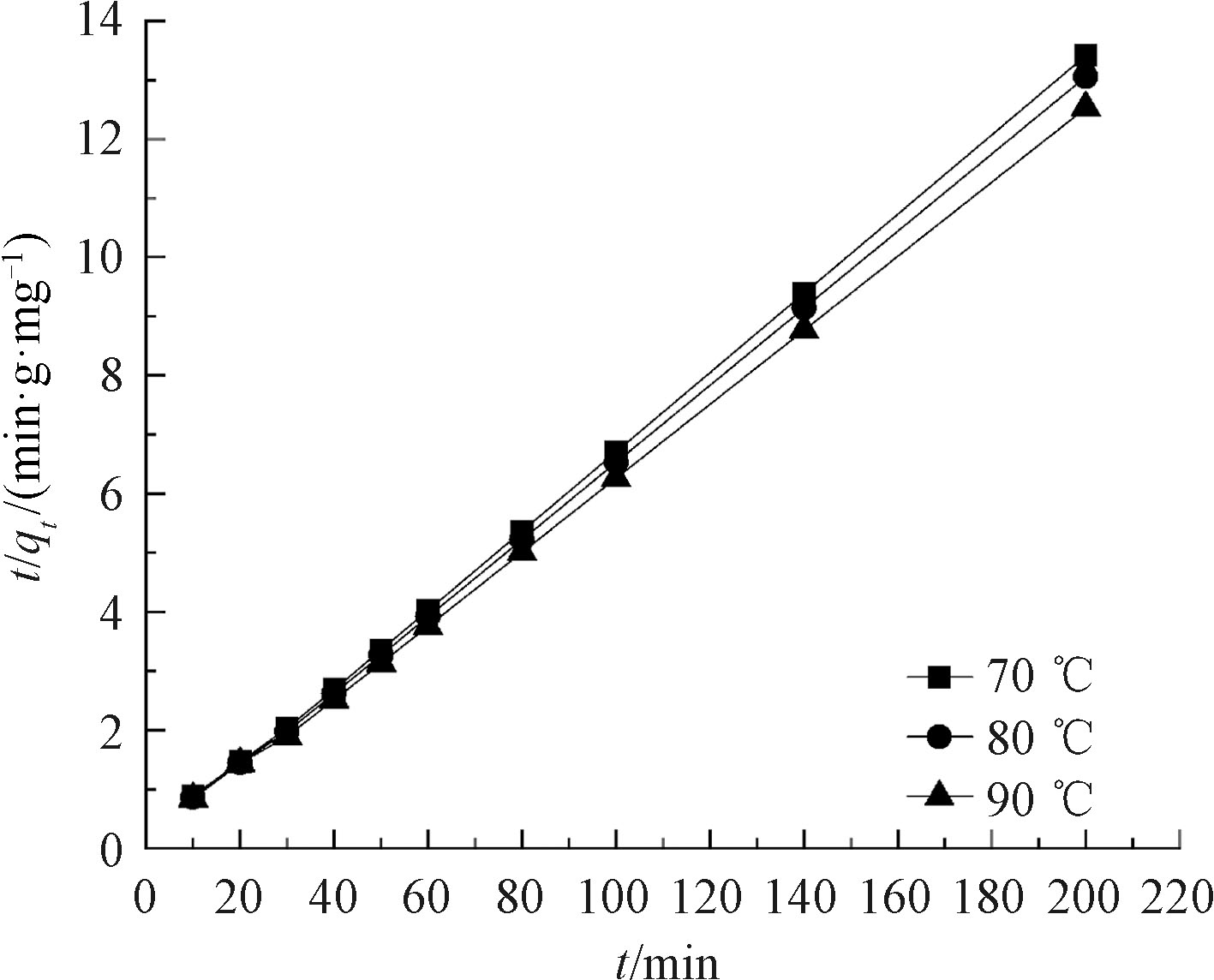
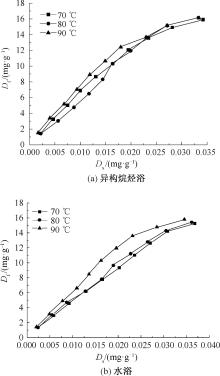
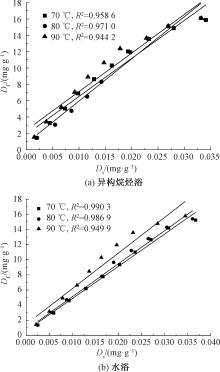
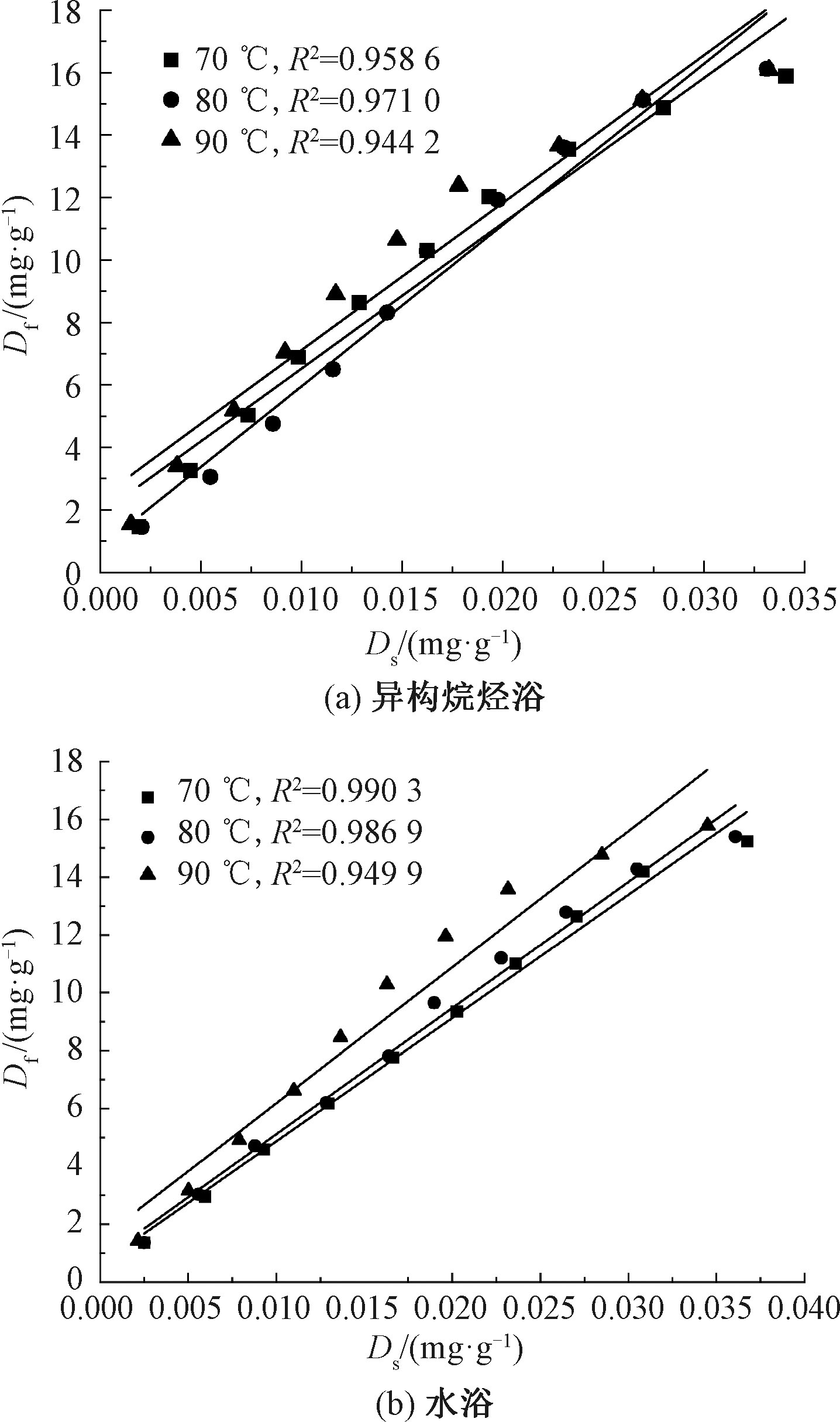
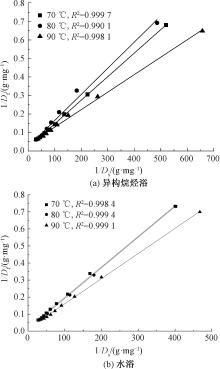
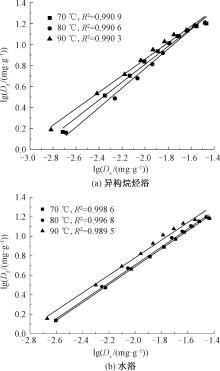
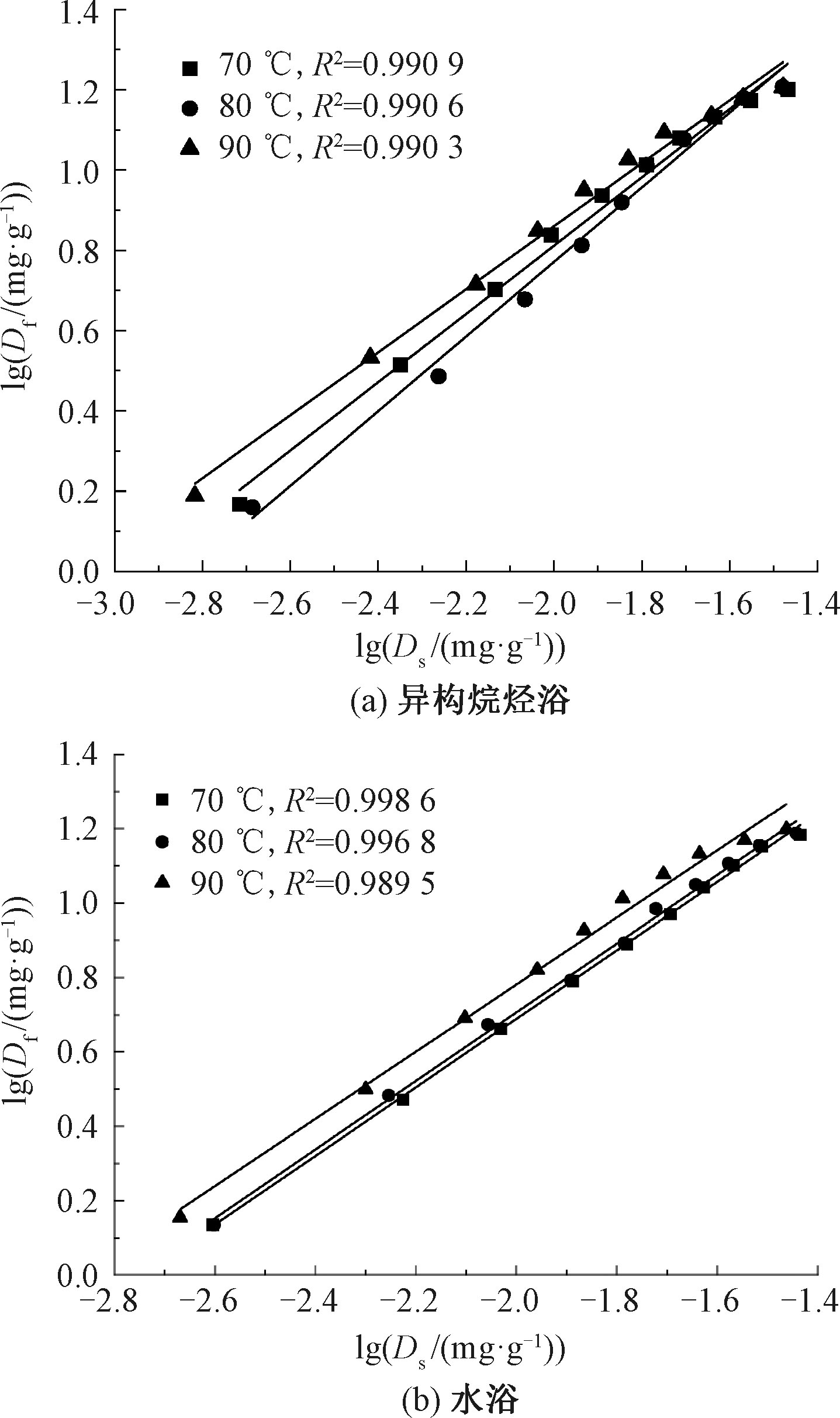
为探讨新型非水介质下活性红195对蚕丝织物的染色可行性,实现环保染色工艺,通过单因素实验优化了活性红195上染蚕丝织物的工艺条件,以染后织物的K/S值、匀染性及染料固色率作为评估指标。采用准一级及准二级动力学模型对染色动力学行为进行拟合分析,并通过Nernst、Langmuir和Freundlich热力学模型研究了活性红195在异构烷烃体系中上染蚕丝织物的热力学行为。同时,对比了异构烷烃浴染色与水浴染色的色牢度差异。结果表明:在染色温度80 ℃、染色时间40 min、浴比1∶40、碳酸钠质量浓度14 g/L,且织物经提前浸轧碱液并保持带液率100%的条件下,染后织物的K/S值最大,匀染性最佳,固色率最高;活性红195在蚕丝织物上的吸附动力学遵循准二级模型,平衡吸附行为可同时用Langmuir和Freundlich模型描述;异构烷烃浴染色织物的色牢度与水浴染色相当,且耐湿摩擦色牢度优于水浴染色。
中图分类号:
| [1] | 齐迪, 丁洪, 王祥荣. 儿茶素络合染料的制备及其对蚕丝织物的染色性能[J]. 纺织学报, 2023, 44(3): 111-118. |
|
QI Di, DING Hong, WANG Xiangrong. Preparation of catechin complex dye and its dyeing properties on silk fabric[J]. Journal of Textile Research, 2023, 44(3): 111-118.
doi: 10.1177/004051757404400205 |
|
| [2] | 孟春丽, 曹机良, 李建辉. L型活性染料对蚕丝的低温染色研究[J]. 丝绸, 2014, 51(7): 6-10. |
| MENG Chunli, CAO Jiliang, LI Jianhui. Study on low-temperature dyeing of silk by L-type reactive dyes[J]. Journal of Silk, 2014, 51(7): 6-10. | |
| [3] | 缪华丽, 付承臣, 李永强, 等. 活性染料/D5悬浮体系应用于蚕丝织物染色的研究[J]. 蚕业科学, 2012, 38(6): 1051-1057. |
| MIAO Huali, FU Chengchen, LI Yongqiang, et al. A study on dyeing of silk fabrics with reactive dye/D5 suspension system[J]. Science of Sericulture, 2012, 38(6): 1051-1057. | |
| [4] | 宋心远, 沈煜如. 活性染料染色[M]. 北京: 中国纺织出版社, 2009: 347-352. |
| SONG Xinyuan, SHEN Yuru. Reactive dye dyeing[M]. Beijing: China Textile & Apparel Press, 2009: 347-352. | |
| [5] | 朱赫, 裴刘军, 郭配廷, 等. 活性黄145在无盐少水染色体系中的染色及其动力学研究[J]. 丝绸, 2024, 61(7): 74-83. |
| ZHU He, PEI Liujun, GUO Peiting, et al. Study on the dyeing and kinetics of Reactive Yellow 145 in the salt-free and low-water dyeing system[J]. Journal of Silk, 2024, 61(7): 74-83. | |
| [6] | 高世会. 锦纶织物超临界CO2的染色工艺[J]. 上海纺织科技, 2024, 52(8): 38-40, 63. |
| GAO Shihui. Polyamide dyeing in supercritical CO2[J]. Shanghai Textile Science & Technology, 2024, 52(8): 38-40, 63. | |
| [7] |
SAWADA K, UEDA M. Dyeing of protein fiber in a reverse micellar system[J]. Dyes and Pigments, 2003, 58(2): 99-103.
doi: 10.1016/S0143-7208(03)00048-2 |
| [8] | 朱进梅. 超临界二氧化碳无水染色工程化技术研究[J]. 化工管理, 2017(19): 62-63. |
| ZHU Jinmei. Study on engineering technology of supercritical carbon dioxide anhydrous dyeing[J]. Chemical Enterprise Management, 2017(19): 62-63. | |
| [9] | 李艳玲, 董永春, 易世雄, 等. 反胶束技术在染整加工中的应用进展[J]. 印染, 2014, 40(11): 48-53. |
| LI Yanling, DONG Yongchun, YI Shixiong, et al. Progress on reversed micelle technology in wet processing of textiles[J]. Dyeing & Finishing, 2014, 40(11): 48-53. | |
| [10] | 张炜, 毛庆楷, 朱鹏, 等. 乙醇/水体系中改性蚕丝织物的活性染料染色动力学和热力学[J]. 纺织学报, 2020, 41(6): 86-92. |
| ZHANG Wei, MAO Qingkai, ZHU Peng, et al. Kinetic and thermodynamic of reactive dye study on silk fabric modification in ethanol/water system[J]. Journal of Textile Research, 2020, 41(6): 86-92. | |
| [11] | 缪华丽, 刘今强, 李永强, 等. 活性染料在D5悬浮染色体系中的水解动力学研究[J]. 纺织学报, 2013, 34(8): 77-82. |
| MIAO Huali, LIU Jinqiang, LI Yongqiang, et al. Study on hydrolysis kinetics of reactive dyes in dye/D5 suspending system[J]. Journal of Textile Research, 2013, 34(8): 77-82. | |
| [12] |
TANG A Y L, KAN C W. Non-aqueous dyeing of cotton fibre with reactive dyes: a review[J]. Coloration Technology, 2020, 136(3): 214-223.
doi: 10.1111/cote.v136.3 |
| [13] | 裴刘军, 刘今强, 王际平. 活性染料非水介质染色的技术发展和应用前景[J]. 纺织导报, 2021(5): 32-40. |
| PEI Liujun, LIU Jinqiang, WANG Jiping. Technology development and application prospect of non-aqueous medium dyeing with reactive dyes[J]. China Textile Leader, 2021(5): 32-40. | |
| [14] | 郭强, 马守涛, 崔艳红, 等. MOFs材料的合成及其烷烃异构化研究进展[J]. 化学与粘合, 2023, 45(3): 253-257, 269. |
| GUO Qiang, MA Shoutao, CUI Yanhong, et al. Progress in synthesis and alkane isomerization of MOFs[J]. Chemistry and Adhesion, 2023, 45(3): 253-257, 269. | |
| [15] | 张尚坤, 张生强, 史建平, 等. 基于异构烷烃体系的涤纶分散染料少水染色工艺[J]. 印染, 2024, 50(1): 10-14. |
| ZHANG Shangkun, ZHANG Shengqiang, SHI Jianping, et al. Less water dyeing process of polyester with disperse dyes based on isomeric alkane system[J]. China Dyeing & Finishing, 2024, 50(1): 10-14. | |
| [16] |
RATTANAPHANI S, CHAIRAT M, BREMNER J B, et al. An adsorption and thermodynamic study of lac dyeing on cotton pretreated with chitosan[J]. Dyes and Pigments, 2007, 72(1): 88-96.
doi: 10.1016/j.dyepig.2005.08.002 |
| [17] |
SUN Q Y, YANG L Z. The adsorption of basic dyes from aqueous solution on modified peat-resin particle[J]. Water Research, 2003, 37(7): 1535-1544.
pmid: 12600381 |
| [18] |
FAN J, SHAO M, MIAO J H, et al. Thermodynamic properties of cotton dyeing with indigo dyes in non-aqueous media of liquid paraffin and D5[J]. Textile Research Journal, 2021, 91(21/22): 2692-2704.
doi: 10.1177/00405175211011773 |
| [19] |
TANG R C, TANG H, YANG C. Adsorption isotherms and mordant dyeing properties of tea polyphenols on wool, silk, and nylon[J]. Industrial & Engineering Chemistry Research, 2010, 49(19): 8894-8901.
doi: 10.1021/ie100052b |
| [20] |
MIRNEZHAD S, SAFAPOUR S, SADEGHI-KIAKHANI M. Dual-mode adsorption of cochineal natural dye on wool fibers: kinetic, equilibrium, and thermodynamic studies[J]. Fibers and Polymers, 2017, 18(6): 1134-1145.
doi: 10.1007/s12221-017-6923-3 |
| [21] |
VIGDOROWITSCH M, PCHELINTSEV A, TSYGANKOVA L, et al. Freundlich isotherm: an adsorption model complete framework[J]. Applied Sciences, 2021, 11(17): 8078.
doi: 10.3390/app11178078 |
| [22] |
PEI L J, LI H, SHEN J F, et al. Salt-free dyeing of cotton fabric and adsorption of reactive dyes in non-aqueous dyeing system: equilibrium, kinetics, and thermodynamics[J]. Cellulose, 2022, 29(8): 4753-4765.
doi: 10.1007/s10570-022-04576-9 |
| [1] | 金少特, 阎克路, 黄金杰, 陈德芳, 史向阳. 棉散纤维活性染料连续染色技术及其工业化应用[J]. 纺织学报, 2025, 46(10): 129-134. |
| [2] | 刘宇祥, 乌婧, 徐锦龙, 谢锐敏, 王华平. 阳离子可染聚对苯二甲酸丙二醇酯预取向丝的制备及其性能[J]. 纺织学报, 2025, 46(07): 46-52. |
| [3] | 徐桐, 徐瑞东, 王奕文, 田明伟. 纺织基触摸电子织物的制备及其触摸性能[J]. 纺织学报, 2025, 46(06): 31-37. |
| [4] | 赵强强, 王韩星, 张奉轩, 何瑾馨, 周俊, 周兆昌, 董霞. 聚六亚甲基双胍盐酸盐改性对棉织物耐日晒色牢度的影响[J]. 纺织学报, 2025, 46(04): 109-118. |
| [5] | 殷连博, 李家炜, 段慧敏, 宋理想, 陈玉霜, 厉巽巽, 戚栋明. 液体分散染料染色废水的循环染色[J]. 纺织学报, 2025, 46(03): 131-140. |
| [6] | 崔芳, 张鑫卿, 殷斐, 李大伟, 雷苗苗, 谢志勇. 基于泡沫法给碱的粘胶织物活性红24无尿素印花[J]. 纺织学报, 2025, 46(02): 138-144. |
| [7] | 解晓康, 江华, 王也, 石璐璐. α-(三氟甲基)苯基重氮酯型染料与合成纤维的反应机制[J]. 纺织学报, 2025, 46(02): 145-152. |
| [8] | 李万新, 舒大武, 安芳芳, 韩博, 任支刚, 单巨川. 碳化钛与三价铁离子协同过硫酸钠对活性染料废水的降解[J]. 纺织学报, 2025, 46(01): 138-147. |
| [9] | 陈锟, 许晶莹, 郑怡倩, 李加林, 洪兴华. 丝网印刷还原氧化石墨烯改性蚕丝织物的导电与电热性能[J]. 纺织学报, 2024, 45(03): 122-128. |
| [10] | 姜绍华, 梁帅童, 裴刘军, 张红娟, 王际平. 基于概率密度函数的织物染色侵入动力学分析[J]. 纺织学报, 2023, 44(10): 90-97. |
| [11] | 连丹丹, 王镭, 杨雅茹, 尹立新, 葛超, 卢建军. 服用聚苯硫醚纤维的制备及其性能[J]. 纺织学报, 2023, 44(08): 1-8. |
| [12] | 韩博, 王玉霖, 舒大武, 王涛, 安芳芳, 单巨川. 活性染料染色废水的循环染色[J]. 纺织学报, 2023, 44(08): 151-157. |
| [13] | 郭玉秋, 钟毅, 徐红, 毛志平. 拼混活性染料染色多组分定量分析方法[J]. 纺织学报, 2023, 44(07): 141-150. |
| [14] | 唐奇, 柴丽琴, 徐天伟, 王成龙, 王直成, 郑今欢. 聚乳酸/聚3-羟基丁酸-戊酸酯共混纤维及其雪尼尔纱的染色动力学[J]. 纺织学报, 2023, 44(06): 129-136. |
| [15] | 关振虹, 李丹, 宋金苓, 冷向阳, 宋西全. 易染间位芳纶的制备及其性能[J]. 纺织学报, 2023, 44(06): 28-32. |
|
||
 京公网安备11010502044800号