纺织学报 ›› 2025, Vol. 46 ›› Issue (07): 46-52.doi: 10.13475/j.fzxb.20240704401

• 纤维材料 • 上一篇    下一篇

阳离子可染聚对苯二甲酸丙二醇酯预取向丝的制备及其性能

刘宇祥1,2, 乌婧2,3, 徐锦龙4, 谢锐敏1,2(), 王华平1,2   

  1. 1 东华大学 材料科学与工程学院, 上海 201620
    2 东华大学 先进纤维材料全国重点实验室, 上海 201620
    3 东华大学 纺织科技创新中心, 上海 201620
    4 国家先进功能纤维创新中心, 江苏 苏州 215228
  • 收稿日期:2024-07-17 修回日期:2025-04-06 出版日期:2025-07-15 发布日期:2025-08-14
  • 通讯作者: 谢锐敏(1993—),女,讲师,博士。主要研究方向为功能性聚酯纤维制备及纤维全流程智能制造。E-mail:rmxie@dhu.edu.cn
  • 作者简介:刘宇祥(2000—),男,硕士生。主要研究方向为改性PTT纤维制备及性能分析。
  • 基金资助:
    上海市教育发展基金会和上海市教育委员会“晨光计划”项目(22CGA36);上海市科学技术委员会“启明星计划”扬帆专项资助项目(22YF1401500)

Preparation and properties of cationic dyeable poly(propylene terephthalate) pre-oriented yarns

LIU Yuxiang1,2, WU Jing2,3, XU Jinlong4, XIE Ruimin1,2(), WANG Huaping1,2   

  1. 1 College of Materials Science and Engineering, Donghua University, Shanghai 201620, China
    2 State Key Laboratory of Advanced Fiber Materials, Donghua University, Shanghai 201620, China
    3 Innovation Center for Textile Science and Technology, Donghua University, Shanghai 201620, China
    4 National Advanced Functional Fiber Innovation Center, Suzhou, Jiangsu 215228, China
  • Received:2024-07-17 Revised:2025-04-06 Published:2025-07-15 Online:2025-08-14

摘要:

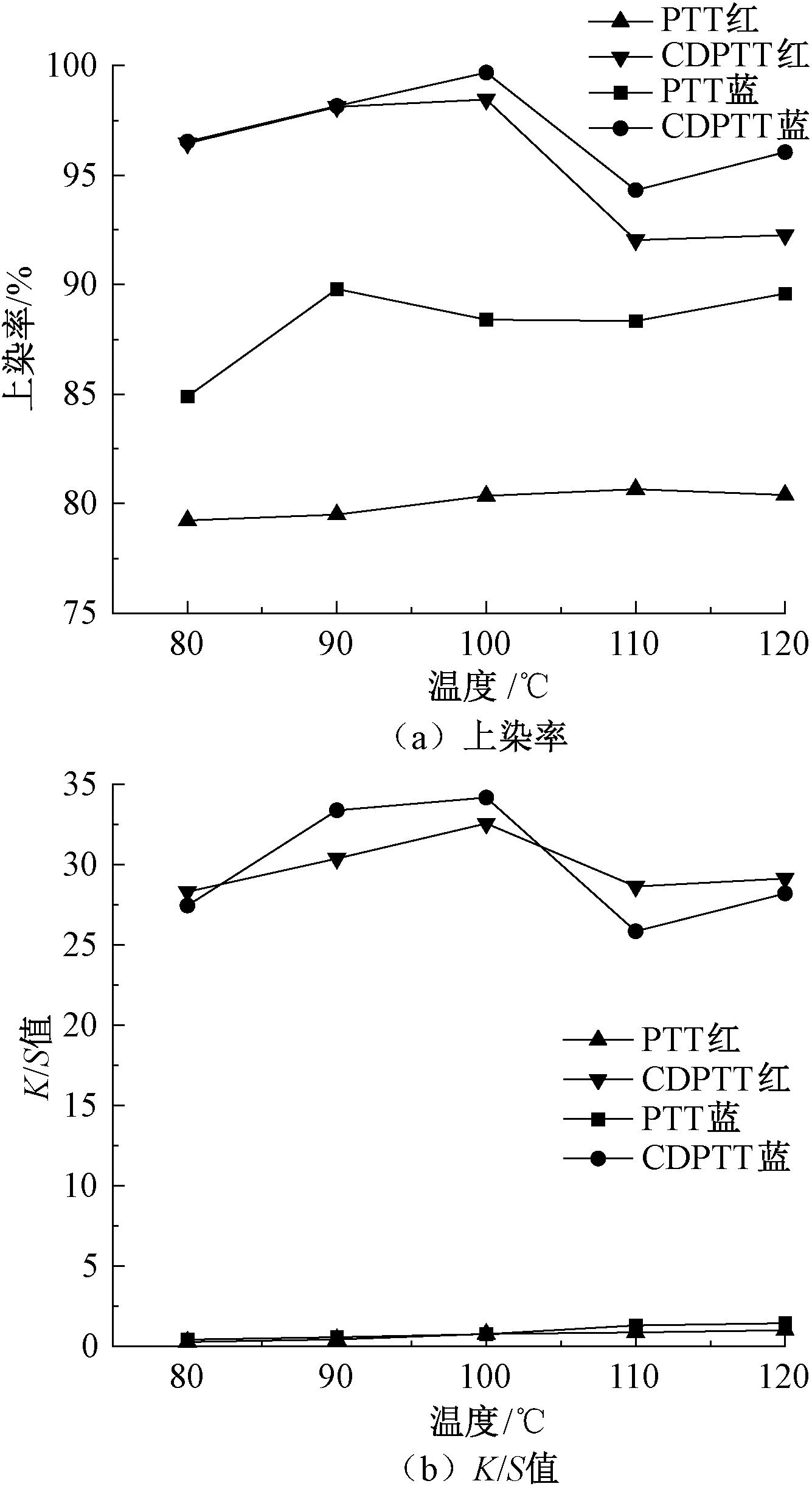
针对聚对苯二甲酸丙二醇酯(PTT)纤维染色性不佳限制其在纤维方面应用的问题,采用PTT和阳离子可染聚对苯二甲酸丙二醇酯(CDPTT)为原料,通过高速熔融纺丝分别制备了PTT和CDPTT预取向丝(POY),研究了纺丝温度、纺丝速度、牵伸倍数对可纺性能、取向性能、结晶性能、力学性能、沸水收缩性能、染色性能的影响。结果表明:CDPTT切片在255 ℃具有良好的可纺性;随着纺丝速度的增大,纤维的结晶度增大、断裂强力增大、断裂伸长率减小;当纺丝速度为3 500 m/min时,CDPTT纤维的结晶度为19.19%,断裂强力为2.54 cN/dtex,断裂伸长率为18.41%;随着牵伸倍数的增加,CDPTT纤维的取向度增大、结晶度增大、沸水收缩率减小;当牵伸倍数为2.3时,CDPTT纤维的取向度为40.89%,结晶度为21.01%,断裂强力为3.45 cN/dtex,断裂伸长率为20.41%,沸水收缩率为17.08%;CDPTT纤维在低温常压条件下可以实现阳离子染料可染,在100 ℃下对2种阳离子染料的上染率和K/S值达到最大,分别为98.45%和99.68%、32.57和34.18,染色后CDPTT纤维的耐皂洗色牢度在4级以上,综合性能良好。

关键词: 聚对苯二甲酸丙二醇酯, 阳离子染料可染性, 纺丝, 力学性能, 染色性能, 预取向丝

Abstract:

Objective Poly(propylene terephthalate) (PTT) is widely used for its excellent all-round properties, especially in the field of apparel. However, its poor fiber dyeability limits its application in fibers. Currently commonly used disperse dyes have the disadvantages of poor environmental friendliness, incomplete chromatography, high cost, and so on. Compared with disperse dyes, cationic dyes have the advantages of environmental friendliness, complete chromatography, bright color and low cost. Therefore, studying cationic dyeable PTT fibers is of great significance.

Method Cationic dyeable poly(propylene terephthalate)(CDPTT) is prepared by adding sodium malonyl isophthalate-5-sulfonate to the polymerization process of PTT. Using PTT and CDPTT as raw materials, PTT and CDPTT pre-oriented yarn (POY) were prepared by high-speed melt spinning. In order to investigate the comprehensive performance of CDPTT, the influences of spinning temperature, spinning speed, and draw multiplier on the spinnability, orientation, crystallization, mechanical properties, and boiling water shrinkage were studied. Meanwhile, the dyeing properties of CDPTT fibers were investigated using cationic red and cationic blue.

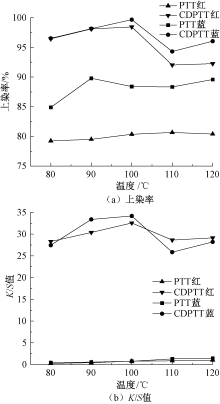
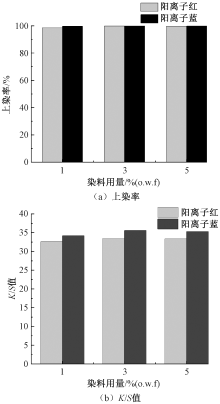
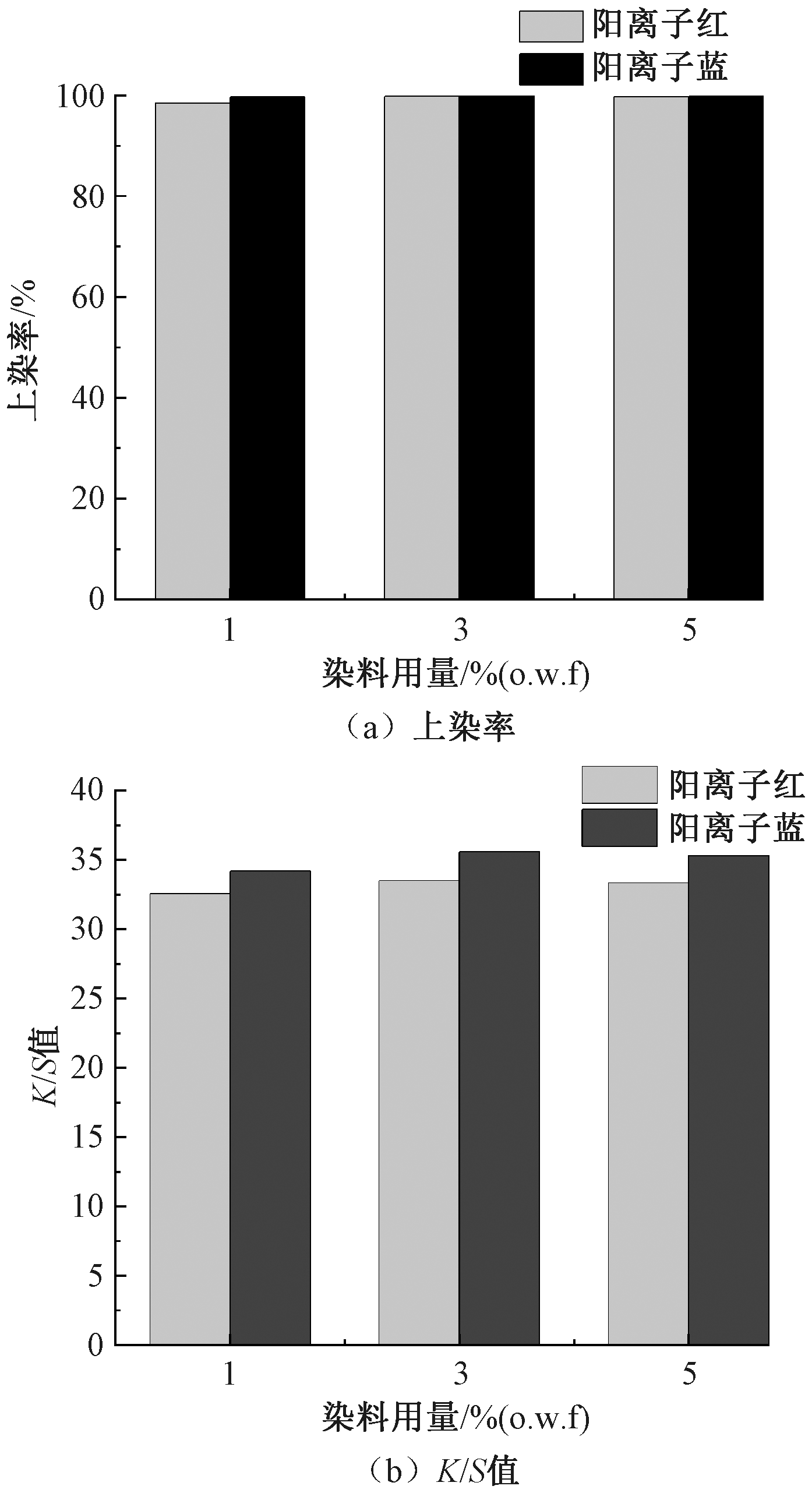
Results The results showed that since the melting point of CDPTT slices was lower than that of PTT slices, the temperature of CDPTT slices was appropriately lowered in all zones of the spinning process screw, and they had good spinnability at 255 ℃. With the increase of spinning speed, the crystallinity and breaking strength of the fiber increased, and the elongation at break decreased. This can be explained by the fact that faster the spinning speed is associated to larger the nozzle stretching ratio, and hence the macromolecular chain can be better stretched under the action of spinning stress. When the spinning speed was 3 500 m/min, the crystallinity of CDPTT fiber was 19.19%, the breaking strength was 2.54 cN/dtex, and the elongation at break was 18.41%. With the increase of drafting ratio, the orientation and crystallinity of CDPTT fiber demonstrated increases, and the boiling water shrinkage became decreases, because the drafting is conducive to the further arrangement of macromolecules in the direction of the fiber axis, and the molecular chain is further oriented and arranged, and the crystallization occurs. When the drafting ratio was 2.3, the orientation of CDPTT fiber was 40.89%, the crystallinity was 21.01%, the breaking strength was 3.45 cN/dtex, the elongation at break was 20.41%, and the boiling water shrinkage was 17.08%. CDPTT fiber had good cationic dyeing performance under conditons low temperature and normal pressure, and the dyeing rate and K/S value of the fiber showed a tendency to increase firstly and then decrease as the temperature was raised, and the change of dyeing rate and K/S value tended to be flat as the dye dosage was raised. The dyeing rate and K/S value of the two cationic dyes reached the maximum value at 100 ℃, which were 98.45% and 99.68%, 32.57 and 34.18, respectively, and the color fastness to soap washing of the CDPTT fibers after dyeing was above level 4, which was in line with the requirements of the color fastness to soap washing for apparel fabrics.

Conclusion CDPTT fibers prepared by high-speed melt spinning had a strength up to 3.45 cN/dtex, an elongation at break up to 20.41%, an orientation of 40.89%, a crystallinity of 21.01% and a boiling water shrinkage of 17.08%. Due to the addition of sodium malonyl isophthalate-5-sulfonate, the regularity of the original structure of the fiber was destroyed, which caused the mechanical properties, crystallinity and orientation of CDPTT fiber decreased compared with those of PTT fiber. Through the study of the dyeing performance of CDPTT and PTT fiber, the addition of dyeing groups significantly improved the dyeing properties of the fiber with cationic dyes, so that the dyeing rate of CDPTT fiber and the K/S value of CDPTT fiber were significantly improved, with the color fastness to soap washing reaching above grade 4. The prepared CDPTT fiber has good comprehensive performance, which broadens its application prospect in the field of fiber and textile.

Key words: poly(propylene terephthalate), cationic dye dyeable, spining, mechanical property, dyeing property, pre-oriented yarn

中图分类号: 

  • TQ342.92

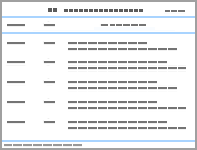
表1

PTT与CDPTT纺丝工艺参数"

样品
名称
温度/℃
一区 二区 三区 四区 五区 六区 模头
PTT 260 261 262 263 264 265 266
CDPTT 255 257 259 260 261 263 265

表2

PTT与CDPTT纺丝前后黏度变化"

样品
编号
纺丝前切片
黏度/(dL·g-1)
纺丝后无油丝
黏度/(dL·g-1)
Δ[η]/%
PTT 0.99 0.83 16.16
CDPTT 0.88 0.76 13.63

表3

不同纤维的取向因子和取向度"

样品编号 C/
(km·s-1)
fs fc/%
PTT 1.43 0.12
CDPTT 1.39
CDPTT-1.7 1.56 0.21 28.63
CDPTT-2.0 1.64 0.28 33.79
CDPTT-2.3 1.75 0.37 40.89

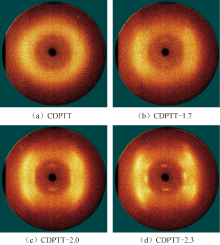
图1

不同牵伸倍数CDPTT纤维的二维衍射图"

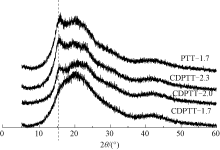
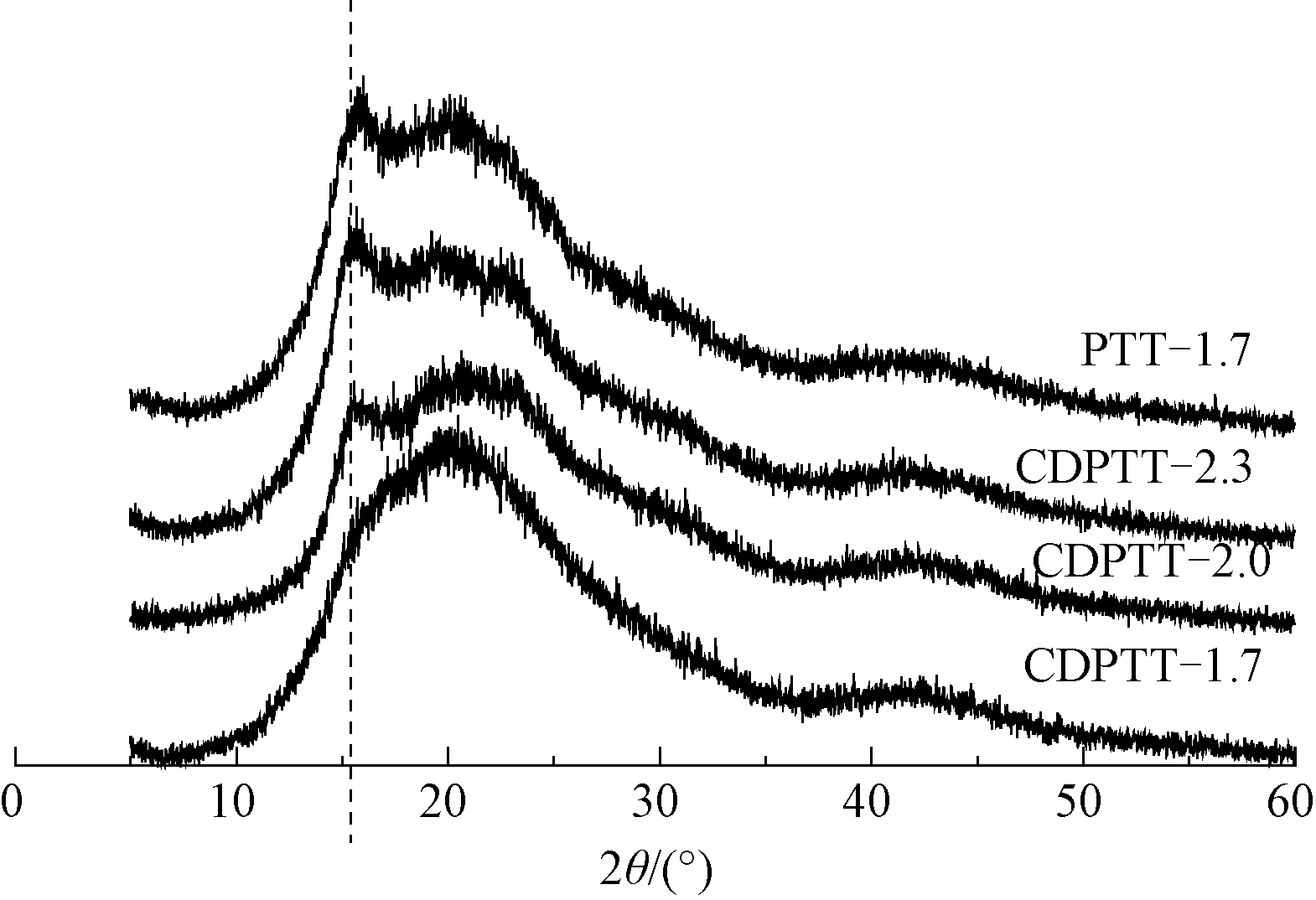
图2

不同牵伸倍数下纤维的WAXD图"

表4

不同工艺条件CDPTT纤维的结晶度"

样品名称 纺丝速度/
(m·min-1)
结晶度
Xc/%
CDPTT-2.0 2 600 14.87
CDPTT-2.3 2 600 21.01
2 600 13.45
CDPTT-1.7 2 800 14.37
3 000 16.67
3 500 19.19

表5

不同纺丝速度PTT纤维的结晶度"

样品名称 纺丝速度/(m·min-1) 结晶度Xc/%
2 600 22.97
PTT-1.7 2 800 24.42
3 000 25.74
3 500 26.09

表6

不同牵伸倍数下纤维的力学性能"

样品名称 线密度/
(dtex(48 f))
断裂伸长
率/%
断裂强度/
(cN·dtex-1)
PTT 241.11 145.25 1.58
CDPTT 242.51 120.18 1.36
CDPTT-1.7 166.25 38.54 2.17
CDPTT-2.0 136.82 21.85 2.76
CDPTT-2.3 122.54 20.41 3.45

表7

不同纺丝速度下纤维的力学性能"

样品名称 纺丝速度/
(m·min-1)
断裂
伸长率/%
断裂强度/
(cN·dtex-1)
PTT-1.7 2 600 35.53 2.72
2 600 38.54 2.17
CDPTT-1.7 2 800 37.26 2.36
3 000 34.68 2.38
3 500 18.41 2.54

图3

CDPTT与PTT纤维在不同温度下的上染率及K/S值"

图4

CDPTT纤维在不同染料用量下的上染率及K/S值"

表8

染色CDPTT织物的耐皂洗色牢度"

染料名称 原样褪色 棉布沾色 涤纶沾色 变色
阳离子红X-GRL 4~5 5 5 3~4
阳离子蓝X-BL 5 5 5 4
[1] 刘泽超, 王锐, 陈玉顺, 等. ECDP/PTT共混物相容性及流变性能研究[J]. 合成纤维工业, 2010, 33(4): 21-23.
LIU Zechao, WANG Rui, CHEN Yushun, et al. Miscibil-ity and rheological behavior of ECDP/PTT blend[J]. China Synthetic Fiber Industry, 2010, 33(4): 21-23.
[2] KIM J H, YANG S S, HUDSON S M. Comparison of the structure-property relationships for PTT and PET fibers spun at various take-up speeds[J]. Fibers and Polymers, 2011, 12(6): 771-777.
[3] 查丽丽, 王朝生, 王华平, 等. 阳离子可染PTT的制备及性能的研究[J]. 合成纤维工业, 2008, (1): 30-33.
ZHA Lili, WANG Chaosheng, WANG Huaping, et al. Preparation and properties of cationic dyeable PTT[J]. China Synthetic Fiber Industry, 2008, (1): 30-33.
[4] 董海良. PTT/ECDP并列复合纤维的制备及性能研究[J] 合成纤维, 2023, 52(7): 29-32.
DONG Hailiang. Preparation and properties of PTT/ECDP parallel composite fibers[J]. Synthetic Fiber in China, 2023, 52(7): 29-32.
[5] 李晓琳, 王朝生, 查丽丽, 等. CDPTT/PTT共混体系的结构和性能研究[J]. 合成纤维工业, 2009, 32(6): 31-34.
LI Xiaolin, WANG Chaosheng, ZHA Lili, et al. Structure and properties of CDPTT/PTT blend system[J]. China Synthetic Fiber Industry, 2009, 32(6): 31-34.
[6] 张振雄, 邱殿銮, 孙君, 等. 聚对苯二甲酸乙二醇酯共聚改性技术进展[J]. 合成技术及应用, 2013, 28(4): 26-30.
ZHANG Zhenxiong, QIU Dianluan, SUN Jun, et al. Progress on modification technology of poly(ethyelene terephthalate) through copolymerization[J]. Synthetic Technology and Application, 2013, 28(4): 26-30.
[7] 姚玉元, 江长明, 吕汪洋, 等. 阳离子染料可染聚对苯二甲酸丙二酯共聚酯的合成及结晶性能的研究[J]. 高分子学报, 2011(5): 467-474.
YAO Yuyuan, JIANG Changming, LÜ Wangyang, et al. Synthesis and crystallization properties of cationic dyeable poly(trimethylene terephthalate) copoly-esters[J]. Acta Polymerica Sinica, 2011(5): 467-474.
[8] 王宁, 王锐, 王敏, 等. 阳离子染料可染PTT的性能研究[J]. 合成纤维工业, 2007(4): 14-16,19.
WANG Ning, WANG Rui, WANG Min, et al. Study on properties of cationic dyeable PTT[J]. China Synthetic Fiber Industry, 2007(4): 14-16,19.
[9] 葛陈程, 吕汪洋, 石教学, 等. 应用二维X射线衍射法测定涤纶工业丝结晶和取向行为[J]. 纺织学报, 2018, 39(3): 19-25.
GE Chencheng, LÜ Wangyang, SHI Jiaoxue, et al. Measurement of crystallinity and crystal orientation of polyester industrial yarns by 2-D X-ray diffraction[J]. Journal of Textile Research, 2018, 39(3): 19-25.
[10] 于亮, 葛陈程, 陈世昌, 等. 热处理温度对高强涤纶工业丝结晶与取向性能的影响[J]. 合成纤维工业, 2019, 42(2): 5-10.
YU Liang, GE Chencheng, CHEN Shichang, et al. In-fluence of heat setting temperature on crystallization and orientation of high-tenacity polyester industrial yarns[J]. China Synthetic Fiber Industry, 2019, 42(2): 5-10.
[11] 沈金科, 巫晓华, 钱杨, 等. 抗菌PTT POY的结构与性能研究[J]. 合成纤维工业, 2014, 37(1): 45-48.
SHEN Jinke, WU Xiaohua, QIAN Yang, et al. Structure and properties of antibacterial PTT POY[J]. China Synthetic Fiber Industry, 2014, 37(1): 45-48.
[12] 张彦, 张瑜. PBT/PET共混纤维性能的研究[J]. 合成纤维, 2006(5): 8-10,17.
ZHANG Yan, ZHANG Yu. The research of the character of PBT/PET blend fiber[J]. Synthetic Fiber in China, 2006(5): 8-10,17.
[13] 李晓琳. 阳离子可染CDPTT纤维的研制[D]. 上海: 东华大学, 2010: 40-41.
LI Xiaolin. Preparation of cationic dyeable poly(trimethylene terephthalate) fiber[D]. Shanghai: Donghua University, 2010: 40-41.
[14] 范公霆, 白桢慧, 李发学, 等. 阻燃抗熔滴PET纤维的制备及其染色性能[J/OL]. 东华大学学报, 2024, 50(3): 1-9.
FAN Gongting, BAI Zhenhui, LI Faxue, et al. Preparation of flame-retardant and anti-dripping PET fibers and their dyeing properties[J/OL]. Journal of Donghua University, 2024, 50(3): 1-9.
[15] 王家宾, 张璐, 王广武, 等. 阳离子染料在腈纶纱线上的染色性能研究[J]. 纺织导报, 2022(4): 68-70.
WANG Jiabin, ZHANG Lu, WANG Guangwu, et al. Study on dyeing properties of cationic dyes on acrylic yarn[J]. China Textile Leader, 2022(4): 68-70.
[16] 张京彬, 许婷婷, 张樱花, 等. 不同类型阳离子染料对CDP纤维染色性能的研究[J]. 染料与染色, 2024, 61(2): 29-33.
ZHANG Jingbin, XU Tingting, ZHANG Yinghua, et al. Study on dyeing properties of CDP fibers with different types of cationic dyes[J]. Dyestuffs and Coloration, 2024, 61(2): 29-33.
[1] 贾陈诺瓦, 张勇, 朱威岩, 刘赛, 唐宁. 芯纱种类对聚丙烯腈纳米纤维导电包芯纱性能的影响[J]. 纺织学报, 2025, 46(07): 87-95.
[2] 朱雷, 李晓俊, 程春祖, 徐纪刚, 杜心宇. 四硼酸钠/单宁酸交联对海藻酸钙纤维结构与性能的影响[J]. 纺织学报, 2025, 46(07): 28-36.
[3] 徐丽亚, 汪瑱, 杨鸿杰, 汪蔚. 氧化锌-银/生物基聚酰胺56纳米纤维膜的制备及其抗菌性能[J]. 纺织学报, 2025, 46(07): 37-45.
[4] 陈亚娟, 郭瀚宇, 张陈恬, 李欣欣, 张雪萍. 聚乙烯醇/海藻酸钠/锦纶66复合水凝胶包芯纱的制备及其吸湿性能[J]. 纺织学报, 2025, 46(06): 103-110.
[5] 谭文萍, 张硕, 张倩, 张寅, 刘润政, 黄晓卫, 明津法. 聚乳酸纤维气凝胶制备及其辐射制冷性能[J]. 纺织学报, 2025, 46(06): 63-72.
[6] 王春翔, 李姣, 解开放, 薛宏坤, 徐广标. 天麻多糖/聚乙烯醇静电纺抗菌保鲜膜的制备与性能[J]. 纺织学报, 2025, 46(06): 73-79.
[7] 张嘉诚, 于影, 左雨欣, 顾志清, 汤腾飞, 陈洪立, 吕勇. 聚丙烯腈/二硫化钼纤维薄膜的挠曲电效应与扭转传感特性[J]. 纺织学报, 2025, 46(06): 80-87.
[8] 邱月, 杨询, 李昊, 李海东, 吴国忠, 张彩丹. 聚琥珀酰亚胺纳米纤维膜改性及其染料吸附性能[J]. 纺织学报, 2025, 46(06): 88-95.
[9] 于梦菲, 高文丽, 任婧, 曹雷涛, 彭若铉, 凌盛杰. 摩擦纳米发电机用皮芯结构纤维的制备及其性能[J]. 纺织学报, 2025, 46(05): 1-9.
[10] 时晓聪, 陈莉, 杜迅. 茜素-聚乳酸/胶原蛋白纳米纤维膜的制备及其氨气检测性能[J]. 纺织学报, 2025, 46(05): 143-150.
[11] 闫静, 王亚倩, 刘晶晶, 李好义, 杨卫民, 康卫民, 庄旭品, 程博闻. 熔融静电纺长丝纱的制备及其在摩擦纳米发电机中的应用[J]. 纺织学报, 2025, 46(05): 23-29.
[12] 郭羽晴, 屈芸, 张利平, 孙洁. 芳纶纳米纤维制备及其可纺性[J]. 纺织学报, 2025, 46(04): 1-10.
[13] 陆宁, 陈碧泠, 宋功吉, 罗忆心, 王建南, 许建梅. 纳米纤维在人工神经导管中的应用与研究进展[J]. 纺织学报, 2025, 46(03): 236-244.
[14] 刘锦锋, 杜康存, 肖畅, 付少海, 张丽平. 多孔MXene/热塑性聚氨酯纤维的制备及其应力应变传感性能[J]. 纺织学报, 2025, 46(03): 41-48.
[15] 李金键, 薛元, 陈宥融. 时序分布的段彩竹节纱及三通道转杯成纱工艺设计[J]. 纺织学报, 2025, 46(03): 72-81.
Viewed
Full text


Abstract

Cited

  Shared   
  Discussed   
No Suggested Reading articles found!